Tag Archives: sobriety

Layers of Emotion

Exactly what factors bring on alcoholism remains unknown, although genetics, trauma, and alcoholic role models often play a role. At some point in our early years, many of us were dealt more pain than we knew how to process, so when we discovered a “Get Out of Pain Free” card – aka alcohol and drugs – we rolled with it.  We drank or drugged away difficult feelings, muting them, taking the edge off. But over time, this card not only quit working; it morphed into a get out of happiness, dignity, human connection, and desire to live card.

That’s when we faced the two exclusive alternatives: “One was to go on to the bitter end, blotting out the consciousness of our intolerable situation as best we could; and the other, to accept spiritual help” (p.25)

Coming up on 30 years sober, I’ve found that I eventually reach this same T in the road with every difficulty, except that now I find other ways to “blot out” what’s actually going on for me. Used to be infatuation, sex, self-pity, and jealousy topped the list. Today it’s anxiety, anger, and many forms of pointless distraction like online shopping, posting stuff, scrolling, etc.

Whatever. You get the idea. I stack secondary preoccupations and emotions on top of unwanted feelings about whatever bump in life has come up. 

Exhibit A is my life these days. Call me woo-woo, but I have an angel who gives me guidance.

Angel

Angel story’s in my book

About two years ago, he directed me that once my mom died and my son moved out, I should sell my home of 25 years and buy land in a place where I could create an animal sanctuary and retreat site for alcoholic addicts. Mom died. My son will move in with his girlfriend after graduation. So I said, Okay, I’ll do this thing, however difficult. 

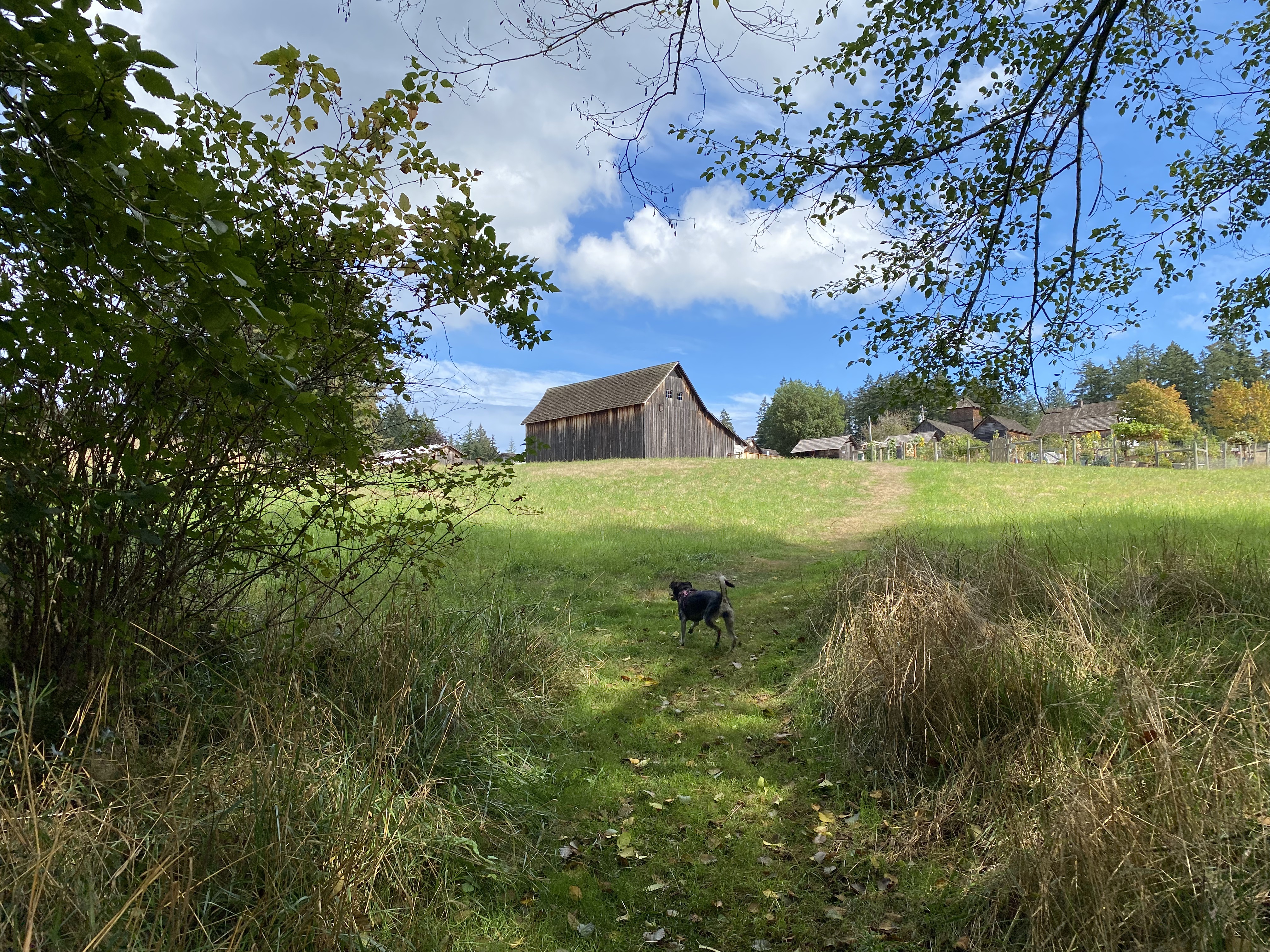
As I write, I’m in the first stages, having rushed to get my house listed in time to meet the terms of my offer on 5 acres in rural Oregon. I’m between homes, living with my two dogs in an idyllic rustic cabin with a beautiful view of Puget Sound and distant mountains, surrounded nature. I got Starlink and built a foundation for it on the roof, though the trees around me mean it quits every 10 minutes for about 10 seconds, so I have to teach from outside the local store. No laundry or drinking water, extension cords everywhere, and I bathe in rust-water from the 15-foot well. But I’m set. I’m doing it. Hopefully, the next pieces will fall into place.

So what have my primary feelings been? Accomplishment? Excitement? Savoring all this beauty and simplicity? No. Try anxiety, constant fretting about the dogs, financial insecurity, criticism of my listed house, doubts about the new place, and just a general, pervasive sense that I’m doing it wrong.

Anxiety reached such a peak that I can’t leave the dogs in the cabin, even if I turn off the gas and unplug everything, because I’m STILL TORTURED with worry that the cabin will burn down while I teach, attend an AA meeting, or visit the post office. I also eat enough sugar-free cookies to hurt my stomach. With no one to talk to, I waste hours online and get riled up about the news.

Roommate #1: Beverly
Roommate #2: Alice

But as I’ve continued to pray for relief from these unwanted feelings, something’s slowly shifted. I was scraping moss chunks off the roof the other day when I suddenly felt tears rising. Out of nowhere, a sob wanted to come up my throat. So I let them through. I set aside my tools, turned off my podcast, sat down on the shingles and ugly-cried – at first not even sure why.

But then it came: My home! My mom! Raising my little boy! My ex lost to alcoholism! My youth and its expansive, limitless future of dreams. All are passing from my life, and I loved them, I miss them. I don’t know anything – who I’m going to be, what my life will look like. Yet I need to grieve the life I’m leaving. My angel told me, You have a chapter left, so let’s use it for good. But who wants a goddam coda, however meaningful?

For me, the gift of sobriety is learning to recognize that it’s not about the cabin burning or Netanyahu kindling world war. It’s never about the big tizzy, whatever form that tizzy may take. When illusions fall away, it’s about facing the vulnerability that 99.9% of what happens is outside my control. It’s about knowing my fate is always in god’s hands more than my own, and trusting that god’s goodness makes up the foundation of what happens despite my human ignorance of the why’s and how’s. Faith and courage — these are all I EVER have to draw on. Ever, ever, ever. 

I remember the predawn hours after the first night I’d spent sober, when I felt so terrified of living with or without booze that I dropped to my knees by the glass doors and begged god for a sign. Across the near-dark patch of grey sky in front of me flew a lone bird, silently navigating from hither to yon with almost no light. I realized then that nothing thrives without faith in something, whether conscious or unconscious of that faith. My faith had lain in booze and ego, both of which had failed me. Now it was time to hand it over to god — the same god guiding that bird.

That was 1995, and it’s still true for me today. Over and over I wander from humility, forgetting, thinking this life is my show, but eventually I’m led back to that touchstone, and that has made all the difference.


10 Comments

Filed under Alcoholism, Faith, fear, living sober, Recovery, Sobriety

Why do Sober Alcoholics Relapse? How can we not?

Recently a visitor to my AA homegoup shared that at 19 years sober, he’d joined coworkers at a business conference and, since cocktails were free and everyone at his table was ordering, decided to have just one. Six long years later, after losing his job, destroying his marriage, impairing his health, and

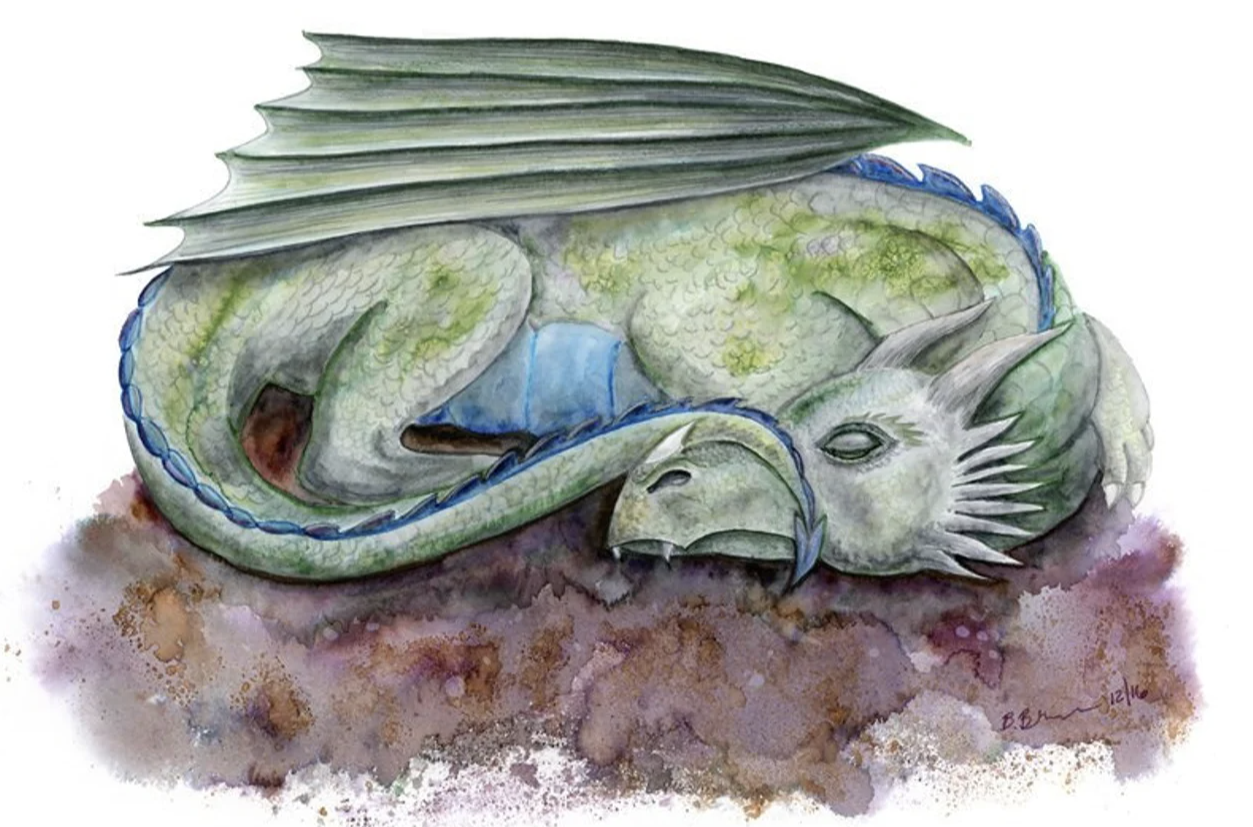
Sleeping Dragon

Alcoholism only sleeps; 1 drink awakens it

having scrabbled at the brink of sobriety in baffled despair as he fell back again and again into drunkenness, he somehow made it back. Sober again four years as he spoke to us, he’d gained a profound respect for the insanity of alcoholism. 

Why does this happen? How can we avoid it?

I myself have never relapsed since my first AA meeting on January 29, 1995, so I cannot speak directly to the inner experience of deciding to drink. Instead, I asked a friend in my homegroup who knows the cycle well to offer you guys some insights. Here is Clark’s story. He left out the trauma of his childhood with a Vietnam vet step-father, but trust me, there was plenty.

“I got my second DUI in back 1982 when I was 19, but I really didn’t want to be sober. I was court ordered to go to AA, so I gave it a half-hearted try, but I wasn’t willing to follow directions. Both my mom and sister were in the program, but I’m incredibly stubborn. I thought, ‘AA is for weak people.’

“By my late 20s, I was making great money. I had a wife and kids, a lakefront home, a speedboat, a Harley, all sorts of toys — and all of it felt meaningless. I was miserable and wanted to kill myself. Booze had quit working. My cousin and best friend were doing heroin, though, so I thought, I’ll try that! In a way, it saved my life; heroin kept me from killing myself; but it also took my addictions to a new level.

“I’ve never officially counted how many times I’ve relapsed, but I’d guess about 20. Every time I was in pain or something bad happened, I’d run back to AA because deep down I knew that was the solution. But again, I wouldn’t follow directions. In 1986 I found crack cocaine, and it completely destroyed my life. I checked myself into treatment and stayed sober about 3 months, but my wife gave me a hard time about being away from home for meetings.

“The main recurring theme of my relapses has been that I forget. I forget how bad things got, and I remember the good times — ’cause there were good times. In 1990, I’d left my wife, stayed up all night smoking crack with a girl I knew from high school, and to get money for more crack we decided to rob a gas station. After I eventually got caught, I went back to AA to avoid jail time. That time, I stayed sober about 6 months, and it was some of my best sobriety up to that point. I actually got a sponsor and cracked open the [Big] Book. But then I met a girl in AA, we were both new, and we got drunk.

“In 1997, I started selling crack myself, but pretty soon I became my own best customer, and before long I ended up in prison. I got clean with my second wife, until she died at 26 giving birth to our daughter. After that, I didn’t even try to get sober for years. I just had too much pain.

“Still, the cycle kept repeating. One thing about relapse, with me anyway: it starts days before I actually take a drink or drug. My thinking gets bad, I’m frustrated about something, in some kind of pain. I wasn’t good at reaching out to people, so I’d convince myself that THIS TIME, things were going to be different! I’d manage it. I’d control it. I’d keep it to weekends.

“This last time, I had a cocaine-induced heart attack, went to the ER, got shocked back to life 6 times, and stayed in a coma for 2 weeks. My poor sister, who is not religious at all, went to the [low-bottom AA hall] and asked them to pray for me. I came out of the coma, but within 2 weeks I was back to drinking and smoking crack. Right about then I got a pretty sizable inheritance, so I proceeded to smoke it — about $500 worth every day. I wanted another heart attack. Dying, I’d not gone to the light, but to a darkness completely painless, and I wanted that again.

“I’d wake up mornings feeling I absolutely could not stand another day. The book talks about ‘the jumping off point’ when we can’t imagine life with or without alcohol. I saw a choice between getting sober and dying, and I chose dying — because I didn’t think I could get sober. I’d tried so many times and failed. I never left my place except to meet the drug dealer in the driveway or to get cash at 7-11. I wasn’t showering; I wasn’t eating. I was a wreck, utterly isolated and alone.

“But… my sister kept coming over. She has 38 years, and we’d always been close. She had me write a will; she made me write a letter to each of my children to explain why I was dying. I could see the pain in her eyes. And I decided, for her sake, I’d give this thing one more try.

“Thank god, two or three days later, it dawned on me that I’d never given AA a fair shot. There’s that line in ‘How it Works’: Those who do not recover are people who cannot or will not completely give themselves to this simple program… That was me. Every time, I’d do a little bit of this and a little bit of that, I’d grudgingly drag myself to 2 or 3 meetings a week, but I’d never given it the whole deal. And this time, I decided to give it the whole deal. And it’s been the difference of night and day.

“I went to 2 or 3 meetings a day for 16 months. After about 90 days, my brain began to clear, and I decided I was going to pray, I was going to get sponsor, and I was going to work the 12 steps out of the book with him. And I did all those things. I’ve prayed every day since. I can’t point to one of those three things because I think they’re all integral, but my life has changed because of that decision. I’m so grateful for what I have today that I keep doing those three things. People I’d known in AA for over 40 years, they always welcomed me back. Given a choice, I wouldn’t pick me as a friend because I was so slippery. But they were always there for me.

Port Angeles

“Today at 2 years and one month sober, my life is completely different. I just got back from an AA Roundup in Port Angeles, and I loved it! I went to meetings, fellowshipped with friends, went out to dinner, walked on the beach. It’s a blast. I’m still kind of shy about making new friends, but I feel I belong.

“I never had a higher power before, but praying and really listening in meetings to how other people were approaching the higher power thing, that opened the door. I have some decidedly un-Christian views (pro-choice, pro-gay rights, etc.) but I’ve found a liberal church where I’m welcome and we don’t talk about those things. Prayer centers me.

“If someone wants to get well, I would say, ‘Give yourself to AA completely. Do the work laid out in the 12 steps.’ Not in your first week! But you can’t keep putting it off, either — working the steps with a good sponsor to the best of your ability.

“My happiness and equanimity are at a level I’ve never had in my life. Ever! I have so much gratitude. Finally being done, having a life that is manageable, friends who care about me, being able to look at myself in the mirror, not feeling like a piece of shit, sleeping good every night. I have a life today that I never could have imagined. I still go to a meeting every day, sometimes two. I walk my little dog — she loves me. I’ve steered away from relationships so far, but I figure when I’m ready, God will give me one.

“Every day is an amazing journey.” ❤

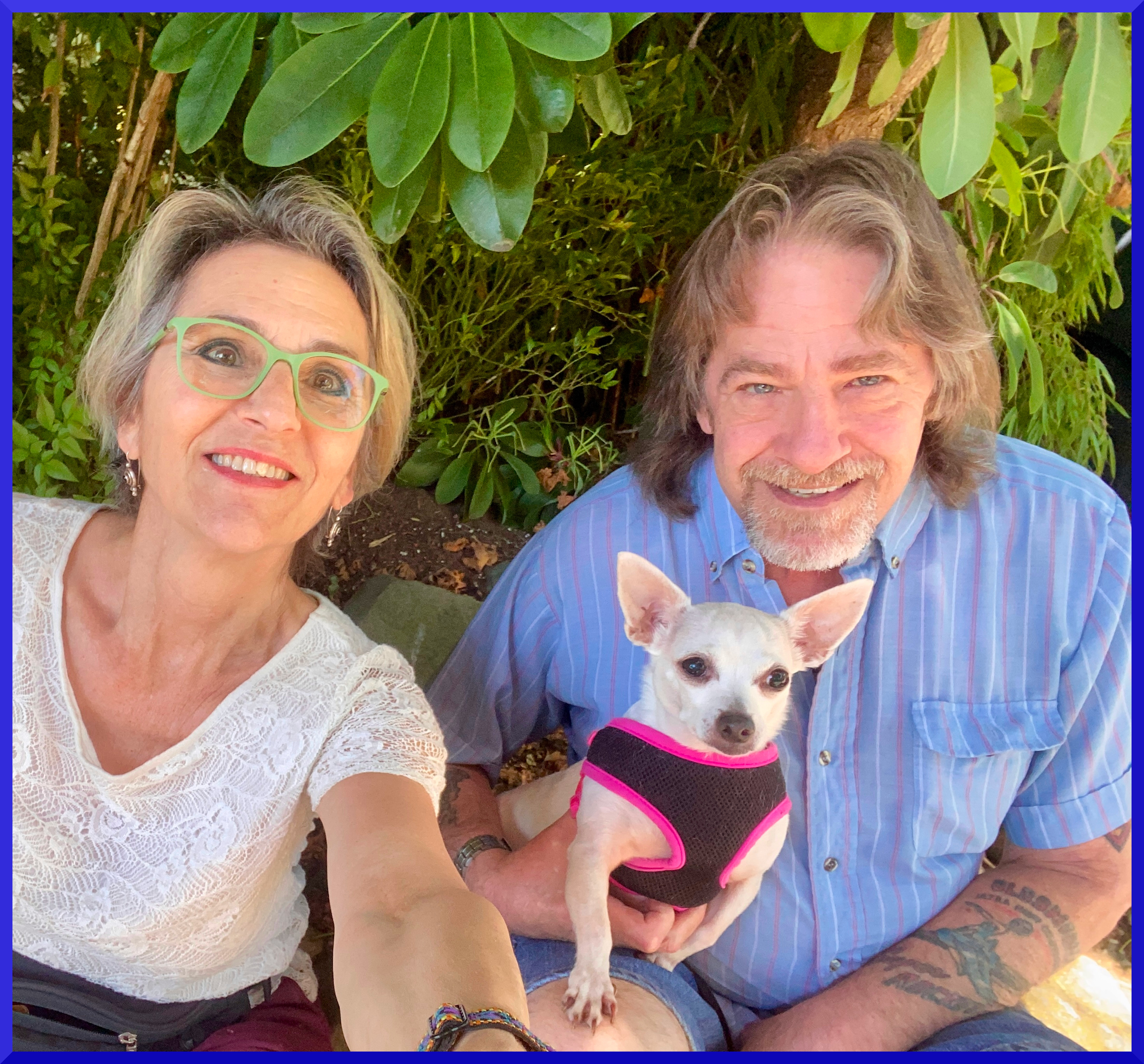
Me, Sweet Pea, and Clark

1 Comment

Filed under AA, Addiction, Alcoholic relapse, Alcoholics Anonymous, Alcoholism, Drug relapse, Recovery

Third Step: Next Right Thing

The first three steps of Alcoholics Anonymous are pure logic:

  • Step 1: “I can’t” (drink in moderation, manage my life, etc.)
  • Step 2: “A higher power can” (restore me to sanity)

Therefore

  • Step 3: “I choose to let it” (by turning my will over to HP)

In Step 2 alone there’s plenty to ruffle our prideful alcoholic feathers, right? Not just the higher power thing, but this insinuation that we’re currently not sane. Hmmph!  For years, maybe decades, we’ve defended our passionate reliance on alcohol by assuring everyone, including ourselves, “I’ve got this!” I can remember thinking, “And even if I don’t quite have it, I’m saner than most people.”

Of course I had no clue how insane I was: I wasn’t SANE enough to! Today, however, I can affirm with perfect certainty that I was bat-shit crazy and had been for years. Confusing self-poisoning with self-care on a daily basis was only the tip of the iceberg.

But then there’s that whole “God” thing. Many newcomers choke on the word, so they never really nail down this crucial foundation of Steps 1-3. Religion’s claimed monopoly on spiritual life is largely to blame. It has bamboozled so many into thinking a higher power must involve religion.

freedom-of-religion-gettyimages-517212696 copyQuite the opposite, in my opinion. As Carl Jung observed, “One of the main functions of organized religion is to protect people against a direct experience of God” (emphasis mine).  Religion miscasts god/HP as an external authority figure, when in fact god is “living” us 24-7, living the trees and grass and little rolly-poly bugs and bunny wabbits. God loves us all sooooo powerfully that we’re animated by it. That wondrously complex arrangement of hydrogen, oxygen, carbon, and trace elements you see in a cold corpse is inexplicably enervated with god’s love to become… YOU!

God speaks within us, not through any text or religious authority. Disagree if you want, but I guarantee you, no religious authority can keep an alcoholic sober! Only we, waking up to god’s guidance through Step 3, can manage that one day at a time. In fact, the more religion has been forced on someone as a child, the more difficult finding god within can be.

duckling-grace2

God at work!

My ex-boyfriend recently drank himself to death with beer — Indian Pale Ale, to be exact. He’d gone through detox and treatment to emerge gung-ho sober, but multiple handicaps blocked him from tapping into a power greater than himself.  A) He’d been raised Catholic; B) he was left-brained to an extreme, having impaired his brain interconnections with binge drinking as a teen; C) he felt extremely awkward and uncomfortable in socializing, also due to B.

A made him keep reverting to seeing HP as an authority figure; B kept him from feeling his connection (8:00) to everything else, and C kept him from hearing or seeing god through his fellow alcoholics.

Below are his last texts to me. Before you laugh at the ‘Subaru’ thing, recall that while sober this man could carry in his mind the full schematics for a Boeing 787. These texts are crippled with drunkenness because… he was less than a week from dying.

Gerard combined texts

You can imagine how often I weep that I didn’t agree to that last call, as I might’ve if I’d not been sitting right next to my Al-Anon sponsor. But in truth, I didn’t want to witness him in that state, slurring his words, awash in vague emotions, making little sense. It was too painful. Besides, I couldn’t have helped him find his HP any more than you could. A week later, on his 60th birthday, he died of a gastric hemorrhage.

“Do the next right thing” was one of those resonant 3rd Step sayings Screen Shot 2024-03-05 at 11.38.13 AMI heard early on in AA. Strangely, “right” did not equate to “most desired.” It steered me away from what I thought would feel good, make me look good, or bring temporary relief, and toward a deeper sense of right and wrong. **

We all carry that sense within. It’s a feeling in our gut. We often have to quiet the chatter of our thoughts before we can make contact with it, but it’s there. Initially, I grasped only few “next right things” like so many flimsy reeds: go to a meeting; stay out of bars; don’t meander toward the store’s booze section or hang out with users.

Today, though, I have a huge, rich bouquet of next right things to choose from every day: practice gratitude; call a friend (instead of texting); exercise/ hike/ do yoga/ walk the doggies someplace new; do service work or donate; tidy or fix something; meditate; notice beauty; be kind, be kind, be kind.

Princess and GoblinOn my favorite sleep podcast, in a book entitled, The Princess and the Goblin, I recently listened to a description of how a child princess, who has discovered her own magical great, great grandmother in a remote tower of the castle, is led by the grandmother’s wisdom even in her absence. When afraid, she’s supposed to put a ring the grandmother gave her under her pillow and feel with her index finger for a gossamer thin thread connecting the two of them. It’s a perfect metaphor for always being connected to our higher power.

But here’s the cool part. The thread at her fingertip doesn’t just lead to the safety of her grandmother. It leads her deep into the goblin mines, into terrifying pitch darkness, across underground streams and through narrow passageways where she’s filled with doubt and urgent desire to turn back but can’t because the thread leads only forward. To her amazement, it leads her to her friend, a courageous boy the goblins have all but buried in a cavern, shows her the way to free him, and guides them both back to daylight and safety. In fear for herself, she’s led to rescue someone else. While boy insists her idea of “grandmother’s thread” is nonsense (right up til the end when he finds it himself), she trusts it beyond her own thinking.

So, I find, goes life after one makes a solid 3rd Step. We are led forward, often scared, but guided to greater outcomes.

I alone can sense where my “god-consciousness” leads. Many don’t understand why I’m about to move away from this city where I was born 63 years ago — to I don’t even know where. I’ll find out soon enough. I trust my thread. It’s just the next right thing.

.

scroll

.

.

** As I describe in my Die-Hard book –> the first two communications I heard from my post-NDE guardian angel, having just driven home horrifically drunk, were: “This is the last time I can help you; you DO know right from wrong!”  Hearing him opened space for what has unfolded as 29 years sober.

4 Comments

Filed under AA, Alcoholism, living sober, Recovery, Step 3

You Don’t Have to…

For so much of my youth, through so much of my active alcoholism, I believed I was supposed to do and be certain ways to be cool. I saw signals everywhere meant to teach me what was expected of me from the sector of society I wanted to emulate.

These signals took on a life of their own in my psyche. They became my own measures of success, and I knocked myself out trying to fulfill them.

img_9766

My son and me

One of the biggest gifts of having been sober a few decades is freedom from all those supposed-to’s.  I can choose the parts of life where I want to push myself, and the parts about which I don’t give a flying duck.

I don’t have to…

  • Whoop it up on New Year’s Eve. I don’t have to stay up ’til midnight, make a big deal, care whether other people want to. The calendar is arbitrary. All holiday customs are voluntary, and these, which entail mainly consuming liquid neurotoxins and making a lot of noise, get obnoxious pretty easily.
  • Buy New Stuff.  In the hiking & mountaineering world, experienced outdoors people can easily spot the newbies. Their gear is all brand spanking new. New pack. New boots. New puffy. Gleaming ice axe. Through our eyes, they look kind of ridiculous, because we know they

    img_5265

    My 1975 VW bus

    have little clue what they’re doing. Gear that’s been put to good use shows “cred” — short for credentials.  My whole life shows cred, so I feel the same way about my household stuff, clothes, car, etc.  It’s been around.

  • Socialize Competitively.  For years, I wanted to be seen at certain events, befriend certain people. Someone somewhere, I imagined, was keeping score of my success. Guess what?  Unless you’re  unfortunate enough to be in high school, no one is! Today I like whomever I like and love whomever I love. I try to find ways to spend time with the latter — which somehow seems harder since the pandemic.
  • Emote to Commercial & Social Media. When I was young, for news channels we had ABC, NBC, or CBS, plus PBS / NPR.  But that was about it. Today, the entire news industry is chaotic and desperate. It’s snag viewers or die, so most waive bait — inflammatory, bloody, infuriating, and/ or terrifying news bits — before our screen-bound eyes in hopes in hopes of snagging our attention and taking up our time. We don’t have to get caught. Yes, truly horrific things are happening in Ukraine and Gaza, but all we have the power to DO is pray and donate what we can.
  • Act My Age – I know who I am better than the calendar does.img_5097
  • Date – What a waste of time!
  • Pretend I’m Always Serene – Life is joyful AND difficult.
  • Avoid Sugar – Pick your vices; this is mine!
  • Clean When No One’s Coming Over – “God, I wish I’d cleaned more!” said no one on their deathbed ever.

Continue reading

4 Comments

Filed under living sober, Recovery, Sober holidays, Sober passions, Twelve Steps

“Why is Nothing Working? It Must Be Me!”

Have you ever heard this saying around the rooms of AA, “Alone is a dangerous place”?  I got another lesson last night in how true this is.

As someone coming up on 28 years sober, I’m usually in pretty good place.  Those demons of shame, not-enoughness, loneliness, self-pity, envy, awkwardness, self-loathing, and many others that fueled my drinking and nearly killed me — they still live in my head, but their megaphone batteries are weak, and I’ve made friends with most.  When they show up, I try to A) view them as familiar characters and B) invite them to tea, as Buddha invites the demon Mara in the brilliant Buddhist story. In other words, I acknowledge I’ll never be rid of them, but each is a voice from my psyche trying to help me, though their methods are flawed.  The difference between befriending and believing these voices — that’s the key to emotional sobriety. 

Shitty Committee

But last night, no such serenity! I tripped over all their wires, bought all their Brooklyn Bridges, and was, in effect, sucker punched.

What happened? Over Christmas, Alex, who normally makes coffee and sets up the meeting space for my AA homegroup, Salmon Bay, was visiting family on the east coast. I volunteered to cover for him, in addition to my normal “cake person” duties. Maybe 8 years ago I’d been coffee maker here, and in 28 years I’ve made a lotta coffee for a lotta groups, so I was sure I’d be fine.  Alex handed me his key to the church.

coffee brewer

    But WAYYY older

Last night, I got there 45 minutes early, had little trouble unlocking, grabbed the big storage tub from the closet, and fretted a bit about how much coffee to put in. As an avid tea drinker, I had to Google the matter, but everything was “per cup” with nothing about 2.2 liter airpots, and I felt somehow too flustered to do the math.  So… I dumped what looked like a good amount into the filter, placed it in the brewing basket with the airpot below, and hit BREW LEFT.

Nothing happened. 

A light was flashing at the top of the machine: READY TO BREW.  Under that was an ON/OFF switch. I pushed both of these and BREW LEFT for short and long periods. Maybe I should try BREW RIGHT.  I moved everything over and repeated the process. Nothing.  I searched the kitchen walls for instructions, checked the power, whether it was connected to water.  The tea spigot water was warm, but not hot.

Meanwhile, time was ticking away: no coffee, no room set up, just an increasingly freaked out alcoholic.

I called Alex in Virginia where it was past 10:00 PM.  He didn’t answer.  I sent an email to the entire homegroup with the subject line, HELP!  Then I put a large tea kettle on to boil, said f*ck this, and went out to set up the meeting space.  

Something was wrong here, too. We normally have several big round tables off to the left and a U-shape of rectangular plastic tables in front of the secretary/chair table. But the room was filled with 7 round tables, two of them plastic. Why couldn’t I remember those plastic ones?  Where did they go? 

stove burnerI was dragging the wood ones to the left when I smelled smoke. I ran to the kitchen where a dirty burner or drip pan was billowing clouds of smoke that filled the kitchen. I turned on the fan and propped open the church door, but it was bad. While I was in there, just for fun I spent another minute pushing all the goddam buttons on that bratty piece of shit coffee machine.  Nothing.

At this point, I reached a FML peak of frustration. In my 10 years at Salmon Bay, except at the pandemic’s height, there had always been coffee, decaf, and tea at this meeting. Always. Now, for the first time ever, there’d be none. That and the round tables looked all wrong, too crowded.  I hadn’t even begun to set up the U-shape.

WHY couldn’t I DO this???  WHAT the goddam hell was WRONG with me?!  What a ridiculous embarrassment, to be such an incompetent idiot!  What would everyone think, especially that person who always seems to not like me?  

FML

I heard the door.  Phil, our outgoing secretary, came in. He’s still recovering from a near-fatal episode of a kink in his intestines, so quite fragile, but I don’t think I said hi or asked how he was feeling, never mind remembering he had 10 years sober this month. “I can’t figure out the f*cking coffee maker!” — that was my hello. “What’s with the smoke?” was his answer.

Phil went in the kitchen. He said a bunch of things, pushed a bunch of buttons, and then delivered this Earth-shattering pronouncement: “It’s broken.”

I showed Phil the round plastic tables. “They don’t belong here,” he said. “We can fold them up and put them aside.”

The smoke had mostly cleared out by the time people started to show up. Many tried the coffee machine and shrugged.  Someone poured the smoke-producing but boiling kettle water into an airpot, I set out the tea things, and we alcoholics had ourselves a wonderful meeting — complete with birthday cake.

When I got called on, I told the tale above. “I was going crazy until Phil got here, and then all of a sudden, nothing was a big deal anymore. To me, this just shows how much we need each other.  Alone, I can catastrophize anything.  It just takes one person facing the same predicament to make it okay.”

mara

                The demon Mara

Maybe when Alex gets back, he can show me how to slap up that bitch machine to make it work.  Til then, I’m happy with the magic of AA, shared community, and friendships. I’m even grateful for those 30 tormented minutes, because they reminded me how my whole effing life used to feel before the steps showed me what was broken, what useless buttons I kept pushing in life. Those demons and I, not only did we have tea, but we were joined by every tea-sipping member of my homegroup.  

Happy New Year, Alcoholics!  

scroll


PS: It WAS broken!! We could tell because the following week it was A) spotless B) devoid of the filters normally on top.

Leave a comment

Filed under AA fellowship, Alcoholism, character defects, Meetings, Recovery

Unexpected Teachers

About two months before I got sober, a voice spoke to me — one I now know as my angel’s (I call him Egnacio).  I’d just driven to my log cabin completely hammered, tearing along winding, woodedNarrow Bridge roads as fast as 80 mph with the radio blaring, seeing quadruple as I bombed through the narrow railroad overpass where I should have died. Instead I reached home, but as I clung to my car door for steadiness and glanced up at the stars, congratulating myself on my badass driving skills, the voice shot through me like a thunderbolt from Zeus, except it was a bolt of telepathy, of knowing, extremely urgent and somehow stern: “This is the last time I can help you.  And you DO know right from wrong!”

In the nearly 28 years since that night, sober all but those first two months, I’ve come to realize that Egnacio’s two brief communications actually contained a template for living, a standard on which to base all future choices and judgments. 

Screen Shot 2022-08-21 at 9.37.50 AMThe first, “This is the last time I can help you,” meant essentially, “If you really want to bash your brains out on a telephone pole or scar your life with paralysis or the guilt of having killed another driver, have at it.”  What he was conveying was this: I (Louisa) am responsible for my own life — for my choices, my outcomes, and the caliber of my character.  The same is true for everyone, and there comes a point when even a guardian angel has to quit trying to help.

The second, “You DO know right from wrong!” was essentially a call for the 3rd step.  At the time, I was letting all my addictions, whether substance or emotional, run rampant. Egnacio asserted that I knew better, that I had the capacity to search within for god’s take on my every thought, communication, and intended action. I can consult Good Orderly Direction on whether what I’m doing is good and right, based in love and truth.  I can also sense if other people’s behavior strikes me as good and right, based in love and truth. But if I think back to communication #1, I must accept that their ways are THEIR responsibility, not mine.

We all encounter teachers in our lives. The teachers we EXPECT are those we look up to: sponsors, mentors in life or work, wise friends, maybe even (if we’re very lucky) parents or grandparents. We look to these people to demonstrate for us how to navigate life with grace and insight. For example, I love and admire my AA/Al-anon sponsor because she’s constantly telling on herself, sharing in AA meetings and recovery conversations all the petty jealousies, insecurities, habits, and worries that fill her thoughts throughout the day.

In fact, she finds herself hilarious! Why? Because she doesn’t identify with the ego that’s constantly churning out these thoughts and reactions. She doesn’t buy into her own thinking. In light of Communication #2 above, she has access to a gauge of reality beyond her own flux of thoughts — her god.  

Similarly, she has fun describing her flaws because her self-worth comes NOT from how she looks to other people, NOT from whether she’s seen as an AA guru (as she comes up on 38 years’ sobriety), NOT from what I or her coworkers or husband or anyone else thinks about her. She knows god loves her, and that’s all she needs. On good days, I can follow her example.

Then then are the unexpected teachers.  All of us have been betrayed by those we thoroughly trusted. Supposed friends, admired mentors, sponsors, family members, lovers — each of us will have the experience of being hurt by such people, and the stronger our trust in them was, the more profound the pain. 

Screen Shot 2022-08-21 at 9.45.16 AM

Among the most important learnings of sobriety is that these people, likewise, are our teachers.  They showcase how to cause pain with our words, judgements, assumptions, indifference, and carelessness. They demonstrate for us the harm these attitudes and resulting actions inflict, and as we smart from their deeds, we learn firsthand how devastatingly they hurt.

In short, UNEXPECTED teachers model for us how NOT to live. Once we understand that, we can view them as assets. We don’t have to analyze exactly what made them choose to do X.  Many of us waste a tremendous amount of time trying, but such thinking has a name: Resentment. We must instead remember that, in light of Communication #1, they alone are responsible for figuring out the machinations of their egos. All we need to take to heart is their EFFECT.  

Step 3 is a core decision, a choice to always run our thinking past our higher power and seek to do right, not wrong.  Via steps 4-9, we gain insights that can increase the honesty with which we perceive our own motives. We can learn to see the ways we are just like our UNEXPECTED teachers, how easily we  inflict the same harms, maybe more subtly. And we’re resolved to continuously strive to do better.  

On the surface that means damage control in not causing harm impulsively — not saying what anger burns to say, not sending the righteous text, calling someone out, acting on the whims of antagonistic emotions. At a deeper level, it means showing up with honor to do whatever we’ve said we’ll do. But at the deepest level, it means trusting, as my sponsor trusts, that we will in time be able to distinguish “right from wrong.”  We pause, if possible, long enough to differentiate our ideals and responsibilities from simply meddling with others.

Egnacio made such a call when he let me go after saving me one last time: “Live blindly, chasing ego’s chimeras, if that’s what you choose!” That’s what I myself sigh inwardly almost every week to the main unexpected teacher in my life.  I’m so grateful to have found another way to live!

Detach with love

8 Comments

Filed under Codependence, living sober, Recovery, Spirituality, Step 3

Alcoholism and Rats

Alcoholism is a master of disguise.  That is how it kills.  It shows up on the doorstep of your consciousness dressed as an ordinary thought — a good thought, in fact, a good idea that seems to be coming from your own free will. So you welcome it in.  It says, essentially, “Hey, a drink is a good idea!” 

It’s nicely dressed.  It’s friendly.  It seems perfectly sensible and justified — justified because, dang it,Good idea you do deserve a drink. Chatting with it, you discover you agree on so many points: all this abstinence stuff is an overreaction. Right?  Other people make such a big deal over something so simple as a [beer / glass of wine / cocktail]!  It’s not their business. Can’t you just do what you want?  Of course you can!  This is your life and… You know what?  A drink is a good idea.  
So skilled at disguise is this visitor that the alcoholic never suspects the truth: its aim is death. Youralcohol death death. It wants you to drink, and keep drinking, to kill yourself while screwing over everything you ever did to STOP drinking, including treatment and step work and soul-searching — all you’ve done to get well.  As long as you still have the strength to raise that drink to your lips, Alcoholism has more work to do: “Fuck that,” it chuckles.  “C’mon, my friend. A drink is a good idea.”

Impulse — that’s what the visitor relies on. Though we vaguely sense that we’re “being none too smart” [36], we pour whiskey in the milk, decide to have a highball, prescribe for what ails us, rebel, say fuck it, or just mechanically take that drink. We are truly defenseless against the first drink.

So are alcoholic rats.

I recently came across this fascinating medical study of alcoholism conducted on rats: https://www.nature.com/articles/npp2017105.

Because it’s rather dry and scientific, here’s a cheat sheet. 

First, the scientists isolated rats like us, that is, “alcohol-preferring rats,” which they call P-rats.  Anrat drinking alcohol alcohol-preferring rat is one that would rather drink booze than water (sensible, right?) until they are quite hammered and, I assume, pass out.  Next, they taught these P-rats to “work for” their booze: when a light went on they had to press an initial lever that would give then access to a second lever which they could press to get booze. All the P-rats learned this. 

Now, here’s the kicker: They started giving the rats painful electric shocks some of the time when they pressed the “seeking” lever — the lever that brings them nothing but an opportunity to press a second to score some booze.  The breakdown was this:

  • 30% of P-Rats greatly decreased use of the “seeking” lever
  • 36% of P-Rats moderately decreased use of the “seeking” lever
  • 34% of P-Rats, the true alcoholic rats, did not or could not give a shit about the shocks. Increasing the frequency of shocks did not deter them. Ten months’ abstinence with no alcohol available did not untrain them. The instant the booze was back, they were back at it, getting fuck zapped out of their little ratty feet, anything just so they could have a drink.

That’s us, guys!  That is us.  I think of the first 30% as normies who love to drink.  I think of the second 36% as hard drinkers who get told by a doctor to decrease their drinking and are able to do so.

But that last 34% of rats  — those the scientists termed “compulsive,” meaning that for them the drive to get alcohol is stronger than any other.  And that is alcoholism in a nutshell.

Were the compulsive P-Rats of a lower moral fiber than the other 66% of booze-loving rats?

Might other rats who loved them have convinced them not to press that seeking lever?

Could they maybe have tried more mental control?

No, no, no.  They were simply alcoholic rats, and they were screwed.

A higher power is our only hope

Back to that master of disguise, alcoholism.  How can we possibly gain the perspective to slam the door in its friendly, affable face?  There are these things called “steps.”

  1. Give up being special. Identify as alcoholic. Know we are no different or “smarter” than anyone else who died of alcoholism.
  2. Open our minds to something greater than us, a power beyond our thinking.
  3. Follow that power. Stop believing our thoughts about anything to do with alcohol and ask instead for help. Make a bone-deep commitment to do what is right and good, no longer what we want. Good Orderly Direction. Group Of Drunks. God as we understand it.  Opening deeply to any of these will let in the light that heals us. 
  4. Complete the next 9 steps with aid of a good sponsor.

Louisa checking in 

I write this today with a heavy heart — crying, actually.  All I write here is what I long to say to one person — one who has never listened.

I love this person very much, though I shouldn’t because he’s an ex who done me wrong.  He is near to dying from alcoholism. Yesterday he checked in to detox and treatment. Ever since one of his relatives texted me that he was “skeletal and shaking,” I’ve stayed mostly in the background, asking sober friends he’s lost touch with to call.  But last night I kept waking and just praying for him to find a higher power. 

It’s unlikely.  His chances of survival are slim not only because he’s one of us 34% compulsive P-Rats but because his right brain is weak. The left brain is the bullhorn of ego and fixing things; the right takes in a bigger picture. People with right brain strokes, relying on their left brain’s assessments, often deny that anything is wrong with them, that limbs are paralyzed, sometimes even that their paralyzed limbs belong to them. I believe the right brain is also the seat of our spiritual connection, without which we cannot get sober.  

Below is a series of photos of George Best, the famous Irish soccer player.

Here he is in 1972 at the height of his fame, enjoying a brewsky.best-in-1972

Here he is in 2003, robust at 57 after a successful liver transplant necessitated by alcoholic cirrhosis.

His liver transplant was so successful and Best felt so great that he welcomed in that friendly visitor, Alcoholism, when it appeared on the doorstep of his mind assuring him a drink was a good idea — “C’mon, George! Just one on a new liver couldn’t hurt!”

Here he is just two years later at 59, a day or two before he died of massive organ failure brought on by alcoholic relapse.

George Best did not mean to commit suicide. His mind was co-opted, and, for whatever reason, he could not reach god to restore him to sanity.

I fear my loved one will follow this same progression. Please pray for him — that he find a way to reach a god of his own understanding that can override the P-Rat compulsion. His name is Gerard.

Thanks, guys. Love is the most powerful force in the universe.

.

Afterword: Gerard did indeed die of alcoholism on July 12, 2023. Drinking enough Indian Pale Ale gave him an unsuspected peptic ulcer which hemorrhaged on what should have been his 60th birthday.

3 Comments

Filed under Addiction, Alcoholism, Drinking, Heavy drinkers

Compassion’s Spark: a 12th Step Call*

On a dark, rainy winter’s evening about ten years ago, I found myself in a run-down urban trailer park trying to find a particular trailer. I don’t remember how I was supposed to identify it, but I do remember a man stepping in front of me whose face I couldn’t see in the dark.  “I got some stuff.  You want some?”  trailer-park“No, thanks,” I replied, moving on. By the light of trailer windows, I saw more shadowy figures moving about in the downpour, and I remember holding my AA Big Book in front of my heart like a shield, asking god to keep me safe.  I was on a full-fledged 12th-step call, one of only a handful in my life.

Twelfth-step calls are less common today because treatment centers tend to be a first stop for addicts wanting help, but the woman whose trailer I was seeking had just been released from the most labor-camp-like detox/treatment center in Seattle – Sedrunar.  A friend had called me about her. “Lena doesn’t have a car to get to meetings.  She’s got two kids, and she’s gonna lose them if she uses again.”

I called Lena, though I was going to insist she take the bus to my house.  But Lena, like any addict, was persuasive.  She didn’t know anyone in the trailer park she could trust to watch her kids – who were seven and two.  Could I please come just this once?

The seven-year-old opened the trailer door.  She stared at me from eyes circled with dark shadows, silent as a spook.  I heard yelled from inside: “Let her in!”  I tried to greet the child cheerily, though to inhale the stinky, steamy air in there felt like an assault. On the floor was an old TV with a beanbag chair in front of it – that and piles of clothes.  Bare walls.  In came Lena, the toddler on her hip naked besides his diaper, food all over his face.  Lena was a bit shorter than me and chunky, about 25. She shook my hand, apologizing for the mess, and handed the boy off to her daughter, pretty much barking at her to go in the bedroom and shut the door so she could talk to this lady – me.

We sat down at the yellow kitchen table.  On the stove, mac & cheese dribbled from a saucepan stovein a way that reminded me of vomit, and smeared noodles dotted the table.  Lena sat across from me and folded her hands expectantly as though I were about to recite poetry.

All I could say was, “Does that window open?” I gestured toward a dark pane at the the table’s end, the glass dripping with condensation.

Lena looked perplexed.  “I’m trying to save heat.”

“I’d really appreciate it.”

Reluctantly she rose and slid the moldy aluminum frame aside about an inch.  While she was up she grabbed a sponge and wiped away most of the noodles at my place, apologizing that she’d just fed her son.

I’d made up my mind that I would stay 30 minutes only.  I began as I always do, by asking Lena to briefly tell me her story.  Clearly practiced from treatment, she launched right into it – how she’d grown up picking crops in Yakima in a Hispanic community; how she’d gotten into meth as a teen.  She was proud that both kids had the same father, but he was a drug dealer.  She’d lost them twice to CPS – once for leaving them in the car outside a bar.

“I’m clean, now, 60 days.  The judge told me this is an extra chance with my kids.  I shouldn’t even have them now.  I gotta stay clean.  I gotta stay sober.”  Here she changed, muscles in her face and throat working hard.  She looked right at me and spoke distinctly: “I can’t… lose… my kids.”

“Well, you’ll need to find a sponsor,” I breezed, “but, unfortunately, I’m full.”  This was somewhat true – I had a few sponsees.  But, of course, I really said it to push away all this squalor.  I wasn’t even sure whether this woman should have her kids.  All I knew was that only 21 minutes stood between me and escape.

I sketched my own story briefly, Lena nodding attentively at every phrase.  I explained that I couldn’t not drink on my own, but by working the 12 steps I’d accessed a higher power that had removed my craving for alcohol and kept me sober eleven years.

“Eleven years!” Lena marveled.  “That’s what I want!  I wanna know how you did that!”

I was starting to explain how I’d worked with a sponsor when we heard a ruckus and the squalling toddler, chased by the spooky girl, burst out of the bedroom.  Hardly taking her eyes from me, Lena scooped her son into her lap and held him close.  She gave the crown of his head tiny kisses and asked him if he wanted a bottle.

Right then – that’s when the voice started.  Not really a voice, but an urging:  Help her.  Sponsor her.  Love her.

No fucking way! my ego countered.  ticking-clockI was busy.  She was hopeless.  Just eight minutes and I’d be outta this dump, back to the fresh air and my nice, clean life!

Lena nodded toward her son.  “He don’t talk,” she said. “They told me he’s disabled, but it ain’t true.  It’s just all he been through.”  Watching the boy’s eyes, the way they moved from Lena to me and back again, I sensed she was right.  Meanwhile the spooky girl joined us with a coloring book, promising to be quiet and asking where her crayons were.  Lena grabbed them from the same box that had held her Big Book.

“It’s not me,” I heard myself telling her. “God has given me a life better than I ever dreamed of.”  Some of the people who’d helped, giving me time and guidance, flashed through my mind.  “I’m not the same person I was.”  Lena nodded intently.  She was not begging.  She was not pleading.  But every cell in her body was straining to hear me.

Just help her.  Just love her.

But I was helping, dammit!  I was steering her toward the program, right?  Just not toward me.  Anyone but me.  But, with just three minutes to go, I made a big mistake.  I looked into Lena’s eyes.  Really looked.  I saw there desperation and terror, but even more, a fierce love for her children.  My own son was five.  How were we any different?

The wall crumbled, compassion washing over me.  “Okay, I’ll sponsor you,” I heard myself saying.  Lena’s face lit up.  “But not here!  You’re gonna have to come meet me at a coffee shop!”

The rest of the story is like a fairy tale.  Lena and I met every Friday tobig-book read the Big Book at a Starbucks while a sober neighbor watched her kids, after which I’d drive us to a meeting.  She had a job riding in a municipal truck, collecting garbage, and within a couple of months she qualified to drive that truck.  She moved into a shitty apartment not far from the trailer park, where I met with her for a while until she found childcare.  She bought a crappy car and started driving herself to meetings.  Whenever I showed up at her homegroup, her kids would ambush me either in the parking lot or when I came in – the little girl now beautiful and clear-eyed, the little boy talking up a storm.  Their laughter still seemed incredible to me – a miracle.

In a little more than a year, we’d progressed to Step 9 when Lena, who was apprenticing as municipal gardener, leased a nice apartment too far north for us to keep meeting.  I drove up and visited her there once.  It was near Christmas.  I remember white carpets, a new sofa, pictures on the walls.  I remember the children bringing me a gift from under the Christmas tree and grinning while I opened it, and my own embarrassment that I had nothing for them.  But I had given them something – and we all knew it.

Last night after eight years I went again to that meeting – Lena’s old home group. But she wasn’t there.  Where she’s gone, what she’s doing, I don’t know.  But I’m hopeful.  I sent them prayers.  Today, I’m so grateful that god opened my heart, and that it’s still opening.

scroll

Postscript:  I had to find out…  🙂

screen-shot-2016-12-24-at-5-20-03-pm

Republished from 12 /2016

5 Comments

Filed under Addiction, Alcoholics Anonymous, Alcoholism, Recovery, Sobriety, Sponsorship, Twelve Steps

Holy Crap! I’m 27 years Sober!

What’s “normal” wisdom?  I’ll never know, so I can’t guess how much I’ve gained from practicing the PROGRAM versus just getting OLDER. What I do know is that I’ve been applying the 12 Steps pretty much every day for these 9,861 since my last drink, and that the lessons keep coming, some of them quite painful; the learning curve keeps me climbing and will do so (I hope) for as long as I live.

While I was drinking, I learned NAHH-THING — about what matters, about who I was, about how to navigate in the world.  If I’d never gotten sober in AA, I’d still be trying to piece together an ego-based design for living, one based in the maxims my parents passed onto me (mainly “be better than everyone else”), never suspecting they’d been shaped by generations of family dysfunction.

In fact, even after I stopped drinking, I kept trying to live by my old standards until I hit an emotional bottom at 2.5 years dry and finally asked a no-nonsense woman to take me through the 12 Steps.

The first changes were revolutionary.  Here’s Karen’s takeaway from my first real fifth step in 1999, all the damaged and unsaleable goods she highlighted after hearing my 263-resentment-inventory:

By “playing god” she meant that I viewed the world as if I knew what was best — for both myself and others. I decided what you ought to do to make things work my way; when you didn’t, I got scared I wouldn’t be okay and resentful at you for having done what you wanted. Embarrassingly, a lot of this had to do with popularity and inclusion. I wanted people to like me, damn it, to include me in things!

Whenever I got my wish, I’d trot out, not my real self, but what Karen called “the Louisa Show” — my people-pleasing act geared toward getting more of what I wanted, i.e. approval, admiration, popularity.  I was always jockeying in a horse race, comparing and judging who — just to keep this brief — was cooler. Either I was cooler (dominant) and you should admire me, or you were, and I (dependently) would keep knocking myself out to impress you.  As the 12 & 12 so insightfully summarizes, “The primary fact that we fail to recognize is our total inability to form a true partnership with another human being.” [p.53]

In short, I kept trying to wrest satisfaction out of people, places, and things, always assuming they held the key to something I needed to be okay.  But they didn’t.  When I felt most crushed and abandoned, when I was forced to turn inward as a last resort, I’d find way deep down, ignored and discounted, the most profound love of the universe.  Today I know my deepest needs can be met only by plugging into that love, which I call god, never by jumping for various gold stars in society.

When my main source of okayness comes from god, life’s a whole different ball game. I can focus on what I have to give: love, listening, recognition. Gradually, giving these things — the feeling of it – has become important to me. I’m not scrambling to prove my own worth, goodness, talent, etc; I want to help others glimpse theirs.

My basic template for living has changed in these two basic ways, with these priorities:Gauge

OUT IN THE WORLD

  1. Develop a good slime-o-meter and pay attention to it.  My putting this first may seem odd, but boundaries are actually a precursor to open-heartedness. A slime-o-meter is like a spiritual Geiger counter. It starts clicking when you sense those energetically corrupt — sexual predators, liars, thieves, or just energy vampires — whether in the rooms of AA or out in the world. When I sense  slime, I’m still cordial, but I decide carefully how much connection I want. Early in recovery I was ripped off for $7K, tricked into disguised dates, and defamed via gossip by people I’d trusted. Each time I’d had a feeling… that I ignored.
  2. So equipped, it’s open season on love and goodwill. Try to imagine each stranger as they might have looked at 3 years old. That same vulnerable, curious, trying-to-figure it out child is lodged inside an adult body layered over with lots of safeguards against the cruel blasts of life, but you need to see through to the spark of goodness. Everyone child within loves to be appreciated, to share humor, and to be startled by kindness. As you progress through your day, leave a wake of incrementally happier people.
  3. Value and make time for chosen family.  During the pandemic, it seems especially hard to do stuff, but it’s more than worth it.
  4. Value and make time for fitness, health, and connection with nature.  Same as #3.

WITHIN MYSELF:                    

  1. Watch for bullshit. Parallel to the slime-o-meter is my inner scan for hidden motivations, most of which I deny for YEARS or DECADES. Every surge of dopamine candy, once I really SEE it as  ego’s fodder, transforms to lukewarm canned peas, so I don’t want it anymore.  Most recently transformed to canned peas for me is any kind of flirty texting. Three years ago, every ping of a date app lit me up. “He likes me!”  Now all that is blechy.
  2. Acknowledge pain, but don’t retaliate.  As the 12 & 12 puts it, “We learned that, if we were seriously disturbed, our first need was to quiet that disturbance, regardless of who or what we thought caused it” [p.47].  For instance, my 95-year-old mother keeps purposefully insulting me. I’m the daughter who lives nearby and does the most for her, which makes me, apparently, the chopped liver child.  It ain’t fair.  It sucks.  And it hurts. I can pray about it, sing about it, lion’s breath about it, but to others — not to a 95-year-old woman set in her ways.
  3. Listen for divine guidance.  It’s always there, sometimes loud, sometimes faint. ear-1I can feel my angel urging me toward self-honesty and love, and I don’t need for anyone else to believe that he communicates with me.

  4. Love myself, flaws and all.  I was raised with conditional love and lots of shaming, so those critical voices are ingrained in my psyche.  As Tara Brach likes to point out, the “second arrow” wounds me when I shame myself for shaming myself.  Sometimes I actually need to list some objective facts that indicate I’m doing okay, that I have some honor, that I deserve self-respect.

Chairing at my home group tonight among all the January birthdays, I began, “I’m so grateful –” and then I choked up.  The feeling is always right there, that sense I don’t deserve all this.  Twenty-seven years ago, I was given a chance at a new way of life — one that continues to amaze me.

scroll

4 Comments

Filed under Alcoholism, living sober, Recovery

Build a New Passion

Me and the BF in 1980

Yes, alcoholism is a horrible disease that slowly destroyed everything good in my life. Even so, if you’re a sober alcoholic, you’ll understand when I say, man, I didn’t just drink — I mean, I DRANK! I was damn good at it.  I remember a time in college when my boyfriend bet a big guy $20 that I, at 5’4″ and ballet dancer thin, could drink his ass under the table. Faintly I can still recall the look of disbelief on the guy’s face across the table when, in front of a crowd of onlookers, I asked for another pint — maybe my fourth? — before he could finish his.  Hungover as I was the next morning, when I learned I’d won, I felt huge pride. I’d kicked some ass.

Fourteen alcoholic years later, after I’d lost the ability to write well, read or think deeply, marvel at beauty, or love anyone or anything in the world besides my next drink (or hit), some of that pride still bolstered my identity. So when I got sober, alcohol’s absence left a huge void in my psyche, not only in terms of how to cope with life or what to do with all the time I once spent “partying” — it also ran deeper, a confusion about who Louisa was and what drove her.

I had to learn to live for something other than alcohol.  I had to discover who I could be.

Yesterday, I returned home from a ten-day adventure with five friends in Colorado and Utah. We rode our mountain bikes 220 miles from Telluride, CO, through the San Juan and La Sal ranges of the Rocky Mountains, to Moab, UT. The trip was intense, to say the least. We climbed and lost an average of 2,500 feet per day over 30-mile stretches, exerting our muscles with little oxygen at elevations of 8 – 10 thousand feet, and not on pavement, but often on rutted, rain-eroded rocky roads and sometimes single track trails in the backcountry. We each carried around 30 lbs of gear.

The aspens were just turning color.  The weather was ideal.  We progressed along a route among well-stocked huts where we cooked great meals and slept in bunk beds. I’d trained for the trip by climbing lots of steep hills in Seattle. But climbing at sea level is nothing to climbing at altitude.

Breathing as hard as I could, countless times I rounded a corner or crested a rise only to see a huge, steep, relentless hill in front of me. Each time I’d feel an irrational surge of anger at the nerve of this route, to demand I find even more strength. A few times, I and the others had to dismount and push our bikes, but more often than not I’d drop to low gear, breathe my hardest, and inch my way up that frickin’ hill until there was no more to climb. At last I could could crest, pedal a few more times, and then sit back and fly down the other side, wind roaring in my ears and cooling my sweat, gorgeous walls of yellow aspens flying past on either side at some parts, and at others open vistas of steely mountains or red mesas rolling under the brilliant blue sky.

Bumpy video from my phone holder here.

Five other sober alcoholics made this trip with me, the youngest 49 and the oldest, me, at 61. This was my first mountain biking experience, but the others had skills and often tackled single-track routes filled with mad turns and rocks and roots and streams to cross. 

Some, like my mom, might call us thrill seekers.  But what we’re actually seeking is the experience of living fully, connected not only to nature’s splendor but to our physical bodies and the determination at our cores. We want to thrive, to challenge ourselves, to carpe the damn diem. For whatever reasons, we are HUNGRY for life in a way no day-to-day humdrum walk in the park can satisfy.  We chase our passions.

It’s my belief that, once we get sober, each of us must find and cultivate some passion that can fill the void left by chasing the buzz, chasing the high, chasing the illusion of cool. We have to embrace something that we love as much as we loved getting wasted, or actually more so, because it’s an activity that feeds us rather than poisoning us. I’m lucky to live in Seattle, where we have a sober outdoor activities group called OSAT — One Step At a Time. We alcoholics hike, mountain climb, rock climb, kayak, and bike together, all of us sober.  OSAT is where I met my biking friends — all except one, who got sober on her own.

OSAT Glacier Climbing Class of ’19

But you, too, can create something like OSAT in your town, something centered on whatever activity you love. You and your sober fellows can do far more together than gather for AA meetings or fellowship.  You can meet to sculpt and paint, to write and critique, to play or go see sports — an all-sober club. You can create a fellowship around whatever passion illuminates your life.  All you have to do is reach out and organize.

Remember in “A Vision For You” where the text reads, 

Little clusters of twos and threes and fives of us have sprung up in other communities… Thus we grow.  And so can you, though you be but one [person] with this book in your hand. We know what you are thinking. You are saying to yourself, “I’m jittery and alone. I couldn’t do that.” But you can. You forget that you have just now tapped a source of power much greater than yourself. To duplicate, with this backing, what we have accomplished is only a matter of willingness, patience, and labor. [p. 162-3]

The same goes for starting any AA-based group that does whatever you love to do — sober peeps to cheer you on as you work at whatever you love; sober people to skate with you, weld with you, check out art with you.  Remember, the main cause and symptom of addiction is not substance abuse; it’s isolation — being cut off from the whole, from community, from the the oneness of which we are a spiritually interconnected part.

Joy rarely blooms in lonely solitude. And the joy I found with my friends in the gorgeous Rocky Mountains didn’t just happen! It evolved slowly, all of us building friendships in sobriety with people who love the same things, daring to propose an outrageous adventure, and planning for it step by step.  

There’s nothing to stop you from doing the same!

6 Comments

Filed under Alcoholism, living sober, Recovery, Sober passions