Category Archives: AA

Beyond Religion’s Painted Window


Long before Eckhart Tolle, there was Alan W. Watts:

…[Y]ou can only know God through an open mind just as you can only see the sky through a clear window.  You will not see the sky if you have covered the glass with blue paint.  But “religious” people… resist the scraping of the paint from the glass.

[O]ur beliefs… block the unreserved opening of mind and heart to reality.

Alan W. Watts
The Wisdom of Insecurity (1951)

.

Hi guys.  So, like, what’re you using to read this right now?  What’re you thinking stuff with?  Is it this?

Cadaver Brain

Fresh out of a cadaver. Click for more photos – or better yet, don’t!

 .

“Gross, Louisa!” you say.  “No way!  Not me!  I think with… uh… the space of knowingness.”

The brain is an organ the size of a small cantaloupe weighing about 3 pounds, 60% of which is fat.  It processes sensory impressions, records them selectively as memory, and works out relationships among them based on principles of causality and classification – relationships we abstract as “truth.”

Now, if you’ll excuse me for a minute, I’m going to use mine (a little rounder than the one above) to determine the nature of the universe as a whole, and whether or not it contains a spiritual entity such as we call “God.”

Hmm.  Okay.  Sorry – still thinking…  Meanwhile, here’s a random shot from the Hubble Telescope for ya.

Butterfly emerges from stellar demise in planetary nebula NGC 63

This dying star, once about five times the mass of the Sun, has ejected its envelope of gases, now traveling at 950, 000 kilometers per hour, and is unleashing a stream of ultraviolet radiation that causes the cast-off material to glow.

.

Back already?  I’m still thinking about it.  Here’s a representation our solar system’s planets – see me thinking on earth, there?  I’m at my laptop.

.

solar scale

Louisa on Earth, weighing god’s existence

.

Okay – ahem! – I’m ready.  Religion?  Atheism?  Aren’t you just dying to know what I’ve decided is TRUE?  Because it’s going to have so much bearing on reality, isn’t it?  I mean, I’m so fully equipped with exhaustive knowledge on this topic, what’s left to guesswork?

Okay, maybe I’m being a tad sarcastic.  Yet the hubris of people both religious and atheistic strikes me as ridiculous to the same extreme.  Both purport to rule on something far beyond the limitations of human thinking.  Sure, written language has enabled humans to compile the collective knowledge of successive generations and arrive at highly technical creations like the Hubble Telescope.  But when we attempt to compile our thinking about spiritual matters, we’re trying to use words and symbols oriented toward material reality to represent that which can  be experienced only inwardly and via immediate consciousness.  And it doesn’t work.

Self-consciousness is a condition thrust on human beings.  If our lives are to have meaning, we must construct that meaning, and contemplating who and what we are is essential to the process. However, contemplating or “opening the mind and heart to reality” does not entail nailing down a pronouncement or definition that we can believe in as “truth” and convey to others.

In fact, to stop short of closure, to embrace faith as NOT knowing, can be highly uncomfortable.  We dislike the insecurity of trusting in something ineffable, of having no solid descriptions.

Religion stepped in long ago to flesh out those descriptions ByzJesusand abolish insecurity.  Human brains do just fine with stories, characters, and rules, so religion provided them in order to harness a unity of belief among followers – and in some cases, wealth and power.  By Watts’ metaphor, religious texts and dogma present us with a blue painted window intended to represent the open sky of god.

But religion, unfortunately, got distracted in specifying the exact shade of holy blue paint, debated oil versus latex and what holy brush had been used.  Each sect developed “right,” easy to grasp answers – the “idols” of which Watts writes.  If I am certain about the validity of my beliefs, I can say, “Fuck you and your wrong beliefs!”  I can do this with terrific confidence, whether I’m a right wing Christian or a jihadist Muslim.

Atheists, on the other hand, point out, “Hello, folks?!  That’s just some fuckin’ paint, dude!  There’s nothing holy about it, any more than what’s on the walls and ceiling – can’t you see that?  We should just close the goddamn shade and forget about it!”  And they do. They stay in the brain-made world, never venturing outside its constructs to gaze up in open-mouthed wonder.

Whenever I talk of god, people tend to assume I’m talking about some kind of blue paint God.  This is frustrating.

In my AA homegroup, for instance, there are a number of “praytheists” – people who pray because they get results, yet purport not to believe in God.  As alcoholics in AA, we’ve all encountered the inexplicable fact that when we pray for help, something relieves us of a compulsion that has proven far beyond our control.  One of these praytheists – a man sober 24 years – shared last night, “I met with my sponsee today.  We didn’t mention god once.  We talked about our kids, about our jobs – about real things we care about.  God’s not one of those things.”

So much I wanted to ask him, “Why do you think you meet with your sponsee?  Why don’t you tell him to fuck off and get a life?  Why do either of you give a shit about your parasitic kids or your waste-of-life jobs?   Could it be… LOVE?  Might you share a faith in basic GOODNESS?  Look into the depths of those feelings, of how it really feels to ‘care about,’ and you’ll see that you guys talked about nothing but god the whole time!  You just didn’t abstract it and name it directly!”

But he would hear only blue paint.  😦  And I would be saying, “Fuck you and your wrong beliefs!”

blueskyIn my experience, love is the clear window in our hearts – not our brains – through which we glimpse our own blue sky of god – the energy that powers our spirits.  If you don’t sit with love, if you don’t pursue the meaning of its non-logical warmth as it is actually happening to you, you’ll take for granted love’s fragments here and there and never see it as the fabric of meaning that unifies your entire existence.  As Watts says, “[L]ove that expresses itself in creative action is something much more than an emotion. Love is the organizing and unifying principle which makes the world a universe…” If you can make a commitment to actively love love, you’ll be jettisoned through Step 3 and toward Step 11.  You’ll begin to feel god – not comprehend it.

Our brains, by the way, are not all we are.  Among my own crowd of Near Death Survivors, all of us have experienced consciousness that continued while our brains were shut down and dying.  We would argue that the “YOU” at the helm of your fat-bag brain is, in fact, your spirit.  This is why people sometimes “know” things before they happen, or hear voices, or, in some cases, see spirits.  People who have crossed over and come back with memories – whether brain experts like Eben Alexander or just ordinary schmucks like me – will tell you they felt more “themselves” and more highly conscious outside their bodies than within them.

Here too, though, the experience is impossible to convey in words.  Even those people who want to believe us misconstrue what we describe, assuming the “other side” to be exactly like this material one.  It isn’t.  For instance, loving mothers like Mary Neal will tell you they didn’t particularly care about leaving their children behind, that they knew their children would be fine without them.  Why?  I think because on this side we parcel up love and dole it out selectively, as things we “care about,” so that we’re dependent on “loved ones” for meaning and spiritual sustenance in life.  On the other side, love is all there is.

How does that work?  I don’t know.  I really don’t.

feel free to share ⇓

2 Comments

Filed under AA, Afterlife, Faith, God, Near Death Experience, Recovery, Spirituality, Twelve Steps

Doing the Opposite: A Christmas Story

Night before last I was in the dumps – just tired of frickin’ everything.  So I threw a party.  I shit you not.

This is the principle we hear of a lot in the rooms – to do the opposite of what we feel like doing.  I’ve been around long enough to know it pays off, and to understand that the loudest voice in my head is usually not the wisest.

Take day before yesterday, I was sitting in my empty house in the same odarknessld chair where I always frickin’ sit, looking out the same damn window at that same damn tree.  I was also looking at the weeks ahead – the darkest of the year (in Seattle, dusk begins to fall around 3:30).  I don’t do well in the dark.  My brain’s amygdala gets its mitts on a little fear-powered megaphone, so it was broadcasting loud and clear like this:

“What is my life, really?  Work.  Pay the damn mortgage – house falling apart.  More work.  Buy groceries, eat ’em, pay the damn sewage bill.  Clean my ever-dirty house.  Exercise to fight getting old.  Get old.  Ach! – how much longer do I have to do this shit?!  I’m 54, so… like… 35 years, and then maybe I’ll get put in a home.  God, I hope I don’t Facebook there!  I am SO sick of EVERYTHING.”

Screen Shot 2014-12-13 at 11.55.41 AMAt that point, some little alarm light tripped in a different part of my brain.  It said, as god often does, “BULLSHIT! BULLSHIT! Re-examine!  Spot inventory!”

Scanning myself, I realized I was angry – unconsciously hurt and angry.  I’d been planning a weekend with my boyfriend on the beautiful island where he lives, even rearranged clients so I could catch an early ferry, then he texted that he was being sent to Copenhagen.  Boom.  Empty weekend.  My son would be at his other mom’s.  I’d be alone.

Somehow, the part of my brain that’s been paying attention in Al-Anon kicked in, letitbeginwithme1saying: “Let it begin with me!  Your happiness does not depend on what Grayson does.  Your life is rich and you are loved by many.  Be grateful!  Spend time with friends!”

Jesus, what bunch of goodie two-shoes platitudes!

Here, dear reader, is where one has to have eaten one’s spiritual Wheaties.  Because it takes a huge surge of faith to hoist yourself out from that dark groove fear has carved, turn away, and begin to do the thing you least feel like doing.  I know that loving other alcoholics helps me.  I know my house is very near my homegroup.  So I reached for my phone.  The dark voice threw everything in arm’s reach at my head as I texted a homegroup friend.

ME: If I have a game night tomorrow after the meeting will you bring games?  I don’t have any fucking games.

ROB: Sounds great.

ME: Should I do it?  I’m depressed so it seems like a huge deal.  I just want to sleep.

ROB: Me every day.

ME:  But will you come over even if nobody else does?  We can just play hangman or tic tac toe.

ROB: I’ll bring Suspend.

I took that as a Yes.  That’s all I needed – just one friend who understood.  Forcing myself, and with the dreariest look on my face, I created an Event entitled, “Post-Meeting Games and Shit” in our local Facebook AA group, which promptly invited all 97 members.  By the next day, my best friend, a sponsee, and one other person had accepted.  The dark voice gloated about my pathetic neediness, how I should just watch TV alone like normal people.  It buzzed in the background like a big zizzy fly while I cleaned my house and bought four jugs of spiced apple cider.  Just getting the dining room table cleared of clutter for games took literally hours!

After the meeting I checked in with some non-Facebook friends, who had other plans.  A few said they might be over.  So I went home and plugged in the Christmas tree.  I turned on Pandora carols and set a big pot of cider on the stove.  My dog looked at me.  I got down a bunch of cups while the voice warned, “You’re going to feel so stupid putting these away again!”  No one came.  I added a bunch of wood to the fire.  The carols played on.  My dog scratched himself.

Then, finally, he barked.  The doorbell.  One or two at a time, a dozen homegroup friends plus two newcomers climbed those freshly swept steps with food in their arms and light in their eyes, and they brought… god.  That’s the only way I can say it.  Because I loved them!  All ages; all walks of life; all sober.  Each had overcome their own dark voice to show up.  Rob unpacked Suspend on the shining wood table where people gathered talking about how Bing Crosby beat his kids or how expensive that bakery up the street is, and, wait, what are the rules again?  Before long we were ooing and ah-ing at daring Suspend feats.

Human voices, their teasing, their laughter filled up my lonely house – and I remembered what life is, saw it like a forgiven lover.  I am so in love with my life!  We went through the cider.  We ate the food.  My party2sponsee’s gift was an updated Trivial Pursuit that a bunch of us played in the living room, awarding pie slices that people hadn’t even won because fuck it!  That question was dumb!  I saw the goodness, the vulnerability of the new people joining in, and the beauty of my friends in ever-more subtle colors.

The dark voice shriveled, its megaphone dead.

Last night rekindled something in me – Love – enough to carry me through the darkest days ahead.  Once again I remember that all my difficulties – my loneliness, my endless bills, my sorrow at getting older, and stings of life’s disappointments – are not mine.  They’re ours.  We do this thing together.

.

“We know what you are thinking.  You are saying to yourself, ‘I’m jittery and alone.  I couldn’t do that.’ But you can.  You forget that you have just now tapped a source of power much greater than yourself.” (A Vision for You, 163)

Life is yours.  Go n’ git it!

CAM00419

Left by one of the smokers on my front step. To me it reads, “I love love”


scroll

5 Comments

Filed under AA, Al-Anon, Alcoholism, Recovery, Seasonal Affective Disorder, Sobriety, Spirituality

Authenticity in the Rooms: Striking a Sober Balance

This above all: to thine own self be true, And it must follow, as the night the day, Thou canst not then be false to any man.”
——————————————— Polonius – ass-kisser & schemer (Shakespeare)

“The paradox of self-honesty is that I need the help of others to achieve it.”
———————————————(Courage to Change, 296)

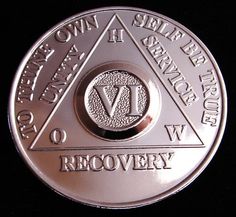
Inscribed on many AA coins is the wisdom byte, “To thine own self be true,” which was probably already time-worn when Shakespeare put it in Polonius’ Shakespeareadvice speech in Hamlet. Whoever Shakespeare was, I’m sure he was crafting irony by doing so: Polonius is false to everyone, including himself.  Shakespeare’s message, as I see it, is that being true to oneself is far more easily said than done.  In fact, striving for personal authenticity is the work of a lifetime.

Many of us believe we’re being true to ourselves when we regurgitate whatever the dominant culture – or our faction thereof – has inculcated in us.  Oprah said it.  Parenting magazine.  Dad and the NRA.  For that matter, individualism itself is an ideal of Western culture.  Because we’re all an amalgamation of the belief systems we’ve been raised with, spouting what these systems maintain in the face of other systems feels like authenticity, even if it doesn’t come from our spirit.

As James Fowler outlines in his book, Stages of Faith*, the search for deeper levels of meaning requires an ability to stand back from our beliefs and evaluate them critically, changing what no longer rings true – even if it requires a break from our past or our clan.  Otherwise, our faith remains childlike.  He identifies Stage 1 faith, for example, in a Catholic woman he interviewed who, interpreting every symbol of her religion literally, staked an almost philomenamonetary worth in telling her beads (points “in the bank”) and worried about pissing off various saints by neglecting to pray to them.  At the other end of the spectrum, Fowler places visionaries like Gandhi or King who staked their lives on a faith in love beyond the norms of their society, valuing good for humanity over good for self.

It’s the difference between obedient adherence to mere form versus courageous application of import. The more we develop toward the latter, Fowler says, the deeper our faith, and the more meaningful our lives.

When I came to AA, my belief system was a mess of contradictions.  Most of what I’d cobbled together to live by had to be straight up chucked in favor of love & respect for people from all walks of life and an ethic of usefulness – values that proved their worth as they lifted me from despair to vitality.  AA sponsors, friends, and sometimes strangers who spoke in meetings – these people taught me how to live.  It’s a process that continues to this day.  Listening, I’m transported outside my own experience into the perspectives of women and men who differ from me in countless ways, yet share my diseased alcoholic mind.  My fellows in AA and Al-Anon have become a sounding board for my tentative thoughts as I navigate the unknowns of today.  Their feedback pushes me beyond what I want to see, pressing me to be ever more honest with myself.Year1AA

Even so, I need to examine AA meetings with some critical distance, as well.  AA is amorphous, because meetings are only as constructive as the alcoholics attending them.  A group of sick people makes a sick meeting.

Dry Drunk** Meetings, for example, have cast aside the Big Book in favor of some kind of open-season group therapy.  Shares focus solely on “checking in,” usually venting frustrations or confessing destructive behavior, all of which is swept aside with the phrase, “but at least I didn’t drink!”  Here plug-in-the-jug abstinence is touted as an asset, even if I’m still an asshole tortured by the fear and self-loathing I once treated with alcohol.  I myself spent the first two years of my sobriety in such meetings, which brought on a debilitating depression.

At the opposite extreme are Competitive Sobriety Meetings, which feature the same schtick over and over: My life sucked, but now I work the 12 Steps constantly, and everything is wonderful!  Yes, dammit, wonderful, because I have 7 sponsees, 5 service positions, 3 home groups, write a 10th step every fucking night and read 86-88 every morning, etc. – so my sobriety is way better than yours!  Here the search for authenticity has been abandoned.  In fear of relapse, I cling to the RIGHT ANSWER.  The second two years of my sobriety were spent developing resentments in such meetings.  The solution was there – yes – a solution that saved my life.  Still, much like Fowler’s Stage 1 woman with her virtual Ken and Barbie saint collection, such meetings tend to make a golden calf of the AA program and its history.

Where is balance to be found?  What rings true?  That’s up to… thine own self, baby!  Today, I have a home group that feels like home.  For me, the most important growth guide is based, not in set rules or standards, but rather in my ways of being, my modes of consciousness – in my awareness of my awareness.  To what degree am I willing to be vulnerable and loving, to admit that I don’t know, but to keep trying regardless? At a dry drunk meeting, can I offer the solution to those who want it, without judging those who don’t?  In competitive sobriety meetings, do I have the courage to speak of my continuing human struggles?

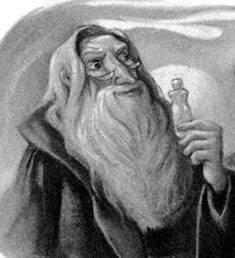
J.K. Rowling may seem a questionable sage, but as I’ve been reading Harry Potter to my son, I’ve noticed how frequently she has Dumbledore preface statements with “I think…”  Unlike Polonius, Dumbledore understands that he is fallible, mourns past mistakes, and acknowledges that he cannot trust himself with power.  His wisdom shows itself as recurring acknowledgement that he may be wrong.c23-horcruxes

In sum, we’re always trying, never done.  Sobriety and spiritual growth are, like life itself, forever touch and go, a muscle that begins to atrophy as soon as we rest it, a puzzle we work on daily even as pieces constantly vanish and reappear.

.

scroll.

* Much of this book deals in depth with developmental psychology, but it’s still an interesting layman’s read.
**For more on Dry Drunk syndrome, see this great article by Liberty Ranch recovery.

Leave a comment

Filed under AA, Alcoholism, Recovery, Sobriety, Spirituality, Twelve Steps

The Codependent Alcoholic’s Quandary

Sometimes I feel pulled in opposite directions by my two programs – AA and Al-Anon – though the confusion actually arises, not from contradiction between them, but from my muddled thinking as a codependent alcoholic.

Bill and Lois

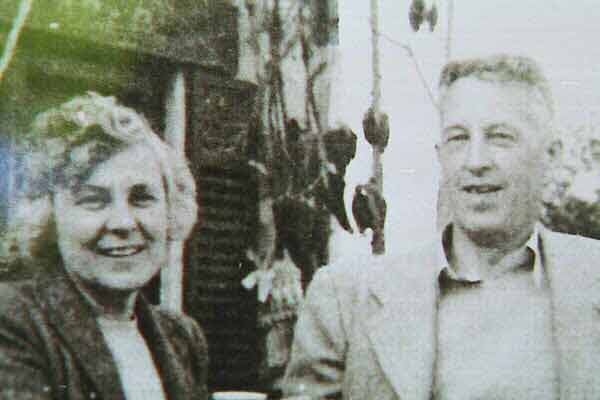
Lois and Bill Wilson, co-founders of Al-Anon and  AA, respectively

AA tells the alcoholic in me that “Our very lives, as ex-problem drinkers, depend on our constant thought of others and how we may help meet their needs” (20).   On the other hand, Al-Anon tells me that “…many of us develop the habit of putting [another] person’s needs first… To recover we have to learn to keep the focus on ourselves” (9).

How can I do both?  How do I constantly think of your needs and keep the focus on me?

When I was new to AA, I resented the idea that selfishness was the “root of [my] troubles” (62).  I was a victim.  Other people hurt me.  It took years of meetings and a fairly forceful sponsor to open my eyes to the ways I victimized myself.  Living in ego, I was “[d]riven by a hundred forms of fear” (62) that there wasn’t enough to go ’round and I wouldn’t get mine.  My sponsor taught me how my egocentric expectations that others do whatever would make me most comfortable laid the foundations for a life of discontent.  (See What a 4th Step is and Ain’t)

In AA, to stop being a black hole of need, we have to literally reverse the direction of our energy flow.  I had to learn to see others, not as appliances, but as fellow children of god to be loved.  Luckily for me, god set me up a bunch of tutorials in this matter.  Here’s one:  In early sobriety, I used to envy a beautiful young woman who secretaried a huge meeting, ever popular and lusted after, dressed to the hilt week after week.  She later relapsed, fled to her friends’ home, and while they were out, chugged a bottle of Drano from under their sink in an effort to die.  Last I spoke with her several years later, she was still missing much of her esophagus and needed a feeding tube to eat.  Her heart itself was scarred.

That’s the pain of alcoholism we share, sans a spiritual solution. Once I could begin to know and internalize that others struggled with the same invisible demons that I did, I could begin to give from the heart.  What the founders of AA knew was that sometimes you have to prime the pump by going through the actions before you feel the spiritheart-chakraThat’s why service work is such a foundational part of our program.  When I feel the outpouring of my own good intentions in making coffee or taking time for a sponsee, I begin to actually want good things for you – to love you.  As my love flows out to you, love from god flows into me, filling my emptiness – and I am healed!

That’s just a spiritual law.

Meanwhile, back at Al-Anon, the core of the program is “Live and Let Live.”  That’s actually two sets of instructions.  The first one, “Live,” means be true to yourself – know yourself, be yourself, love yourself.  Each of these is, for me, a 400-level grad school course that meets 365 days per year.  It’s tough!  When I was new to Al-Anon, I resented my sponsor’s conjecture that I probably didn’t know what I wanted.  How ridiculous!  I’m a very passionate person!  Of course I know I want… I want…

What do you think I should want?  I kinda like ABC – is that okay?  Do you like it?  Really?  So, you must like me!  Yay, I win!

In Al-Anon I realized that I had little to no center, that I’d been a reactor allwhoami my life. I set up relationships of turmoil to keep myself busy so I’d never have to take responsibility for my own happiness.  The greatest distraction from my assigned work of “Live” was harping on how you ought to live.  Really – look at yourself!  You’d be so much better off if you just did X, Y, and Z!  And I can’t do ABC because you hold me back!

Here comes the second half of the Al-Anon slogan: “Let live.”  Okay.  You are sole boss of you.  I haven’t lived your life up until this point, so I can’t know what’s best for you.  That’s between you and your higher power.  I can only tell you how your actions impact me and what I need, and then, based on your response, make choices for my own behavior (which may include parting ways).

But guys, you know what’s still hardest for me?  Weathering disapproval from people who believe they know better than I what I should and shouldn’t do.  You may have your own set of judges, but mine are my siblings; my recovery in AA put us terribly out of step.  Apparently I love, climb, parent, and write wrongly.  For many years I struggled to win their approval, mistaking that effort for “how [I could] help meet their needs.”  But the truth is, no one needs to approve of me!

This is where Al-Anon’s “focus on ourselves” comes in, to help me recognize internal factors – hello! fear of conflict! external locus of self-worth! – that are harming me and helping no one. I can easily detach in other parts of life, but to practice detachment with our first family requires, I’m beginning to think, a black belt in Al-Anon.  I’m still very much a work in progress.

The goal in both AA and Al-Anon is to grow toward my god rather than as dictated by my ego or someone else’s.  God moves me to love and help others, but never toward what I decide they “ought” to be, or in ways that harm my own serenity.  To achieve balance, I have to accept that my doing good for anyone depends on the foundational practice of self-care and self-love, so I can show up with my unique strengths and radiance – complete, confident, and compassionate.

Some day, that’ll be me with my sibs!

.

scroll

Leave a comment

Filed under AA, Al-Anon, Alcoholism, Codependence, Recovery, Sobriety, Spirituality, Twelve Steps

Near Death and God Stuff

I am weird.  One night in 1982, when I was 22, I went out to a Manhattan night club, snorted quite a bit of coke, then bought and snorted what I thought was a gram more Nightclub(though it didn’t get me high). I developed increasingly narrow  tunnel vision from bradycardia (slowing heartbeat) and hypoxia (from respiratory depression), underwent a grand mal seizure, suffered a cardiac arrest, and died on the nightclub floor.  That is, I was without vital signs for three minutes.  I’d ingested enough lidocaine to shut down my central nervous system.

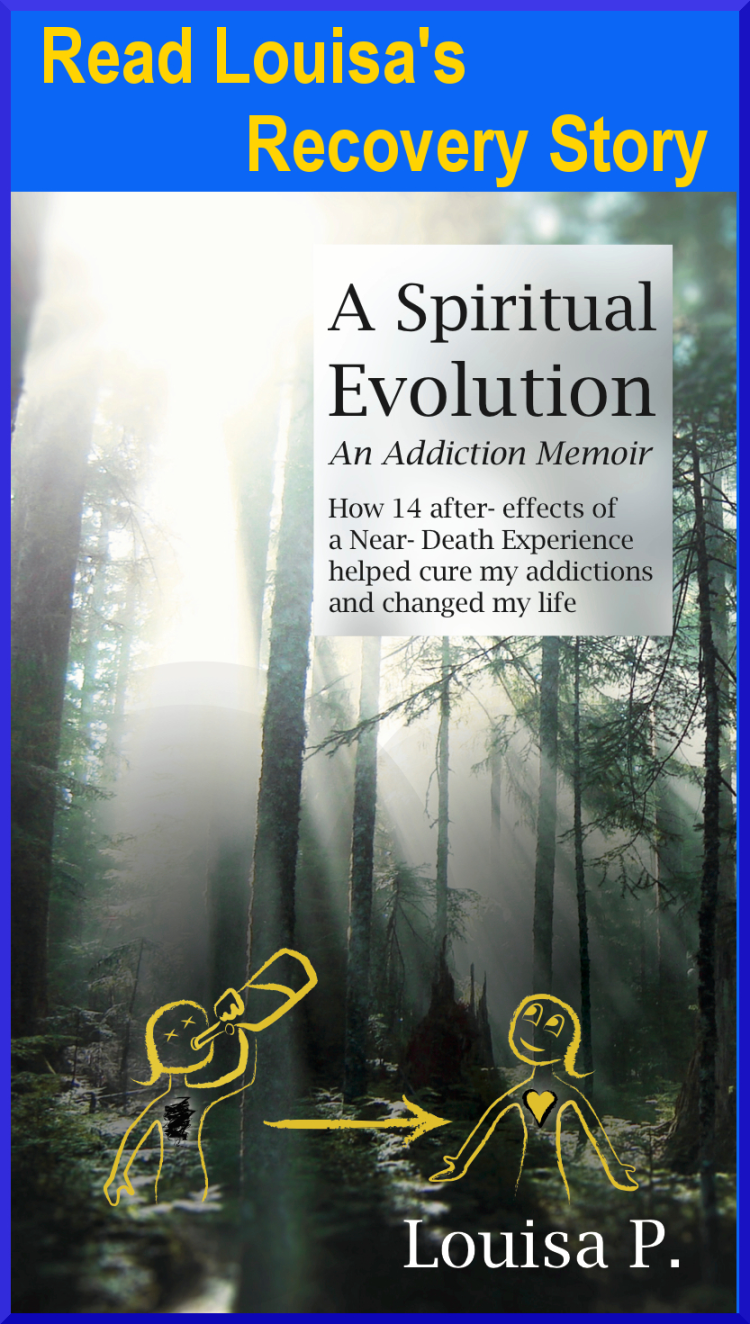
While a bartender worked at CPR and I began to look “all gray like a corpse, nothing like yourself…” according to my date, my consciousness shot off on a vivid journey.  With keen awareness I traveled from sky to sea to beach to ancestral house before getting sucked through a window and over the dazzle of sunlight on the sea’s surface to plunge right into the heart of the sun. There I was subsumed by a light of love beyond measure.  A strong presence was with me, beaming love through me, until abruptly it told me in no uncertain terms that I wasn’t done and couldn’t stay – after which cut the light to total blackness.  (If you want the whole story, you have to buy my goddamn addiction memoir, but only if you’re also psyched to read about alcoholism and romantic obsession, because that’s mostly what it’s about.)

Anyway!  As a result of whatever happened that night, the boundaries of my consciousness changed.  I knew nothing of it.  I was a smug atheist who’d never heard of Near Death Experiences or any of the related terms now commonplace in popular culture.  What had happened didn’t fit with my scientifically based definition of reality, so I put it behind me.  Over the next decade, however, two more distinctly impossible experiences forced themselves on me.  I didn’t want them!

LightI didn’t much associate my secret paranormals with whatever people called God.  To me, that concept involved a personification of divine power – God as a super-boss.  I rejected it and still do.  But once I got sober, once I opened to a higher power and began to pray, the rate of paranormal “knowings” increased dramatically.  Finally, in 2003 I had an astoundingly specific clairvoyant dream, and in 2004 was shown the break in my life the dream had foretold.  It was a such an undeniably personal, otherworldly message that, at 9 years sober, I broke down, sobbing with gratitude, and finally surrendered the last of my reservations: god, I finally knew beyond faith, was an energy infusing everything that lives. Spiritual energy is a force every bit as real as gravity or electromagnetism – forces nobody personifies or insists we capitalize!  That’s why I refer to it as “god.”

In 2010, after accidentally and embarassingly reading a friend’s mind regarding a romantic weekend with his wife, I went ahead and Googled “Near Death Experiences.” I eventually found a Seattle group that meets monthly to hear a speaker tell his/her Near Death story (Seattle IANDS).  A year later, in 2011, I finally got myself to attend one of those meetings.  And in January of 2012, I was the speaker.  I discovered, just as in AA, that many experiences I’d long believed unique to me were actually quite common among this group.  We speak brightly of our dying experiences: “I was thrown 20 feet from the car,” “I could see the surface but knew I’d never reach it.”  Some of us talk about foreknowing events or catching an afterglow in much the same way AAs talk about the phenomenon of craving.  Though I never saw my guardian angel, hearing descriptions from those who did (and a few who saw other angels, though they’re reluctant to use the term) has helped me understand who/what was with me in the light.

I can’t talk about any of this in an AA meeting.  The purpose of AA shares is to allow fellow alcoholics to identify, to hear their own problems and psychic pain described by others, so they’ll be attracted to the solution of the 12 steps.  No one imposes their beliefs on someone else – at least, not in theory.  And the fact is, most newcomers are already freaked out by the word “God” in the steps – as I was at first.  They’re worried about cultish, woo-woo weirdness.  To hear someone talking about having left their body or experiencing paranormal after-effects would send them screaming from the church basement!  It would help no one.  And though AA friends came to hear my IANDS story, most assume Near-Death meetings must entail morbid rehashings of the close scrapes we call death, mixed with woo-woo chicanery.

I can’t talk about alcoholism at IANDS meetings, either.  For NDE folks, the strangest part of my story is not that I left my body, journeyed, etc., but that I basically killed myself by snorting everything I could get my hands on whether it was working or not.  Why would such a clown drunknice person be so self-destructive?!  They assume AA meetings are penitent gatherings where we rehash old drinking stories and renew our determination.  They express sympathy.  The idea that we’re happily united in a daily immunity granted to us by a higher power, that we laugh at our own sick thinking, that we’re actually grateful for the program we live by – they just don’t get it.

Every person’s beliefs develop in the crucible of their family, social group, and culture, to be either confirmed or challenged by individual experience.  Our culture at large tends to present religion versus atheism as an exclusive dichotomy, and many of us internalize that idea.  My family and our academic community chose option B – atheism.  For some time, I straddled belief in a higher power at AA and dismissal of the “weird things” that had followed my NDE.  It took 30 years of personal encounters with physically inexplicable happenings to push me to the point where I could discard my old truth and seek out people who shared my otherworldly experience.  I’ve since spoken at the Seattle Theosophical Society, been interviewed on a radio show (podcast here, starts at 15:00) and appeared in a documentary film /future television show.  I am all in.  But to be honest, part of me still cringes to hear, for instance, my radio talk sponsored by “Hugz from Heaven” – really?  Have I gone that daft?

I often wish I could help others in AA who struggle with the god aspect to see the wide array of spiritual paths between religion and atheism, or even to discard the “God-boss” image in favor of the energy of love.  Though it can be frustrating, in meetings I say nothing of my NDE or its after-effects.  If it took me 30 years to accept my own experience, how the hell can I expect others to accept my words?  I leave them to their own ideas, and share mine outside the rooms.  Part of faith is accepting that those who want to hear – who, as I did, already share this truth deep within – will be listening.

scroll

1 Comment

Filed under AA, Afterlife, Near Death Experience, Recovery, Spirituality

Off the Beam – Head Static Returns

Sorry, there’s no inspiring blog this week because Louisa doesn’t have her shit together.  That’s right, I’ve wandered off the spiritual path and found myself befuddled in some remote, unspiritual bog surrounded by brambles and having just accidentally used my only map as TP.

Why am I so off the beam?  I guess because I’ve been deluged with work, something I kept praying for with those stupid Santa prayers that aren’t supposed work.  For the past few weeks I’ve been zooming around town meeting clients and editing like a mo-fo in between, so my eyes are all bloodshot and my poor brain feels encased in pantyhose.  Every now and then I feel a lurch of vertigo that would flare into a full blown panic attack if I couldn’t spot their wolf-cryin’ asses a mile away by now.  Hyperventilating, again!  In other words, I’m running on fear.

So, how does being off the beam show up?  Regression!  It’s ridiculous.  I get to go through high school all over again.  Take the other night, when I went to my mountain climbing group’s annual gratitude embarrassedbanquet, where the faces of the (cool kids’) Glacier Climbing Course I was once so active in have all changed for the younger.  I arrived late, so there were no seats.  I felt like a has-been.  But then my ego got a great idea to fix this: I tracked down two of the new leaders and said I’d be happy to deliver some of this year’s presentations if they needed someone – you know, sort of like Barry Manilow offering to perform at the Grammys.
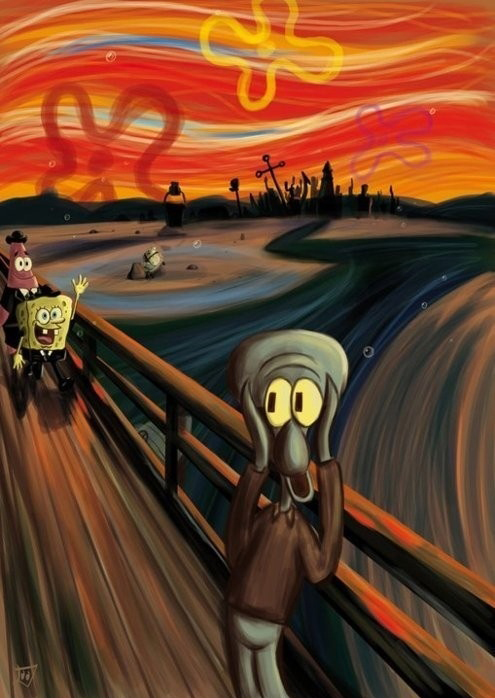


Or at least, so it seemed to me the next morning.  I was mortified.  With dozens of new grads able to present, why had I nosed in?  Ach!  What should’ve been dismissed with a quick “f*ck it” prayer seemed like a huge deal and colossal embarrassment.  My old buddies – wounded pride, concern with what others think of me, and self-loathing – stopped by for breakfast and hung out all morning.  We hadn’t seen each other in a while, so we chatted for hours about how pathetic I was, how dumb I must’ve looked – lots of productive stuff.  There was even a dark, dreary day plus some menopausal symptoms toThe-Scream set the stage.  Good times!

To knock that stuff the hell off when I’m in spiritual disarray seems next to impossible.  No matter what I tell myself, I’m back to square one, worrying about the same shit.  It’s like waving away a determined yellow jacket.

Contrast me in this tizzy with the Native American panhandler I talked to last week while the light was red at the Aurora Denny exit.  He described the “irony” of having felt lucky the day before to find a sheet of plastic so he could wrap his backpack against the rain, only to return from walking the car line and find it – everything he had – stolen.  “Who would do that?!” I asked, incensed.  He flashed me a toothless smile.  “Just somebody being a jerk,” he shrugged.  “I’ll be okay, though.  Today’s been a good day.”

This man’s acceptance blew me away.  He wasn’t drunk.  He was just unafraid of life with nothing.  Can I say that again?  Unafraid.  Of life.  With nothing.  Every bit as poor as Jesus or the Buddha, his outlook was brighter than the majority of us schmucks lined up in  traffic.

In only one area do I have that man’s caliber of faith, and that’s around my sobriety.  I know I’ll be okay, so long as I hang on to god.  No matter how frazzled I get, whether by small stuff or big stuff, this description from the Big Book’s pages 84-85 still applies:

“For by this time sanity will have returned. We will seldom be interested in liquor. If tempted, we recoil from it as from a hot flame… We have not even sworn off.  Instead, the problem has been removed. It does not exist for us… That is how we react so long as we keep in fit spiritual condition.”

How does that work?  I know that on one level, I have nothing to do with this gift.  As described in the Robin Williams post, I’m sober because of grace alone, for reasons I’ll never understand – a miracle that is never guaranteed.

Yet there is such a thing as underlying spiritual fitness, which offers grace a landing strip to show up in our Starry Night Skylives, even during tizzies.  Mine shows up as an understanding that I’m never in charge, ever, of anything – least of all emotions that come over me.  I’ve somehow internalized Step 3.  In the past, thoughts, emotions, and judgements that defined my reality amounted to an unacknowledged false god, one that used to tell me I could fix stuff with booze.  Through practicing the steps consistently, however, I’ve withdrawn my trust from those voices and given it instead to a higher power, a god of love.  Nothing that happens to me can shake that.  It’s in my bones, even when self-defeating thoughts ricochet around my silly brain.

If I live to be 100, I think I’ll always have episodes like this, when I transform into SUPER TWIT and anguish for hours over a visible booger or even an imagined visible booger.  I’m kind of glad about that: I’ll always be a fool.  Being a fool – freaking out about piddly-shit – is actually one of the most endearing aspects of being a fallible human being.  Part of me misses it already, and I’m not even dead.

I know I need to slow down, maybe even decline some work to make time for self-care.  I will.  But listen, my lovely alcoholic readers, I do want to add this:  No matter how busy or pressed for time, I always go to my meetings, meet with my sponsees, and pray all over the place.  No matter how wacky I get, I know these actions are my only recourse against the disease that wants to ruin my life.  On them, I never compromise, because if that monster ever escapes from my brain stem, it won’t compromise with me.

scroll.

POST SCRIPT, 2/8/15:  It turns out I was asked to give a presentation on gear to this year’s Glacier Climbing Class, which I delivered yesterday.  And out turns out it did prove valuable to climbers both new and old, for which everyone was grateful.  Who knew?

Leave a comment

Filed under AA, Recovery, Sobriety, Spirituality

Hitting Bottom, Remembered

Looking back can make us grateful

I grew up in an alcoholic home where we could never say, “Dad’s drunk again,” because it might sound like we didn’t love dad.  And truly we all loved Dad, so we showed it by keeping silent.

I grew up in an alcoholic home where we couldn’t say, “Mom’s frustrated with Dad’s drinking,” because it might sound like Mom didn’t love Dad.  And we all knew Mom loved Dad, so we respected them by keeping silent.

I grew up in an alcoholic home where I could never say, “I’m afraid I’m not good enough to be loved,” because it might sound like there was something wrong with me or my family’s ways.  I knew I needed to do what others wanted in hopes of being loved, so I stayed silent… until gradually I forgot how to know what I felt.

As a child I grew to resemble an android navigating templates of what I thoughtstar-wars-stormtrooper-deluxe-statue copy others wanted me to do.  Inside my polished shell, a sea of vibrant emotions and passions raged, a crazy frothing of all different colors longing to get out.  I’d been taught to censor whatever didn’t fit the judgements my family held, but as my body grew up, forbidden urges sometimes burst out of me, shameful and bizarre compulsions that frightened me.  I hid them.  There was no way to integrate my outer good girl and that inner chaos – no way that I, at least could see.

Until here came the magic of alcohol.  Alcohol dilated the zillion pores in my shell-like skin so the truth of me could gush out into the world, like it or not!  Alcohol dissolved those walls of shoulds and musts, blasted to hell that relentless rubric of inner criticisms.  I flowed; I fit; I flourished!  Soon life had only two states: drinking, and waiting to drink.  Naturally, I could never say, “I’m ill with alcoholism,” because that would cast aspersions on the one thing that made life livable.

Plus it would throw light on a family disease, declare that my father and I were equally ill.  And the song we all knew, the chorus we sang whenever we still gathered, was all about how nothing was wrong with any of us – though plenty was wrong with outsiders.

But, as the years passed, my android shell, because it was made of unnatural materials and not grown from within, began to obsolesce – to fall apart.  More and more it cracked at the joints – my elbows, my waist – so that my inner mess, which had churned around unsupervised through ghostbusters_25012the years until all its vibrant colors merged to a muddy ugliness, began to spew on the sensible arrangements of my life.  It smelled bad.  It hurt people.  But I told myself, “Ah, well!  Everybody spews!”

Now the mess for alcohol to clear got heavier – landslides filled with large, trashed objects it had to plow aside to reopen the flow.  And given that it had only masqueraded as love, but really grew from self-hate, it began to slack in its duties. The magic grew thin.  Ludolf_Bakhuizen_-_Ships_Running_Aground_in_a_Storm_-_WGA01131And so I hit bottom.  The keel of my consciousness ran aground on the rock of despair.  I’d tried all I knew with all that I had and ended here: failure.  Existence sucked.  And Option B, to abandon ship, began to seem the saner solution.

But, wait…  Wasn’t there something I’d forgotten? Hadn’t there been – before the android sealed me off, before my passions turned putrid – something?  So distant a memory but faintly recalled – that once there was a time when I believed in… goodness.  And now, if all roads were marked with skull and crossbones but one, a path signed “Goodness →,” would I follow it, no matter how cliché and pointlessly breakfast-cereal-box-maze-like it looked?

AA~?!  Me, going to AA?!  Ha!  What a grim joke.  These people’s problems were generic.  Mine were unique.  And yet, among all these stupid, brainwashed nobodies who failed to see the world rightly as my family did, around these cultish zealots with their scrolls of numbered steps and traditions on the walls, was I just imagining it, or was it in the air?  Goodness.  And maybe from under the floorboards, subsonic, maybe diffused in some elaborate code these people sprinkled through their words, that ancient, sacred radiance I’d long since dismissed as worthless: Love.

A plant with just one dangling leaf may still rejuvenate.  Slowly, the love from these strangers permeated the cracked husks of my old armor.  “You can lay that stuff down,” they smiled. “If you work these 12 steps and stand up in honesty with all your deformities and wounds exposed, the sunlight will heal them.”

Wonderland Trail

Sunlight?!  Of course I didn’t believe in sunlight!  So what if I’d never even tried looking up! I saw stuff because it was there – not because of some hokey-ass Light Bulb in the sky!  And yet, reluctantly, one piece at a time I shed those dented old plates and cuffs meant to protect me.  Then I felt it: something warmed my skin, my face, and before I’d even realized it, my heart – sunlight!  Colors revived, my sores healed, and the textures of the world that I’d been numb to for so long became vivid.  I remembered how to play.

So began a lifelong inner expedition that continues to this day, bumbling around the dim passageways of my consciousness, discovering how I really feel, what I really love, and who I really am – each step illuminated by my own small lantern of sunlight, which I need to recharge daily.  In the rooms of AA, Al-Anon, and ACA, I meet people who grew up in the very same house I did.  Imagine that!  They’ve given me field guides to flora and fauna to help me to identify those strange creatures I come across in my psyche, some older than I am, spawned by my ancestors.

My father died in regret, and my siblings text that I’m wrong – but I know joy, and I know its source.  I’m now loved freely in a raucous, imperfect new family where I like to sing out loud – as you may have noticed!

This is the story I tell in my addiction memoir.

4 Comments

Filed under AA, Alcoholism, Recovery, Sobriety

Step 9: Mending the Past

I’m sorry!  I’m sorry!  Who the heck wants to read about amends?  Nobody!  I don’t even really want to write about them, but I’m going to trust, and ask you to trust, that taking a good look will reveal their beauty.

Angry-WomanSo here’s the quandary.  You may hear people in the rooms kicking around the question: “Who are amends for?  Me or the other person?”  I recall about a dozen years ago hearing a woman announce with contempt, “I’m not making this amends for her!  I’m doing it for me!”  Something sounded wrong in that, but I wasn’t sure what.

Sure, the steps are our pathway to freedom.  But they work because they’re a pathway to change, not self-help.  Didn’t we try every way of helping ourselves when we were drinking, doing whatever our monkey-brains thought would work best?  And what happened?  As I seem to recall, most of us ended up alone and fucking miserable.  The fact is, self-help refers to motivational adjustments to an otherwise successful model of living, such as, “I’m going to exercise more!” or “I’m going to procrastinate less!” not, “I’m going to quit submerging my entire existence in a cesspool of self-disgust caused by senselessly poisoning myself on a daily basis!”

So, no.  We don’t need self help.  CAM00400What we need is a transformation, a psychic change beyond anything we could engineer ourselves that redirects our energy toward maximum usefulness to god and our fellows.  If Step 3 led us to stake the best 4th step inventory we could, if we’ve read it to a sponsor who’s made clear our faulty thinking, then something has shifted in us.  In Steps 6 and 7, we opened to asking god to render us better human beings.  Now we revisit our past in this new light.

When my sponsor asked me to generate compassion toward those I’d resented, it felt like she was asking for some crazy move of spiritual gymnastics.  But really, all I had to do is acknowledge that I’ve fucked up many times myself, out of fear and pitfalls in thinking.  Let’s say I was trying to protect my beloved A when I accidentally nudged B into the boiling oil.  “Doh!”  Or in reaching after that prized X, I forgot I was supposed to hold Y and let it fall into the mile-deep chasm.  “Shit!”  Maybe I heard the enticing, faint calls of  J through the tall grass and, in stepping toward them, crushed underfoot the tiny, delicate K.  “Oh, no! Poor K~!!”

Such botched moves fill at least 75% of my addiction memoir; they’re the stuff of which all our deepest conflicts are made.  That’s why my double backward flip in the pike position comes about as I accept that you, like me, were doing only the best you could.  Now watch this move in slo-mo: I decide to cut you the same slack I wish others might cut me – the slack to be human.  It may take me days or years to get there, but eventually, your wrongs become moot.  The focus closes in on the behavior I exhibited toward you.  Would I want those wrongs carved on my tombstone?  Do I want to carry them until then?

Oops!
Remember, though, that 9 comes after 8, and “became ready” refers to more than just working up nerve.  In early sobriety, I thought I was working Step 9 by writing impulsive letters to my ex’s and telling them way more than they needed to know. By contrast, when I worked Step 8 in earnest, my sponsor wrested my ways of thinking from old to new.  For each person on my list, she crossed out and scribbled notes all over the accounts of harms I thought I’d caused, eliminating 75% of what I’d thought was the issue.  Each time she had me…

1) highlight ONLY those behaviors and attitudes the person was well aware of, to avoid causing further harm

2) boil down the harms via the rubric of selfish, dishonest, thoughtless/inconsiderate

3) come up with one specific example to illustrate each

I was not to apologize.  Rather, I was to articulate the behavior I’d shown and the ways it was wrong, and to ask what I might do to set it right.  She said, “It’s like you left a turd lying somewhere in this person’s life.  You swoop in, say, ‘I believe that’s mine!’, scoop up the turd, and ask if you got it all.”

doveAmends don’t mean you become buddy-roos with the person.  And some may continue to lob fireballs at you, requiring you to maintain a safe distance.  But when I’ve sat down with people from my past and owned, often with my voice shaking, my very human fuck-ups, I’ve witnessed in almost every one of them the blossoming grace of compassion.  Many have spontaneously confessed fuck-ups of their own.  And sometimes, in the pool of truth we shared for those moments, I would behold in them a dignity and beauty to which our old conflict had blinded me.

The 9th step means taking our new way of life out into the world and trusting god in a free fall.  As I once heard it put: “I make amends to restore that person’s faith in basic human decency.  And when I do that, I restore my own.”


peace

1 Comment

Filed under AA, Recovery, Sobriety

Not-Enoughness

A worthy life is simply one of honesty with oneself and god…

.
I go through phases when I wake up almost every morning with a gut-level anxiety, a feeling of guilt that I’m somehow not doing all I’m supposed to, shame for lacking “success,” and alarm that I’m getting old at a mile a minute.  My whole life, the feeling claims, is a failure.  Before I’ve even sat up in bed, this “not-enoughness” jabs at my mind, perfect lifeprompting vague solutions that pop up like slot machine combos:  “Earn more!”  “Lose weight!”  “Socialize more!”

Whether my not-enoughness, a default setting from childhood, will ever go away I don’t know.  What’s changed is how I respond to it.  Today I understand that it’s just a feeling launched by the part of me that’s still broken.  I return its topspin tennis serve with a quick prayer: “God, please take this away and guide my thinking today.”  While I put on my morning clothes and weigh myself, not-enoughness still chides at me.  I dismiss it automatically and try to focus on the moment: gift of what I am doing, the good fortune of where I am, and the blessings of my reality.  I commit to loving what is instead of lacking what isn’t.

The power for this practice comes from my god, a connection nurtured through many years of working all 12 Steps.  Back when I relied on active drinking and codependency, I believed not only the not-enoughness, but the solutions my mind proposed.  My high school refrain, “Excel more!” gradually morphed into “Be more liked!”  If I could just win your admiration, I’d overcome not-enoughness.  Sans alcohol I was terrified to converse with people, not realizing the main obstacle had to do with the coordinates of my head, which was firmly lodged up my ass.  I could scarcely hear what you were saying, so preoccupied was I with self: what was up with me, what I thought you thought of me, and what I might say to impress you (usually figured out after you left).  Sober socializing was, in short, torture.

Drinking, of course, fixed all that.  It made me smart, funny, beautiful, and worthy.  Glamour drinkSure, I was still biding my time while you talked, but who gave a shit?  I’d get my turn to blab soon enough and, whether you were impressed or not, I, at least, was fine with whatever the fuck I’d just said.  The drunker I got, the wider my range of just fine became.  Maybe you didn’t care to hear about ex-partner’s sexual foibles, but fuck it!  Lissen!  It’s hilarious!

loufinger

Moi, back in the day

The infatuation addiction detailed in my memoir was really just a souped-up version of that same dynamic, with all my need concentrated on a chosen, magical person whose admiration (or even company) worked like cocaine.  Sadly, these worth-seeking projects frequently morphed into real relationships – meaning that the magic one, by committing, lost all magic.  Subsequently, when attacks of not-enoughness struck, I had no “soon things will be different!” to counter it with.  I could only muffle its penalty buzzer with more booze and great ideas.  All I’d end up with was a wreckage of mishaps, huge amounts of money blown, and a hangover like a brain full of puss.

Sobriety has by no means been a picnic.  I spent over two years dry and tortured – fleeing the conversation clusters after meetings with mutters of “fuck ’em!” – before I finally worked the steps and became teachable.  Slowly teachable, that is: I spent nine years in a codependent cocoon focusing all my anxious attention, from the moment I woke, on fixing my partner’s “problems” and ignoring my own.  Really, that morning gong of not-enoughness did not emerge for me as a distinct phenomenon until I found myself waking up alone.  “What is this feeling?” I finally asked.

Self-knowledge may not save us from drinking, but it sure helps with other problems!  The steps have transformed my economics of worth.  The only worth I can feel, I understand now, is self-worth.  I am the only agent who can generate that rebuttal to not-enoughness, no matter what anyone else may think of me.  God has shown me how to cultivate self-esteem by doing estimable works.  It has guided me to grow a loveable life by loving my life.  It has taught me to connect with others more through my heart than my words.

Despite what the zillion ads we’re bombarded with would have us believe, a worthy life is simply one of honesty with oneself and god – whatever that may look like for the individual.  For me, it means I do the best I can with what’s right in front of me Goodmanand trust god that whenever a suitable door approaches, god will not only alert me, but open it.  Why did I start up the small business I run today?  Doors would not open to the 500+ jobs I tried for following my layoff, whereas with just one little ad, the business practically threw itself at me.  Like incremental promotions at a firm called Happiness, Inc., small choices I’ve made have gradually steered my life away from money and prestige toward more time and freedom.  Thrift at home is part of my work.  True, I drive a beater and shop at Goodwill, but I also get to walk my 13-year-old son to school each morning, laughing about this and that.  I get to write instead of wishing to.  I see friends.  I take loads of ballet classes, raise cute hens, and execute my own half-assed home repairs.  Overall, my life today reflects the truth of who I am – a plenitude of what I value and a shortage of what I don’t.  That’s the true test.

In fact, by the time I go to bed each night, I’m overwhelmed with gratitude for my beautiful, rich, love-filled life.  My only prayer is, “Thank you, god, for all of it.  I love you.”

Tomorrow, I know, it all begins again.

imagesShare if you like ~ ↓ ↓

8 Comments

Filed under AA, Alcoholism, Codependence, Drinking, living sober, Recovery, sober, Sobriety, Twelve Steps

The Courage to Surrender

Courage: the ability to do something that you know is right or good, even though it is dangerous, frightening, or very difficult.
—————————————————————————-Macmillan dictionary

.
American popular culture tends to associate courage with kicking ass.  Most of our movie heroes don’t need to overcome fear because they don’t feel any.  All we see from them is the anger and righteousness to smash the bad guys.  This invulnerable version of courage is reflected in Dictionary.com’s definition, as that which “permits one to face Die_hardextreme dangers and difficulties without fear.”

But what if fear is essential to courage?  That is, what if courage involves not just outward action, but the inner struggle to overcome all that holds us back – confusion, doubts… and fear?  In that case, courage means acceptance of our vulnerability, even our weakness, as well as the faith to move beyond it.

What’s this got to do with alcoholism?  People outside the rooms often assume recovery is about the ego’s type of courage: we’re sober because we’ve kicked addiction’s ass.  We conquered that mofo by being strong, disciplined, and – my favorite – taking control!  But there’s a lil’ problem with that.  Where drinking’s concerned, I can pull off none of those things.  I drink myself shitfaced.  That’s just what happens.  No matter how angry or righteous I may feel toward addiction, it’s the only one doing the ass-kickin’.

HOW coinOn the other hand, what I witness and learn in the rooms of AA is another form of courage – the courage to surrender.  Those two words don’t match up in most people’s minds, but for those of us in recovery, they have to.  When we tell ourselves, “I’m gonna beat this thing!” we seem to end up drunk.  But if instead we surrender, something inside us begins to shift, and we develop courage through the three essentials of recovery: Honesty, Open-mindedness, and Willingness.

Honesty
Nobody wants to be an alcoholic.  But even more, nobody who’s known only that way of life can imagine surviving without alcohol – a terrifying prospect.  I don’t know a single person who came to their first AA meeting without half a mind to bolt out the door.  What keeps us there is loyalty to certain moments of clarity – also known as honesty – when we either recognized death on our not-so-distant horizon or, in subtler cases, realized we could no longer endure the mental contortions necessary to sustain denial.  To hang onto that insight despite all the disclaimers our disease flings at us requires courage.

What’s more, every instinct cries out against admitting to a room full of strangers, “I cannot stop drinking and I don’t know how to live.”  Such words may not be voiced at our first meeting, and for some they never are. But alcoholics committed to recovery find the courage to speak these truths, no matter how difficult or painful.  Hearing them still brings tears to my eyes, even after almost 20 years.

Open-mindedness
Alcoholics tend to abhor the idea of groups.  We like to see ourselves as fiercely independent and temperamentally unique, so we’re repulsed by anything that smacks of conformity.  We also can’t stand the prospect of talking to others without a few drinks in us.  The last place we ever thought we’d spill our guts is a goddam cult, meetingwhich is what we’ve been calling AA, between swigs, for years.  Who wants to crawl in and, stone cold sober, ask for help from a group they’ve talked nothing but shit about to anyone who’d listen?  Nobody!  But we do it anyway, strange and frightening as it is.

Neither do I know a single newcomer who read the Twelve Steps on the wall and thought, “Oh, boy! That’ll help!”  The steps seem useless and irrelevant – some ‘hokey-pokey’ dance involving a magic Easter Bunny that has NOTHING to do with our very huge and real problems.  When alcoholics move ahead with these steps despite the certainty that they’ll never work, they’re stepping out on pure faith, reaching for the possibility of other ways to experience life.   The disease continues to offer them “Fuck Everything Free!” cards, but they decline to take one.  To turn away from everything familiar toward something unknown and intangible just because it feels “good or right” takes – you got it! – courage.

Willingness
The road to recovery is lengthy and, in places, steep.  We hear early on, “There’s only one thing you need to change – and that’s everything!”  Not only does that sound creepy, but “change” here is a verb – meaning we have to make it happen.  To find and work with a sponsor, write and read inventory, show up and listen at meetings, make amends, and eventually to sponsor and be of service to others – all these efforts require a willingness we’ve formerly lacked.  Our degree of willingness may wax and wane over the years, but if we steer by what we “know is right or good, even though it is… difficult,” we gradually come to call it by a different name: maybe god’s guidance, or maybe loving-kindness.

scroll.
Whether in terms of the battlefield or bottle, surrender means accepting as reality that which we’ve been fighting to deny.  But while a soldier surrenders only once, for the alcoholic, surrendering to one aspect of reality just moves us to a new perspective where we have to repeat the process.  Once we accept that our lives are unmanageable, we have to look at our relationships, which points us to our selfishness, which alerts us to our fear, which signals us to look at our connection to god and what it truly means to us.  The greatest paradox is that courage gradually leads us to our spiritual source, and yet it was that source (aka god/HP/ loving-kindness), once we opened the channel, that granted us the courage to change.

surrender_flag


Leave a comment

Filed under AA, Alcoholism, Drinking, living sober, Recovery, sober, Sobriety, Twelve Steps