Category Archives: Addiction

The Wisdom of the 12 Steps

Context:
Men and women drink essentially because they like the effect produced by alcohol… They are restless, irritable and discontented, unless they can again experience the sense of ease and comfort which comes at once by taking a few drinks…
Alcoholic Anonymous

A dry alcoholic – one who’s merely ceased drinking – is a miserable one.  I certainly was.  I needed booze.  For over 15 years it served as my medicine, my magic doorway to relaxation and social confidence.

Throughout my first two years sober, intense nervousness and insecurity made me miserable.  Tension ran me so ragged that my body eventually decided, “Can’t do this anymore; we’re shutting down” – and I sank into a depression no Zoloft could touch.  I had not worked the 12 Steps.

Once I worked them, I discovered lasting relief.  The unbearable uptightness of being doesn’t vanish in minutes as with as with alcohol, but by slow degrees as the steps change the way we view ourselves and the world.

A book called The Art of Happiness recently fell into my hands.  Quick story: after meeting a young Saudi Arabian friend for a farewell coffee before she returned to her country, I took her to my favorite Tibetan gift shop nearby.  It stands about a block from where recently a huge natural gas explosion obliterated three businesses and shattered every storefront window for blocks, so they’re still boarded over.  All except those of the tiny Tibetan gift shop.  It’s owner, a likewise tiny man, is constantly cheerful.

“And why didn’t your windows shatter?” I asked him with a half-smile.

To what was clearly a frequent question, he shrugged: “Mine shattered in a past life.”

Dalai-Lama-Nantes

I chatted about having heard the Dalai Lama address a university crowd in a crammed sports arena about ten years ago.  “What you could see was that he was really having a great time with it.  The school was giving him this honorary degree, so he was supposed to be all solemn, but he kept making these silly asides and cracking himself up.  He was just too happy!”

The little shop owner handed one Dalai Lama book to me and another to my Muslim friend.  “You want these,” he said simply – and offered us a screamin’ deal.  We three corners of the world smiled at one another.

The wisdom of the ages for how to live life is, in my opinion, distilled in the 12 steps of AA.  That’s why every suggestion from the Dalai Lama in this book (penned by an American psychiatrist dude who interviewed him ) aligns with their principles – though his words are based on 2,500 year old teachings and ours on a 1939 text by a New York stock broker, an Akron proctologist, and 100 newly sober drunks.

  • Trust in the innate goodness of all beings – oneself included.  Though in the wake of two world wars many Western anthropologists jumped on the “humans are intrinsically selfish, aggressive assholes” bandwagon (African Genesis, The Selfish Gene), Buddhist traditions maintain the opposite.  The Dalai Lama points out that “a calm, affectionate, wholesome state of mind has beneficial effects on our health” not just emotionally, but physically, implying it’s how we’re designed to operate.  The 12 steps  are founded in this same assumption, that beneath our self-centered, erratic behavior lies our truer nature.  We look to our higher power to “restore us to sanity” via the spiritual cleansing the remaining steps provide.
  • We cause much of our own suffering. “In general, if we carefully examine any given situation in a very honest and unbiased way, we will realize that to a large extent we are also responsible for the unfolding of events,” says the Dalai Lama.  This is the heart of steps 4 & 5, where, arriving at the fourth column of our inventory, we identify our part in what happened.
  • Happiness differs from pleasure.  “True happiness relates more to the mind and heart.  Happiness that depends on physical pleasure is unstable; one day it’s there and the next it’s gone.”  This quote correlates to a passage from Step 7 in Twelve Steps and Traditions:  “Never was there enough of what we thought we wanted.  In all these strivings, so many of them well-intentioned, …[w]e had lacked the perspective to see that character-building and spiritual values had to come first, and that material satisfactions were not the purpose of living.”
  • Happiness springs from compassion.  The Dalai Lama emphasizes repeatedly, “We weren’t born with the purpose of causing trouble, harming others.  For our life to be of value, we must develop basic good human qualities – warmth, kindness, compassion. … Genuine compassion is based on the rationale that all human beings have an innate desire to be happy and overcome suffering, just like myself. And, just like myself, they have the natural right to fulfill this fundamental aspiration.”  This view lies at the heart of steps 8 and 9.  When we make restitution to former rivals, we go to them in this spirit of compassion.

compassion

  • Service to others is our purpose.  “There is no guarantee that tomorrow at this time we will be here…  I believe that the proper utilization of time is this: if you can, serve other people, other sentient beings.”  This idea lines up with a passage from the Big Book not quoted enough, probably because it runs so counter to self.  “At the moment we are try­ing to put our lives in order. But this is not an end in itself. Our real purpose is to fit ourselves to be of maxi­mum service to God and the people about us.” (p.77)
  • Recognize suffering as a teacher.  Dalai Lama: “By… eliminating afflictive states of mind such as craving and hatred, one can achieve a completely purified state, free from suffering.  Within a Buddhist context, …[pain] serves to encourage one to engage in the practices that will eliminate the root causes of suffering.” Here’s the same idea in AA’s 12 & 12:  “Under these conditions, the pains of failure are converted into assets. Out of them we receive the stimulation we need to go forward. Someone who knew what he was talking about once remarked that pain was the touchstone of all spiritual progress. How heartily we A.A.’s can agree with him, for we know that the pains of drinking had to come before sobriety, and emotional turmoil before serenity.”

There are many more parallels, but I’m out of room.

Thanks to the steps, ease and comfort come to me now because I enjoy the world I live in, not because I’ve vanquished it for a few hours.  But there’s still a long way to go.  For instance, the Dalai Lama says he never feels lonely or wishes he could marry, whereas I still get lonely quite frequently and am codependent as hell.  But that’s okay: it’s progress,  not perfection – right?

scroll

4 Comments

Filed under AA, Addiction, Recovery, Sobriety, Spirituality, Twelve Steps

Six Reasons I “still go to those meetings”

Sometimes if I share that I’m 21 years sober, people unfamiliar with AA will ask: “You don’t still go to those meetings, do you?”

The answer is, hell yes!  Yes, yes, YES!!!  And I hope I always get to!

The fact is, I’m talking about something completely different than they are.  They’re thinking of whatever bullshit AA they’ve seen on TV and in movies.  Yuck!  The actors always use this solemn, self-deprecating tone of confession, or else they blurt out horrific embarrassments that cue mindless laughter.  I’m always angered when I see these depictions.  They have nothing to do with the AA I adore.

Here’s a photo of my most recent AA meeting (that preserves anonymity):

Tiger AA

We’re all former loners and shy people who’ve hiked to the top of 3,000′ Tiger Mountain for a meeting that happens there every Sunday morning in all kinds of weather.  Coffee’s in the middle – people bring big thermoses – and treats of every description, from lemon bars to fresh baked calzones, circulate in plastic containers.  Why hold an AA meeting up in the mountains?  Because it’s fun!  Because friendship, exercise, nature, and recovery are all great things!

Last week before my old homegroup, a friend and I met downtown for coffee, which was tremendous fun.  The two of us differ drastically (he’s half my age, Korean-born, and hip), but because of our shared disease and the way of life that cures it, “there exists among us a fellowship, a friendliness, and an understanding which is indescribably wonderful” (17).

When this friend, back from relapse with about a year sober, chaired the meeting of 150-200 recovering drunks, he called on a young woman who raised an interesting question.  She said, “I don’t understand why, even though I have 11 years sober and I’m a yoga instructor with my own spiritual practice and I read spiritual books and meditate and pray, I still get crazy if I go too long without a meeting.  Why is that?”

Answer: Because she’s still an alcoholic.

Six Reasons I’ll Always Go to Meetings

  1. Treating fear and ego: Alcoholism is a dis-ease of maladjustment to life, a suffering in selfhood and social interaction that we tried to alleviate with a dopamine-boosting neurotoxin – until that strategy began to kill us.  But even after we’ve stopped drinking and worked the steps, whenever that maladjustment crops up – whether as anxiety, resentment, or self-loathing – ego volunteers (“pick me! pick me!”) to fix it.  Ego puffs us up as “special,” turning us away from god and love, which brings on all the old feelings.  In meetings, as we connect via others’ shares, we remember the common humanity our stepwork revealed.  Hearing others lay out their inner experience, a privilege we find nowhere else in our culture, reopens our hearts.
  2. Reminders of what it’s like out there: Only in meetings do I witness this story in a way I can’t doubt: “I was doing well so I tapered my meetings.  I decided I had my act more together now so I could drink normally, and I did great for a couple weeks: I’d have a drink or two and stop.  But then it took off, worse than ever, and I had no brakes…”  The person isn’t just saying this.  You can see it.  You can hear it.  My friend Carl came back a near skeleton.  Others end up in the psyche ward.  And some just plain old wanna die.
  3. Chances to help others, to be of use:  Meetings give an opportunity for service work, whether by making the coffee or reaching out to someone who’s new or hurting.  It’s a spiritual axiom that when I give, I get.
  4. Learning from others: At almost every meeting, myrolodex internal Rolodex of AA wisdom gets updated with cool stuff – like this Rolodex metaphor!  Last spring I learned of Drop the Rock, a great book on Steps 6 and 7.  A month ago I heard the excellent term “awfulizer” for that part of my mind that jumps to worst case scenario.

  5. Laughter: Succinctly stated truths of experience we’d thought to be ours alone are what drive all great stand-up comedy.  My fellows are fuckin’ hilarious.  And laughter heals.
  6. Love, love, love:  At that big meeting, another friend responded to the young woman’s question about why we need meetings:  “It’s the love. This room is full of it.  We know each other, we love each other.  We’re family. We’re like a good mafia.”  He pointed out people here and there, naming memories that connected them.  To my friend, the chair, he said, “We saw you when you were out there, man, and it hurt my heart.  You were ridin’ your bike, you had this big ole abscess on your arm and your eyes were dim and you’re all like, ‘It’s cool!’  But we knew it wasn’t.  I’m so glad you made it back, man!”

Threads connected me, too, to so many in that room.  Over there was the young woman with multiple sclerosis I called from a parking lot in a panic at my cancer diagnosis, who comforted me and has miraculously cured her own symptoms.  Here was that wise-ass guy I thought would never make it, whom I just saw at Starbucks reading the Big Book to a teenage junkie – also present.  That suicidal girl I sat down with on those steps twelve years ago, who now has a beautiful marriage and toddler and sometimes cuts my hair – I sent her a smile.

rainbow_heart

As for the “good mafia” part – it’s true we take care of each other.  I’ve edited cover letters, resumes, and financial aid requests that helped people move ahead in life.  Alcoholics have built my deck, given me (amazing) facials, fixed my car, rewired my home, split my firewood, built my website, changed my locks, fixed my sink, and more – much of it for free.  And what’s more, all borrowed when I stood atop the 14,380′ summit of Mount Rainier the first time were my ice axe, crampons, helmet, harness, gaters, shell pants, and goggles – from alcoholic climbers.  Who else does that?

We’re not drunk.

We’re not dead or wishing we were, as we did for years.

Because the truth is, alcoholism made only one mistake: it’s the same for all of us (Rolodex item #557).  By meeting and sharing our stories, we call out this disease on its cunning, insidious lies and take steps toward a higher power that kicks its hoary ass.

scroll

9 Comments

Filed under AA, Addiction, Alcoholism, Meetings, Recovery, Sobriety

The Power of Powerlessness

About a year ago, I used to frequently pass a billboard claiming thousands of “stubborn” men who avoided seeing a doctor would die that year.  This photo isn’t from my street, but our local billboard met with the same (funny) response:

Stubbornness


While I don’t know about the billboard’s claim, I do know when it comes to stubborn alcoholics, even more will NOT seek out a program of recovery this year, which is why in the U.S. alone 2.5 million years of potential life will be lost, shortening by an average of 30 years the lives of those 88,000 who’ll die.*  Instead, despite an inner knowledge that they’re addicted to alcohol, millions will (yet again) marshal their willpower to decide not to drink so much.  Never mind how many times such resolutions have failed!  Never mind that they and everyone they live with can recognize night after night that they’re drunk as usual!  They’ll simply refuse to accept the fact that they’re powerless over alcohol.

The Big Book tells us, “The idea that somehow, someday he will control and enjoy his drinking is the great obsession of every abnormal drinker.  The persistence of this illusion is astonishing.  Many pursue it to the gates of insanity or death.”**  But even more simply resign themselves to permitting the self-disgust, degradation, and pathetic caricature of chronic drunkenness to taint their inmost conscience and closest relationships for the rest of their lives.

Why?  Because they believe so ardently in the preeminence of their own minds!  They insist their brains have the power to enact choices of free will that, research increasingly indicates, they simply do not have.  For an addict, Emersonian self-reliance means, in fact, an imprisoning cycle rather than freedom of choice.

Gabor Maté, in his book on addiction, In the Realm of Hungry Ghosts, explains our predicament as follows:

We may say, then, that in the world of the psyche, freedom is a relative concept: the power to choose exists only when our automatic mental mechanisms are subject to those brain systems that are able to maintain conscious awareness…

Electrical studies of brain function show that… the interval between awareness of the impulse and the activation of the… impulse is only one-tenth to one-fifth of a second.  Amazingly, it’s only in this briefest of intervals that the [cerebral] cortex can suppress behavior it judges to be inappropriate. …[But] in the split second before the impulse emerges into awareness… the brain carries out what is called preattentive analysis… the unconscious evaluation of what [is]…essential or irrelevant, valuable or worthless.  The cortex is primed to select actions that will achieve [these] goals…

“Those habit structures are so incredibly robust, and once they form in the nervous system, they will guide behavior without free choice.”***

In other words, before we even know we’ve thought of having a drink, the brain has cleared the impulse.  The cortex may occasionally summon a “but wait!’ counter-insurgence, but more often the drink idea advances to GO and collects $200.  Maté calls this condition “brain lock.”  AA calls it the “curious mental blank spot.”  In either case, with an internal sigh of “oh well!” we take the drink (just this one time) and tell ourselves we decided to.Broken Brain

Our brains are broken.  They cannot be fixed.

 ~

I knew none of this when I came to AA wanting to die.  When I first heard the statement, “I can’t fix my broken brain with my broken brain,” so much became clear to me!  For one thing, I understood why I’d fought tooth and nail against “surrendering” to AA.  Who wants to admit she can’t trust her own brain?  No one.

The ego lays claim to omniscience, at least within ourselves: I know all about me.  My thoughts are accurate.  To admit a glitch in my thinking has rendered me unable to choose, unable to correct myself, unable even to see what I’m doing while I’m doing it – this goes against all instinct.  It’s on par with admitting mental illness or, as Step 2 forces us to swallow, insanity.

Yet a deeper part of me – my soul –  heard the resounding truth of that phrase.  I realized I had no answers, and that AA, no matter how foreign, offered one.

So I gave up.Step1

I admitted I was powerless.

And do you know what happened?  Miracles!

First, I quit drinking.  Second, I began to see I was maladapted to living, that I’d never developed the skills and insight to “manage” life’s choices.  Third,  I discovered it wasn’t too late to learn.

The remaining 11 steps reconnected me to the god of goodness I’d known in earliest childhood – to the nurturing powers of Love and divine wisdom.  To maintain contact with them, all I had to do was adopt the 12 steps as a way of life.

At first, mind you, that idea repulsed me, too.

Who wishes to be rigorously honest and tolerant?  Who wants to confess his faults to another and make restitution for harm done?  Who cares anything about a Higher Power, let alone meditation and prayer?  Who wants to sacrifice time and energy in trying to carry AA’s message to the next sufferer? ***

Not early sobriety Louisa!  I did these things because I had to.  Today I do them because I get to – because they fill me with freedom and fulfillment.  Drunk, I blathered about climbing Mount Rainier.  Sober, I did it – 3 times!  Drunk, I dreamed of writing a book.  Sober, I wrote it – check the sidebar!  Drunk, I longed desperately to be liked.  Sober, I love more people than I’d ever have believed possible.

Mount_Rainier_from_northwest

Mount Rainier: click to enlarge:  14,411′

THAT is power, guys.  It’s just not mine.

~

The most important 1st step is the one I take today, the one I re-experience every morning, every hour.  My compulsion to drink is 100 times stronger than my cortex’s resistance.  Alcohol kicks my ass, has its way, calls the shots, rules my mind.  But luckily, it’s the same for you!  Alone, each of us has no power to fight this thing.  We bloat, soggy and mollified in the dregs of our lonely cups.  But connected to god and fellow alcoholics through AA, we tap into a Power that lifts us above the limitations of our broken brains – to heights we never dared imagine.


scroll

Post to Facebook

* http://www.cdc.gov/alcohol/fact-sheets/alcohol-use.htm
** Alcoholics Anonymous p. 30
*** In the Realm of Hungry Ghosts, Chpt. 26

2 Comments

Filed under AA, Addiction, Alcoholism, Drinking, living sober, Recovery, Spirituality, Step 1, Twelve Steps

What Alcohol Did; What god Does

Pain happens, starting when we’re young. In our efforts to evade it, we suppress a whole array of feelings, turning away and denying them. But like an ignored roommate sharing the small apartment of our psyches, the pain lives on. It doesn’t grow up. It stays the age we were when the trauma happened. Countless negative beliefs systems sprout to position it – that we’re not good enough, that others will reject our true selves, so we need to strategize to please them.  We try.  Again we miss the mark and endure more pain, the rabble of negativity within us creating a ceaseless inner shitstorm.

It sucks – the shitstorm does.  Our psyches can become a hellhole.  In AA, we speak of the shitty committee.

Shitty Committee

click to enlarge

What Alcohol Did for Me
The first time I got wasted, alcohol shrank that entire tornado of pain and fear so small it could fit inside a harmless little bubble and float off somewhere in my mind’s periphery – totally irrelevant.  Hey!  I was fine, you were fine, and if someone didn’t like us, fuck ‘em. My psyche’s protective walls fell away so the world opened up as a land of plenty, beautiful and safe. Life was so damn easy!  Cocaine tripled that effect*, adding an intense interest and delight in all things.

I wanted that feeling again.  And again.  Addiction promises a shortcut, an escape from ourselves. It’s that hope, that sweet anticipation of GOOD STUFF that lures us every time to jump on it again. Something as simple as a red notification number on Facebook can trigger a spurt of anticipatory endorphins in our minds – this is gonna be good! This cheesecake, this big sale, this cocaine porn winning horse remodel facelift romance booze is gonna lift me right out of the bad stuff, set me on top, make being me so smooth!  Dopamine levels surge, causing us to “forget” all the pain in our lives.

“Thus addiction… arises in a brain system that governs the most powerful emotional dynamic in human existence: the attachment instinct.  Love.”  Gabor Maté is writing here of opiates, but the same principle applies to all drugs that impact our dopamine levels – including alcohol.

sunshine1That first perfect, blissful high is, in my opinion, reminiscent of heaven.  Literally.  Hear the story of anyone who’s had a Near Death Experience (NDE) in which they went to the Light, and they’ll tell you they were permeated by an ovewhelming Love, a brilliance so powerful it left no room for anything bad. The Light is the unfiltered energy of Love that is not incarnate, not trapped in a limiting body; it is whence we originate, what powers us here, and what we’ll return to. And it’s a memory of bliss for which we hunger desperately as we trudge through the difficulties of being human.

So what am I saying?  That consciousness from a brain artificially flooded with dopamine resembles consciousness in heaven?  Yep.  ‘Fraid so.  That’s why many addicts sacrifice their lives in pursuit of it.  Un/fortunately, our brains respond to such bombardment by curtailing both production of and receptors for dopamine, so life without using more becomes increasingly hellish – and that change persists for years.

What god Does for Me
…is not as fast or dramatic, but it works: god gives me the self-compassion to heal my own wounds.  The message of the Big Book is love.  In the rooms we’re surrounded with it as we dare to take that First Step, to admit openly, “You guys, I don’t know what the fuck I’m doing!!”  From that humility, we tap an “an inner resource” – god as we understand it – which begins to edge out ego as our guide for living.  The more love we accept from god, the more we have to offer others, and vice versa.  For the first time, we can love imperfect people from the standpoint of our own imperfection.  In other words, as working the steps gradually teaches us compassion for others, we also develop it for ourselves.  We become conduits of the Light.

“You have to feel it to heal it,” my cousin and I like to say.  In scaredgirlmeditation I go in looking for that little 9-year-old Louisa who was so blighted by shame, and I ask her to tell me where it still hurts.  I feel it, too; I grieve with her; I comfort her.  You don’t have to do anything, I tell her. You can just be you, and I’ll love you.  I can promise her this because my god has promised it to me. At the core of Al-Anon, ACA, and SLAA, named either directly or indirectly, is the healing power of self-parenting. That’s the nexus of change.  We can play both roles, loving and healing our past selves.

Today my inner little girl is pretty happy.  She got banged up rather badly in my recent break-up, but she’s convalescing well.  We share an open world infused with goodness – because I perceive god in all I encounter.  At times I do experience bliss – basking in the beauty of the mountains, laughing myself loopy with sober friends, or witnessing the miracle of my sweet son. It’s not a cheap bliss, either: it’s the real McCoy, earned through hard spiritual work – that freedom I once faked temporarily with alcohol and drugs.  And like heaven, it’s all about love.

~

Watch This:
Here’s a simple animation that depicts volumes about addiction in a brief 4.5 minutes.  Strangely, watching it makes me cry.

I’m guessing Andreas Hykade, the film’s German creator, knew addiction well. It’s not by coincidence that our protagonist is a kiwi, a flightless bird.  We all feel like that – denied the soaring others pull off.  Neither is the grating step-by-step sound effect accidental. Real life is one step at a time and arduously incremental compared to the smooth bliss of intoxication. Even the images’ barren simplicity reflects the stark focus of addiction. An animation teacher at Harvard, Hykade chose a simple line drawing over every state-of-the-art visual effect at his disposal.

NUGGETS

Kiwi addict

.

So many of us never escape that final darkness.  If you have, take a moment for gratitude.

.

scroll

* Gabor Maté, In the Realm of Hungry Ghosts, p.153

Post to Facebook

4 Comments

Filed under Addiction, Afterlife, Al-Anon, Alcoholism, Denial, God, Near Death Experience, Recovery, Sobriety, Spirituality

Step 3 and Happiness

I’ll have 21 years sober on Friday, which is kinda unbelievable to me.  That’s long enough to be of age to drink.  Where did the time go?  How did I get so friggin’ old?

No matter.  My life’s damn good.  On this ordinary Saturday I slept in til 8:00, then texted alternately with two sober friends – one joking about the “sober paws,” the other mired in grief, both of which I get: life lived fully awake is both a blast and painful as hell.  Meanwhile, my 14-year-old son put an adolescent chicken on my head, because he and I are close and sometimes like toAdolescent chick let our chicks scuttle around the house like cheeping Keystone Cops.  I soon left for a ballet class where, keeping up with an advanced group, I nailed a few turns and jumps that pleased me.  Came home to write this so I could postpone cleaning my house for the big fat 21st birthday party I’m throwing a week from tonight.  Just normal life, and I’m happy.
Twenty-one years ago, I felt alone in a dead, condemning world from which I longed to vanish.

What’s made the difference?

Step 3: Made a decision to turn our will and our lives over to the care of God, as we understood God.

When I first tried Step 3, I completely misunderstood it.  I thought I was supposed to give up my will and live exclusively by god’s.  Short of lying down and waiting for a windstorm or something to throw me into action, how was that possible?  But that’s not even remotely what the step says.  Look at the exact wording: we still have our will, but we’ll turn it over to god’s care.  Or at least, we make a decision to do so.  God’s will, you’ll note, isn’t mentioned.

Personally, I have a problem with the notion of god’s will or god’s plan for me.  Why?  Because each strikes me as a product of needWill strives to realize an intention; plan foresees a chain of events that will bring about something desired.  I don’t see god as having either.

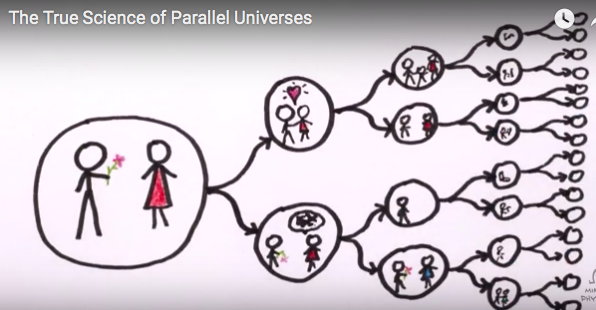
People in my Near Death Experiences group who’veGalton Board been shown their futures describe it more as a 3-D Plinko board of endlessly branching possibilities.  They say the spirit showing it to them had no agenda – any series of choices was dandy, including death.  My own NDE was different: I was told “You’re not finished” and sent back against my will, revived by CPR despite lethal levels of drugs still in my system. 

Potential FuturesSo let’s just say, if god does have a will or plan for each of us, it’s a super flexible one.  Let’s say you planted two tiny genetically identical elm tree seedlings 50 feet apart.  Then you came back 100 years later to find two huge, swaying, graceful elm trees.  Would you expect them to be identical?  Would one of them be wrong?  Of course not.  Because each grew into its own uniqueness.  Incomprehensibly detailed variations make up the richness of this world.  And if god wants anything for us, it’s that we grow into our incomprehensibly unique selves.

Unfortunately, growth seems a lot more complicated for humans.  The trouble comes from dealing with fear and pain, and encountering the voice of ego which promises to protect us from both.  I grew up with so much fear and pain that I poured all my trust into ego.  What else was there?!  As an alcoholic, I found booze boosted ego’s power, generating a workable substitute for the self-worth I lacked.  My world shrank smaller and smaller as I pursued ease and comfort in the bottle.  I learned nothing about myself or how to live.  I hit bottom as a 15- year-old girl in 34-year-old body.

Step Three opens the door for learning.  AA’s “psychic change” is what happens when we stop listening to ego and start seeking a deeper truth.  Good Orderly Direction (GOD) was the term offered to help me ease into my own conception of god.  I learned to subject each idea to this test: does it feel like Good Orderly Direction?

GODWorking the 12 steps with a sponsor exemplified Good Orderly Direction.  The process taught me spiritual principles – like gratitude, humility, love, and service – that shape a worthwhile life.  I learned that they’re realized through daily acts of empathy and kindness, and that when I live in accordance with them, I can generate self-esteem by doing esteemable acts.


I’ve learned that meditation pays off in the ability to distinguish my awareness from my thoughts.  A babble of ego-thoughts still passes constantly through my brain – stories of envy, self-pity, resentment, and how I could fix everything.  Today I can detach (usually) from them, knowing (usually) that they’re worthless.  I can sometimes glean the aftertaste of regret before I do the wrong thing.

I’ve learned that, for me, the biggest challenge of sobriety is self-honesty.  Honesty with others is easy: I’m an open book.  But to change the things I can, I have to be willing to see the need for change – and I don’t like to. I’d rather pretend things are fine. Or, if I do make a bid for change, it’s still a challenge to do the footwork and then LET GO of the results.  Whenever I’m obsessing – needing to get what I want or for someone else to do/see what I want – I’m trying to boss reality, to shape it to my will – which is obviously  insane.  So the more life beats me up, the better I get at letting go.

As a result, I’ve learned some of most freeing stuff: that what seems urgent is usually not important, and what’s important is usually not urgent.  I’ve learned the wisdom of “Don’t just do something!  Sit there!”  Life flows around me; people flow in and out of my life; I’m powerless over virtually all of it.  My attitude alone is mine to choose, but no longer mine to choose alone.


scroll

Post to Facebook

2 Comments

Filed under AA, Addiction, Recovery, Sobriety, Twelve Steps

New Year’s FOMO and other Alcoholic Horsecrap

What is FOMO?  Fear  Of  Missing  Out.

It’s that sinking feeling that someplace you’re not, lots of amazingly cool people are having an absolutely stupendous time. Maybe there’s kickass music and people are lookin’ sharp n’sexy and having a fuckin’ blast and – oh my GAWD!!! Can you believe what those two did?! That is so hilariously outrageous!  It’s not just goin’ aParty-Dancing-Vectorll over Facebook –it’s like a “fun times” montage out of a Hollywood flick!  If you could be there mixin’ it up you’d feel – oh my god – so damn good! You’d be dialed into life, you’d be carpé-ing the fuckin’ diem all night long!   But you’re missing it!

As Katie Perry sings:

Last Friday night

Yeah we danced on tabletops
And we took too many shots
Think we kissed but I forgot

Yeah we maxed our credit cards
And got kicked out of the bar
So we hit the boulevard

We went streaking in the park
Skinny dipping in the dark
Then had a ménage a trois

Yeah I think we broke the law
Always say we’re gonna stop-op
ooh-ohh*

Here’s what the song leaves out: live those lyrics and you end up with a busted ankle from falling off the damn tabletop, years of credit card debt, and maybe even salmonella because you skinny dipped in a fucking duck pond.  You’re lucky if you don’t end up in jail with charges on your record or an STD from the ménage a trois with morons.  Of course, it goes without saying that you’ve poisoned yourself again ‘til you’re heaving up bile.

Lets-partyNo, Katie doesn’t really mention that part. Neither does your FOMO.  It airbrushes away all those pesky consequences and lures us with the promise of a bright and shiny “great time.”

It’s Also Called Immaturity
For normies, FOMO spikes in youth when they’re highly peer-oriented, but as they mature into adulthood, FOMO diminishes to a rare blip on the screen. The trouble for alcoholics is, once again, our perspective is skewed.

Our disease carries many tricks in its bag.  Though normies don’t understand, we  often speak of it as having a mind of its own, exploiting whatever ploys avail themselves to keep us using or, in recovery, to trigger relapse.  A lot of alcoholics crave adventure – a sense of living on the edge.  So addiction broadcasts FOMO to persuade us that swallowing a neurotoxin is really the key to livin’ large.

Much like the craving for alcohol, alcoholic FOMO can never be satiated.

For example, New Year’s Eve of 1982, after snorting coke in the car and paying some absurdly high cover charge, my future (ex) husband and I sauntered into a hip and glitzy Boston nightclub. We scored a table near the dance floor, ordered champagne, and lit up our smokes. We danced. But at as the countdown for midnight approached I was struck by the realization I still recall so clearly: We were at the wrong club! The one down the street was way cooler! No one here was even worth impressing because they, too, had fallen for the wrong club!  If only I’d known! If only we’d gone there! I was missing out!!

This pattern would repeat itself for over a decade. I never did find the right club or party or even picnic, because if I was there, a better one had to be someplace else.

Recovery = Reality
FOMO is really just another guise of codependence. It’s not actually a yearning for fun; it’s a belief that we can gain something that will deliver a shot of wellbeing by being seen in the right places doing the right things. At some level, we believe others hold the power to validate us, though we’re actually validating ourselves through projections of those people’s imagined esteem. The esteem has to seem to come from them to be any good – we can’t feel it simply by knowing and valuing ourselves.

More and more I’m convinced most alcoholics are also codependent. The source of pain for all codependents is an external locus of self-worth – often because we grew up in dysfunctional families where we did not get what we needed to develop a strong sense that we are loveable and worthy. We keep chasing and chasing it in others and never getting any closer.

While non-alcoholic (classic) codependents try to subdue their pain by concerning themselves with what others should do and ‘winning’ love by caretaking, alcoholic codependents subdue it not only with alcohol, but with attempts or impress and winCodependent over others, often becoming social chameleons and regarding friends as something like collectible baseball cards.  Active alcoholics can’t really love our friends. We can only seek relief via people – and “love” that relief.

When we get sober, we begin to seek a higher power that can grant us the worth we’ve so desperately sought in all the wrong places. With guidance from sponsors and a growing sense of Good Orderly Direction, we can begin to live a life of integrity that lets us discover our worth as loving and lovable human beings.

But FOMO still nags at us to forget all that. It can wheedle into our minds at any time, but New Year’s Eve is its favorite holiday – especially for the newly sober.

The Big Book’s authors knew all about FOMO.  While they do instruct us “not to avoid a place where there is drinking if we have a legitimate reason for being there” (p. 101), they also caution against attempting to “steal a little vicarious pleasure from the atmosphere of such places.”  They warn us to “be sure you are on solid spiritual ground before you start and that your motive in going is thoroughly good.”  Not just good – thoroughly good.  In other words, don’t bullshit yourself.

In my almost 21 years sober, I’ve never found a thoroughly good reason to go hang with drinkers at a New Year’s Eve party.  I prefer to usher in the new year with a good night’s sleep and a cushy set of earplugs.  Sobriety fills my life to the brim, and I know it.

scroll

Post to Facebook
.

* Katie Perry Lyrics – https://www.youtube.com/watch?v=Cdyfr4lU8sk
See also 6 Tips for Holiday Parties

.

16 Comments

Filed under Addiction, Alcoholism, Codependence, Codependency, living sober, Recovery, Sobriety

Denial and Ego: Addiction’s Minions

People suffering from a potentially fatal disease normally want to know what it is and how to get better. If it’s diabetes, you alter your diet and take insulin. If it’s cancer, you follow whatever regimen you’re dictated. But if it’s alcoholism, you say, “Um… actually, I don’t have that!” so you can get even worse.

Denial: it’s built right into alcoholism – which why in the rooms we talk about “the disease that tells me I don’t have a disease.”

Here’s an official alcoholism definition hammered out by the Journal of the American Medical Association. A 23-member (how many?) committee of the National Council on Alcoholism and American Society of Addiction Medicine researched and bickered for 2 frickin’ years (how long?) to spell this thing out:

Alcoholism is a primary, chronic disease with genetic, psychosocial, and environmental factors influencing its development and manifestations. The disease is often progressive and fatal. It is characterized by impaired control over drinking, preoccupation with the drug alcohol, use of alcohol despite adverse consequences, and distortions in thinking, most notably denial.

I’d like to thank whichever committee members lobbied to squeeze in “most notably denial.” Under great pressure to be concise, why bother naming that particular distortion? God knows alcoholic thinking distorts right and left: Everyone else is the problem; I drive better drunk; I didn’t like that X anyway. But woven through every distorted thought of an active alcoholic is the thread of denial – outright refusal to acknowledge the fact that we need to get wasted despite whatever price it’s exacting from our lives.

evil minions

Self-centered ego is denial’s evil twin, likewise a mainstay of alcoholism.  A great description, penned by Anne Wilson Schaef in When Society Becomes an Addict, runs as follows (excerpted):

Addicts are notoriously self-centered. They may claim to care about the people around them, but their fix begins to overshadow everything else.

Another aspect of self-centeredness puts the self at the center of the universe. Self-centered people do not know where they begin and end and anyone else begins and ends. Because there are no clear-cut boundaries, two things happen: the self spreads out, and the world rushes in. Everything becomes ME, and everything starts coming at ME and is perceived as either for or against ME.

During active addiction, alcohol is FOR ME.  It’s on my side – the only ally I can trust.  If I’m lonely, I invite my buddy alcohol over to keep me company, and we hang out together in a cozy refuge against a world we both tell to fuck off.  On the other hand, if I need to socialize, alcohol becomes my Iron Man suit.  It empowers me to converse freely, lovin’ life and knowing I’m absolutely invincible.  Either I’m so freakin’ charming that everyone admires me, or I’m such a boss rebel I could give a rat’s ass what any of those assholes think.  Either way, my self-centered ego feels impervious.

Anything against my alcohol is, by definition, against ME.  I fight as if my life depended on it: You can take my job, my relationships, my health, my home, my self-respect, even my hope that things will ever get better – but don’t you dare touch my buddy, alcohol.  That’s my lifeline, bitches!

Doctors, therapists, friends, spouses or partners – when they turn against our buddy, they all have to be shafted.  It’s unfortunate, but inevitable.  And what about our conscience, that repentant whiner who, filled with morning self-reproach, promises not to drink (so much) again?  With a sigh we hit the trap door switch and drop them to the alligators.  Sorry.  No way around it.

Denial and ego conspire together as addiction’s minions. Demon quarterbackDenial says I don’t have a problem, and ego says, Whatever – I do what I want!  Together they block the world like offensive linemen, protecting addiction from tackles by reason and emotion so it can launch just one more play for a great time.  This time, it’s gonna be awesome!

But then one day, if we’re lucky, we reach that magical combination –our life’s shot to shit and alcohol quits working – and we hit bottom.  Death is lookin’ real-ly good by this point.  No more anybody expecting anything from us.  No more failure.  No more loneliness and hating ourselves.  Just peace.  That incomprehensible demoralization blasts away denial’s excuses, flattens ego’s games.

Without their cover, we can finally glimpse the actual face of addiction, and we understand that it’s a demon. For a short window of time, we get that it’s killing us. The question is whether we can find help, whether we can be shown a way out, before that window of clarity closes. If we make it to AA, we can look at Step 1 on the wall and sigh, yes:  We admitted we were powerless over alcohol – that our lives had become unmanageable.  Others can show us the way out.

But that’s far from the end of it!

The inner addict doesn’t die.  Recovery only incarcerates it.  And guess who’s constantly plotting and conspiring to spring the boss out of prison?  You got it: those loyal henchmen, denial and ego.

“You know, maybe I never really had that big a problem with alcohol.  Maybe now that I’ve got my shit together, I don’t have to bother with AA meetings.”  Just as cancer mimics and perverts the miracle of cell growth, so addiction mimics and perverts the goodness of self-care. “You deserve a drink!  Don’t be so hard on yourself!  You’ve totally cleaned up your act – why not enjoy a little reward?”  Both diseases kill the host.

In sobriety I know of only one deliverance from the minions’ head chatter: god.  That’s why the 12 Steps exist.  For me, god can be found only when I wrench my focus away from all my thinking and look to my heart, where my sense of goodness lives.  Goodness runs deeper than knowledge; it’s my very foundation of living, god dwelling in me.  I pray for direction and new thoughts come: call a sober friend; get to a meeting; be of service to others.  Whenever unselfish love flows through our system, it flushes out the disease’s crud and nourishes our core.   The minions lose.

But they’ll be back tomorrow!

scroll

Post to Facebook

5 Comments

Filed under AA, Addiction, Alcoholism, Denial, Recovery, Sobriety

‘Coming Out’ as Alcoholics? The Anonymous People

I finally watched The Anonymous People.  It’s a 2013 documentary on the history and current status of the Recovery Movement – something I, at 20 years sober, had never even heard of.  The “War on Drugs,” I was vaguely aware, has caused drug incarcerations to soar, such that today the vast majority of convicts are serving time for addiction-related crimes.  The film’s creators are striving to get addiction recognized and treated as a disease by the health care and judicial systems.  Such a controversy opens a can of worms way too wriggly for me to address in 1000 words.

What I can talk about, however, is my biggest take-away from the film: that through a misinterpretation of “anonymity”as referenced in the 12 Traditions, many of us alcoholics conceal our recovery from the people we know and thus inadvertently propagate public misconceptions of both alcoholism and AA.  In the long run, this secrecy hinders our goal of helping the still-suffering alcoholic.

marty_mann

Marty Mann*

Nowhere in AA literature are we told to keep our own recovery secret.  The 11th Tradition deals with PR; no one can purport to represent AA.  The 12th Tradition says only that anonymity is the “spiritual foundation of all our traditions.” But way back in the 1930s, Marty Mann busted out in the public eye with Bill and Bob’s blessings, trying to recast the public’s perception of what an alcoholic looked like.  The film hopes to carry on her tradition – as I believe every alcoholic ought.

I’ve been open about my recovery pretty much since I got sober in ’95.  At the time, I’d been very much ‘out’ as a lesbian for years.  I’d seen no reason people who considered me a friend should not know who I was; if they had a problem with my orientation, they had a problem with me.  In the ’80s I used to make a major production of outing myself to my college English classes on the last day of class.  I remember one year I wore a T-shirt under my men’s jacket that read across the back, “Nobody knows I’m gay.”  The class gasped when, after thanking them for the quarter, I turned and dropped the jacket.  One student in particular, I remember, a street-smart African American boy, was absolutely shocked:  How could such a smart, nice teacher be… one of them-?

Copenhagen 91

Teddy-girl me, 1991

That’s why we out ourselves.  We stand up as real people who contradict the phobic stereotypes of public opinion.  All lesbians are ugly shrews who can’t get laid.  All alcoholics are ill-disciplined louts who throw away their lives.  When we out ourselves among people who respect us, we confront prejudice with our human dignity: Look at me and say that.

Flyers I posted on that campus to start up a gay student union were torn down or defaced with hate slurs and warnings about hell.  I’ll never forget walking into that first meeting: the room I’d reserved was far too small.  About 30 kids looked up from every seat plus the floor, tables, and walls, their faces alight with a vulnerable hope.  “We’re gonna show this campus a thing or two,” I told them in my coolest butch tone.  They beamed.  And we did, too.  I left that college after three years, but the group we started still thrives today, 25 years later.

When my son was about two and a half years old, I heard a 5-year-old in the park sandbox scoff at his explaining that he had two moms.  “Who’s your dad?” asked the boy. “Everybody has a dad!”  As bewilderment crumpled my son’s face, I swooped him up, my heart pKeno ounding, and, struggling to remember this other child was also innocent, offered a gentle correction.  After that, I begged my parents to spend a huge wad of my future inheritance to place my son in a pro-diversity preschool where lots of kids had same-sex parents.  By the time he started first grade at a public school, although his moms had separated, he knew firmly in his heart he just was as “normal” as anybody else.  That deep confidence and happy openness about his moms has won friends and warded off bullies.  Even in his absence, I once overheard one of his friends tell another, “Dude, Keno’s other mom’s girlfriend is an awesome cook!”

Keno trout

First trout caught with his AA ‘uncles’; confident boy

My son has in many ways been my teacher. When I directed a writing center at the UW, I was ‘out’ to each year’s team of student tutors about my gay past and current recovery.  Though I’d jumped tracks again and resumed dating men after 14 years (it’s all in the addiction memoir: my lesbian era was something like a geographic), my son still had two moms, so I shared our truth.  The tutors, in turn, came to trust me with issues of their own, such that my desk became something like Lucy’s Psychiatric Help stand in Peanuts.  In the six years since the center closed, one of those students has sought out recovery and several have come out as gay or transgender.  Others have reached out over Facebook asking if we can meet up and talk about life.  A few have even asked me for help with their alcoholic friends.  And one of those friends, I know for a fact, is sober today in part from my help.

In short, I share my recovery with anyone who wants to know me personally.  “I’m so sorry!” some respond.  “Can’t you just have one drink?” ask others.  I keep it simple, but I speak my truth.  I wrote my memoir to share my entire story in hopes that it might help others who struggle with the same experiences and emotions I did.

The rooms of AA have been my “safe school,” where I’ve  learned that alcoholics are individuals normal in every respect but for a potentially fatal disease that should carry no stigma.  Listening to other alcoholics unfold their inner experiences, I’ve learned, too, that all the quirky emotions I’d imagined, in my isolated loneliness, made me terminally unique are in fact just part of being human.  Whatever I’ve done, thought, or suffered has been known to countless others, and we can help each other through it all.  Showing up in our whole truth, without shame or secrecy, is how we change the world.

scroll

* Click here for video on 1930s National Committee for Education on Alcoholism

Leave a comment

Filed under Addiction, Alcoholism, Recovery, Sobriety