Tag Archives: addiction

On Wreckage and Forgiveness

The ironic thing about forgiveness is that when we truly achieve it, we realize there’s nothing to forgive.  We experience a shift of perspective, a widening of the lens we’ve been looking through.  The person we needed to forgive goes from being a beetle mounted on a card and identified as faulty in various ways to a piece of our own soul – the part of us that also struggles and often fails.

Resentment works by keeping score.  But we can keep score only when we have rules, agendas, and an assumed point to the game – all of which tend to be the work of ego.  To bring about the outcome we would have preferred, the mounted beetle in question should have chosen to do X and Y.  They should have seen and realized how important X and Y were.  Why the hell didn’t they?  What the hell were they thinking?!  Now the outcome is all fucked up and it’s totally their fault!

40803_10150244489590608_8125380_nTwo weeks ago I brought home my boyfriend’s old iPhone and discovered that for two and a half years – ever since we got back together after a one-year break-up – he’s been leading a double life.  He’s had a second girlfriend whom he saw just as much or even more than me, a chunky girl half his age who clearly worships the ground he walks on and matches him drink for drink as they get bombed together.  I had trusted him completely.  I believed he was still the Good Man I fell in love with while he was sober.  Because of this, I gave him ample room to do his own thing (we lived 90 minutes apart) and never checked up on him – ignoring the fact that he was a relapsed alcoholic who merely didn’t drink in front of me – and that active alcoholics tend to lie.

My agenda was as follows: the relationship I thought I had with him was meant to flourish and endure. For this to happen, we both had to be committed and true to each other.  Those were the rules of the game as I saw it, and when I first discovered their porn-style sexting and rendezvous set up around my visits (she sometimes left the same day I arrived), I did very much know the rage of betrayal.  That rage has faded now, but what puzzles me is that it hasn’t morphed into resentment.  Somehow, I’ve jumped straight from rage to forgiveness.  Mind you, I don’t intend to see the man again – his future is god’s business and no longer mine.  But anger I do not feel.

I let go my agenda.  The whole thing.  Clearly this relationship was not supposed to be.  For a woman like me, 20 years sober, to be with a man who drinks in her absence was not a good set-up.  It could not have worked.  Yes – there was a lot of love over the nine years we shared, and the loss of that remains tragic to me.  I’m grieving it.  It hurts.  Further, what my boyfriend did is clearly heinous on a number of moral levels.  You don’t have to be the one cheated on to see that.

beerBut I’ve been there.  I’ve done that.  Okay – I’ve never developed a sex addiction with someone young enough to be my child, but by the final stages of my drinking, I lacked moral sense to an equal degree.  In the fifteen years I was drunk, I cheated on three partners in a row – the first one physically and the second two emotionally.  I developed wild crushes on people while pretending to be in committed relationships and chased down the high of those infatuations regardless of their eventual impact on my partner.  I didn’t care.  In fact, it seemed to me at the time that I couldn’t care.  I needed the fix of the person I was addicted to just as much as I needed my next drink.

In every fifth step I’ve heard, sponsees have felt failed and betrayed by important figures in their lives – often a dysfunctional parent either alcoholic or affected by alcoholism.  Time and time again, the 4th column comes down to the question, “Do you think this person would not have done better if they were capable of it?”  Sponsees struggle with this.  Their minds wrestle with the dichotomy of who they wanted the parent or person to be, with all the power to choose wisely they believed that person possessed, versus the truth of what actually happened – the fact that the parent or person simply did not have the integrity, self-awareness, or the moral resources to show up any better than they did, let alone with honor.

Who wants to be a shitty parent?  Who wants to betray and abuse the partner they’ve loved?  Nobody.  In the case of alcoholics, prolonged alcohol abuse actually atrophies the emotional centers of the brain; we reach recklessly for whatever we think will bring relief.  Compassion shrinks.  We become selfish monsters.  We do shameful things.  It’s part of the disease.

Resentment at these facts can do nothing but harm me.  Nurtured anger traps us in our heads, our stories, our righteousness about what should have been, whereas the sunlight of the spirit is cast only on what is. And it’s only once we accept what is that we can feel gratitude for all reality offers us and try to lead useful, constructive lives, granting others the freedom to seek their own path.  24350_10150106518895608_1574989_nSo forgiveness, really, is just acceptance of a person exactly as they are.  In my case, I also have to accept the toll of addiction.  The Big Book even tells us, “More than most people, the alcoholic leads a double life.” My guy was just a late stage alcoholic doing what drunks do best: dishonesty with self and others.  He’s consumed in tearing down his own emotional life and perhaps career, veering obliviously toward alcoholic decline.  None of this will end prettily for him.  My mistake was fighting reality, closing my mind to his addiction, trying to love him as though he were sober.  So much I wanted better things for him!  But when I let go that agenda, it’s all just life unfolding as it should.


scroll


18 Comments

Filed under AA, Al-Anon, Alcoholism, Codependence, Codependency, Recovery, Sobriety, Spirituality

What the Heck is a Spiritual Path?

A number of people dear to me in AA just can’t seem to stay sober.  Their recovery looks hopeful at times: they’ll string together a few months or even a year, but then they go out again.  At some point they drag themselves back looking haggard and beat up and often shockingly aged.  They share about being totally defeated, about knowing they can’t drink, and about their rock solid determination to stay sober this time.  Sadly, though, a few months or a year later, they’re gone again.

The Big Book tells us why: they “failed to enlarge [their] spiritual life” (35).  During my drinking, I very much wanted to be a good person so I could be happy – to be true to my partners (at least in everything they knew about), to be honest (enough), and to contribute to the world (so I’d be respected).  If I had brought that same approach to getting or staying sober – reliance on self – I’d be drunk today.

Here’s the deal: There are two ways to live in this world – by the guidance of ego, or by the guidance of something greater than ego.  Practicing alcoholics, when they look inward, consult with the authority of ego, which has one sole criterion for direction: me.  “What will make me feel good/get me what I (think I) want?”  I may desire amazing personal experiences, or to feel attractive or valued.  I may want money and a sense of importance – the recognition of achieving great things.

The active alcoholic may sincerely wish to live by higher principles because doing so might help goalsthem grab the things they link to happiness – like a career, a relationship, or esteem among peers.  But in all their navigation, the joystick always remains firmly in the grip of ego, whose sole objective is to get what it wants.  That’s why most practicing alcoholics harbor secrets.  That’s why their love is striated with selfishness.  And it’s why they’re never immune from the seduction of alcohol, because ego assures them a drink will feel awesome – or at least bring relief – and they take the bait.

What’s the alternative?  To be holier than thou?  To renounce earthly life and pursue some lofty enlightenment?

No.  It’s to admit we’re irreparably flawed, and to commit to trying every day to be a slightly better person than we were yesterday – not by the criterion of what feels good, but by the light of what, in our deepest heart, we know to BE good.  Pursuit of goodness – however we define it, however faultily we seek it, and whatever that progress may look  like –  is the essence of a spiritual path.

Let’s look at this idea in pieces.  First, admission.  The ego howls againstbroken vase the idea that we are irreparably flawed.  “I can fix myself!” it insists.  “Really!  I know best!”  To admit we’re permanently confused and lacking integrity requires the two greatest forms of ego Kryptonite on the planet: honesty and humility.  This first step is the foundation on which every alcoholic bases a new experience of living.

Next, commitment.  A spiritual path requires that we accept the futility of living by self-propulsion.  Though society at large touts “taking control,” a spiritual path requires relinquishing the claim that we’re qualified to call the shots.  In AA this means we commit to the steps, the fellowship, and service work.  For non-alcoholics, too, some form of spiritual community is often involved, whether a sangha, a church, a yoga or meditation group, or some other family of like-minded people also trying to grow spiritually.  We begin to test our own thinking – which we have admitted to be flawed – against the wisdom of this sounding board.

What we know to BE good is the thing we commit to.  The Big Book tells us, “deep down in every man, woman, and child is the fundamental idea of God.”  Unfortunately, many people assume this idea should equate to the God of religion, which may or may not be found anywhere in them – let alone deep down!  My own god has nothing to do the God of any religion – that’s why I forgo the capital ‘G.’

My god is the tremendous power of unconditional love in which all blue-and-white-orchidlife is swimming.  Not everyone needs to go to AA to find and tap this source, but we all need it to get and stay sober.  This power is available to anyone by any name or in any form – as innate goodness or a religious deity or the frickin’ Force from Star Wars: how you conceive of it does not matter.  What changes your life is that you trust its goodness and ask it for guidance in all actions, at each juncture.

Of course ego still elbows its way in countless times, because we’re still flawed.  But our intention remains to shift our point of reference away from ME! to a deeper sense of what is right and good.  We try to pause before we act – especially when we don’t want to – in an effort to discern the two courses.  That is the path – intention and effort.  We hang onto a faith that if we keep earnestly seeking one day at a time, we will be guided.

Ironically, this course usually brings us a richer life than we could ever have imagined. At my home group last night, the chair took issue with the saying, “My worst day sober is better than my best day drunk.”  He pointed out that he’d had some “fuckin’ awesome times” in his early drinking.  But when I was called on, I cross-talked a tad: I recalled that all my “awesome” drunken times boiled down to feeling awesome about ME! Even if I said, “I fuckin’ love you, man!” I really meant, “Wow! – I don’t feel alienated and alone!”  The spiritual path opened by AA has nurtured in me the gift of genuinely loving others – of living for something larger than myself.  That’s what we’re here to do.  And really, it’s a high no glory days can touch.

scroll


Post to Facebook

Leave a comment

Filed under AA, Alcoholism, Recovery, Sobriety, Spirituality, Twelve Steps

‘Coming Out’ as Alcoholics? The Anonymous People

I finally watched The Anonymous People.  It’s a 2013 documentary on the history and current status of the Recovery Movement – something I, at 20 years sober, had never even heard of.  The “War on Drugs,” I was vaguely aware, has caused drug incarcerations to soar, such that today the vast majority of convicts are serving time for addiction-related crimes.  The film’s creators are striving to get addiction recognized and treated as a disease by the health care and judicial systems.  Such a controversy opens a can of worms way too wriggly for me to address in 1000 words.

What I can talk about, however, is my biggest take-away from the film: that through a misinterpretation of “anonymity”as referenced in the 12 Traditions, many of us alcoholics conceal our recovery from the people we know and thus inadvertently propagate public misconceptions of both alcoholism and AA.  In the long run, this secrecy hinders our goal of helping the still-suffering alcoholic.

marty_mann

Marty Mann*

Nowhere in AA literature are we told to keep our own recovery secret.  The 11th Tradition deals with PR; no one can purport to represent AA.  The 12th Tradition says only that anonymity is the “spiritual foundation of all our traditions.” But way back in the 1930s, Marty Mann busted out in the public eye with Bill and Bob’s blessings, trying to recast the public’s perception of what an alcoholic looked like.  The film hopes to carry on her tradition – as I believe every alcoholic ought.

I’ve been open about my recovery pretty much since I got sober in ’95.  At the time, I’d been very much ‘out’ as a lesbian for years.  I’d seen no reason people who considered me a friend should not know who I was; if they had a problem with my orientation, they had a problem with me.  In the ’80s I used to make a major production of outing myself to my college English classes on the last day of class.  I remember one year I wore a T-shirt under my men’s jacket that read across the back, “Nobody knows I’m gay.”  The class gasped when, after thanking them for the quarter, I turned and dropped the jacket.  One student in particular, I remember, a street-smart African American boy, was absolutely shocked:  How could such a smart, nice teacher be… one of them-?

Copenhagen 91

Teddy-girl me, 1991

That’s why we out ourselves.  We stand up as real people who contradict the phobic stereotypes of public opinion.  All lesbians are ugly shrews who can’t get laid.  All alcoholics are ill-disciplined louts who throw away their lives.  When we out ourselves among people who respect us, we confront prejudice with our human dignity: Look at me and say that.

Flyers I posted on that campus to start up a gay student union were torn down or defaced with hate slurs and warnings about hell.  I’ll never forget walking into that first meeting: the room I’d reserved was far too small.  About 30 kids looked up from every seat plus the floor, tables, and walls, their faces alight with a vulnerable hope.  “We’re gonna show this campus a thing or two,” I told them in my coolest butch tone.  They beamed.  And we did, too.  I left that college after three years, but the group we started still thrives today, 25 years later.

When my son was about two and a half years old, I heard a 5-year-old in the park sandbox scoff at his explaining that he had two moms.  “Who’s your dad?” asked the boy. “Everybody has a dad!”  As bewilderment crumpled my son’s face, I swooped him up, my heart pKeno ounding, and, struggling to remember this other child was also innocent, offered a gentle correction.  After that, I begged my parents to spend a huge wad of my future inheritance to place my son in a pro-diversity preschool where lots of kids had same-sex parents.  By the time he started first grade at a public school, although his moms had separated, he knew firmly in his heart he just was as “normal” as anybody else.  That deep confidence and happy openness about his moms has won friends and warded off bullies.  Even in his absence, I once overheard one of his friends tell another, “Dude, Keno’s other mom’s girlfriend is an awesome cook!”

Keno trout

First trout caught with his AA ‘uncles’; confident boy

My son has in many ways been my teacher. When I directed a writing center at the UW, I was ‘out’ to each year’s team of student tutors about my gay past and current recovery.  Though I’d jumped tracks again and resumed dating men after 14 years (it’s all in the addiction memoir: my lesbian era was something like a geographic), my son still had two moms, so I shared our truth.  The tutors, in turn, came to trust me with issues of their own, such that my desk became something like Lucy’s Psychiatric Help stand in Peanuts.  In the six years since the center closed, one of those students has sought out recovery and several have come out as gay or transgender.  Others have reached out over Facebook asking if we can meet up and talk about life.  A few have even asked me for help with their alcoholic friends.  And one of those friends, I know for a fact, is sober today in part from my help.

In short, I share my recovery with anyone who wants to know me personally.  “I’m so sorry!” some respond.  “Can’t you just have one drink?” ask others.  I keep it simple, but I speak my truth.  I wrote my memoir to share my entire story in hopes that it might help others who struggle with the same experiences and emotions I did.

The rooms of AA have been my “safe school,” where I’ve  learned that alcoholics are individuals normal in every respect but for a potentially fatal disease that should carry no stigma.  Listening to other alcoholics unfold their inner experiences, I’ve learned, too, that all the quirky emotions I’d imagined, in my isolated loneliness, made me terminally unique are in fact just part of being human.  Whatever I’ve done, thought, or suffered has been known to countless others, and we can help each other through it all.  Showing up in our whole truth, without shame or secrecy, is how we change the world.

scroll

* Click here for video on 1930s National Committee for Education on Alcoholism

Leave a comment

Filed under Addiction, Alcoholism, Recovery, Sobriety

Enlightened but Dead: Why Alcoholics Need God

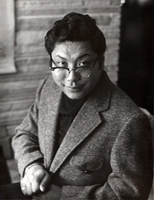
Pema Chödrön’s teacher, the venerable Chögyam Trungpa, drank a lot.  Drinking was a staple of his sanga, where he threw big parties among his students, and he was known to carry vodka in a water bottle.  Trungpa explained in one of his spiritual books why his drinking differed from that of an ordinary alcoholic:

“Whether alcohol is to be a poison or a medicine depends on one’s awareness while drinking. Conscious drinking—remaining aware of one’s state of mind—transmutes the effect of alcohol. Here awareness involves a tightening up on one’s system as an intelligent defense mechanism…

“For the yogi, alcohol is fuel for relating with his students and with the world in general, as gasoline allows a motorcar to relate with the road. But naturally the ordinary drinker who tries to compete with or imitate this transcendental style of drinking will turn his alcohol into poison…”*

Sadly, it appears that Trungpa’s liver failed to read the book and appreciate his “transcendental style” of yogi drinking.  Despite diagnoses of cirrhosis and doctors’ warnings that more drinking would kill him, Trungpa continued to drink heavily until it did indeed kill him in April of 1986, when he was just 48 years old.

Trungpa~

Philosopher Alan Watts was considered a sage throughout the ’60s after he rose to prominence with the 1951 publication of The Wisdom of Insecurity – a pivotal text  introducing Eastern concepts to Western society.  The book considers the ego’s dis-ease with the unstable nature of reality and its efforts to create security via constructs of memory and projection coalescing in a story of “I,” which Watts dismisses as unreal: only awareness divorced from self can access reality.  Watts, like Trungpa, was well aware of the futility of escapist drinking:

“One of the worst vicious circles is the problem of the alcoholic.  In very many cases he knows quite clearly that he is destroying himself, that, for him, liquor is poison, that he actually hates being drunk… And yet he drinks.  For, dislike it as he may, the experience of not drinking is worse… for he stands face to face with the unveiled, basic insecurity of the world.”

Unfortunately, identifying this vicious circle did not grant Watts the power to exit it.  Like Trungpa, he often gave lectures while sloppy drunk. He, too, developed end-stage alcoholism that deeply concerned his ex-wife and friends, and died of alcoholic cardiomyopathy – e.g. heart failure – at 58.

Watts~

Both of these men were masters of self-knowledge and the meditative disciplines that yield inner peace.  Both could speak brilliantly on the ills of ego and treasures of honesty.  Yet neither could stop drinking.  And they’re just two examples out of jillions.  Why did they fail?  Why would people so insightful not quit what was clearly killing them?  The Big Book explains:

“If a mere code of morals or a better philosophy of life were sufficient to overcome alcoholism, many of us would have recovered long ago.  But we found that such codes and philosophies did not save us, no matter how hard we tried.  We… could will these things with all our might, but the needed power wasn’t there. Our human resources, as marshalled by the will, …failed utterly.” (p. 44)

In Shambala: The Sacred Path of the Warrior, Trungpa makes very clear that no god enters into his vision.  “Over the past seven years, I have been a presenting series of ‘Shambala Teachings’ [on]… secular enlightenment, that is, the possibility of uplifting our personal existence and that of others without the help of any religious outlook.”

Good for him!  I agree wholeheartedly that self-knowledge is great stuff.  But it will not cure alcoholism.

In a 1968 talk, Bill Wilson, one of AA’s founders, described the initial amazement of the psychiatric community at the unprecedented breakthroughs of AA.  Many alcoholism specialists attended meetings and saw their own alcoholic patients, with whom years of psychiatric work had failed, achieve abstinence and mental health in a matter of weeks.  One suggested that Bill assemble a group of such psychiatrists to testify before the Academy of Medicine about AA’s success. So Bill asked them.

“And not a one would do it! …In effect, each said, ‘Look, Bill. You folks have added up in one column more of the resources which have been separately applied to alcoholics than anyone else… [But] the sum of them won’t add up to the speed of these transformations in these very grim cases… So for us, there is an unknown factor at work in AA.  [B]eing scientists, we… call it the X factor.  We believe you people call it the grace of God. And who shall go to the Academy and explain the grace of God?  No one can.'”

questionSorry, folks!  But the X factor, and that alone, is what saves an alcoholic: Connection with a higher power, to god as we understand it.  We ask god to help us, and we’re relieved of a compulsion that no amount of self-knowledge can touch.

Humility is the key ingredient to receiving grace.  We have to ask for it, accepting that we’ve been defeated.  By contrast, Trungpa, for all his wisdom, exhibited a strong tendency toward hubris.  The true warrior, he explains in Shambala, is both Outrageous and Inscrutable.  “…[H]aving overcome hope and fear, the warrior… fathoms the whole of space.  You go beyond any possibilities of holding back at all…. Your wakefulness and intelligence make you self-contained and confident with a confidence that needs no reaffirmation through feedback.” In other words, I got this!  Screw what anyone else thinks!

Watts, meanwhile, purported to embrace God, but his abstractions reduced it to a mere abandonment of I, which enabled connection with the eternal now and rendered us one with God.  For Watts, there could be no “Hey, god (you) please help (me)!” because the you / I division negated the fact that we are god: “[W]e cannot lay ourselves open to grace, for all such split-mindedness is the denial… of our freedom.”

Reluctance to seek god’s help almost killed AA co-founder Bill Wilson, too.  Relatively unknown in AA culture is the fact that Bill was so deeply repulsed by the God element in his friend Ebby’s solution that he went on drinking for three weeks after Ebby’s visit and landed yet again in a sanitarium.  There, after Ebby had visited him again to recap the spiritual solution, he had this experience:

“And again the despair deepened until the last of this prideful obstinacy was momentarily crushed out. And then, like a child crying out in the dark, I said, ‘If there is a God, will he show himself?’ And the place lit up in a great glare, a wondrous white light. Then I began to have images, in the mind’s eye, so to speak, and one came in which I seemed to see myself standing on a mountain and a great clean wind was blowing, and this blowing at first went around and then it seemed to go through me. And then the ecstasy redoubled and I found myself exclaiming, ‘I am a free man! So THIS is the God of the preachers!'”

Light
In my Near-Death Experiences group, I’ve heard several people describe similar experiences, when the “white light” of love brilliantly illuminated the room around them; but, naturally, many of Bill’s contemporaries considered him daft for insisting it had happened.  In his talk, he attributes this phenomenon not to his own specialness, but to the role it enabled him to play in AA, explaining that the powerful faith most AAs develop over months or years was for him simply crammed into a few minutes: “It did give me an instant conviction of the presence of God which has never left me… And I feel that that extra dividend may have made the difference in whether I would have persisted with AA in the early years or not.”

In other words, Bill was given what he needed not only to overcome a lifetime of harrowing addiction, but to co-create AA and persist in carrying its message into the dark world of his fellow alcoholics.  Why?  Because he asked… and frickin’ meant it.

.

scroll

.

PS: I have tremendous respect for both these sages as well as for Buddhism.  By no means am I critical of their legacy or beliefs.  Reading both authors did contribute to my self-knowledge, for which I am grateful, because such insight aids in a lifetime quest for serenity.  My point is merely that self-knowledge, no matter how deep or how keen, cannot arrest this disease, as these two tragically premature deaths testify.  See comments below. 

– Louisa

  • (Heart of the Buddha, p. 153)

31 Comments

Filed under AA, Alcoholism, Drinking, Faith, God, Recovery, Sobriety, Spirituality, Twelve Steps

Freedom: the Gift of Recovery

Got a few resentments in AA?  Certain personalities in meetings annoying you?   Big Book thumpers causing internal eye-rolling?  Somewhere inside, are you thinking you may be able to manage your alcoholism yourself – that it’s really not such a big deal?

Maybe it’s time for a little ATTITUDE ADJUSTMENT with the help of this visual aid I lifted from the Wikipedia page on alcoholism.  It’s an engraving from the mid-1800s called “King Alcohol and his Prime Minister.”  Check it.  (It’s enlargeable. )

King_Alcohol_and_his_Prime_Minister

CLICK to zoom: King Alcohol & his Prime Minister, engraving by John Warner Barber (1820-1880) .

In the background on the left, we’ve got the normies drinking with impunity.  A little closer we’ve got the socialites making cocktails look 19th Century glamorous.  But once we get to the Dram Shop, which is the old term for bar or tavern, things ain’t lookin’ so good.  Sure, there’s a pretty barmaid serving, but one patron is looking pretty disheveled, two are brawling on the floor, and another is passed out.  In the foreground the Virgin Mary is seen bumming about it all (at least, I think it’s she).  The anchor could refer to maritime alcoholism?

On the right we see some consequences listed: Poverty, misery, crime, and death.  There’s the jail, the poorhouse to which with someone is escorting a drunk, a cop with his nightstick dealing with another. We see a home gone to shit, a dad passed out while his wife and kids stand by, and closest to us, a rich guy all dressed up but still on his face.  Closer still are the graves, one of them immediately outside the home.  Jails, institutions, and death – as we often hear in the rooms.  The only thing I don’t see is an asylum.

Lastly, check out King Alcohol and his sidekick Death, themselves.  Death’s bottle is corked: he doesn’t touch the stuff, only offers it to recruits.  The King himself looks confused and miserable in spite of his lavish banner.  His face has marks all over it, his brow is furrowed, his hair and beard a mess.  Around his neck what seems an amulet is actually a locked chain, and chains run down his robe in place of royal ermine.  He holds aloft a large goblet, almost like a chalice, but encircled by a snake.  Above it hovers a reference to Proverbs 23, line 32:

31 Do not gaze at wine when it is red,
    when it sparkles in the cup,
    when it goes down smoothly!
32 In the end it bites like a snake
    and poisons like a viper.

Whoa.

If you lived in the 1800s, that would be the full extent of your program:  “Do not….”  Don’t look at booze, don’t drink booze.  Just don’t.  Just stop.  Look at the facts.  Use your willpower.

“Do not…”  If I’d been born during that time, I’d be a perma-drunk or dead.  Because I tried “do not” for 14 years and ended up bombed every night, like my father before me, because the “wine” I would “gaze at” lived in my mind.  As soon as enough of the poison had cleared from the night before, I’d think, “Yes!  I’m talking about just one pretty, perfect cocktail/ beer/ glass of wine!”  Next thing I knew, I was reaching for that snake-entwined goblet, oblivious to the bite and poison.

And I did that again.

And again.

And again…

It cracks me up that at the top of King Alcohol’s barrel list is “strong beer” – as if “weak beer” might be okay.  In other words, even in his desire to capture the entirety of alcoholism, Barber lacked a basic understanding of addiction: the allergy in me – which makes me break out in endless “more!” – can be triggered by as little as a single dose of cough medicine.

What Barber did understand, though, was that we die.  We’ve been dying for millennia, at least throughout the 10,000 years that humans have been brewing alcohol.  Slowly, century by century, those of us with alcoholic genes have been winnowed from those European cultures where alcohol has long been a staple – a fact highlighted by rampant alcoholism among Native American populations where alcohol has been introduced only in modern history.  Why do 10% of Native Americans die of alcoholism, compared to 0.2% of Italians?  Because most Italian alcoholics are already dead!  They died centuries ago leaving fewer descendents.  Still, around the world, how many of us are killing ourselves slowly, blurring our thinking, drowning our love of life?

You might wonder, why did Barber choose to depict alcohol as a king, rather than a slave driver or a warlord?  The answer is in addiction.  Alcohol rules our lives, but at the same time, we venerate it as our savior.  Left to our own human powers, there is no way out.

BUT HERE’S THE GOOD NEWS!  I’m sober!  You’re sober!

In June of 1935, the world of the alcoholic changed forever.  Fifteen minutes is how long alcoholic Bob Smith agreed to talk with that sober guy, Bill Wilson.  Three months is how long they ended up hanging out before Wilson even went home. They had discovered something amazing: the connection between one alcoholic and another when speaking the truth of our condition.  They also put together the physical allergy piece Bill knew with the spiritual malady piece Bob knew and – SHAZAM!!!  For the first time in human history, alcoholics had a way out!

Never again will we as a class of afflicted people have no solution.  Shivering denizens no more, we’ve found a way to overthrow the tyrant with a far greater power – one of love, of life, of goodness.  Whether you live near a slew of AA meetings or it’s just you with your Big Book and computer, you possess two insights that Barber and the dying drunks throughout history never had:  1) That your body reacts differently to alcohol than a normal body does, and 2) that alcoholism can be treated via a 12 Step program of spiritual growth, usually (but not always) in connection with fellow alcoholics.

What I know is this: Living sober has brought me and countless other hopelessly doomed alcoholics a joy of living beyond our wildest dreams.  We are free.

scroll

2 Comments

Filed under Alcoholism, Recovery, sober, Sobriety, Twelve Steps

Holiday Parties: 6 Tips for the Recovering Alcoholic

…and why they may be utterly useless

booze-banner-2
.
‘Tis the season when a lot of us get invited to gatherings where the alcohol flows. If we go, we may find ourselves among normies for whom “drinking means conviviality, companionship and colorful imagination,” as well as some pre-bottom drunks.  Because they’re outside recovery, chances are they’ll be a world away from understanding that for us, to drink is to die.

young-people-in-clubdrinking-

drinks we see others taking with impunity…        

Normies view alcohol consumption from the perspective of a normal body and mind, which they assume (come on!) we must  have, too – the kind that can moderate alcohol intake at will. Believing this, they may interpret our abstaining, not as avoiding the poison that can bring down in ruins everything we love, but as a party-poopy failure to “join in the revelry.” Even if we say flat out (as I do), “I’m an alcoholic,” some can’t seem to grasp what that means.  They urge, cajole, and act baffled — or mourn for us.  “What?!  We’re talking a single glass of X, here!” (insert spiked punch, spiked eggnog, spiked cider, or plain old booze).

Standing by our own truth in the face of such reactions can be, for the more codependent among us, socially difficult.  What’s more, watching others take drinks with impunity amid all the sensory experiences of alcohol – hearing the ice clinks, seeing it pour, maybe even smelling it – Whoa! – can rouse our addict from its slumber, enabling it to launch a marketing campaign about the radness of just one drink.

drunk-people-grin

…it’s never enough

Yet the Big Book tells us, “any scheme of combating alcoholism that attempts to shield the sick man from temptation is doomed to failure…. So our rule is not to avoid a place where there is drinking, if we have a legitimate reason for being there.”

Everything hinges on spiritual fitness, which I’ll discuss a little further down. Meanwhile, here are six tips that have helped me feel more comfortable at events where alcohol is served.

  1. Go in the spirit of usefulness, not to “get” social points or further your “little plans and designs.”  My sponsor used to tell me to see “what (I) could pack into the stream of life.” I show up to give. I can give others my attention, my humor, my encouragement, and my caring for them.  If it’s a homemade party, I can ask the hosts what I might do to help. What matters is not how these offerings are received, but the spiritual flow they put me in.
  1. Bring a supply of kick-ass non-alcoholic drinks if possible, that is, if it’s not a fancy catered type thing. As above, bring them not only for yourself, but others. “Hey, I just happened to pick up some Reed’s Ginger Beer, Martinelli’s, and this amazing Trader Joe’s whatever on my way over! Enjoy!”
  1. Have a recovery buddy. Either bring a sober alcoholic with you, or arrange to check in with one before and after.
  1. Pray your ass off. Pray before, pray during (in the bathroom or just your mind), and pray again when it’s time to leave. “God, please help me remember what’s truly important, who I am, and that you’re with me” might be a better prayer than “Help me not drink.”
  1. Know your boundaries before you go. Once we get somewhere, it may feel loserish to leave early, but screw that. Know in advance that as soon as people start slurring and discussing their favored sexual positions, or when a certain hour arrives, you’re gone.
  1. Have something cozy waiting at home. This can be reunion with your beloved pets/people or some treat you decide on in advance: a good movie or book, a slice of cheesecake, blankie & PJs, or all of the above – whatever makes you happy.

Now for the spiritual fitness part: None of these tips will be worth jack if you don’t love your sobriety.

As a newcomer, you may not think you love it, but at some level you do, because it’s your core, your truth, your life. You want to grow and thrive, and while your addiction promises you guzzling will accomplish this, you know better.

I love my sobriety fiercely – as fiercely as if it were my newborn child. It’s only as old as today. Some people might bring their newborn to a whoopee party. I do so when I bring my sobriety, cradling it close. Some might set their newborn down on a table and wander off in search of social adventures, forgetting about it. Others may decide partway through the party that toting this newborn around really inhibits their having a good time, so they’re just gonna chuck it in the garbage tonight and cut loose.

Any time a well-meaning acquaintance urges me to have a drink, they’re holding a garbage can under my newborn. They have no idea what deep fury they’re fucking with. My sobriety is the source of my joy, my awakeness, my love for all the beauties of this life – and no dumbass party can tempt me to drop it. I don’t need to vent this at them; I just need to remember my life is at stake.

Yet, dear readers, the inescapable fact remains that I can’t always remember.  Addiction lives inside my brain – the very same brain needing to remember. It can usurp the helm at any time and disguise a drink as a fine idea.  AA’s ‘spiritual fitness’ refers to my connection to a god that, for reasons unknown, intercedes during these curious mental blank spots to let me pause (provided my steps 1, 2, & 3 stand in earnest) until the truth returns.  To the extent that following these tips reflects my commitment to those steps, they may help me enjoy myself in the midst of boozers.

Yet the bottom line remains: Party or no party, tips or no tips, I’m safe anywhere if my god is with me, and nowhere if it’s not.

.scroll

where it leads

21 year old girl, drunk, killed family of 4 as well as her two passengers.  Will she continue drinking, no matter how much she wants to stop?

4 Comments

Filed under Alcoholism, Recovery, Sobriety, Twelve Steps

Step 9: Mending the Past

I’m sorry!  I’m sorry!  Who the heck wants to read about amends?  Nobody!  I don’t even really want to write about them, but I’m going to trust, and ask you to trust, that taking a good look will reveal their beauty.

Angry-WomanSo here’s the quandary.  You may hear people in the rooms kicking around the question: “Who are amends for?  Me or the other person?”  I recall about a dozen years ago hearing a woman announce with contempt, “I’m not making this amends for her!  I’m doing it for me!”  Something sounded wrong in that, but I wasn’t sure what.

Sure, the steps are our pathway to freedom.  But they work because they’re a pathway to change, not self-help.  Didn’t we try every way of helping ourselves when we were drinking, doing whatever our monkey-brains thought would work best?  And what happened?  As I seem to recall, most of us ended up alone and fucking miserable.  The fact is, self-help refers to motivational adjustments to an otherwise successful model of living, such as, “I’m going to exercise more!” or “I’m going to procrastinate less!” not, “I’m going to quit submerging my entire existence in a cesspool of self-disgust caused by senselessly poisoning myself on a daily basis!”

So, no.  We don’t need self help.  CAM00400What we need is a transformation, a psychic change beyond anything we could engineer ourselves that redirects our energy toward maximum usefulness to god and our fellows.  If Step 3 led us to stake the best 4th step inventory we could, if we’ve read it to a sponsor who’s made clear our faulty thinking, then something has shifted in us.  In Steps 6 and 7, we opened to asking god to render us better human beings.  Now we revisit our past in this new light.

When my sponsor asked me to generate compassion toward those I’d resented, it felt like she was asking for some crazy move of spiritual gymnastics.  But really, all I had to do is acknowledge that I’ve fucked up many times myself, out of fear and pitfalls in thinking.  Let’s say I was trying to protect my beloved A when I accidentally nudged B into the boiling oil.  “Doh!”  Or in reaching after that prized X, I forgot I was supposed to hold Y and let it fall into the mile-deep chasm.  “Shit!”  Maybe I heard the enticing, faint calls of  J through the tall grass and, in stepping toward them, crushed underfoot the tiny, delicate K.  “Oh, no! Poor K~!!”

Such botched moves fill at least 75% of my addiction memoir; they’re the stuff of which all our deepest conflicts are made.  That’s why my double backward flip in the pike position comes about as I accept that you, like me, were doing only the best you could.  Now watch this move in slo-mo: I decide to cut you the same slack I wish others might cut me – the slack to be human.  It may take me days or years to get there, but eventually, your wrongs become moot.  The focus closes in on the behavior I exhibited toward you.  Would I want those wrongs carved on my tombstone?  Do I want to carry them until then?

Oops!
Remember, though, that 9 comes after 8, and “became ready” refers to more than just working up nerve.  In early sobriety, I thought I was working Step 9 by writing impulsive letters to my ex’s and telling them way more than they needed to know. By contrast, when I worked Step 8 in earnest, my sponsor wrested my ways of thinking from old to new.  For each person on my list, she crossed out and scribbled notes all over the accounts of harms I thought I’d caused, eliminating 75% of what I’d thought was the issue.  Each time she had me…

1) highlight ONLY those behaviors and attitudes the person was well aware of, to avoid causing further harm

2) boil down the harms via the rubric of selfish, dishonest, thoughtless/inconsiderate

3) come up with one specific example to illustrate each

I was not to apologize.  Rather, I was to articulate the behavior I’d shown and the ways it was wrong, and to ask what I might do to set it right.  She said, “It’s like you left a turd lying somewhere in this person’s life.  You swoop in, say, ‘I believe that’s mine!’, scoop up the turd, and ask if you got it all.”

doveAmends don’t mean you become buddy-roos with the person.  And some may continue to lob fireballs at you, requiring you to maintain a safe distance.  But when I’ve sat down with people from my past and owned, often with my voice shaking, my very human fuck-ups, I’ve witnessed in almost every one of them the blossoming grace of compassion.  Many have spontaneously confessed fuck-ups of their own.  And sometimes, in the pool of truth we shared for those moments, I would behold in them a dignity and beauty to which our old conflict had blinded me.

The 9th step means taking our new way of life out into the world and trusting god in a free fall.  As I once heard it put: “I make amends to restore that person’s faith in basic human decency.  And when I do that, I restore my own.”


peace

1 Comment

Filed under AA, Recovery, Sobriety

Not-Enoughness

A worthy life is simply one of honesty with oneself and god…

.
I go through phases when I wake up almost every morning with a gut-level anxiety, a feeling of guilt that I’m somehow not doing all I’m supposed to, shame for lacking “success,” and alarm that I’m getting old at a mile a minute.  My whole life, the feeling claims, is a failure.  Before I’ve even sat up in bed, this “not-enoughness” jabs at my mind, perfect lifeprompting vague solutions that pop up like slot machine combos:  “Earn more!”  “Lose weight!”  “Socialize more!”

Whether my not-enoughness, a default setting from childhood, will ever go away I don’t know.  What’s changed is how I respond to it.  Today I understand that it’s just a feeling launched by the part of me that’s still broken.  I return its topspin tennis serve with a quick prayer: “God, please take this away and guide my thinking today.”  While I put on my morning clothes and weigh myself, not-enoughness still chides at me.  I dismiss it automatically and try to focus on the moment: gift of what I am doing, the good fortune of where I am, and the blessings of my reality.  I commit to loving what is instead of lacking what isn’t.

The power for this practice comes from my god, a connection nurtured through many years of working all 12 Steps.  Back when I relied on active drinking and codependency, I believed not only the not-enoughness, but the solutions my mind proposed.  My high school refrain, “Excel more!” gradually morphed into “Be more liked!”  If I could just win your admiration, I’d overcome not-enoughness.  Sans alcohol I was terrified to converse with people, not realizing the main obstacle had to do with the coordinates of my head, which was firmly lodged up my ass.  I could scarcely hear what you were saying, so preoccupied was I with self: what was up with me, what I thought you thought of me, and what I might say to impress you (usually figured out after you left).  Sober socializing was, in short, torture.

Drinking, of course, fixed all that.  It made me smart, funny, beautiful, and worthy.  Glamour drinkSure, I was still biding my time while you talked, but who gave a shit?  I’d get my turn to blab soon enough and, whether you were impressed or not, I, at least, was fine with whatever the fuck I’d just said.  The drunker I got, the wider my range of just fine became.  Maybe you didn’t care to hear about ex-partner’s sexual foibles, but fuck it!  Lissen!  It’s hilarious!

loufinger

Moi, back in the day

The infatuation addiction detailed in my memoir was really just a souped-up version of that same dynamic, with all my need concentrated on a chosen, magical person whose admiration (or even company) worked like cocaine.  Sadly, these worth-seeking projects frequently morphed into real relationships – meaning that the magic one, by committing, lost all magic.  Subsequently, when attacks of not-enoughness struck, I had no “soon things will be different!” to counter it with.  I could only muffle its penalty buzzer with more booze and great ideas.  All I’d end up with was a wreckage of mishaps, huge amounts of money blown, and a hangover like a brain full of puss.

Sobriety has by no means been a picnic.  I spent over two years dry and tortured – fleeing the conversation clusters after meetings with mutters of “fuck ’em!” – before I finally worked the steps and became teachable.  Slowly teachable, that is: I spent nine years in a codependent cocoon focusing all my anxious attention, from the moment I woke, on fixing my partner’s “problems” and ignoring my own.  Really, that morning gong of not-enoughness did not emerge for me as a distinct phenomenon until I found myself waking up alone.  “What is this feeling?” I finally asked.

Self-knowledge may not save us from drinking, but it sure helps with other problems!  The steps have transformed my economics of worth.  The only worth I can feel, I understand now, is self-worth.  I am the only agent who can generate that rebuttal to not-enoughness, no matter what anyone else may think of me.  God has shown me how to cultivate self-esteem by doing estimable works.  It has guided me to grow a loveable life by loving my life.  It has taught me to connect with others more through my heart than my words.

Despite what the zillion ads we’re bombarded with would have us believe, a worthy life is simply one of honesty with oneself and god – whatever that may look like for the individual.  For me, it means I do the best I can with what’s right in front of me Goodmanand trust god that whenever a suitable door approaches, god will not only alert me, but open it.  Why did I start up the small business I run today?  Doors would not open to the 500+ jobs I tried for following my layoff, whereas with just one little ad, the business practically threw itself at me.  Like incremental promotions at a firm called Happiness, Inc., small choices I’ve made have gradually steered my life away from money and prestige toward more time and freedom.  Thrift at home is part of my work.  True, I drive a beater and shop at Goodwill, but I also get to walk my 13-year-old son to school each morning, laughing about this and that.  I get to write instead of wishing to.  I see friends.  I take loads of ballet classes, raise cute hens, and execute my own half-assed home repairs.  Overall, my life today reflects the truth of who I am – a plenitude of what I value and a shortage of what I don’t.  That’s the true test.

In fact, by the time I go to bed each night, I’m overwhelmed with gratitude for my beautiful, rich, love-filled life.  My only prayer is, “Thank you, god, for all of it.  I love you.”

Tomorrow, I know, it all begins again.

imagesShare if you like ~ ↓ ↓

8 Comments

Filed under AA, Alcoholism, Codependence, Drinking, living sober, Recovery, sober, Sobriety, Twelve Steps

The Courage to Surrender

Courage: the ability to do something that you know is right or good, even though it is dangerous, frightening, or very difficult.
—————————————————————————-Macmillan dictionary

.
American popular culture tends to associate courage with kicking ass.  Most of our movie heroes don’t need to overcome fear because they don’t feel any.  All we see from them is the anger and righteousness to smash the bad guys.  This invulnerable version of courage is reflected in Dictionary.com’s definition, as that which “permits one to face Die_hardextreme dangers and difficulties without fear.”

But what if fear is essential to courage?  That is, what if courage involves not just outward action, but the inner struggle to overcome all that holds us back – confusion, doubts… and fear?  In that case, courage means acceptance of our vulnerability, even our weakness, as well as the faith to move beyond it.

What’s this got to do with alcoholism?  People outside the rooms often assume recovery is about the ego’s type of courage: we’re sober because we’ve kicked addiction’s ass.  We conquered that mofo by being strong, disciplined, and – my favorite – taking control!  But there’s a lil’ problem with that.  Where drinking’s concerned, I can pull off none of those things.  I drink myself shitfaced.  That’s just what happens.  No matter how angry or righteous I may feel toward addiction, it’s the only one doing the ass-kickin’.

HOW coinOn the other hand, what I witness and learn in the rooms of AA is another form of courage – the courage to surrender.  Those two words don’t match up in most people’s minds, but for those of us in recovery, they have to.  When we tell ourselves, “I’m gonna beat this thing!” we seem to end up drunk.  But if instead we surrender, something inside us begins to shift, and we develop courage through the three essentials of recovery: Honesty, Open-mindedness, and Willingness.

Honesty
Nobody wants to be an alcoholic.  But even more, nobody who’s known only that way of life can imagine surviving without alcohol – a terrifying prospect.  I don’t know a single person who came to their first AA meeting without half a mind to bolt out the door.  What keeps us there is loyalty to certain moments of clarity – also known as honesty – when we either recognized death on our not-so-distant horizon or, in subtler cases, realized we could no longer endure the mental contortions necessary to sustain denial.  To hang onto that insight despite all the disclaimers our disease flings at us requires courage.

What’s more, every instinct cries out against admitting to a room full of strangers, “I cannot stop drinking and I don’t know how to live.”  Such words may not be voiced at our first meeting, and for some they never are. But alcoholics committed to recovery find the courage to speak these truths, no matter how difficult or painful.  Hearing them still brings tears to my eyes, even after almost 20 years.

Open-mindedness
Alcoholics tend to abhor the idea of groups.  We like to see ourselves as fiercely independent and temperamentally unique, so we’re repulsed by anything that smacks of conformity.  We also can’t stand the prospect of talking to others without a few drinks in us.  The last place we ever thought we’d spill our guts is a goddam cult, meetingwhich is what we’ve been calling AA, between swigs, for years.  Who wants to crawl in and, stone cold sober, ask for help from a group they’ve talked nothing but shit about to anyone who’d listen?  Nobody!  But we do it anyway, strange and frightening as it is.

Neither do I know a single newcomer who read the Twelve Steps on the wall and thought, “Oh, boy! That’ll help!”  The steps seem useless and irrelevant – some ‘hokey-pokey’ dance involving a magic Easter Bunny that has NOTHING to do with our very huge and real problems.  When alcoholics move ahead with these steps despite the certainty that they’ll never work, they’re stepping out on pure faith, reaching for the possibility of other ways to experience life.   The disease continues to offer them “Fuck Everything Free!” cards, but they decline to take one.  To turn away from everything familiar toward something unknown and intangible just because it feels “good or right” takes – you got it! – courage.

Willingness
The road to recovery is lengthy and, in places, steep.  We hear early on, “There’s only one thing you need to change – and that’s everything!”  Not only does that sound creepy, but “change” here is a verb – meaning we have to make it happen.  To find and work with a sponsor, write and read inventory, show up and listen at meetings, make amends, and eventually to sponsor and be of service to others – all these efforts require a willingness we’ve formerly lacked.  Our degree of willingness may wax and wane over the years, but if we steer by what we “know is right or good, even though it is… difficult,” we gradually come to call it by a different name: maybe god’s guidance, or maybe loving-kindness.

scroll.
Whether in terms of the battlefield or bottle, surrender means accepting as reality that which we’ve been fighting to deny.  But while a soldier surrenders only once, for the alcoholic, surrendering to one aspect of reality just moves us to a new perspective where we have to repeat the process.  Once we accept that our lives are unmanageable, we have to look at our relationships, which points us to our selfishness, which alerts us to our fear, which signals us to look at our connection to god and what it truly means to us.  The greatest paradox is that courage gradually leads us to our spiritual source, and yet it was that source (aka god/HP/ loving-kindness), once we opened the channel, that granted us the courage to change.

surrender_flag


Leave a comment

Filed under AA, Alcoholism, Drinking, living sober, Recovery, sober, Sobriety, Twelve Steps

On Alcoholic Denial

The greater our honesty, the more life is worth

Alcohol has never been de-throned in my family. Throughout his life, my father clung persistently to the conviction that alcohol opened a portal to happiness. As the big book says, “For most folks, drinking means conviviality, companionship, and colorful imagination. It means release from care, boredom, and worry. It is joyous intimacy with friends and a feeling that life is good.”

That and much more, for the early alcoholic. Because for us, drinking means release not only from those factors, but from ourselves. We live constantly tormented by the thousand stinging wasps of envy, self-criticism, frustrated desires, and the injustice of being misunderstood even though we know best. Drinking sedates these irritants, and we feel free. The trouble is, they all come back with twice the venom when we sober up. So we need more alcohol to regain peace. We don’t want to examine our consciousness itself and recognize that the bees are all generated by our own sickness.

Like my father, I clung to this pro-booze view as long as I could. The more painful and screwed up my life became, the more convinced I was that I needed alcohol in my corner as my only true friend. When that path led me close enough to meeting death or tragedy – meaning that I regularly drove drunk almost wishing to die and too selfish to consider the threat I posed to others, and that an otherworldly voice actually told me it could no longer help me if I continued to lie to myself – the day came when I finally turned on it.

I’d known for ages that I was alcoholic; I’d resolved a thousand times to drink less. But this time was different. This was a resolve to take action, and it entailed a shift of means that felt almost like murder. I would open the trap door beneath my buddy, alcohol, who unsuspectingly assumed we were still a team.   I would go to AA, that anathema of self-reliance, and I would check out surrender. While I drove to my first meeting, that part of me – my addict – pleaded for me to wake up, say fuck it all, and just down a goddam drink.

Over the nearly 20 years since, as told in my addiction memoir, my sobriety has progressed as slowly as a receding tide that gradually reveals all kinds of submerged skeletons and rusting old junk on a beach. Every corpse, every dysfunctional mechanism has had to be dealt with through awareness, acceptance, and action. It’s a process that continues today through the 12 steps.

What I’m remembering this morning is how astonished I felt each time my father voiced the old belief that alcohol was the goodness of living. One night around Christmas a few years before he died of alcoholic cardiomyopathy, he showed me the strings of Christmas lights in a three-tiered arch over the front door entrance. “Do you know why we have it like that?” he joked. “So our guests will leave thinking they’ve had a good time!”

wineThough I loved my father for joking with me, which he rarely did in his last years, I could barely fathom the mindset involved.  Every doctor he’d seen in 30 years had pronounced him an alcoholic with an enlarged liver and advancing wet brain.  I’m sure he was warned about his thinning heart walls as well.  Mom would confide these medical concerns to me when the mood came over her; more often, she pretended along with Dad that they simply didn’t exist.  Despite the thousands of mornings he’d awoken with killer hangovers, Dad’s thinking around alcohol had changed not an iota since the fabulous cocktail parties thrown in my childhood. My father was a brilliant man. How could something so obvious be walled out from his reality?

He was a star in his career, raised his children lovingly, and remained married to my mom for 59 years.   He was also successful at continuing to drink all his life. Before retirement, he drank only on evenings and weekends. After retirement, he drank all day, pouring wine into his coffee cup an hour or so after breakfast. Did he get DUIs? Never. Did he get in fights or become obnoxious? Not even potentially. This is something many drunks wish they could pull off.

The toll was all on himself.  He endured endless self-loathing, judged his life irritably as having fallen short, and lived in emotional isolation from those closest to him.  There was so much we couldn’t talk about!  Resentments flared at the mere mention of certain names.  Yes, wine dulled these pains somewhat, but less and less as years went on.  He became bitter and snappish.

I am like my father in so many ways besides alcoholism! Sometimes I almost feel I am him as I prune things or cook pancakes or do any of the chores I remember doing with him. When he was dying, I had dreams I would swear were his. As described in my memoir, I’ve had a Near Death Experience, and I often pick up energies/thoughts that are not mine. In these dreams, I was the one dying and looking back on my life.

Approaching death, my father’s consciousness overflowed with anguished regret for having been duped all his life.  He felt he had wasted his chance to meet life head-on with honesty and honor. The old mechanism of self-loathing still had him in its grip, as he felt that by having rejected the Catholic church at a young age, he had angered god.  I woke filled with these feelings at 4:00 AM and drove across town to tell him, before the dawn of his last day, that god loved him, that he had done beautifully, and that there was nothing to regret.  By then he could not speak, but I like to think he could hear.

My own greatest regret is that I couldn’t get my father sober. I couldn’t even speak to him about his alcoholism or AA. Deeply codependent, I felt overpowered by the intensity of denial in our family: admittedly Dad was an alcoholic, but hey, a healthy one! While my family continues that legacy by toasting Dad’s memory and reflecting how much he’d love to be drinking right now, I’ve recently, after a few years in Al-Anon, decided on a shift.  I’ll no longer attend such functions. If my family wants to see me, we can meet for alcohol free events.

There was also no way I could ever speak to my father, even on his deathbed, about the greatest gift he gave me, though I think he knows it now. In a sense, he helped me to find sobriety – a chance to live in the immediacy of life, working to hide nothing from myself and god. In the end, his example of painful denial, of remaining loyal to an illusion, taught me honesty.  The greater our honesty, the more life is worth. I wish I could have shared that with him, but it was not to be.

2 Comments

Filed under Alcoholism, Drinking, Recovery, Sobriety, Twelve Steps