Tag Archives: AA

Essential Prayers: Please and Thank You

Rejoice always,

pray without ceasing,

give thanks in all circumstances…

(1 Thessalonians 5:16-18)

I ain’t a Christian, but them’s some wise words for how to tackle the challenge of living a happy and meaningful life.  For some, the “always,” “without ceasing,” and “all circumstances” parts might present a problem.  Actually, they’re problematic only if we segregate our spiritual life from the rest, as if the little things we did all day had nothing to do with our spirit.  The fact is, they have everything to do with it! Our spirits are just as present when we’re comparing cans of beans at the store as when we’re kneeling by our bedside doing what we label “prayer.”  We’re just too caught up in piddly-shit to be aware of our awareness – to focus on what we actually are.

In the rooms of AA, we often hear the advice to use two simple prayers – Please and Thank You – to forge a relationship with our higher power.  This is an excellent start!  For newcomers who have no idea what might be entailed in talking to their god, these instructions open the door.  It’s suggested that when we wake up, we ask god to “Please help me to stay sober today.”  When we go to bed, we pray, “Thank you for keeping me sober today.”

2014-12-25 14.58.27But there’s a whole lot more potential behind these two simple prayers.  They can change your life.  Just as step 1 is the only one to spell out the word “alcohol” while the remaining 11 deal with the matters that made life so painful we needed a damn drink, so the lens of the Please and Thank You prayers can be dilated from mere drink avoidance to apply to all of living.

Please.  By all means, when we wake up, we can ask god to keep us sober today, but we can also expand that request to “ask God to direct our thinking.”  What I ask is, “please guide me today,” by which I mean not only my thoughts and actions, but my level of awareness.  I might even say, “help me stay awake.”  What I mean is, god, help me to stay in contact with you all day long; help me remember this life is not about my little fears and agenda, but about being the best human being I can be today; help me know that whatever’s going on right now is just a single pace in the journey of my life, so when it gets tough I can hang onto hope.

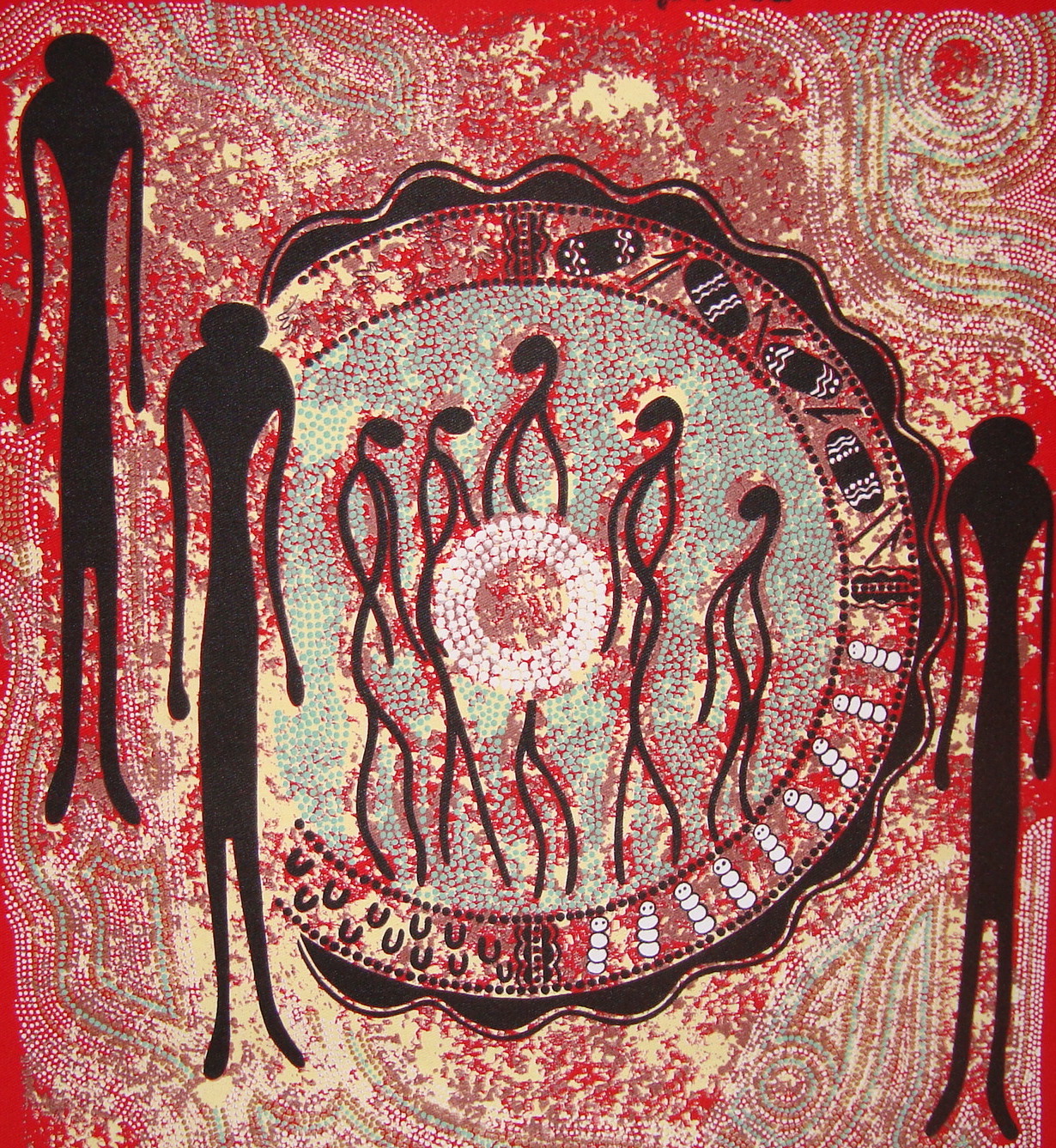
As I proceed through my day, my biggest challenges all center on emotions.  Not what happens, but how I feel about what happens.  I’m a wa-ay codependent child of an alcoholic, which means that, left to my own devices, I tend to be a “reactor” aboriginemore than an “actor.”  Boy, do I hate that!  It sounds so wussy, but it’s true.  Most of the time, what you think (or at least what I think you’re thinking) carries more weight than what think or do.  I need you to be okay with me.  Better still, I’d prefer you be favorably impressed.  That way, you’d hand me a chit of personal worth I could add to my lowly little scrap heap.
But, damn it, I don’t want to live that way!  So I pray pretty much “without ceasing.”  I ask god, not to strike me well, but to show me, “If I were well, how might I see this?”  My experience has been that god nudges me toward compassion – for myself and others – which helps me reframe what’s going on and strengthen new neural pathways so that my thinking will change over time.  And slowly, gradually, it’s been working, which brings us to…

Thank You.  Again, it’s fine to start with the matter of whether I swallowed any booze today.  Even after 20 years’ sobriety, I still hop into bed some nights and think, “Geez!  I didn’t drink or even think about drinking all day!”  I still get this little image of my insides as all clean and healthy compared to that slimy feeling from back in the day.  And I thank god for it, for having let me be just one of Earth’s creatures, a gizmo fit to walk the planet exactly as I was made.

But I also “give thanks in all circumstances.”  What a trip it is to be alive!  What a freaking awesome world this is to cruise through, filled with miracles we can take for granted any time we switch to autopilot.  Bits of nature (outside my window, a finch just landed amid the gently stirring leaves of a cherry tree), goodness our culture has produced, signs of caring between strangers, and my chance to be part of it all – I thank god for this over and over.  Sure, there’s plenty of darkness; just read the news.  But there are also many who unite in trying to combat it, connecting in their commitment to… love.

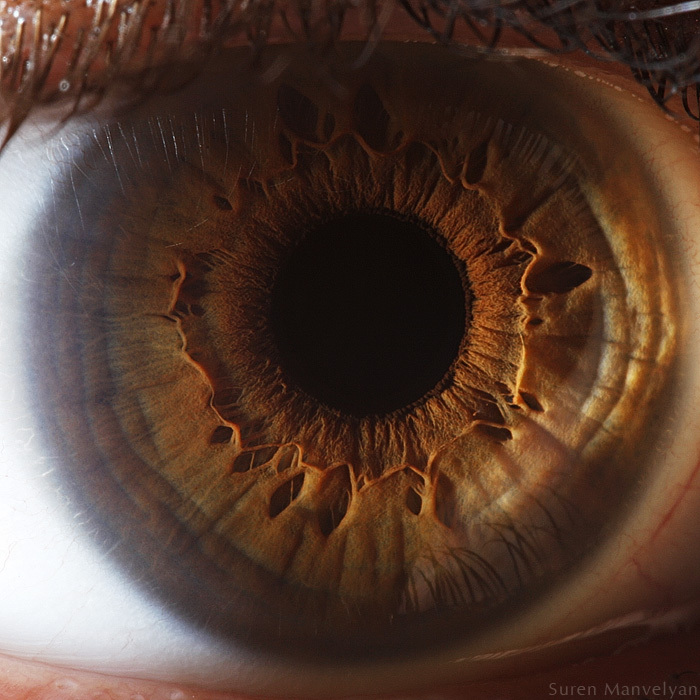
CloudmoonGrowth.  How can the “Please and Thank You” prayers change your life?  For me, they’ve expanded my awareness a tiny bit, like the rings on in a tree, with each challenge I walk though sober.  eye
I am a tiny bit more aware.  It’s how we grow in sobriety.

At the core of my consciousness is my spirit.  It’s not my body: my body includes all my brain’s thoughts, all my body’s issues, and all the emotions they stir up between them.  I love those guys – don’t get me wrong – but they’re not my spirit.  My knowingness, my receptiveness, the live wire of my presence – this is the essence that sprang out of my body during my Near Death Experience, but it’s also the core of what I am as I brush my teeth or drive to Goodwill.  I am a little piece of god.  So are you.  And that reality becomes slightly more vivid to me with every clod I break as I plow through the lumpy terrain of being alive. I am the plowwoman, the driving force behind one individual human experience.  I need help to push on (please), but with every step taken, I see a little better what a tremendous privilege I’ve been given (thank you)!

scroll

Post to Facebook

2 Comments

Filed under AA, Al-Anon, Alcoholism, Codependence, Faith, God, Recovery, Sobriety, Spirituality

Trashing AA as “Irrational”

Maybe you’ve seen Gabrielle Glaser’s Atlantic Monthly article entitled, “The Irrationality of Alcoholics Anonymous.”  Glaser, a self-proclaimed normie (i.e. non-alcoholic), attempts to illuminate the scam of Alcoholics Anonymous, which passes itself off as the sole antidote to alcoholism, and advocates instead for newly developed drug treatments as a solution more “scientific” than AA’s program of abstinence and spiritual growth.

Maybe you’re indifferent to both this article and AA.  But if you love AA for having saved your life and yet this article doesn’t anger you, you work a WAY better program than I do!  I am angered and for many reasons – the foremost being that I am fond of truth, and the article is rife with inaccuracies.  A second is that I don’t believe in increasing people’s suffering for the sake of a snappy article (or book sales).  Nothing can be gained by slamming AA, but so much can be lost!

The most glaring error, to me, is Glaser’s lumping together AA, which makes no luxury treatmentmoney for anyone, with the treatment center industry that rakes in tremendous profits from addicts and their stricken families by “selling” what one can find freely in AA. Yes, without question, some treatment centers place under-qualified counselors in positions of power and exploit the crisis of addiction to charge exorbitant fees in exchange for a Big Book and an introduction to the steps – but they are not AA!  Quite the converse, they embody every disaster that Bill, Bob, and other pioneers of AA tried to avert with the 12 Traditions.

Wrong also is holding AA responsible for the judicial practice of “sentencing” people to AA.  I can’t imagine anything further from the 11th Tradition of “attraction rather than promotion.”  As we often hear in the rooms, “AA is not for people who need it; it’s for people who want it.”  But thanks to the courts’ total disregard of thisgavel2 policy, many people are forced to attend AA meetings.  Like the treatment industry, the U.S. punitive system exploits AA, funneling unwilling people into the program simply because it lacks the means to otherwise deal with them.  (That thousands of lives have been saved this way, however, can’t be denied.)

Glaser’s allegation that AA touts itself as the sole solution to alcoholism contradicts a clear statement in the Big Book’s forward to the second edition: “Upon therapy for the alcoholic himself, we surely have no monopoly.  Yet it is our hope that all those who have as yet found no answer may begin to find one in the pages of this book…” [italics mine].  In other words, if you CAN’T find any other way out, we have something to offer you here.

Glaser implies that Marty Mann and her 1940s fellows in the National Committee for Education on Alcoholism were scheming to promote AA:  “But AA supporters worked to make sure their approach remained central. Marty Mann joined prominent Americans…”  Gosh, Gabrielle, that’s right!  They were trying to hog the spotlight so they could get…uh… money?  fame?  Does it ever enter your mind that their sole intention was to help dying alcoholics who had not yet heard of any solution?  Do you ever consider that such is what AA is all about?

Perhaps most irritating to me, but indicative of a larger societal misconception, Glaser confounds AA’s higher power with religiosity: “‘Alcohol- and substance-use disorders are the realm of medicine,’ McLellan says. ‘This is not the realm of priests.’”  Excuse me, but what the hell do priests have to do with AA?  Absolutely nothing!  AA is a spiritual program, not a religious one.  Why is this distinction so difficult for so many to appreciate?  Religion tells people what to believe; spirituality calls for an inward search for meaning and truth.  The only goal dictated by spirituality is growth toward loving kindness.

Science, Glaser claims, does not support this charlatan program of abstinence and spiritual growth.  In this oversight, she ignores a wealth of scientific research supporting the success of AA (see Substance Abuse: Alcoholics Anonymous Science Update), simply because no study can figure out why it works.  Spiritual growth does not show up under a microscope – so it must amount to nothing!

microscopeIf Glaser were to succeed in leading alcoholics away from AA, what great gains would be made?  If alcoholics took opioid antagonists like naltrexone or the muscle relaxant baclofen sensibly as Glaser propounds, if everyone would stop this silly business of abstinence and spirituality, from what would Glaser be rescuing people?  “The prospect of never taking another sip is daunting, to say the least. It comes with social costs and may even be worse for one’s health than moderate drinking: research has found that having a drink or two a day could reduce the risk of heart disease, dementia, and diabetes.”  Oh – I see!  Abstinence is scary, so we shouldn’t attempt it.  And not drinking, based on a handful of studies in the past 2 decades, suggests there might be potential benefits for some people from drinking moderately.

For alcoholics, these potential benefits from 1-2 drinks per day do not put much on the scale against death or the misery of living with full blown alcoholism.  Sadly, I am willing to bet that Glaser’s article will, for scores of people in the difficult, early stages of sobriety, serve as excuse for relapse.  Of those, how many will die?  Will Glaser ever know?  Does she care?

There is so much more to AA than not drinking!  People in the program evolve into their best selves.  In a matter of a months, they realize a potential that could not have been brought about by years of opioid antagonist pills and therapy.  In AA I learned to seek a guiding voice other than my ego’s, to love imperfect people as I am imperfect, and to be of service – the most rewarding pursuit life has to offer.  For the first time in my life, I discovered what it is to be happy from the inside out.  I am a different person today because of AA: quitting drinking is only a small part of that.  How tragic to think that Glaser’s finger pointing may rob others of what I have found!

scroll

Post to Facebookif you agree!

15 Comments

Filed under AA, Alcoholism, Recovery, Sobriety, Twelve Steps

What the Heck is a Spiritual Path?

A number of people dear to me in AA just can’t seem to stay sober.  Their recovery looks hopeful at times: they’ll string together a few months or even a year, but then they go out again.  At some point they drag themselves back looking haggard and beat up and often shockingly aged.  They share about being totally defeated, about knowing they can’t drink, and about their rock solid determination to stay sober this time.  Sadly, though, a few months or a year later, they’re gone again.

The Big Book tells us why: they “failed to enlarge [their] spiritual life” (35).  During my drinking, I very much wanted to be a good person so I could be happy – to be true to my partners (at least in everything they knew about), to be honest (enough), and to contribute to the world (so I’d be respected).  If I had brought that same approach to getting or staying sober – reliance on self – I’d be drunk today.

Here’s the deal: There are two ways to live in this world – by the guidance of ego, or by the guidance of something greater than ego.  Practicing alcoholics, when they look inward, consult with the authority of ego, which has one sole criterion for direction: me.  “What will make me feel good/get me what I (think I) want?”  I may desire amazing personal experiences, or to feel attractive or valued.  I may want money and a sense of importance – the recognition of achieving great things.

The active alcoholic may sincerely wish to live by higher principles because doing so might help goalsthem grab the things they link to happiness – like a career, a relationship, or esteem among peers.  But in all their navigation, the joystick always remains firmly in the grip of ego, whose sole objective is to get what it wants.  That’s why most practicing alcoholics harbor secrets.  That’s why their love is striated with selfishness.  And it’s why they’re never immune from the seduction of alcohol, because ego assures them a drink will feel awesome – or at least bring relief – and they take the bait.

What’s the alternative?  To be holier than thou?  To renounce earthly life and pursue some lofty enlightenment?

No.  It’s to admit we’re irreparably flawed, and to commit to trying every day to be a slightly better person than we were yesterday – not by the criterion of what feels good, but by the light of what, in our deepest heart, we know to BE good.  Pursuit of goodness – however we define it, however faultily we seek it, and whatever that progress may look  like –  is the essence of a spiritual path.

Let’s look at this idea in pieces.  First, admission.  The ego howls againstbroken vase the idea that we are irreparably flawed.  “I can fix myself!” it insists.  “Really!  I know best!”  To admit we’re permanently confused and lacking integrity requires the two greatest forms of ego Kryptonite on the planet: honesty and humility.  This first step is the foundation on which every alcoholic bases a new experience of living.

Next, commitment.  A spiritual path requires that we accept the futility of living by self-propulsion.  Though society at large touts “taking control,” a spiritual path requires relinquishing the claim that we’re qualified to call the shots.  In AA this means we commit to the steps, the fellowship, and service work.  For non-alcoholics, too, some form of spiritual community is often involved, whether a sangha, a church, a yoga or meditation group, or some other family of like-minded people also trying to grow spiritually.  We begin to test our own thinking – which we have admitted to be flawed – against the wisdom of this sounding board.

What we know to BE good is the thing we commit to.  The Big Book tells us, “deep down in every man, woman, and child is the fundamental idea of God.”  Unfortunately, many people assume this idea should equate to the God of religion, which may or may not be found anywhere in them – let alone deep down!  My own god has nothing to do the God of any religion – that’s why I forgo the capital ‘G.’

My god is the tremendous power of unconditional love in which all blue-and-white-orchidlife is swimming.  Not everyone needs to go to AA to find and tap this source, but we all need it to get and stay sober.  This power is available to anyone by any name or in any form – as innate goodness or a religious deity or the frickin’ Force from Star Wars: how you conceive of it does not matter.  What changes your life is that you trust its goodness and ask it for guidance in all actions, at each juncture.

Of course ego still elbows its way in countless times, because we’re still flawed.  But our intention remains to shift our point of reference away from ME! to a deeper sense of what is right and good.  We try to pause before we act – especially when we don’t want to – in an effort to discern the two courses.  That is the path – intention and effort.  We hang onto a faith that if we keep earnestly seeking one day at a time, we will be guided.

Ironically, this course usually brings us a richer life than we could ever have imagined. At my home group last night, the chair took issue with the saying, “My worst day sober is better than my best day drunk.”  He pointed out that he’d had some “fuckin’ awesome times” in his early drinking.  But when I was called on, I cross-talked a tad: I recalled that all my “awesome” drunken times boiled down to feeling awesome about ME! Even if I said, “I fuckin’ love you, man!” I really meant, “Wow! – I don’t feel alienated and alone!”  The spiritual path opened by AA has nurtured in me the gift of genuinely loving others – of living for something larger than myself.  That’s what we’re here to do.  And really, it’s a high no glory days can touch.

scroll


Post to Facebook

Leave a comment

Filed under AA, Alcoholism, Recovery, Sobriety, Spirituality, Twelve Steps

‘Coming Out’ as Alcoholics? The Anonymous People

I finally watched The Anonymous People.  It’s a 2013 documentary on the history and current status of the Recovery Movement – something I, at 20 years sober, had never even heard of.  The “War on Drugs,” I was vaguely aware, has caused drug incarcerations to soar, such that today the vast majority of convicts are serving time for addiction-related crimes.  The film’s creators are striving to get addiction recognized and treated as a disease by the health care and judicial systems.  Such a controversy opens a can of worms way too wriggly for me to address in 1000 words.

What I can talk about, however, is my biggest take-away from the film: that through a misinterpretation of “anonymity”as referenced in the 12 Traditions, many of us alcoholics conceal our recovery from the people we know and thus inadvertently propagate public misconceptions of both alcoholism and AA.  In the long run, this secrecy hinders our goal of helping the still-suffering alcoholic.

marty_mann

Marty Mann*

Nowhere in AA literature are we told to keep our own recovery secret.  The 11th Tradition deals with PR; no one can purport to represent AA.  The 12th Tradition says only that anonymity is the “spiritual foundation of all our traditions.” But way back in the 1930s, Marty Mann busted out in the public eye with Bill and Bob’s blessings, trying to recast the public’s perception of what an alcoholic looked like.  The film hopes to carry on her tradition – as I believe every alcoholic ought.

I’ve been open about my recovery pretty much since I got sober in ’95.  At the time, I’d been very much ‘out’ as a lesbian for years.  I’d seen no reason people who considered me a friend should not know who I was; if they had a problem with my orientation, they had a problem with me.  In the ’80s I used to make a major production of outing myself to my college English classes on the last day of class.  I remember one year I wore a T-shirt under my men’s jacket that read across the back, “Nobody knows I’m gay.”  The class gasped when, after thanking them for the quarter, I turned and dropped the jacket.  One student in particular, I remember, a street-smart African American boy, was absolutely shocked:  How could such a smart, nice teacher be… one of them-?

Copenhagen 91

Teddy-girl me, 1991

That’s why we out ourselves.  We stand up as real people who contradict the phobic stereotypes of public opinion.  All lesbians are ugly shrews who can’t get laid.  All alcoholics are ill-disciplined louts who throw away their lives.  When we out ourselves among people who respect us, we confront prejudice with our human dignity: Look at me and say that.

Flyers I posted on that campus to start up a gay student union were torn down or defaced with hate slurs and warnings about hell.  I’ll never forget walking into that first meeting: the room I’d reserved was far too small.  About 30 kids looked up from every seat plus the floor, tables, and walls, their faces alight with a vulnerable hope.  “We’re gonna show this campus a thing or two,” I told them in my coolest butch tone.  They beamed.  And we did, too.  I left that college after three years, but the group we started still thrives today, 25 years later.

When my son was about two and a half years old, I heard a 5-year-old in the park sandbox scoff at his explaining that he had two moms.  “Who’s your dad?” asked the boy. “Everybody has a dad!”  As bewilderment crumpled my son’s face, I swooped him up, my heart pKeno ounding, and, struggling to remember this other child was also innocent, offered a gentle correction.  After that, I begged my parents to spend a huge wad of my future inheritance to place my son in a pro-diversity preschool where lots of kids had same-sex parents.  By the time he started first grade at a public school, although his moms had separated, he knew firmly in his heart he just was as “normal” as anybody else.  That deep confidence and happy openness about his moms has won friends and warded off bullies.  Even in his absence, I once overheard one of his friends tell another, “Dude, Keno’s other mom’s girlfriend is an awesome cook!”

Keno trout

First trout caught with his AA ‘uncles’; confident boy

My son has in many ways been my teacher. When I directed a writing center at the UW, I was ‘out’ to each year’s team of student tutors about my gay past and current recovery.  Though I’d jumped tracks again and resumed dating men after 14 years (it’s all in the addiction memoir: my lesbian era was something like a geographic), my son still had two moms, so I shared our truth.  The tutors, in turn, came to trust me with issues of their own, such that my desk became something like Lucy’s Psychiatric Help stand in Peanuts.  In the six years since the center closed, one of those students has sought out recovery and several have come out as gay or transgender.  Others have reached out over Facebook asking if we can meet up and talk about life.  A few have even asked me for help with their alcoholic friends.  And one of those friends, I know for a fact, is sober today in part from my help.

In short, I share my recovery with anyone who wants to know me personally.  “I’m so sorry!” some respond.  “Can’t you just have one drink?” ask others.  I keep it simple, but I speak my truth.  I wrote my memoir to share my entire story in hopes that it might help others who struggle with the same experiences and emotions I did.

The rooms of AA have been my “safe school,” where I’ve  learned that alcoholics are individuals normal in every respect but for a potentially fatal disease that should carry no stigma.  Listening to other alcoholics unfold their inner experiences, I’ve learned, too, that all the quirky emotions I’d imagined, in my isolated loneliness, made me terminally unique are in fact just part of being human.  Whatever I’ve done, thought, or suffered has been known to countless others, and we can help each other through it all.  Showing up in our whole truth, without shame or secrecy, is how we change the world.

scroll

* Click here for video on 1930s National Committee for Education on Alcoholism

Leave a comment

Filed under Addiction, Alcoholism, Recovery, Sobriety

Enlightened but Dead: Why Alcoholics Need God

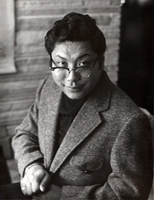
Pema Chödrön’s teacher, the venerable Chögyam Trungpa, drank a lot.  Drinking was a staple of his sanga, where he threw big parties among his students, and he was known to carry vodka in a water bottle.  Trungpa explained in one of his spiritual books why his drinking differed from that of an ordinary alcoholic:

“Whether alcohol is to be a poison or a medicine depends on one’s awareness while drinking. Conscious drinking—remaining aware of one’s state of mind—transmutes the effect of alcohol. Here awareness involves a tightening up on one’s system as an intelligent defense mechanism…

“For the yogi, alcohol is fuel for relating with his students and with the world in general, as gasoline allows a motorcar to relate with the road. But naturally the ordinary drinker who tries to compete with or imitate this transcendental style of drinking will turn his alcohol into poison…”*

Sadly, it appears that Trungpa’s liver failed to read the book and appreciate his “transcendental style” of yogi drinking.  Despite diagnoses of cirrhosis and doctors’ warnings that more drinking would kill him, Trungpa continued to drink heavily until it did indeed kill him in April of 1986, when he was just 48 years old.

Trungpa~

Philosopher Alan Watts was considered a sage throughout the ’60s after he rose to prominence with the 1951 publication of The Wisdom of Insecurity – a pivotal text  introducing Eastern concepts to Western society.  The book considers the ego’s dis-ease with the unstable nature of reality and its efforts to create security via constructs of memory and projection coalescing in a story of “I,” which Watts dismisses as unreal: only awareness divorced from self can access reality.  Watts, like Trungpa, was well aware of the futility of escapist drinking:

“One of the worst vicious circles is the problem of the alcoholic.  In very many cases he knows quite clearly that he is destroying himself, that, for him, liquor is poison, that he actually hates being drunk… And yet he drinks.  For, dislike it as he may, the experience of not drinking is worse… for he stands face to face with the unveiled, basic insecurity of the world.”

Unfortunately, identifying this vicious circle did not grant Watts the power to exit it.  Like Trungpa, he often gave lectures while sloppy drunk. He, too, developed end-stage alcoholism that deeply concerned his ex-wife and friends, and died of alcoholic cardiomyopathy – e.g. heart failure – at 58.

Watts~

Both of these men were masters of self-knowledge and the meditative disciplines that yield inner peace.  Both could speak brilliantly on the ills of ego and treasures of honesty.  Yet neither could stop drinking.  And they’re just two examples out of jillions.  Why did they fail?  Why would people so insightful not quit what was clearly killing them?  The Big Book explains:

“If a mere code of morals or a better philosophy of life were sufficient to overcome alcoholism, many of us would have recovered long ago.  But we found that such codes and philosophies did not save us, no matter how hard we tried.  We… could will these things with all our might, but the needed power wasn’t there. Our human resources, as marshalled by the will, …failed utterly.” (p. 44)

In Shambala: The Sacred Path of the Warrior, Trungpa makes very clear that no god enters into his vision.  “Over the past seven years, I have been a presenting series of ‘Shambala Teachings’ [on]… secular enlightenment, that is, the possibility of uplifting our personal existence and that of others without the help of any religious outlook.”

Good for him!  I agree wholeheartedly that self-knowledge is great stuff.  But it will not cure alcoholism.

In a 1968 talk, Bill Wilson, one of AA’s founders, described the initial amazement of the psychiatric community at the unprecedented breakthroughs of AA.  Many alcoholism specialists attended meetings and saw their own alcoholic patients, with whom years of psychiatric work had failed, achieve abstinence and mental health in a matter of weeks.  One suggested that Bill assemble a group of such psychiatrists to testify before the Academy of Medicine about AA’s success. So Bill asked them.

“And not a one would do it! …In effect, each said, ‘Look, Bill. You folks have added up in one column more of the resources which have been separately applied to alcoholics than anyone else… [But] the sum of them won’t add up to the speed of these transformations in these very grim cases… So for us, there is an unknown factor at work in AA.  [B]eing scientists, we… call it the X factor.  We believe you people call it the grace of God. And who shall go to the Academy and explain the grace of God?  No one can.'”

questionSorry, folks!  But the X factor, and that alone, is what saves an alcoholic: Connection with a higher power, to god as we understand it.  We ask god to help us, and we’re relieved of a compulsion that no amount of self-knowledge can touch.

Humility is the key ingredient to receiving grace.  We have to ask for it, accepting that we’ve been defeated.  By contrast, Trungpa, for all his wisdom, exhibited a strong tendency toward hubris.  The true warrior, he explains in Shambala, is both Outrageous and Inscrutable.  “…[H]aving overcome hope and fear, the warrior… fathoms the whole of space.  You go beyond any possibilities of holding back at all…. Your wakefulness and intelligence make you self-contained and confident with a confidence that needs no reaffirmation through feedback.” In other words, I got this!  Screw what anyone else thinks!

Watts, meanwhile, purported to embrace God, but his abstractions reduced it to a mere abandonment of I, which enabled connection with the eternal now and rendered us one with God.  For Watts, there could be no “Hey, god (you) please help (me)!” because the you / I division negated the fact that we are god: “[W]e cannot lay ourselves open to grace, for all such split-mindedness is the denial… of our freedom.”

Reluctance to seek god’s help almost killed AA co-founder Bill Wilson, too.  Relatively unknown in AA culture is the fact that Bill was so deeply repulsed by the God element in his friend Ebby’s solution that he went on drinking for three weeks after Ebby’s visit and landed yet again in a sanitarium.  There, after Ebby had visited him again to recap the spiritual solution, he had this experience:

“And again the despair deepened until the last of this prideful obstinacy was momentarily crushed out. And then, like a child crying out in the dark, I said, ‘If there is a God, will he show himself?’ And the place lit up in a great glare, a wondrous white light. Then I began to have images, in the mind’s eye, so to speak, and one came in which I seemed to see myself standing on a mountain and a great clean wind was blowing, and this blowing at first went around and then it seemed to go through me. And then the ecstasy redoubled and I found myself exclaiming, ‘I am a free man! So THIS is the God of the preachers!'”

Light
In my Near-Death Experiences group, I’ve heard several people describe similar experiences, when the “white light” of love brilliantly illuminated the room around them; but, naturally, many of Bill’s contemporaries considered him daft for insisting it had happened.  In his talk, he attributes this phenomenon not to his own specialness, but to the role it enabled him to play in AA, explaining that the powerful faith most AAs develop over months or years was for him simply crammed into a few minutes: “It did give me an instant conviction of the presence of God which has never left me… And I feel that that extra dividend may have made the difference in whether I would have persisted with AA in the early years or not.”

In other words, Bill was given what he needed not only to overcome a lifetime of harrowing addiction, but to co-create AA and persist in carrying its message into the dark world of his fellow alcoholics.  Why?  Because he asked… and frickin’ meant it.

.

scroll

.

PS: I have tremendous respect for both these sages as well as for Buddhism.  By no means am I critical of their legacy or beliefs.  Reading both authors did contribute to my self-knowledge, for which I am grateful, because such insight aids in a lifetime quest for serenity.  My point is merely that self-knowledge, no matter how deep or how keen, cannot arrest this disease, as these two tragically premature deaths testify.  See comments below. 

– Louisa

  • (Heart of the Buddha, p. 153)

31 Comments

Filed under AA, Alcoholism, Drinking, Faith, God, Recovery, Sobriety, Spirituality, Twelve Steps

Step 3: A Decision

What if I trusted god?

Doesn’t trust by definition mean not knowing?  Isn’t god by definition something I can’t know?

But what if I truly trusted trust?  Could I place mine in this unknowable god?  What if I surrendered this constant fight to fend off invisible threats and beat every dark fear to the punch?  Maybe I could give it up this constant need to choreograph the people and events around me if I decided it wasn’t necessary.  What might that feel like?  Why is it so difficult?

I could try thinking about how I got here.  embryosHow much say did I have about what I thought ought to happen in my mom’s womb?  Innumerable complexities aligned with inconceivable precision to bring about the organism that is me.  My mom herself had no clue what was happening.  All life originates from a process far beyond anything humans could ever comprehend or rig.  To give that process a name or classify it as “biology” doesn’t make it any less dumbfounding.

At birth our consciousness consists of trust and little more.  What is crying but half a bridge-?  As a survival strategy, it’s founded on the blind, helpless trust that someone will respond, someone will care.  That impulse – a precursor to prayer – is the only power given a human infant, but it’s the only one we need.

All that for what?  So I could grow up to earn money and buy groceries?  So it seems.  What if god has no extravagant “plan” for my life but loves me overwhelmingly regardless, simply for being me?  What if all the love I’ve ever felt and absorbed, every embrace from intimates and each kindness from strangers, every affection to ever move my heart – what if all of that energy pooled together were just the tiniest smidge of god?  What if an ocean of love is what generates every leaf and imbues every living thing with the urge to venture and delight and to rest and heal?

I might decide that, in ways far beyond my understanding, this intelligence orchestrates the outer world as much as inner, shapes every circumstance as much as every cell.  What if I could see that there is even more beauty, grace, and agility in the spirit of the gazelle in that moment when the cheetah’s jaws close on its throat than there was in its spirited flight, as it escapes the bonds of muscles and neurons to rejoin its brilliant source?  What if my perspective let me understand that from the beginning those two have been one, because the cheetah (in its mother’s womb) and the gazelle (in its mother’s womb) are two notes of the same symphony, one wave overtaking another with the same momentum?

earthMaybe then, in the same way, I could be okay with whatever happens.  Maybe I’d get it that my life is just a life, a storyline beaded with random incidents but beautifully embedded in some enterprise both gargantuan and exquisite, more vast than I can ever conceive.  It could be that the universe is indeed unfolding as it should, with me in it, so that I am still, in a sense, within a global womb.

Maybe I should think about the clear-eyed toddler I saw today outside Fred Meyer whose mom had just put her astride a fiberglass horse (without even feeding it quarters), who squealed with the uncontainable delight of now: something AMAZING was happening!  The mom’s love showed in her eyes, but my love for the two of them flooded inward from my smile – just some lady walking by – with intensity neither could guess.  Why?  Because they were me with my son ten years ago, and my mom with me half a century ago.  With them were the echoes of children long since aged and dead from centuries past, their horses of ceramic or wood now crumbled to dust.

That child will die.  My friends and family and pets have died.  And, yes, sometimes shit happens that is not of god.  There’s suffering and loss and disease and unfairness, so that my eyes teared at the child’s tender vulnerability, like mine and like yours.  God can’t guard us from pain and mishap.  But always, always there is love and more love – growing back, surviving, passed down – and the chance it gives us to cast its brightness on the now, to delight in our sheer being, to know joy.  The avalanche takes down trees centuries old, but amid the rubble, with the season, springs a tiny seedling.  These are the ways of god.


Fir Seedling

What if I put my trust in that ongoing love – mine, yours, god’s – as a tremendous net I can fall into?  What if all of it is good – not just striving but failing, not just birth but death?  Then I can fill in the dark unknown future with a flickering faith that god’s goodness is the ultimate power underlying all life, that it has always supported me whether I’ve known it or not, and that it always will.

That way I’m freed to seek out my own fiberglass horse in whatever form it takes.  I can rejoice right now just because I’m alive.  I’m here solely to be me and love you, not to stress and plot and worry about stuff I’m powerless over anyway.  I seek god’s guidance, try my best, end of story.  My ideas of how everything should come about or end up are just that – ideas.  As for reality, God’s got it.

I’ll roll with that.

Leave a comment

Filed under AA, Al-Anon, Alcoholism, Faith, God, Recovery, Sobriety, Spirituality, Twelve Steps

The Wisdom of Ordinary Schmucks

Today, Thursday the 29th, I have 20 years clean and sober. Woot!

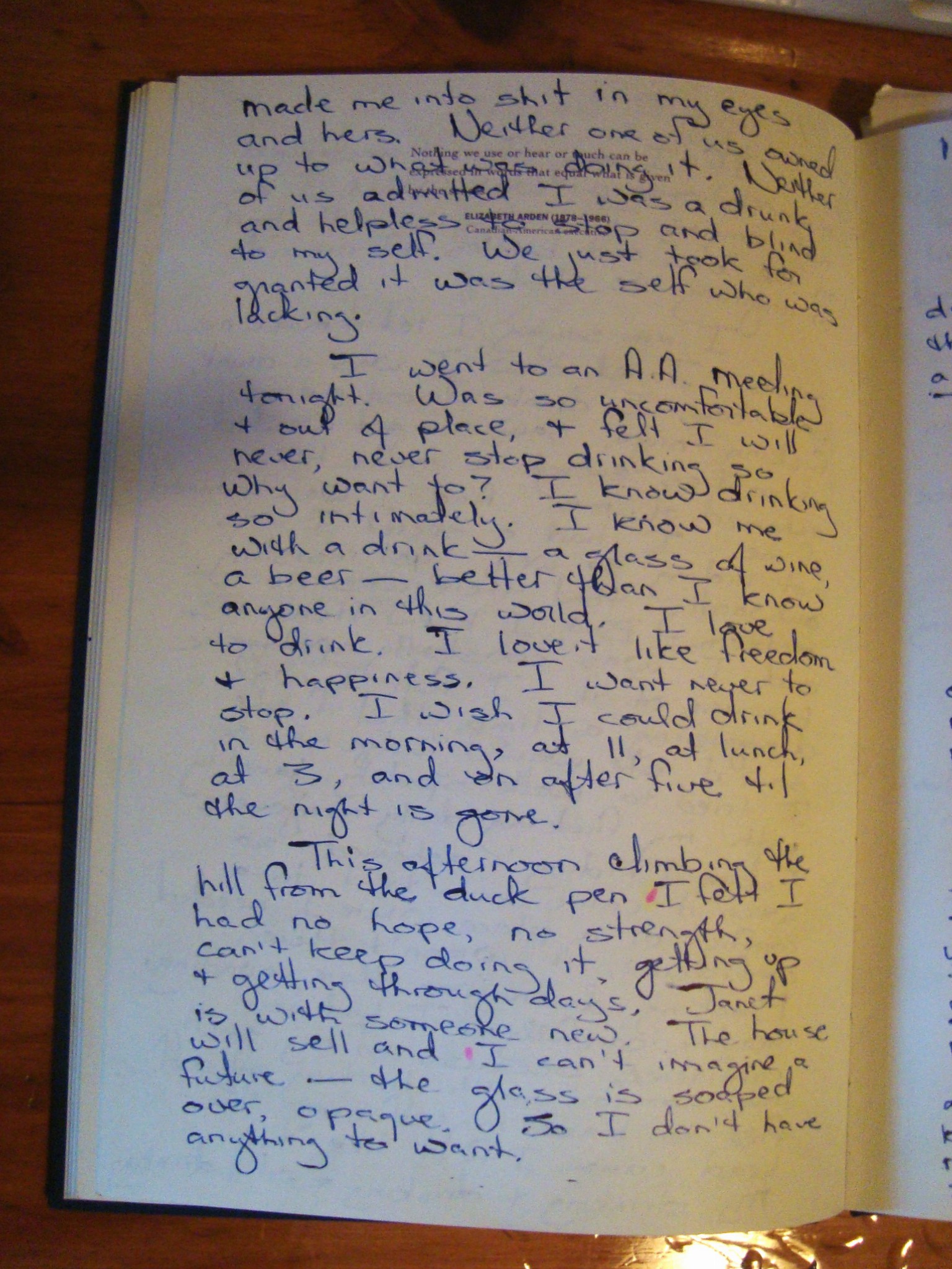
Here’s a journal entry I wrote 20 years ago after my first AA meeting:

1/29/1995:  “I went to an AA meeting tonight. Was so uncomfortable and out of place, and felt I will never, never stop drinking so why want to? I know drinking so intimately. I know me with a drink – a glass of wine, a beer – better than I know anyone in this world. I love to drink. I love it like freedom and happiness. I want never to stop. I wish I could drink in the morning, at eleven, at lunch, at three, and on after five ‘til the night is gone.”

2015-01-29 08.01.00

journal page

Writing that was a scared, deeply confused and unhappy semi-suicidal woman who thought her mind ought to be able to get her out of any jam. The last thing she suspected was that those people among whom she felt “so uncomfortable and out of place” would not only save her from slow death, they would teach her to transform living into something beautiful and joy-filled. I remember judging every person in that room by the standards my family had ingrained in me. Anyone lacking at least a BA, anyone with a working class job who wasn’t slumming ironically for the sake of some art form, was ignorant. As for the 12 Steps, it took me about 40 seconds to read them off the wall. How could such vague ideas accomplish anything?  Sure, these ordinary schmucks believed in them, but I was way smarter and more special.

Wisdom, however, is neither academic nor cultural. It’s about living – how we respond to the passions of being human, like our desires for love, fulfillment, and specialness.  It concerns how we deal with fear, anger, and the impulse to defend what we love.  And it’s far more a matter of what we let go as false than what we cling to as true.  The ordinary schmucks in AA taught me how to cast off the hoary crust of fear that had blocked me from the truths of god and my fellows, freeing me to be myself and to love you intrinsically because you are, at heart, just like me.

The first things the schmucks taught me were wisdom bytes passed down in AA, which made such an impression that I remember to this day where I sat relative to the person speaking.  “I can’t fix my broken brain with my broken brain,” said a guy at the next table with unruly hair sticking out from under his baseball cap. “That’s why I need the help of something greater than me.”  Whoa! I thought, no wonder I can’t get better!  Too bad I reject everything to do with God!  But then a few days later an overweight woman in polyester pants sitting to my left against the wall said, “If you can’t think God, if that’s objectionable to you, just think Good Orderly Direction.  You can seek that – something deeper than your own thinking.”

There light_bulbare countless other key moments when light bulbs went on for me. “My ego tells me I’m the shit, and my self-loathing insists I’m a piece of shit.  But God grants me the humility to be right-sized – to be a worker among workers, a driver among drivers, a sober drunk among sober drunks.”

But even more important, what the schmucks have shared with me is their experience of living life. The first story I ever identified with was told by a guy (sitting near the door to my right) who ordered Chinese take-out that arrived without chopsticks.  He knew he had a pair in the house, some nice bamboo ones, but couldn’t find them. He went bananas searching for them.  He kept looking in the silverware drawer again and again, lifting out the tray and shoving stuff around. Furious, he checked all kinds of illogical places – the junk drawer, his desk, the broken dishwasher – while his take-out got cold. It seemed to be about a principle.

This was in maybe my second week sober, but I still hear that guy’s words every time I go bonkers trying to find something.  “It’s just my ego refusing to accept what is” echoes in my mind.  “It’s just me being human and flawed.”  I’ve since heard countless stories of ways to be human and flawed, issues I once thought were mine alone.  Incrementally, they push me toward acceptance of things I cannot change.  But what about that courage to change the things I can?

The 12 steps grew from empty suggestions to a revolution in life perspective once I worked them with a hard-ass sponsor who pushed me to see beyond my story.  They changed me, dredging up insights from the depths of my inner knowledge and compelling me to face them.  When I didn’t like what I saw, I was willing to ask my god for help, much as I’d asked in theoak-tree beginning to be relieved of the compulsion to drink.  I was willing to work with god to become what it (i.e. love/Good Orderly Direction) would have me be.  I write this now when I have almost no time in my week because of my commitment to follow through on that direction.

Telling the truth – the human truth. That’s what I heard the schmucks doing over and over once I’d awoken through the steps.  They taught me with their shares that there’s almost always a deeper, more honest revelation underneath whatever story we’ve cooked up about ourselves and others.  Pretty much any problem boils down to “I’m afraid” of not getting what I think I need or losing what I have.  And any happiness boils down to “I love.”

I’m no longer the woman who wrote of clinging to her glass, to her liquid freedom and happiness that had, unfortunately, quit working.  Some wisdom comes simply with age.  We begin to see the old in the young and vice versa, see the broke in the rich, and to have compassion for people living though pains we have known.  Whether one is in AA or not, pain can be the greatest teacher if it moves us to replace our defunct illusions with love and tolerance rather than tout them with righteous judgement.  Gradually, we come to see the trajectory of birth to death resembles a meteor’s streak through the night sky: the small and insignificant burn bright, casting light where there was none, and then go out.  We can’t begrudge anyone the color or angle of their flare.  We are all miraculous and unique ordinary schmucks.

Thanks for 20 years, guys!

20 year coin

2 Comments

Filed under AA, Alcoholism, Drinking, living sober, Recovery, Twelve Steps

Is Plain Old Living Fun?

Active alcoholics, it seems to me, often crave action, adventure, glamour, and a lot of craziness, usually as ways of getting attention.  johnny-cash-finger-2I know I chased all these things – and loved to mentally flip off anyone who told me to settle down.  I see this tendency still in newcomers and chronic relapsers.  Hell, yeah, mothahfuckah, I’m a bad ass!  I’m wild!  Carpe F-in’ Diem is my middle name!

In my addiction memoir, I talk about the god-inspired (and abrupt dog-death inspired) aha moment when I realized the Pied Piper of the ultimate party, a phantom I’d been chasing all my life, was actually a demon who would lead me to my death.  Another face of that demon is dissatisfaction.  It’s discounting all that you have as not good enough while elevating the lure of something shiny – a party, a romance, a feat, some moment in the spotlight – as the prize that will fulfill you.

I’ve written before about the crisis that washed over me in 2012 with the one-two punch of my siblings venting emailed rage about my memoir (I was a narcissistic, AA-brainwashed liar dishonoring our family) and the news that I had breast cancer, both in the same month.  I’ve also written a bit on the way the intensity of that pain/fear acted on me like a forge, recasting me with a changed outlook.  Pain, the Big Book tells us, is the touchstone of growth, and all of us have to pass through our own to gain wisdom.  But the view from this side is something I can try to describe – something that may be of use.

Back in the day, I was constantly trying to fill the gaping hole in my chest with SOMETHING.  Alcohol, drugs, relationships, excitement, drama-analysis, fglamorood.  I knew my life shouldn’t be what it was.   I could read our culture; I could perceive what was rated glamorous or worthy; I understood the goal.  Media of all kinds broadcast examples of who and what was interesting and enviable.  I internalized all that and judged myself inadequate.

And yet at the same time, I drank to rebel against all that shit.  Drinking made whatever the hell was going on now just fine.  Sitting home alone or at a dive bar, I was a rugged individual who didn’t give a rat’s ass what anybody thought of me.  One of the best magical spells worked by alcohol was its jacking up my ego ipso facto.  I didn’t have to do anything but swallow to render my life a poignant drama worthy of attention.

So… I’ll be 20 years sober in two weeks, on the 29th.  I’ve walked a long road since those days, calling on god and gradually strengthening that relationship, so that while I used to “check in” with god through prayer, now god and me hang out 24/7 (although I think now more in terms of my guardian angel).  In any case, with spirit filling that hole, what life is about becomes a whole lot different.

Beautiful

To love life itself is an active enterprise.  Love flows only one way – from your heart outward.  But the marvelous thing is that it bounces back as reflection, whether from people, physical things, or even memories.  The more you love, the more love fills your life.

At some point, I realized how deeply in love I am with ordinary, boring, day-to-day life.  When I take the time to consciously love it, even the most mundane details reflect back their beauty and infinite preciousness.  Why infinite?  Because life is a chunk of a few decades cast against eternity.  Though I believe our spirits live on beyond our bodies, I also think that being in our bodies – spirit made flesh – is an amazing trip, a hybrid 3-D extravaganza of multi-tiered awareness.  Consciousness itself is a wild ride.

My cancer was caught early.  For a lot of people, like pancakesmy sister and friends, it wasn’t.  I get to be here.  What tremendous fun it is to make a pot of tea!  Will you look at this cozy I crocheted for the tea pot?  It’s yarn of bright colors, blue and yellow, and stained under the spout.  A little slice of living; the way things work. The trees out my window are earnestly being trees – those same things we drew as children, the green ball on the brown stick.  God, I love them!  My rug is worn threadbare from all the life that has tramped through this house – my son and I, friends and sponsees.  I have to go to work.  I don’t like work.  But I love the whole experience – getting to be a person who says, “Shit!  I have to go to work now…”  A person who drives just like everyone else.  Who hopes to be liked Carand to understand things and yet worries.  I buy apples and bring them home.  All the tiny chips of this life mosaic grab my attention one by one – but only for this little chunk of years.

I guess words are failing me as I try to describe this shift from taking everything for granted to seeing it, living it, loving it.  Mindfulness is the noticing of everything.  Gratitude recognizes the good things we have. But to really savor life is to go beyond both: it’s to notice each detail and call it good, delight in the sheer fun of it.  It’s to adore the whole kit and kaboodle.

I still like wild fun and adventure.  It was an adrenaline rush to zipline through a rainforest canopy on my vacation, to be the first in our group to jump from a 200 foot platform and shoot down the mountainside.  I love wilderness hiking, treks that some people would call extreme, either alone or with my boyfriend.  (He rode his bicycle alone 1800 miles from the Yukon Territory to his home on an island north of Seattle – that’s a bit much for me.)  I love dancing advanced ballet (and well), sweating alongside teens who could be my granddaughters.  In all these things, the stream of stimuli comes fast and thick.  Sometimes overload still thrills me.

But it’s not what I live for anymore.  Today, I live to be alive.

scroll

still life

3 Comments

Filed under AA, Alcoholism, Happiness, living sober, Recovery, Sobriety, Spirituality

Beyond Religion’s Painted Window


Long before Eckhart Tolle, there was Alan W. Watts:

…[Y]ou can only know God through an open mind just as you can only see the sky through a clear window.  You will not see the sky if you have covered the glass with blue paint.  But “religious” people… resist the scraping of the paint from the glass.

[O]ur beliefs… block the unreserved opening of mind and heart to reality.

Alan W. Watts
The Wisdom of Insecurity (1951)

.

Hi guys.  So, like, what’re you using to read this right now?  What’re you thinking stuff with?  Is it this?

Cadaver Brain

Fresh out of a cadaver. Click for more photos – or better yet, don’t!

 .

“Gross, Louisa!” you say.  “No way!  Not me!  I think with… uh… the space of knowingness.”

The brain is an organ the size of a small cantaloupe weighing about 3 pounds, 60% of which is fat.  It processes sensory impressions, records them selectively as memory, and works out relationships among them based on principles of causality and classification – relationships we abstract as “truth.”

Now, if you’ll excuse me for a minute, I’m going to use mine (a little rounder than the one above) to determine the nature of the universe as a whole, and whether or not it contains a spiritual entity such as we call “God.”

Hmm.  Okay.  Sorry – still thinking…  Meanwhile, here’s a random shot from the Hubble Telescope for ya.

Butterfly emerges from stellar demise in planetary nebula NGC 63

This dying star, once about five times the mass of the Sun, has ejected its envelope of gases, now traveling at 950, 000 kilometers per hour, and is unleashing a stream of ultraviolet radiation that causes the cast-off material to glow.

.

Back already?  I’m still thinking about it.  Here’s a representation our solar system’s planets – see me thinking on earth, there?  I’m at my laptop.

.

solar scale

Louisa on Earth, weighing god’s existence

.

Okay – ahem! – I’m ready.  Religion?  Atheism?  Aren’t you just dying to know what I’ve decided is TRUE?  Because it’s going to have so much bearing on reality, isn’t it?  I mean, I’m so fully equipped with exhaustive knowledge on this topic, what’s left to guesswork?

Okay, maybe I’m being a tad sarcastic.  Yet the hubris of people both religious and atheistic strikes me as ridiculous to the same extreme.  Both purport to rule on something far beyond the limitations of human thinking.  Sure, written language has enabled humans to compile the collective knowledge of successive generations and arrive at highly technical creations like the Hubble Telescope.  But when we attempt to compile our thinking about spiritual matters, we’re trying to use words and symbols oriented toward material reality to represent that which can  be experienced only inwardly and via immediate consciousness.  And it doesn’t work.

Self-consciousness is a condition thrust on human beings.  If our lives are to have meaning, we must construct that meaning, and contemplating who and what we are is essential to the process. However, contemplating or “opening the mind and heart to reality” does not entail nailing down a pronouncement or definition that we can believe in as “truth” and convey to others.

In fact, to stop short of closure, to embrace faith as NOT knowing, can be highly uncomfortable.  We dislike the insecurity of trusting in something ineffable, of having no solid descriptions.

Religion stepped in long ago to flesh out those descriptions ByzJesusand abolish insecurity.  Human brains do just fine with stories, characters, and rules, so religion provided them in order to harness a unity of belief among followers – and in some cases, wealth and power.  By Watts’ metaphor, religious texts and dogma present us with a blue painted window intended to represent the open sky of god.

But religion, unfortunately, got distracted in specifying the exact shade of holy blue paint, debated oil versus latex and what holy brush had been used.  Each sect developed “right,” easy to grasp answers – the “idols” of which Watts writes.  If I am certain about the validity of my beliefs, I can say, “Fuck you and your wrong beliefs!”  I can do this with terrific confidence, whether I’m a right wing Christian or a jihadist Muslim.

Atheists, on the other hand, point out, “Hello, folks?!  That’s just some fuckin’ paint, dude!  There’s nothing holy about it, any more than what’s on the walls and ceiling – can’t you see that?  We should just close the goddamn shade and forget about it!”  And they do. They stay in the brain-made world, never venturing outside its constructs to gaze up in open-mouthed wonder.

Whenever I talk of god, people tend to assume I’m talking about some kind of blue paint God.  This is frustrating.

In my AA homegroup, for instance, there are a number of “praytheists” – people who pray because they get results, yet purport not to believe in God.  As alcoholics in AA, we’ve all encountered the inexplicable fact that when we pray for help, something relieves us of a compulsion that has proven far beyond our control.  One of these praytheists – a man sober 24 years – shared last night, “I met with my sponsee today.  We didn’t mention god once.  We talked about our kids, about our jobs – about real things we care about.  God’s not one of those things.”

So much I wanted to ask him, “Why do you think you meet with your sponsee?  Why don’t you tell him to fuck off and get a life?  Why do either of you give a shit about your parasitic kids or your waste-of-life jobs?   Could it be… LOVE?  Might you share a faith in basic GOODNESS?  Look into the depths of those feelings, of how it really feels to ‘care about,’ and you’ll see that you guys talked about nothing but god the whole time!  You just didn’t abstract it and name it directly!”

But he would hear only blue paint.  😦  And I would be saying, “Fuck you and your wrong beliefs!”

blueskyIn my experience, love is the clear window in our hearts – not our brains – through which we glimpse our own blue sky of god – the energy that powers our spirits.  If you don’t sit with love, if you don’t pursue the meaning of its non-logical warmth as it is actually happening to you, you’ll take for granted love’s fragments here and there and never see it as the fabric of meaning that unifies your entire existence.  As Watts says, “[L]ove that expresses itself in creative action is something much more than an emotion. Love is the organizing and unifying principle which makes the world a universe…” If you can make a commitment to actively love love, you’ll be jettisoned through Step 3 and toward Step 11.  You’ll begin to feel god – not comprehend it.

Our brains, by the way, are not all we are.  Among my own crowd of Near Death Survivors, all of us have experienced consciousness that continued while our brains were shut down and dying.  We would argue that the “YOU” at the helm of your fat-bag brain is, in fact, your spirit.  This is why people sometimes “know” things before they happen, or hear voices, or, in some cases, see spirits.  People who have crossed over and come back with memories – whether brain experts like Eben Alexander or just ordinary schmucks like me – will tell you they felt more “themselves” and more highly conscious outside their bodies than within them.

Here too, though, the experience is impossible to convey in words.  Even those people who want to believe us misconstrue what we describe, assuming the “other side” to be exactly like this material one.  It isn’t.  For instance, loving mothers like Mary Neal will tell you they didn’t particularly care about leaving their children behind, that they knew their children would be fine without them.  Why?  I think because on this side we parcel up love and dole it out selectively, as things we “care about,” so that we’re dependent on “loved ones” for meaning and spiritual sustenance in life.  On the other side, love is all there is.

How does that work?  I don’t know.  I really don’t.

feel free to share ⇓

2 Comments

Filed under AA, Afterlife, Faith, God, Near Death Experience, Recovery, Spirituality, Twelve Steps

Freedom: the Gift of Recovery

Got a few resentments in AA?  Certain personalities in meetings annoying you?   Big Book thumpers causing internal eye-rolling?  Somewhere inside, are you thinking you may be able to manage your alcoholism yourself – that it’s really not such a big deal?

Maybe it’s time for a little ATTITUDE ADJUSTMENT with the help of this visual aid I lifted from the Wikipedia page on alcoholism.  It’s an engraving from the mid-1800s called “King Alcohol and his Prime Minister.”  Check it.  (It’s enlargeable. )

King_Alcohol_and_his_Prime_Minister

CLICK to zoom: King Alcohol & his Prime Minister, engraving by John Warner Barber (1820-1880) .

In the background on the left, we’ve got the normies drinking with impunity.  A little closer we’ve got the socialites making cocktails look 19th Century glamorous.  But once we get to the Dram Shop, which is the old term for bar or tavern, things ain’t lookin’ so good.  Sure, there’s a pretty barmaid serving, but one patron is looking pretty disheveled, two are brawling on the floor, and another is passed out.  In the foreground the Virgin Mary is seen bumming about it all (at least, I think it’s she).  The anchor could refer to maritime alcoholism?

On the right we see some consequences listed: Poverty, misery, crime, and death.  There’s the jail, the poorhouse to which with someone is escorting a drunk, a cop with his nightstick dealing with another. We see a home gone to shit, a dad passed out while his wife and kids stand by, and closest to us, a rich guy all dressed up but still on his face.  Closer still are the graves, one of them immediately outside the home.  Jails, institutions, and death – as we often hear in the rooms.  The only thing I don’t see is an asylum.

Lastly, check out King Alcohol and his sidekick Death, themselves.  Death’s bottle is corked: he doesn’t touch the stuff, only offers it to recruits.  The King himself looks confused and miserable in spite of his lavish banner.  His face has marks all over it, his brow is furrowed, his hair and beard a mess.  Around his neck what seems an amulet is actually a locked chain, and chains run down his robe in place of royal ermine.  He holds aloft a large goblet, almost like a chalice, but encircled by a snake.  Above it hovers a reference to Proverbs 23, line 32:

31 Do not gaze at wine when it is red,
    when it sparkles in the cup,
    when it goes down smoothly!
32 In the end it bites like a snake
    and poisons like a viper.

Whoa.

If you lived in the 1800s, that would be the full extent of your program:  “Do not….”  Don’t look at booze, don’t drink booze.  Just don’t.  Just stop.  Look at the facts.  Use your willpower.

“Do not…”  If I’d been born during that time, I’d be a perma-drunk or dead.  Because I tried “do not” for 14 years and ended up bombed every night, like my father before me, because the “wine” I would “gaze at” lived in my mind.  As soon as enough of the poison had cleared from the night before, I’d think, “Yes!  I’m talking about just one pretty, perfect cocktail/ beer/ glass of wine!”  Next thing I knew, I was reaching for that snake-entwined goblet, oblivious to the bite and poison.

And I did that again.

And again.

And again…

It cracks me up that at the top of King Alcohol’s barrel list is “strong beer” – as if “weak beer” might be okay.  In other words, even in his desire to capture the entirety of alcoholism, Barber lacked a basic understanding of addiction: the allergy in me – which makes me break out in endless “more!” – can be triggered by as little as a single dose of cough medicine.

What Barber did understand, though, was that we die.  We’ve been dying for millennia, at least throughout the 10,000 years that humans have been brewing alcohol.  Slowly, century by century, those of us with alcoholic genes have been winnowed from those European cultures where alcohol has long been a staple – a fact highlighted by rampant alcoholism among Native American populations where alcohol has been introduced only in modern history.  Why do 10% of Native Americans die of alcoholism, compared to 0.2% of Italians?  Because most Italian alcoholics are already dead!  They died centuries ago leaving fewer descendents.  Still, around the world, how many of us are killing ourselves slowly, blurring our thinking, drowning our love of life?

You might wonder, why did Barber choose to depict alcohol as a king, rather than a slave driver or a warlord?  The answer is in addiction.  Alcohol rules our lives, but at the same time, we venerate it as our savior.  Left to our own human powers, there is no way out.

BUT HERE’S THE GOOD NEWS!  I’m sober!  You’re sober!

In June of 1935, the world of the alcoholic changed forever.  Fifteen minutes is how long alcoholic Bob Smith agreed to talk with that sober guy, Bill Wilson.  Three months is how long they ended up hanging out before Wilson even went home. They had discovered something amazing: the connection between one alcoholic and another when speaking the truth of our condition.  They also put together the physical allergy piece Bill knew with the spiritual malady piece Bob knew and – SHAZAM!!!  For the first time in human history, alcoholics had a way out!

Never again will we as a class of afflicted people have no solution.  Shivering denizens no more, we’ve found a way to overthrow the tyrant with a far greater power – one of love, of life, of goodness.  Whether you live near a slew of AA meetings or it’s just you with your Big Book and computer, you possess two insights that Barber and the dying drunks throughout history never had:  1) That your body reacts differently to alcohol than a normal body does, and 2) that alcoholism can be treated via a 12 Step program of spiritual growth, usually (but not always) in connection with fellow alcoholics.

What I know is this: Living sober has brought me and countless other hopelessly doomed alcoholics a joy of living beyond our wildest dreams.  We are free.

scroll

2 Comments

Filed under Alcoholism, Recovery, sober, Sobriety, Twelve Steps