Tag Archives: AA

Step 3 and Happiness

I’ll have 21 years sober on Friday, which is kinda unbelievable to me.  That’s long enough to be of age to drink.  Where did the time go?  How did I get so friggin’ old?

No matter.  My life’s damn good.  On this ordinary Saturday I slept in til 8:00, then texted alternately with two sober friends – one joking about the “sober paws,” the other mired in grief, both of which I get: life lived fully awake is both a blast and painful as hell.  Meanwhile, my 14-year-old son put an adolescent chicken on my head, because he and I are close and sometimes like toAdolescent chick let our chicks scuttle around the house like cheeping Keystone Cops.  I soon left for a ballet class where, keeping up with an advanced group, I nailed a few turns and jumps that pleased me.  Came home to write this so I could postpone cleaning my house for the big fat 21st birthday party I’m throwing a week from tonight.  Just normal life, and I’m happy.
Twenty-one years ago, I felt alone in a dead, condemning world from which I longed to vanish.

What’s made the difference?

Step 3: Made a decision to turn our will and our lives over to the care of God, as we understood God.

When I first tried Step 3, I completely misunderstood it.  I thought I was supposed to give up my will and live exclusively by god’s.  Short of lying down and waiting for a windstorm or something to throw me into action, how was that possible?  But that’s not even remotely what the step says.  Look at the exact wording: we still have our will, but we’ll turn it over to god’s care.  Or at least, we make a decision to do so.  God’s will, you’ll note, isn’t mentioned.

Personally, I have a problem with the notion of god’s will or god’s plan for me.  Why?  Because each strikes me as a product of needWill strives to realize an intention; plan foresees a chain of events that will bring about something desired.  I don’t see god as having either.

People in my Near Death Experiences group who’veGalton Board been shown their futures describe it more as a 3-D Plinko board of endlessly branching possibilities.  They say the spirit showing it to them had no agenda – any series of choices was dandy, including death.  My own NDE was different: I was told “You’re not finished” and sent back against my will, revived by CPR despite lethal levels of drugs still in my system. 
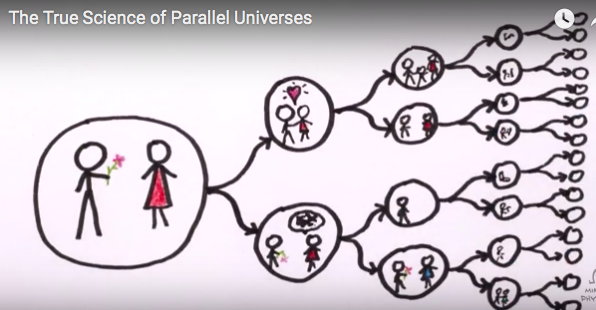
Potential FuturesSo let’s just say, if god does have a will or plan for each of us, it’s a super flexible one.  Let’s say you planted two tiny genetically identical elm tree seedlings 50 feet apart.  Then you came back 100 years later to find two huge, swaying, graceful elm trees.  Would you expect them to be identical?  Would one of them be wrong?  Of course not.  Because each grew into its own uniqueness.  Incomprehensibly detailed variations make up the richness of this world.  And if god wants anything for us, it’s that we grow into our incomprehensibly unique selves.

Unfortunately, growth seems a lot more complicated for humans.  The trouble comes from dealing with fear and pain, and encountering the voice of ego which promises to protect us from both.  I grew up with so much fear and pain that I poured all my trust into ego.  What else was there?!  As an alcoholic, I found booze boosted ego’s power, generating a workable substitute for the self-worth I lacked.  My world shrank smaller and smaller as I pursued ease and comfort in the bottle.  I learned nothing about myself or how to live.  I hit bottom as a 15- year-old girl in 34-year-old body.

Step Three opens the door for learning.  AA’s “psychic change” is what happens when we stop listening to ego and start seeking a deeper truth.  Good Orderly Direction (GOD) was the term offered to help me ease into my own conception of god.  I learned to subject each idea to this test: does it feel like Good Orderly Direction?

GODWorking the 12 steps with a sponsor exemplified Good Orderly Direction.  The process taught me spiritual principles – like gratitude, humility, love, and service – that shape a worthwhile life.  I learned that they’re realized through daily acts of empathy and kindness, and that when I live in accordance with them, I can generate self-esteem by doing esteemable acts.

I’ve learned that meditation pays off in the ability to distinguish my awareness from my thoughts.  A babble of ego-thoughts still passes constantly through my brain – stories of envy, self-pity, resentment, and how I could fix everything.  Today I can detach (usually) from them, knowing (usually) that they’re worthless.  I can sometimes glean the aftertaste of regret before I do the wrong thing.

I’ve learned that, for me, the biggest challenge of sobriety is self-honesty.  Honesty with others is easy: I’m an open book.  But to change the things I can, I have to be willing to see the need for change – and I don’t like to. I’d rather pretend things are fine. Or, if I do make a bid for change, it’s still a challenge to do the footwork and then LET GO of the results.  Whenever I’m obsessing – needing to get what I want or for someone else to do/see what I want – I’m trying to boss reality, to shape it to my will – which is obviously  insane.  So the more life beats me up, the better I get at letting go.

As a result, I’ve learned some of most freeing stuff: that what seems urgent is usually not important, and what’s important is usually not urgent.  I’ve learned the wisdom of “Don’t just do something!  Sit there!”  Life flows around me; people flow in and out of my life; I’m powerless over virtually all of it.  My attitude alone is mine to choose, but no longer mine to choose alone.

 

scroll

Post to Facebook

2 Comments

Filed under AA, Addiction, Recovery, Sobriety, Twelve Steps

AA Newcomer Fears

My newest sponsee and I were reading the Big Book together the other night, with me passing on to her all the margin notes my sponsor passed on to me so many years ago. When we got to this passage in The Doctor’s Opinion, I had her change the pronouns as my sponsor had had me do:

Men and women I drink essentially because they I like the effect produced by alcohol. The sensation is so elusive that, while they I admit it is injurious, they I cannot after a time differentiate the true from the false. To them me, their my alcoholic life seems the only normal one. They are I am restless, irritable and discontented, unless they I can again experience the sense of ease and comfort which comes at once by taking a few drinks—drinks which they I see others taking with impunity. After they I have succumbed to the desire again, as so many do, and the phenomenon of craving develops, they I pass through the well-known stages of a spree, emerging remorseful, with a firm resolution not to drink again. This is repeated over and over, and unless this person I can experience an entire psychic change there is very little hope of his my recovery.

Next I asked her (as I’d been asked) to read it aloud and tell me if she identified.  Over the years, the response has varied, but for newcomers seeing this passage for the first time, it’s often tears.  One tough, independent woman of Inuit descent, single mom to a disabled boy, could not finish reading the passage  for weeping.  She murmured, “This is me.  This is my life.”

(But her life changed.  She’s been sober nine years.)

My current sponsee has a few years sober, but she, too, was moved.  In the silence following her simple “Yes,” I could see her  travel back in time.  She said, “I remember… I came home after my first AA meeting, and I sat on the couch, and I just cried and cried and cried.  Life seemed over.  I couldn’t see the future – anything – without alcohol.”

Though it’s been almost 21 years, when I’m sitting with an alcoholic who remembers, I, too, remember my first meetings.  I knew I was an alcoholic.  I still couldn’t speak those words, but inside I’d rounded that corner.  Yet the vacuous terror of living without booze, of identifying with AA crap, and going to meetings for the rest of my life, felt like such a horrific, endless nightmare that I almost preferred to slop my drunken way toward death – privately.

Here are some of the things I feared:moonshine

  • My life would be boring
  • I’d have to pretend to like stupid AA people
  • AA would feel cultish like an Amway scam
  • I’d never feel deeply relaxed and happy again
  • I’d never feel wildly excited and happy again
  • “Psychic change” was mumbo-jumbo – I’d feel this bad forever
  • Steps 4 and 9 would be degrading, so I wouldn’t do them
  • Step 12 would mean consorting with weirdos, so I’d never do that one, either

Now, AA works by attraction, and I don’t mean to promote anything.  I can only report what I’ve experienced and how I’ve changed, and maybe offer tidbits of advice.  I’m just one sober drunk.

  • Meetings vary tremendously, but if they’re based in the Big Book, they’re about the solution.  I got sober at folksy meetings in Olympia, then switched to lesbian meetings in Seattle.  For a few years I preferred hipster meetings where everybody had tats and pierces and spoke in strings of profanity.  I’ve also felt at home at meetings in Boston, LA, Hawaii, and Greece.  Yet any meeting is only as good as the stepwork of people attending.  I avoid informercial (“everything’s wonderful since I worked the steps!”) meetings, and bitch sessions (“but at least I didn’t drink!”).  Look for meetings with fun people who exude the energy you want, who speak honestly of their struggles but apply the solution.
  • Friendships formed when I started going to gatherings outside meetings.  Old friendships deepen, but I keep making new ones; today I have more friends than time to see them all.  This Sunday I went snowshoeing with five kick-ass sober women who say ‘fuck’ a lot.  We laughed and shared frankly and the young ones dropped their pants for bare-ass-in-the snow pics – which I can’t show you ;).  But each of them has a quiet side, as well; each has known devastating misery.


Ks bdaysnowshoe


  • Boring is how I’d describe my life of drinking and faking coolness in contrast to the wide-awake, life-savoring ride of sober spiritual growth.  Even the most painful experiences, walked through sober, are valuable teachers.
  • Conformity is an anathema to every alcoholic.  It’s the disease that’s the same for all of us, and the “way out” – i.e. living by spiritual principles.  Through trial and error, we each find our unique spiritual path.  “And how’s that workin’ out for ya?” is all a wise sponsor need ask.
  • The psychic change grew in me oh so gradually as I worked the steps.  Taking Step 3 made me ready for 4-7.  Doing 8 -11 finally opened the door for 12.  Each time I repeat all 12 steps, I see a little deeper.

Have I changed much?  Hell, yeah.  For instance, these past few months I’ve gotten up early every first Saturday and driven downtown to help cook breakfast for about 150 homeless people.  In the past, it was all about me. But last Saturday, on a freezing cold morning, I was dishing out cheesy scrambled eggs, first server on the line.  I greeted each person directly, recalling a few names, with my heart overflowing.  “Nice hat!  Cheesier or less cheesy?  It’s nice and warm in here, and so are these eggs!”  Faces lit up – they thanked us, wished us Happy New Year.  Some laughed with me.  The sausage guy next to me remarked, “Boy, you sure are Miss Sunshine, aren’t ya?”
And I am.  Except it’s not me, not my light.  It’s Light that shines through me because of all I’m connected to.  Today, I have something to give.  And, as that new sponsee texted me the other day, “I’ve never felt so happy in my life!”


scroll


.

Hey, guys!  We are everywhere!  Thanks for 290,000 views in 2015 – and that ain’t even counting RSS, email, or most Facebook tags.  WordPress says you visited from 166 nations.  I never dreamed my little free blog would attract so many readers.

If I’ve helped any of you anywhere to stay sober another day, I’m super grateful.  I mean, sure, I’m glad if people like my writing and stuff, but even gladder that we all share this thing, this gift, and this connection – and “get” each other.  Love to all of you!


Screen Shot 2015-12-30 at 3.40.44 PM

Nations in white had no views, yellow few, greenish more, blueish LOTS.

1 Comment

Filed under AA, Alcoholism, Recovery, Sobriety, Twelve Steps

New Year’s FOMO and other Alcoholic Horsecrap

What is FOMO?  Fear  Of  Missing  Out.

It’s that sinking feeling that someplace you’re not, lots of amazingly cool people are having an absolutely stupendous time. Maybe there’s kickass music and people are lookin’ sharp n’sexy and having a fuckin’ blast and – oh my GAWD!!! Can you believe what those two did?! That is so hilariously outrageous!  It’s not just goin’ aParty-Dancing-Vectorll over Facebook –it’s like a “fun times” montage out of a Hollywood flick!  If you could be there mixin’ it up you’d feel – oh my god – so damn good! You’d be dialed into life, you’d be carpé-ing the fuckin’ diem all night long!   But you’re missing it!

As Katie Perry sings:

Last Friday night

Yeah we danced on tabletops
And we took too many shots
Think we kissed but I forgot

Yeah we maxed our credit cards
And got kicked out of the bar
So we hit the boulevard

We went streaking in the park
Skinny dipping in the dark
Then had a ménage a trois

Yeah I think we broke the law
Always say we’re gonna stop-op
ooh-ohh*

Here’s what the song leaves out: live those lyrics and you end up with a busted ankle from falling off the damn tabletop, years of credit card debt, and maybe even salmonella because you skinny dipped in a fucking duck pond.  You’re lucky if you don’t end up in jail with charges on your record or an STD from the ménage a trois with morons.  Of course, it goes without saying that you’ve poisoned yourself again ‘til you’re heaving up bile.

Lets-partyNo, Katie doesn’t really mention that part. Neither does your FOMO.  It airbrushes away all those pesky consequences and lures us with the promise of a bright and shiny “great time.”

It’s Also Called Immaturity
For normies, FOMO spikes in youth when they’re highly peer-oriented, but as they mature into adulthood, FOMO diminishes to a rare blip on the screen. The trouble for alcoholics is, once again, our perspective is skewed.

Our disease carries many tricks in its bag.  Though normies don’t understand, we  often speak of it as having a mind of its own, exploiting whatever ploys avail themselves to keep us using or, in recovery, to trigger relapse.  A lot of alcoholics crave adventure – a sense of living on the edge.  So addiction broadcasts FOMO to persuade us that swallowing a neurotoxin is really the key to livin’ large.

Much like the craving for alcohol, alcoholic FOMO can never be satiated.

For example, New Year’s Eve of 1982, after snorting coke in the car and paying some absurdly high cover charge, my future (ex) husband and I sauntered into a hip and glitzy Boston nightclub. We scored a table near the dance floor, ordered champagne, and lit up our smokes. We danced. But at as the countdown for midnight approached I was struck by the realization I still recall so clearly: We were at the wrong club! The one down the street was way cooler! No one here was even worth impressing because they, too, had fallen for the wrong club!  If only I’d known! If only we’d gone there! I was missing out!!

This pattern would repeat itself for over a decade. I never did find the right club or party or even picnic, because if I was there, a better one had to be someplace else.

Recovery = Reality
FOMO is really just another guise of codependence. It’s not actually a yearning for fun; it’s a belief that we can gain something that will deliver a shot of wellbeing by being seen in the right places doing the right things. At some level, we believe others hold the power to validate us, though we’re actually validating ourselves through projections of those people’s imagined esteem. The esteem has to seem to come from them to be any good – we can’t feel it simply by knowing and valuing ourselves.

More and more I’m convinced most alcoholics are also codependent. The source of pain for all codependents is an external locus of self-worth – often because we grew up in dysfunctional families where we did not get what we needed to develop a strong sense that we are loveable and worthy. We keep chasing and chasing it in others and never getting any closer.

While non-alcoholic (classic) codependents try to subdue their pain by concerning themselves with what others should do and ‘winning’ love by caretaking, alcoholic codependents subdue it not only with alcohol, but with attempts or impress and winCodependent over others, often becoming social chameleons and regarding friends as something like collectible baseball cards.  Active alcoholics can’t really love our friends. We can only seek relief via people – and “love” that relief.

When we get sober, we begin to seek a higher power that can grant us the worth we’ve so desperately sought in all the wrong places. With guidance from sponsors and a growing sense of Good Orderly Direction, we can begin to live a life of integrity that lets us discover our worth as loving and lovable human beings.

But FOMO still nags at us to forget all that. It can wheedle into our minds at any time, but New Year’s Eve is its favorite holiday – especially for the newly sober.

The Big Book’s authors knew all about FOMO.  While they do instruct us “not to avoid a place where there is drinking if we have a legitimate reason for being there” (p. 101), they also caution against attempting to “steal a little vicarious pleasure from the atmosphere of such places.”  They warn us to “be sure you are on solid spiritual ground before you start and that your motive in going is thoroughly good.”  Not just good – thoroughly good.  In other words, don’t bullshit yourself.

In my almost 21 years sober, I’ve never found a thoroughly good reason to go hang with drinkers at a New Year’s Eve party.  I prefer to usher in the new year with a good night’s sleep and a cushy set of earplugs.  Sobriety fills my life to the brim, and I know it.

scroll

Post to Facebook
.

* Katie Perry Lyrics – https://www.youtube.com/watch?v=Cdyfr4lU8sk
See also 6 Tips for Holiday Parties

.

16 Comments

Filed under Addiction, Alcoholism, Codependence, Codependency, living sober, Recovery, Sobriety

Spiritual Experience

Sometimes I wish I could loan my faith to others.  At least I felt that way the other night at my homegroup when the topic was “your spiritual experience.”  In share after share, people balanced guarded reservation with the undeniable fact that, once they sincerely asked a higher power for help, their addiction was lifted and a new way of living began for them.  A few also shared that certain inexplicable synchronicities or phenomena had strengthened their faith.

I really hoped to get called on.  If you could raise your hand in AA, I’d have been bouncing in my chair – “Ooo!  Pick me, pick me!”  My faith is HUGE and strong, and I wanted to share it!  I don’t believe – I know ( just like Carl Jung! – this is an awesome, quick clip!).

sky angelsMy addiction memoir recounts the tale of my slow (and ongoing) spiritual awakening.  It tells how there came a definite turning point in 2003 when I finally dropped the walls I’d been holding up against god.  Before that, I’d locked my Near Death Experience (NDE) and subsequent paranormal experiences away in a “not relevant to regular living” vault.  When I was “feeling spiritual,” I’d turn to god; otherwise it was was business as usual.  Weird Thing #9 led up to the transformative acknowledgement that god really is omnipresent in all that lives, beyond anything my brain can conceptualize or imagine.

On that day, I turned away from loyalty to society’s consensual reality in much the same way I’d turned from loyalty to alcohol and drugs some 8 years previously.   In both cases, I’ve never looked back.

My god is not religion’s God.  It’s the life force, the collaborative, animating energy of Love and the collective intelligence of all life it has ever generated. Nothing is lost.  Energy can’t vanish, even as a result of mass extinctions.  The sun keeps pouring energy into our life system, and the system keeps growing.  You’re a part of it.  Your trillions of separate cells collaborate toward the larger purpose of you, which/who in turn is meant to serve the greater purpose of we.

After Weird Thing #9 in 2003, it still took me 8 years to Google Near Death Studies, and still another year before I went to an IANDS meeting.  As with my first AA meeting, I was leery of a bunch of kooks.  And, as with my first AA meeting, hearing my inmost experiences described by strangers blew me away.  I soon realized I had, again, found “my people.”

In fact, only about 10% of our Seattle IANDS group at any given meeting has actually died.  But almost everyone there (usually about 60 people)  has experienced some kind of overtly paranormal event that caused them, too, to break from the physical-only view of the world that society condones.

Just as it’s “safe” at an AA meeting to share our ups and downs of sober living, so it’s “safe” in an IANDS meeting to speak of guardian angels, the overwhelming Love of the Light, and encounters with dead loved ones, or – if they’re in your story – demons.

Here’s a brief excerpt from one of our members’ stories.  A severe allergic reaction, combined perhaps with asthma, had caused him to collapse, aspirate, and die one night on a California beach.

When I’d been flipped over, I had sand and vomit all over my face and… she thought it was gross and didn’t want to do [CPR].  I still was [above them] saying, ‘I’m fine, I’m okay!… I don’t want to bother you!  I’d much rather you be happy!’…  But she did it.  I could see her bending down and getting ready to press her lips to mine.  And almost as soon as that happened, it felt like a car crash or something.  I was immediately back through my own perspective, I was definitely in my body… it was like being slammed back into me.  …I don’t know how to describe it.

I remember seeing her over me… At this point people are all around me and I’m just laying there on my back.  And I know that they’re asking me, what’s your name, what year is it, who’s the president.  I… I didn’t care.  All I could focus on were two things.  I could see their lips moving – I couldn’t actually, for some reason, hear their voices.  The only thing I could hear were the waves from the ocean, and the only thing I could look at were the people that were helping me – but they were… people that were helping the people that were helping me.

Um… for lack of a better term – I don’t like to use certain terms, but – for lack of a better term, I would call these ‘angels.’  I don’t feel they were there connected specifically to me, but that maybe they were there connected to those people – that we were all part of a collective effort, that everyone had the same – goal? – in mind.  It wasn’t that the goal was to bring me back, but that we were all taking part [in something bigger].

How wonderful to be free to know in an IANDS meeting that god is real!  Those rooms glow with vestiges of the Light.  By aligning what’s happened to me with what others have seen and described, I’ve come to believe that the loving presence I knew on the other side was my guardian angel, and that this same entity is what often answers not just my prayers but my private thoughts – not necessarily when I’d like or with what I’d like, but somehow.

orb close close orb2
Just before these pictures were taken in 2013, as many sober friends who knew I had cancer sang Happy Birthday to me, my embarrassment was interrupted by a different thought-voice: “Louisa, this is as good as it gets!  Don’t resist.  Just let them love you.”  If orbs are nothing but dust motes on a lens, why would photos from two different cameras, from two angles, at two different moments show the same orb in the same place?  That’s my angel.

So… back to my homegroup: “What’s your spiritual experience?”  I wasn’t called on, so I’d resolved to share once the meeting opened for volunteers.  As soon as it did, though, before I could open my mouth, came the thought: Don’t.  Only listen and love.

I countered, “I only want to help people!”

Bullshit, came the next thought/voice.  You think you know more just because you know different?  Let be.

Boy, was it hard to abide by this!  I had to sit on my hands, especially through the long silences.  Puppies don’t always pee on the newspaper, and I don’t always listen to guidance – but this time, I did.  When the secretary finally called time, I sighed: Phew!  Made it!

I got home.  I went to bed.  And in the morning I remembered clearly that AA works only because we all keep our gods to ourselves – since we do “not need to consider another’s conception of God.”  To go off about my IANDS group and NDE would be no different from someone going off about how Jesus Christ is Lord and Savior.

Because spiritual experience is, like sobriety, an inside job.  Each person grows their own experience.  Much as I’d like to, I can’t whomp my big fat weird tree down in front of anyone – each person has to germinate their own inner seed and nurture it over the days and years of their life.

What do you call that, when you’re great guns to do something and another thought/voice tells you not to – or vice versa?  How, exactly, do Steps 6 & 7 work in your beliefs?  “Do not let any prejudice you may have against spiritual terms deter you from honestly asking yourself what they mean to you” (p. 47).  You can call it superego if you prefer, but, as long as it’s a calling toward love, I call it direction from whatever it is that’s helping me.

scroll

.

.

3 Comments

Filed under AA, Afterlife, Faith, God, Near Death Experience, Recovery, Spirituality

Recover-ING or Recover-ED Alcoholic?

Some folks in AA take issue with the words sun-thru-cracks-in-door“recovering alcoholic,” preferring to classify themselves as having “recovered from a seemingly hopeless state of mind and body,”* and thus from alcoholism.

Not me!  Sure, my mind and body are healthy and I’m filled with hope.  Even so, an inner part of me remains as broken today as when I first walked into the rooms.  To me, that’s a gift.  Knowing I’m intrinsically flawed motivates me reach for god’s love each day by actively loving what is.

As long as my recovery’s a process rather than a check-box, the doorway is still opening.  There’s always more good stuff to seek – deeper honesty, truer humility, simpler joy.  I’ll never classify myself as a “success,” a done deal.

Here’s a little story about why.

Ten years ago, I was church liaison for an AA group that met in a wealthy neighborhood. For years, the church complained that we left cigarette butts in their parking lot. Homegroup meetings addressed this problem with lots of announcements and a two-person outdoor cleanup team. During our final winter, I served as Official Butt-Ranger myself, scouring the lot with my headlamp long after everyone had left, picking up every soggy thing that could possibly be construed as a butt. Even so, the complaints continued and we were finally given notice.

I phoned the church and asked to speak directly with the priest since our meeting, which drew over 150 drunks every week, would be tough to relocate.   What a huge and diverse crew we were!

In addition to plenty of wise old-timers and on-fire yearlings, the group included several mentally ill regulars. A muttering homeless guy, Dave, came for the coffee and smelled sooooo atrocious you couldn’t sit within three chairs of him. But you could observe each week’s unsuspecting newcomers as they took a seat next to him and, stage by stage, awakened to that fact.

We also had a schizophrenic young man I’ll call Harold, who occasionally suffered irrepressible outbursts at someone not there and had to be escorted from the room. To deal with this, we designated an un-official rotating service position of “Harold-shepherd.”

I also recall an adorable little curly-haired blonde girl I’ll call Robin who, as she shared, would gradually flush beet red until she was glaring around the room and barking out, “Fuck you ALL! I don’t give a FUCK what you think of me!” Whether to kick out little Robin came up frequently at homegroup meetings, but someone always agreed to have a talk with her, after which she’d contain herself for a few weeks.

Something wasn’t right in these and many others present, but we all kept coming back for the same reason: the meeting helped us.

Eventually, the priest called me at my work. Explaining to him, as I had in many emails to his office, that the butts were not ours, I suggested the nearby freeway exit might be somehow related. He said he thought that unlikely. Abruptly, his tone became frank.

“Listen, I’ve sat in on one of your meetings and I was very unimpressed. There’s swearing! People slop their coffee and don’t clean it up. They speak out of turn. Now you – you sound like an intelligent, well-educated woman. How can you sit with these people week after week and listen to the same drivel over and over?”

A little taken aback, I explained: “Some of those people have only one day sober.  They slop coffee cause they’re shaking so bad. Or a few might be close to killing themselves, so slopping coffee’s just not that big a deal. We mop up afterwards. We clean everything.” I decided to risk quoting one of the meeting’s old-timers: “In AA, we don’t shoot our wounded.”

The priest scoffed. “Wounded? I don’t see anything wounded about ‘em. They’re just lazy and immature!”

This was too much. Part of me wanted to fire back, “Jesus fucking Christ, man! Who’d want to listen you driveling on Sunday after Sunday? I’ll take drunks over your hypocritical ass any day!” Instead I thanked him respectfully for the many years of allowing us to meet in his church and agreed to be out by the end of next month.

Richard Rohr, a Franciscan Jesuit, offers a fascinating critique of Christianity. He points out that admitting our brokenness is crucial to letting god in – through our wounds, the cracks in our shell. Jesus healed the sick and banded with outcasts, not the well-to-do. Only when defeat forces us to admit powerlessness is the ego is quelled enough to shut up and let us receive.

Emperor Constantine

 Christian Emperor Constantine I

By contrast, once Christianity became Rome’s official religion in 313 A.D., it lost touch with the meek and struggling.  Says Rohr, “When you are aligned with Empire, you are forced to prefer a spirituality of achievement, performance, worthiness, and willpower… Conformity to cultural virtue becomes much more important than love of littleness itself or love of any outsider (read ‘sinner’).”**

Me – I ain’t righteous.  I ain’t fixed and never will be.  On daily loan to me from god are my sanity and happiness – and I know it!  The reward is tremendous: acknowledging the remnants of my own brokenness lets me love others through theirs.

I wish I could have taken that priest on a Scrooge-trip to my first AA meeting. My own shaking hands slopped coffee all over the place, which I hoped no one would notice even as I chain-smoked about 12 cigarettes in an hour and dropped candy wrappers under the table, trying my utmost to project a savvy, disinterested coolness that belied the empty, terrified, hopeless, self-disgusted wreck I was inside. In that magic AA room I sensed an energy I could neither identify nor comprehend, but today I can offer the same to newcomers living my past.  Compassion.  Well-wishing.  Patience.  Love.

We moved that old homegroup to a church downtown near a druggie park, but its character changed over time, and after a few years I signed over the lease and switched groups. Homeless Dave froze on the streets years ago. Harold and Robin vanished. Yet the beauty of that inclusive group stays in my heart, a collage of memories exquisitely human in a way that haughty priest (who had not love) will never know.

God breathes love into this leaky skin balloon each day when I ask and open. Like you, I’m a work in progress.

.

scroll

* Alcoholics Anonymous, xiii
**Richard Rohr’s Daily Meditations (thanks, Mick M.!)

Leave a comment

Filed under AA, Alcoholism, God, Recovery, Sobriety, Spirituality

The Serenity Prayer

The word prayer repulsed me in early sobriety, and in some ways it’s still glitchy. It can call to mind a penitent worshiper hunched over clasped hands in some austere setting – and for the non-religious, that just ain’t us! So I’ve come up with ways to make prayer real to me – since fortunately, religion has no monopoly on access to god.

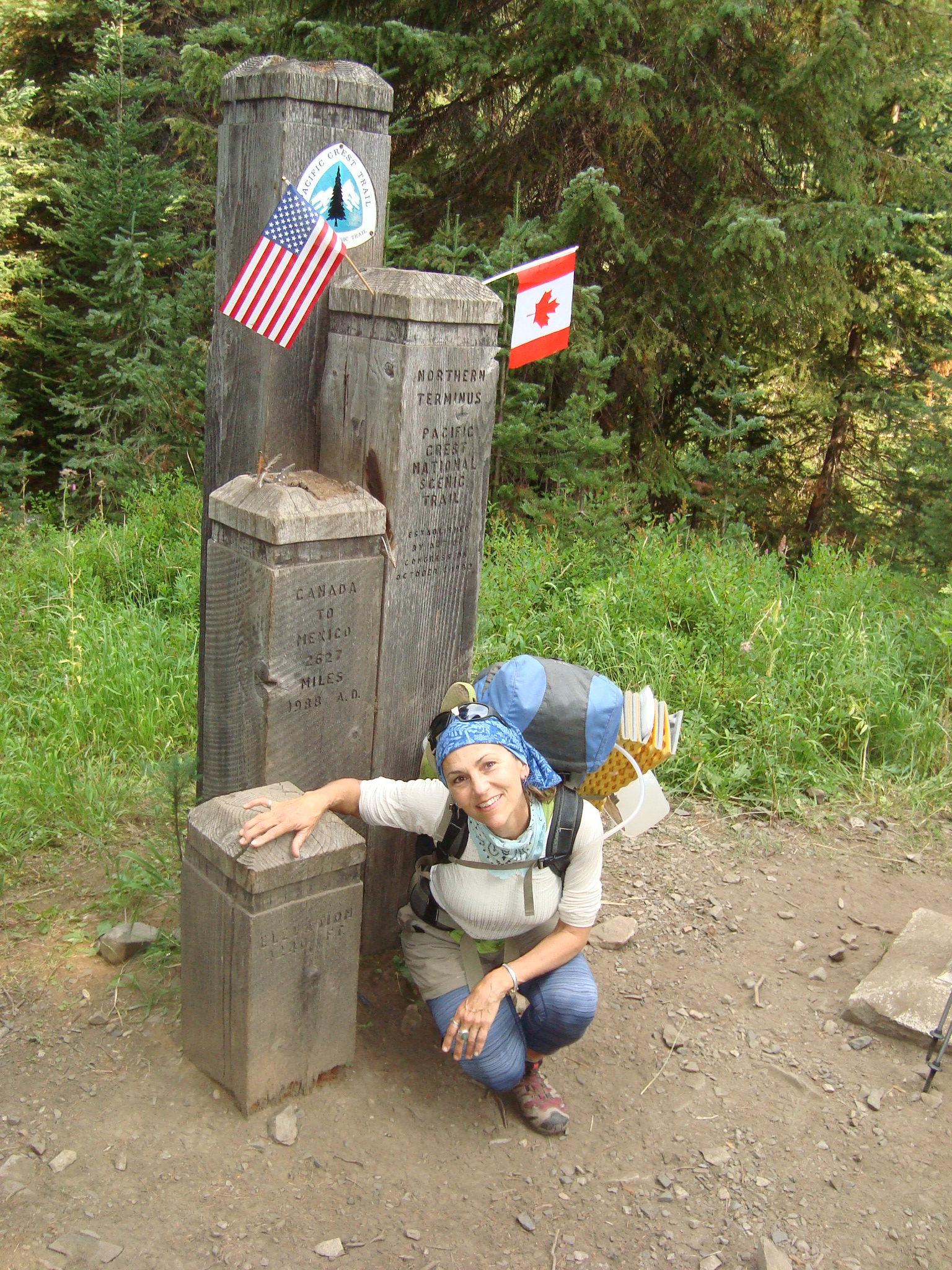
It’s amazing how many people assume it does – that spiritual DSC03916seeking and religion are inseparable.  That’s like claiming I-5 is the only way to get from Seattle into Canada.  Not true.  Recently, hiking the Pacific Crest Trail, I jumped in and out of Canada about five times in few seconds, just for fun.  You can always find your own pathway to god; the important thing is that you seek it with your deepest sincerity.

So instead of prayer, I just frickin’ talk to god. I may gab away and cuss and laugh, or I may get on my knees and weep, depending on how I feel. I may address my lost sister, or guardian angel, or the font of all that lives. Whatever works.

But what do I say?
Fear-based prayers are an extension of self – and a very natural one. All day, from the moment we wake, we’re responsible for meeting our own material needs. We engage our brains and bodies to make shit happen. I want a bagel so I open the fridge and get one. I want it toasted, so I get a knife to slice it and then pop that baby in the toaster. By applying skills, I get what I want.

Problems arise when we apply this approach to spiritual life: I feel restless, irritable, and discontent, so I gulp down some booze and get what I want – relief.  Great!  But fast-forward to the point where that survival tactic has quit working, so I’ve suffered agony at the level of emotional disembowelment, finally become willing, and – with god’s help – gotten sober.

Now I need new ways to fix those old pains, but I don’t know it. So it’s only natural that I try a skills approach: I identify the external problems I think are responsible – the people, places, and things I perceive as fucking up my happiness – and try to manage them to suit my needs.

It doesn’t work.  Dammit!  So I try harder.   Still, no dice.

Now I’m freaking out.  Will I ever get X?  Oh my god, does this mean I’ll always be stuck with this crappy Y?  What’s that I’m hearing in the rooms?  Ask god for help?

Okay… I turn to prayer: “God, please put this damn life-bagel in the goal-toaster for me. It should be toasted.  Surely you can see this. Thank you!  Your child, Louisa.”

Anxious prayerI may think of it as supplication rather than giving god orders. Still, however respectful I may be, I’m backseat-driving the universe. And it doesn’t work!  Yes, god may make some related good of my prayers (especially if they’re for others), but it won’t involve my specific bagel.  The great danger here is that I can feel ignored and get pissed… and turn my back on god.

True prayer, as Richard Rohr and others have written, is not about managing the world. It’s about changing ourselves. It’s about strengthening our relationship to god and accessing the power that god can channel into our lives.

Bagle

Enter, Serenity Prayer

Thank you, Reinhold Niebuhr, for writing this gorgeous prayer for a Sunday service in Heath, MA, in 1943.* You could not have imagined the role it would play in so many lives today.

“God, grant me the serenity to accept the things I cannot change, the courage to change the things I can, and the wisdom to know the difference.”

The prayer asks god to change us, to help us grow beyond whatever we ourselves can muster. We can say it over and over, thinking about what it means, how it moves us.   At different times it takes on different nuances.

Here, unpacked and named, is some of what this prayer can mean for me:  God,

grant me = help me, because I can’t seem to do this myself; I need your love, your guidance, your gifts
the serenity = to fricking calm the fuck down about this stuff, to quit panicking, to quit judging, to let go this urgency
to accept = to allow into my reality, to acknowledge as what is, to give up shoulding on and just let it be true – because it already is
the things I cannot change, = the past, what’s happening, how this person is, what they won’t do, everything I don’t like and wish were different… that isn’t me
the courage = a conviction, faith stronger than my fears, a power drawn from my inmost heart, a little spark of you
to change = to take action, to re-see, to step out into empty space, to quit procrastinating, to dare, to just do it !
the things I can = attitudes & assumptions & habits that don’t bring goodness, cycles I’m stuck in, people I hang out with, my default defects.  Reluctance to begin those baby steps of action I’ve been too afraid or proud to take
and the wisdom = god-inspired honesty, open-mindedness, faith, harvest from the experiences you’ve already given me
to know the difference = to intuit what’s my business and what’s yours

.

Good thing it’s a lot shorter, eh?  But for me it still carries all that meaning.

Resistance
I don’t know that I’ve ever, in 20 years of saying this shit, had a problem instantly vanish.  With bigger issues, sometimes the best I can hope for is for me to shed a layer of denial or feel a little less pain.

But the courage part has been literal and concrete. This prayer has emboldened me to act where I’ve been scared and reluctant: I’ve made phone calls, shown up at events, applied for jobs, thrown parties, forgiven rosietheriveterpeople, entered dance studios, climbed volcanoes, started a business, and walked into the mountains alone – all deeds inspired by this little prayer.  And those actions do transform my reality incrementally, with a cumulative effect beyond anything I could envision or orchestrate.

Ultimately, the Serenity Prayer condenses into twenty-seven words the essence of all 12 Steps: surrendering of self and the willingness to collaborate with god to cultivate meaning and integrity in our lives.

Never underestimate it, no matter how many cutesy places you see it embroidered!  It’s a compact tool we can carry in our back pockets like a humble but priceless compass.

scroll.

*http://www.huffingtonpost.com/2014/05/15/serenity-prayer-origin_n_5331924.html

.

Post to FacebookSerenityPrayer22

5 Comments

Filed under AA, Al-Anon, Alcoholism, Faith, Recovery, Serenity Prayer, Sobriety, Spirituality, Twelve Steps

How Alcoholism Fucks Up Your Brain

A brief overview

I usually focus these posts on the spirituality of the 12 Steps as brewbama path  of recovery from alcoholism and codependency, but today I’ve decided to look at a little medical research on this disease. You already know that chronic alcohol abuse causes brain damage – some of it permanent. Whether your brain can rebuild itself with prolonged abstinence depends upon the severity of the damage as well as correlated factors such as genetics, nutrition, and your life habits in sobriety.

Alcoholism Shrinks Your Brain
This is an indisputable fact. Prolonged abuse of alcohol shrinks all areas of the brain, causing the condition known as “wet brain.” All wet brain really means is that, as the brain tissue shrinks, the vacated areas, known as ventricles, fill with fluid to compensate. It doesn’t mean you become a drooling idiot. (My father developed it late in life and remained quite sharp.) Rather, the condition simply indicates that all functions of your brain have been compromised, so that you’re less aware, less physically able, less emotionally engaged, and less intelligent overall than you would be with a healthy, non-alcoholic brain.

But, hey, no big! The buzz is worth it, right?
.

MRI Alcoholic Brain
.
Why Does Alcoholism Shrink Your Brain?
Here we encounter competing theories. To quote an article from the National Institute on Alcohol Abuse and Alcoholism (what a bunch of party-poopers!):

According to one hypothesis, shrinkage (i.e., atrophy) of the cerebral cortex and white matter, as well as possible atrophy of basal forebrain regions, may result from the neurotoxic effects of alcohol… Alcoholics who are susceptible to alcohol toxicity may develop permanent or transient cognitive deficits associated with brain shrinkage.[i]

What is “neurotoxicity”? It’s medi-speak for toasts your brain cells. They don’t necessarily die, but the dendrites connecting them are damaged or lost, so the cells occupy less area.   But hey – at least they’re still kind of there, right?

.
Gray Matter Volumes

.
As you can see, when it comes to brains, plump is better. The graph on the right may seem a little confusing if you’ve gotten bombed enough times – or, heck, even if you haven’t. The straight line represents a normal brain. The blue line shows shrinkage of regions in a young alcoholic brain, and the yellow line shrinkage in an older alcoholic brain. (By the way, who the hell drinks only 20 gallons of alcohol in their whole life? Seriously? Even 625 gallons wouldn’t be nearly enough for my addict!)

Parts of the Brain Most Vulnerable
Everybody knows that when you’re fucked up, you temporarily lose coordination, short-term memory, and sound judgment. But who cares? Not much of a price to pay for not hating yourself for a bit, right? Of course, getting hammered also fries your behavioral inhibitions, emotional intelligence, and the ability to accurately read social cues – none of which can even compare, obviously, with the tremendous relief of no longer feeling terrified to converse with other human beings because you’re suddenly irresistibly hot and charming.

That said, it only makes sense that prolonged exposure to alcohol would eventually damage the parts of the brain responsible for those very functions.

Neuroimaging studies of living brains point to increased susceptibility of frontal brain systems to alcoholism-related damage… The frontal lobes, connected with all other lobes of the brain, receive and send fibers to numerous subcortical structures. The prefrontal cortex is considered the brain’s executive—that is, it is necessary for planning and regulating behavior, inhibiting the occurrence of unnecessary or unwanted behaviors, and supporting adaptive “executive control” skills such as goal-directed behaviors, good judgment, and problem-solving abilities.

In other words, the motherboard of your brain starts to malfunction. drunk-people-grin  As alcoholism progresses, this can lead to the chain of bad choices that screw up an alcoholic’s entire life. Because it only makes sense that as self-restraint abates and good judgment declines, egotism and selfishness jump in to take up the slack.

 Disruptions of the normal inhibitory functions of prefrontal networks often have the interesting effect of releasing previously inhibited behaviors. As a result, a person may behave impulsively and inappropriately – which may contribute to excessive drinking.

In other words, the more you injure your brain by drinking, the more likely you are to say, “aw… fuck it!” and drink more. Other excellent ideas include hooking up with other sick people, engaging in unethical/destructive behaviors, and royally screwing over the people you love.

Because actually, you only kind of love them. To be honest, loving them is only a vague memory. Why is that?

Alcoholics may seem emotionally “flat” – i.e., they are less reactive to emotionally charged situations… Impairments in emotional functioning that affect alcoholics may reflect abnormalities in [the right 48_Withered_Heart_16oo_by_WoodrowShigeruhemisphere or] other brain regions which… influence emotional processing, such as the limbic system and the frontal lobes.

How many alcoholics know that feeling of not being able to feel?  When my grandmother died, when my husband walked away, when my partner shut the door on my begging – I knew I ought to feel something, but I didn’t. Not much more than, “Hmm… that sure sucks!” Who knew my limbic system was screwed up? Really, by the end I could feel only one thing: when I was pouring the drink, when I was chopping the lines, when it seemed I was winning the conquest, I felt, “YES!”

Alcohol directly stimulates release of the neurotransmitter serotonin, which is important in emotional expression, and of the endorphins, natural substances related to opioids, which may contribute to the “high” of intoxication and the craving to drink. Alcohol also leads to increases in the release of dopamine (DA), a neurotransmitter that plays a role in motivation and in the rewarding effects of alcohol.

The trouble is, the brain recognizes this overload of pleasure transmitters and tapers its production of each as a result. In other words, you feel like shit without a drink; in fact, severe neurotransmitter imbalances my cause you to develop “seizures, sedation, depression, agitation, and other mood and behavior disorders.”

The brain, of course, isn’t the only organ on the team to get fucked by alcohol. Every organ in the body suffers, but hardest hit is your liver. We all know the liver’s ability to remove toxins from the bloodstream gets compromised as alcohol overtaxes it. But did you know this?

These damaged liver cells no longer function as well as they should and allow too much of these toxic substances, ammonia and manganese in particular, to travel to the brain. These substances proceed to damage brain cells, causing a serious and potentially fatal brain disorder known as hepatic encephalopathy, which can result in mood and personality changes, anxiety, depression, shortened attention span, and coordination problems, including… hand shaking[ii]

I think I might’ve had a spot of that…

Well, that’s about the end of my rollicking review of alcoholic brain damage. Missing from this account, of course, is the self-destructive spiritual illness that makes us not give a shit whether we’re killing ourselves, because life’s worthless anyway.

The good news is that studies also show all these physical processes can be reversed by long-term abstinence, while the spiritual malady – thank god! – can be cured via the 12 steps.  A healthy body is really just the means to an end – usefulness and the joy of living, which we’ve been granted in sobriety.

.

scroll

 Post to Facebook
[i] Except where noted, quotations are taken from “Alcoholism and the Brain: An Overview,” by Marlene Oscar–Berman, Ph.D., and Ksenija Marinkovic, Ph.D. See http://pubs.niaaa.nih.gov/publications/arh27-2/125-133.htm
[ii] http://pubs.niaaa.nih.gov/publications/Hangovers/beyondHangovers.htm

16 Comments

Filed under AA, alcohol damage, Alcoholism, Drinking, Recovery, Sobriety

Psychic Change

Toward Alcohol

When we hit bottom in our drinking careers, we’re pretty much forced to change.  We’re truly sick and tired of being sick and tired; we recognize, however faultily, that our way is not working.  We become teachable.  That is, we’re desperate enough to try out AA’s approach even though it feels foreign, artificial, and disorienting.

For me this meant giving up the belief that I knew everything.  I’d always felt sure I could perceive the lay of the land in a snap and choose the best course, which I then acted on with chutzpah and a dash of fukitol.  Drinks made me feel better, so I frickin’ took ’em.  Certain designated figures, also known as cool people, carried what I craved, so I chased ’em.  Responsibility and integrity felt cumbersome, so I shrugged ’em off – free to follow my whims wherever they might lead!

And where was that?  Loneliness so lethal I wanted to scream for eternity and futility so rampant I wanted to break and trash and burn every fucking thing that ever touched my life – that’s where my knowing everything took me.

12 stepsAA – the supposed solution – seemed as silly as a cake walk.  The 12 Steps, anyone could see, held no more wisdom than a hopscotch grid, and yet all these AA dolts claimed that if you sincerely played hopscotch, if you landed in each arbitrarily chalked off square, you’d bust through to frickin’ Narnia or something – whatever they meant by this “4th dimension of existence.”

But since a U-turn could lead me only back to the hell, I went ahead.  I gave up control, followed directions, did the dance.  And I commenced to change – to heal and grow and behold countless unexplored and rich possibilities hitherto invisible to me.

From somewhere inside me, I began to sense a direction besides my thoughts.  They – my thoughts – were still as dumb and which-way as ever, but this new chord, this voice within – it began to lead me instead of them.  Guidance I heard and talked about in AA aligned with this voice, but did not constitute it.  Rather, I had “tapped an unsuspected inner resource” previously drown out by all the fears, demands, and clutter spewed by my ego.

I’d experienced a psychic change.  I’d begun to develop a spiritual life that edged out my craving for booze.

Toward Life Itself

“Our liquor was but a symptom,” says the Big Book, of our messed up approach to life.  If we merely take away the faulty solution of drinking, life hits us full force and feels unbearable. The lasting solution is to live on a spiritual basis which flows in tune with reality rather than fighting it.

Spiritual evolution is not a matter of content.  That is, it’s never a matter of learning X, Y, and Z, passing the quiz, and graduating.  Rather, it’s a habit of cultivating open-mindedness and reaching for growth.  In other words, the conditions for continuous growth are the same as those that freed us from compulsive drinking: I elect not to buy into my thoughts, not to obey my ego, not to fall for the idea that my way is right.  Only by turning away from these easy-to grab reflexes can I open myself to another voice – the more fundamental guidance of a higher power.

second-handDay by day, growth happens at the juncture between what I’m exposed to and how I react to it.  In that immediate crucible, I make more tiny choices than can possibly be noted, but collectively, they coalesce into a “gear” for my outlook.  I plop into good-ole self-pity or reach for seemingly impossible gratitude – though I may end up somewhere between.  What matters is whether I ask my higher power to guide those tiny choices, and whether I commit the incremental shards of my awareness to pursuing that guidance.

Growth can’t happen when ego takes over.  The world becomes scary, because if what I’ve decided is supposed to happen doesn’t, I’m gonna be screwed. There’s never enough, so I lock into my plans.  I get tunnel vision – which means I’m sealed off from potential good outside my will.  I consign myself to stagnation.

The openness of faith reminds me life is always a collaborative effort – mine and god’s.  Sure, I still plan and take action, but with built-in acceptance of whatever plays out.  Even if things fuck up and fall apart, I’ll still be okay.  My “enough” originates not from stuff or status, but from the power of god’s love flowing through me, the strength to generate and nurture and delight.

Jess and Chip

Jesse & Chip (by permission) 1 month post-flood: “The joy of living [they] really have, even under pressure and difficulty.”

Consider some dear friends of mine who moved to Wimberley, TX, last year only to lose everything they owned in a recent river flood.  One day things were dandy, and next their home was was missing two walls and contained only mud and somebody else’s overturned couch.  They had no renters’ insurance.  Can you imagine that?  I mean, can you really imagine losing everything?  Yet these are two happy and thriving, not only because they’re sober, but because they live on a spiritual basis.  They don’t lament.  They have their precious lives, their energy, their love – a flow that’s providing all they need to rebuild what was lost, even as they pitch in to help neighbors… or support a faraway friend (me) processing a painful break-up.

The psychic change to living on a spiritual basis means we accept life’s uncertainty, taking our best shot and leaving the results to god.  Failure’s fine.  It happens.  Floods happen.  Betrayals happen.  We can only keep listening for the voice within and trying to follow it toward good actions and good people, but with no guarantees.  Because, while it’s true we each reap what we sow, it’s also true we’re  scattering seeds from an unmarked, mixed bag. What will take root and flourish depends, we know, as much on the rain and sun as our work. Yet we do it anyway – and cheerfully.

Millet- sower

The Sower, J. F. Millet, 1850


 scroll

1 Comment

Filed under AA, Alcoholism, Drinking, Faith, God, Happiness, Recovery, Sobriety, Spirituality, Twelve Steps

Memoir Out in Paperback

Just an announcement:

For those non-Kindle readers interested in getting my addiction memoir as a hold-in-your-hands, physical page-turning book, it’s FINALLY available on Amazon here:

Click here for paperback addiction memoir

Click here for content description/reader reviews

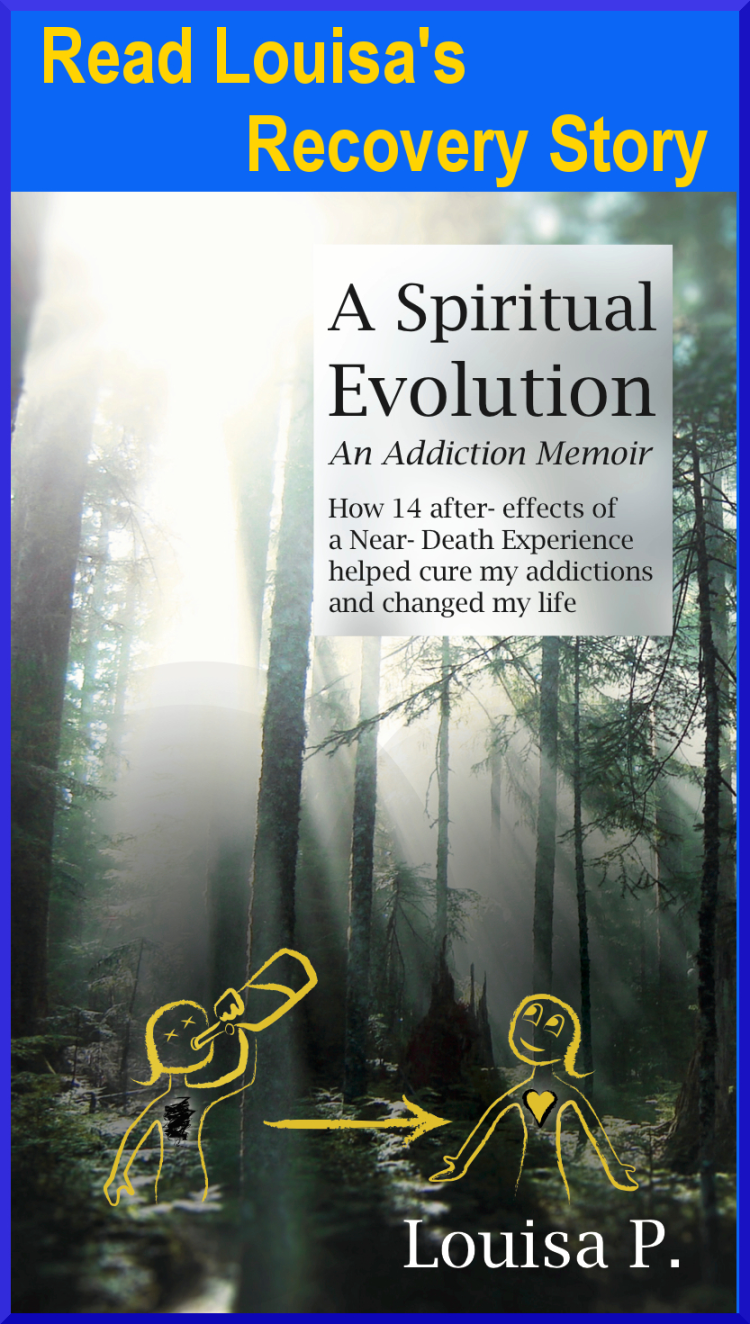
It reads just like an AA share.  You’ll feel like you’re at a speakers’ meeting where I’m telling you my story with that unique funny/sad tone we all use – except somebody gave me 12 hours to tell it!  I can promise you, it’s not dull.  I quote wet journal entries – I was a prize-winning writer able to articulate problems but not solve them.  I also, as the subtitle indicates, describe the vivid Near Death journey to the Light I experienced at age 22.  The series of paranormal after-effects that followed over the years culminate in the concrete faith in a higher power grounding my long term sobriety today.

The last chapters recount my recovery from codependency – an ongoing process.

Please feel free to pass on the link above to anyone in/attempting recovery from any form of addiction who you think would enjoy a wild tale of experience, strength, and hope.

New blog post for y’all tomorrow!

yours,

-Louisa

Cover figures

.

Leave a comment

Filed under AA, Al-Anon, Alcoholism, Codependency, Near Death Experience, Recovery, Sobriety, Spirituality

What is Goodness?

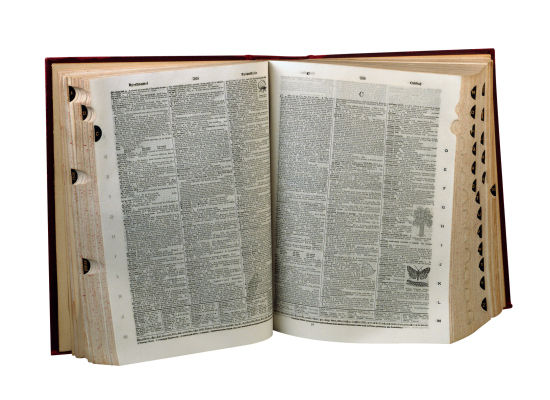
Words can be dead or alive.  My big, fat Webster’s dictionary devotes a full page to the word good, yet conveys almost nothing.  Definitions range from dictionary“making a favorable impression in terms of moral character” to “wholesome” or “noble and respectable.”    Words – nothing but lexical connections.

Yet words can also be alive when they resonate with what we know to be true.  Years ago at an AA meeting, for instance, I heard these: “Love from the heart is a one-way street.  It goes out.”  The guy saying this gestured from his chest into the room, his hand unfolding from from fist to open.  I knew the truth of what he was saying.  I’d never heard it so succinctly put.

Goodness.  What is it?  Most of us know it when we’re feeling it.  If we’re around a good person, something emanates from them.  A work of art or beauty can evoke the same feeling.  It’s a warmth, a light, a glow – maybe an aura.  But of what?

Love.  Goodness is the product of love.  When that inmost heart of ours, the font of our being, our life energy, reaches out to connect with something in the world, the energy around that connection is goodness. Love has a direction, a flow along the one-way street, while goodness is the product of that connection.  It shows up in any act or effort of integrity and honor that is untainted by selfishness.

A friend of mine experienced a Near Death Experience far more protracted and detailed than mine.  Hers occurred in the seconds before a head-on car crash, which for her expanded to hours of interaction with spirits.  She was a teen at the time, verging on a dark turn of acting out from pain in her past.  An ugly, squat demon at her feet in the passenger’s seat invited her to join him, promising her a chance to “get even” with everyone who’d ever wronged her.  But she declined, and found herself suddenly pulled up out of the car, rushing into the sky with her very serious, earnest guardian angel whom she realized she’d known all her life.  Among the things she was shown was a whirlwind tour of the globe, zooming in on all the pies being made right then.  Yes, pies.  She saw countless homemade pies, all different styles and types, until finally her guide showed her the very best pie on earth at that point in time.

It was a cherry pie made by an older woman somewhere Cherry-Piein Europe. The pie was just coming out of the oven, perfectly browned with woven crust and beveled edges.  The woman loved the pie.  Into it she had poured everything she knew about pie-making, every skill acquired in years of baking – not to impress anyone, but purely to manifest the best of her abilities.  The guide flashed into my friend’s awareness that the same can be true for anything we do in life.  When we care enough to learn something, when we respect the skills involved enough to apply them with dedication, we can bring into the world a work of goodness – even when tremendous faith and courage are needed to do so.

Any time our efforts are powered by such love, they become acts of goodness – an emblem of the plenty we’ve received from god.  They are, in essence, acts of gratitude: “Life is God’s gift to you; what you make of your life is your gift to God.”

Conversely, when they’re powered by the desire to get, which is actually rooted in a sense of lack and the driving fear behind it, which is ultimately a distrust of god, our efforts become acts of aggression.  They devolve to a way of “showing” and outstripping others, of getting even with those we feel have wronged us.  The recognition is all for me.

For these reasons, addiction cuts us off from goodness entirely.  Compulsive use of alcoholalcohol, drugs, sex, shopping, etc., or the codependent urge to steer another’s life – all these keep us constantly in the mode of wanting.  We try to suck from the world whatever we think will fill the gaping hole in our guts.  This time, we’ll get what we need to feel good about ourselves.  We’ll score it from the people we impress, from the places and things that infuse us with status, lend us power.

What we have in addiction is wrong-way traffic.  As long as I’m trying to suck up whatever addiction promises will fix me, I’m incapable of even recognizing goodness.  I’m numb to it entirely.  In fact, as told in my addiction memoir, by the time I neared hitting bottom, I’d quit believing goodness even existed!  It seemed a sickly sweet delusion manufactured by conformists, when the hard core truth was that I had to grab whatever I could from a mean, barren world.

But goodness not only exists, it’s the ultimate expression ofsunshine1 living.  It can emanate from any relationship founded in sincerity – in creativity and playfulness, in compassion and affection.  Whenever I reach to connect my spirit to yours without seeking to get something from the deal, the energy from my heart streams toward you, and I become a channel for god – which is love – to flow through.  God is the source of all beauty, and as soon as we give ourselves over to expressing it, that flow simplifies life radically down to being present in gratitude.  We are complete.  In fact, we have a surplus, because the wellspring of our life-force is constantly flowing, flowing.  So we can try to give it shape, to bring goodness into the world.

That’s why I wrote this, from me to you.

scroll

Post to Facebook

3 Comments

Filed under AA, Alcoholism, Codependence, Codependency, Faith, God, Near Death Experience, Recovery, Sobriety, Spirituality