
Honesty is such a lonely word.
———————–– Billy Joel
It seems as if nothing should be easier than knowing what we want, knowing what we feel. We should be able to look inside and, fast as checking what time it is, say, “Gosh, I feel angry,” or “I fear change,” or maybe “I want ____ more than _____.” 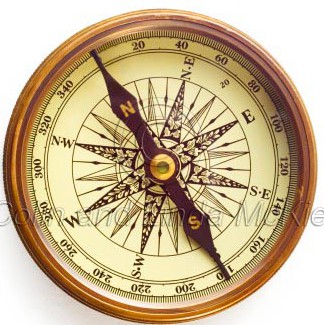 Based on that information, we should have no trouble making big decisions in our lives. Happiness should twinkle straight ahead as clear as the North Star, and we should be able to navigate toward it. Drop this relationship to steer more starboard. Go for this job to steer more to the port. That’s how I tried to live throughout my drinking, through shipwreck after shipwreck.
Why doesn’t it work like that? Clarity on what we think and feel – is that so much to ask? As it turns out, the compass is buried deep inside us where it can be extremely difficult to read. For me it takes a long, long time to know what I truly feel about anything complex and important. I have to live with the question for weeks, sometimes months, viewing it from different angles and slowly gestating some fetus of recognition in my gut. I’m reminded of the 9-day hike I took around Mount Rainier a few years ago, 100 miles up and down many mountain ridges that extend like arms between its huge glaciers. Every day I hiked, that mountain was in my sight, and every day it showed me a different face, a different aspect. I often feel as if there’s a spiritual Rainier within me that my consciousness hikes around – my truth – and that it reveals just as many faces.

All forms of honesty are related. That’s why it’s only by practicing honesty across the board that I’m able to stay sober. The most basic form is monetary. For instance, while shopping recently, I picked out a freezable lunch bag for my son that I considered vastly overpriced at $22. When the cashier rang me up, miraculously the sum total of all my groceries was only $26! It took me a moment to realize she’d assumed I’d brought the bag in with me as a  reusable shopping bag. After a tiny flinch of glee that I could get the damn thing for free I said, “I think you forgot to charge me for that bag.” She was surprised. But I’ve run back into stores for items much smaller that somehow made it out to my car unpaid for – a little jar of stevia or stick of glue the cashier didn’t see.
There’s also honesty with other people. Sometimes when I’m telling a story, I still hear myself embellish and have to backtrack to what’s real. I’ll say “a whole bunch of…” and then admit, “actually, only two…” or I’ll quote someone saying something far more emphatically than they actually did, then have to go back and recount what, to the best of my recollections, were their actual words.
Those two are easy, and while it might seem incredible that my sobriety hinges  on the price of a lunch sack or whether someone said X versus Y, for me, it does, because when I lie to others – even in piddly-shit lies or perhaps especially in piddly shit lies – I lose credibility with myself. I get a sense that it might be okay to be just a smidge full of shit. If I don’t need to be honest with others across the board, I can go ahead and compartmentalize, behaving in ways I plan to conceal. What’s the big problem with that? What does it do to me?
It cuts me off from my god. The most precious thing in my life is my connection to the higher power that keeps me sober and lets me live with some degree of dignity and serenity. Without that connection, I’m lost in a dark world where my ego craves a bright spotlight on ME and manipulates others to get it. Withholding the truth from others, even in minor things, is actually using them like game pieces to get what I want. God exists only in genuine reality – the truth of what is. When I lie to anyone, I’m turning my back on that, trying to play god by feeding them a false reality that’s a product of my ego. I can make a cashier complicit in my theft of a freezable lunch sack. I can pose as an expert to get attention. I can cheat on my boyfriend to feed my vanity. And I can take a drink no one needs to know about.
Then it’s on – and I’m right back in the hell I escaped twenty years ago.
What is a spiritual connection? What part of us connects with god? The inmost truth of our awareness and consciousness is where we find god. Our I-AM-ness seeks its source. When I meet god in prayer – which for me is almost constant – I like to show up humbly naked. That is, I bring my whole self with all my vulnerabilities and flaws and say, here I am again! To do that, I have to know who and what I am. If I’ve been deceiving others and rationalizing my own lies, I’m shrouded in falsehood and pride, both cohorts of the anti-god, fear. I am blocked.
The arms of honesty extend into every facet of spiritual wellness. It’s honesty that lets us see the selfish fear that fuels our resentments. Honesty that lets us see how we set ourselves up to be hurt, how we’ve hurt others, where we’re in the wrong, and what we might do for others to be better human beings. Yet the honesty of knowing myself is more a journey than light bulb. It’s taken me 20 years of sober seeking to acknowledge that I don’t really know myself. What makes life seem so complicated is my web of as-yet unacknowledged fabrications. I still can’t see all I do to hold myself back from living in the simplicity of joy – which I believe is what god wants for all of us.
I keep seeking, though. That’s all we can do.



 Sorry, folks! But the X factor, and that alone, is what saves an alcoholic: Connection with a higher power, to god as we understand it. We ask god to help us, and we’re relieved of a compulsion that no amount of self-knowledge can touch.



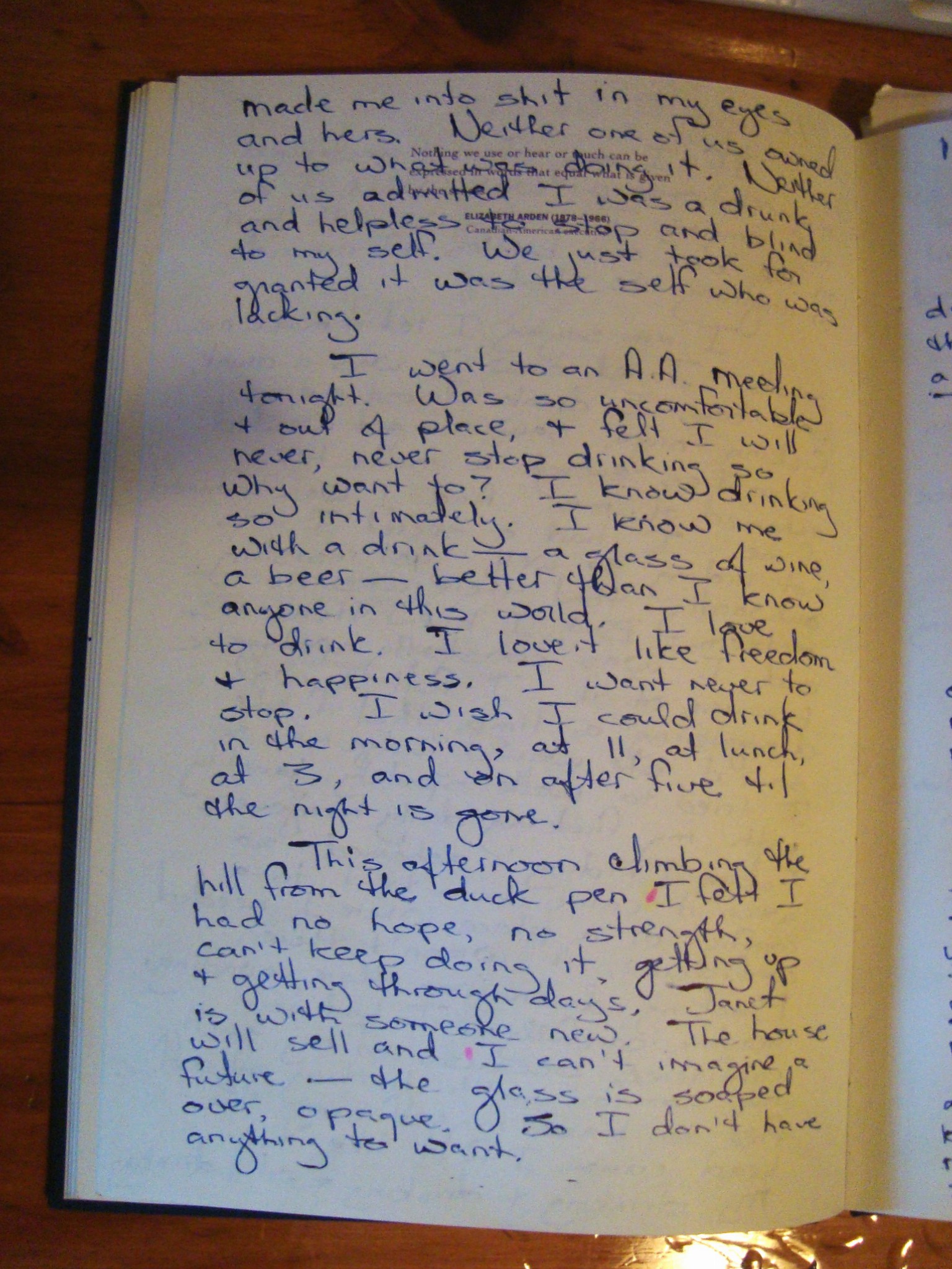
 are countless other key moments when light bulbs went on for me. “My ego tells me I’m the shit, and my self-loathing insists I’m a piece of shit. But God grants me the humility to be right-sized – to be a worker among workers, a driver among drivers, a sober drunk among sober drunks.”



 and abolish insecurity. Human brains do just fine with stories, characters, and rules, so religion provided them in order to harness a unity of belief among followers – and in some cases, wealth and power. By Watts’ metaphor, religious texts and dogma present us with a blue painted window intended to represent the open sky of god.
 In my experience, love is the clear window in our hearts – not our brains – through which we glimpse our own blue sky of god – the energy that powers our spirits. If you don’t sit with love, if you don’t pursue the meaning of its non-logical warmth as it is actually happening to you, you’ll take for granted love’s fragments here and there and never see it as the fabric of meaning that unifies your entire existence. As Watts says, “[L]ove that expresses itself in creative action is something much more than an emotion. Love is the organizing and unifying principle which makes the world a universe…” If you can make a commitment to actively love love, you’ll be jettisoned through Step 3 and toward Step 11. You’ll begin to feel god – not comprehend it.



















 A Spiritual Evolution