A few years ago, my friend Rob, a “purebred” alcoholic sober nearly a decade, injured his elbow and was prescribed Vicodin. In mere weeks he became addicted to opioids and, after a few years, died. Another friend, an engineer with decades of sobriety, likewise hurt his elbow. He, too, was prescribed pain medicine, left his life to chase street drugs for months, but by the grace of god did not die.
What we as alcoholic addicts can never forget is that our brains have a haywire switch. No matter how certain our rational minds are about “not liking pills” or “using only as prescribed,” our addict remains crouched in the back of our minds saying, “Right! You’ve got this!” until the moment it clinches control and says, “Ha! I’ve got YOU, bitch, and we’re on a run!” I can’t emphasize enough the degree of respect for this demon every alcoholic addict needs.
-

-
“You’re fine! No worries!”
Last Thursday, a surgeon sliced open my hip crease, popped the ball outta the socket, sawed off the end of that femur, and commenced building me a new hip. That’s a graphic way of saying I underwent an anterior hip replacement. When I came to, I felt wonderful! In fact, I had a moment of intense spiritual clarity — see below — before things got cloudy.
I have no partner, my son’s away at college, my mom is hella old, siblings either distant or dealing with their own ailments. My main “family” is AA, but I have other circles as well. My friend Keira came to get me 30 minutes after surgery. She’s a chemo nurse, at home in medical settings. When the nurse discharging me noted that, per my request, I’d be prescribed only Tramadol — not Oxycodone — Keira interrupted. To me she said, “Dude, they just sawed through your femur. Get the Oxy. If you don’t need it, you don’t have to take it.”
An hour later in the Safeway the parking lot, my entire thigh was !!!SCREAMING!!!  as if someone had … well, just sawed through it. Keira was inside trying to get me the Oxy before the pharmacy took a lunch break. I was doing controlled breathing, shaking like mad, pressing down the panic that wanted to explode as my pain flared higher and higher.
At last Keira opened the driver’s side door. She had the Oxy. Thank god. About 10 minutes later, I could speak again in a normal voice. The pain was managed.
That’s what such drugs are for.
Over the 27 years I’ve been sober, I’ve gotten super comfortable with full-on reality. What used to seem an onslaught of jarring, demanding impressions is now just the flow of what’s happening. I knew this before my surgery. What I didn’t know until the following day was that the converse has also become true: I’m now super UN-comfortable with being fucked up.
Isn’t that crazy? What would Pink Floyd, who wrote “Comfortably Numb,” think of that? Could 34-year-old Louisa, who in 1995 lived for her daily booze and drugs, have even imagined such a mindset?
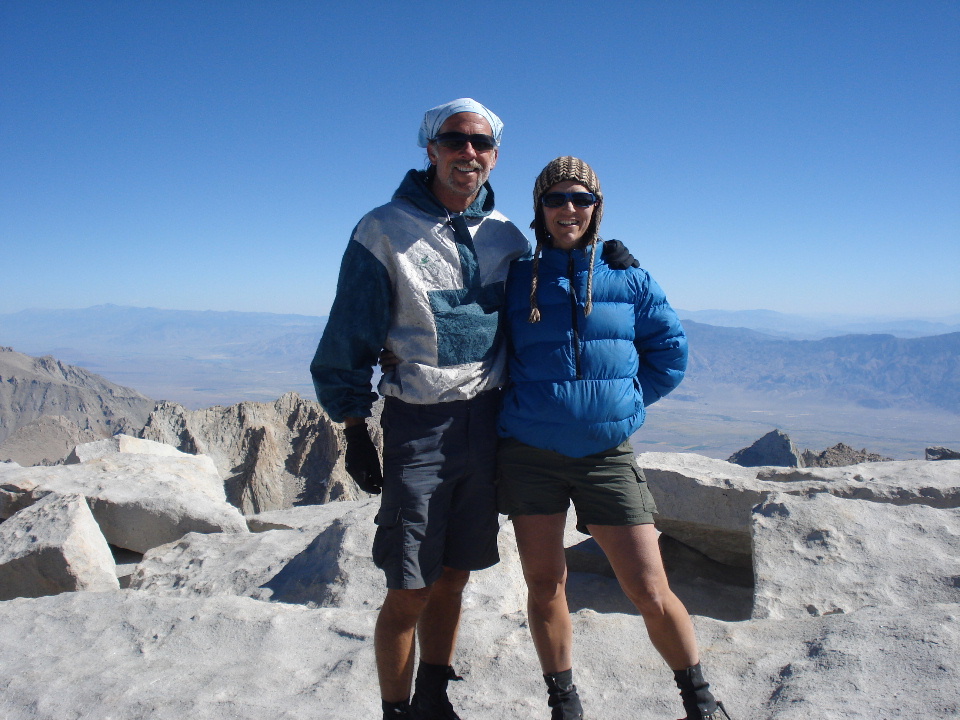
I was staying with Keira’s family for three nights. On Day 2, Friday, she invited our friend Sarah over for a card table dinner in the room next to mine. I was excited! Both these friends live an hour away from me, so I don’t get to see either as much as I’d like, let alone both together. We three are the Bikini Bitches. We climb glacial mountains and take silly Bikini Bitch photos at the summits, clean, sober, & livin’ large. That’s us.

Mount Daniel ’19

Mount Baker ’18

Ruth Mountain ’21
I wanted to be fully PRESENT for this little reunion, but I also needed to sit at the table, so I took a Tramadol instead of Oxycodone. That shit may be one-sixth as strong as Oxy, but it messed me up, hit me like a wave of blur! Sarah showed up and we all sat down together, but my mind was goofing around on some mayonnaise slip n’ slide. I remember looking at my friends and thinking, I want to BE here! Again and again I struggled to focus, but I couldn’t think of words or keep track of most ideas long enough to speak them.
Every now and then, they’d look at each other. I remember Keira saying with an accepting shrug, “She’s fucked up.”
I wanted OUT of my fucked-upness as badly as I used to want OUT of full-on, clear consciousness. My friends were there, and I was MISSING it! But I could do nothing to get my sharpness back. I was half-drowned in stupidity.
On Day 3, my son surprised me by driving 6 hours across the state, using my shared location to find Keira’s house, and then phoning to say, “Mom, can you look out the window?” Such a sweet boy! Sunday, after he’d driven me home, he set up our house so I could live downstairs alone.
He also hid all my meds.
Yup. The Oxy he divvied into stashes — 2 pills, 6 pills, and the rest of the bottle — then found hiding places for them and the Tramadol. I had my ibuprofen and Tylenol. If I needed something stronger, I could call him. My son understands. He grew up around sober friends we’ve since lost to addiction, prescribed or otherwise. He mourns them, and he loves me.
As it turned out, I did need to call him. My stomach rejected the ibuprofen AGAIN and, after I caught my crutch on a gate while letting my chickens out, I stumbled and re-injured my leg, which brought on a 99.5 º fever and heightened pain. “Look in the drone box on my desk,” he told me. And there were two Oxy, right under my nose! For two nights, they controlled the pain enough to let me sleep, but I think I’m done now. I don’t need to ask for more.
What protects me from hunting for those meds is not my will. Addiction’s kryptonite is connection: love, community, and gratitude. An AA friend is coming over today to move my stuff back upstairs. Another will come tomorrow to spot me while I take a (much-needed!!) shower. Neighbors have mastered my chicken routines, gifted me a thermometer, and picked up my new anti-inflammatory meds. My dogs have gone for walks every day — 6 days in a row — with different people. Today they have a play date with the dogs of a former student of mine from 15 years back.
Here is the image I was shown when I first came out of the anesthetic, before my brain came back online to block spiritual knowing. First, I had to remember what I was doing: I recalled, “Oh, yeah, I’m doing that Louisa business!” Then, on the strip of wall in front of me above a window to the nurses’ station, I saw my life as Louisa. It was a circle at the center of a ring of smaller circles, connected by radiating lines that I understood went two ways. These were all the lives mine touches, all the people connected to me whether remotely or in person. Lean into this, my angel told me. There was more, but I’ll save that for another post.
I thought, “Wow! That wall is so awesome! I’ve got to tell the staff to put some pictures up there for people who maybe don’t have visions!” Then everything went cloudy, and I don’t remember much.
I’m on a mission here in this Louisa suit to share love and kindness. So are you. But the flipside is, we can give others a chance to do the same.
-

-
What I saw (but more small ones)
-
-
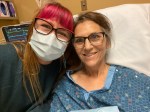
Keira & me
-

-
What it meant



 talked about “emotional sobriety.” For a long time, I assumed emotional sobriety meant just not acting out. Active and newly sober alcoholics do such crazy stuff, fomenting drama like a dishwasher with the wrong kind of soap, spewing it onto all who come in contact with them. Bad relationships, bad communication, bad decisions, bad consequences, and back reactions to those consequences: we dig our trench of pain and isolation ever deeper.








 Cover painting and design by me.

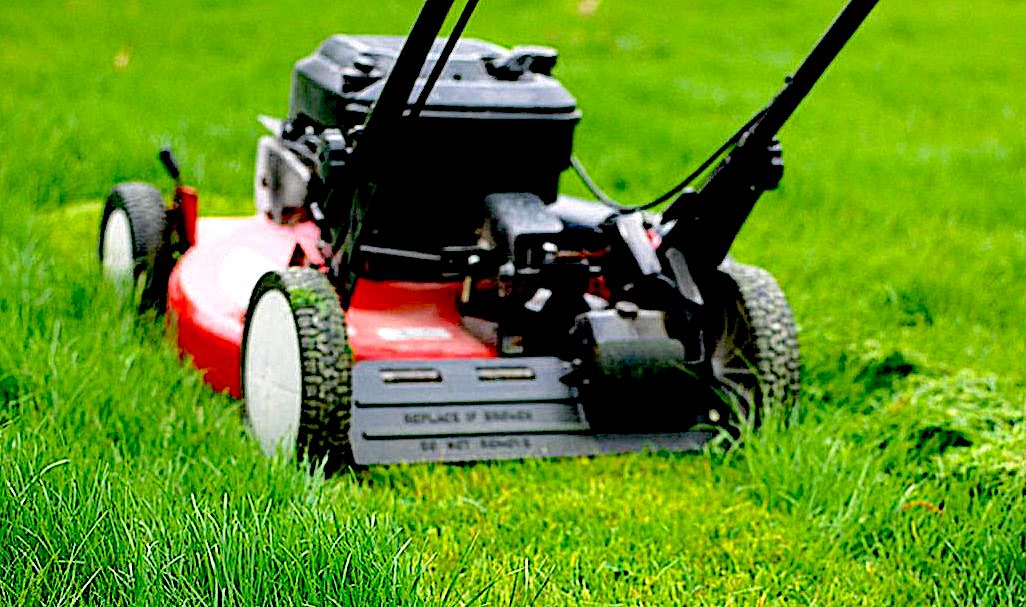 and others — leading to a lack of boundaries. I discover my false tactic only once the pain load reaches such a pitch that I have to take action: “If someone keeps running over your foot with a lawnmower, it’s up to you to move your foot.” That’s one of my favorite sayings, and yet I’ll leave my foot in their path for years! “No, no, it doesn’t hurt much! It’s just a little blood! Just a toe I wasn’t using! After all, they have a perfect right to mow!”
 Spiritual pride tells me I’d be too “unspiritual” if I said what I actually think and feel. Too unspiritual if I showed up as myself. Too petty, judgmental, wave-making, or self-centered in telling others “Here are my feelings” or admitting to myself “This isn’t working.” In fact, by pretending everything’s fine, I’m harming everyone involved.





 I was dragging the wood ones to the left when I smelled smoke. I ran to the kitchen where a dirty burner or drip pan was billowing clouds of smoke that filled the kitchen. I turned on the fan and propped open the church door, but it was bad. While I was in there, just for fun I spent another minute pushing all the goddam buttons on that bratty piece of shit coffee machine. Nothing.




 roads as fast as 80 mph with the radio blaring, seeing quadruple as I bombed through the narrow railroad overpass where I should have died. Instead I reached home, but as I clung to my car door for steadiness and glanced up at the stars, congratulating myself on my badass driving skills, the voice shot through me like a thunderbolt from Zeus, except it was a bolt of telepathy, of knowing, extremely urgent and somehow stern: “This is the last time I can help you. And you DO know right from wrong!”




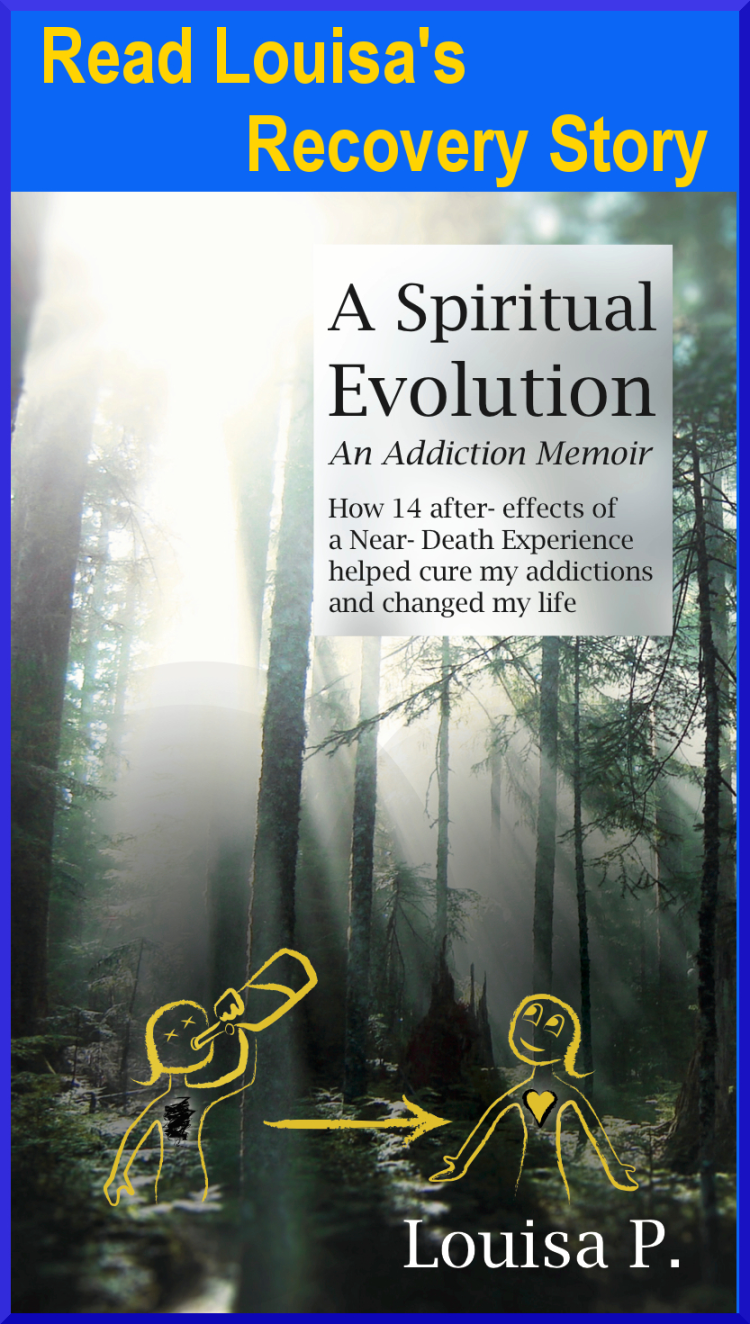
 A Spiritual Evolution