Category Archives: AA

Recover-ING or Recover-ED Alcoholic?

Some folks in AA take issue with the words sun-thru-cracks-in-door“recovering alcoholic,” preferring to classify themselves as having “recovered from a seemingly hopeless state of mind and body,”* and thus from alcoholism.

Not me!  Sure, my mind and body are healthy and I’m filled with hope.  Even so, an inner part of me remains as broken today as when I first walked into the rooms.  To me, that’s a gift.  Knowing I’m intrinsically flawed motivates me reach for god’s love each day by actively loving what is.

As long as my recovery’s a process rather than a check-box, the doorway is still opening.  There’s always more good stuff to seek – deeper honesty, truer humility, simpler joy.  I’ll never classify myself as a “success,” a done deal.

Here’s a little story about why.

Ten years ago, I was church liaison for an AA group that met in a wealthy neighborhood. For years, the church complained that we left cigarette butts in their parking lot. Homegroup meetings addressed this problem with lots of announcements and a two-person outdoor cleanup team. During our final winter, I served as Official Butt-Ranger myself, scouring the lot with my headlamp long after everyone had left, picking up every soggy thing that could possibly be construed as a butt. Even so, the complaints continued and we were finally given notice.

I phoned the church and asked to speak directly with the priest since our meeting, which drew over 150 drunks every week, would be tough to relocate.   What a huge and diverse crew we were!

In addition to plenty of wise old-timers and on-fire yearlings, the group included several mentally ill regulars. A muttering homeless guy, Dave, came for the coffee and smelled sooooo atrocious you couldn’t sit within three chairs of him. But you could observe each week’s unsuspecting newcomers as they took a seat next to him and, stage by stage, awakened to that fact.

We also had a schizophrenic young man I’ll call Harold, who occasionally suffered irrepressible outbursts at someone not there and had to be escorted from the room. To deal with this, we designated an un-official rotating service position of “Harold-shepherd.”

I also recall an adorable little curly-haired blonde girl I’ll call Robin who, as she shared, would gradually flush beet red until she was glaring around the room and barking out, “Fuck you ALL! I don’t give a FUCK what you think of me!” Whether to kick out little Robin came up frequently at homegroup meetings, but someone always agreed to have a talk with her, after which she’d contain herself for a few weeks.

Something wasn’t right in these and many others present, but we all kept coming back for the same reason: the meeting helped us.

Eventually, the priest called me at my work. Explaining to him, as I had in many emails to his office, that the butts were not ours, I suggested the nearby freeway exit might be somehow related. He said he thought that unlikely. Abruptly, his tone became frank.

“Listen, I’ve sat in on one of your meetings and I was very unimpressed. There’s swearing! People slop their coffee and don’t clean it up. They speak out of turn. Now you – you sound like an intelligent, well-educated woman. How can you sit with these people week after week and listen to the same drivel over and over?”

A little taken aback, I explained: “Some of those people have only one day sober.  They slop coffee cause they’re shaking so bad. Or a few might be close to killing themselves, so slopping coffee’s just not that big a deal. We mop up afterwards. We clean everything.” I decided to risk quoting one of the meeting’s old-timers: “In AA, we don’t shoot our wounded.”

The priest scoffed. “Wounded? I don’t see anything wounded about ‘em. They’re just lazy and immature!”

This was too much. Part of me wanted to fire back, “Jesus fucking Christ, man! Who’d want to listen you driveling on Sunday after Sunday? I’ll take drunks over your hypocritical ass any day!” Instead I thanked him respectfully for the many years of allowing us to meet in his church and agreed to be out by the end of next month.

Richard Rohr, a Franciscan Jesuit, offers a fascinating critique of Christianity. He points out that admitting our brokenness is crucial to letting god in – through our wounds, the cracks in our shell. Jesus healed the sick and banded with outcasts, not the well-to-do. Only when defeat forces us to admit powerlessness is the ego is quelled enough to shut up and let us receive.

Emperor Constantine

 Christian Emperor Constantine I

By contrast, once Christianity became Rome’s official religion in 313 A.D., it lost touch with the meek and struggling.  Says Rohr, “When you are aligned with Empire, you are forced to prefer a spirituality of achievement, performance, worthiness, and willpower… Conformity to cultural virtue becomes much more important than love of littleness itself or love of any outsider (read ‘sinner’).”**

Me – I ain’t righteous.  I ain’t fixed and never will be.  On daily loan to me from god are my sanity and happiness – and I know it!  The reward is tremendous: acknowledging the remnants of my own brokenness lets me love others through theirs.

I wish I could have taken that priest on a Scrooge-trip to my first AA meeting. My own shaking hands slopped coffee all over the place, which I hoped no one would notice even as I chain-smoked about 12 cigarettes in an hour and dropped candy wrappers under the table, trying my utmost to project a savvy, disinterested coolness that belied the empty, terrified, hopeless, self-disgusted wreck I was inside. In that magic AA room I sensed an energy I could neither identify nor comprehend, but today I can offer the same to newcomers living my past.  Compassion.  Well-wishing.  Patience.  Love.

We moved that old homegroup to a church downtown near a druggie park, but its character changed over time, and after a few years I signed over the lease and switched groups. Homeless Dave froze on the streets years ago. Harold and Robin vanished. Yet the beauty of that inclusive group stays in my heart, a collage of memories exquisitely human in a way that haughty priest (who had not love) will never know.

God breathes love into this leaky skin balloon each day when I ask and open. Like you, I’m a work in progress.

.

scroll

* Alcoholics Anonymous, xiii
**Richard Rohr’s Daily Meditations (thanks, Mick M.!)

Leave a comment

Filed under AA, Alcoholism, God, Recovery, Sobriety, Spirituality

Trusting God, Trusting Life

I haven’t had a clue what I’m doing lately. Last night I dreamed I had to perform in a play – you know this one – despite recalling none of my lines, my script turning into a camping catalog, and part of the stage collapsing to reveal a cistern of filthy water – almost like sewage treatment – just underneath. A fiasco, a shit show! That’s how everything feels right now.

Why? Loss – in my case, of a long term relationship doomed by alcoholism. But loss can spur growth. Each time something we’ve been clinging to is wrenched away, our hands are freed to reach for god. In a different dream I had a few weeks before discovering my partner’s duplicity, back when I’d first quit mocking and started reading Codependent No More, I met face to face with the deprivation I’d been choosing in order to keep my “love” intact. Here’s my journal description:

4/17/15: I dreamed last night of a woman sealed in a basement of an old, dilapidated house. We raised the trap door and she had cobwebs and dust all over her bowed head. When she lifted her face to the light, it was ugly but not evil. She had a red clown mouth drawn over her real one – leering, but supposed to be a smile. I felt afraid of her until I saw that her eyes were young and confused. We talked to her, me and these friends of mine who had unearthed her. We offered to let her come with us, and her face lit up with hope. Yes! She’d love that! She wanted to come out of her cave and live.

Christina's World

Christina’s world – Andrew Wyeth

My dream friends, I think, represent the loving AA fellowship I’ve allowed to buoy most parts of my life. But I’ve left behind my inmost part, a soul that craves true intimacy but has always settled for less. This is due to no flaw in AA, but to fear holding me back from full trust in god.  God can’t fix what I won’t offer up. Ironically, it’s always my efforts to protect myself that harm me most.

Whether we’re walking our first days sober or well along in our journey, we have to keep extending our trust day by day, ever beyond our comfort zone. In addiction we trusted the power of booze to fix whatever ailed us – so what if it was temporary? We also trusted our stories: we were victims, uniquely flawed, deeply complex and misunderstood. Both these props collapsed.

AA suggested I chuck this entire way of positioning myself in the world. What I was handed instead were spiritual principles, a compass for living with its rose oriented toward love, humility, usefulness, and gratitude. Dammit! To invest my trust in these spiritual principles meant embracing a god of my understanding – the loving energy that animates the world. But how to do that?

In early sobriety a friend of mine – Aaron G. – taught me his letting go meditation. He would lie down with closed eyes and start by giving god control of his room, everything in it – whether it was messy or clean, etc. Whatever, god, it’s yours. Then he’d shift the spotlight to various areas of his life. Work. Housemates. Sex. Money.  God, I’m done trying to control what’s going on with these things. They’re yours. Next he’d move to his feelings. Sadness. Anxiety. Greed. Vanity.  God please steer me, because I don’t know what the fuck I’m doing. And last of all, he came to his life itself. If I’m supposed to keep living, let me live. If I’m supposed to die, I’m good with that, too. You made me. You run me. I’m yours.

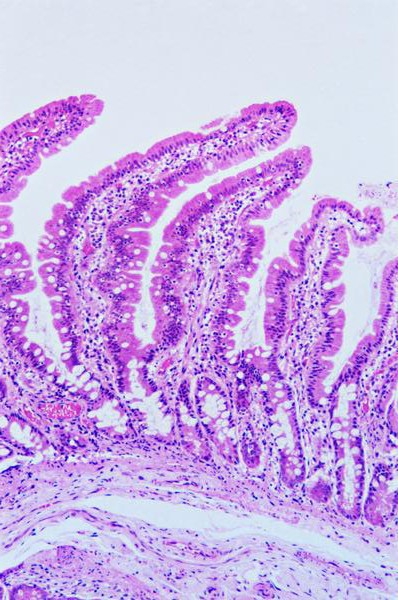
Intestines

Your intestines. Nice work!

Sound overly dramatic, that last part? It’s not. What do you know of the trillions of intricately orchestrated processes of mitosis, osmosis, and diffusion keeping you alive right now? How is it that you can eat a crappy breakfast scone and turn it into thought and laughter and you running across the street or picking up a toddler? How do you do this stuff?

“Oh, that’s not god!” reason shrugs. “It’s just nature. Shit happens. The earth has life and it evolved into complex organisms and, you know, it’s science!”

I dare your skeptic to really contemplate this description of photosynthesis*, the molecular process by which plants transform SUNLIGHT into SUGAR, providing the bedrock upon which all of earth’s menagerie is built. See how far you get before you sigh and say: “Dude! That’s a shitload of science. I’m just glad it happens!”

Screen Shot 2015-11-10 at 10.40.47 AM

Admit it. We know next to nothing.  Each of us is a drooling infant riding a 787 across the Pacific Ocean, grasping nothing of how the plane works or was made, aware only that our basic needs are met. We exist by trust alone, despite whatever stories we propagate about how we engineer our lives. Bullshit. Perhaps for a brief moment, we can acknowledge what bullshit it is.  We can see that god lives us.  But we soon direct our attention elsewhere, sighing, “Well, that’s enough of that!”

Our spiritual practice today can be to continually give up a little more pretense of control, as in Aaron’s meditation, but all day every day.  We can allow in a little more the fact that god and life are one.

Loss is damn painful, for you as for me. Pain urges us to retreat into depression, nursing our wounds in solitude while mindlessly munching glazed donut holes. And addiction is right there, cheering for that plan as the grieving we deserve – because, while that track may be fine for normies, for an alcoholic prone to depression, like me, the next stop is relapse.

That’s why I’m doing the opposite. Here’s what my grieving looks like: I’m climbing too many mountains, going on too many dates, showing up to feed the homeless, speaking at meetings, starting new projects, and buying two baby chicks in the bleak darkness of November. Pain gets dragged along for the ride, like it or not. I entreat god continually for the courage to pursue whatever feels like growth – even if it’s scary – and then I simply blunder ahead, sometimes clumsily, maybe knocking over a vase or two along the way.

“Screwing up is part of being human – part of how we steer the course of who we do and don’t want to be.” Who wrote that? Yours truly at the close of “Being Right versus Just Being.” (Sometimes I teach myself!)  The point its, we don’t have to do this thing perfectly.

A woman emerging from the darkness of her cave doesn’t know which way to head. Trust is walking anyway. It’s striving to be our best, to love god and others, and to live at peace with knowing nothing.

Beneath all this tumult, god is transforming me into a wiser, stronger woman. In that I trust.

.

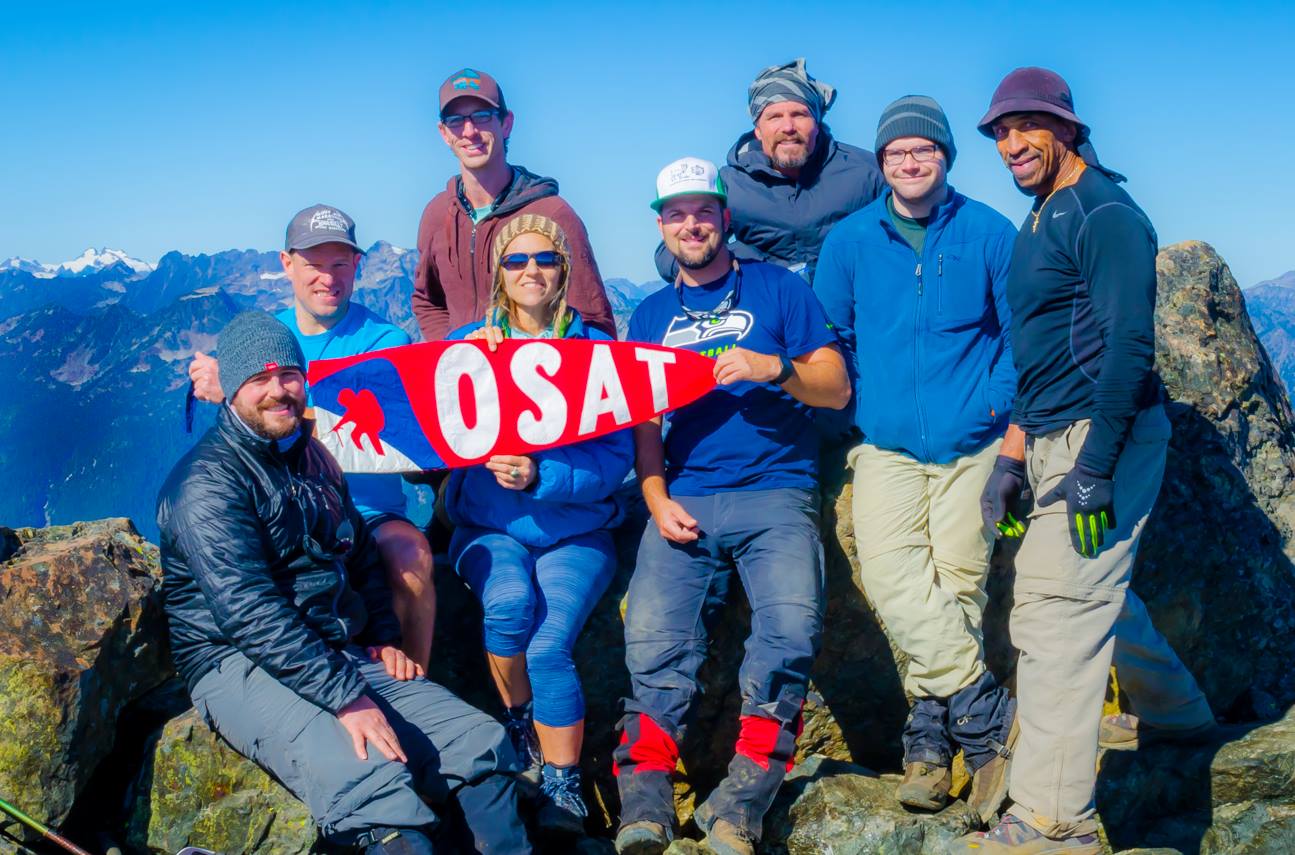
Brothers summit

scroll

.

* http://science.nsta.org/enewsletter/2007-05/sc0704_60.pdf
(Sorry, Facebook insists on posting the stupid picture of the photosynthesis text.  I can’t change it.  😦  Try copy and pasting the url instead, and choosing no preview.)

5 Comments

Filed under AA, Alcoholism, Codependency, Recovery, Sobriety, Spirituality

Prescribed Relapse

Doctor with Stethoscope“I’m happy to tell you the surgery went quite well, so you’re going to be on the mend!  Obviously, you’re going to have some pain from this, so what I’ll just do is ruin your life, happiness, and relationships by giving you an opiate.  Sound good?  So… you’ll start off taking it according to these directions I’m jotting until, of course, your brain’s addictive wiring trumps your reason – haha, just like the old days! – and you find yourself helplessly abusing it.  Eventually, I’d like to see you transition to your drug of choice.  When you do that is up to you, but within a couple months, you should find yourself back in full-on relapse.  Okay?  Does that sound good?  I’ll just call it in now.”

If only doctors actually said this, we alcoholic-addicts might have a better chance of protecting our sobriety from the pain management substances that work fine for normies (i.e. non-addictive people).  The trouble is that, even today, the vast majority of doctors don’t get recovery.  They see before them a reasonable and sane person who, they assume, will self-administer a prescribed drug reasonably and sanely.

What they don’t get is that we’re different. Our brains are forever like a duplex we share with an insatiable lunatic who is temporarily napping.  Rap on its door with an opiate and – no matter how intently we self-manage the dosage – once that beast wakes up, all bets are off.  It’ll rage, it’ll bust shit up, it’ll burn the whole damn house down, motherfucker.  Because that beast has a hold on us more powerful than anything that well-meaning doctor can possibly imagine.

It’s more powerful than reason, than resolve, than all things human.  It’s run our lives before, and it’s psyched to do it again.

I remember the first time I raised my voice at a vicodin2medical authority – my very kind dentist, a British woman – when I was about four years sober.  She’d just extracted one of my molars, and I’d just declined pain meds.  I remember the room we were in when she insisted, because it seemed to shrink and turn more yellow and seal off every doorway connecting me to AA.  I could feel the excitement rise in my chest: Meds!  Something GOOD!  There was hope!  Something really delightful perched just on the horizon!  Sure, I’d take ’em sensibly!  Of course!

…And I can’t say where it came from, but that small counter-voice, that love for the gift of sobriety and all the goodness it nurtured in my life – that sprang up in me, too.  They fought.  So by the time the words came out my mouth, sloppy from novocain, they were way too loud, too urgent, and too emotional.

“No!  I told you, I’m an alcoholic!”

“Yes, I know.  But this is a very safe drug – Vicodin.  You’ll be fine.”

“No, I won’t!  I’m sober and I want to stay that way!”

I remember the look of distaste on her face, that this normally calm and socially appropriate patient was going off on her.  She tried again, emphasizing the small dosage, but by that point tears spilled from my eyes and I had just one tremulous, throaty word for her: Ibuprofen.  Ibuprofen.  I’ll take ibuprofen…

And I did.  End of anecdote.

I’m not blaming doctors.  They’re rational; it’s we who make no sense!  That’s why the onus is on us to keep out of our lives what docs assure us is safe.   They don’t get Obit Hoffmanthe “curious mental blank spot.”  They haven’t heard the heart-rending shares of misery, helplessness, and loss sometimes dragging on for years – all triggered by a sensible prescription.   I have a huge number of friends in recovery.  And in contrast to the one alcoholic I know who successfully manages back pain with meds her partner doles out*, I know at least a dozen who have relapsed catastrophically – not counting those who have died.

I was messaging with one of them yesterday, my friend Rob.  He’s a wonderful guy traveling the country, working odd jobs, and struggling to stay off heroin for more than a few months at a time.  But failing.  He had a week.  Here’s what he messaged:

Yah know, if I’d of known what I would become after a few Vicodin, I’d a shoved them up my doctor’s ass!!  I was never into opiates as a kid. But eight years into sobriety I hurt myself really really bad, and I guess I needed them. But in hindsight, if I had a choice between acute pain and becoming a heroin addict, I would have probably chose the pain. But whatever.  It’s done.  It’s over, right?” 

Maybe.  Maybe not.**

When we want to drink or use, only god can help us. But when someone else tells us it’s not a problem, we can use our brains.  Remember: the doctor is going to offer you prescripsomething so legitimate, so routine, so neat!  The prospect of those little pills fucking up your life will seem so overly dramatic!  What I do is this: I picture a set of balance scales with two big pans.  On one side I put the prospect of perturbing my doctor, making a stink, sounding like an uncooperative bitch, no one getting it, and, quite likely, some physical pain.  On the other side I put every blessing I’ve won back sober, every person I love, every friend who needs me, my self-respect, my inner dignity, my body’s health, my spirit’s channel to god – and every beauty and joy of this life.

Then I bite my tongue to keep from saying, “Don’t you dare fuck with my sobriety!”  But it’s right there – that sense of defending what I love.

If your pain is such that you’ve absolutely got to take some meds, agree to a prescription of five pills.  Maybe eight.  Then call someone for each goddam pill you take and say, “It is 4:00, and I am taking a percocet now.”  Draw up a chart to keep exact track of what time you dosed, whom you called, and whom you’re calling next.  Stay in touch with your sponsor.  And as soon as you can, switch to ibuprofen and get the pills out of your house.  Do nothing alone because – remember – you’re not really alone: there’s that slumbering beast in the duplex, and you’re making a racket.

I recall the sadness I felt post-surgery many years ago, flushing the three remaining Vicodin I’d been given.  The magic was gone.  Now there was just me… and my stupid old life.  It took about five minutes for gratitude to return: the vial was empty, but my future was full.  I was sober.

scroll

*UPDATE: She relapsed after a year – knew where the pills were. After about a year of wallowing in opioid chaos, she’s clean again.

**UPDATE: Rob died of overdose less than a year later.

Post to Facebook

15 Comments

Filed under AA, Alcoholism, Drinking, living sober, Pain Medication, Pill addiction, Recovery, Sobriety

The Serenity Prayer

The word prayer repulsed me in early sobriety, and in some ways it’s still glitchy. It can call to mind a penitent worshiper hunched over clasped hands in some austere setting – and for the non-religious, that just ain’t us! So I’ve come up with ways to make prayer real to me – since fortunately, religion has no monopoly on access to god.

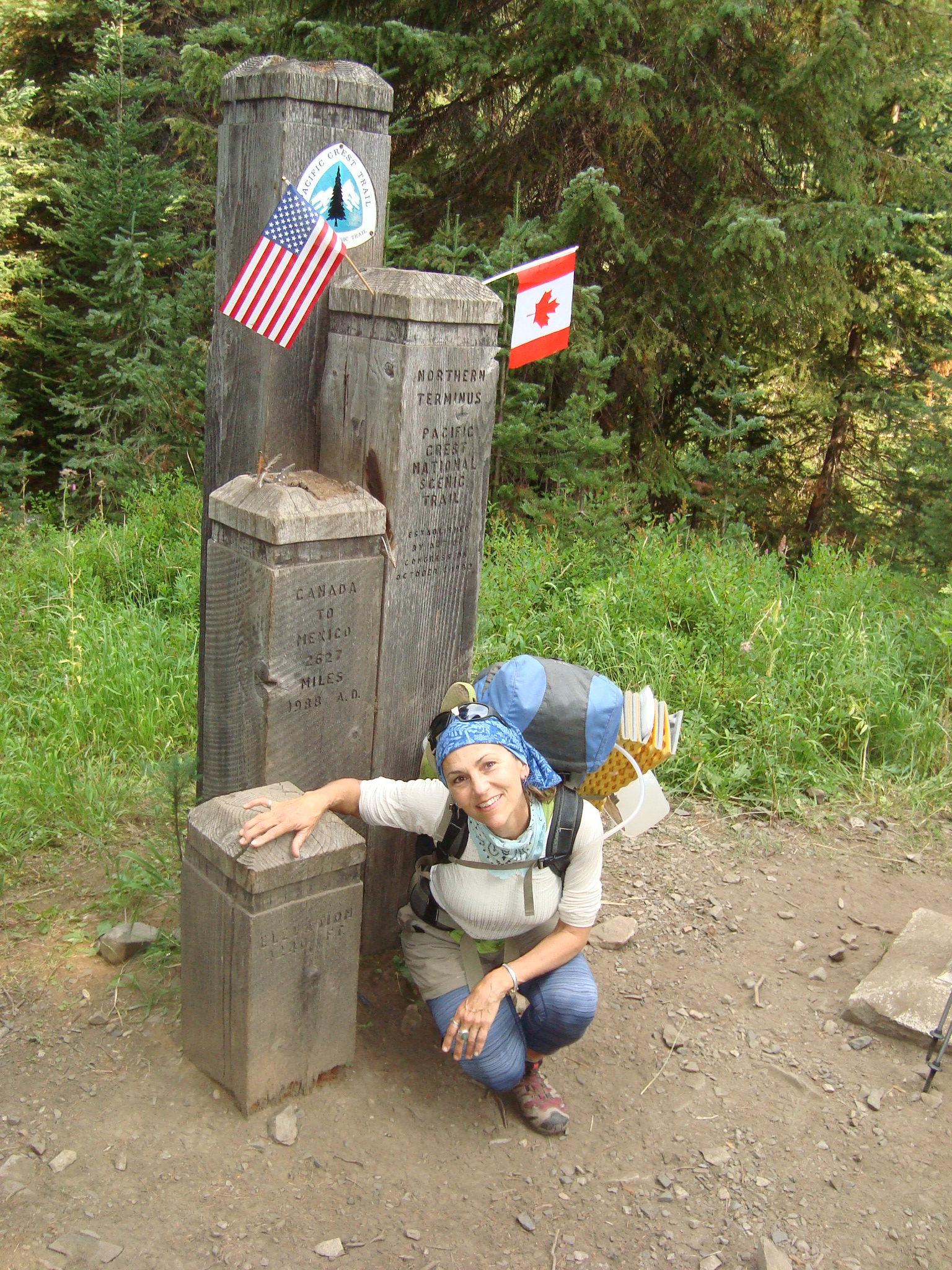
It’s amazing how many people assume it does – that spiritual DSC03916seeking and religion are inseparable.  That’s like claiming I-5 is the only way to get from Seattle into Canada.  Not true.  Recently, hiking the Pacific Crest Trail, I jumped in and out of Canada about five times in few seconds, just for fun.  You can always find your own pathway to god; the important thing is that you seek it with your deepest sincerity.

So instead of prayer, I just frickin’ talk to god. I may gab away and cuss and laugh, or I may get on my knees and weep, depending on how I feel. I may address my lost sister, or guardian angel, or the font of all that lives. Whatever works.

But what do I say?
Fear-based prayers are an extension of self – and a very natural one. All day, from the moment we wake, we’re responsible for meeting our own material needs. We engage our brains and bodies to make shit happen. I want a bagel so I open the fridge and get one. I want it toasted, so I get a knife to slice it and then pop that baby in the toaster. By applying skills, I get what I want.

Problems arise when we apply this approach to spiritual life: I feel restless, irritable, and discontent, so I gulp down some booze and get what I want – relief.  Great!  But fast-forward to the point where that survival tactic has quit working, so I’ve suffered agony at the level of emotional disembowelment, finally become willing, and – with god’s help – gotten sober.

Now I need new ways to fix those old pains, but I don’t know it. So it’s only natural that I try a skills approach: I identify the external problems I think are responsible – the people, places, and things I perceive as fucking up my happiness – and try to manage them to suit my needs.

It doesn’t work.  Dammit!  So I try harder.   Still, no dice.

Now I’m freaking out.  Will I ever get X?  Oh my god, does this mean I’ll always be stuck with this crappy Y?  What’s that I’m hearing in the rooms?  Ask god for help?

Okay… I turn to prayer: “God, please put this damn life-bagel in the goal-toaster for me. It should be toasted.  Surely you can see this. Thank you!  Your child, Louisa.”

Anxious prayerI may think of it as supplication rather than giving god orders. Still, however respectful I may be, I’m backseat-driving the universe. And it doesn’t work!  Yes, god may make some related good of my prayers (especially if they’re for others), but it won’t involve my specific bagel.  The great danger here is that I can feel ignored and get pissed… and turn my back on god.

True prayer, as Richard Rohr and others have written, is not about managing the world. It’s about changing ourselves. It’s about strengthening our relationship to god and accessing the power that god can channel into our lives.

Bagle

Enter, Serenity Prayer

Thank you, Reinhold Niebuhr, for writing this gorgeous prayer for a Sunday service in Heath, MA, in 1943.* You could not have imagined the role it would play in so many lives today.

“God, grant me the serenity to accept the things I cannot change, the courage to change the things I can, and the wisdom to know the difference.”

The prayer asks god to change us, to help us grow beyond whatever we ourselves can muster. We can say it over and over, thinking about what it means, how it moves us.   At different times it takes on different nuances.

Here, unpacked and named, is some of what this prayer can mean for me:  God,

grant me = help me, because I can’t seem to do this myself; I need your love, your guidance, your gifts
the serenity = to fricking calm the fuck down about this stuff, to quit panicking, to quit judging, to let go this urgency
to accept = to allow into my reality, to acknowledge as what is, to give up shoulding on and just let it be true – because it already is
the things I cannot change, = the past, what’s happening, how this person is, what they won’t do, everything I don’t like and wish were different… that isn’t me
the courage = a conviction, faith stronger than my fears, a power drawn from my inmost heart, a little spark of you
to change = to take action, to re-see, to step out into empty space, to quit procrastinating, to dare, to just do it !
the things I can = attitudes & assumptions & habits that don’t bring goodness, cycles I’m stuck in, people I hang out with, my default defects.  Reluctance to begin those baby steps of action I’ve been too afraid or proud to take
and the wisdom = god-inspired honesty, open-mindedness, faith, harvest from the experiences you’ve already given me
to know the difference = to intuit what’s my business and what’s yours

.

Good thing it’s a lot shorter, eh?  But for me it still carries all that meaning.

Resistance
I don’t know that I’ve ever, in 20 years of saying this shit, had a problem instantly vanish.  With bigger issues, sometimes the best I can hope for is for me to shed a layer of denial or feel a little less pain.

But the courage part has been literal and concrete. This prayer has emboldened me to act where I’ve been scared and reluctant: I’ve made phone calls, shown up at events, applied for jobs, thrown parties, forgiven rosietheriveterpeople, entered dance studios, climbed volcanoes, started a business, and walked into the mountains alone – all deeds inspired by this little prayer.  And those actions do transform my reality incrementally, with a cumulative effect beyond anything I could envision or orchestrate.

Ultimately, the Serenity Prayer condenses into twenty-seven words the essence of all 12 Steps: surrendering of self and the willingness to collaborate with god to cultivate meaning and integrity in our lives.

Never underestimate it, no matter how many cutesy places you see it embroidered!  It’s a compact tool we can carry in our back pockets like a humble but priceless compass.

scroll.

*http://www.huffingtonpost.com/2014/05/15/serenity-prayer-origin_n_5331924.html

.

Post to FacebookSerenityPrayer22

5 Comments

Filed under AA, Al-Anon, Alcoholism, Faith, Recovery, Serenity Prayer, Sobriety, Spirituality, Twelve Steps

Awkwardness ~ !!!

Hi.  So I’m Louisa.

This is my blog.   Yeah.  It’s about alcoholism and spirituality.

I write it – the blog, I mean.

This one’s about…. AWKWARDNESSSSSSS

What the hell is it?  Why the hell does it happen? What’s the feeeeling it causes, and why does alcohol take it away?  Is it really so torturous that some of us, cornered at a dumb-ass party that in truth means nothing to us, are tempted to throw away our life-saving sobriety just to fit in?

awkward-momentOf course, awkwardness doesn’t strike just at parties and weddings and barbecues. It’s everywhere. It can plague us as we try to mingle after an AA meeting: I remember storming away from a smokers’ crowd in 1998 cursing them all – “Fuck ‘em! Fuck ‘em! Fuck ‘em!” – with every step.  Friends today Facebook about ducking down grocery aisles or waiting to leave their house until they can avoid an acquaintance or neighbor.

The dreaded nightmare?  It’s that bumbling, uncertain, inadequate feeling – awkwardness.

What’s the experience?
Awkwardness, I would say, is an involuntary onset of stiffness, verbal paralysis, and general lack of spontaneity that comes over us in conversation in such a way that we can’t think of good stuff to say, and stuff we do say sounds incredibly stupid.  We feel encased in something, as if our mind were struggling to sprint in a five-inch-thick wet suit.

What I still count as my all-time most awkward moment happened for no reasoncartoon whatsoever.  I was 17 and reading a textbook in the sun on the front steps of our house when our neighbor came through the gate calling hello – a young, cheery woman I idolized as cool. What we talked about, I have no idea. But for some reason, the intensity of awkwardness I underwent in those minutes is branded forever on my memory – I’d have gladly sawed off my left leg for a supply of witty rejoinders, and by the time she left, I longed to commit hari-kiri.

But then something rare followed: a passing moment of self-compassion. I reflected that I was like a student driver new to adult roads, still unskilled and unsure of the rules. I thought, “Maybe some day I’ll get good at social driving.  Maybe someday, I’ll always know what to say.”

Enter Alcohol
As it turned out, I was on the brink of discovering a drastic shortcut to an Indy 500 social experience: booze. That’s right!  Alcohol is not only liquid courage, butcool cat liquid ANTI-AWKWARD.  A few drinks and we “loosen up” so we can converse smoothly and easily.  We’re suddenly cool cats.  A few more and we just don’t give a fuck.  What a simple switch to flip: wracked with self-consciousness  ⇒  charming, maybe even scintillating  ⇒  “I fuckin’ love you guys!”

But what really happened?  What does the drug change in us?

Self-judgment.  Self-monitoring.  As noted in my previous blog, alcohol compromises the prefrontal cortex, responsible for monitoring impulsive behavior.  The trouble for many of us alcoholics (and codependents) is that for a variety of reasons, we tend to over-monitor.  In fact, we censor ourselves right out of perfectly valid expressions and sharings right and left.  But the good news is, if we do this to ourselves, then with god’s help we can learn to un-do it – sans alcohol.

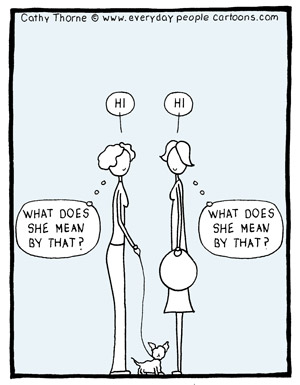
Over the course of my sobriety, I’ve found it possible to make peace with awkwardness by drawing back the curtain on that little wizard generating all the noise and smoke.  Another approach is to go ahead and embrace awkwardness as a precious part of being human and flawed.  And the third is to simply remind myself that all moments pass, so even if I were to find myself living out a “forgot to wear pants” dream, ultimately I’d be okay.

What’s really going on?
Okay, you’re not gonna like this.  I know for me, any time I’m feeling awkward, I’m also feeling selfish and self-centered.  Selfishness for the alcoholic is such a deeply ingrained defect, one “driven by a thousand forms of fear,” that we may not realize we’re in its grip.Womensayinghi

I’m afraid you won’t like me.

I’m afraid I’m boring.

I’m afraid I’ll reveal ignorance.

I’m afraid – let’s just sum it up – that you’ll figure out I’m not good enough.

So since I secretly believe I’m not good enough, I have to falsely impress you.  While my conversation may seem motiveless on the surface, it’s actually an attempt to manipulate you into a favorable view of me that, deep down, I believe I don’t deserve.  I’m busy crafting an image, doing PR work with every nod, every chuckle, every response.

And it’s a fuck of a lot of work!

In fact, it’s so much work that my poor brain doesn’t have enough bandwidth left to actually be interested in you, in what you’re saying or feeling or whatever the hell we’re purportedly talking about.

I want something from you.  Approval.  Increased trust.  Intimacy.  I probably don’t even know what it is, but at some level I fear my ship will sink without it.  YOU are a means to an end…  and our conversation, interesting or needed as it may be, is really all about ME and my needs.

What’s the alternative?
Sorry, guys, but here we go again!  The way out is Step 3.  It’s trusting god.  It’s having made a decision to live from a place of knowing that my worth derives from god’s love – and that god is not wrong to love me.  I have inherent worth.  I am trying.  I have love and kindness to offer.  Further, regardless of whether our conversation turns to a big fat stinky turd on fire, I will still be worthy and lovable.  I don’t need you to like me.  What will be, will be.  I trust god that, just by being loving and useful, I can play the role I’m meant to.

What happens when we adopt this attitude?  Amazing things!  I can pay attention.  I can wonder about you.  I can think clearly about what I really mean, what would be helpful, what I have to offer you.  And I’m free!  God has sliced through the five-inch-thick wet suit to let me out so I can dance!  I laugh, say what I think, am playful – and it’s fun!  I’m able to love you for just being you.  All this I can do stone. cold. sober.

Embracing Awkwardness
Let’s face it, there are times when I do want something from someone, because I’m human.  Recently, for instance, I was on a group hike with a guy I found attractive – the first spark I’d felt since the demise of my relationship.  So guess what?  Whenever we two were alone, I felt awkward.  I couldn’t think of shit to say, or I said “stupid” shit, and three-second silences loomed like eternities.  But I forgave myself for it.  “How cute we are,” I thought, “all awkward and goofy like this!  How predictable I am, like a high schooler!”  Even awkwardness, reminding us we’re alive, can be a gift.

And Besides, No One Cares!
Eleanor Roosevelt, that great vanquisher of personal awkwardness, left us with this gem on the topic:

“You wouldn’t worry so much about what others think of you if you realized how seldom they do.”

We’re all self-centered by nature, each of us the central protagonist of our world’s story. Everyone’s too busy thinking about themselves to dwell on anything we say or do.

Lastly, there’s that bit of AA wisdom: “What you think of me is none of my business.” We’re here to be kind, loving, and useful.  Let others make of it what they will.

scroll

7 Comments

Filed under AA, Alcoholism, Codependency, living sober, Recovery, Sobriety, Spirituality

How Alcoholism Fucks Up Your Brain

A brief overview

I usually focus these posts on the spirituality of the 12 Steps as brewbama path  of recovery from alcoholism and codependency, but today I’ve decided to look at a little medical research on this disease. You already know that chronic alcohol abuse causes brain damage – some of it permanent. Whether your brain can rebuild itself with prolonged abstinence depends upon the severity of the damage as well as correlated factors such as genetics, nutrition, and your life habits in sobriety.

Alcoholism Shrinks Your Brain
This is an indisputable fact. Prolonged abuse of alcohol shrinks all areas of the brain, causing the condition known as “wet brain.” All wet brain really means is that, as the brain tissue shrinks, the vacated areas, known as ventricles, fill with fluid to compensate. It doesn’t mean you become a drooling idiot. (My father developed it late in life and remained quite sharp.) Rather, the condition simply indicates that all functions of your brain have been compromised, so that you’re less aware, less physically able, less emotionally engaged, and less intelligent overall than you would be with a healthy, non-alcoholic brain.

But, hey, no big! The buzz is worth it, right?
.

MRI Alcoholic Brain
.
Why Does Alcoholism Shrink Your Brain?
Here we encounter competing theories. To quote an article from the National Institute on Alcohol Abuse and Alcoholism (what a bunch of party-poopers!):

According to one hypothesis, shrinkage (i.e., atrophy) of the cerebral cortex and white matter, as well as possible atrophy of basal forebrain regions, may result from the neurotoxic effects of alcohol… Alcoholics who are susceptible to alcohol toxicity may develop permanent or transient cognitive deficits associated with brain shrinkage.[i]

What is “neurotoxicity”? It’s medi-speak for toasts your brain cells. They don’t necessarily die, but the dendrites connecting them are damaged or lost, so the cells occupy less area.   But hey – at least they’re still kind of there, right?

.
Gray Matter Volumes

.
As you can see, when it comes to brains, plump is better. The graph on the right may seem a little confusing if you’ve gotten bombed enough times – or, heck, even if you haven’t. The straight line represents a normal brain. The blue line shows shrinkage of regions in a young alcoholic brain, and the yellow line shrinkage in an older alcoholic brain. (By the way, who the hell drinks only 20 gallons of alcohol in their whole life? Seriously? Even 625 gallons wouldn’t be nearly enough for my addict!)

Parts of the Brain Most Vulnerable
Everybody knows that when you’re fucked up, you temporarily lose coordination, short-term memory, and sound judgment. But who cares? Not much of a price to pay for not hating yourself for a bit, right? Of course, getting hammered also fries your behavioral inhibitions, emotional intelligence, and the ability to accurately read social cues – none of which can even compare, obviously, with the tremendous relief of no longer feeling terrified to converse with other human beings because you’re suddenly irresistibly hot and charming.

That said, it only makes sense that prolonged exposure to alcohol would eventually damage the parts of the brain responsible for those very functions.

Neuroimaging studies of living brains point to increased susceptibility of frontal brain systems to alcoholism-related damage… The frontal lobes, connected with all other lobes of the brain, receive and send fibers to numerous subcortical structures. The prefrontal cortex is considered the brain’s executive—that is, it is necessary for planning and regulating behavior, inhibiting the occurrence of unnecessary or unwanted behaviors, and supporting adaptive “executive control” skills such as goal-directed behaviors, good judgment, and problem-solving abilities.

In other words, the motherboard of your brain starts to malfunction. drunk-people-grin  As alcoholism progresses, this can lead to the chain of bad choices that screw up an alcoholic’s entire life. Because it only makes sense that as self-restraint abates and good judgment declines, egotism and selfishness jump in to take up the slack.

 Disruptions of the normal inhibitory functions of prefrontal networks often have the interesting effect of releasing previously inhibited behaviors. As a result, a person may behave impulsively and inappropriately – which may contribute to excessive drinking.

In other words, the more you injure your brain by drinking, the more likely you are to say, “aw… fuck it!” and drink more. Other excellent ideas include hooking up with other sick people, engaging in unethical/destructive behaviors, and royally screwing over the people you love.

Because actually, you only kind of love them. To be honest, loving them is only a vague memory. Why is that?

Alcoholics may seem emotionally “flat” – i.e., they are less reactive to emotionally charged situations… Impairments in emotional functioning that affect alcoholics may reflect abnormalities in [the right 48_Withered_Heart_16oo_by_WoodrowShigeruhemisphere or] other brain regions which… influence emotional processing, such as the limbic system and the frontal lobes.

How many alcoholics know that feeling of not being able to feel?  When my grandmother died, when my husband walked away, when my partner shut the door on my begging – I knew I ought to feel something, but I didn’t. Not much more than, “Hmm… that sure sucks!” Who knew my limbic system was screwed up? Really, by the end I could feel only one thing: when I was pouring the drink, when I was chopping the lines, when it seemed I was winning the conquest, I felt, “YES!”

Alcohol directly stimulates release of the neurotransmitter serotonin, which is important in emotional expression, and of the endorphins, natural substances related to opioids, which may contribute to the “high” of intoxication and the craving to drink. Alcohol also leads to increases in the release of dopamine (DA), a neurotransmitter that plays a role in motivation and in the rewarding effects of alcohol.

The trouble is, the brain recognizes this overload of pleasure transmitters and tapers its production of each as a result. In other words, you feel like shit without a drink; in fact, severe neurotransmitter imbalances my cause you to develop “seizures, sedation, depression, agitation, and other mood and behavior disorders.”

The brain, of course, isn’t the only organ on the team to get fucked by alcohol. Every organ in the body suffers, but hardest hit is your liver. We all know the liver’s ability to remove toxins from the bloodstream gets compromised as alcohol overtaxes it. But did you know this?

These damaged liver cells no longer function as well as they should and allow too much of these toxic substances, ammonia and manganese in particular, to travel to the brain. These substances proceed to damage brain cells, causing a serious and potentially fatal brain disorder known as hepatic encephalopathy, which can result in mood and personality changes, anxiety, depression, shortened attention span, and coordination problems, including… hand shaking[ii]

I think I might’ve had a spot of that…

Well, that’s about the end of my rollicking review of alcoholic brain damage. Missing from this account, of course, is the self-destructive spiritual illness that makes us not give a shit whether we’re killing ourselves, because life’s worthless anyway.

The good news is that studies also show all these physical processes can be reversed by long-term abstinence, while the spiritual malady – thank god! – can be cured via the 12 steps.  A healthy body is really just the means to an end – usefulness and the joy of living, which we’ve been granted in sobriety.

.

scroll

 Post to Facebook
[i] Except where noted, quotations are taken from “Alcoholism and the Brain: An Overview,” by Marlene Oscar–Berman, Ph.D., and Ksenija Marinkovic, Ph.D. See http://pubs.niaaa.nih.gov/publications/arh27-2/125-133.htm
[ii] http://pubs.niaaa.nih.gov/publications/Hangovers/beyondHangovers.htm

16 Comments

Filed under AA, alcohol damage, Alcoholism, Drinking, Recovery, Sobriety

Spiritual Essence: Sobriety, Growth, and Who You’ll Be on the Other Side

Because in AA and Al-Anon meetings we emphasize similarities rather than differences, I usually refrain from talking about my Near Death Experience. I don’t want some share of mine about going to the Light to discourage a newcomer from identifying as alcoholic or convince them AA is full of loonies. But my blog’s a different matter. It’s a place to share my whole experience, loony or not.

When we get sober, we hear a lot of talk about ego as something in close cahoots with our addiction. In order to grow in sobriety, we strive to become conscious of those times (always?) when  it takes over our thinking. But what, exactly, is that entity trying to become conscious? That is, who/what are we without our egos? When we get down to the very heart of our being, our consciousness, what do we find?

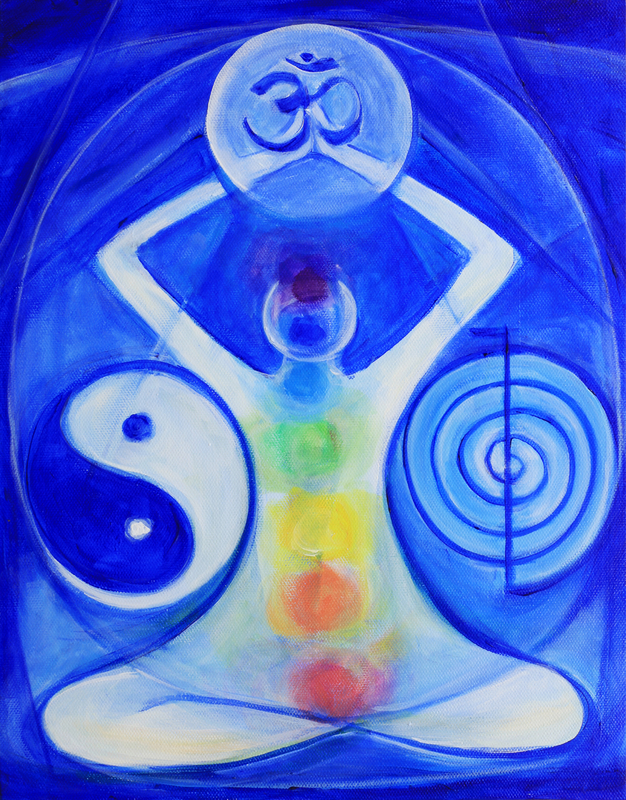
chakrasEckhart Tolle, in my experience, writes most masterfully on this topic. In A New Earth, he makes a number of distinctions among the images appearing on the screen of the mind or various voices in our heads. In addition to ego (which is essentially the voice of fear – a destructive agent) and thought (which continuously occupies the brain much as digestion occupies the stomach, but without necessarily holding insight), he identifies emotions (the body’s reaction to thoughts) and the pain-body (an energy field within the body that feeds on negative emotions). Together, these components of our minds conspire to create the Unhappy Story of our lives.

In contrast to this, Tolle posits Presence. Presence is that which witnesses all aspects of our experience – the font of consciousness itself. I remember when I was reading Tolle on a beautiful beach in Costa Rica, the phenomenon of Presence kept eluding me.  I’d try repeatedly to disengage from my thoughts and emotions enough to zoom in on who was witnessing them, only to be sucked in by another thought or emotion, such as judging the extent of my success.

Today I understand why I couldn’t do it: my core, my soul, my essence was submerged beneath a layer of lies (thoughts) and denial (fear) manufactured by my ego to maintain my love addiction: I lay on that beautiful beach with a boyfriend who I knew in my core was concealing late-stage alcoholism, simply not drinking or acting out around me. I did not want to know this, mind you. I wanted not want to be fully conscious, because if I dropped my stories of him as an ethically strong and genuine man, I’d need to uproot my entire emotional life by breaking from him.  Addiction – with its urgent needs and false realities to fill them – obstructed my access to Presence, exactly as it had back in the days when I was drinking.

I do, however, have a memory of being pure presence.  If you’ve read my addiction memoir, you know that in 1982 I snorted a half-gram of lidocaine sold to me as cocaine, which shut down my cardio-pulmonary impulses and caused me to die on the dance floor of a Manhattan nightclub.  In those three minutes without pulse or breathing, I rocketed out of my body and into a vast blue sky above the open ocean, embarking on my journey to god.  There’s no room to tell the whole story here. What I want to concentrate on is the “I” in those sentences. What was “I” outside my body?

Pure awareness. Pure interest. Pure embrace of each phenomenon I encountered. That is, whatever I experienced, I loved.  I saw and knew with an ongoing, unqualified excitement that made not loving impossible. How to describe this? When you were a kid, maybe on your birthday or Christmas, you might have encountered a big stack of presents. You didn’t know what was in them.  You didn’t need to.  You anticipated finding out without worry that some might be duds.  All you felt was, “Oh, boy!”  That’s how you’ll feel about everything after you leave your body – everything, that is, except the prospect of returning to it.

Fear became null. When I was diving hundreds of feet toward tspiritenergyhe ocean’s surface, I wondered whether its surface tension might impact me like concrete, and there was certainly an extra spurt of “Oh, boy!” when it didn’t – but no adrenaline tinge of dread.  Same with the realization that I was about to burst into the sun – I only wondered what would happen.  That’s it.  Fear, sadness, anger: these are functions of the BODY.  We don’t need them once staying biologically operational is no longer of consequence.

Short of dying, how can you experience your own essence – that core consciousness you’ll become on the other side?  The best way I know today is to get quiet, close your eyes, and mentally speak your own name adding the suffix “–ness.” Do this several times.  Each time you repeat it, go further toward your child self.  Seek the thinker, not the thoughts.  Not only that, let go of trying – to be someone, to please, to do well before anyone but god – and let yourself fall toward humility. You’re just you.

In my “Louisa-ness,” there’s a subtle hint of…  I can’t find a word besides “dumbness.” But it’s a dumbness I thoroughly love! Maybe it’s just the void left by ego’s absence, the submission to being limited. It’s sort of like the curve of a ball, the spherical nature of myself coming back to me. It cups me. It hums “Louisa-ness.”

The more sober I am, the closer I move toward living from my essence.  THAT is my spiritual journey.  As Meister Eckhart put it (not related to Tolle), “God is not found in the soul by adding anything, but by a process of subtraction.”

Part of the reason I love to climb mountains is that the physical demands pare away my thoughts and emotions until the simplicity of one goal – I will simply continue – eclipses all the various yammerings of ego.  Ego may initiate my climbs, but spirit finishes them.  “One Step at a Time” – the name of my sober mountaineering group – offers the ultimate metaphor for spiritual growth.  Day before yesterday, standing at 12,200 feet on the summit of Mount Adams, I did indeed feel close to my god.

I’m alive.  I’m grateful.  Nothing else matters.  For me, until the times comes to shed the “dumbness” of this body, that’s as true as it gets.

Me at 12,200 feet

Sunday afternoon, Mount Adams summit at 12,200 feet, a distant Rainier on the horizon.

1 Comment

Filed under AA, Afterlife, Codependency, God, living sober, Near Death Experience, Recovery, Spirituality

Psychic Change

Toward Alcohol

When we hit bottom in our drinking careers, we’re pretty much forced to change.  We’re truly sick and tired of being sick and tired; we recognize, however faultily, that our way is not working.  We become teachable.  That is, we’re desperate enough to try out AA’s approach even though it feels foreign, artificial, and disorienting.

For me this meant giving up the belief that I knew everything.  I’d always felt sure I could perceive the lay of the land in a snap and choose the best course, which I then acted on with chutzpah and a dash of fukitol.  Drinks made me feel better, so I frickin’ took ’em.  Certain designated figures, also known as cool people, carried what I craved, so I chased ’em.  Responsibility and integrity felt cumbersome, so I shrugged ’em off – free to follow my whims wherever they might lead!

And where was that?  Loneliness so lethal I wanted to scream for eternity and futility so rampant I wanted to break and trash and burn every fucking thing that ever touched my life – that’s where my knowing everything took me.

12 stepsAA – the supposed solution – seemed as silly as a cake walk.  The 12 Steps, anyone could see, held no more wisdom than a hopscotch grid, and yet all these AA dolts claimed that if you sincerely played hopscotch, if you landed in each arbitrarily chalked off square, you’d bust through to frickin’ Narnia or something – whatever they meant by this “4th dimension of existence.”

But since a U-turn could lead me only back to the hell, I went ahead.  I gave up control, followed directions, did the dance.  And I commenced to change – to heal and grow and behold countless unexplored and rich possibilities hitherto invisible to me.

From somewhere inside me, I began to sense a direction besides my thoughts.  They – my thoughts – were still as dumb and which-way as ever, but this new chord, this voice within – it began to lead me instead of them.  Guidance I heard and talked about in AA aligned with this voice, but did not constitute it.  Rather, I had “tapped an unsuspected inner resource” previously drown out by all the fears, demands, and clutter spewed by my ego.

I’d experienced a psychic change.  I’d begun to develop a spiritual life that edged out my craving for booze.

Toward Life Itself

“Our liquor was but a symptom,” says the Big Book, of our messed up approach to life.  If we merely take away the faulty solution of drinking, life hits us full force and feels unbearable. The lasting solution is to live on a spiritual basis which flows in tune with reality rather than fighting it.

Spiritual evolution is not a matter of content.  That is, it’s never a matter of learning X, Y, and Z, passing the quiz, and graduating.  Rather, it’s a habit of cultivating open-mindedness and reaching for growth.  In other words, the conditions for continuous growth are the same as those that freed us from compulsive drinking: I elect not to buy into my thoughts, not to obey my ego, not to fall for the idea that my way is right.  Only by turning away from these easy-to grab reflexes can I open myself to another voice – the more fundamental guidance of a higher power.

second-handDay by day, growth happens at the juncture between what I’m exposed to and how I react to it.  In that immediate crucible, I make more tiny choices than can possibly be noted, but collectively, they coalesce into a “gear” for my outlook.  I plop into good-ole self-pity or reach for seemingly impossible gratitude – though I may end up somewhere between.  What matters is whether I ask my higher power to guide those tiny choices, and whether I commit the incremental shards of my awareness to pursuing that guidance.

Growth can’t happen when ego takes over.  The world becomes scary, because if what I’ve decided is supposed to happen doesn’t, I’m gonna be screwed. There’s never enough, so I lock into my plans.  I get tunnel vision – which means I’m sealed off from potential good outside my will.  I consign myself to stagnation.

The openness of faith reminds me life is always a collaborative effort – mine and god’s.  Sure, I still plan and take action, but with built-in acceptance of whatever plays out.  Even if things fuck up and fall apart, I’ll still be okay.  My “enough” originates not from stuff or status, but from the power of god’s love flowing through me, the strength to generate and nurture and delight.

Jess and Chip

Jesse & Chip (by permission) 1 month post-flood: “The joy of living [they] really have, even under pressure and difficulty.”

Consider some dear friends of mine who moved to Wimberley, TX, last year only to lose everything they owned in a recent river flood.  One day things were dandy, and next their home was was missing two walls and contained only mud and somebody else’s overturned couch.  They had no renters’ insurance.  Can you imagine that?  I mean, can you really imagine losing everything?  Yet these are two happy and thriving, not only because they’re sober, but because they live on a spiritual basis.  They don’t lament.  They have their precious lives, their energy, their love – a flow that’s providing all they need to rebuild what was lost, even as they pitch in to help neighbors… or support a faraway friend (me) processing a painful break-up.

The psychic change to living on a spiritual basis means we accept life’s uncertainty, taking our best shot and leaving the results to god.  Failure’s fine.  It happens.  Floods happen.  Betrayals happen.  We can only keep listening for the voice within and trying to follow it toward good actions and good people, but with no guarantees.  Because, while it’s true we each reap what we sow, it’s also true we’re  scattering seeds from an unmarked, mixed bag. What will take root and flourish depends, we know, as much on the rain and sun as our work. Yet we do it anyway – and cheerfully.

Millet- sower

The Sower, J. F. Millet, 1850


 scroll

1 Comment

Filed under AA, Alcoholism, Drinking, Faith, God, Happiness, Recovery, Sobriety, Spirituality, Twelve Steps

Memoir Out in Paperback

Just an announcement:

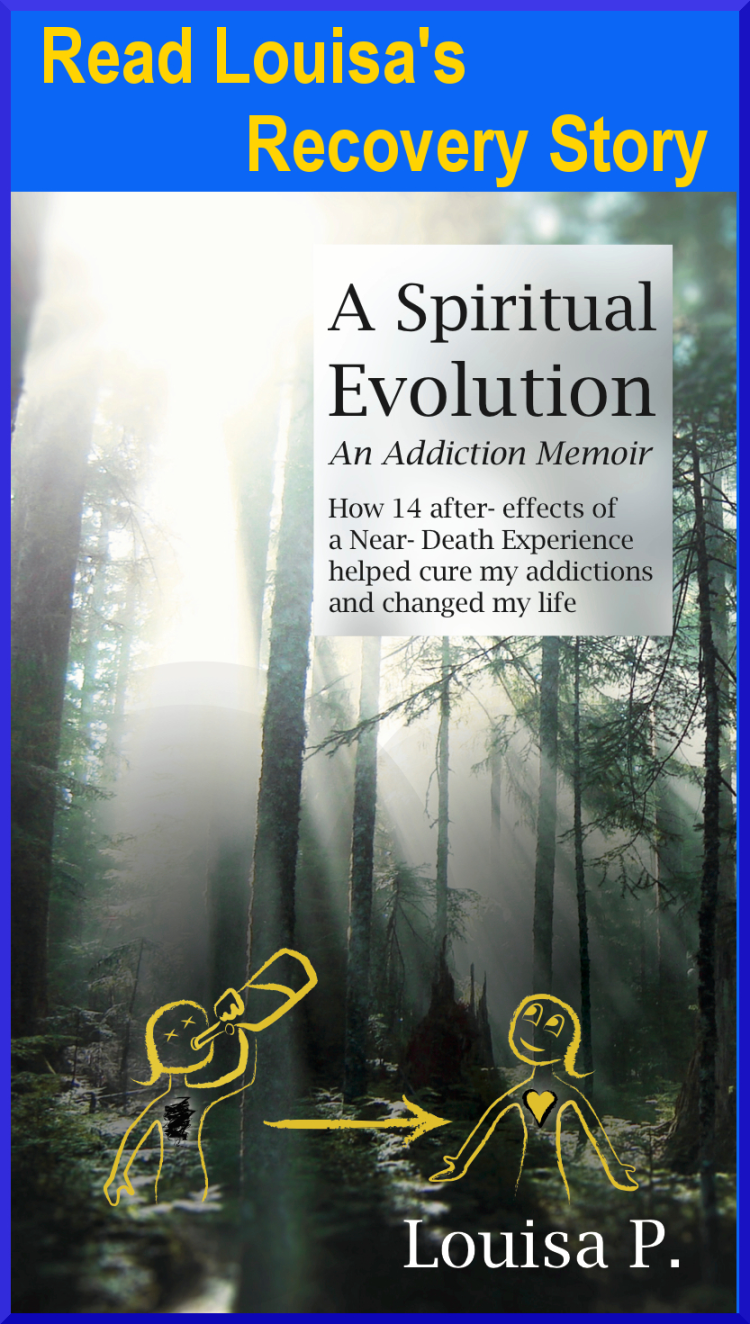
For those non-Kindle readers interested in getting my addiction memoir as a hold-in-your-hands, physical page-turning book, it’s FINALLY available on Amazon here:

Click here for paperback addiction memoir

Click here for content description/reader reviews

It reads just like an AA share.  You’ll feel like you’re at a speakers’ meeting where I’m telling you my story with that unique funny/sad tone we all use – except somebody gave me 12 hours to tell it!  I can promise you, it’s not dull.  I quote wet journal entries – I was a prize-winning writer able to articulate problems but not solve them.  I also, as the subtitle indicates, describe the vivid Near Death journey to the Light I experienced at age 22.  The series of paranormal after-effects that followed over the years culminate in the concrete faith in a higher power grounding my long term sobriety today.

The last chapters recount my recovery from codependency – an ongoing process.

Please feel free to pass on the link above to anyone in/attempting recovery from any form of addiction who you think would enjoy a wild tale of experience, strength, and hope.

New blog post for y’all tomorrow!

yours,

-Louisa

Cover figures

.

Leave a comment

Filed under AA, Al-Anon, Alcoholism, Codependency, Near Death Experience, Recovery, Sobriety, Spirituality

What is Goodness?

Words can be dead or alive.  My big, fat Webster’s dictionary devotes a full page to the word good, yet conveys almost nothing.  Definitions range from dictionary“making a favorable impression in terms of moral character” to “wholesome” or “noble and respectable.”    Words – nothing but lexical connections.

Yet words can also be alive when they resonate with what we know to be true.  Years ago at an AA meeting, for instance, I heard these: “Love from the heart is a one-way street.  It goes out.”  The guy saying this gestured from his chest into the room, his hand unfolding from from fist to open.  I knew the truth of what he was saying.  I’d never heard it so succinctly put.

Goodness.  What is it?  Most of us know it when we’re feeling it.  If we’re around a good person, something emanates from them.  A work of art or beauty can evoke the same feeling.  It’s a warmth, a light, a glow – maybe an aura.  But of what?

Love.  Goodness is the product of love.  When that inmost heart of ours, the font of our being, our life energy, reaches out to connect with something in the world, the energy around that connection is goodness. Love has a direction, a flow along the one-way street, while goodness is the product of that connection.  It shows up in any act or effort of integrity and honor that is untainted by selfishness.

A friend of mine experienced a Near Death Experience far more protracted and detailed than mine.  Hers occurred in the seconds before a head-on car crash, which for her expanded to hours of interaction with spirits.  She was a teen at the time, verging on a dark turn of acting out from pain in her past.  An ugly, squat demon at her feet in the passenger’s seat invited her to join him, promising her a chance to “get even” with everyone who’d ever wronged her.  But she declined, and found herself suddenly pulled up out of the car, rushing into the sky with her very serious, earnest guardian angel whom she realized she’d known all her life.  Among the things she was shown was a whirlwind tour of the globe, zooming in on all the pies being made right then.  Yes, pies.  She saw countless homemade pies, all different styles and types, until finally her guide showed her the very best pie on earth at that point in time.

It was a cherry pie made by an older woman somewhere Cherry-Piein Europe. The pie was just coming out of the oven, perfectly browned with woven crust and beveled edges.  The woman loved the pie.  Into it she had poured everything she knew about pie-making, every skill acquired in years of baking – not to impress anyone, but purely to manifest the best of her abilities.  The guide flashed into my friend’s awareness that the same can be true for anything we do in life.  When we care enough to learn something, when we respect the skills involved enough to apply them with dedication, we can bring into the world a work of goodness – even when tremendous faith and courage are needed to do so.

Any time our efforts are powered by such love, they become acts of goodness – an emblem of the plenty we’ve received from god.  They are, in essence, acts of gratitude: “Life is God’s gift to you; what you make of your life is your gift to God.”

Conversely, when they’re powered by the desire to get, which is actually rooted in a sense of lack and the driving fear behind it, which is ultimately a distrust of god, our efforts become acts of aggression.  They devolve to a way of “showing” and outstripping others, of getting even with those we feel have wronged us.  The recognition is all for me.

For these reasons, addiction cuts us off from goodness entirely.  Compulsive use of alcoholalcohol, drugs, sex, shopping, etc., or the codependent urge to steer another’s life – all these keep us constantly in the mode of wanting.  We try to suck from the world whatever we think will fill the gaping hole in our guts.  This time, we’ll get what we need to feel good about ourselves.  We’ll score it from the people we impress, from the places and things that infuse us with status, lend us power.

What we have in addiction is wrong-way traffic.  As long as I’m trying to suck up whatever addiction promises will fix me, I’m incapable of even recognizing goodness.  I’m numb to it entirely.  In fact, as told in my addiction memoir, by the time I neared hitting bottom, I’d quit believing goodness even existed!  It seemed a sickly sweet delusion manufactured by conformists, when the hard core truth was that I had to grab whatever I could from a mean, barren world.

But goodness not only exists, it’s the ultimate expression ofsunshine1 living.  It can emanate from any relationship founded in sincerity – in creativity and playfulness, in compassion and affection.  Whenever I reach to connect my spirit to yours without seeking to get something from the deal, the energy from my heart streams toward you, and I become a channel for god – which is love – to flow through.  God is the source of all beauty, and as soon as we give ourselves over to expressing it, that flow simplifies life radically down to being present in gratitude.  We are complete.  In fact, we have a surplus, because the wellspring of our life-force is constantly flowing, flowing.  So we can try to give it shape, to bring goodness into the world.

That’s why I wrote this, from me to you.

scroll

Post to Facebook

3 Comments

Filed under AA, Alcoholism, Codependence, Codependency, Faith, God, Near Death Experience, Recovery, Sobriety, Spirituality