Category Archives: AA

Wait! The Traditions Don’t Suck!

For years I was instantly bored by AA’s 12 Traditions. Read at the outset of most meetings right after the 12 Steps, they tended to have a soporific effect, the words droning past by like train cars as I waited to cross tracks to the actual meeting.

Lately, though, I’ve been listening to them and thinking about how their guidance applies to life. Certainly not a new idea – countless people have advised such – but it’s new to me.  I’m always on the lookout for guidance!
aa-coins

You can look up the traditions in normal and “long form” at the back of your Big Book.  I ain’t gonna list them here because they’d hog up too much of my word count, so I’d have less room to cuss.  😉   Instead, here’s just the gist of what I hear in each.

1. Together we live; alone we die.  I need to stay connected to AA, to join in the unity that sustains “our common welfare.”  Whenever I choose to isolate, deciding my problems are unique or that I don’t need to show up at meetings, I’m dying just a little bit – spiritually if not physically.

2. God’s Guidance is the Shit.  I need to seek god in all things always, to navigate by this North Star of goodness to the best of my ability in all my thoughts and actions.  And when I talk matters over with others who earnestly seek god/good, I should listen for god’s guidance reflected in their words – often unintentionally.

3. Welcome Others as They Are.  That AA’s only requirement for membership is a “desire to stop drinking” is HUGE!  There’s so much more to this tradition than meets the eye! It points to a way of life. For example, in 1960s South Africa, sober alcoholics flouted apartheid laws by holding multi-racial AA meetings and dances; in order to avoid arrest at the latter, Black members disguised themselves as wait staff.  Imagine the secret solidarity of those groups!  AA embraces everyone who desires recovery, regardless of “money or conformity” or how many times they’ve relapsed.  In a similar spirit, I need to recognize and honor the human kinship of every person I encounter.diverse-hands

4. To Thine Own Self Be True.  A spiritually awakened way of life will look different on every individual, so we can live and meet in a wide diversity of styles – provided we’re conscientious about the effects of our actions. In AA meetings we can each think for ourselves, conceive of god as we choose, and talk about sobriety in our own damn vernacular.

5 & 6. Remember Why We’re Here.  Like an AA group, our lives have a primary purpose: “to be of maximum service to God and the people about us” (p. 77).  Helping one another, spreading love and kindness – that’s the frickin’ purpose of life, guys.  Time and time again, I hear from my Near Death Experience (NDE) friends who’ve died and witnessed a life review that they were shown countless instances where they impacted others with kindness or cruelty.  Effects from each act – kind or cruel – rippled outward from person to person into the world.  Accomplishments we consider major did not matter, except in their impact on others’ feelings.  Kindness mattered.  We can’t let a focus on “money, property, and prestige divert us from our primary purpose” of bringing about maximal good.
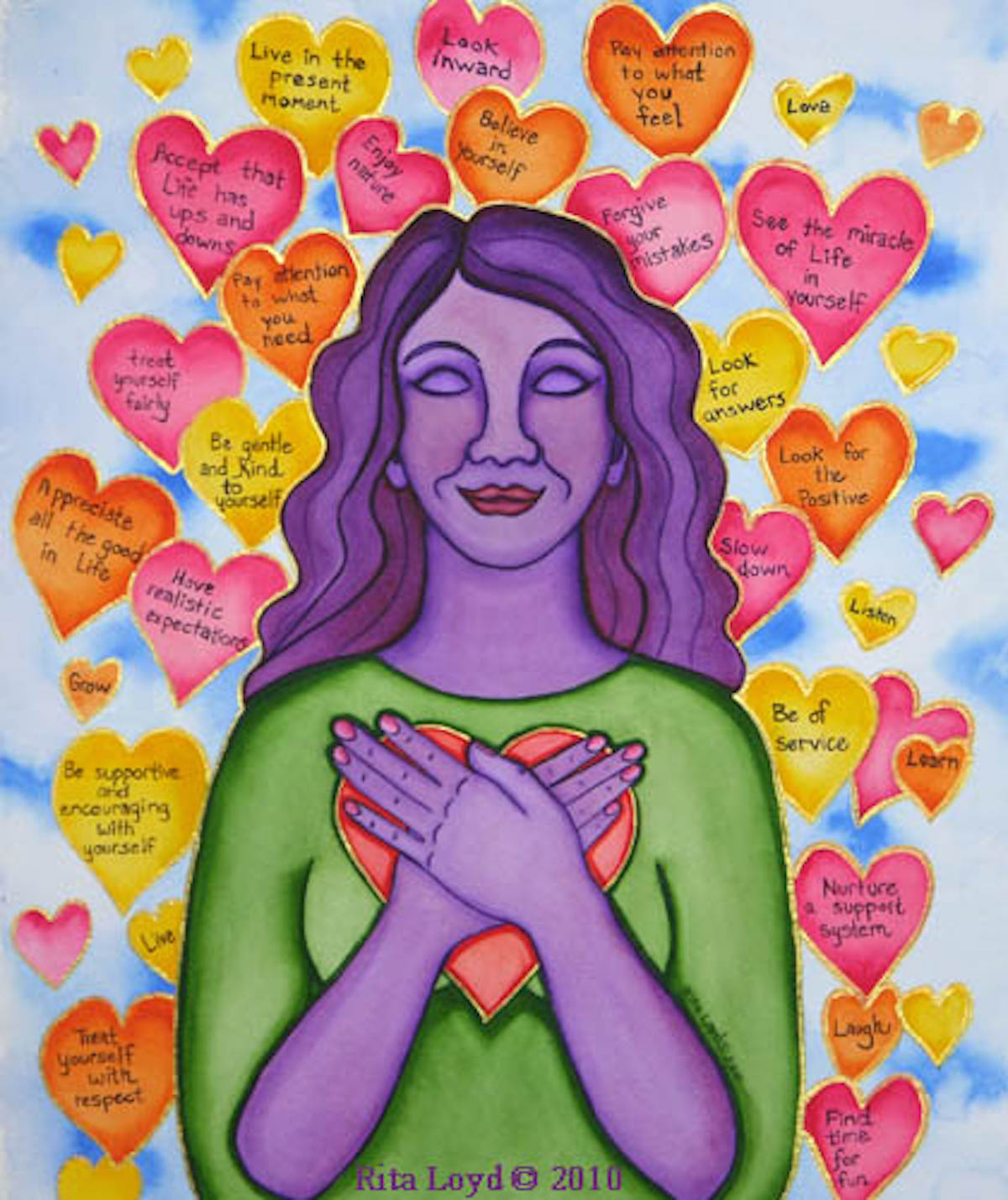
unconditional-self-love7. Love Ourselves.  How do I get from “fully self-supporting” to self-love?  Because the founders recognized that if AA failed to support itself from within, then favor toward, obligation to, and dependence on those providing the handouts would fuck up everything.  Bill W. initially tried to hit up John D. Rockefeller for money, but Rockefeller, miraculously enough, recognized the risk and refused.  Sure, financial solvency is a fine goal for all adults.  But what really “funds” my day-to-day experience is my emotional well-being.  If I place myself in a position where I’m dependent on others to provide that, I lose all integrity.

I must learn to love and support myself.  I’m progressing toward this goal little by little, slowly and painfully.  (To be honest, I’ve tried to blog on self-love several times and realized I’m just not there yet.)

8 & 9. Be Neither a Role nor Rule Book.  The fact that AA no-bosshas survived over 80 years despite being neither professional nor organized is something many outsiders can’t grasp. We charge nothing, and nobody is in charge.  Rather, our cohesion results from lived experience of our shared plight and solution.  Extending these principles into our lives means that we not identify with the roles or labels we tend to pin on ourselves, that we lighten up and take ourselves less seriously.  Eckhart Tolle writes about the diminished experience we suffer when we identify with a role, class, or even personality.  Living truly awake means seeking to be maximally open to experience right now, not hemmed in by limiting self-definitions.

10. Eschew Conflict When Possible.  Regarding controversial issues, this tradition states that we “oppose no one.”  I do need to know what’s right for me and be faithful to it with boundaries, but I don’t go imposing my will on others.  (Given the current US political climate, though, I think we should extend our personal boundaries to consider the character of our country and who we are collectively – and stand up to those inflicting harm in our name.)

11. Live our Program. This tradition translates pretty directly.  As AA doesn’t self-promote, neither should we.  Rather, we walk our talk.  We work the steps, seek growth and healing through god, and let the results speak for themselves.  I know several people dying of alcoholism.  To each I have mentioned that I’m sober in AA – end of story.  They can seek me out if they want what I have.

12. Stay Humble and Grateful.  Here I do quote the long form: “–And finally, we of Alcoholics Anonymous believe that the principle of anonymity has immense spiritual significance.  It reminds us that we are to place principles before personalities; that we are to actually practice a genuine humility.  This to the end that our great blessings may never spoil us; that we shall forever live in thankful contemplation of [god].”  Can’t improve on that!

.

scroll

2 Comments

Filed under 12 Traditions, AA, Addiction, Recovery, Sobriety

Vulnerability

The other day I got a call from a woman I don’t know asking about something she’d heard me say in an AA meeting.  She’d tracked me down because she was curious.

“You said the closer you get to God, the more you’re able to love people – you said because you don’t need shit from them.  I’ve been wanting and wanting for years to get closer to that – not wanting or needing people’s approval – but I don’t seem to get anywhere.  How do you do it?”

I offered to meet her for coffee next week. But what the fuck will I say to her?  How can I even hope to frame in one sitting what’s taken me 22 years to learn?  I can’t.  But that’s okay.  Because the truth is, in taking the risk to reach out to me, she’d begun to answer her own question.

Vulnerability is Scary
Neurologically, most of our responses to life involve an almond-sized part of the brain known as the amygdala, the center of fight, flight, or freeze, which scans our sensory data constantly for signs of danger.

Costa Rican girls

Unsafe but unworried Costa Rican kids

In the US, our culture prioritizes shielding ourselves from such danger.  Airbags, seatbelts, baby car seats, and helmets – they’re all mandated by law.  By contrast, when I traveled to Costa Rica, the safety policy appeared to be, “Let’s hope bad shit doesn’t happen.” I saw a couple motorcycling down a pot-holed road with no helmets – not for them or the 1-year-old between them, whom the woman could brace with only one hand because her other dangled groceries near the rear axle.  Another guy ahead of our car perched on the back of his friend’s motorcycle carrying a full-size bicycle across his back – no hands!  Now, I’m sure some bad shit does happen, but among the Costa Ricans I sensed a freedom and happiness – a trust in life and themselves – that Americans can’t even dream of.

If we’re knocking ourselves out to evade physical dangers, it only makes sense that we transfer the same approach to emotional ones.  Research has proven that our brains experience emotional pain and physical pain as virtually identical: the same regions light up when someone turns us a cold shoulder as would if they snapped a mousetrap on our finger.  Rejections hurts.

That’s why we drank!  Then we didn’t have to give a shit who disliked or rejected us, or if we did, it was all delicious maudlin drama.  Yet the day comes when alcohol can no longer anesthetize us, and at the same time the wreckage of our past overwhelms us.  When that happens, we hit bottom.

It’s a pain that cracks us open so deeply, god can touch our hearts.  We admit we don’t know how to live, and we ask for help from god and sober alcoholics.  If we work a program, we learn that ego, unchecked, is the source of our troubles.  Through inventory we name the character defects that ego animates in us and start mustering the willingness to part with them.

So who, then, is this new person?  This human divested of their emotional shield, inflated ego, assorted coping mechanisms – in short of their boozing imperviousness?

It’s a person suddenly exposed and vulnerable as hell.

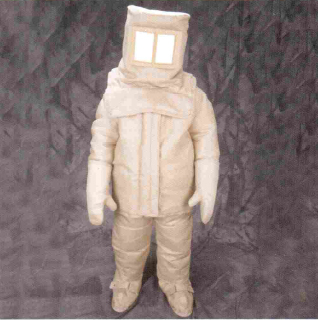
Now, we can be hurt.  We experience pain deeply, sometimes a backlog built up over a lifetime.  If we’re lucky, we have a sponsor who advises us to bring that pain to god.  But sometimes, our amygdalas decide god’s just not concrete enough.  fire-suitWe need safety precautions, emotional helmets and hazmat suits!  So we reduce our vulnerability by learning to edit and hide our true selves.  We develop strategies like people pleasing: whatever we think will smooth our path, whatever others want or would approve, we try to appear.  The goal is to be accepted.  We need it because we so intensely fear rejection’s pain.

The problem is, if we don’t put ourselves out there, exposing our weaknesses and imperfections and hoping to be loved despite them, we also won’t live. We’ll miss the chance to know intimacy, trust, and the warmth of loving other people simply for their humanness.  In short, safe inside our hazmat suits, we’ll miss the richest beauties of life on earth.

So I Guess What I’ll Say to that woman is that since I’ve been sober, life has absolutely beaten the crap out of me, over and over.  Partners have plopped my heart in food processors set on Betrayal – not just once but twice.  My siblings ridiculed and shamed my book – even as I fought cancer.  Besides losing a sister and father, I’ve lost half a dozen dear friends to overdose, accident, and suicide.

Pain.  Pain.  Pain.

But here’s the thing.  Every time, god has been there.  Every time, god has loved me through it.  And the gift from staying sober long enough has been that I begin to fear pain less.  It won’t kill me.  It is, after all, “the touchstone of all spiritual progress” – that which affirms the real deal:  I will love again.  I’ll show up for my siblings.  Cancer won’t haunt me.  And I will never forget my loved ones.

cristins-cookiesI find I have begun to live emotionally in the same spirit the Costa Ricans live physically – with less caution and more freedom.  I can begin to risk pain knowingly.  Today I choose to be vulnerable, extending kindness or heartfelt gifts to those who may reject them, because I don’t need their acceptance.  Sure, I’d like it!  Sure, I hope bad shit doesn’t happen.  But what’s the worst case scenario?  Those “ouch” parts of my brain will light up again, and I’ll cry my guts out again.  And when I turn to god in all my pain and grief, god will say to me again, “Louisa, you are enough, just as you are – I love you in the beauty of your trying.”

Freedom is the difference between hoping for and thinking we need reciprocation.  I am all I have to offer.  This life’s the only time I can do it.  God, I know, has my back.

scroll

.

PS: Happy birthday to me, guys!  Thanks for 22 years on the 29th!  🙂

Post to Facebook

12 Comments

Filed under AA, Addiction, Alcoholism, Codependence, Faith, God, Recovery, Sobriety, Spirituality

The Bedevilments vs. Grace

Here are thousands of [sober] men and women, worldly indeed. They flatly declare that since they have come to believe in a Power greater than themselves… there has been a revolutionary change in their way of living and thinking. In the face of collapse and despair… they found that a new power, peace, happiness, and sense of direction flowed into them.
 
…Is not our age characterized by the ease with which we… throw away the theory or gadget which does not work for something new which does? We had to ask ourselves why we shouldn’t apply to our human problems this same readiness. We were having trouble with personal relationships, we couldn’t control our emotional natures, we were a prey to misery and depression, we couldn’t make a living, we had a feeling of uselessness, we were full of fear, we were unhappy, we couldn’t seem to be of real help to other people— was not a basic solution of these bedevilments more important than whether we should see [an ad for some new gadget]? Of course it was…
 
Our ideas did not work. But the God idea did.
-Alcoholic Anonymous, pp. 50-52
The bedevilments sum up how life sucks for an active alcoholic – or for one dry without a solution.  Anyone familiar with the Big Book knows of them.  They make up yet another passage where the AA founders nailed our experience, so  the hurting alcoholic marvels as s/he reads, “How did they know-?”
.
The bedevilments hurt like hell because they’re symptoms of our dying spirits.  Fear cuts us off from the love that would sustain us, so we languish like plants without sunlight.  Drinking temporarily soothes that pain while ego promises to fix everything by grabbing more admiration from the outside world (via  accomplishments, attractiveness, wealth, etc).  What else could possibly help us besides self-medicating and vanquishing all the assholes in our life?
.
aa-80th-convention

AA’s 80th anniversary: 70,000 sober drunks from 94 nations. D’ya think this thing might work?         (click to enlarge)**

.
The Way Out
This chapter, “We Agnostics,” offers an alternative:  If we replace religious ideas of God with  open-minded spirituality, we can examine the results of faith just as we would any other phenomenon – scientifically.  We see that people who adopt faith in a higher power go from the shit pile to thriving.  We see it over and over.  Linking the two events causally – is that such an illogical jump?  To say, “Hmm… looks like this faith gadget works wayyy  better than the self-reliance gadget I’ve been using” – ?
.
That’s how models function in science.  We observe phenomena and devise a theory, a model that explains what’s going on.  We can’t isolate or observe faith, but we can note its effects.  Faith (and the rigorous stepwork it inspires) arrests the misery of alcoholism.  In drunk after drunk, this shit works.  We don’t have to know why.
.
Still, I remember how I reacted the first time I read “We Agnostics.”  Yes, I suffered all the bedevilments (though I didn’t give a shit about not helping others), but I wasn’t going to buy the idea that what had worked for millions of other people would work for me.  No, because I was smarter.  And I hurt worse.  And the prospect of seeking god felt weirder to me than it had for those guys – obviously.  Just in general, other people were so other-peopleish!  They had nothing to do with me.  They were packed in society like canned beans, whereas I had flowered and grown on the vine of my life, bobbing in breezes and raindrops they’d never experienced.
.
This is the catch-22 of getting sober in AA: we have to trust that we are like others before we can really believe it to be so.  If we trust, we can do what they did and get what they got – but at the start we don’t trust anything!  Even booze, our best buddy ever, has turned on us.  Or has it?  Maybe we should try one more time with the bootstraps and a little less bottle?  Isn’t that more likely to work than something so preposterous?
.
wile-e-coyote-cliffAnd yet we try the unknown thing.  We step out into air.  There’s something in AA meetings, some energy we can’t identify that keeps us coming back.  My brain told me emphatically that AA would never work, yet my hope, my heart, and somehow my car keys carried me to meeting after meeting, where I heard people speaking authentically of ruined relationships, self-loathing, wild emotions, relentless fears, and pain-filled loneliness just like mine – that no longer ruled their lives.  I could see it in their eyes, hear it in their voices: they were free.

.
Grace.  What is it?  It’s defined as “unmerited divine assistance,” a gift from god we receive without earning.  The longer I’m sober, the more I see it’s all grace: every breath I take, every sensation, every emotion, every moment of being alive on this earth.  How could I “earn” any of that?  I was graced with the utter defeat of my wrecked life.  I was graced to meet the person who took me to my first AA meeting.  Graced to find myself out of answers, sick of believing my broken brain over and over, desperate enough to show up despite immense skepticism.  The short version is that I was graced with surrender: “Maybe there is something; maybe I can ask it to help me.”
.
That opened the door enough for those first rays of sunlight to touch me.  duckling-graceThree steps forward, two steps back, I’ve progressed through life’s vicissitudes and cycles of stepwork to reach my own intimate experience with a god that I now love with everything in me.  Today I can see how god – that energy of love powering every element of life – is in you.  I can love you with no self-interest – no more than I have in loving a robin, or a birch tree, or a puffy white cloud shifting across the blue expanse of sky.  Look at you being you!

.
And what a wonder it still is, as I come up on 22 years sober, to watch AA newcomers at the outset of their own  journey.  They come in with bedeviled pain and discontent practically scribbling the space above their chairs. Today, I get to flatly declare to them the peace, happiness, and sense of direction with which I’ve been graced – and watch them find it, too.
.
scroll
.
 **https://rehabreviews.com/went-aas-80th-international-convention-kept-journal-become/#prettyPhoto

6 Comments

Filed under AA, Addiction, Alcoholism, Faith, God, Happiness, Recovery, Sobriety, Spirituality

Choose Life; Choose Joy

Paul Johnson was not an alcoholic, but he was extremely unhappy.  One night he drank a bunch of booze and took a bunch of pills then went up to his attic, where he hung himself.  Some time later his wife found him – quite dead.  She struggled to lift his body but failed; she had to go downstairs and get her son, the two of them panicking in their efforts to get the body down.  Though Paul’s face had turned black and he was without pulse or breathing, his wife gave him CPR for five minutes.

Then Paul took a breath.

Paul’s consciousness, far from ceasing to exist, had become exceptionally clear during the time his body was dead.  He found himself in darkness, approached from the right by four shadowy figures who showed him a review of his entire life.  “Thoughts were instantaneous. When you asked a question, you would instantly know the answers.” In a Scrooge-like transformation, Paul returned from the dead absolutely overjoyed to be alive:  “I had this vivid memory, extremely vivid, and it shouldn’t have been vivid at all for a guy that took a couple bottles of meds and drank two bottles of liquor. Yet it was so vivid and so real.  I was so happy to be alive, and to have a second chance to fulfill the things pointed out to me as being important.”

I’m in the process of editing a book of interviews with Near-Death Experiencers* – people (including me) who have died, experienced the other side, and returned with memories. Paul is one of fourteen of us interviewed by filmmaker Heather Dominguez, who has amassed the footage for a television series and is raising the money to produce it.

hooded-figureUnlike the rest of us, however, Paul did not go to the Light.  He went to blackness – a void where he existed without a body.  Far from feeling inundated with infinite love, he sensed that the four figures “wanted to take me to a darker, more horrible place.”  But as he watched the scenes of his life go by, Paul felt overwhelmed with loss.  “My biggest regrets were that I didn’t travel and see the world, and I didn’t do the things that made me happy. …It wasn’t that I missed this wedding or didn’t get this job… [It was] that I didn’t enjoy my life like I really wanted to…  As I realized that, I thought: ‘I wish I wasn’t dead!’  In that exact moment… [the experience] was over for me.”

Today, Paul lives in the Philippines with a new wife and her extended family – all of whom he loves.  He changed everything about himself and is now a man decidedly happy, joyous, and free.

Alcoholics who choose to live experience a shift analogous to Paul’s – if they commit to rigorous spiritual work to effect an internal change.  Paul’s moment of choice strongly reminds me of a favorite Big Book story in the 2nd & 3rd editions of Alcoholics Anonymous, “He Who Loses his Life.”  In it, an honors student and “boy wonder” in business named Bob has drunk his life into the ground despite plenty of intelligence and self-knowledge.  All his city friends alienated, following yet another binge he crashes in the country with a doctor he’s known since boyhood.

We worked in five below zero weather, fixing on an elm tree a wrought iron device which modestly proclaimed that he was indeed a country doctor.  I had no money – well, maybe a dime – and only the clothes I stood in.  “Bob,” he asked quietly, “do you want to live or die?”

He meant it.  I knew he did… I remembered the years I had thrown away.  I had just turned 46. Maybe it was time to die.  Hope had died, or so I thought.

But I said humbly, “I suppose I want to live.”  I meant it.  From that instant to this, nearly eight years later, I have not had the slightest urge to drink.

Bob threw himself into working the 12 steps in AA, which led him to great happiness.

Such lasting happiness can be found only by learning to love reality as it is.  To do this, we need to bring about major change in ourselves – something we can’t accomplish without help from the steps, from our fellows, and, most of all, from our god.

When I was growing up in the 1960s and 1970s, drugs had just sprung lucy_in_the_sky_with_diamonds_by_alfredov90-d5tmlejinto mainstream popular culture.  As a kid listening to Beatles songs like “Lucy in the Sky with Diamonds” or “Tomorrow Never Knows,” I imagined that drugs brought a higher awareness than just plain old consciousness – which was, for me, terribly uncomfortable. As I grew up, I embraced not just alcohol but “recreational drugs” – as if crippling my brain created anything.  I don’t know about you, but I dared to chase that vision, to venture far into the mysteries of the universe – so I sucked chemicals into my mouth and nose and lungs that essentially shoved my head up my ass, and from there I tried to marvel at the view.

It was dark.  It was lonely.  It was pointless.

I had to hit a bottom, to despair almost completely, before I could begin to see that in my search for “something cooler,” I had rejected life.  In my greediness to be loved, I had rejected loving.  And in my obsession with self, I had rejected a humble consciousness of my own soul and spirit – connection to god.

Deep down, every alcoholic knows they are committing a little bit of suicide with every drink.  We know we’re turning our backs on goodness and truth even as we laugh and whoop it up.  We vaguely sense that we’re completely full of shit, but we somehow can’t see a viable alternative.  It’s life.  Honing awareness in sobriety, I have found that plain old reality… is a trip.  It’s huge.  It’s rich.  It’s mind-blowing.

oak-treeTo love what is takes courage.  To love others without a parasitic agenda takes strength.  And to see clearly into ourselves takes humility.  I, of myself, have hardly any of the above.  But I borrow them (and more) from my god day after day, breath after breath.  I choose joy.


scroll

*I’ll let you know when it comes out 🙂

..

5 Comments

Filed under AA, Addiction, Afterlife, Happiness, Near Death Experience, Recovery, Sobriety, Spirituality

Thinking in Sobriety: A Suggested Playlist

A thought is harmless unless we believe it.  It’s not our thoughts, but the attachment to our thoughts, that causes suffering.  Attaching to a thought means believing it’s true.   (-Byron Katie)

One of the greatest gifts I’ve been granted in sobriety is a thin layer of mental insulation between having a thought and believing it’s true.  Back when I was drinking or newly sober, I used to experience a barrage of hopeless, self-deprecating, and judgemental thoughts that seemed to come at me from nowhere.

And they still do!  The miracle now is that today I know I’m thinking. I’m also aware that my thoughts are fickle: sometimes they’re guided by my higher self, and others they’re broadcast by that parasitic asshole camped out in my amygdala: Addiction.

Thoughts in themselves are just mental activity – nothing we have to sign on with.  But doing so becomes habit. As Eckhart Tolle explains, “Strictly speaking, you don’t think: Thinking happens to you… Digestion happens, circulation happens, thinking happens.  Most people are possessed by thought… [while] the greater part of [their] thinking is involuntary, automatic, and repetitive. ”

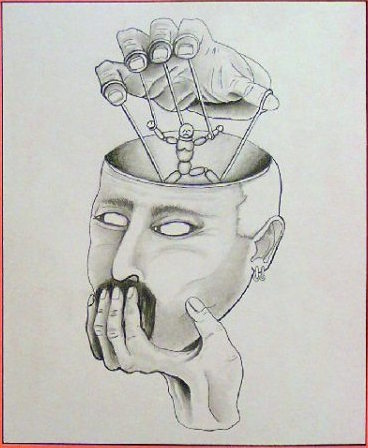
The majority of my thinking, unfortunately, tends to diagnose what’s not right.  (For instance, I’m telling you now what’s not right with my thinking.)  Why is that?  For one thing, as a human I’ve evolved to be on the constant lookout for survival problems. As an academic, I’ve been trained to evaluate everything critically.  Add the fact that, as a codependent, whoamiI’ve always had a hell of a time gauging where I stand relative to you, who I think you want me to be, and my fleeting sense of self.  (Are you disappointed?  Bored?  How do I fix it?)  And lastly, as an alcoholic, I’m prone to self-centered extremes of self-aggrandizement and self-loathing: I’m the best or the worst, totally the shit or a total piece of shit.

Maybe that’s why I experience so much downright back-assward thinking.  I kid you not: this morning I got up for a second cup of tea, and as I crossed the threshold of the kitchen, the thought came to mind that my entire life was a pathetic failure.  Why?  That’s hard to say. My thinking voice was wielding some punishing club, like: “Why do you constantly deny this?!  Why don’t you just quit your strained pretensions and admit you’re nothing but a fuck up?!” Further back I sensed accusations about my lack of material wealth and a relationship, but I didn’t look into them.  Instead I pulled away, thought: “Wow!  Harsh!” and focused on my lovely, cozy tea.

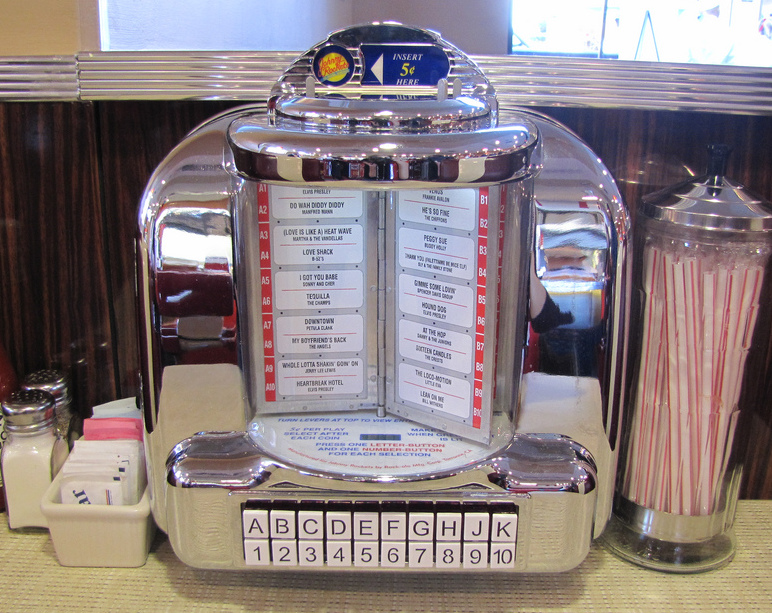
The thing is, I was once addicted to that harsh voice.  I used to grab at those thoughts saying, “AHA!  Now I face the TRUTH!”  Granted, the harsh voice possessed a dismally limited supply of diatribes or, if you will, a chintzy jukebox of dark songs it played over and over.  But I knew them all so well that, whether about your faults or mine, it was great fun to sing along.  For years, they all led to a frame of mind that clearly called for a drink.  I drank not so much to vanquish them as to join with their story: “I don’t give a shit anymore.  Cheers!”

table-jukeboxHere are some of the dark jukebox’s Greatest Hits, sequenced from inner to outer attacks:

  • You Suck  (verses include your life sucks; you’re incompetent; your job/ creativity / social skills suck; no one likes you)
  • You’re Gross  (includes you’re fat; your clothes/ hair/ belongings are stupid; your ____ is too ___)
  • Poor, Poor You~! (includes cruelly denied X;  you’ve tried so hard; never even had a chance; assholes always win; god is frickin’ mean)
  • Your Way’s Right  (includes you told them X ! ; they think they’re so smart; they’ll be sorry; fuck those bastards)
  • That Bitch (includes why is shit so easy for her?; why do all the guys like her?; why won’t she just shrivel up and die?)
  • How D’they Like You NOW??  (includes a myriad of stellar comebacks, snide putdowns, and scathing witticisms to put assholes in their place)
  • Some Day You’ll Show ‘Em (includes Academy Award-winning footage of you accomplishing great things amid vast admiration, or talking thoughtfully with vanquished rivals about your victories)

As I noted above, I still have all these thoughts.  But… by virtue of having worked the steps and listened to a variety of 5th steps, I’ve learned to recognize their hackneyed tunes as part of the human condition – nothing unique to me.  And by a miracle of grace, I’ve actually grown bored of them.

Sometimes, to break a dark train of thought, you need a light one.  The Saint Francis Prayer rocks, of course, but it’s a bit abstract.  Here’s a playlist of thought trains I pursue when I’m having trouble shutting down the jukebox.

  • Be grateful.  I’m not in a war-torn country; I’m healthy; I’m sober; I know my god; I have friends; all I need to live has been gifted to me, plus a wonderful son, home, and abilities.
  • Send love to someone struggling.  I call to mind friends having a hard time and pray for them, maybe text some kind words, or decide on something I could do to help.
  • Plan something happy.  This past kidless weekend I saw the blues coming, so I took my dog, drove 2 hours, and climbed 4,000 feet from old growth forest to a snowy peak – sheer heaven!  All it cost was gas and gumption. I also throw parties, meet for coffee, and play at silly sober stuff (like sober karaoke this weekend).
  • Remember I’m going to die, as are you.  This may sound morbid, but holding in mind that life is finite renders every detail of the present moment infinitely precious.  The more loved ones I lose, the more easily I love all of us – this uppermost layer of humanity like fresh spring grass on an ancient prairie.

Living sober doesn’t mean just not drinking.  It means cultivating a beautiful life with the help of a loving god – and saying no to those habits that drag us back toward our dis-ease.

dsc04697

Me not watching TV alone last weekend (across from Glacier Peak, tagged last summer)

scroll

Post to Facebook

8 Comments

Filed under AA, Addiction, Codependence, Recovery, Sobriety, Twelve Steps

Seasons of Sobriety

Sobriety isn’t a task or a diet – it’s a way of life.  And like life, it excited-fanhas its ups and downs, riches and ruins.  The quality of our sobriety varies with our connectedness to god and our fellows, depending on the rigor with which we cultivate both.  Many of us long to be gung-ho about sobriety all the time – and we can be!  It’s just that what gung-ho looks like is going to change over time, which is why I like the analogy of seasons in sobriety.

Among my AA speaker recordings, I particularly love one by Don C., a Native American from Colorado Springs sober since August 10, 1978.  Don describes the horrific beating his alcoholism inflicted, distrust at his first AA meeting, a sponsor who made him read and annotate each Big Book chapter 25 times, and the freedom he accessed (there’s a silence while he fights back tears) by working the 12 steps.  His entire life and outlook changed.  So why, early in his fourth year sober, did he suddenly find himself miserable?

He says:

“I was about three years and two months sober and everything was going to hell. Meetings got stupid; my sponsor was having stupid attacks; the Big Book sucked…  I thought I was going crazy. So I went up to see Johnny Looking Cloud… He was a Native Elder that was in recovery. …He said, ‘You’re thinking this is a white man’s program – and it’s not.  This is the Indian way, also… The steps are 12 gentle ways to bring you back to the original teachings. And when you’re done, you’ll be in harmony… the way it was for your ancestors.’”

Johnny Looking Cloud explains to Don, firstly, that the steps align with the Native teaching of the Four Directions.  Steps 1, 2, and 3 align with the east, direction of the new sun, where we find our relationship with the Creator.  Steps 4, 5, and 6 align with the south, the high sun, where we find our relationship with ourselves.  Steps 7, 8, and 9  align with the west, the setting sun and direction of letting go, where we make amends to heal our relationships with others.  To the north, like the North Star, lie 10, 11, and 12, steps that align with the elders’ teachings to deepen our wisdom.

Secondly, he explains that just as all living things proceed through cycles, so do we in sobriety.  The first year is our spring, when our sap begins to flow and we form buds of potential.  In the summer of our second year, our leaves mature and we bloom – living vigorously in sobriety.  By the autumn of our third year, we’re harvesting sobriety’s fruits – stability, material gain, relationships.  But then along comes that fourth year: winter.  Our leaves wither and drop; the light weakens; sobriety seems barren and empty, as if everything were falling apart – just as Don C. experienced.  But in truth, the slate is only being cleared for a new level of sobriety – a fresh spring.

four-seasons-22

My own seasons haven’t conformed to a four-year pattern, but I’ve definitely experienced that cycle many times in my 21 years’ sobriety.  In my springtimes, I get to see something new, some truth of living or character defect I’d never recognized before, that changes me forever.  My golden summers and autumns extend sometimes for years.

But winter does arrive.  And it sucks.  My sobriety feels ~meh! ~  I can’t recapture my enthusiasm for meetings, stepwork, or service.  Even so, I’ve schlepped through many such winters to reach new springs.  How does that happen… or not happen?

All of us, consciously or not, seek god/goodness/love in our lives.  All of us carry burdens of fear, pain, and loss.  The interrelationship between these two parts, I’ve found, comprises the melody of my life.  The seasons of a heavy and aching soul complement those of lightness and a free spirit.

My feelings really don’t have much to do with god, I don’t think.  Emotions are part of me, rooted in my body and brain – my separateness from god.  Rather, the godly part of me manifests only in my immediate awareness – my ability to see with love in the present instant.

During my summery months, my god-awareness acts like a beam of light, one I can turn on my own emotions – fears and sadness or childish excitement.  I can make friends with whatever nonsensical feelings insist on tagging along with me.  And when I’m good with my own emotions, it’s easy to extend love and compassion to others.

But when sobriety’s winter comes around, the beam wanes so I can’t tell what the hell’s going on.  Emotions victimize me.  I suffer.  I isolate.  I envy.  I doubt life will ever be good again.  gollumIt’s at this point that I’m most vulnerable to the wheedling voice of alcoholism.  It promises me drinking would fix everything.  It points out that other people drink with impunity, claims my life would be more fun if I joined them.  It paints a sweeping mural of a happier me with booze at its center.

For me, thank god (literally), this voice stays puny – I can swat it away like a pesky fly.  But for relapsing friends of mine, it begins to sound credible.  “Take charge of your life!” it urges them.  Humility starts to look like timidity; gratitude like settling; forgiveness like self-debasement.  Before they know it, a grandiose ego has upstaged god and they’re gonna to fix themselves with a drink – and do it right this time!

I wish I could offer a ticket to instant spring.  But there isn’t one.  There’s only acceptance:

doveThis, too, shall pass.  Every alcoholic with long term sobriety has taken refuge in this motto.  When recovery feels like drudgery, we still pursue it as best we can – going to meetings, calling sponsors, being of service.  Maybe we seek out Johnny Looking Cloud, or our own equivalent, and ask for help.  In some ways, those words represent the deepest form of faith.  They capture the willingness to have no idea how things will turn out, yet trust god enough to hang on through the darkness, believing spring will come again.

scroll

.

PS:  Listen to Don C. here.  This isn’t the same talk I have on my 2011 Bellevue CD, but close.

Post to Facebook.

.

.

11 Comments

Filed under AA, Addiction, Alcoholism, Faith, living sober, Recovery, Sobriety

Amends

Rarely do AA newcomers like the sound of steps 8 & 9, where we contemplate the harm we’ve done others and do what we can to set things right.  I know I certainly didn’t plan on completing them early on.

My siblings, who don’t identify as alcoholic, believe I’ve been brainwashed by AA.  Maybe I have – but it was a washing much needed!  Today I simply do not question the wisdom of the 12 steps, and I seek constantly to apply their principles to my life.  That’s why I recently sent off an amends letter for harm I did almost 30 years ago.

bride-lighter

I married at 26 – drunk as I spoke my vows amid a total void of emotion – aside from the guilt of realizing I couldn’t feel.  We were outdoors on a sunny day, and I made myself cry because I wanted the hundred people in attendance to believe I was deeply moved.  The groom had been the object of my sexual obsession toward the end of college.  For over a year his mere presence – or even the thought of him – had spiked my dopamine better than cocaine: he’d been a living drug.  But as we said our vows, I knew his effect had worn off.  He’d been demoted to close friend and source of security.  I appreciated him for that, but love – genuine intimacy – had somehow dropped out of my emotional vocabulary.

As newlyweds we moved to Brookline, MA, so he could attend business school.  I drank.  I was supposedly a writer, since I’d won a big prize in grad school.  I had no friends, no job, no reason for existing – so my compulsive behaviors (described in my book) and drinking simply took over.  The panic attacks I’d experienced in New York City returned with a vengeance.  God, what a nightmare! – that sense of dying amid the obliterating jumble of an indifferent now.  Valium and booze were my only respite.

To rescue myself, I developed a new obsession – a girl, the most popular aerobics instructor at the gym where I’d started work.  Now I had a fresh stash of euphoria to chase after.  There was no physical infidelity because we were both straight – the girl and I – and intensely homophobic.  All I knew was that I wanted to be around her constantly and to reel her into my life as a new fix, a new paradise.  She gave me a little gift – a small metal figure seated on a toilet made from wire, nuts, and washers – that went missing.  I don’t know what drew me to look in the garbage outside, but wrapped in a bunch of paper in a bag within a bag I found it… bent and broken to pieces.

As I looked at it, I registered the magnitude of my husband’s pain and rage.  But with zero compassion – only anticipation that I could show this weird relic to my new friend.  And I did.  I got it out of the garbage a second time.  “Whoa!” she marveled.  “He’s fucked up!” – meaning my husband.  Later, after she’d followed me back to the west coast, we became partners.  It would take another six years for me to repeat the cycle – to betray her for a new host.

Flash forward a dozen years or so to 2000.  By this time I’m five years sober, working through my last amends.  I want to fly out to Boston to see my ex-husband, own my wrongs, and pretty much beg forgiveness – but my sponsor pauses.  She has me go see the rabbi who married us (my husband was Jewish) and ask his advice.  The rabbi ruminated for so long, I worried he’d fallen asleep.  Then he spoke: “You’ve changed little in appearance.  I think seeing you would cause him pain.  prayerStay out of his life.  Pray that he receive all the love and happiness you couldn’t give him.”  When I objected, trying to explain step 9, he reared up powerfully: “This amends would be more for you than for him!  He has a new wife!  Let him be!”

So I did.

Flash forward again, now to the spring of 2015.  As some of you know, I learned that my boyfriend of 9 years, whom I knew to be drinking, had been carrying on an affair with a girl from work five years older than his daughter – for several years.  I saw their texts.  I ended our relationship.  This caused me a great deal of pain.

Now we’re up to about two weeks ago.  In the midst of decluttering my house, chucking piles of once crucial papers into the recycling, I came across some old photos of my husband and me.  Look at us!  So young!  So… innocent!   His energy, his humor and kindness – they flooded back to me.  Sitting there on the floor with remnants of my life scattered about, I felt the grief and regret wash over me like a tsunami.  By the light of my own pain, I ventured down those hallways of memory, myself now in his place.  I saw as never before what I’d done, who I’d been.  And amid that mourning came clear direction from my higher power: The rabbi’s advice has expired.  The right thing to do has changed.

Am I brainwashed?  Maybe so.  But it took me only days to write a letter, tears nearly shorting out my laptop.  I sent it to my sponsor, and with her adjustments, copied it out by hand – again awash in tears.  I owned everything.  I told him I’d not been human – that addiction had turned me into a gaping black hole of selfish need.  I told him there was nothing in my life that I regretted more – that I would always, always, regret having abused his trust.  And I wrote that he was wonderful.

rainbow_heart

I mailed it a week ago with a kiss and a prayer.  I’ve not heard back, but the results are out of my hands – not even my business!  What I know is that I’ve done my best to do the right thing.  That’s how I live now.  I seek insight through prayer and talking with the people I trust most.  And then I act.

In return, I get to hold my head up… and live sober another day.  That’s how it works.

scroll

.

Leave a comment

Filed under AA, Addiction, Recovery, Sobriety, Twelve Steps

The Bitter End… or Willingness

…[W]e had but two alterna­tives: One was to go on to the bitter end, blotting out the consciousness of our intolerable situation as best we could; and the other, to accept spiritual help.
–“There is a Solution” (p. 25)

Over the years I’ve grown so accustomed to going to meetings, working the steps, and sponsoring people that I tend to forget I’m actually sober through god’s grace alone.  I forget that for most alcoholics, the disease rolls along like a hell-bound runaway train, taking them with it.

The Bitter End:  The other day I had coffee with a longtime friend whose ex-husband bavarian shed– I’ll call him Julius – was once a man vividly alive: handsome, funny, and brilliant. Together they created a beautiful home, the yard landscaped with a Bavarian-style gardenhouse of which I was always a tiny bit jealous. While our children were young, I joined their friends and family at many celebratory gatherings where Julius cheerfully acted as a bartender, mixing everyone’s drinks with a brisk, festive hospitality.

He didn’t seem to like me much, though. His wife had discussed his suspected ‘drinking problem’ with my partner and me, which he seemed to resent.  He was European-born, a year and a half older than I.  Alcohol, he maintained, was a normal part of European life – though Americans abused it.

As the years elapsed, however, my friend experienced the many pains of loving an active alcoholic. Finally she found herself cheated on in conjunction with alcohol, much as I would years later. Because Julius scoffed at AA recovery, she’d had to painfully end the relationship and find her happiness elsewhere.

Still, I continued to see Julius regularly because for some time he and I worked at the same place and exercised at the same gym. I’d witness much important foot traffic bustling to and from his windowed office across the hall from my virtual closet. At the gym, he’d stroll into the big cardio room glancing about as if for an audience — tall, blonde, and well aware of his strapping physique. But meeting his eye was only me, that annoying sober woman!  We’d exchange nods.  Then, about seven years ago, I was laid off and no longer saw him.

So over coffee, I asked my friend, “And how is Julius doing?”

“You didn’t hear?” she started in return. “He died.  It was a few months ago.”

I shook my head, speechless.

“His liver went, and then… Didn’t you see his obituary? I put it on Facebook.”

Maybe you know the feeling I had, when you’ve rivaled someone you actually respect.  It’s as though the two of you were playing an intent game of ping-pong – and they’re suddenly not there.  The ball whizzes off to nowhere,  gone forever; you realize that underneath your resentment was… a slightly bruised form of love.  True, Julius had seemed to scorn my life choices – to flout sobriety by drinking hard and living well.  But he’d also passionately loved his children, the world of intellect, and life itself.  At heart, he was a good man.

My friend proceeded to unfold an old, old story lived out by countless alcoholics, a script starring that unsung hero, the liver. empties We alcoholics poison ourselves, and our liver cures us.  We do it again and again, driven by addiction, and that amazing organ reverses our suicidal onslaughts.  Until one day, it can’t.  It breaks.  But as alcoholics, we can’t stop the onslaught.  Poisons course unchecked through our systems, wreaking havoc on other organs – especially the brain.

Julius could not stop drinking, despite knowing full well alcohol was destroying his life.  He became obese and depressed.  He lost interest in work and took early retirement.  He stopped leaving the house, bathing, shaving, caring about anything.  His children both pitied and resented him, because he lived on the couch in a house that smelled bad.  He peed himself.  He saw no one.  Still, he drank.  And gradually, as ammonia crippled his brain, he stopped making sense.  Visiting to check on him, my friend found him speaking of people not there and tasks imagined.  She called 911.

At the hospital, doctors did all they could, but his body could not recoup.  A bloated wreck of his former self, watched over by the woman whose love he’d betrayed, with the children he would leave fatherless, 12 and 14, clutching his hands on either side, Julius died.

~

alcohol death

~

Willingness:  It’s an odd feeling to hear of someone dying from the same disease you have.  There but for the grace of god go I.  Nothing could be more true.

I was just like Julius.  For so many years, whenever the prospect of my “getting help” was raised by therapists or friends, a bulletproof glass shield came up like an electric car window between me and that idea.  “No.  That will not happen,” I’d think with an iron will.  Like Julius, I planned to slow down and then drink normally.  But I’d sooner join a leppers’ nudist colony than mix with those freaks in AA!

How did that change for me – but not him?  Surely Julius knew a misery just as dark and painful as mine.  But somehow, I was graced with the gift of willingness.

My desire to live jumped tracks.  Its impulse switched from “I must drink” to “I must change.”  Why that happened for me and not for Julius, I cannot tell you.  I did not want to change.  I did not believe AA could help me.  Yet I made that first call, went to that first meeting in spite of my thinking.

That god provides the defense we lack against the first drink – we’re reminded of that miracle often enough.  But even the willingness to BEGIN TO LET GOD HELP US comes from god.  A spark of god glows at our core, our source, and yearns to connect outside us.  For some, the blockage – our will – is temporarily lifted: our spirit reaches out and god answers.  Others languish, locked in self.

Grace is inexplicable!  But we can practice gratitude without understanding: “Thank you, god, for my sobriety.  Thank you for this life – exactly as it is!”

scroll

7 Comments

Filed under AA, Addiction, alcohol damage, Alcoholism, Denial, God, Recovery, Sobriety, Spirituality

What (most) Normal Drinkers Will Never Understand

NOTE:  Hi folks.  At this time of summer, I’m hiking and camping all over the place, so I’m reblogging an oldie but goodie for this week.  I’ll be back in a few with a new post. 🙂

-Louisa


Alcoholism is a physical, mental, and spiritual disease.  That’s what we learn in AA.

Alcoholism is just a lack of self-discipline.  That’s what most of the world thinks.

Alcoholics can exert all the self-discipline in the world and still end up drunk.

That’s absurd.  If they really kept up their self-discipline, if they really stuck to their guns, they could stop or moderate.

Only accessing a power greater than themselves – aka god – can keep an alcoholic sober one day at a time.

That’s just religiosity couched in a cultish slogan. 

Sometimes it’s frustrating to live in a world that doesn’t “get” my disease.  My blood family and normie acquaintances assume the mind works according to certain principles.  The notion of the Curious Mental Blank Spot (p 24) is foreign to them and to almost anyone who hasn’t been utterly stumped and defeated by it.  Thank god I’ve been both, though to get there took about 4,000 attempts of rallying resolve that I would drink with moderation, then finding myself plastered – again.  It took the admission that I’d run my life into the ground despite countless advantages, to the point where I no longer wanted to live.

I’d still have clung to alcohol as my true friend if the stuff hadn’t quit working for me.  When it no longer brought about the magical transformation that had made it a staple of my life – taking away my nervous, self-conscious unworthiness and replacing it with sociability and confidence – only then did I become willing to consider the counter-betrayal of checking out AA.  “Alcoholism made only one mistake,” goes the saying: “It’s the same for all of us.”  Not exactly the same, but close enough that I could learn from other sober drunks the hallmarks of alcoholic thinking, feeling, and experience.

The main hallmark is not drinking.  I’ve had several partners who matched me drink for drink for years on end.  But as soon as they made up their minds to exert their self-disciple, it took.  They could stop.  They had brakes.  Mine might work for a few hours or even days, but then along comes that Curious Mental Blank spot.  My resolve gets greased with coconut oil.  Thoughts of an hour or even a minute ago can find no traction.  They become meaningless.

What’s  the Curious Mental Blank Spot?  We like to think the conscious parts of our brain determine our actions – the frontal lobe of the cerebral cortex, which hosts thoughts and decisions.  But there’s a little lizard living in the basement of our brains – the amygdala – that generates basic survival impulses like fear and anger.   Alcoholism seems to live here.  Like a vine that winds its way front and center, it’s able to circumvent even the most determined resolutions of the frontal lobe, hitching a drink to the basic drives of being alive.  Drinking becomes an impulse, almost like sneezing, that you act on without a rational choice.

addict brainThe experience goes like this.  You’re all set to not drink today.  You’ve made up your mind, and it’s just not an option.  You’re going to drink healthy stuff, maybe exercise, busy yourself with – you should have a drink.  You know what?  A drink is a great idea.  Why not just relax, enjoy just one or two, like a little get-away to Maui that nobody needs to know about?  Eh?  You faintly sense there’s something wrong with this thinking.  Wasn’t a drink what you weren’t going to do.  Yes.  And the reason you weren’t going to do it was… was…

Here something happens similar to flipping through an old fashioned Rolodex and recognizing not a single name:  Let’s see; it was here somewhere: Not good for my body – who’s that?  Always make a fool of myself – do I know him?  Swore to my loved ones – might have met briefly, but…no. None of these ring a bell.  Meanwhile, here’s your amygdala holding out a frosty, aesthetically perfect image of your favorite drink.  It asks, What are ya, a pussy?  You gonna let these cards you don’t even recognize tell you what to do?  Just do what you wanna do – THIS!

It makes so much sense.  The idea of abstaining for any reason seems absurdly far-fetched, while the idea of drinking rings every cerebral bell of recognition for a natural, sensible, sound idea.  So, you decide, “Yes.” All it takes is a millisecond of assent and that genie is out of the bottle again, running your life.

As I once put it in an AA meeting: “My frontal lobe is my amygdala’s BITCH!”

Equally preposterous to the normal drinker (or active alcoholic) is the solution – asking the help of a higher power.  Only once we quit thinking that we, ourselves, have the means to quit drinking, when we give up reliance on self and sincerely ask a higher power for help, something shifts.  Some change happens.  Suddenly, we’re able to weather those Curious Mental Blank Spots with just enough resistance to avoid saying yes.  Do this long enough, and eventually the constant obsession to drink is lifted.

I’m still occasionally struck by the Curious Mental Blank Spot, instances in which I still don’t recognize a single reason not to take a drink, even after decades of sobriety.  “You’re in AA!” -whatever!  “You’d lose all your time!” – Who gives a fuck?  While I’m struggling with these confused thoughts, something steps between me and that image of a flawless, aftermath-free drink my amygdala is advertising:

“How about we just wait five minutes and see if all this is still true?”  It’s not a thought that comes from me.  But within thirty seconds, in my experience, my conscious mind is back at the wheel, and I retract in horror from the idea of drinking.  That is, the window of blindness, when I could have assented and released the genie, lasts only that long.

It may seem unlikely, but that’s pretty much the scenario experienced by millions of alcoholics meeting in 170 nations all over the world.  When we do the things suggested in AA’s program of recovery, that mediating influence – which I call god – restores us to sanity.


scroll

.

2 Comments

Filed under AA, Addiction, Alcoholism, Sobriety

Hurting Out Loud

Nine months ago I published “Prescribed Relapse,” a post on how doctors sabotage our sobriety and threaten our lives as alcoholic addicts by prescribing us vast supplies of opiates.  Telling us to “take them as directed” is about as good as recommending we “stop at the second drink” – as if we had any power to drink or drug “like a gentleman.”  We don’t!  If it cops us a buzz, we default to MORE.

In that post I quoted friend’s Facebook message.  This was Rob, whose doctor turned him on to opioids years ago, hatching a fresh addiction that promptly took over his life:

Yah know, if I’d of known what I would become after a few Vicodin, I’d a shoved them up my doctor’s ass!!  I was never into opiates as a kid. But eight years into sobriety I hurt myself really really bad, and I guess I needed them. But in hindsight, if I had a choice between acute pain and becoming a heroin addict, I would have probably chose the pain. But whatever.  It’s done.  It’s over, right?” 

Last week Rob was coming up on a year clean when he died from accidental overdose.  My friend is gone.  He was 44.  I miss him terribly.  About 20 of us gathered at his sponsor’s house the other day, wrote him a shoe box full of notes, and circled the bonfire where we burned them to share our memories and weep.  I have dialed his voicemail just to hear his voice and bawled my guts out, remembering how I could call any time, how he’d offer me that sweet mix of empathy and “whaddaya gonna do?” acceptance of life’s pains.  He was one I leaned on to help me through my horrific break up, because he’d suffered one, too.

Rob

The more recent break up that triggered this fatal relapse was much less of a big deal.  He missed, not so much his ex-girlfriend as her son – a little boy he’d played dad to for about a year.  Building cushion forts, taking the Big Wheel out for a spin, tickling on the grass – we all saw the happy Facebook photos.

I wish to god he’d told me.  When we talked about missing the boy, he said a lot of “whatever” and “I’m fine.”  Maybe he really thought he was.  Or maybe he was just loath to admit that all his old wounds were re-opened, his heart re-cracked, his loneliness bleeding, a despair darkening his skies, that he’d never have a little family of his own.  Instead, he asked me for help setting up a Tinder dating profile.  That conversation was goofy – lots of “shit -wait a sec, k?” – because we were both on our phones working on phone apps.  It was the last we’d ever have.

Telling others we hurt, and how bad we hurt, is one of the hardest things to do.  We’re afraid of looking weak, looking naive or over-dramatic, or maybe even deserving of the blows dealt us.  For me, with decades of sobriety in AA, the biggest obstacle is pride: I should be more spiritual.  I should see through the dust of my collapsed dreams to recognize my part, take responsibility for my delusions, own my self-centered blindness, and, most of all, have faith that all is as it should be.

But when shit hits the fan, when the bottom falls out of your sky-castle and you’re plummeting, all you feel is WAH!  NO!  I DON’T WANT THIS!  I’m sad!  I’m mad!  I’m hurting!  You want to bawl like a toddler, throw a kicking, floor-pounding fit at god and fucking life and those fuckers who hurt you.  It’s not exactly the most flattering spiritual pose.

But it’s truth.  We have a disease that wants to kill us, and it’s favorite subterfuge is pride.  The most powerful trust we can have is to go to a meeting with our spiritual pants around our ankles for all to see – trusting that we’ll be caught by love.  When I learned my boyfriend had been screwing a girl from work for two and a half years, I went to my homegroup and cried to fifty people: “My boyfriend has been screwing a girl from work for two and a half years!”  How many of them thought, Tch!  How self-deluding that woman must be!   My disease tells me half the room, but god tells me, in the moment of my deepest vulnerability, no one.  Not even that guy in the corner pissed about his DUI.  Every person in that room beamed me human compassion.

My message to you is that, though your fan Shitfanmay whirl so shit-free at the moment that dramatic squalor seems far from hitting you, pain will find you.  And when it does, you’ll need trust in god just to feel it.  Trust in god to forgive yourself for fucking up.  Trust in god to own pain as part of your journey.  But most of all, you’ll need trust in god to reach out and ask for help.  Not just once.  Not just stopping when you think it might be getting old for others.  As alcoholics, what we cover up festers, becomes an emotional abscess fed by our disease, swelling with resentment and self-pity until eventually it bursts as the emotional nihilism of fuck it.  Fuck sobriety.  Fuck trying for a good life.  I tried, and look what it got me: misery.

Sure, it’s self-centered to keep bending people’s ears about your troubles if you’re not also doing the work to heal yourself.  Sure, there are assholes who’ll hear you wrongly, who will twist what you’ve shared against you.  But the deeper truth is this: trust is a form of love, and love is what heals us.

If Rob had loved himself enough, maybe he’d have given himself permission to feel  a degree of pain that, rationally, made no sense to him.  And maybe he’d have tapped into the trust to call somebody, maybe me, maybe another of those loving friends gathered in tears around our pyre of goodbye notes,  and say, “I can’t do this.  I can’t do life.  It hurts too much.”

Maybe he could have given us, instead of heroin, a chance to love him.


scroll


Post to Facebook


8 Comments

Filed under AA, Addiction, Alcoholism, Pain Medication, Recovery, Sobriety, Spirituality