Tag Archives: sobriety

Prescribed Relapse

Doctor with Stethoscope“I’m happy to tell you the surgery went quite well, so you’re going to be on the mend!  Obviously, you’re going to have some pain from this, so what I’ll just do is ruin your life, happiness, and relationships by giving you an opiate.  Sound good?  So… you’ll start off taking it according to these directions I’m jotting until, of course, your brain’s addictive wiring trumps your reason – haha, just like the old days! – and you find yourself helplessly abusing it.  Eventually, I’d like to see you transition to your drug of choice.  When you do that is up to you, but within a couple months, you should find yourself back in full-on relapse.  Okay?  Does that sound good?  I’ll just call it in now.”

If only doctors actually said this, we alcoholic-addicts might have a better chance of protecting our sobriety from the pain management substances that work fine for normies (i.e. non-addictive people).  The trouble is that, even today, the vast majority of doctors don’t get recovery.  They see before them a reasonable and sane person who, they assume, will self-administer a prescribed drug reasonably and sanely.

What they don’t get is that we’re different. Our brains are forever like a duplex we share with an insatiable lunatic who is temporarily napping.  Rap on its door with an opiate and – no matter how intently we self-manage the dosage – once that beast wakes up, all bets are off.  It’ll rage, it’ll bust shit up, it’ll burn the whole damn house down, motherfucker.  Because that beast has a hold on us more powerful than anything that well-meaning doctor can possibly imagine.

It’s more powerful than reason, than resolve, than all things human.  It’s run our lives before, and it’s psyched to do it again.

I remember the first time I raised my voice at a vicodin2medical authority – my very kind dentist, a British woman – when I was about four years sober.  She’d just extracted one of my molars, and I’d just declined pain meds.  I remember the room we were in when she insisted, because it seemed to shrink and turn more yellow and seal off every doorway connecting me to AA.  I could feel the excitement rise in my chest: Meds!  Something GOOD!  There was hope!  Something really delightful perched just on the horizon!  Sure, I’d take ’em sensibly!  Of course!

…And I can’t say where it came from, but that small counter-voice, that love for the gift of sobriety and all the goodness it nurtured in my life – that sprang up in me, too.  They fought.  So by the time the words came out my mouth, sloppy from novocain, they were way too loud, too urgent, and too emotional.

“No!  I told you, I’m an alcoholic!”

“Yes, I know.  But this is a very safe drug – Vicodin.  You’ll be fine.”

“No, I won’t!  I’m sober and I want to stay that way!”

I remember the look of distaste on her face, that this normally calm and socially appropriate patient was going off on her.  She tried again, emphasizing the small dosage, but by that point tears spilled from my eyes and I had just one tremulous, throaty word for her: Ibuprofen.  Ibuprofen.  I’ll take ibuprofen…

And I did.  End of anecdote.

I’m not blaming doctors.  They’re rational; it’s we who make no sense!  That’s why the onus is on us to keep out of our lives what docs assure us is safe.   They don’t get Obit Hoffmanthe “curious mental blank spot.”  They haven’t heard the heart-rending shares of misery, helplessness, and loss sometimes dragging on for years – all triggered by a sensible prescription.   I have a huge number of friends in recovery.  And in contrast to the one alcoholic I know who successfully manages back pain with meds her partner doles out*, I know at least a dozen who have relapsed catastrophically – not counting those who have died.

I was messaging with one of them yesterday, my friend Rob.  He’s a wonderful guy traveling the country, working odd jobs, and struggling to stay off heroin for more than a few months at a time.  But failing.  He had a week.  Here’s what he messaged:

Yah know, if I’d of known what I would become after a few Vicodin, I’d a shoved them up my doctor’s ass!!  I was never into opiates as a kid. But eight years into sobriety I hurt myself really really bad, and I guess I needed them. But in hindsight, if I had a choice between acute pain and becoming a heroin addict, I would have probably chose the pain. But whatever.  It’s done.  It’s over, right?” 

Maybe.  Maybe not.**

When we want to drink or use, only god can help us. But when someone else tells us it’s not a problem, we can use our brains.  Remember: the doctor is going to offer you prescripsomething so legitimate, so routine, so neat!  The prospect of those little pills fucking up your life will seem so overly dramatic!  What I do is this: I picture a set of balance scales with two big pans.  On one side I put the prospect of perturbing my doctor, making a stink, sounding like an uncooperative bitch, no one getting it, and, quite likely, some physical pain.  On the other side I put every blessing I’ve won back sober, every person I love, every friend who needs me, my self-respect, my inner dignity, my body’s health, my spirit’s channel to god – and every beauty and joy of this life.

Then I bite my tongue to keep from saying, “Don’t you dare fuck with my sobriety!”  But it’s right there – that sense of defending what I love.

If your pain is such that you’ve absolutely got to take some meds, agree to a prescription of five pills.  Maybe eight.  Then call someone for each goddam pill you take and say, “It is 4:00, and I am taking a percocet now.”  Draw up a chart to keep exact track of what time you dosed, whom you called, and whom you’re calling next.  Stay in touch with your sponsor.  And as soon as you can, switch to ibuprofen and get the pills out of your house.  Do nothing alone because – remember – you’re not really alone: there’s that slumbering beast in the duplex, and you’re making a racket.

I recall the sadness I felt post-surgery many years ago, flushing the three remaining Vicodin I’d been given.  The magic was gone.  Now there was just me… and my stupid old life.  It took about five minutes for gratitude to return: the vial was empty, but my future was full.  I was sober.

scroll

*UPDATE: She relapsed after a year – knew where the pills were. After about a year of wallowing in opioid chaos, she’s clean again.

**UPDATE: Rob died of overdose less than a year later.

Post to Facebook

15 Comments

Filed under AA, Alcoholism, Drinking, living sober, Pain Medication, Pill addiction, Recovery, Sobriety

How Alcoholism Fucks Up Your Brain

A brief overview

I usually focus these posts on the spirituality of the 12 Steps as brewbama path  of recovery from alcoholism and codependency, but today I’ve decided to look at a little medical research on this disease. You already know that chronic alcohol abuse causes brain damage – some of it permanent. Whether your brain can rebuild itself with prolonged abstinence depends upon the severity of the damage as well as correlated factors such as genetics, nutrition, and your life habits in sobriety.

Alcoholism Shrinks Your Brain
This is an indisputable fact. Prolonged abuse of alcohol shrinks all areas of the brain, causing the condition known as “wet brain.” All wet brain really means is that, as the brain tissue shrinks, the vacated areas, known as ventricles, fill with fluid to compensate. It doesn’t mean you become a drooling idiot. (My father developed it late in life and remained quite sharp.) Rather, the condition simply indicates that all functions of your brain have been compromised, so that you’re less aware, less physically able, less emotionally engaged, and less intelligent overall than you would be with a healthy, non-alcoholic brain.

But, hey, no big! The buzz is worth it, right?
.

MRI Alcoholic Brain
.
Why Does Alcoholism Shrink Your Brain?
Here we encounter competing theories. To quote an article from the National Institute on Alcohol Abuse and Alcoholism (what a bunch of party-poopers!):

According to one hypothesis, shrinkage (i.e., atrophy) of the cerebral cortex and white matter, as well as possible atrophy of basal forebrain regions, may result from the neurotoxic effects of alcohol… Alcoholics who are susceptible to alcohol toxicity may develop permanent or transient cognitive deficits associated with brain shrinkage.[i]

What is “neurotoxicity”? It’s medi-speak for toasts your brain cells. They don’t necessarily die, but the dendrites connecting them are damaged or lost, so the cells occupy less area.   But hey – at least they’re still kind of there, right?

.
Gray Matter Volumes

.
As you can see, when it comes to brains, plump is better. The graph on the right may seem a little confusing if you’ve gotten bombed enough times – or, heck, even if you haven’t. The straight line represents a normal brain. The blue line shows shrinkage of regions in a young alcoholic brain, and the yellow line shrinkage in an older alcoholic brain. (By the way, who the hell drinks only 20 gallons of alcohol in their whole life? Seriously? Even 625 gallons wouldn’t be nearly enough for my addict!)

Parts of the Brain Most Vulnerable
Everybody knows that when you’re fucked up, you temporarily lose coordination, short-term memory, and sound judgment. But who cares? Not much of a price to pay for not hating yourself for a bit, right? Of course, getting hammered also fries your behavioral inhibitions, emotional intelligence, and the ability to accurately read social cues – none of which can even compare, obviously, with the tremendous relief of no longer feeling terrified to converse with other human beings because you’re suddenly irresistibly hot and charming.

That said, it only makes sense that prolonged exposure to alcohol would eventually damage the parts of the brain responsible for those very functions.

Neuroimaging studies of living brains point to increased susceptibility of frontal brain systems to alcoholism-related damage… The frontal lobes, connected with all other lobes of the brain, receive and send fibers to numerous subcortical structures. The prefrontal cortex is considered the brain’s executive—that is, it is necessary for planning and regulating behavior, inhibiting the occurrence of unnecessary or unwanted behaviors, and supporting adaptive “executive control” skills such as goal-directed behaviors, good judgment, and problem-solving abilities.

In other words, the motherboard of your brain starts to malfunction. drunk-people-grin  As alcoholism progresses, this can lead to the chain of bad choices that screw up an alcoholic’s entire life. Because it only makes sense that as self-restraint abates and good judgment declines, egotism and selfishness jump in to take up the slack.

 Disruptions of the normal inhibitory functions of prefrontal networks often have the interesting effect of releasing previously inhibited behaviors. As a result, a person may behave impulsively and inappropriately – which may contribute to excessive drinking.

In other words, the more you injure your brain by drinking, the more likely you are to say, “aw… fuck it!” and drink more. Other excellent ideas include hooking up with other sick people, engaging in unethical/destructive behaviors, and royally screwing over the people you love.

Because actually, you only kind of love them. To be honest, loving them is only a vague memory. Why is that?

Alcoholics may seem emotionally “flat” – i.e., they are less reactive to emotionally charged situations… Impairments in emotional functioning that affect alcoholics may reflect abnormalities in [the right 48_Withered_Heart_16oo_by_WoodrowShigeruhemisphere or] other brain regions which… influence emotional processing, such as the limbic system and the frontal lobes.

How many alcoholics know that feeling of not being able to feel?  When my grandmother died, when my husband walked away, when my partner shut the door on my begging – I knew I ought to feel something, but I didn’t. Not much more than, “Hmm… that sure sucks!” Who knew my limbic system was screwed up? Really, by the end I could feel only one thing: when I was pouring the drink, when I was chopping the lines, when it seemed I was winning the conquest, I felt, “YES!”

Alcohol directly stimulates release of the neurotransmitter serotonin, which is important in emotional expression, and of the endorphins, natural substances related to opioids, which may contribute to the “high” of intoxication and the craving to drink. Alcohol also leads to increases in the release of dopamine (DA), a neurotransmitter that plays a role in motivation and in the rewarding effects of alcohol.

The trouble is, the brain recognizes this overload of pleasure transmitters and tapers its production of each as a result. In other words, you feel like shit without a drink; in fact, severe neurotransmitter imbalances my cause you to develop “seizures, sedation, depression, agitation, and other mood and behavior disorders.”

The brain, of course, isn’t the only organ on the team to get fucked by alcohol. Every organ in the body suffers, but hardest hit is your liver. We all know the liver’s ability to remove toxins from the bloodstream gets compromised as alcohol overtaxes it. But did you know this?

These damaged liver cells no longer function as well as they should and allow too much of these toxic substances, ammonia and manganese in particular, to travel to the brain. These substances proceed to damage brain cells, causing a serious and potentially fatal brain disorder known as hepatic encephalopathy, which can result in mood and personality changes, anxiety, depression, shortened attention span, and coordination problems, including… hand shaking[ii]

I think I might’ve had a spot of that…

Well, that’s about the end of my rollicking review of alcoholic brain damage. Missing from this account, of course, is the self-destructive spiritual illness that makes us not give a shit whether we’re killing ourselves, because life’s worthless anyway.

The good news is that studies also show all these physical processes can be reversed by long-term abstinence, while the spiritual malady – thank god! – can be cured via the 12 steps.  A healthy body is really just the means to an end – usefulness and the joy of living, which we’ve been granted in sobriety.

.

scroll

 Post to Facebook
[i] Except where noted, quotations are taken from “Alcoholism and the Brain: An Overview,” by Marlene Oscar–Berman, Ph.D., and Ksenija Marinkovic, Ph.D. See http://pubs.niaaa.nih.gov/publications/arh27-2/125-133.htm
[ii] http://pubs.niaaa.nih.gov/publications/Hangovers/beyondHangovers.htm

16 Comments

Filed under AA, alcohol damage, Alcoholism, Drinking, Recovery, Sobriety

Just Say NO to Self-Pity: 10 Reasons

“What we must recognize now is that we exult in some of our defects. We really love them” (12 Steps and 12 Traditions, p.66).

Somebody or somethin’ done ya wrong?  Let’s stew on it.  After all, you’ve tried so hard for so long, earnestly doing what’s reasonable and right.  You had faith things would work out.  But then what did they do – this person or group or life in general?  Did they recognize the facts?  Did they acknowledge what was really going on, see their obligations, and grant you your just reward?

No!  No, they did this other thing, this wrong thing, 858617_4584888544779_993860787_othis business that is so, so hurtful!  You had hopes and they dashed them!  You were innocent and they shot you down.  And hasn’t it always been like this?  Fuckers.  They’re just plain cruel – that’s the truth!  It’s all so unfair!  Why do you even keep trying?  Why get hurt like this again and again?  Sometimes it feels like even god – that’s right, your gonna just go ahead and say it – plays favorites, walls you out, prefers a frickin’ clique!  So you’re utterly alone.  You have nothing.  Only this lonely ache and this rusty iron conviction you’ve been wronged…

Man, I just LOVE me a warm bath of self-pity!!!  Sing it, bring it, tell it!

Except – wait a minute.  That stuff’s poison.  It’s toxic thinking guaranteed to sicken and imprison a person in resentment quicker than they can say “running the show.”  Whenever I senseTears glass self-pity pooling in my thoughts, I have to draw myself up short and try my best to redirect my focus.  Otherwise, I’m taking steps backwards in my recovery.  For all of us prone to addiction, self-pity is a dangerous spiritual ailment, and  indulging in it without check is the emotional equivalent of guzzling drinks.

10 Reasons

    1. Self-pity ain’t nothin’ but ego:  We know the storyline of how things were supposed to go because we wrote the script.  It was a really good script, too!  We had “the lights, the ballet, the scenery, and the rest of the players” all set in the best way – that is, the way that would turn out ideally for us.  We deserve what we want!  Really, everybody would be better off doing things our way, if only we could make them see it! —————————————-  ——————— —————  —————-
    2. Self pity lies like a rug: I know what’s best. I know what everyone’s thinking and exactly why they did what they did – all their petty, biased little motives!  That’s why I’m sure this turn of events is wrong.  What actually happened is NOT god’s way: it’s a big mistake!  Or if it is god’s way, then god’s an asshole.  God should put foremost what makes me happy.  The universe is either with me or against me, based on what I see and think! ———————— ——— ——————————————- ————-
    3. Self-pity is drama crack: I’m not only the heroine of this tale but also the audience. Look at this poignant twist of plot!  I’ve persevered through so many difficulties, only to be wounded by this undeserved blow!  Oh, the pain!  The audience (me) can see the other characters all plotting around the player spotlighted in center-stage (also me).  I can play the drama forward; I can draw out the future with swelling musical notes.  Someday, damn it, they’ll realize X and be filled with Y.  This show is so intense!  So deep————————————– ——————- ————- ———
    4. Self-pity is addicting: The more we hang out in self-pity, the more trammeled those neural networks become and the more likely we’ll go back for more.  Dwelling on injustice brings the intensity of something exciting, something dire!  That delicious ache of martyrdom fills the gaping hole in our spirits.  Yes, it’s a low, but it’s also a high – an all-consuming escape from real life.  By contrast, a level-headed look at our situation going forward seems either boring (acceptance) or intimidating (action).  Can’t I just sit here and savor another hit of “poor me”?! ————————————– ————————————      ————————————————
    5. Self-pity ain’t self-compassion: Compassion is positive.  When we feel it for others, we open our hearts to them; we empathize lovingly.  The same goes for self-compassion.  It prevents us from judging ourselves negatively, acknowledging instead the efforts we’ve put in and the disappointment we feel.  But it does not stew, blame, resent, envy, or hate.  In self-compassion, we love ourselves as god loves us.  We nurture our own healing, not our pain. ———————————————————————————–
    6. Self-pity ain’t self-care: Self-care is, by definition, pro-active.  It considers my constructive options for healing and strengthening.  I ask god what I can do now to better my emotional state so I’ll develop the means to help myself – and then I do it.  Self-pity, by contrast, attributes all the power to others.  I’m a victim!  I have no responsibility!  Nothing I could have done, nothing I can do now can help me. —————————– ——————————————————– ——- ——–
    7. Self-pity turns our backs on god:  God dwells only in reality.  It can be met only in the present moment. It’s also the power of love – a love that motivates us to accept what life brings and see how we can grow, make, and be useful under those circumstances.  When we collapse instead into self, when we rail against reality, we encase ourselves in righteous resentment. Fear and scarcity wall out the very faith we need in order to recoup. ————————————————————————————–
    8. Self-pity makes us useless:  Your problems?  Are you fucking kidding me?  I’ve got my problems!  What do you have for me? ———————————————————————————–
    9. Self-pity attracts misfortune: This is karmic law.  I don’t know exactly how it works, just that it does.  Self-pity renders us a black hole of need.  We’re not generating; we’re sucking, sinking, retreating into darker and darker recesses of self.  The forces that gain energy in that darkness – forces we feed with our anguish – do not bring goodness into our lives. —————- ————–  —————————— ——————- ————
    10. Self-pity is frickin’ boring: For god’s sake, don’t we know this song and dance too well?  How many times have we been here?  It never changes.  It interests no one.  There are so many better ways to spend our time and energy.

Every time I’m able to recognize that self-pity is having its way with me, I pray something like this: God, help me stop right now.  Steer my thoughts toward the path of healing and usefulness.  Change me, dear god, in whatever way will free me from this dumbass horseshit. 

It truly helps.  Try it and see!

scrollPost to Facebook

9 Comments

Filed under Al-Anon, Alcoholism, Codependence, God, living sober, Recovery, Sobriety, Spirituality

Memoir Out in Paperback

Just an announcement:

For those non-Kindle readers interested in getting my addiction memoir as a hold-in-your-hands, physical page-turning book, it’s FINALLY available on Amazon here:

Click here for paperback addiction memoir

Click here for content description/reader reviews

It reads just like an AA share.  You’ll feel like you’re at a speakers’ meeting where I’m telling you my story with that unique funny/sad tone we all use – except somebody gave me 12 hours to tell it!  I can promise you, it’s not dull.  I quote wet journal entries – I was a prize-winning writer able to articulate problems but not solve them.  I also, as the subtitle indicates, describe the vivid Near Death journey to the Light I experienced at age 22.  The series of paranormal after-effects that followed over the years culminate in the concrete faith in a higher power grounding my long term sobriety today.

The last chapters recount my recovery from codependency – an ongoing process.

Please feel free to pass on the link above to anyone in/attempting recovery from any form of addiction who you think would enjoy a wild tale of experience, strength, and hope.

New blog post for y’all tomorrow!

yours,

-Louisa

Cover figures

.

Leave a comment

Filed under AA, Al-Anon, Alcoholism, Codependency, Near Death Experience, Recovery, Sobriety, Spirituality

Reaching for god, Healing in the Mountains

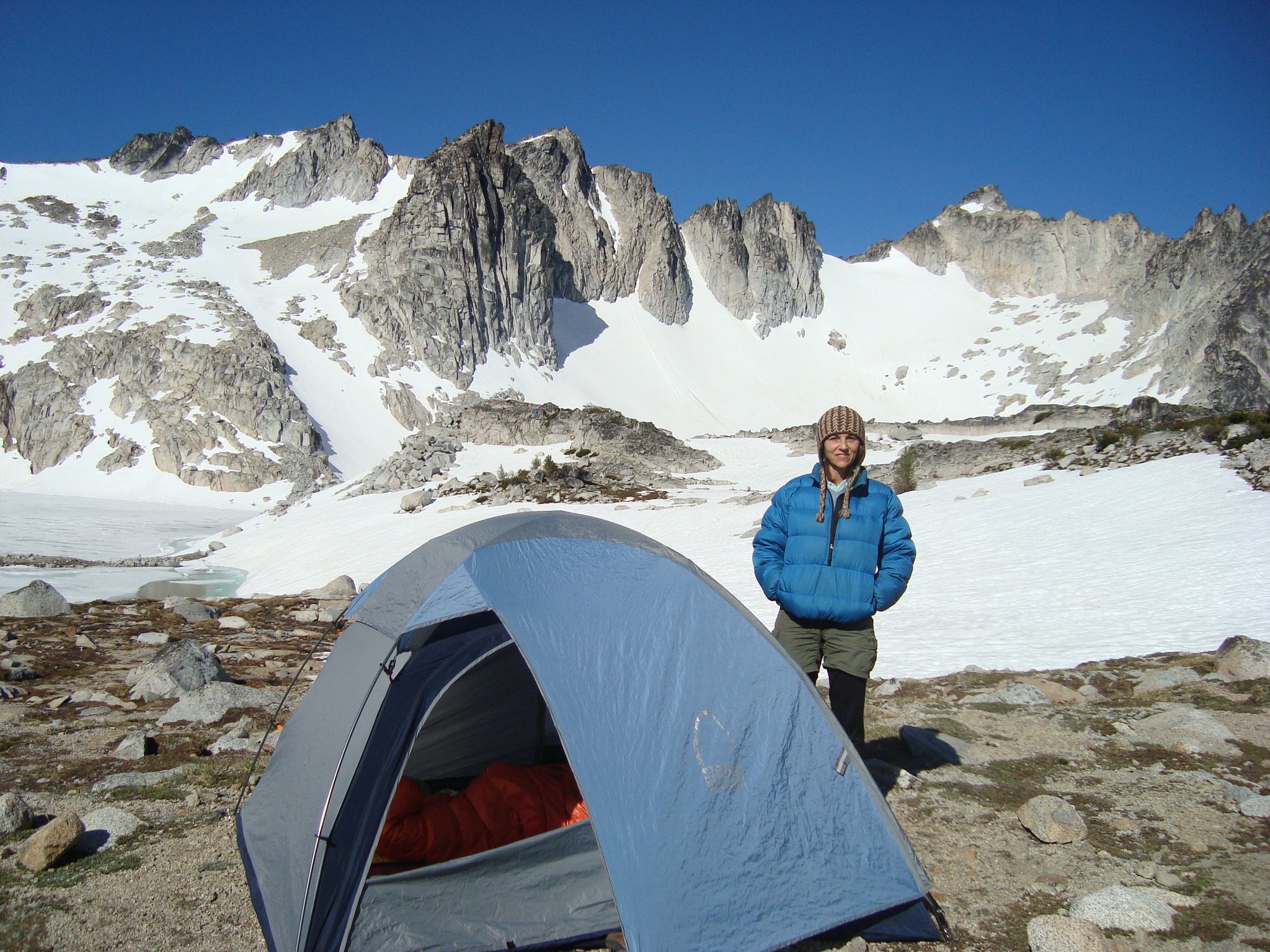
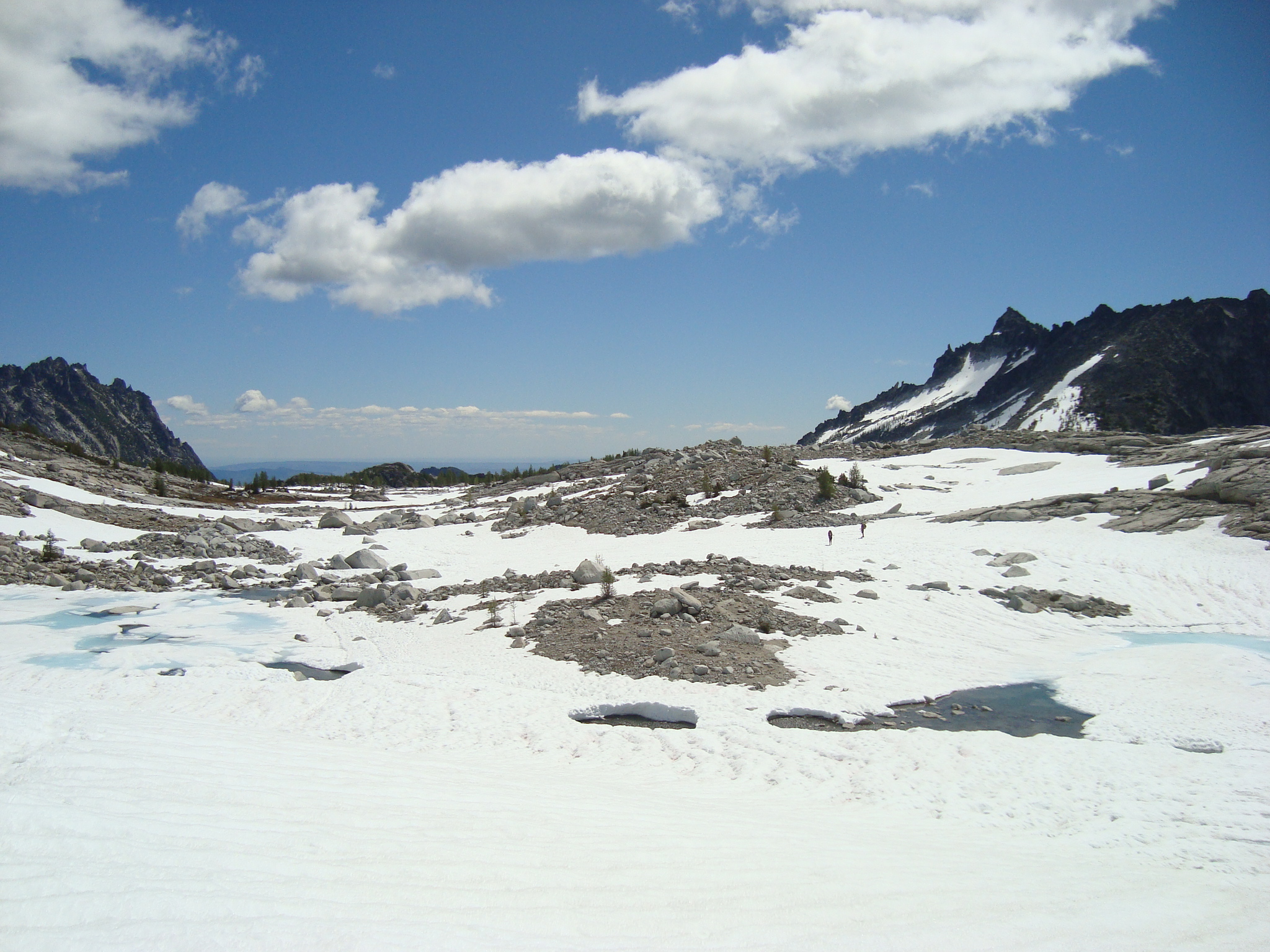
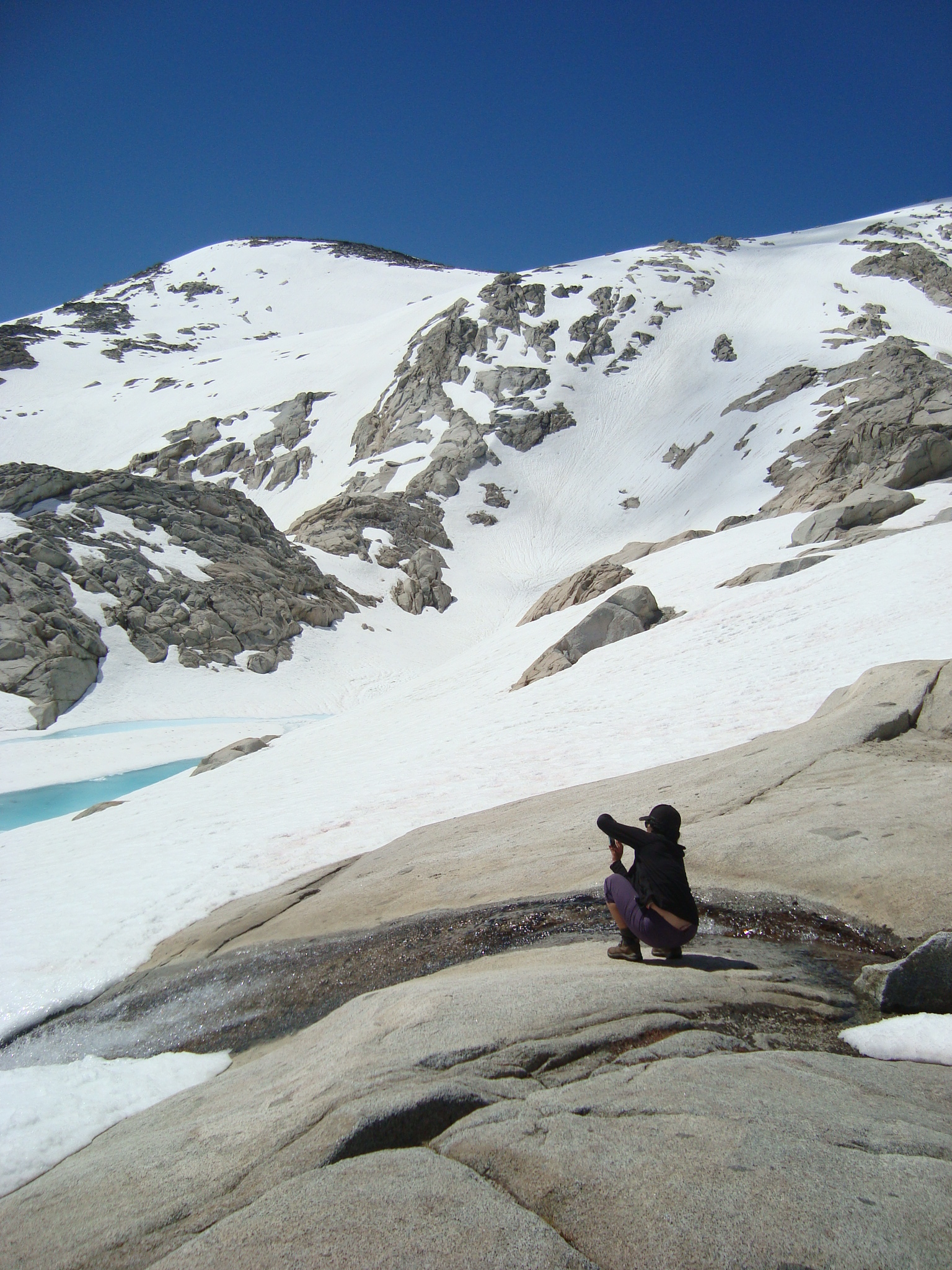
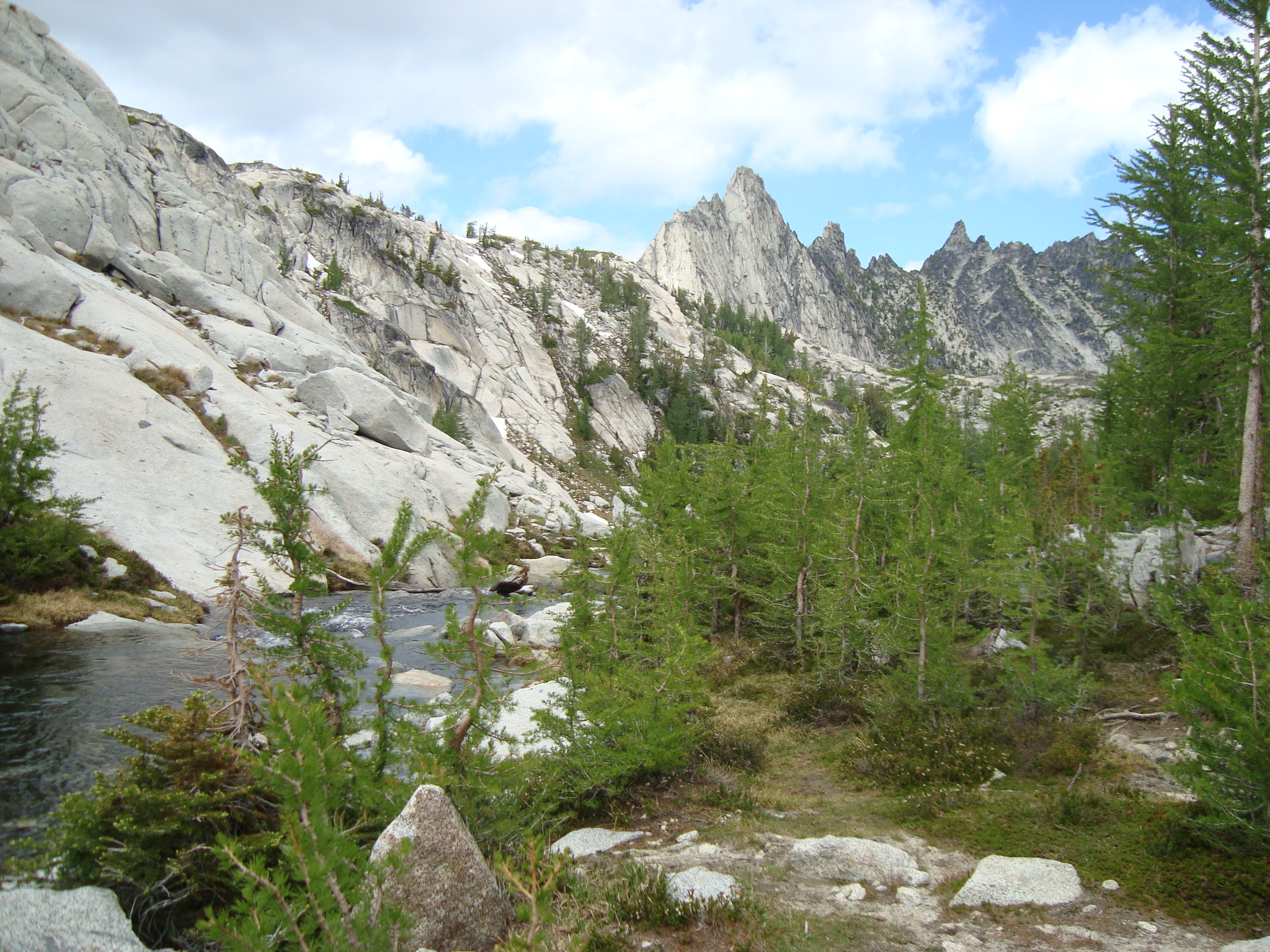
I want to describe a moment of insight, but to get there, I’ll have to take you on a little odyssey with me.  The Enchantments are a chain of lakes carved out by glaciers in Washington’s Central Cascades – a series of cirques in pale granite amid jagged peaks so lovely you need a very elusive permit to visit in summer.  But this year, with the snow level so low, I decided to seize the chance to see them before permit season began.

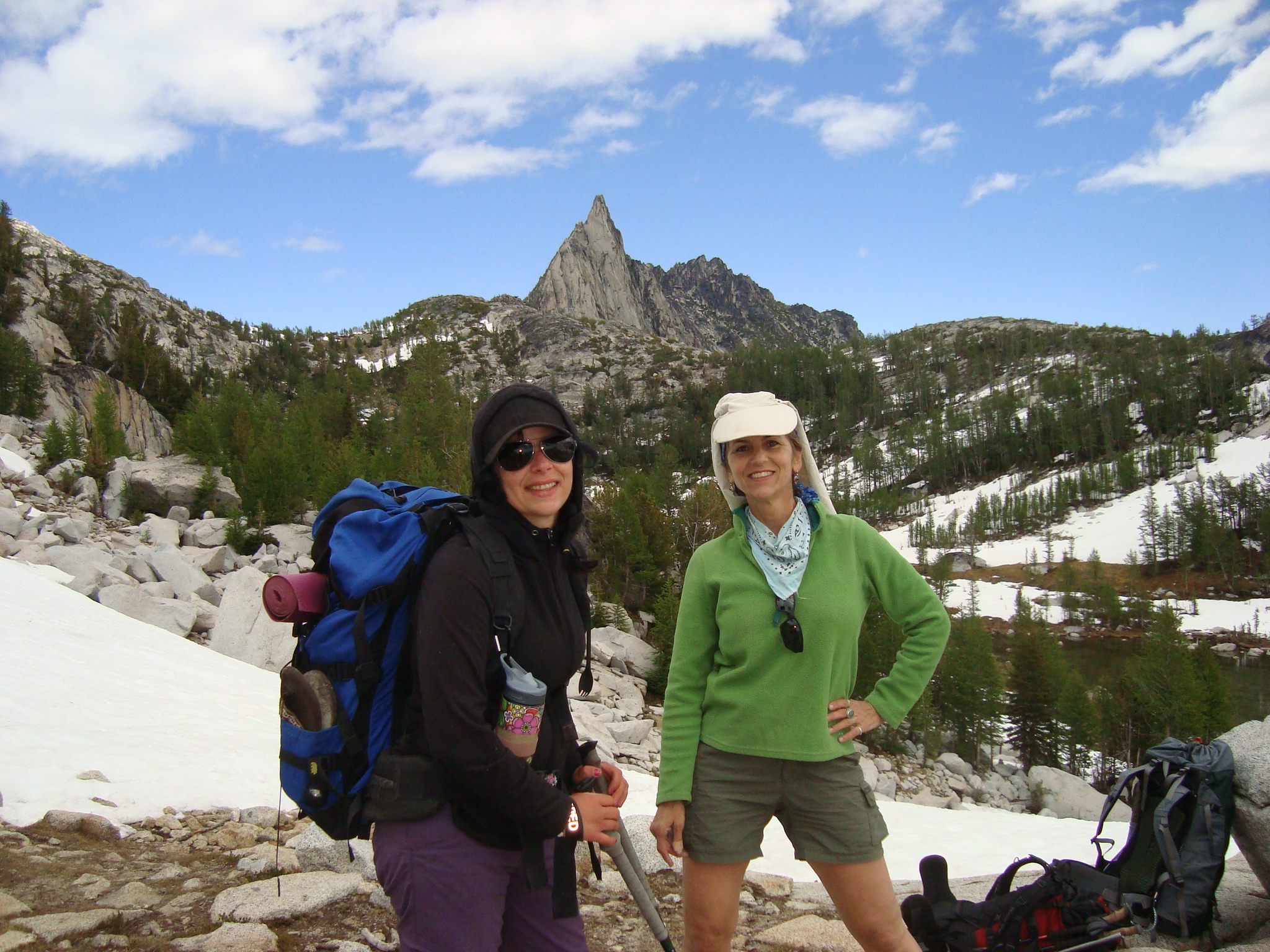
I invited along a friend who recently completed the Camino de Santiago Pilgrimage, walking 500 miles from St. John, France, to the cathedral of Santiago, Spain – with virtually no money.  I chose Kacie not only because she’s sober and a skilled through-hiker, but because her connection to God is knowledge rather than faith. Though she’s Christian and I’m non-religious, our spiritual convictions align perfectly.  At 33, she’s an absolutely beautiful soul.  Here we are, starting out our trip at Colchuck Lake.

DSC03396

Aasgard Pass is behind us, where the trail gains 2,000 feet in 3/4 of a mile

I wanted Kacie with me not just to help me tackle this trail, but because I knew she could help me along a second, inner trek.  Maybe I’m trying to tell too much in one post, but for me, this trip was more about healing than hiking. I recently posted about having discovered that for two and a half years my alcoholic boyfriend concealed an ongoing affair with an alcoholic girl half my age – named KC, ironically enough.  Though I’m glad to have escaped with my sobriety, there’s much grief to process in losing someone you thought you loved for nine years.

Early on, I asked my Kacie for her take on my “happy” memories from those deceit-filled years with Grayson – our teasing as we played ping-pong, comparing cloud pictures as we lay in the sunlit grass, decorating our tiny Christmas tree.  She answered straight up: “You need to let go the lie before you can embrace the truth.  That was manipulation, it was false, it was poison – every minute of it.”  I knew she was right.  Her words solidified the ones hovering in my thoughts for weeks: emotional robbery, abuse, even molestation.  Because, yes, to con someone into prolonged intimacy, fully aware the truth would both horrify and repulse them, is that bad.

We hiked on.  I’d heard a lot about the dangers of climbing Aasgard Pass, with its 2,000 foot near-vertical gain.  We didn’t reach the base of the chute until 4:15.  There’s no trail per se; you scramble amid sliding talus and scree; you search above you for cairns – stacks of rock people have left to mark a course – praying nothing falls on you.  Chest-high boulders with divot toe-holds demand you heave yourself up them despite the 35 pounds on your back and hundreds of feet below you to fall.

DSC03408

Kacie picking her way up the rubble

We climbed for an hour.  Two hours.  The wind picked up, and we began to encounter pockets of ice and snow.  There were times I thought I’d lost the way completely, boxed in among boulders, until I’d sight a cairn someplace seemingly impossible to reach.  Then I’d pray, find handholds, pretend I wasn’t exhausted, and heft Louisa + pack one more time.  Ten minutes later, repeat.  Finally, three and a half hours into it, a moment arrived when I rounded a rock face and recognized from the outlines of slabs against the sky that we were nearly there.  To Kacie, over the whipping wind and cataract tumbling to our right, I shouted, “We’re almost there!  We’re gonna fuckin’ do it!”

That’s when the tears came. Thank you, god.  Not just for getting me here, but for showing me I have what it takes to do this.  In the past, on all our toughest climbs, Grayson led.  But no one led me this time, not even a frickin’ trail: just god and the bright life it kindles in me.

While the sun set amid 20 mph winds and the temps dropped below freezing, Kacie and I made camp at about 7,ooo feet.  Kacie was so chilled she began dropping things, getting confused.  Our stove wouldn’t light at this altitude and the winds snapped at the tent as we pitched it.  But we were never scared – not really. I gave Kacie all my extra clothes and released enough gas from the canister to blow up a small dog before my lighter finally ignited it. Once the water boiled I told Kacie to go eat inside the tent while I made her some hot water bottles and picked up for the night.

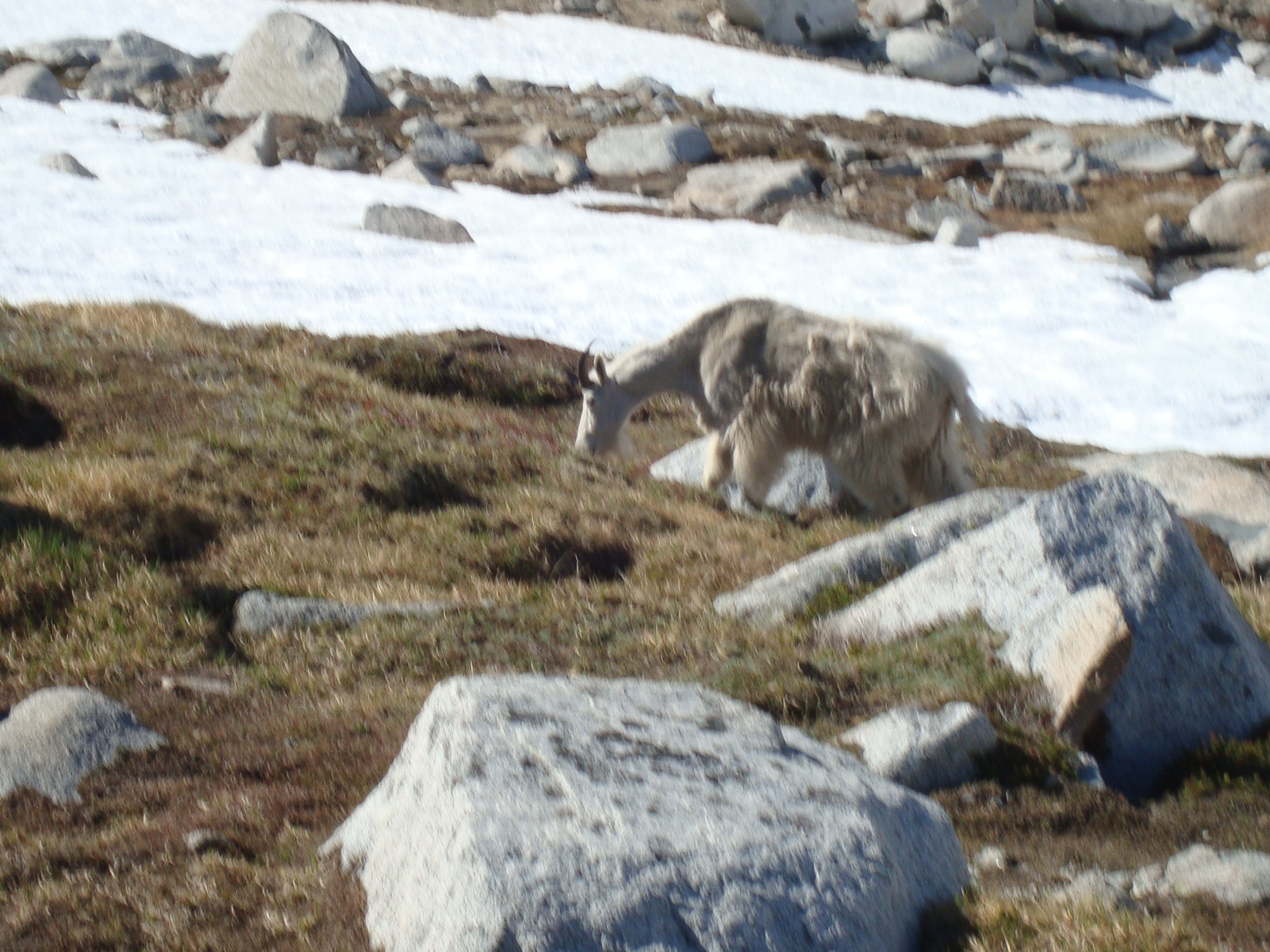
Neither of us slept much because the elevation throws you off, but in the morning we encountered this, along with the delicate music of snowmelt everywhere running down to Aasgard Lake:

DSC03410

and this:

DSC03411

and lots of these guys:

DSC03413

After breakfast, we packed up and set off again, like this:

DSC03423

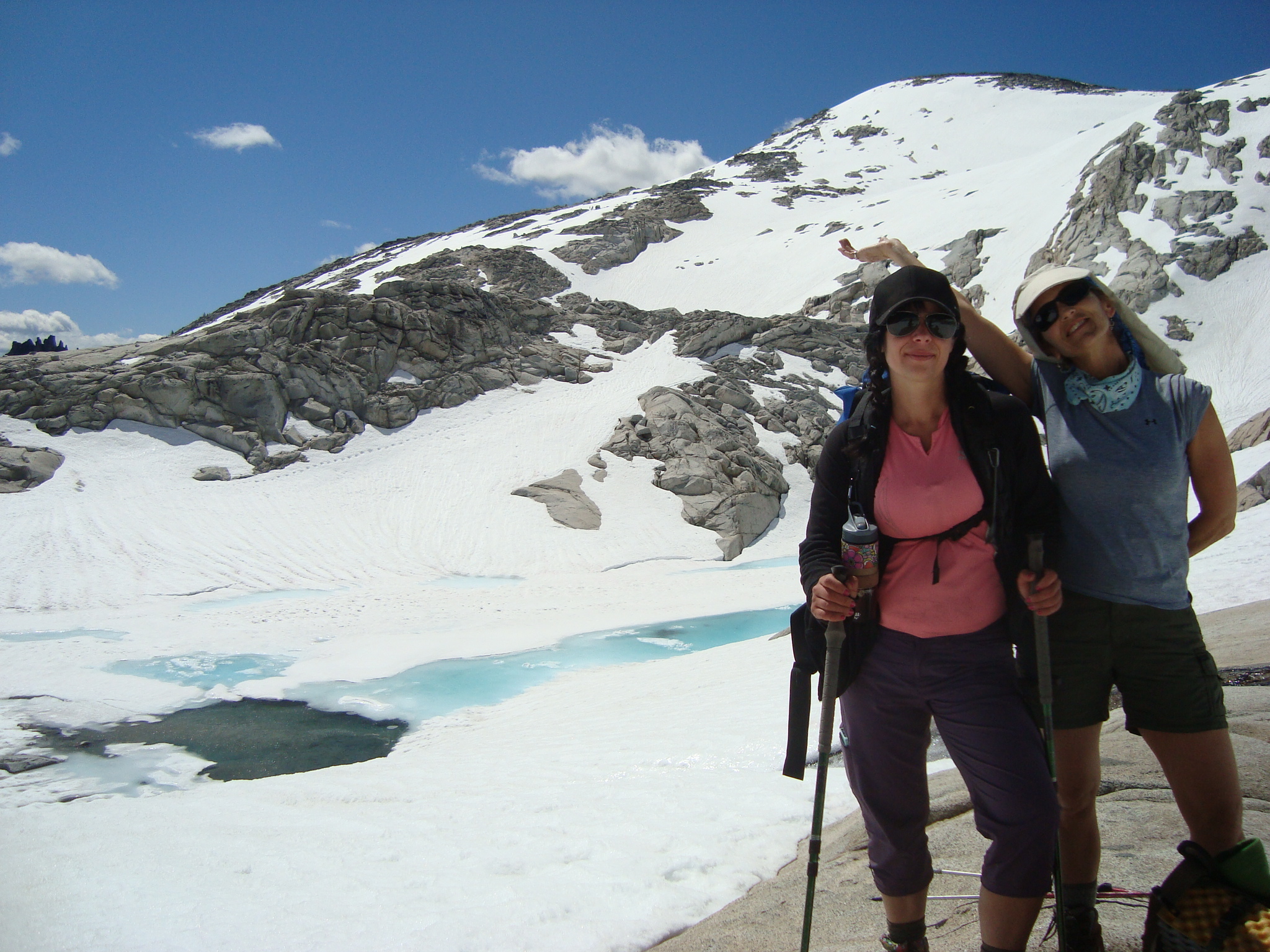
We covered about 10 miles that day, talking on and on about god, about how god has built right into us our capacity to see, feel, and appreciate beauty as a spiritual language to connect with Him/it.  Here’s are some glimpses of what we saw, did, and loved:

DSC03424

DSC03429

Kacie took

DSC03441

DSC03440

DSC03455

DSC03447

DSC03449

Among the many things Kacie said that struck me deeply was this: “The only thing God asks is that we participate in the relationship.  It’s like if I were going on this hike saying, ‘Hmm… Louisa might be with me on this hike. That might be her I see ahead of me, that could be her voice…’ but I ignored you the whole way because I wasn’t sure you were real.  I mean, what’s more hurtful than just ignoring someone who loves you?!  We do that to God all the time, and yet He just keeps loving us.  He keeps saying, I’m here when you’re ready.”

Eventually we began our descent to Snow Lake, where we’d spend our second night.  That’s when I felt something welling up in me, stronger with each step I advanced between the huge rock escarpments toward the meandering valley below.  Thoughts churned.  Why did it still hurt that Grayson had ignored my love? Why was it so hard to love myself ?

Here came the revelation: I understood, as I started bawling silently, that to love god in these mountains was to love god in me as well.  So I began saying silently to each beauty, however tiny or vast: “I love you, god.  I love you in this flower.  I love you in the tops of those trees.  I love you in that tremendous and intricate stone wall above me older than I can conceive.”  Each time I sent out this energy, whatever came back seemed to redirect my inner periscope just a tiny notch or two – away from Grayson’s insult and toward my own wealth of spirit, away from the story of what happened and toward the openness of whatever might.

I crossed some threshold.  I saw my journey was on course, that god had sent me a precious gift through every person I’ve ever loved – including Grayson. In the thousand-plus miles we covered together, he taught me most of the skills that embolden me today, skills that let me dare to venture out and meet my god in the rough and dangerous beauty of the wilderness.

What a gift!  Not just for me, but now through me to Kacie. “Churches are like big, fancy worship bathrooms,” says Kacie.  “I want to be here.  God’s Cathedral is here.”

DSC03460

The next day we were met at the trailhead by kind, sober friends who drove us back to my car. The minute I got home, I showered, threw on a dress and heels, and drove to a downtown restaurant to celebrate another sober friend’s 50th birthday. We sang to him as he blushed.  Love – that same echo of god’s goodness – rang in our voices.

“God is such a show-off!” I remember Kacie saying as we hiked. “He is!  Because He has infinite beauty to show off!  Fucking infinite!  He pours it into the mountains, into this stream, into us!  He wants it  a-l-l  to be felt!”  We joked about the fears that make us check our inner share of god’s beauty, like a bird halting in mid-song for fear of fucking up.  This blog is part of my song.  I’ll show off, I’ll sing, I’ll fuck up, and I won’t apologize.  Because god put inside me what it wants me to share.

scroll

Post to Facebook

1 Comment

Filed under Alcoholism, Codependence, Faith, God, Happiness, living sober, Recovery, Sobriety, Spirituality

On Wreckage and Forgiveness

The ironic thing about forgiveness is that when we truly achieve it, we realize there’s nothing to forgive.  We experience a shift of perspective, a widening of the lens we’ve been looking through.  The person we needed to forgive goes from being a beetle mounted on a card and identified as faulty in various ways to a piece of our own soul – the part of us that also struggles and often fails.

Resentment works by keeping score.  But we can keep score only when we have rules, agendas, and an assumed point to the game – all of which tend to be the work of ego.  To bring about the outcome we would have preferred, the mounted beetle in question should have chosen to do X and Y.  They should have seen and realized how important X and Y were.  Why the hell didn’t they?  What the hell were they thinking?!  Now the outcome is all fucked up and it’s totally their fault!

40803_10150244489590608_8125380_nTwo weeks ago I brought home my boyfriend’s old iPhone and discovered that for two and a half years – ever since we got back together after a one-year break-up – he’s been leading a double life.  He’s had a second girlfriend whom he saw just as much or even more than me, a chunky girl half his age who clearly worships the ground he walks on and matches him drink for drink as they get bombed together.  I had trusted him completely.  I believed he was still the Good Man I fell in love with while he was sober.  Because of this, I gave him ample room to do his own thing (we lived 90 minutes apart) and never checked up on him – ignoring the fact that he was a relapsed alcoholic who merely didn’t drink in front of me – and that active alcoholics tend to lie.

My agenda was as follows: the relationship I thought I had with him was meant to flourish and endure. For this to happen, we both had to be committed and true to each other.  Those were the rules of the game as I saw it, and when I first discovered their porn-style sexting and rendezvous set up around my visits (she sometimes left the same day I arrived), I did very much know the rage of betrayal.  That rage has faded now, but what puzzles me is that it hasn’t morphed into resentment.  Somehow, I’ve jumped straight from rage to forgiveness.  Mind you, I don’t intend to see the man again – his future is god’s business and no longer mine.  But anger I do not feel.

I let go my agenda.  The whole thing.  Clearly this relationship was not supposed to be.  For a woman like me, 20 years sober, to be with a man who drinks in her absence was not a good set-up.  It could not have worked.  Yes – there was a lot of love over the nine years we shared, and the loss of that remains tragic to me.  I’m grieving it.  It hurts.  Further, what my boyfriend did is clearly heinous on a number of moral levels.  You don’t have to be the one cheated on to see that.

beerBut I’ve been there.  I’ve done that.  Okay – I’ve never developed a sex addiction with someone young enough to be my child, but by the final stages of my drinking, I lacked moral sense to an equal degree.  In the fifteen years I was drunk, I cheated on three partners in a row – the first one physically and the second two emotionally.  I developed wild crushes on people while pretending to be in committed relationships and chased down the high of those infatuations regardless of their eventual impact on my partner.  I didn’t care.  In fact, it seemed to me at the time that I couldn’t care.  I needed the fix of the person I was addicted to just as much as I needed my next drink.

In every fifth step I’ve heard, sponsees have felt failed and betrayed by important figures in their lives – often a dysfunctional parent either alcoholic or affected by alcoholism.  Time and time again, the 4th column comes down to the question, “Do you think this person would not have done better if they were capable of it?”  Sponsees struggle with this.  Their minds wrestle with the dichotomy of who they wanted the parent or person to be, with all the power to choose wisely they believed that person possessed, versus the truth of what actually happened – the fact that the parent or person simply did not have the integrity, self-awareness, or the moral resources to show up any better than they did, let alone with honor.

Who wants to be a shitty parent?  Who wants to betray and abuse the partner they’ve loved?  Nobody.  In the case of alcoholics, prolonged alcohol abuse actually atrophies the emotional centers of the brain; we reach recklessly for whatever we think will bring relief.  Compassion shrinks.  We become selfish monsters.  We do shameful things.  It’s part of the disease.

Resentment at these facts can do nothing but harm me.  Nurtured anger traps us in our heads, our stories, our righteousness about what should have been, whereas the sunlight of the spirit is cast only on what is. And it’s only once we accept what is that we can feel gratitude for all reality offers us and try to lead useful, constructive lives, granting others the freedom to seek their own path.  24350_10150106518895608_1574989_nSo forgiveness, really, is just acceptance of a person exactly as they are.  In my case, I also have to accept the toll of addiction.  The Big Book even tells us, “More than most people, the alcoholic leads a double life.” My guy was just a late stage alcoholic doing what drunks do best: dishonesty with self and others.  He’s consumed in tearing down his own emotional life and perhaps career, veering obliviously toward alcoholic decline.  None of this will end prettily for him.  My mistake was fighting reality, closing my mind to his addiction, trying to love him as though he were sober.  So much I wanted better things for him!  But when I let go that agenda, it’s all just life unfolding as it should.


scroll


18 Comments

Filed under AA, Al-Anon, Alcoholism, Codependence, Codependency, Recovery, Sobriety, Spirituality

Essential Prayers: Please and Thank You

Rejoice always,

pray without ceasing,

give thanks in all circumstances…

(1 Thessalonians 5:16-18)

I ain’t a Christian, but them’s some wise words for how to tackle the challenge of living a happy and meaningful life.  For some, the “always,” “without ceasing,” and “all circumstances” parts might present a problem.  Actually, they’re problematic only if we segregate our spiritual life from the rest, as if the little things we did all day had nothing to do with our spirit.  The fact is, they have everything to do with it! Our spirits are just as present when we’re comparing cans of beans at the store as when we’re kneeling by our bedside doing what we label “prayer.”  We’re just too caught up in piddly-shit to be aware of our awareness – to focus on what we actually are.

In the rooms of AA, we often hear the advice to use two simple prayers – Please and Thank You – to forge a relationship with our higher power.  This is an excellent start!  For newcomers who have no idea what might be entailed in talking to their god, these instructions open the door.  It’s suggested that when we wake up, we ask god to “Please help me to stay sober today.”  When we go to bed, we pray, “Thank you for keeping me sober today.”

2014-12-25 14.58.27But there’s a whole lot more potential behind these two simple prayers.  They can change your life.  Just as step 1 is the only one to spell out the word “alcohol” while the remaining 11 deal with the matters that made life so painful we needed a damn drink, so the lens of the Please and Thank You prayers can be dilated from mere drink avoidance to apply to all of living.

Please.  By all means, when we wake up, we can ask god to keep us sober today, but we can also expand that request to “ask God to direct our thinking.”  What I ask is, “please guide me today,” by which I mean not only my thoughts and actions, but my level of awareness.  I might even say, “help me stay awake.”  What I mean is, god, help me to stay in contact with you all day long; help me remember this life is not about my little fears and agenda, but about being the best human being I can be today; help me know that whatever’s going on right now is just a single pace in the journey of my life, so when it gets tough I can hang onto hope.

As I proceed through my day, my biggest challenges all center on emotions.  Not what happens, but how I feel about what happens.  I’m a wa-ay codependent child of an alcoholic, which means that, left to my own devices, I tend to be a “reactor” aboriginemore than an “actor.”  Boy, do I hate that!  It sounds so wussy, but it’s true.  Most of the time, what you think (or at least what I think you’re thinking) carries more weight than what think or do.  I need you to be okay with me.  Better still, I’d prefer you be favorably impressed.  That way, you’d hand me a chit of personal worth I could add to my lowly little scrap heap.

But, damn it, I don’t want to live that way!  So I pray pretty much “without ceasing.”  I ask god, not to strike me well, but to show me, “If I were well, how might I see this?”  My experience has been that god nudges me toward compassion – for myself and others – which helps me reframe what’s going on and strengthen new neural pathways so that my thinking will change over time.  And slowly, gradually, it’s been working, which brings us to…

Thank You.  Again, it’s fine to start with the matter of whether I swallowed any booze today.  Even after 20 years’ sobriety, I still hop into bed some nights and think, “Geez!  I didn’t drink or even think about drinking all day!”  I still get this little image of my insides as all clean and healthy compared to that slimy feeling from back in the day.  And I thank god for it, for having let me be just one of Earth’s creatures, a gizmo fit to walk the planet exactly as I was made.

But I also “give thanks in all circumstances.”  What a trip it is to be alive!  What a freaking awesome world this is to cruise through, filled with miracles we can take for granted any time we switch to autopilot.  Bits of nature (outside my window, a finch just landed amid the gently stirring leaves of a cherry tree), goodness our culture has produced, signs of caring between strangers, and my chance to be part of it all – I thank god for this over and over.  Sure, there’s plenty of darkness; just read the news.  But there are also many who unite in trying to combat it, connecting in their commitment to… love.

CloudmoonGrowth.  How can the “Please and Thank You” prayers change your life?  For me, they’ve expanded my awareness a tiny bit, like the rings on in a tree, with each challenge I walk though sober.  eye

I am a tiny bit more aware.  It’s how we grow in sobriety.

At the core of my consciousness is my spirit.  It’s not my body: my body includes all my brain’s thoughts, all my body’s issues, and all the emotions they stir up between them.  I love those guys – don’t get me wrong – but they’re not my spirit.  My knowingness, my receptiveness, the live wire of my presence – this is the essence that sprang out of my body during my Near Death Experience, but it’s also the core of what I am as I brush my teeth or drive to Goodwill.  I am a little piece of god.  So are you.  And that reality becomes slightly more vivid to me with every clod I break as I plow through the lumpy terrain of being alive. I am the plowwoman, the driving force behind one individual human experience.  I need help to push on (please), but with every step taken, I see a little better what a tremendous privilege I’ve been given (thank you)!

scroll

Post to Facebook

2 Comments

Filed under AA, Al-Anon, Alcoholism, Codependence, Faith, God, Recovery, Sobriety, Spirituality

Trashing AA as “Irrational”

Maybe you’ve seen Gabrielle Glaser’s Atlantic Monthly article entitled, “The Irrationality of Alcoholics Anonymous.”  Glaser, a self-proclaimed normie (i.e. non-alcoholic), attempts to illuminate the scam of Alcoholics Anonymous, which passes itself off as the sole antidote to alcoholism, and advocates instead for newly developed drug treatments as a solution more “scientific” than AA’s program of abstinence and spiritual growth.

Maybe you’re indifferent to both this article and AA.  But if you love AA for having saved your life and yet this article doesn’t anger you, you work a WAY better program than I do!  I am angered and for many reasons – the foremost being that I am fond of truth, and the article is rife with inaccuracies.  A second is that I don’t believe in increasing people’s suffering for the sake of a snappy article (or book sales).  Nothing can be gained by slamming AA, but so much can be lost!

The most glaring error, to me, is Glaser’s lumping together AA, which makes no luxury treatmentmoney for anyone, with the treatment center industry that rakes in tremendous profits from addicts and their stricken families by “selling” what one can find freely in AA. Yes, without question, some treatment centers place under-qualified counselors in positions of power and exploit the crisis of addiction to charge exorbitant fees in exchange for a Big Book and an introduction to the steps – but they are not AA!  Quite the converse, they embody every disaster that Bill, Bob, and other pioneers of AA tried to avert with the 12 Traditions.

Wrong also is holding AA responsible for the judicial practice of “sentencing” people to AA.  I can’t imagine anything further from the 11th Tradition of “attraction rather than promotion.”  As we often hear in the rooms, “AA is not for people who need it; it’s for people who want it.”  But thanks to the courts’ total disregard of thisgavel2 policy, many people are forced to attend AA meetings.  Like the treatment industry, the U.S. punitive system exploits AA, funneling unwilling people into the program simply because it lacks the means to otherwise deal with them.  (That thousands of lives have been saved this way, however, can’t be denied.)

Glaser’s allegation that AA touts itself as the sole solution to alcoholism contradicts a clear statement in the Big Book’s forward to the second edition: “Upon therapy for the alcoholic himself, we surely have no monopoly.  Yet it is our hope that all those who have as yet found no answer may begin to find one in the pages of this book…” [italics mine].  In other words, if you CAN’T find any other way out, we have something to offer you here.

Glaser implies that Marty Mann and her 1940s fellows in the National Committee for Education on Alcoholism were scheming to promote AA:  “But AA supporters worked to make sure their approach remained central. Marty Mann joined prominent Americans…”  Gosh, Gabrielle, that’s right!  They were trying to hog the spotlight so they could get…uh… money?  fame?  Does it ever enter your mind that their sole intention was to help dying alcoholics who had not yet heard of any solution?  Do you ever consider that such is what AA is all about?

Perhaps most irritating to me, but indicative of a larger societal misconception, Glaser confounds AA’s higher power with religiosity: “‘Alcohol- and substance-use disorders are the realm of medicine,’ McLellan says. ‘This is not the realm of priests.’”  Excuse me, but what the hell do priests have to do with AA?  Absolutely nothing!  AA is a spiritual program, not a religious one.  Why is this distinction so difficult for so many to appreciate?  Religion tells people what to believe; spirituality calls for an inward search for meaning and truth.  The only goal dictated by spirituality is growth toward loving kindness.

Science, Glaser claims, does not support this charlatan program of abstinence and spiritual growth.  In this oversight, she ignores a wealth of scientific research supporting the success of AA (see Substance Abuse: Alcoholics Anonymous Science Update), simply because no study can figure out why it works.  Spiritual growth does not show up under a microscope – so it must amount to nothing!

microscopeIf Glaser were to succeed in leading alcoholics away from AA, what great gains would be made?  If alcoholics took opioid antagonists like naltrexone or the muscle relaxant baclofen sensibly as Glaser propounds, if everyone would stop this silly business of abstinence and spirituality, from what would Glaser be rescuing people?  “The prospect of never taking another sip is daunting, to say the least. It comes with social costs and may even be worse for one’s health than moderate drinking: research has found that having a drink or two a day could reduce the risk of heart disease, dementia, and diabetes.”  Oh – I see!  Abstinence is scary, so we shouldn’t attempt it.  And not drinking, based on a handful of studies in the past 2 decades, suggests there might be potential benefits for some people from drinking moderately.

For alcoholics, these potential benefits from 1-2 drinks per day do not put much on the scale against death or the misery of living with full blown alcoholism.  Sadly, I am willing to bet that Glaser’s article will, for scores of people in the difficult, early stages of sobriety, serve as excuse for relapse.  Of those, how many will die?  Will Glaser ever know?  Does she care?

There is so much more to AA than not drinking!  People in the program evolve into their best selves.  In a matter of a months, they realize a potential that could not have been brought about by years of opioid antagonist pills and therapy.  In AA I learned to seek a guiding voice other than my ego’s, to love imperfect people as I am imperfect, and to be of service – the most rewarding pursuit life has to offer.  For the first time in my life, I discovered what it is to be happy from the inside out.  I am a different person today because of AA: quitting drinking is only a small part of that.  How tragic to think that Glaser’s finger pointing may rob others of what I have found!

scroll

Post to Facebookif you agree!

15 Comments

Filed under AA, Alcoholism, Recovery, Sobriety, Twelve Steps

What the Heck is a Spiritual Path?

A number of people dear to me in AA just can’t seem to stay sober.  Their recovery looks hopeful at times: they’ll string together a few months or even a year, but then they go out again.  At some point they drag themselves back looking haggard and beat up and often shockingly aged.  They share about being totally defeated, about knowing they can’t drink, and about their rock solid determination to stay sober this time.  Sadly, though, a few months or a year later, they’re gone again.

The Big Book tells us why: they “failed to enlarge [their] spiritual life” (35).  During my drinking, I very much wanted to be a good person so I could be happy – to be true to my partners (at least in everything they knew about), to be honest (enough), and to contribute to the world (so I’d be respected).  If I had brought that same approach to getting or staying sober – reliance on self – I’d be drunk today.

Here’s the deal: There are two ways to live in this world – by the guidance of ego, or by the guidance of something greater than ego.  Practicing alcoholics, when they look inward, consult with the authority of ego, which has one sole criterion for direction: me.  “What will make me feel good/get me what I (think I) want?”  I may desire amazing personal experiences, or to feel attractive or valued.  I may want money and a sense of importance – the recognition of achieving great things.

The active alcoholic may sincerely wish to live by higher principles because doing so might help goalsthem grab the things they link to happiness – like a career, a relationship, or esteem among peers.  But in all their navigation, the joystick always remains firmly in the grip of ego, whose sole objective is to get what it wants.  That’s why most practicing alcoholics harbor secrets.  That’s why their love is striated with selfishness.  And it’s why they’re never immune from the seduction of alcohol, because ego assures them a drink will feel awesome – or at least bring relief – and they take the bait.

What’s the alternative?  To be holier than thou?  To renounce earthly life and pursue some lofty enlightenment?

No.  It’s to admit we’re irreparably flawed, and to commit to trying every day to be a slightly better person than we were yesterday – not by the criterion of what feels good, but by the light of what, in our deepest heart, we know to BE good.  Pursuit of goodness – however we define it, however faultily we seek it, and whatever that progress may look  like –  is the essence of a spiritual path.

Let’s look at this idea in pieces.  First, admission.  The ego howls againstbroken vase the idea that we are irreparably flawed.  “I can fix myself!” it insists.  “Really!  I know best!”  To admit we’re permanently confused and lacking integrity requires the two greatest forms of ego Kryptonite on the planet: honesty and humility.  This first step is the foundation on which every alcoholic bases a new experience of living.

Next, commitment.  A spiritual path requires that we accept the futility of living by self-propulsion.  Though society at large touts “taking control,” a spiritual path requires relinquishing the claim that we’re qualified to call the shots.  In AA this means we commit to the steps, the fellowship, and service work.  For non-alcoholics, too, some form of spiritual community is often involved, whether a sangha, a church, a yoga or meditation group, or some other family of like-minded people also trying to grow spiritually.  We begin to test our own thinking – which we have admitted to be flawed – against the wisdom of this sounding board.

What we know to BE good is the thing we commit to.  The Big Book tells us, “deep down in every man, woman, and child is the fundamental idea of God.”  Unfortunately, many people assume this idea should equate to the God of religion, which may or may not be found anywhere in them – let alone deep down!  My own god has nothing to do the God of any religion – that’s why I forgo the capital ‘G.’

My god is the tremendous power of unconditional love in which all blue-and-white-orchidlife is swimming.  Not everyone needs to go to AA to find and tap this source, but we all need it to get and stay sober.  This power is available to anyone by any name or in any form – as innate goodness or a religious deity or the frickin’ Force from Star Wars: how you conceive of it does not matter.  What changes your life is that you trust its goodness and ask it for guidance in all actions, at each juncture.

Of course ego still elbows its way in countless times, because we’re still flawed.  But our intention remains to shift our point of reference away from ME! to a deeper sense of what is right and good.  We try to pause before we act – especially when we don’t want to – in an effort to discern the two courses.  That is the path – intention and effort.  We hang onto a faith that if we keep earnestly seeking one day at a time, we will be guided.

Ironically, this course usually brings us a richer life than we could ever have imagined. At my home group last night, the chair took issue with the saying, “My worst day sober is better than my best day drunk.”  He pointed out that he’d had some “fuckin’ awesome times” in his early drinking.  But when I was called on, I cross-talked a tad: I recalled that all my “awesome” drunken times boiled down to feeling awesome about ME! Even if I said, “I fuckin’ love you, man!” I really meant, “Wow! – I don’t feel alienated and alone!”  The spiritual path opened by AA has nurtured in me the gift of genuinely loving others – of living for something larger than myself.  That’s what we’re here to do.  And really, it’s a high no glory days can touch.

scroll


Post to Facebook

Leave a comment

Filed under AA, Alcoholism, Recovery, Sobriety, Spirituality, Twelve Steps

Searching for Honesty

Honesty is such a lonely word.

———————– Billy Joel

It seems as if nothing should be easier than knowing what we want, knowing what we feel.  We should be able to look inside and, fast as checking what time it is, say, “Gosh, I feel angry,” or  “I fear change,”  or maybe “I want ____ more than _____.”  Antique CompassBased on that information, we should have no trouble making big decisions in our lives.  Happiness should twinkle straight ahead as clear as the North Star, and we should be able to navigate toward it.  Drop this relationship to steer more starboard.  Go for this job to steer more to the port.  That’s how I tried to live throughout my drinking, through shipwreck after shipwreck.

Why doesn’t it work like that?  Clarity on what we think and feel – is that so much to ask?  As it turns out, the compass is buried deep inside us where it can be extremely difficult to read.  For me it takes a long, long time to know what I truly feel about anything complex and important.  I have to live with the question for weeks, sometimes months, viewing it from different angles and slowly gestating some fetus of recognition in my gut.  I’m reminded of the 9-day hike I took around Mount Rainier a few years ago, 100 miles up and down many mountain ridges that extend like arms between its huge glaciers.  Every day I hiked, that mountain was in my sight, and every day it showed me a different face, a different aspect.  I often feel as if there’s a spiritual Rainier within me that my consciousness hikes around – my truth – and that it reveals just as many faces.

Rainier

All forms of honesty are related.  That’s why it’s only by practicing honesty across the board that I’m able to stay sober.  The most basic form is monetary.  For instance, while shopping recently, I picked out a freezable lunch bag for my son that I considered vastly overpriced at $22.  When the cashier rang me up, miraculously the sum total of all my groceries was only $26!  It took me a moment to realize she’d assumed I’d brought the bag in with me as a reusable shopping bag.  After a tiny flinch of glee that I could get the damn thing for free I said, “I think you forgot to charge me for that bag.”  She was surprised.  But I’ve run back into stores for items much smaller that somehow made it out to my car unpaid for – a little jar of stevia or stick of glue the cashier didn’t see.

There’s also honesty with other people.  Sometimes when I’m telling a story, I still hear myself embellish and have to backtrack to what’s real.  I’ll say “a whole bunch of…” and then admit, “actually, only two…” or I’ll quote someone saying something far more emphatically than they actually did, then have to go back and recount what, to the best of my recollections, were their actual words.

Those two are easy, and while it might seem incredible that my sobriety hinges liaron the price of a lunch sack or whether someone said X versus Y, for me, it does, because when I lie to others – even in piddly-shit lies or perhaps especially in piddly shit lies – I lose credibility with myself.  I get a sense that it might be okay to be just a smidge full of shit.  If I don’t need to be honest with others across the board, I can go ahead and compartmentalize, behaving in ways I plan to conceal.  What’s the big problem with that?  What does it do to me?

It cuts me off from my god.  The most precious thing in my life is my connection to the higher power that keeps me sober and lets me live with some degree of dignity and serenity.  Without that connection, I’m lost in a dark world where my ego craves a bright spotlight on ME and manipulates otherspawn1 to get it.  Withholding the truth from others, even in minor things, is actually using them like game pieces to get what I want.  God exists only in genuine reality – the truth of what is.  When I lie to anyone, I’m turning my back on that, trying to play god by feeding them a false reality that’s a product of my ego.  I can make a cashier complicit in my theft of a freezable lunch sack.  I can pose as an expert to get attention.  I can cheat on my boyfriend to feed my vanity.  And I can take a drink no one needs to know about.

Then it’s on – and I’m right back in the hell I escaped twenty years ago.

What is a spiritual connection?  What part of us connects with god?  The inmost truth of our awareness and consciousness is where we find god.  Our I-AM-ness seeks its source.  When I meet god in prayer – which for me is almost constant – I like to show up humbly naked.  That is, I bring my whole self with all my vulnerabilities and flaws and say, here I am again!  To do that, I have to know who and what I am.  If I’ve been deceiving others and rationalizing my own lies, I’m shrouded in falsehood and pride, both cohorts of the anti-god, fear.  I am blocked.

The arms of honesty extend into every facet of spiritual wellness.  It’s honesty that lets us see the selfish fear that fuels our resentments.  Honesty that lets us see how we set ourselves up to be hurt, how we’ve hurt others, where we’re in the wrong, and what we might do for others to be better human beings.  Yet the honesty of knowing myself is more a journey than light bulb.  It’s taken me 20 years of sober seeking to acknowledge that I don’t really know myself.  What makes life seem so complicated is my web of as-yet unacknowledged fabrications.  I still can’t see all I do to hold myself back from living in the simplicity of joy – which I believe is what god wants for all of us.

I keep seeking, though.  That’s all we can do.

scroll


3 Comments

Filed under AA, Alcoholism, Recovery, Sobriety, Spirituality, Twelve Steps