Sorry, there’s no inspiring blog this week because Louisa doesn’t have her shit together. That’s right, I’ve wandered off the spiritual path and found myself befuddled in some remote, unspiritual bog surrounded by brambles and having just accidentally used my only map as TP.
Why am I so off the beam? I guess because I’ve been deluged with work, something I kept praying for with those stupid Santa prayers that aren’t supposed work. For the past few weeks I’ve been zooming around town meeting clients and editing like a mo-fo in between, so my eyes are all bloodshot and my poor brain feels encased in pantyhose. Every now and then I feel a lurch of vertigo that would flare into a full blown panic attack if I couldn’t spot their wolf-cryin’ asses a mile away by now. Hyperventilating, again! In other words, I’m running on fear.
So, how does being off the beam show up? Regression! It’s ridiculous. I get to go through high school all over again. Take the other night, when I went to my mountain climbing group’s annual gratitude  banquet, where the faces of the (cool kids’) Glacier Climbing Course I was once so active in have all changed for the younger. I arrived late, so there were no seats. I felt like a has-been. But then my ego got a great idea to fix this: I tracked down two of the new leaders and said I’d be happy to deliver some of this year’s presentations if they needed someone – you know, sort of like Barry Manilow offering to perform at the Grammys.
Or at least, so it seemed to me the next morning. I was mortified. With dozens of new grads able to present, why had I nosed in? Ach! What should’ve been dismissed with a quick “f*ck it” prayer seemed like a huge deal and colossal embarrassment. My old buddies – wounded pride, concern with what others think of me, and self-loathing – stopped by for breakfast and hung out all morning. We hadn’t seen each other in a while, so we chatted for hours about how pathetic I was, how dumb I must’ve looked – lots of productive stuff. There was even a dark, dreary day plus some menopausal symptoms to set the stage. Good times!
To knock that stuff the hell off when I’m in spiritual disarray seems next to impossible. No matter what I tell myself, I’m back to square one, worrying about the same shit. It’s like waving away a determined yellow jacket.
Contrast me in this tizzy with the Native American panhandler I talked to last week while the light was red at the Aurora Denny exit. He described the “irony” of having felt lucky the day before to find a sheet of plastic so he could wrap his backpack against the rain, only to return from walking the car line and find it – everything he had – stolen. “Who would do that?!” I asked, incensed. He flashed me a toothless smile. “Just somebody being a jerk,” he shrugged. “I’ll be okay, though. Today’s been a good day.”
This man’s acceptance blew me away. He wasn’t drunk. He was just unafraid of life with nothing. Can I say that again? Unafraid. Of life. With nothing. Every bit as poor as Jesus or the Buddha, his outlook was brighter than the majority of us schmucks lined up in traffic.
In only one area do I have that man’s caliber of faith, and that’s around my sobriety. I know I’ll be okay, so long as I hang on to god. No matter how frazzled I get, whether by small stuff or big stuff, this description from the Big Book’s pages 84-85 still applies:
“For by this time sanity will have returned. We will seldom be interested in liquor. If tempted, we recoil from it as from a hot flame… We have not even sworn off. Instead, the problem has been removed. It does not exist for us… That is how we react so long as we keep in fit spiritual condition.”
How does that work? I know that on one level, I have nothing to do with this gift. As described in the Robin Williams post, I’m sober because of grace alone, for reasons I’ll never understand – a miracle that is never guaranteed.
Yet there is such a thing as underlying spiritual fitness, which offers grace a landing strip to show up in our  lives, even during tizzies. Mine shows up as an understanding that I’m never in charge, ever, of anything – least of all emotions that come over me. I’ve somehow internalized Step 3. In the past, thoughts, emotions, and judgements that defined my reality amounted to an unacknowledged false god, one that used to tell me I could fix stuff with booze. Through practicing the steps consistently, however, I’ve withdrawn my trust from those voices and given it instead to a higher power, a god of love. Nothing that happens to me can shake that. It’s in my bones, even when self-defeating thoughts ricochet around my silly brain.
If I live to be 100, I think I’ll always have episodes like this, when I transform into SUPER TWIT and anguish for hours over a visible booger or even an imagined visible booger. I’m kind of glad about that: I’ll always be a fool. Being a fool – freaking out about piddly-shit – is actually one of the most endearing aspects of being a fallible human being. Part of me misses it already, and I’m not even dead.
I know I need to slow down, maybe even decline some work to make time for self-care. I will. But listen, my lovely alcoholic readers, I do want to add this: No matter how busy or pressed for time, I always go to my meetings, meet with my sponsees, and pray all over the place. No matter how wacky I get, I know these actions are my only recourse against the disease that wants to ruin my life. On them, I never compromise, because if that monster ever escapes from my brain stem, it won’t compromise with me.
 .
.
POST SCRIPT, 2/8/15: It turns out I was asked to give a presentation on gear to this year’s Glacier Climbing Class, which I delivered yesterday. And out turns out it did prove valuable to climbers both new and old, for which everyone was grateful. Who knew?






 empire of steel, concrete, and synthetics, where nothing natural or charming can survive.


 So here’s the quandary. You may hear people in the rooms kicking around the question: “Who are amends for? Me or the other person?” I recall about a dozen years ago hearing a woman announce with contempt, “I’m not making this amends for her! I’m doing it for me!” Something sounded wrong in that, but I wasn’t sure what.

 Amends don’t mean you become buddy-roos with the person. And some may continue to lob fireballs at you, requiring you to maintain a safe distance. But when I’ve sat down with people from my past and owned, often with my voice shaking, my very human fuck-ups, I’ve witnessed in almost every one of them the blossoming grace of compassion. Many have spontaneously confessed fuck-ups of their own. And sometimes, in the pool of truth we shared for those moments, I would behold in them a dignity and beauty to which our old conflict had blinded me.




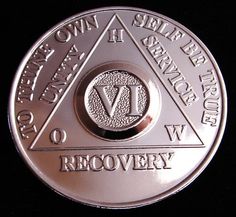





 in not laying too much on us at the outset. In chapter 1 Bill W. describes being “catapulted into the 4th dimension of existence,” where we will know “happiness, peace, and usefulness, in a way of life that is incredibly more wonderful as time passes.”
 making coffee, answering phones, helping with set-up or tear-down. Reluctant as I was to take on one of these, I found that, strangely enough, during my duties I experienced a sense of ease and comfort I’d never known before without being drunk. I didn’t get why, but I knew I liked it (and still do). Same thing when I started sponsoring other women. I remember marveling each time I closed my front door at the end of the hour, how was it that “getting out of self” felt so damn good? How had those all-consuming morasses of my own problems dehydrated to little flecks of scum in just sixty minutes? What was this lightness, this joy that let me turn back to my own life with love and gratitude? I didn’t understand it.