Tag Archives: recovery

Compassion – the best thing you can do for yourself

“Think of others as you would have them think of you.”

.

Self-centered like me?  Love others.  Got problems?  Give it all you got.

It may seem counter-intuitive, but practicing “love and tolerance” (p. 84) for all brings enormous spiritual, mental, and even physical benefits.  What I think about you inevitably colors the attitude I have toward myself, which in turn shapes my experience of life. We can know this based on anything from having lived it to abstract theories of quantum physics telling us the universe is made of energy.  What you dish out is ultimately what you get.

Years ago I recognized myself in a share by my friend, Andrew K..  He told about a time near his bottom when some friends Door peepholestopped by to see him.  From the upper story of the split-level where he lived, he silently crept down the stairs as the friends went on ringing and knocking.  Cautiously he peered out through the peep-hole to see them standing on the front slab exchanging conjectures about him.  What did they want?!  Whatever it was, he couldn’t handle it.  He just didn’t have it in him. Pleased at his evasion, he retreated oh-so silently up the stairs.
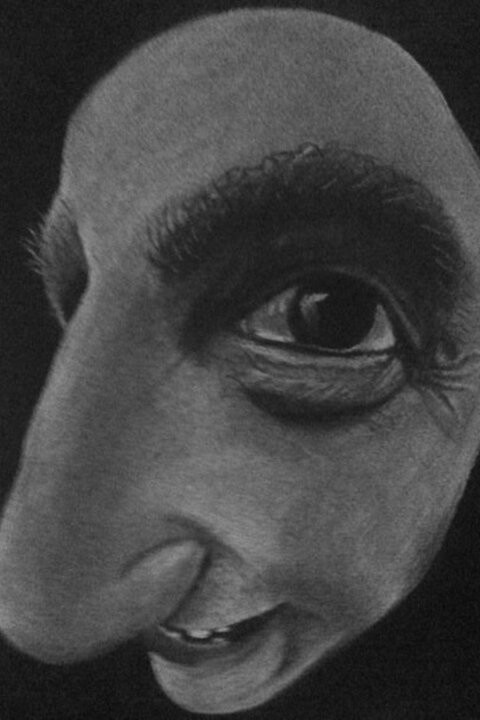
Andrew contrasted the story with his experience around Step 7:  “The more I judge you, the more I’m sure you’re judging me, so I actually experience that judging and judge myself.  And on the flipside, I’ve found that the more I let you be you and maybe even love you for it, the more I assume you’re okay with me, and so I’m okay with me.”

Our culture of scarcity encourages us to hoard love, but spiritual axioms teach the opposite.  The doors of the heart need to be oiled daily so that they’ll open even for strangers who “don’t deserve” our love and the very people who irritate us, as well as those in our inner circle.

We do pour out love toward a certain class of strangers all the time.  Yesterday during my ballet class, babyfor instance, we could hardly keep dancing for all the affection we were flooding through the studio’s big storefront windows.  With Halloween a week away, neighborhood retailers were holding a “Safe Trick-or Treat,” so the sidewalk featured a constant stream of bumblebees, superheroes, and characters from all kinds of stories.  Dressed as a dolphin, a woman handing out candy stood with her back to us, so the children would pause facing the glass, where we could see them perfectly.
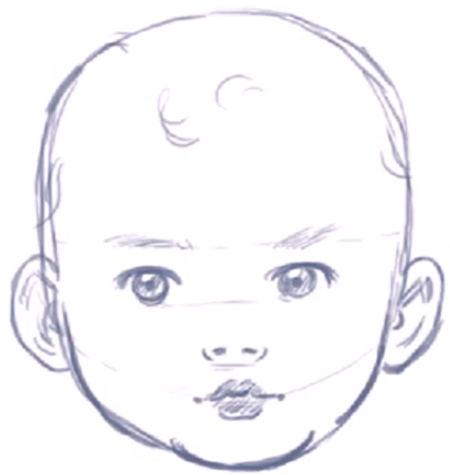
Our teacher couldn’t help interrupting herself again and again.  “Oh my god, it’s Princess Leah!”  We all looked, and what I saw almost overwhelmed me.  She stood about two and a half feet tall in a flowing tunic, the classic dark buns on either side of her head slightly askew.  Tentatively, knowing what she was supposed to do, she approached the dolphin woman, her eyes staring up with a mix of trust and caution.  People flipped her off.  They called her a fucking bitch.  They judged her as a slut or a failure or beneath their concern — not yet, not yet, mind you.  But in her future.

Tiny Princess Leah was only doing her best, as she will throughout her life, and as will the Incredible Hulk who followed her with his impossibly muscled little green chest.  Already, they’re being taught who to be and how to get stuff.  We find it natural never to judge them (greedy little schmucks!) for what they “ought” to know or do.  To love them freely is ingrained in our culture.

Just for today, what if you practiced seeing the toddler in every person you interact with?  The spirit within that person is exactly the same.  Or what if you tried calling up a “legitimate” feeling of love – a glimpse of your loved one’s inner beauty or a sleepy kitten snuggling against you – and purposefully grew that energy in your chest like an expanding sun until it shone on every sight, sound, and experience?  Commit to loving.  Keep it like an inner homefire that must never go out, not even when fear tries to snuff it or anger tries to blast it from you.  Hold onto it as your homage to goodness, and practice radiating what it generates in all you think and do.

Sun

This under your sternum.

What you’ll get is a world transformed by love.  Today I notice small gestures of love from others that I used to discount as empty manners.  I joke with strangers about the dumbest shit, and to me our shared laughter rings out more beautifully than church bells.  I’ll never be some spiritual giant.  I wrestle daily with a shitload of fear.  But love is god’s power, and I’ve found that channeling it actually lends me power over fear: I sense an active energy of goodness all around me.  The world will feels safer.  If you’re coming from a place of love and encounter darkness in others – cruelty or deceit – you feel it as the anti-matter of goodwill and respond with mourning more than angry contempt.  The difference is huge.

Finally, when you least expect it, awareness will slip in that you, too, are loveable.  It’s hard to grasp, but in this moment, you – despite everything you regret in your past – are as innocent as you were at Princess Leah’s age.  Society sells you its weird customs and you suit up and give it a shot.  You look up toward life’s unknown with the same mix of trust and caution.  You, too, are vulnerable and unique.  It’s okay to see that with love.

Loving the good in others and yourself will swing wide the doors of spirit so you can breathe, and play, and thrive in the freedom of generosity.  It’s either that, or keep peering through the peep-hole.  You can choose.

.

.

Leave a comment

Filed under living sober, Recovery, Sobriety, Spirituality

When the Darkness Comes…

Ways to stay chipper

I’m resolved to be happy, to enjoy life.  In the summer months, happiness comes easily.  I’m active, whether alone or with friends, and never short of energy or enthusiasm.  But when fall comes I start to feel the tides of darkness encroaching, dragging me down.  Now’s the time I have to make a note: candleDepression Alert!  Because I’m prone to Seasonal Affective Disorder and live in Seattle, because I suffered depression throughout my 30s and my brain chemistry still teeters on that brink, and because I’m a damn complex and moody alcoholic in recovery, I need to be careful.

I once read that depression evolved as a survival strategy to prevent us from doggedly pursuing unrealistic goals or otherwise squandering energy without a high return.  I envision some primitive humans all gung-ho to build a tower to the gods despite all setbacks; some kind of “fuck this!” switch had to evolve somewhere along the line.  primitive2-1024x681More practically, in fall and winter there’s just not as much food out there for a hunter-gatherer to net, so we developed the impulse to hunker by the home-fires to avoid fruitless expenditures of energy.

The trouble comes when my brain decides to categorize the entire enterprise of living as a fruitless expenditure of energy.  I look around: the house will never stay clean; dishes and laundry never stay done.  My bank account acts like a storage tank with a gaping hole at the bottom.  I gleefully deposit checks only to see that some damn auto-deduction – the gym, car insurance, internet – has slurped up half of it before I even drive home.  I keep getting older and ricketier plus people seem to forget about me if I don’t keep showing up for social stuff.  Doesn’t that make all of these unattainable goals?  Shouldn’t I just give up and hunker by the home-fire?

I choose not to take prescription antidepressant drugs because, lucky for me, my depression is only seasonal and not debilitating. It’s just the daily challenge of my emotional weather. I want to learn to navigate life in stormy as well as in clear sailing.  Wisdom, I believe, gets pounded out in that struggle. I don’t mean to poop on meds or those whose brain chemistry leaves them no other option. Chemistry is chemistry.  For myself, though, I envision my depression as a pit of darkness I have to circle until spring, walking a narrow, angled, and slippery path on its perimeter.  The tactics below help me pick my steps.  But if I were to fall in (become clinically depressed) none of them would do any good.

THE SIGNS

  • I filled with a low-level dread but have no clue what it’s about.
  • I may or may not decide I’m scared of finding myself broke and alone.
  • The prospect of socializing seems an Olympic event, demanding coherent remark after coherent remark like a series of hurdles I barely clear.
  • The prospect of going to work feels like storming a hostile dagwood napempire of steel, concrete, and synthetics, where nothing natural or charming can survive.
  • The world’s goin’ to hell in a handbasket.
  • All I want to do is to eat cookies and nap peacefully.

What to do?  I fuckin’ pray.  I don’t want to, but I do.  I ask god to help me remember how to live.  God, I have found, is all about can-do and positive action.  It doesn’t empathize with lackadaisical whining, but counters, What can you do now?  It tells me I already know the answer.  And I sort of do.

THE CURES

Whether I feel like it or not, I have to FORCE myself to…

  • Exercise – take a ballet class, go for a run, something
  • Make coffee/pho dates and go to more meetings
  • Go outside and do SOMETHING – anything!  Rake leaves, walk the dog
  • Practice gratitude; love others; be of service
  • Meditate more
  • Eat healthy, for god’s sake!
  • If it gets really bad, bust out the Happy Light, St. John’s wort and/or 5 hydroxytryptophan

All these tactics help a little.  But I also have a secret list of unofficial aids that help me – things I’ve never seen in magazines.

 UNOFFICIAL AIDS

  • Make something – bake, draw a picture, knit
  • Light candles to an impractical degree, maybe even in daylightmusicnote
  • Play happy music
  • Smile and yawn more – both give your brain a lift
  • String up indoor Xmas lights irrespective of Xmas
  • Watch no TV; avoid pop-culture magazines; limit social networking
  • Practice mindfulness, focusing on loving what I am doing now

Here’s my thing with mindfulness: sometimes, it can get boring.  I mean, obviously, it’s a discipline, so if I’m getting bored, that means I’m not practicing well.  Still, I’ve developed some tweaks to make it more interesting – and most of them involve pretending.  Recreational pretending, in my opinion, is vastly underrated. My brain chemistry doesn’t seem to distinguish much between real and imagined sources of happy, cozy thoughts.   In fact, pretending, if executed skillfully, can feel like a little uplifting,  drug-free trip to another place.

Bourges-Fiji

MINDFULNESS TWEAKS

  • I pretend…
    • that I live in a charming, romantic country or exotic tropical place.  My home is in some village of France or on the island of Fiji.  I can smell the odors of baguettes or tropical flowers.  This can work when you’re driving if you pretend you’re touring quaint vistas.
    • that I’m super rich but eccentric and choose to live exactly as I do
    • that I live in an amazing dollhouse.  I was once on a ladder fixing a small window that looks in on my living room.  Inside, the evening sun was lighting the space with a warm yellow, and it looked to me like a weirdly classic doll’s house with every detail delightfully realistic.  I can still call up that feeling which changes mess to fantastic precision.
    • that I’m a 14th century monk used to abjuring all physical comforts, but just for today, I’m cheating!

The goal of all these quirky imaginings is actually to practice love and acceptance.  The act of assenting to the circumstances of our lives – calling them good – is what brings contentment.  I’ve developed these roundabout means of doing what you can practice directly: loving everything your senses bring you, loving being alive.rainbow_heart

5 Comments

Filed under Recovery, SAD, Seasonal Affective Disorder, sober, Sobriety, Spirituality

Step 9: Mending the Past

I’m sorry!  I’m sorry!  Who the heck wants to read about amends?  Nobody!  I don’t even really want to write about them, but I’m going to trust, and ask you to trust, that taking a good look will reveal their beauty.

Angry-WomanSo here’s the quandary.  You may hear people in the rooms kicking around the question: “Who are amends for?  Me or the other person?”  I recall about a dozen years ago hearing a woman announce with contempt, “I’m not making this amends for her!  I’m doing it for me!”  Something sounded wrong in that, but I wasn’t sure what.

Sure, the steps are our pathway to freedom.  But they work because they’re a pathway to change, not self-help.  Didn’t we try every way of helping ourselves when we were drinking, doing whatever our monkey-brains thought would work best?  And what happened?  As I seem to recall, most of us ended up alone and fucking miserable.  The fact is, self-help refers to motivational adjustments to an otherwise successful model of living, such as, “I’m going to exercise more!” or “I’m going to procrastinate less!” not, “I’m going to quit submerging my entire existence in a cesspool of self-disgust caused by senselessly poisoning myself on a daily basis!”

So, no.  We don’t need self help.  CAM00400What we need is a transformation, a psychic change beyond anything we could engineer ourselves that redirects our energy toward maximum usefulness to god and our fellows.  If Step 3 led us to stake the best 4th step inventory we could, if we’ve read it to a sponsor who’s made clear our faulty thinking, then something has shifted in us.  In Steps 6 and 7, we opened to asking god to render us better human beings.  Now we revisit our past in this new light.

When my sponsor asked me to generate compassion toward those I’d resented, it felt like she was asking for some crazy move of spiritual gymnastics.  But really, all I had to do is acknowledge that I’ve fucked up many times myself, out of fear and pitfalls in thinking.  Let’s say I was trying to protect my beloved A when I accidentally nudged B into the boiling oil.  “Doh!”  Or in reaching after that prized X, I forgot I was supposed to hold Y and let it fall into the mile-deep chasm.  “Shit!”  Maybe I heard the enticing, faint calls of  J through the tall grass and, in stepping toward them, crushed underfoot the tiny, delicate K.  “Oh, no! Poor K~!!”

Such botched moves fill at least 75% of my addiction memoir; they’re the stuff of which all our deepest conflicts are made.  That’s why my double backward flip in the pike position comes about as I accept that you, like me, were doing only the best you could.  Now watch this move in slo-mo: I decide to cut you the same slack I wish others might cut me – the slack to be human.  It may take me days or years to get there, but eventually, your wrongs become moot.  The focus closes in on the behavior I exhibited toward you.  Would I want those wrongs carved on my tombstone?  Do I want to carry them until then?

Oops!
Remember, though, that 9 comes after 8, and “became ready” refers to more than just working up nerve.  In early sobriety, I thought I was working Step 9 by writing impulsive letters to my ex’s and telling them way more than they needed to know. By contrast, when I worked Step 8 in earnest, my sponsor wrested my ways of thinking from old to new.  For each person on my list, she crossed out and scribbled notes all over the accounts of harms I thought I’d caused, eliminating 75% of what I’d thought was the issue.  Each time she had me…

1) highlight ONLY those behaviors and attitudes the person was well aware of, to avoid causing further harm

2) boil down the harms via the rubric of selfish, dishonest, thoughtless/inconsiderate

3) come up with one specific example to illustrate each

I was not to apologize.  Rather, I was to articulate the behavior I’d shown and the ways it was wrong, and to ask what I might do to set it right.  She said, “It’s like you left a turd lying somewhere in this person’s life.  You swoop in, say, ‘I believe that’s mine!’, scoop up the turd, and ask if you got it all.”

doveAmends don’t mean you become buddy-roos with the person.  And some may continue to lob fireballs at you, requiring you to maintain a safe distance.  But when I’ve sat down with people from my past and owned, often with my voice shaking, my very human fuck-ups, I’ve witnessed in almost every one of them the blossoming grace of compassion.  Many have spontaneously confessed fuck-ups of their own.  And sometimes, in the pool of truth we shared for those moments, I would behold in them a dignity and beauty to which our old conflict had blinded me.

The 9th step means taking our new way of life out into the world and trusting god in a free fall.  As I once heard it put: “I make amends to restore that person’s faith in basic human decency.  And when I do that, I restore my own.”


peace

1 Comment

Filed under AA, Recovery, Sobriety

Humility and Gratitude

“If you claim to have humility, you don’t have it.”  That saying has some validity.  But there’s a bigger picture here.  Saying you have humility is a bit like saying you inhale.  That is, it’s never a constant state we can hang onto, but part of a fundamental rhythm.  I’m not really sure what the hell I’m saying here, but I’m going to keep writing.

BoxerWe all have egos and self-will built in to help us hold our own in this hazardous world.  It’s when they exceed their useful scope, as they often do for alcoholics, that we run into trouble.  We become selfish and egotistical because those states seem to grant us power, to make us bigger and badder so we can vanquish whatever we fear (i.e. most of life).  Unfortunately, what they really do is shut us off from faith in god – our only true recourse against fear.

Richard Rohr, in his discussion of the Twelve Steps (Breathing Underwater), quotes the bible in relation to Step 7.  Now, don’t run screaming from this blog!  I’m not a Christian and, trust me, not even a monotheist, but that doesn’t mean I can’t recognize wisdom from a Franciscan friar who dares to challenge his church.   Just roll with me a minute.  Anyway, Rohr quotes Luke quoting Jesus: “It is easier for a camel to pass through camelneedlethe eye of a needle than for a rich man to enter the kingdom of God.”  But he moves right along from there.  He says it’s not the possession of stuff per se that blocks us from god, but an attitude of entitlement. “I am the shit!” is a stance that blocks us from spirit, as does its mirror image of self-c0nsumed self-pity, “I am a piece of shit.”  Neither can co-exist with humility and faith.

The points Rohr asserts that I want to highlight are these:  1) That our truth is not in what we claim to believe, but in the way we live.  2) That we pray not in order to “change God” (i.e. kiss ass and win approval) but to “change ourselves.”  3) That prayer opens us to god, and that the gist of all prayer – here I’m paraphrasing – is essentially, I lack.  I need you.  Rohr writes,

So it is important that you ask, seek, and knock to keep yourself in right relationship with Life Itself.  Life is a gift, totally given to you without cost, every day of it, and every part of it.  A daily and chosen “attitude of gratitude” will keep your hands open to… receive life at ever-deeper levels…

What really wakes me up is to substitute the word “sobriety” in place of “life,” above.  Sobriety is indeed a gift, given to me freely every day.  And it started on the day I turned to god and said simply, “I lack.  I can’t do this.  I need you.”  Something shifted then, some channel opened that allowed god to help me do what I’d spent years and thousands of desperate, failed attempts trying to do: Get well.  God, not I, removed my mania for drinking.

Prayer relinquishes the illusion that I can do life, including sobriety, on my own.  As a spiritual being, I am intricately connected to both my Source and my fellows.  Prayer acknowledges this, re-opening the channel.  And it stays open at meetings if I listen knowing I can’t stay sober on my own.  Here’s where that mixed nature of humility comes up.  Truthfully, I go to meetings in a hybrid of mind frames.  Part of me (ego) says, “I’m comin’ up on 20 freakin’ years, dude!  I so know this drill!”  Part of me (compassion) says, “I’m here to help the newcomer and those who are struggling.”  Meeting snowflakeBut a key part of me – the seed of genuine humility – says, “I am here to be taught.  I am here to listen to god speak through my fellow addicts; and whether they drank just this morning, are fresh out of prison, or have thirty years and sponsor a jillion alcoholics does not matter.”

Humility and gratitude are inextricably interwoven, and both are essential to the fabric of sobriety.  Both can be cultivated in mindfulness – living in the simplicity of the present moment, saying to ourselves, “I am a living creature doing this here now,” and seeing, as Rohr says, that all of it is a gift we can love.  Ego lives in the thought-movies that our minds play, in the loveless illusion that we make shit happen, in the Teflon of coolness that causes meaning and responsibility to slide off us until we’re only half alive.  Ego refuses to appreciate that we are everywhere dependent on one another for survival, and on god for sanity (and everything).

One more note, though.  It’s important, too, for me to cultivate humility about my own arrogance.  Here’s my fav quote from Thomas Merton (another Christian, but oh well), part of which kicks off my addiction memoir:

This is the terrible thing about humility: that it is never fully successful… [O]ur humility consists in being proud and knowing all about it… and to be able to do so little about it. *

Pride goes with the turf…and Merton  didn’t even Facebook!

The bottom line is, I’m human and I’m flawed.  I have a big, gaping hole in my guts and an ego determined to fill it with bullshit.  I can either grab at mood altering drugs, attention, food, merchandise, etc. to try to fill the hole ego’s way, or I can acknowledge my incompleteness, my flawed nature, and turn to god for help.  I can do this not only about drinking, but about my unmanageable life in general.  When I open with asking, when I am humble and admit I am wounded, I let god in.  And god lets me flourish.

Love to you, alcoholic!  Love to you, seeking person!

rainbow_heart

*Thomas Merton, Thoughts on Solitude, p. 59

Feel free to share↓

1 Comment

Filed under Alcoholism, Recovery, Sobriety, Twelve Steps

The Courage to Surrender

Courage: the ability to do something that you know is right or good, even though it is dangerous, frightening, or very difficult.
—————————————————————————-Macmillan dictionary

.
American popular culture tends to associate courage with kicking ass.  Most of our movie heroes don’t need to overcome fear because they don’t feel any.  All we see from them is the anger and righteousness to smash the bad guys.  This invulnerable version of courage is reflected in Dictionary.com’s definition, as that which “permits one to face Die_hardextreme dangers and difficulties without fear.”

But what if fear is essential to courage?  That is, what if courage involves not just outward action, but the inner struggle to overcome all that holds us back – confusion, doubts… and fear?  In that case, courage means acceptance of our vulnerability, even our weakness, as well as the faith to move beyond it.

What’s this got to do with alcoholism?  People outside the rooms often assume recovery is about the ego’s type of courage: we’re sober because we’ve kicked addiction’s ass.  We conquered that mofo by being strong, disciplined, and – my favorite – taking control!  But there’s a lil’ problem with that.  Where drinking’s concerned, I can pull off none of those things.  I drink myself shitfaced.  That’s just what happens.  No matter how angry or righteous I may feel toward addiction, it’s the only one doing the ass-kickin’.

HOW coinOn the other hand, what I witness and learn in the rooms of AA is another form of courage – the courage to surrender.  Those two words don’t match up in most people’s minds, but for those of us in recovery, they have to.  When we tell ourselves, “I’m gonna beat this thing!” we seem to end up drunk.  But if instead we surrender, something inside us begins to shift, and we develop courage through the three essentials of recovery: Honesty, Open-mindedness, and Willingness.

Honesty
Nobody wants to be an alcoholic.  But even more, nobody who’s known only that way of life can imagine surviving without alcohol – a terrifying prospect.  I don’t know a single person who came to their first AA meeting without half a mind to bolt out the door.  What keeps us there is loyalty to certain moments of clarity – also known as honesty – when we either recognized death on our not-so-distant horizon or, in subtler cases, realized we could no longer endure the mental contortions necessary to sustain denial.  To hang onto that insight despite all the disclaimers our disease flings at us requires courage.

What’s more, every instinct cries out against admitting to a room full of strangers, “I cannot stop drinking and I don’t know how to live.”  Such words may not be voiced at our first meeting, and for some they never are. But alcoholics committed to recovery find the courage to speak these truths, no matter how difficult or painful.  Hearing them still brings tears to my eyes, even after almost 20 years.

Open-mindedness
Alcoholics tend to abhor the idea of groups.  We like to see ourselves as fiercely independent and temperamentally unique, so we’re repulsed by anything that smacks of conformity.  We also can’t stand the prospect of talking to others without a few drinks in us.  The last place we ever thought we’d spill our guts is a goddam cult, meetingwhich is what we’ve been calling AA, between swigs, for years.  Who wants to crawl in and, stone cold sober, ask for help from a group they’ve talked nothing but shit about to anyone who’d listen?  Nobody!  But we do it anyway, strange and frightening as it is.

Neither do I know a single newcomer who read the Twelve Steps on the wall and thought, “Oh, boy! That’ll help!”  The steps seem useless and irrelevant – some ‘hokey-pokey’ dance involving a magic Easter Bunny that has NOTHING to do with our very huge and real problems.  When alcoholics move ahead with these steps despite the certainty that they’ll never work, they’re stepping out on pure faith, reaching for the possibility of other ways to experience life.   The disease continues to offer them “Fuck Everything Free!” cards, but they decline to take one.  To turn away from everything familiar toward something unknown and intangible just because it feels “good or right” takes – you got it! – courage.

Willingness
The road to recovery is lengthy and, in places, steep.  We hear early on, “There’s only one thing you need to change – and that’s everything!”  Not only does that sound creepy, but “change” here is a verb – meaning we have to make it happen.  To find and work with a sponsor, write and read inventory, show up and listen at meetings, make amends, and eventually to sponsor and be of service to others – all these efforts require a willingness we’ve formerly lacked.  Our degree of willingness may wax and wane over the years, but if we steer by what we “know is right or good, even though it is… difficult,” we gradually come to call it by a different name: maybe god’s guidance, or maybe loving-kindness.

scroll.
Whether in terms of the battlefield or bottle, surrender means accepting as reality that which we’ve been fighting to deny.  But while a soldier surrenders only once, for the alcoholic, surrendering to one aspect of reality just moves us to a new perspective where we have to repeat the process.  Once we accept that our lives are unmanageable, we have to look at our relationships, which points us to our selfishness, which alerts us to our fear, which signals us to look at our connection to god and what it truly means to us.  The greatest paradox is that courage gradually leads us to our spiritual source, and yet it was that source (aka god/HP/ loving-kindness), once we opened the channel, that granted us the courage to change.

surrender_flag


Leave a comment

Filed under AA, Alcoholism, Drinking, living sober, Recovery, sober, Sobriety, Twelve Steps

Drama Addiction vs. Emotional Sobriety

Drama – emotional turmoil for its own sake – is one of those things that may entail drawbacks for normal people, but in the mind of an alcoholic, can lead to serious trouble.  When I get too whipped up by anything, real or imagined, I ‘m pulled off the beam spiritually, which means I’m a further from god and closer to a drink.

DSC03002

Self-portrait, 1980 – 1/28/1995

One of my favorite lines in the 12 x 12 is this: “We learned that if we were seriously disturbed, our first need was to quiet that disturbance, regardless of who or what we thought caused it” (47).  In the past, we used to “quiet” our inner disturbances by drinking, which enabled us to excel at not giving a shit.  You remember those days, right?  Nowadays, though, we have to do manually what we once did chemically.  That is, living in sobriety, we have to find ways to become calm by letting go of what we can’t control.

Some call Al-Anon the grad school of AA – at least for those of us who are “Double Winners!”  (Can’t type that with a straight face!)  In any case, Al-Anon is where I finally got it – that axiom in the Big Book that whenever someone else seems to be upsetting me, it’s really me – my reactions – upsetting me.  My instinct is to point at the other person and say, “You’re the problem!”  But in every case, that conflict and pain is actually all coming from me fighting reality.  I can either be RESISTING something real, or MANUFACTURING something unreal, or both.

In years past, I’ve been addicted to infatuation.  While obsessing on that magic person, I’d play all these mind-movies of me doing stuff and them being impressed. “How extraordinary Louisa is!  Look how X and Y!”  As I’d bask in the idea of them thinking this, I’d get a glorious, glowing kickback of what felt like self-worth.  It wasn’t reallyDaydream-Cartoon-1966169 self-worth, though.  It was just a sweet dopamine hit caused by delusion.  (Because, lord knows, I couldn’t just have worth as a human being!)  Anywho – I’ve always assumed that when god took away that infatuation thing, I was also cured of the whole delusional projection business.

Except for something that happened the other night.  See, I write this blog with a lot of trust in you as an open-hearted reader, so when I figured out that a family member highly critical of me had subscribed to it, I became “seriously disturbed.”  My heart pounded.  I called friends.  And that night, I absolutely couldn’t sleep, because I kept imagining this person poring over every word, judging and condemning away.  Toss!  Not going to think about that.  Turn!  Except, what will they think of that part where it says…

God, as I’ve often noted, visits me mostly via a little “BULLSHIT” indicator light somewhere in the back of my mind.  I’m super busy signing onto my bullshit, which seems to be truth, so I’m certainly not going to recognize anything bullshitty about it, myself.  But after years of praying, “Please guide me, please help me grow,” I sometimes get this faint, subtle signal:  “BULLSHIT…  BULLSHIT… BULLSHIT…

It’s like a smoke detector going off when you have no idea what’s burning.  I have to root around for the source.  What, god, where?!

So I sat up, turned on the light, and grabbed my journal. As I wrote, I came to see how I was wrapped up in the opposite of infatuation, which involved just as much projection.  This time I had the little Louisa-hating puppet in my mind reading this or that part of the blog and thinking, “How awful that bitch Louisa is!  Look how X (shitty) and Y (shitty)!”  And this time the kickback was the opposite of self-worth – a hit of self-loathing and guilt.

300px-Flagellants

Good ole’ self-flagellation

Why would my ego want this?  The same reason I worry about stuff I can’t know or control – that delusion of beating pain to the punch, of somehow bracing myself for the worst.  But in shining light on my bullshit, I saw this projection had NOTHING to do with reality.  Yes, I can know this person does not like my blog.  But there I have to stop.  End of topic.  No matter how many times the old phonograph needle of my mind wants to return to that groove of our story in progress, I have to remove it and say firmly, “Not real.”

Maybe my ego’s just addicted to the self-importance of drama.  Compared to my projections, reality’s storyline is pretty tame.  “I’m here now” doesn’t merit much of a compelling soundtrack.  I realize it’s only human nature to imagine what we can’t know and, likewise, to feel emotional reactions to those conjectures.  But as an alcoholic, I can get addicted to just about any diversion from the work of being myself – that ordinary woman wiping down her kitchen counter.  What might it be like to really give up the idea that these projections, these personal dramas, have any bearing on reality?  What if, rather than losing myself in mental commentary and spin-offs, I were willing to be humble one moment at a time, and to live in the simplicity of what is?

God, I’m pretty sure, would click LIKE.  (jk!!)

images

5 Comments

Filed under AA, Alcoholism, living sober, Recovery, Sobriety, Spirituality, Twelve Steps

Service for the Lazy Alcoholic

So here we are, hopeless alcoholics, and we find out we can’t stay sober without god’s help. Dammit. Next, we learn we need to work the Twelve Steps to remove all the clutter blocking us from god, which entails a lot of time and work. Bummer.

But it gets even worse!  Service? Usefulness? These are scary words for the self-centered. The Big Book is kind of craftyhyper in not laying too much on us at the outset. In chapter 1 Bill W. describes being “catapulted into the 4th dimension of existence,” where we will know “happiness, peace, and usefulness, in a way of life that is incredibly more wonderful as time passes.”

Happiness. Yep, that’s on our spiritual shopping list! Peace. Definitely want us some o’ that! But usefulness? What’s so wonderful about that? Hmm. Apparently, we begin to sense, it’s essential to getting the previous two. Chapter 2 tells us, “Our very lives, as ex-problem drinkers, depend on our constant thought of others and how we may help meet their needs.” Yuck! we think. Constant thought? I don’t even like others!  Still, if our sole alternative is misery, we move forward.

Solution-based meetings urge newcomers onto a bunny slope of usefulness via a service position – two-coffee-urnsmaking coffee, answering phones, helping with set-up or tear-down. Reluctant as I was to take on one of these, I found that, strangely enough, during my duties I experienced a sense of ease and comfort I’d never known before without being drunk. I didn’t get why, but I knew I liked it (and still do). Same thing when I started sponsoring other women. I remember marveling each time I closed my front door at the end of the hour, how was it that “getting out of self” felt so damn good? How had those all-consuming morasses of my own problems dehydrated to little flecks of scum in just sixty minutes? What was this lightness, this joy that let me turn back to my own life with love and gratitude? I didn’t understand it.

Now I do.

What flows through us when we’re helping others is the energy of god – no less. We become that “channel” the Saint Francis prayer opens with, and, as the power of compassion, the desire to help, and the love that asks for nothing streams through us, we ourselves are replenished and healed. Beyond AA, almost any spiritual tradition worth its salt tells us helping others is essential to a meaningful life; Christianity and Buddhism are two that come to mind.  My own view of god as the collaborative power behind life works even better.

It’s as if the nutrients our spirit needs to flourish can materialize only in circulation, in flow from and to. The ego, walling us in, promotes stagnation.  By contrast, whenever I pray to feel god’s love for me, the prayer is answered in my flow of love for you.  All this makes sense.  But what it’s taken me years to abandon is that mistaken notion of service I developed early on – that we do X in order to get Y.

I remember the moment when my Al-Anon sponsor pointed out this disturbing passage embedded in step 9: “At the moment we are trying to put our lives in order. But this is not an end in itself. Our real purpose is to fit ourselves to be of maximum service to God and the people about us.”  What?  Not an end in itself?  A smile came over her face, probably in response to the look of puzzlement/ horror on mine. She said, “So many of us put the cart before the horse. We don’t help others so god will fix up our lives. No.  God fixes up our lives so that we can help others.”

So… what starts off as a quest for relief gradually morphs into a reason for being.  My body exists in order to let me move about in the world, and the more I use it, the more it thrives. My spirit exists to express love, and the same principle holds. To love each other is why we’re here. Period. The purpose of life, right there, Charlie Brown.pitfalls

A few quick addenda:

  1. Martyrdom is selfishly oriented, though easy to mistake for service. When I give help based on a preconceived notion of how someone should view/ respond to it, I’m not channeling god. I’m manipulating. I may want their fucking gratitude, or for them to live in a certain way to reinforce my rightness. Love, by contrast, is open-minded, freeing each person to find their own relationship to god.

2) Judging others is kryptonite to the part of you that loves. “Many of us sense that real tolerance for other people’s shortcomings and viewpoints and a respect for their opinions are attitudes that make us more useful to others” (19). Love does not “should” on anyone.

 3) Love is not enabling. “It is not the matter of giving that is in question, but how and when to give. The minute… the alcoholic commences to rely upon our assistance rather than upon God,” we’re both screwed (98).

Today a lot of my service work outside sponsorship involves just answering my phone.  This week alone I’ve gotten three alcoholic HELP! calls. I don’t try to solve anyone’s problems. Instead, I listen and love – and whatever comes out my mouth comes out. They can take it or leave it.

The most difficult of these calls I ever took came from an acquaintance crying almost too hard to speak.  She’d fallen in mutual love with someone she shouldn’t have, and though extremely aware of the moral stakes involved – why she was sobbing uncontrollably – she insisted this love was, for her, non-negotiable.  They hid nothing, but everyone had turned away from her.  She was in a living hell, losing her mind from all this pain!  I’d been weeding when she called, and I remember praying by my flowerbed to be both honest and useful to her.  My own feelings about such romances, having suffered the butt end of one, are intense. So much churned inside me – old hurts, judgments, pronouncements! – but compassion won out.  Pain, I told her bluntly, was the inevitable price for breaking her own morals and causing someone else even more pain. There was no way out.  But that said, I did have a lot of experience with living sober through pain, and I shared what had helped me most.  She was avidly grateful – more, I think, for my clemency than the suggestions themselves.

It’s a far cry from making coffee! And I can’t say I felt joy when I hung up, either. Rather, what I felt was a deeper acknowledgment of the difficulties of being dandelionhuman and compassion for all of us – including myself – who struggle with them. Bad weeds, bad loves!  There’s an element of arbitrariness in all our designations. I appreciated my own life not as an individual effort but as inextricable from my culture, which was in turn part of the larger unfolding of life – all of us trying to find our way. To feel connected with all things is the most profound form of peace, and for the next few hours – still pulling weeds but now a little more merciful – I had it.

Alcoholic or normie, we can’t help but be motivated by the rewards of service.  Today, though, I view them more as a chicken/egg phenomenon.  Being happily sober, we can be lovingly useful, which keeps us happily sober.

images

3 Comments

Filed under AA, living sober, Recovery, Sobriety, Spirituality, Twelve Steps

What a 4th Step Is and Ain’t

Recently I’ve encountered a few people at odds with the 12 steps who see the 4th step as negative and punishing. To their minds, it’s an exercise in self-judgment that drags down people’s self esteem and flagging spirits.

I disagree.  Of course, I’m just another drunk – one who’s stayed sober a while and writes too much.  Still, my own belief is that, as with all the tools of the steps, the 4th step’s effectiveness depends on how closely one adheres to the instructionsScreen Shot 2014-09-02 at 11.28.37 AM and spirit of the Big Book.  To me, all the steps step are founded in the power of love with the goal of achieving a freer flow of that love – for myself, for my fellows, and for life/god.

The Short Version

I came to AA because I was beyond miserable. My every intention, good and bad, backfired because people didn’t react as they were supposed to, and my self-loathing took deep, savoring tokes on those fumes of failure.  Yet I kept trying to work those intentions over and over, always hoping for a different result, the same way I’d kept trying to drink normally. Before I could stop grabbing for those faulty tools, I had to see them.

But what part of me does the seeing?  Whether a 4th step is shaming or freeing depends on whether I view it from the standpoint of my ego, who compares, competes, and complains, or a deeper layer consciousness, my true self that opens to god.  Who’s at the wheel depends in turn on the thoroughness of my 1st, 2nd, and 3rd steps.  Am I truly done trying to fix everything?  Done running around being crazy?  If so, who can restore me to sanity?  A judgmental god?  A god who says, “Louisa, you really fucked up, and it’s your own selfish fault, so eat it!”

Nope.  It’s a god who loves, who is love, who hurts with me when I’m in pain.  When I allow that god into my vision, I can start to see how in my recurring complaint that “people didn’t react as they were supposed to,” the true problem lies not in the people or their reactions but in those words, “supposed to.”  Supposed to, that is, by my agenda, based on Louisa’s efforts to arrange things for her own maximum comfort and benefit (also known as “selfishness – self-centeredness!”)  A loving god guides me toward the wisdom of understanding what is and is not mine to change:  I can’t change you.  I can only change me.  When I rely on god – not you – to provide all I need to build a good life, when I’m more interested in giving than receiving, I find it possible to live and let live.

The Long Version, for those interested…

My331289200303_1 1st step sucked for two years.  Because I wasn’t open to any sort of god, I surrendered only enough to admit I needed meetings. Or not even!  Most of the time I went only because I’d been willingly 13th stepped* into the program.  I say willingly because my ego was still very much in charge, and what it knew best was codependence. Dry, I focused on molding my partner as a way of navigating life, using my same old tools. But then god chucked some major stuff in my path, obstacles these tools couldn’t surmount: first the death of my sister, then a resultant clinical depression. I believed the wrong sister had died – the worthless one was still dragging on in her useless life. When the pain got bad enough, when despite twice doubling the Zoloft, I found getting out of bed to be an exhausting exercise in futility, I sought out a new sponsor.  To her I said, and meant, help me!

My ego’s belief was that I needed to trick people into loving me by hosting the Louisa show.  That’s the reason no god would love me, because it would see right through all the hoopla of my trying to be pretty, savvy, complex, and blah blah fartsworth to know me in all my pathetic unworthiness. Who could love that?  God already did, my sponsor promised. She gave me permission to entertain the possibility that the infinite love I’d experienced in my Near Death Experience was how god embraced me all the time – except that I shut it out. I couldn’t feel god’s love because of something  from me that repelled it.

Hmm, what could that be…? How about fear and resentment, those Bobbsey Twins of darkness?

“Driven by a hundred forms of fear [‘that we would lose something we already possessed or would fail to get something we demanded’]… we step on the toes of our fellows” in our efforts “to arrange” them in our own way “and they retaliate.”† In other words,

A) I’m afraid my needs won’t be met, so

B) I try to manipulate other people to meet them. ButAnger

C) they have a different agenda: meeting their needs. So

D) it doesn’t work my way, and

E) I get pissed.  And maybe

F) they get pissed, too.

A 4th step is first a way of tracing backwards from the pissedness (E) to identify the fear at stake (A).  Column 3 lists the needs I was trying to recruit others to meet. They’re very real needs: for self-esteem (self-worth), security (being ok), ambitions (growing), personal relations (fitting in), and sex relations (sexual identity). The problem is, I can go for minutes or years just positive that if I only coach someone rightly, urging and expecting, they’ll step up to fill my need and I’ll be all set!  Except the bastards don’t cooperate.  Instead they do shit that hurts me, wrecks my plans.

At some point, I invented for my sponsees a column 3½: “Name the Diss.” That is, I have the sponsee write out what insult the uncooperative candidate seemed, by their actions, to be saying. For example, if someone I trusted lies to or cheats me, I feel like they’re saying, “You’re a gullible chump!” If a woman I’d like to pale in comparison to me sexually attracts all the guys I know like iron filings to a magnet, I feel like she’s saying, “You’re not sexy!” If a friend shafts me for other company, s/he says, “You’re not worth my attention!” These stingers can embed themselves in our spiritual skin for decades – these perceived disses. If we fear they may be true, we foment anger to defend ourselves from their outrageous slander, even though it’s really WE who keep rehashing the imagined diss long after the other person has forgotten.  That’s the re in resentment.

How can a 4th step free us from all this?

First off, the actual problem lies not in the person resented, but in my recruitment process and assumptions. Sometimes I try to recruit an incapable or unwilling candidate, and sometimes my need is actually something that can be filled only by me or god.  To grasp this, I have to recognize that what EVERY SINGLE person on my 4th step did wrong was FAIL to make Louisa comfortable.  Whether they didn’t return my smile or cheated on me in bed, my resentment is rooted, not in moral conviction per se, as I might like to think, but in the presumption that they A) exist to meet my needs and B) have the means to do so.

That presumption is…. wait for it…. you know it….. selfish!  You say, But, but-!  I say listen.  To let go of point A, I need to recognize that this person’s primary mission is always to meet their own needs – not mine. For point B, I need to borrow from Byron Katie a bit and ask, “Did that person have the means to do what was, in my view, the right thing?”  Apparently not.  If they weren’t honest with me, apparently they did not have the internal means to be so.  I don’t go to the hardware store to buy bread, and I can’t ask this person to draw upon inner strengths or character assets they simply do not possess. They are not a vending machine into which I can deposit in my coins of kindness, good faith, whatever, and expect to get a pop can of the behavior I want.

It’s in my expectation that others show up as I prefer, not as who they are, that I set myself up for hurt.  And sure, hurt is inevitable.  My ex-partner’s infidelity was devastating to me.  But when I’m totally honest with myself, I see that in some way, I ignored what was inconvenient.  I might also see that in some way at some point, I’ve done the very thing I resent.  And lastly, I see what hurt most was actually the implied diss I told myself: “I’m not loveable.”

The 4th step teaches compassion, forgiveness, and acceptance of the fact that all human beings – you, me, and everyone we encounter – are flawed.  Being flawed is nothing to be ashamed of; it’s essential to our humanity.  I fuck up.  God loves 670px-Shade-a-Flower-Rose-when-Drawing-With-a-Graphite-Pencil-Step-1me.  I try again and fuck up.  God still loves me.  I can respond in the same way toward you with your fuck ups, or I can decide that your flaws cause me too much pain and steer clear of you (eventually without rancor).  But gradually I learn where the exploding mines of human interaction are lodged, and I begin not to step there.

I do believe there’s one exception to this pattern. Parents are sole custodians of a child, who rightly depends on them to meet all their needs.  When parents fail to, when their actions cause injury, the child has no “part” to identify in Column 4.   That said, however, once the child becomes an adult, they do become responsible for their own lives, including the care of those injuries. If they’re trying to draw healing out of another person, it’s not going to work – particularly if that person, their parent, is still flawed.

Forgiveness is a gift we grant ourselves.  When compassion won’t come, we can think back on the times we most knew we should not drink, and drank anyway.  When we should not have flirted, and flirted anyway.  Should have told the truth and didn’t.  Some part of us longed to make better choices, but the needed power wasn’t there.  We lacked impetus.  So it goes with every misdeed of people on our 4th step: the clarity and strength to choose wisely simply weren’t there.  To resent a seed for not sprouting or a rabbit for not being a paycheck makes no sense.  So it goes with the people in my life – for not being programmable.  And thank god they’re not, or I’d never learn jack!

.

.
* “13th stepping” refers to dating/taking a partner among newcomers in the program.
† See p. 62 in the Big Book and  p. 76   in the 12 & 12

9 Comments

Filed under AA, Alcoholism, Recovery, Sobriety, Twelve Steps

A Lil’ Note on Fear

What’s that saying we hear around the rooms – “Be careful what you pray for – you just might get it” – ? In the last few weeks I’ve learned that when you do get what you thought you wanted, it turns out not to be what you thought.

A week ago Wednesday a client of mine canceled, so I thought I’d grab the time to write a post.  I’d skipped the previous week because of a long hike, so I pushed myself to just crank something out.  News of Robin Williams’ suicide had shaken me.  My own years of battling depression were but a drop in the bucket to his, I knew, but after Google brought me his choice words on the inner experience of alcoholism, I’d felt a powerful upwelling of compassion.  Could I remember and describe that feeling?

An hour and a half later, it was online.  That entire day, the post got one (1, uno) view.  I considered deleting it, seeing as it didn’t “fit” with most of my blog.  Except that I liked it.  It said what I’d felt.  So, after adding the opening disclaimer, I posted a link to Facebook and left for work.

When I got home that evening, there were 187 views.  Since my previous all-time high had been 80, I thought something must’ve gone haywire with my WordPress stats.  Two friends had shared the link – that’s it. trending-sign But just for shits and giggles, I posted it on an open AA Facebook page as well.  In the next 24 hours there were 1,600 views, a number doubled or tripled daily.   As of right now, the total number of views has reached almost 75,000 from over 100 nations.

Two weeks ago, I’d have told you my only reaction would be elation.  Every writer wants to be read, right?  But the inflow of comments gave me a feeling more like when you’ve put too much lighter fluid on the briquettes and light them too soon.  The flames leap higher and higher until – aack! – what have you done?!

Exposure was a scary feeling I’d not anticipated.  The blog had traveled to readers critical of AA and recovery, a few of whom accused me of discounting depression, glorifying myself, or forcing AA on others – nonetrend of which I’d intended.  In these voices I felt aggression, like flaming arrows entering my home.  They seemed certain I thought I knew shit, that I was saying, “Here’s the real deal on Robin Williams.”  But there is no high horse to knock me down from.  I never claimed to know anything.  I’d written my feelings – what I’d wondered, and how that felt.

I’ve never seen this in AA literature, but it seems to me that, just as there plain hamburgers and cheeseburgers, so are there two basic types of alcoholics: plain and codependent.  Plain alcoholics fear god won’t care for them, and codependent alcoholics fear they’re not worth caring for, period.  That is, unless others say they are.  Codependents try all kinds of ways to win the approval that, this time, might just fill that painful hole in their soul.  It’s a double disease that divides the adult self, who of course knows better, from the inner child who still pleads, “Like me! Like me!”

In my case, apparently, that means everybody.  My emotional balance often seems as precarious as if I were riding a unicycle, so that any disturbance makes me wobble and flail absurdly all over the place.  Because this fear was absurd!  Even with tens of thousands of folks quietly re-posting, and kind comments outnumbering critical ones by 10 to 1, every damn time I went to checked email, my body anticipated criticism with huge shots of adrenaline – that flush in your stomach that fills you with dread.

During the two days of highest blog traffic, my constant state of fear obliterated mindful presence.  I got a parking ticket (too many thoughts to feed the meter), a speeding ticket (too many to notice speedometer), and went without sleep.  When I described my critic-angst to sober friends, their advice was either “Fuck ’em!” (by far most common) or “It’s self-centered to expect others to see what we see.”  But neither helped.  I’d originally started this blog to publicize my addiction memoir, which I secretly hoped might some day take off the way the blog has, but now I had doubts about even wanting that. Maybe I was just too easily bruised, I thought, to be putting myself out there that way.

The irony is, I don’t fear the world.  This past weekend, I loaded up the car with my son, dog, and two backpacks, drove 138 miles into the North Cascades, hiked a mile in, rented a canoe, and paddled 4 miles on a glacier-melt lake to find a small inlet where our sober friends were camping – no roads, no cars.  Sunday morning, along a trail where for the past two years we’ve encountered bears, I went for a run carrying a collapsed, pointed trekking pole just in case.  Sure enough, major bear poop showed up on the trail about a mile in – dark with lots of berries – but since it didn’t look fresh, I kept on, just keeping my eyes open and blowing out a trumpet-style farty noise every so often as a bear-bell.  That kind of courage I don’t lack.

Codependence makes me over-reactive to others’ responses, because I think I need approval to outweigh my deepest fear – that dark secret that I do suck and am going to be exposed as a fake and a fraud.  It’s the fear that others will discover how flawed and therefore vile I am and react with disgust.  On this camping trip, surrounded by loving, flawed alcoholics and the beauty of mountains, I saw my fear as something I need to make peace with until god takes it.  When fear of judgement comes on, I can only accept it as I would a sneezing fit, involuntary and inevitable.  Whoops!  Adrenaline rush!  I’m a fake and a fraud who’s unworthy and everybody’s gonna find out!  …Gesundheit!

One of the greatest gifts I’ve received in sobriety is the distance allowing me to not believe my own thoughts.  I have faith in something far greater than my own mind, something that shapes my life with wild turns of events that I could never, ever see coming.  For now I can tell fear, “Thanks for sharing.”  I can hold up the “Please wrap it up” card.  But I can also trust that god is teaching me in ways I can’t yet fathom, and that fear, like pain, is a voice for what still needs healing.

.

DSC02999

Boy and dog on Ross Lake: what does matter.

4 Comments

Filed under AA, Alcoholism, Codependence, living sober, Recovery, Sobriety, Twelve Steps

On Alcoholic Denial

The greater our honesty, the more life is worth

Alcohol has never been de-throned in my family. Throughout his life, my father clung persistently to the conviction that alcohol opened a portal to happiness. As the big book says, “For most folks, drinking means conviviality, companionship, and colorful imagination. It means release from care, boredom, and worry. It is joyous intimacy with friends and a feeling that life is good.”

That and much more, for the early alcoholic. Because for us, drinking means release not only from those factors, but from ourselves. We live constantly tormented by the thousand stinging wasps of envy, self-criticism, frustrated desires, and the injustice of being misunderstood even though we know best. Drinking sedates these irritants, and we feel free. The trouble is, they all come back with twice the venom when we sober up. So we need more alcohol to regain peace. We don’t want to examine our consciousness itself and recognize that the bees are all generated by our own sickness.

Like my father, I clung to this pro-booze view as long as I could. The more painful and screwed up my life became, the more convinced I was that I needed alcohol in my corner as my only true friend. When that path led me close enough to meeting death or tragedy – meaning that I regularly drove drunk almost wishing to die and too selfish to consider the threat I posed to others, and that an otherworldly voice actually told me it could no longer help me if I continued to lie to myself – the day came when I finally turned on it.

I’d known for ages that I was alcoholic; I’d resolved a thousand times to drink less. But this time was different. This was a resolve to take action, and it entailed a shift of means that felt almost like murder. I would open the trap door beneath my buddy, alcohol, who unsuspectingly assumed we were still a team.   I would go to AA, that anathema of self-reliance, and I would check out surrender. While I drove to my first meeting, that part of me – my addict – pleaded for me to wake up, say fuck it all, and just down a goddam drink.

Over the nearly 20 years since, as told in my addiction memoir, my sobriety has progressed as slowly as a receding tide that gradually reveals all kinds of submerged skeletons and rusting old junk on a beach. Every corpse, every dysfunctional mechanism has had to be dealt with through awareness, acceptance, and action. It’s a process that continues today through the 12 steps.

What I’m remembering this morning is how astonished I felt each time my father voiced the old belief that alcohol was the goodness of living. One night around Christmas a few years before he died of alcoholic cardiomyopathy, he showed me the strings of Christmas lights in a three-tiered arch over the front door entrance. “Do you know why we have it like that?” he joked. “So our guests will leave thinking they’ve had a good time!”

wineThough I loved my father for joking with me, which he rarely did in his last years, I could barely fathom the mindset involved.  Every doctor he’d seen in 30 years had pronounced him an alcoholic with an enlarged liver and advancing wet brain.  I’m sure he was warned about his thinning heart walls as well.  Mom would confide these medical concerns to me when the mood came over her; more often, she pretended along with Dad that they simply didn’t exist.  Despite the thousands of mornings he’d awoken with killer hangovers, Dad’s thinking around alcohol had changed not an iota since the fabulous cocktail parties thrown in my childhood. My father was a brilliant man. How could something so obvious be walled out from his reality?

He was a star in his career, raised his children lovingly, and remained married to my mom for 59 years.   He was also successful at continuing to drink all his life. Before retirement, he drank only on evenings and weekends. After retirement, he drank all day, pouring wine into his coffee cup an hour or so after breakfast. Did he get DUIs? Never. Did he get in fights or become obnoxious? Not even potentially. This is something many drunks wish they could pull off.

The toll was all on himself.  He endured endless self-loathing, judged his life irritably as having fallen short, and lived in emotional isolation from those closest to him.  There was so much we couldn’t talk about!  Resentments flared at the mere mention of certain names.  Yes, wine dulled these pains somewhat, but less and less as years went on.  He became bitter and snappish.

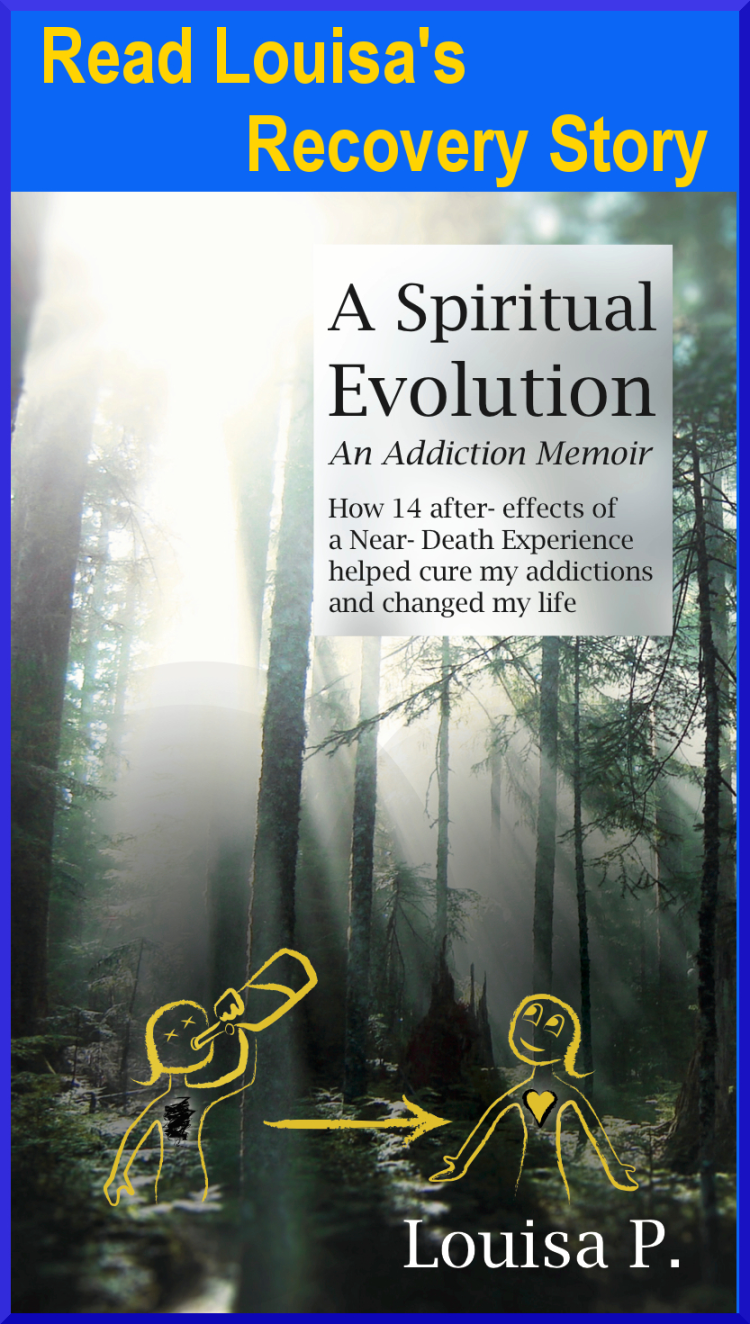
I am like my father in so many ways besides alcoholism! Sometimes I almost feel I am him as I prune things or cook pancakes or do any of the chores I remember doing with him. When he was dying, I had dreams I would swear were his. As described in my memoir, I’ve had a Near Death Experience, and I often pick up energies/thoughts that are not mine. In these dreams, I was the one dying and looking back on my life.

Approaching death, my father’s consciousness overflowed with anguished regret for having been duped all his life.  He felt he had wasted his chance to meet life head-on with honesty and honor. The old mechanism of self-loathing still had him in its grip, as he felt that by having rejected the Catholic church at a young age, he had angered god.  I woke filled with these feelings at 4:00 AM and drove across town to tell him, before the dawn of his last day, that god loved him, that he had done beautifully, and that there was nothing to regret.  By then he could not speak, but I like to think he could hear.

My own greatest regret is that I couldn’t get my father sober. I couldn’t even speak to him about his alcoholism or AA. Deeply codependent, I felt overpowered by the intensity of denial in our family: admittedly Dad was an alcoholic, but hey, a healthy one! While my family continues that legacy by toasting Dad’s memory and reflecting how much he’d love to be drinking right now, I’ve recently, after a few years in Al-Anon, decided on a shift.  I’ll no longer attend such functions. If my family wants to see me, we can meet for alcohol free events.

There was also no way I could ever speak to my father, even on his deathbed, about the greatest gift he gave me, though I think he knows it now. In a sense, he helped me to find sobriety – a chance to live in the immediacy of life, working to hide nothing from myself and god. In the end, his example of painful denial, of remaining loyal to an illusion, taught me honesty.  The greater our honesty, the more life is worth. I wish I could have shared that with him, but it was not to be.

2 Comments

Filed under Alcoholism, Drinking, Recovery, Sobriety, Twelve Steps