
Pema Chödrön’s teacher, the venerable Chögyam Trungpa, drank a lot. Drinking was a staple of his sanga, where he threw big parties among his students, and he was known to carry vodka in a water bottle. Trungpa explained in one of his spiritual books why his drinking differed from that of an ordinary alcoholic:
“Whether alcohol is to be a poison or a medicine depends on one’s awareness while drinking. Conscious drinking—remaining aware of one’s state of mind—transmutes the effect of alcohol. Here awareness involves a tightening up on one’s system as an intelligent defense mechanism…
“For the yogi, alcohol is fuel for relating with his students and with the world in general, as gasoline allows a motorcar to relate with the road. But naturally the ordinary drinker who tries to compete with or imitate this transcendental style of drinking will turn his alcohol into poison…”*
Sadly, it appears that Trungpa’s liver failed to read the book and appreciate his “transcendental style” of yogi drinking. Despite diagnoses of cirrhosis and doctors’ warnings that more drinking would kill him, Trungpa continued to drink heavily until it did indeed kill him in April of 1986, when he was just 48 years old.
 ~
~
Philosopher Alan Watts was considered a sage throughout the ’60s after he rose to prominence with the 1951 publication of The Wisdom of Insecurity – a pivotal text introducing Eastern concepts to Western society. The book considers the ego’s dis-ease with the unstable nature of reality and its efforts to create security via constructs of memory and projection coalescing in a story of “I,” which Watts dismisses as unreal: only awareness divorced from self can access reality. Watts, like Trungpa, was well aware of the futility of escapist drinking:
“One of the worst vicious circles is the problem of the alcoholic. In very many cases he knows quite clearly that he is destroying himself, that, for him, liquor is poison, that he actually hates being drunk… And yet he drinks. For, dislike it as he may, the experience of not drinking is worse… for he stands face to face with the unveiled, basic insecurity of the world.”
Unfortunately, identifying this vicious circle did not grant Watts the power to exit it. Like Trungpa, he often gave lectures while sloppy drunk. He, too, developed end-stage alcoholism that deeply concerned his ex-wife and friends, and died of alcoholic cardiomyopathy – e.g. heart failure – at 58.
 ~
~

Both of these men were masters of self-knowledge and the meditative disciplines that yield inner peace. Both could speak brilliantly on the ills of ego and treasures of honesty. Yet neither could stop drinking. And they’re just two examples out of jillions. Why did they fail? Why would people so insightful not quit what was clearly killing them? The Big Book explains:
“If a mere code of morals or a better philosophy of life were sufficient to overcome alcoholism, many of us would have recovered long ago. But we found that such codes and philosophies did not save us, no matter how hard we tried. We… could will these things with all our might, but the needed power wasn’t there. Our human resources, as marshalled by the will, …failed utterly.” (p. 44)
In Shambala: The Sacred Path of the Warrior, Trungpa makes very clear that no god enters into his vision. “Over the past seven years, I have been a presenting series of ‘Shambala Teachings’ [on]… secular enlightenment, that is, the possibility of uplifting our personal existence and that of others without the help of any religious outlook.”
Good for him! I agree wholeheartedly that self-knowledge is great stuff. But it will not cure alcoholism.
In a 1968 talk, Bill Wilson, one of AA’s founders, described the initial amazement of the psychiatric community at the unprecedented breakthroughs of AA. Many alcoholism specialists attended meetings and saw their own alcoholic patients, with whom years of psychiatric work had failed, achieve abstinence and mental health in a matter of weeks. One suggested that Bill assemble a group of such psychiatrists to testify before the Academy of Medicine about AA’s success. So Bill asked them.
“And not a one would do it! …In effect, each said, ‘Look, Bill. You folks have added up in one column more of the resources which have been separately applied to alcoholics than anyone else… [But] the sum of them won’t add up to the speed of these transformations in these very grim cases… So for us, there is an unknown factor at work in AA. [B]eing scientists, we… call it the X factor. We believe you people call it the grace of God. And who shall go to the Academy and explain the grace of God? No one can.'”
 Sorry, folks! But the X factor, and that alone, is what saves an alcoholic: Connection with a higher power, to god as we understand it. We ask god to help us, and we’re relieved of a compulsion that no amount of self-knowledge can touch.
Humility is the key ingredient to receiving grace. We have to ask for it, accepting that we’ve been defeated. By contrast, Trungpa, for all his wisdom, exhibited a strong tendency toward hubris. The true warrior, he explains in Shambala, is both Outrageous and Inscrutable. “…[H]aving overcome hope and fear, the warrior… fathoms the whole of space. You go beyond any possibilities of holding back at all…. Your wakefulness and intelligence make you self-contained and confident with a confidence that needs no reaffirmation through feedback.” In other words, I got this! Screw what anyone else thinks!
Watts, meanwhile, purported to embrace God, but his abstractions reduced it to a mere abandonment of I, which enabled connection with the eternal now and rendered us one with God. For Watts, there could be no “Hey, god (you) please help (me)!” because the you / I division negated the fact that we are god: “[W]e cannot lay ourselves open to grace, for all such split-mindedness is the denial… of our freedom.”
Reluctance to seek god’s help almost killed AA co-founder Bill Wilson, too. Relatively unknown in AA culture is the fact that Bill was so deeply repulsed by the God element in his friend Ebby’s solution that he went on drinking for three weeks after Ebby’s visit and landed yet again in a sanitarium. There, after Ebby had visited him again to recap the spiritual solution, he had this experience:
“And again the despair deepened until the last of this prideful obstinacy was momentarily crushed out. And then, like a child crying out in the dark, I said, ‘If there is a God, will he show himself?’ And the place lit up in a great glare, a wondrous white light. Then I began to have images, in the mind’s eye, so to speak, and one came in which I seemed to see myself standing on a mountain and a great clean wind was blowing, and this blowing at first went around and then it seemed to go through me. And then the ecstasy redoubled and I found myself exclaiming, ‘I am a free man! So THIS is the God of the preachers!'”

In my Near-Death Experiences group, I’ve heard several people describe similar experiences, when the “white light” of love brilliantly illuminated the room around them; but, naturally, many of Bill’s contemporaries considered him daft for insisting it had happened. In his talk, he attributes this phenomenon not to his own specialness, but to the role it enabled him to play in AA, explaining that the powerful faith most AAs develop over months or years was for him simply crammed into a few minutes: “It did give me an instant conviction of the presence of God which has never left me… And I feel that that extra dividend may have made the difference in whether I would have persisted with AA in the early years or not.”
In other words, Bill was given what he needed not only to overcome a lifetime of harrowing addiction, but to co-create AA and persist in carrying its message into the dark world of his fellow alcoholics. Why? Because he asked… and frickin’ meant it.
.

.
PS: I have tremendous respect for both these sages as well as for Buddhism. By no means am I critical of their legacy or beliefs. Reading both authors did contribute to my self-knowledge, for which I am grateful, because such insight aids in a lifetime quest for serenity. My point is merely that self-knowledge, no matter how deep or how keen, cannot arrest this disease, as these two tragically premature deaths testify. See comments below.
– Louisa
- (Heart of the Buddha, p. 153)


 are countless other key moments when light bulbs went on for me. “My ego tells me I’m the shit, and my self-loathing insists I’m a piece of shit. But God grants me the humility to be right-sized – to be a worker among workers, a driver among drivers, a sober drunk among sober drunks.”


 ood. I knew my life shouldn’t be what it was. I could read our culture; I could perceive what was rated glamorous or worthy; I understood the goal. Media of all kinds broadcast examples of who and what was interesting and enviable. I internalized all that and judged myself inadequate.



 saying: “Let it begin with me! Your happiness does not depend on what Grayson does. Your life is rich and you are loved by many. Be grateful! Spend time with friends!”







 banquet, where the faces of the (cool kids’) Glacier Climbing Course I was once so active in have all changed for the younger. I arrived late, so there were no seats. I felt like a has-been. But then my ego got a great idea to fix this: I tracked down two of the new leaders and said I’d be happy to deliver some of this year’s presentations if they needed someone – you know, sort of like Barry Manilow offering to perform at the Grammys.





 So here’s the quandary. You may hear people in the rooms kicking around the question: “Who are amends for? Me or the other person?” I recall about a dozen years ago hearing a woman announce with contempt, “I’m not making this amends for her! I’m doing it for me!” Something sounded wrong in that, but I wasn’t sure what.

 Amends don’t mean you become buddy-roos with the person. And some may continue to lob fireballs at you, requiring you to maintain a safe distance. But when I’ve sat down with people from my past and owned, often with my voice shaking, my very human fuck-ups, I’ve witnessed in almost every one of them the blossoming grace of compassion. Many have spontaneously confessed fuck-ups of their own. And sometimes, in the pool of truth we shared for those moments, I would behold in them a dignity and beauty to which our old conflict had blinded me.


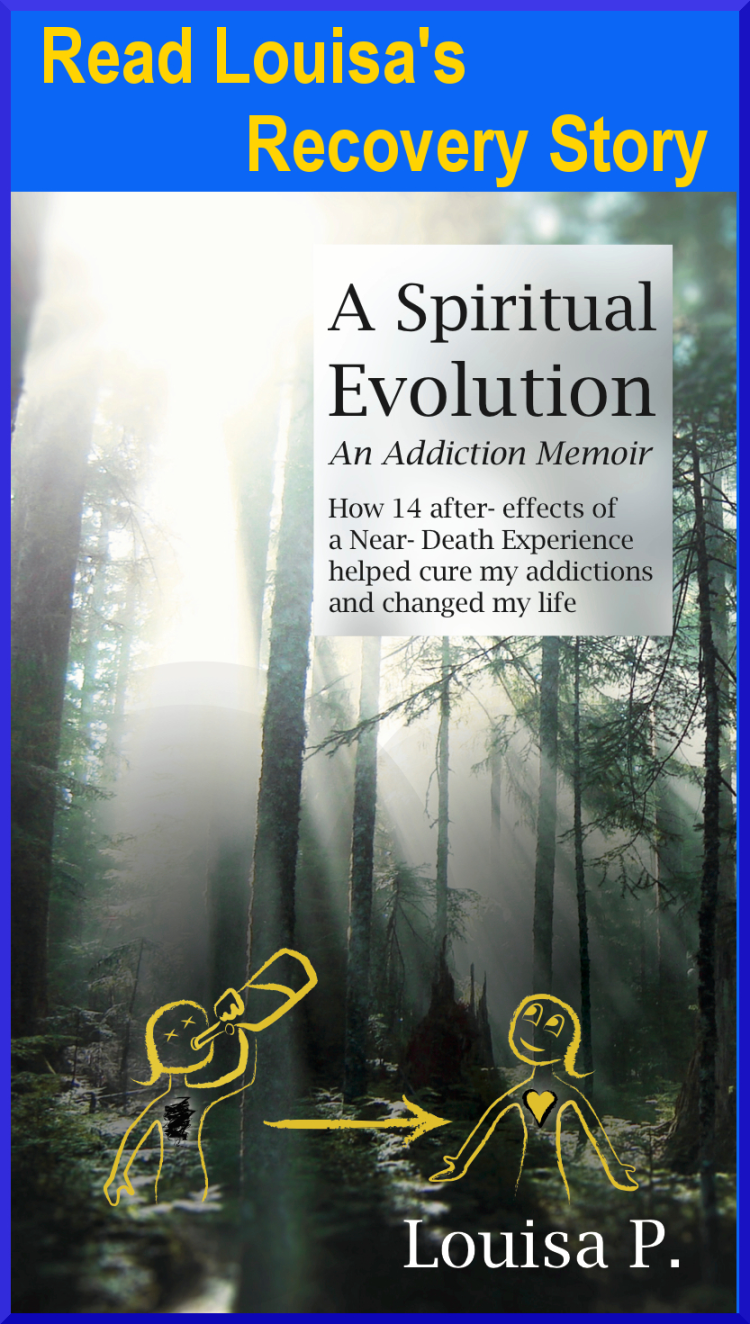
 A Spiritual Evolution