Step 3 and Happiness

I’ll have 21 years sober on Friday, which is kinda unbelievable to me.  That’s long enough to be of age to drink.  Where did the time go?  How did I get so friggin’ old?

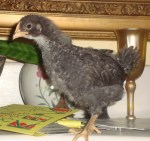
No matter.  My life’s damn good.  On this ordinary Saturday I slept in til 8:00, then texted alternately with two sober friends – one joking about the “sober paws,” the other mired in grief, both of which I get: life lived fully awake is both a blast and painful as hell.  Meanwhile, my 14-year-old son put an adolescent chicken on my head, because he and I are close and sometimes like toAdolescent chick let our chicks scuttle around the house like cheeping Keystone Cops.  I soon left for a ballet class where, keeping up with an advanced group, I nailed a few turns and jumps that pleased me.  Came home to write this so I could postpone cleaning my house for the big fat 21st birthday party I’m throwing a week from tonight.  Just normal life, and I’m happy.
Twenty-one years ago, I felt alone in a dead, condemning world from which I longed to vanish.

What’s made the difference?

Step 3: Made a decision to turn our will and our lives over to the care of God, as we understood God.

When I first tried Step 3, I completely misunderstood it.  I thought I was supposed to give up my will and live exclusively by god’s.  Short of lying down and waiting for a windstorm or something to throw me into action, how was that possible?  But that’s not even remotely what the step says.  Look at the exact wording: we still have our will, but we’ll turn it over to god’s care.  Or at least, we make a decision to do so.  God’s will, you’ll note, isn’t mentioned.

Personally, I have a problem with the notion of god’s will or god’s plan for me.  Why?  Because each strikes me as a product of needWill strives to realize an intention; plan foresees a chain of events that will bring about something desired.  I don’t see god as having either.

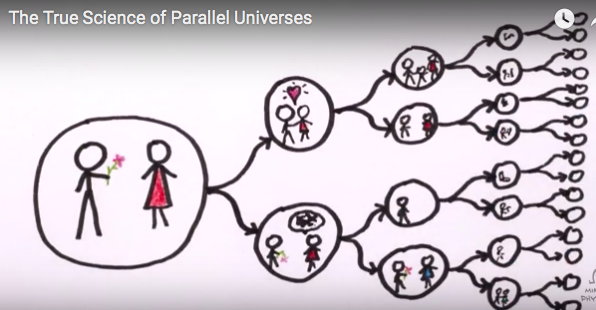
People in my Near Death Experiences group who’veGalton Board been shown their futures describe it more as a 3-D Plinko board of endlessly branching possibilities.  They say the spirit showing it to them had no agenda – any series of choices was dandy, including death.  My own NDE was different: I was told “You’re not finished” and sent back against my will, revived by CPR despite lethal levels of drugs still in my system. 

Potential FuturesSo let’s just say, if god does have a will or plan for each of us, it’s a super flexible one.  Let’s say you planted two tiny genetically identical elm tree seedlings 50 feet apart.  Then you came back 100 years later to find two huge, swaying, graceful elm trees.  Would you expect them to be identical?  Would one of them be wrong?  Of course not.  Because each grew into its own uniqueness.  Incomprehensibly detailed variations make up the richness of this world.  And if god wants anything for us, it’s that we grow into our incomprehensibly unique selves.

Unfortunately, growth seems a lot more complicated for humans.  The trouble comes from dealing with fear and pain, and encountering the voice of ego which promises to protect us from both.  I grew up with so much fear and pain that I poured all my trust into ego.  What else was there?!  As an alcoholic, I found booze boosted ego’s power, generating a workable substitute for the self-worth I lacked.  My world shrank smaller and smaller as I pursued ease and comfort in the bottle.  I learned nothing about myself or how to live.  I hit bottom as a 15- year-old girl in 34-year-old body.

Step Three opens the door for learning.  AA’s “psychic change” is what happens when we stop listening to ego and start seeking a deeper truth.  Good Orderly Direction (GOD) was the term offered to help me ease into my own conception of god.  I learned to subject each idea to this test: does it feel like Good Orderly Direction?

GODWorking the 12 steps with a sponsor exemplified Good Orderly Direction.  The process taught me spiritual principles – like gratitude, humility, love, and service – that shape a worthwhile life.  I learned that they’re realized through daily acts of empathy and kindness, and that when I live in accordance with them, I can generate self-esteem by doing esteemable acts.


I’ve learned that meditation pays off in the ability to distinguish my awareness from my thoughts.  A babble of ego-thoughts still passes constantly through my brain – stories of envy, self-pity, resentment, and how I could fix everything.  Today I can detach (usually) from them, knowing (usually) that they’re worthless.  I can sometimes glean the aftertaste of regret before I do the wrong thing.

I’ve learned that, for me, the biggest challenge of sobriety is self-honesty.  Honesty with others is easy: I’m an open book.  But to change the things I can, I have to be willing to see the need for change – and I don’t like to. I’d rather pretend things are fine. Or, if I do make a bid for change, it’s still a challenge to do the footwork and then LET GO of the results.  Whenever I’m obsessing – needing to get what I want or for someone else to do/see what I want – I’m trying to boss reality, to shape it to my will – which is obviously  insane.  So the more life beats me up, the better I get at letting go.

As a result, I’ve learned some of most freeing stuff: that what seems urgent is usually not important, and what’s important is usually not urgent.  I’ve learned the wisdom of “Don’t just do something!  Sit there!”  Life flows around me; people flow in and out of my life; I’m powerless over virtually all of it.  My attitude alone is mine to choose, but no longer mine to choose alone.


scroll

Post to Facebook

2 Comments

Filed under AA, Addiction, Recovery, Sobriety, Twelve Steps

AA Newcomer Fears

My newest sponsee and I were reading the Big Book together the other night, with me passing on to her all the margin notes my sponsor passed on to me so many years ago. When we got to this passage in The Doctor’s Opinion, I had her change the pronouns as my sponsor had had me do:

Men and women I drink essentially because they I like the effect produced by alcohol. The sensation is so elusive that, while they I admit it is injurious, they I cannot after a time differentiate the true from the false. To them me, their my alcoholic life seems the only normal one. They are I am restless, irritable and discontented, unless they I can again experience the sense of ease and comfort which comes at once by taking a few drinks—drinks which they I see others taking with impunity. After they I have succumbed to the desire again, as so many do, and the phenomenon of craving develops, they I pass through the well-known stages of a spree, emerging remorseful, with a firm resolution not to drink again. This is repeated over and over, and unless this person I can experience an entire psychic change there is very little hope of his my recovery.

Next I asked her (as I’d been asked) to read it aloud and tell me if she identified.  Over the years, the response has varied, but for newcomers seeing this passage for the first time, it’s often tears.  One tough, independent woman of Inuit descent, single mom to a disabled boy, could not finish reading the passage  for weeping.  She murmured, “This is me.  This is my life.”

(But her life changed.  She’s been sober nine years.)

My current sponsee has a few years sober, but she, too, was moved.  In the silence following her simple “Yes,” I could see her  travel back in time.  She said, “I remember… I came home after my first AA meeting, and I sat on the couch, and I just cried and cried and cried.  Life seemed over.  I couldn’t see the future – anything – without alcohol.”

Though it’s been almost 21 years, when I’m sitting with an alcoholic who remembers, I, too, remember my first meetings.  I knew I was an alcoholic.  I still couldn’t speak those words, but inside I’d rounded that corner.  Yet the vacuous terror of living without booze, of identifying with AA crap, and going to meetings for the rest of my life, felt like such a horrific, endless nightmare that I almost preferred to slop my drunken way toward death – privately.

Here are some of the things I feared:moonshine

  • My life would be boring
  • I’d have to pretend to like stupid AA people
  • AA would feel cultish like an Amway scam
  • I’d never feel deeply relaxed and happy again
  • I’d never feel wildly excited and happy again
  • “Psychic change” was mumbo-jumbo – I’d feel this bad forever
  • Steps 4 and 9 would be degrading, so I wouldn’t do them
  • Step 12 would mean consorting with weirdos, so I’d never do that one, either

Now, AA works by attraction, and I don’t mean to promote anything.  I can only report what I’ve experienced and how I’ve changed, and maybe offer tidbits of advice.  I’m just one sober drunk.

  • Meetings vary tremendously, but if they’re based in the Big Book, they’re about the solution.  I got sober at folksy meetings in Olympia, then switched to lesbian meetings in Seattle.  For a few years I preferred hipster meetings where everybody had tats and pierces and spoke in strings of profanity.  I’ve also felt at home at meetings in Boston, LA, Hawaii, and Greece.  Yet any meeting is only as good as the stepwork of people attending.  I avoid informercial (“everything’s wonderful since I worked the steps!”) meetings, and bitch sessions (“but at least I didn’t drink!”).  Look for meetings with fun people who exude the energy you want, who speak honestly of their struggles but apply the solution.
  • Friendships formed when I started going to gatherings outside meetings.  Old friendships deepen, but I keep making new ones; today I have more friends than time to see them all.  This Sunday I went snowshoeing with five kick-ass sober women who say ‘fuck’ a lot.  We laughed and shared frankly and the young ones dropped their pants for bare-ass-in-the snow pics – which I can’t show you ;).  But each of them has a quiet side, as well; each has known devastating misery.


Ks bdaysnowshoe


  • Boring is how I’d describe my life of drinking and faking coolness in contrast to the wide-awake, life-savoring ride of sober spiritual growth.  Even the most painful experiences, walked through sober, are valuable teachers.
  • Conformity is an anathema to every alcoholic.  It’s the disease that’s the same for all of us, and the “way out” – i.e. living by spiritual principles.  Through trial and error, we each find our unique spiritual path.  “And how’s that workin’ out for ya?” is all a wise sponsor need ask.
  • The psychic change grew in me oh so gradually as I worked the steps.  Taking Step 3 made me ready for 4-7.  Doing 8 -11 finally opened the door for 12.  Each time I repeat all 12 steps, I see a little deeper.

Have I changed much?  Hell, yeah.  For instance, these past few months I’ve gotten up early every first Saturday and driven downtown to help cook breakfast for about 150 homeless people.  In the past, it was all about me. But last Saturday, on a freezing cold morning, I was dishing out cheesy scrambled eggs, first server on the line.  I greeted each person directly, recalling a few names, with my heart overflowing.  “Nice hat!  Cheesier or less cheesy?  It’s nice and warm in here, and so are these eggs!”  Faces lit up – they thanked us, wished us Happy New Year.  Some laughed with me.  The sausage guy next to me remarked, “Boy, you sure are Miss Sunshine, aren’t ya?”

And I am.  Except it’s not me, not my light.  It’s Light that shines through me because of all I’m connected to.  Today, I have something to give.  And, as that new sponsee texted me the other day, “I’ve never felt so happy in my life!”


scroll


.

Hey, guys!  We are everywhere!  Thanks for 290,000 views in 2015 – and that ain’t even counting RSS, email, or most Facebook tags.  WordPress says you visited from 166 nations.  I never dreamed my little free blog would attract so many readers.

If I’ve helped any of you anywhere to stay sober another day, I’m super grateful.  I mean, sure, I’m glad if people like my writing and stuff, but even gladder that we all share this thing, this gift, and this connection – and “get” each other.  Love to all of you!


Screen Shot 2015-12-30 at 3.40.44 PM

Nations in white had no views, yellow few, greenish more, blueish LOTS.

1 Comment

Filed under AA, Alcoholism, Recovery, Sobriety, Twelve Steps

New Year’s FOMO and other Alcoholic Horsecrap

What is FOMO?  Fear  Of  Missing  Out.

It’s that sinking feeling that someplace you’re not, lots of amazingly cool people are having an absolutely stupendous time. Maybe there’s kickass music and people are lookin’ sharp n’sexy and having a fuckin’ blast and – oh my GAWD!!! Can you believe what those two did?! That is so hilariously outrageous!  It’s not just goin’ aParty-Dancing-Vectorll over Facebook –it’s like a “fun times” montage out of a Hollywood flick!  If you could be there mixin’ it up you’d feel – oh my god – so damn good! You’d be dialed into life, you’d be carpé-ing the fuckin’ diem all night long!   But you’re missing it!

As Katie Perry sings:

Last Friday night

Yeah we danced on tabletops
And we took too many shots
Think we kissed but I forgot

Yeah we maxed our credit cards
And got kicked out of the bar
So we hit the boulevard

We went streaking in the park
Skinny dipping in the dark
Then had a ménage a trois

Yeah I think we broke the law
Always say we’re gonna stop-op
ooh-ohh*

Here’s what the song leaves out: live those lyrics and you end up with a busted ankle from falling off the damn tabletop, years of credit card debt, and maybe even salmonella because you skinny dipped in a fucking duck pond.  You’re lucky if you don’t end up in jail with charges on your record or an STD from the ménage a trois with morons.  Of course, it goes without saying that you’ve poisoned yourself again ‘til you’re heaving up bile.

Lets-partyNo, Katie doesn’t really mention that part. Neither does your FOMO.  It airbrushes away all those pesky consequences and lures us with the promise of a bright and shiny “great time.”

It’s Also Called Immaturity
For normies, FOMO spikes in youth when they’re highly peer-oriented, but as they mature into adulthood, FOMO diminishes to a rare blip on the screen. The trouble for alcoholics is, once again, our perspective is skewed.

Our disease carries many tricks in its bag.  Though normies don’t understand, we  often speak of it as having a mind of its own, exploiting whatever ploys avail themselves to keep us using or, in recovery, to trigger relapse.  A lot of alcoholics crave adventure – a sense of living on the edge.  So addiction broadcasts FOMO to persuade us that swallowing a neurotoxin is really the key to livin’ large.

Much like the craving for alcohol, alcoholic FOMO can never be satiated.

For example, New Year’s Eve of 1982, after snorting coke in the car and paying some absurdly high cover charge, my future (ex) husband and I sauntered into a hip and glitzy Boston nightclub. We scored a table near the dance floor, ordered champagne, and lit up our smokes. We danced. But at as the countdown for midnight approached I was struck by the realization I still recall so clearly: We were at the wrong club! The one down the street was way cooler! No one here was even worth impressing because they, too, had fallen for the wrong club!  If only I’d known! If only we’d gone there! I was missing out!!

This pattern would repeat itself for over a decade. I never did find the right club or party or even picnic, because if I was there, a better one had to be someplace else.

Recovery = Reality
FOMO is really just another guise of codependence. It’s not actually a yearning for fun; it’s a belief that we can gain something that will deliver a shot of wellbeing by being seen in the right places doing the right things. At some level, we believe others hold the power to validate us, though we’re actually validating ourselves through projections of those people’s imagined esteem. The esteem has to seem to come from them to be any good – we can’t feel it simply by knowing and valuing ourselves.

More and more I’m convinced most alcoholics are also codependent. The source of pain for all codependents is an external locus of self-worth – often because we grew up in dysfunctional families where we did not get what we needed to develop a strong sense that we are loveable and worthy. We keep chasing and chasing it in others and never getting any closer.

While non-alcoholic (classic) codependents try to subdue their pain by concerning themselves with what others should do and ‘winning’ love by caretaking, alcoholic codependents subdue it not only with alcohol, but with attempts or impress and winCodependent over others, often becoming social chameleons and regarding friends as something like collectible baseball cards.  Active alcoholics can’t really love our friends. We can only seek relief via people – and “love” that relief.

When we get sober, we begin to seek a higher power that can grant us the worth we’ve so desperately sought in all the wrong places. With guidance from sponsors and a growing sense of Good Orderly Direction, we can begin to live a life of integrity that lets us discover our worth as loving and lovable human beings.

But FOMO still nags at us to forget all that. It can wheedle into our minds at any time, but New Year’s Eve is its favorite holiday – especially for the newly sober.

The Big Book’s authors knew all about FOMO.  While they do instruct us “not to avoid a place where there is drinking if we have a legitimate reason for being there” (p. 101), they also caution against attempting to “steal a little vicarious pleasure from the atmosphere of such places.”  They warn us to “be sure you are on solid spiritual ground before you start and that your motive in going is thoroughly good.”  Not just good – thoroughly good.  In other words, don’t bullshit yourself.

In my almost 21 years sober, I’ve never found a thoroughly good reason to go hang with drinkers at a New Year’s Eve party.  I prefer to usher in the new year with a good night’s sleep and a cushy set of earplugs.  Sobriety fills my life to the brim, and I know it.

scroll

Post to Facebook
.

* Katie Perry Lyrics – https://www.youtube.com/watch?v=Cdyfr4lU8sk
See also 6 Tips for Holiday Parties

.

16 Comments

Filed under Addiction, Alcoholism, Codependence, Codependency, living sober, Recovery, Sobriety

Spiritual Experience

Sometimes I wish I could loan my faith to others.  At least I felt that way the other night at my homegroup when the topic was “your spiritual experience.”  In share after share, people balanced guarded reservation with the undeniable fact that, once they sincerely asked a higher power for help, their addiction was lifted and a new way of living began for them.  A few also shared that certain inexplicable synchronicities or phenomena had strengthened their faith.

I really hoped to get called on.  If you could raise your hand in AA, I’d have been bouncing in my chair – “Ooo!  Pick me, pick me!”  My faith is HUGE and strong, and I wanted to share it!  I don’t believe – I know ( just like Carl Jung! – this is an awesome, quick clip!).

sky angelsMy addiction memoir recounts the tale of my slow (and ongoing) spiritual awakening.  It tells how there came a definite turning point in 2003 when I finally dropped the walls I’d been holding up against god.  Before that, I’d locked my Near Death Experience (NDE) and subsequent paranormal experiences away in a “not relevant to regular living” vault.  When I was “feeling spiritual,” I’d turn to god; otherwise it was was business as usual.  Weird Thing #9 led up to the transformative acknowledgement that god really is omnipresent in all that lives, beyond anything my brain can conceptualize or imagine.

On that day, I turned away from loyalty to society’s consensual reality in much the same way I’d turned from loyalty to alcohol and drugs some 8 years previously.   In both cases, I’ve never looked back.

My god is not religion’s God.  It’s the life force, the collaborative, animating energy of Love and the collective intelligence of all life it has ever generated. Nothing is lost.  Energy can’t vanish, even as a result of mass extinctions.  The sun keeps pouring energy into our life system, and the system keeps growing.  You’re a part of it.  Your trillions of separate cells collaborate toward the larger purpose of you, which/who in turn is meant to serve the greater purpose of we.

After Weird Thing #9 in 2003, it still took me 8 years to Google Near Death Studies, and still another year before I went to an IANDS meeting.  As with my first AA meeting, I was leery of a bunch of kooks.  And, as with my first AA meeting, hearing my inmost experiences described by strangers blew me away.  I soon realized I had, again, found “my people.”

In fact, only about 10% of our Seattle IANDS group at any given meeting has actually died.  But almost everyone there (usually about 60 people)  has experienced some kind of overtly paranormal event that caused them, too, to break from the physical-only view of the world that society condones.

Just as it’s “safe” at an AA meeting to share our ups and downs of sober living, so it’s “safe” in an IANDS meeting to speak of guardian angels, the overwhelming Love of the Light, and encounters with dead loved ones, or – if they’re in your story – demons.

Here’s a brief excerpt from one of our members’ stories.  A severe allergic reaction, combined perhaps with asthma, had caused him to collapse, aspirate, and die one night on a California beach.

When I’d been flipped over, I had sand and vomit all over my face and… she thought it was gross and didn’t want to do [CPR].  I still was [above them] saying, ‘I’m fine, I’m okay!… I don’t want to bother you!  I’d much rather you be happy!’…  But she did it.  I could see her bending down and getting ready to press her lips to mine.  And almost as soon as that happened, it felt like a car crash or something.  I was immediately back through my own perspective, I was definitely in my body… it was like being slammed back into me.  …I don’t know how to describe it.

I remember seeing her over me… At this point people are all around me and I’m just laying there on my back.  And I know that they’re asking me, what’s your name, what year is it, who’s the president.  I… I didn’t care.  All I could focus on were two things.  I could see their lips moving – I couldn’t actually, for some reason, hear their voices.  The only thing I could hear were the waves from the ocean, and the only thing I could look at were the people that were helping me – but they were… people that were helping the people that were helping me.

Um… for lack of a better term – I don’t like to use certain terms, but – for lack of a better term, I would call these ‘angels.’  I don’t feel they were there connected specifically to me, but that maybe they were there connected to those people – that we were all part of a collective effort, that everyone had the same – goal? – in mind.  It wasn’t that the goal was to bring me back, but that we were all taking part [in something bigger].

How wonderful to be free to know in an IANDS meeting that god is real!  Those rooms glow with vestiges of the Light.  By aligning what’s happened to me with what others have seen and described, I’ve come to believe that the loving presence I knew on the other side was my guardian angel, and that this same entity is what often answers not just my prayers but my private thoughts – not necessarily when I’d like or with what I’d like, but somehow.

orb close close orb2
Just before these pictures were taken in 2013, as many sober friends who knew I had cancer sang Happy Birthday to me, my embarrassment was interrupted by a different thought-voice: “Louisa, this is as good as it gets!  Don’t resist.  Just let them love you.”  If orbs are nothing but dust motes on a lens, why would photos from two different cameras, from two angles, at two different moments show the same orb in the same place?  That’s my angel.

So… back to my homegroup: “What’s your spiritual experience?”  I wasn’t called on, so I’d resolved to share once the meeting opened for volunteers.  As soon as it did, though, before I could open my mouth, came the thought: Don’t.  Only listen and love.

I countered, “I only want to help people!”

Bullshit, came the next thought/voice.  You think you know more just because you know different?  Let be.

Boy, was it hard to abide by this!  I had to sit on my hands, especially through the long silences.  Puppies don’t always pee on the newspaper, and I don’t always listen to guidance – but this time, I did.  When the secretary finally called time, I sighed: Phew!  Made it!

I got home.  I went to bed.  And in the morning I remembered clearly that AA works only because we all keep our gods to ourselves – since we do “not need to consider another’s conception of God.”  To go off about my IANDS group and NDE would be no different from someone going off about how Jesus Christ is Lord and Savior.

Because spiritual experience is, like sobriety, an inside job.  Each person grows their own experience.  Much as I’d like to, I can’t whomp my big fat weird tree down in front of anyone – each person has to germinate their own inner seed and nurture it over the days and years of their life.

What do you call that, when you’re great guns to do something and another thought/voice tells you not to – or vice versa?  How, exactly, do Steps 6 & 7 work in your beliefs?  “Do not let any prejudice you may have against spiritual terms deter you from honestly asking yourself what they mean to you” (p. 47).  You can call it superego if you prefer, but, as long as it’s a calling toward love, I call it direction from whatever it is that’s helping me.

scroll

.

.

3 Comments

Filed under AA, Afterlife, Faith, God, Near Death Experience, Recovery, Spirituality

Denial and Ego: Addiction’s Minions

People suffering from a potentially fatal disease normally want to know what it is and how to get better. If it’s diabetes, you alter your diet and take insulin. If it’s cancer, you follow whatever regimen you’re dictated. But if it’s alcoholism, you say, “Um… actually, I don’t have that!” so you can get even worse.

Denial: it’s built right into alcoholism – which why in the rooms we talk about “the disease that tells me I don’t have a disease.”

Here’s an official alcoholism definition hammered out by the Journal of the American Medical Association. A 23-member (how many?) committee of the National Council on Alcoholism and American Society of Addiction Medicine researched and bickered for 2 frickin’ years (how long?) to spell this thing out:

Alcoholism is a primary, chronic disease with genetic, psychosocial, and environmental factors influencing its development and manifestations. The disease is often progressive and fatal. It is characterized by impaired control over drinking, preoccupation with the drug alcohol, use of alcohol despite adverse consequences, and distortions in thinking, most notably denial.

I’d like to thank whichever committee members lobbied to squeeze in “most notably denial.” Under great pressure to be concise, why bother naming that particular distortion? God knows alcoholic thinking distorts right and left: Everyone else is the problem; I drive better drunk; I didn’t like that X anyway. But woven through every distorted thought of an active alcoholic is the thread of denial – outright refusal to acknowledge the fact that we need to get wasted despite whatever price it’s exacting from our lives.

evil minions

Self-centered ego is denial’s evil twin, likewise a mainstay of alcoholism.  A great description, penned by Anne Wilson Schaef in When Society Becomes an Addict, runs as follows (excerpted):

Addicts are notoriously self-centered. They may claim to care about the people around them, but their fix begins to overshadow everything else.

Another aspect of self-centeredness puts the self at the center of the universe. Self-centered people do not know where they begin and end and anyone else begins and ends. Because there are no clear-cut boundaries, two things happen: the self spreads out, and the world rushes in. Everything becomes ME, and everything starts coming at ME and is perceived as either for or against ME.

During active addiction, alcohol is FOR ME.  It’s on my side – the only ally I can trust.  If I’m lonely, I invite my buddy alcohol over to keep me company, and we hang out together in a cozy refuge against a world we both tell to fuck off.  On the other hand, if I need to socialize, alcohol becomes my Iron Man suit.  It empowers me to converse freely, lovin’ life and knowing I’m absolutely invincible.  Either I’m so freakin’ charming that everyone admires me, or I’m such a boss rebel I could give a rat’s ass what any of those assholes think.  Either way, my self-centered ego feels impervious.

Anything against my alcohol is, by definition, against ME.  I fight as if my life depended on it: You can take my job, my relationships, my health, my home, my self-respect, even my hope that things will ever get better – but don’t you dare touch my buddy, alcohol.  That’s my lifeline, bitches!

Doctors, therapists, friends, spouses or partners – when they turn against our buddy, they all have to be shafted.  It’s unfortunate, but inevitable.  And what about our conscience, that repentant whiner who, filled with morning self-reproach, promises not to drink (so much) again?  With a sigh we hit the trap door switch and drop them to the alligators.  Sorry.  No way around it.

Denial and ego conspire together as addiction’s minions. Demon quarterbackDenial says I don’t have a problem, and ego says, Whatever – I do what I want!  Together they block the world like offensive linemen, protecting addiction from tackles by reason and emotion so it can launch just one more play for a great time.  This time, it’s gonna be awesome!

But then one day, if we’re lucky, we reach that magical combination –our life’s shot to shit and alcohol quits working – and we hit bottom.  Death is lookin’ real-ly good by this point.  No more anybody expecting anything from us.  No more failure.  No more loneliness and hating ourselves.  Just peace.  That incomprehensible demoralization blasts away denial’s excuses, flattens ego’s games.

Without their cover, we can finally glimpse the actual face of addiction, and we understand that it’s a demon. For a short window of time, we get that it’s killing us. The question is whether we can find help, whether we can be shown a way out, before that window of clarity closes. If we make it to AA, we can look at Step 1 on the wall and sigh, yes:  We admitted we were powerless over alcohol – that our lives had become unmanageable.  Others can show us the way out.

But that’s far from the end of it!

The inner addict doesn’t die.  Recovery only incarcerates it.  And guess who’s constantly plotting and conspiring to spring the boss out of prison?  You got it: those loyal henchmen, denial and ego.

“You know, maybe I never really had that big a problem with alcohol.  Maybe now that I’ve got my shit together, I don’t have to bother with AA meetings.”  Just as cancer mimics and perverts the miracle of cell growth, so addiction mimics and perverts the goodness of self-care. “You deserve a drink!  Don’t be so hard on yourself!  You’ve totally cleaned up your act – why not enjoy a little reward?”  Both diseases kill the host.

In sobriety I know of only one deliverance from the minions’ head chatter: god.  That’s why the 12 Steps exist.  For me, god can be found only when I wrench my focus away from all my thinking and look to my heart, where my sense of goodness lives.  Goodness runs deeper than knowledge; it’s my very foundation of living, god dwelling in me.  I pray for direction and new thoughts come: call a sober friend; get to a meeting; be of service to others.  Whenever unselfish love flows through our system, it flushes out the disease’s crud and nourishes our core.   The minions lose.

But they’ll be back tomorrow!

scroll

Post to Facebook

5 Comments

Filed under AA, Addiction, Alcoholism, Denial, Recovery, Sobriety

Recover-ING or Recover-ED Alcoholic?

Some folks in AA take issue with the words sun-thru-cracks-in-door“recovering alcoholic,” preferring to classify themselves as having “recovered from a seemingly hopeless state of mind and body,”* and thus from alcoholism.

Not me!  Sure, my mind and body are healthy and I’m filled with hope.  Even so, an inner part of me remains as broken today as when I first walked into the rooms.  To me, that’s a gift.  Knowing I’m intrinsically flawed motivates me reach for god’s love each day by actively loving what is.

As long as my recovery’s a process rather than a check-box, the doorway is still opening.  There’s always more good stuff to seek – deeper honesty, truer humility, simpler joy.  I’ll never classify myself as a “success,” a done deal.

Here’s a little story about why.

Ten years ago, I was church liaison for an AA group that met in a wealthy neighborhood. For years, the church complained that we left cigarette butts in their parking lot. Homegroup meetings addressed this problem with lots of announcements and a two-person outdoor cleanup team. During our final winter, I served as Official Butt-Ranger myself, scouring the lot with my headlamp long after everyone had left, picking up every soggy thing that could possibly be construed as a butt. Even so, the complaints continued and we were finally given notice.

I phoned the church and asked to speak directly with the priest since our meeting, which drew over 150 drunks every week, would be tough to relocate.   What a huge and diverse crew we were!

In addition to plenty of wise old-timers and on-fire yearlings, the group included several mentally ill regulars. A muttering homeless guy, Dave, came for the coffee and smelled sooooo atrocious you couldn’t sit within three chairs of him. But you could observe each week’s unsuspecting newcomers as they took a seat next to him and, stage by stage, awakened to that fact.

We also had a schizophrenic young man I’ll call Harold, who occasionally suffered irrepressible outbursts at someone not there and had to be escorted from the room. To deal with this, we designated an un-official rotating service position of “Harold-shepherd.”

I also recall an adorable little curly-haired blonde girl I’ll call Robin who, as she shared, would gradually flush beet red until she was glaring around the room and barking out, “Fuck you ALL! I don’t give a FUCK what you think of me!” Whether to kick out little Robin came up frequently at homegroup meetings, but someone always agreed to have a talk with her, after which she’d contain herself for a few weeks.

Something wasn’t right in these and many others present, but we all kept coming back for the same reason: the meeting helped us.

Eventually, the priest called me at my work. Explaining to him, as I had in many emails to his office, that the butts were not ours, I suggested the nearby freeway exit might be somehow related. He said he thought that unlikely. Abruptly, his tone became frank.

“Listen, I’ve sat in on one of your meetings and I was very unimpressed. There’s swearing! People slop their coffee and don’t clean it up. They speak out of turn. Now you – you sound like an intelligent, well-educated woman. How can you sit with these people week after week and listen to the same drivel over and over?”

A little taken aback, I explained: “Some of those people have only one day sober.  They slop coffee cause they’re shaking so bad. Or a few might be close to killing themselves, so slopping coffee’s just not that big a deal. We mop up afterwards. We clean everything.” I decided to risk quoting one of the meeting’s old-timers: “In AA, we don’t shoot our wounded.”

The priest scoffed. “Wounded? I don’t see anything wounded about ‘em. They’re just lazy and immature!”

This was too much. Part of me wanted to fire back, “Jesus fucking Christ, man! Who’d want to listen you driveling on Sunday after Sunday? I’ll take drunks over your hypocritical ass any day!” Instead I thanked him respectfully for the many years of allowing us to meet in his church and agreed to be out by the end of next month.

Richard Rohr, a Franciscan Jesuit, offers a fascinating critique of Christianity. He points out that admitting our brokenness is crucial to letting god in – through our wounds, the cracks in our shell. Jesus healed the sick and banded with outcasts, not the well-to-do. Only when defeat forces us to admit powerlessness is the ego is quelled enough to shut up and let us receive.

Emperor Constantine

 Christian Emperor Constantine I

By contrast, once Christianity became Rome’s official religion in 313 A.D., it lost touch with the meek and struggling.  Says Rohr, “When you are aligned with Empire, you are forced to prefer a spirituality of achievement, performance, worthiness, and willpower… Conformity to cultural virtue becomes much more important than love of littleness itself or love of any outsider (read ‘sinner’).”**

Me – I ain’t righteous.  I ain’t fixed and never will be.  On daily loan to me from god are my sanity and happiness – and I know it!  The reward is tremendous: acknowledging the remnants of my own brokenness lets me love others through theirs.

I wish I could have taken that priest on a Scrooge-trip to my first AA meeting. My own shaking hands slopped coffee all over the place, which I hoped no one would notice even as I chain-smoked about 12 cigarettes in an hour and dropped candy wrappers under the table, trying my utmost to project a savvy, disinterested coolness that belied the empty, terrified, hopeless, self-disgusted wreck I was inside. In that magic AA room I sensed an energy I could neither identify nor comprehend, but today I can offer the same to newcomers living my past.  Compassion.  Well-wishing.  Patience.  Love.

We moved that old homegroup to a church downtown near a druggie park, but its character changed over time, and after a few years I signed over the lease and switched groups. Homeless Dave froze on the streets years ago. Harold and Robin vanished. Yet the beauty of that inclusive group stays in my heart, a collage of memories exquisitely human in a way that haughty priest (who had not love) will never know.

God breathes love into this leaky skin balloon each day when I ask and open. Like you, I’m a work in progress.

.

scroll

* Alcoholics Anonymous, xiii
**Richard Rohr’s Daily Meditations (thanks, Mick M.!)

Leave a comment

Filed under AA, Alcoholism, God, Recovery, Sobriety, Spirituality

Trusting God, Trusting Life

I haven’t had a clue what I’m doing lately. Last night I dreamed I had to perform in a play – you know this one – despite recalling none of my lines, my script turning into a camping catalog, and part of the stage collapsing to reveal a cistern of filthy water – almost like sewage treatment – just underneath. A fiasco, a shit show! That’s how everything feels right now.

Why? Loss – in my case, of a long term relationship doomed by alcoholism. But loss can spur growth. Each time something we’ve been clinging to is wrenched away, our hands are freed to reach for god. In a different dream I had a few weeks before discovering my partner’s duplicity, back when I’d first quit mocking and started reading Codependent No More, I met face to face with the deprivation I’d been choosing in order to keep my “love” intact. Here’s my journal description:

4/17/15: I dreamed last night of a woman sealed in a basement of an old, dilapidated house. We raised the trap door and she had cobwebs and dust all over her bowed head. When she lifted her face to the light, it was ugly but not evil. She had a red clown mouth drawn over her real one – leering, but supposed to be a smile. I felt afraid of her until I saw that her eyes were young and confused. We talked to her, me and these friends of mine who had unearthed her. We offered to let her come with us, and her face lit up with hope. Yes! She’d love that! She wanted to come out of her cave and live.

Christina's World

Christina’s world – Andrew Wyeth

My dream friends, I think, represent the loving AA fellowship I’ve allowed to buoy most parts of my life. But I’ve left behind my inmost part, a soul that craves true intimacy but has always settled for less. This is due to no flaw in AA, but to fear holding me back from full trust in god.  God can’t fix what I won’t offer up. Ironically, it’s always my efforts to protect myself that harm me most.

Whether we’re walking our first days sober or well along in our journey, we have to keep extending our trust day by day, ever beyond our comfort zone. In addiction we trusted the power of booze to fix whatever ailed us – so what if it was temporary? We also trusted our stories: we were victims, uniquely flawed, deeply complex and misunderstood. Both these props collapsed.

AA suggested I chuck this entire way of positioning myself in the world. What I was handed instead were spiritual principles, a compass for living with its rose oriented toward love, humility, usefulness, and gratitude. Dammit! To invest my trust in these spiritual principles meant embracing a god of my understanding – the loving energy that animates the world. But how to do that?

In early sobriety a friend of mine – Aaron G. – taught me his letting go meditation. He would lie down with closed eyes and start by giving god control of his room, everything in it – whether it was messy or clean, etc. Whatever, god, it’s yours. Then he’d shift the spotlight to various areas of his life. Work. Housemates. Sex. Money.  God, I’m done trying to control what’s going on with these things. They’re yours. Next he’d move to his feelings. Sadness. Anxiety. Greed. Vanity.  God please steer me, because I don’t know what the fuck I’m doing. And last of all, he came to his life itself. If I’m supposed to keep living, let me live. If I’m supposed to die, I’m good with that, too. You made me. You run me. I’m yours.

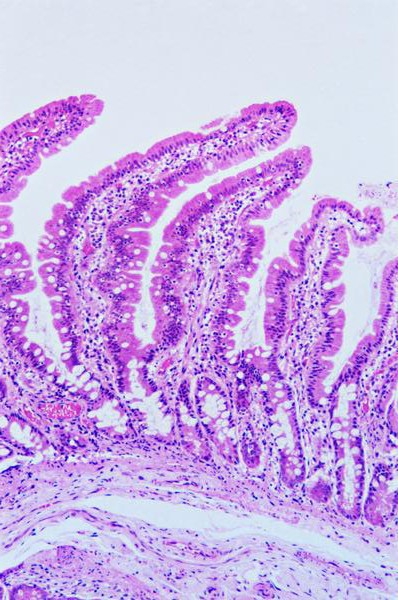
Intestines

Your intestines. Nice work!

Sound overly dramatic, that last part? It’s not. What do you know of the trillions of intricately orchestrated processes of mitosis, osmosis, and diffusion keeping you alive right now? How is it that you can eat a crappy breakfast scone and turn it into thought and laughter and you running across the street or picking up a toddler? How do you do this stuff?

“Oh, that’s not god!” reason shrugs. “It’s just nature. Shit happens. The earth has life and it evolved into complex organisms and, you know, it’s science!”

I dare your skeptic to really contemplate this description of photosynthesis*, the molecular process by which plants transform SUNLIGHT into SUGAR, providing the bedrock upon which all of earth’s menagerie is built. See how far you get before you sigh and say: “Dude! That’s a shitload of science. I’m just glad it happens!”

Screen Shot 2015-11-10 at 10.40.47 AM

Admit it. We know next to nothing.  Each of us is a drooling infant riding a 787 across the Pacific Ocean, grasping nothing of how the plane works or was made, aware only that our basic needs are met. We exist by trust alone, despite whatever stories we propagate about how we engineer our lives. Bullshit. Perhaps for a brief moment, we can acknowledge what bullshit it is.  We can see that god lives us.  But we soon direct our attention elsewhere, sighing, “Well, that’s enough of that!”

Our spiritual practice today can be to continually give up a little more pretense of control, as in Aaron’s meditation, but all day every day.  We can allow in a little more the fact that god and life are one.

Loss is damn painful, for you as for me. Pain urges us to retreat into depression, nursing our wounds in solitude while mindlessly munching glazed donut holes. And addiction is right there, cheering for that plan as the grieving we deserve – because, while that track may be fine for normies, for an alcoholic prone to depression, like me, the next stop is relapse.

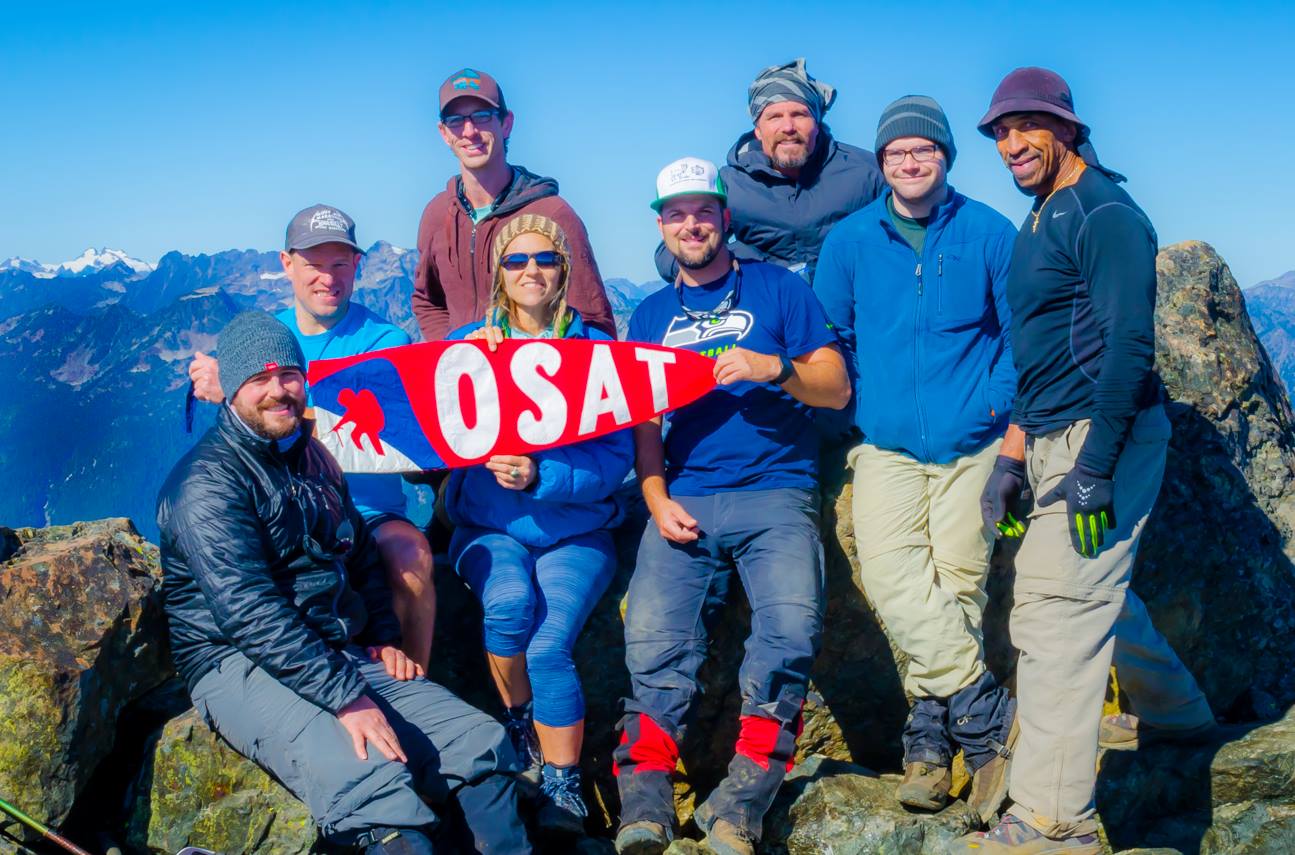
That’s why I’m doing the opposite. Here’s what my grieving looks like: I’m climbing too many mountains, going on too many dates, showing up to feed the homeless, speaking at meetings, starting new projects, and buying two baby chicks in the bleak darkness of November. Pain gets dragged along for the ride, like it or not. I entreat god continually for the courage to pursue whatever feels like growth – even if it’s scary – and then I simply blunder ahead, sometimes clumsily, maybe knocking over a vase or two along the way.

“Screwing up is part of being human – part of how we steer the course of who we do and don’t want to be.” Who wrote that? Yours truly at the close of “Being Right versus Just Being.” (Sometimes I teach myself!)  The point its, we don’t have to do this thing perfectly.

A woman emerging from the darkness of her cave doesn’t know which way to head. Trust is walking anyway. It’s striving to be our best, to love god and others, and to live at peace with knowing nothing.

Beneath all this tumult, god is transforming me into a wiser, stronger woman. In that I trust.

.

Brothers summit

scroll

.

* http://science.nsta.org/enewsletter/2007-05/sc0704_60.pdf
(Sorry, Facebook insists on posting the stupid picture of the photosynthesis text.  I can’t change it.  😦  Try copy and pasting the url instead, and choosing no preview.)

5 Comments

Filed under AA, Alcoholism, Codependency, Recovery, Sobriety, Spirituality

The Alcoholic’s Power of Choice

“The fact is that most alcoholics, for reasons yet obscure, have lost the power of choice in drink.”

Alcoholic Anonymous, p. 24

Alcoholics cannot choose to not drink.  We lack the power to decide whether or how much alcohol we’ll consume.  If we had that power, we wouldn’t be alcoholics.  We’d just be people who drink too much.

liverIf that’s all there were to it, once we recognized drinking was destroying our love, life, and liver, instead of experiencing  “a complete failure of the kind of defense that keeps one from putting his hand on a hot stove,” we’d yank back our blistered, half-cooked hands and just stop drinking.  We certainly wouldn’t need a program of recovery or a spiritual connection to do so, and I wouldn’t need to write this blog.

Given our powerlessness, then, it really  makes no sense to say, “I’m an alcoholic and I choose not to drink today” – though we often hear that very  line spoken in meetings.  Some saying this may be clueless about their condition.  But others may be using shorthand for the power of choice we alcoholics do retain.  As alcoholics we have one daily, hourly, by-the-minute choice that can make or break our sobriety, and this is what it looks like: we can work toward the solution, or we can regress toward the problem.

Tiny TimWhat’s the problem, again?  We’re maladjusted to life.  Drinking was our old solution. Take it away via abstinence, and we’re up shit creek without a paddle.  Undeveloped emotionally, we’re Tiny Tim with his crutch cruelly kicked away.  We still have to cope with and navigate everything that overwhelmed us before, but now try to do so exposed and unarmed.

So the choices we make in sobriety are really about how to render the real world comfortable, livable, and even a joy – by staying in touch with a higher power.  We choose thousands of times every day, not only in our actions but in how we elect to perceive – and every choice will fall into one of those two categories: toward the solution or toward the problem.  Which wolf do you feed?

When newcomers ask me, sometimes desperately, what’s going fill that empty chasm in their gut, what’s ever going to take the place of alcohol and drugs, the solution is hard to verbalize because it resembles a sense they don’t have yet, or a feeling they haven’t experienced since they were little kids.  The solution is LOVE, for everything and everyone – and the unshakable conviction that love is everything.  Mind you, when I heard that kind of stuff in early sobriety, I felt like, “What the fuck good is that?!  I heard that crap in a Beatles song a long time ago and it doesn’t do anything!  I need help NOW!”

Don Miguel Ruiz offers this gem of a prayer at the close of The Four Agreements:

Today, Creator of the Universe, …help us to be like you are, to love life, to be life, to be love.  Help us to love the way you love, with no conditions….  Help us to love and accept ourselves without any judgement, because when we judge ourselves, we find ourselves guilty and we need to be punished.

That’s the destination: freedom to love ourselves and others.  The steps are a means of getting there – sometimes quickly, sometimes slowly.  Everything we think we know from the past holds us back.  When the fabric of our existence is shot through with fear, we can love only a select few and only on the condition that they be on “our side.”  Ironically, the same guards we’ve built up to protect us from a threatening world constitute the source of our deepest pain, because they also cut us off from god’s love – love that can flow through us and invigorate our souls as we pass it on to others.

Do you know what hell is?  Hell is being cut off from god, from love, from the energy that orchestrates our internal body and connects us to all that lives.  A life of fear and resentment enshrouds us in a thick, impenetrable cell that will not admit the light of god.  We can be busy knowing what’s right and who’s wrong, we can be fighting for ourselves and resenting everyone who gets in our way, we can chase whatever seems to grant us power – and all of it will lead to loneliness and despair!  And if we die with those guards up, we’ll experience hell in the hereafter – unless love cuts through our shell and frees us to seek the light.  (Or at least, so report my fellow Near-Death survivors who did go to hell.)

.

Sunlight of the spirit.

The 12 steps chip away at those countless false beliefs that made our shells seem necessary in the first place.  We replace our old axioms with new, transparent ones – that whenever we’re upset, it’s because there is something wrong with us; that acceptance grants us the freedom to live and let live; that we need to know where we end and others begin; and that, when necessary, detaching with love is our responsibility.

I can’t choose not to drink.  But I can choose to do what’s necessary to connect with a god who, one day at a time, graces me with sobriety.  I can PRAY for strength and guidance.  I can PRACTICE the self-care that nurtures me.  I can PAUSE whenever I sense I’m headed down a wrong path – toward resentment, self-pity, or irresponsibility.  I can ACT by walking out the door to a meeting I don’t think I need, where I do service I don’t admit is important, or pick up sponsees I don’t have time for.  I can feel GRATITUDE for a beautiful life I threw away countless times in my drinking.  I can OFFER kindness, encouragement, and help to those in need – i.e. everyone.  And, most important, I can choose to LOVE whatever life brings me, moment by moment by moment.

It’s not about just not drinking anymore.  These choices, I find, bring me heaven on earth.

 .

scroll

.

Post to Facebook

6 Comments

Filed under Alcoholism, Faith, God, Recovery, Sobriety, Spirituality, Twelve Steps

Acceptance

And acceptance is the answer to all my problems today. When I am disturbed, it is because I find some person, place, thing, or situation – some fact of my life – unacceptable to me, and I can find no serenity until I accept that person, place, thing, or situation as being exactly the way it is supposed to be at this moment… Until I could accept my alcoholism, I could not stay sober; unless I accept life completely on life’s terms, I cannot be happy. I need to concentrate not so much on what needs to be changed in the world as on what needs to be changed in me and my attitudes.

                                                                                                                  -Paul O.                                                                                             “Doctor, Alcoholic, Addict”

Acceptance was the topic at my homegroup last night, and I’ve been thinking about it since.  The only sane response to life, acceptance is also the arch-nemesis of ego, which much prefers its minions – denial, control, and resentment.  Ego says, “What is shouldn’t be!”  Acceptance says, “What is, is.  Now what?”

Acceptance Oops!is closely tied to humility and surrender. Our faith in a higher power lets us surrender to the workings of a universe beyond our comprehension, or to the irrevocable fact that we just stepped in dog shit.  Life brings a lot of what we don’t want, and we’re often powerless over it: the dinosaurs didn’t screw up in any way; neither do victims of disaster and disease.  Other times, we do play a part. Maybe we were too busy daydreaming to watch where we stepped.  Either way, acceptance means being honest with ourselves about what transpires or exists, whether we like it or not.

Last night a young newcomer shared that the hardest things for her to accept had been that A) she was alcoholic and B) that abstinence was, according to the medical community, the sole way to arrest her disease.  Her voice, still ringing with that forlorn loss of her best friend and coping tool, reminded me of the savage fight I’d put up years ago against those same facts.  Real alcoholics did X and Y, and I didn’t – so I wasn’t.

But awareness of the truth grows ever so slowly in our bones, no matter what skeletonrationalizations our brains light up as the neon truth of the day.  Layer by layer, truth gathers substance beneath our superficial mind babble until it grows too prominent for us to stuff into the strongbox of denial any longer.  For years I’d been a maybe alcoholic or even a sure but who gives a fuck? alcoholic. Yet there came a day, a minute, a second – yes – when I acknowledged reality: addiction ran my life, and I didn’t know how to live otherwise.

So it goes, to an extent, with every acceptance.  The process can take years or seconds.  In 1998, driving down a familiar street that passes under a highway, my partner and I encountered a handful of pedestrians mulling in the middle of the road with no inclination to step out of our way.  When I looked where they were looking, I saw a Metro bus in an odd place – the rockery of an apartment building – with its middle accordion bent at a sharp angle.  Dust hung thick.  Piles of what looked like dirty laundry littered the grass nearby.  I took in all the pieces, but they made no sense to me until, like a bowling ball rolling down the alley of my mind, the thought struck: look up.

When I craned my neck to peer up at the highway fifty feet above, I saw… open air where the guardrail should be and something hanging by its wires – an inverted lamppost.  Those little piles of laundry were bleeding, suffering human beings flung where they lay.  I still remember the fight my mind put up: This can’t have happened, can’t be true!  It was not unlike the silent fight I waged when my boss told me the best job I’d ever had had just been cut; or after I picked up my cell phone and was told I had cancer; or when I looked at my boyfriend’s texts and learned he’d been seeing a girl from work for years.  The mind whirls, searching for outs.  But denial, in big cases like those, is like a frantic little terrier scratching at a closed steel door.  The weight of the facts precludes wrangling.  Shit. has. happened.

Thank god I have a place where I can speak of my loss, my fears, my broken heart and be heard and hugged by friends or even strangers with full hearts – people who carry the message of god: everything’s gonna be okay.

In daily life, what’s denied may be less dramatic, yet we go through the same process of looking for outs and telling preferred stories about what’s going on.  This bill is so stupid I don’t need to pay it.  It’s not gossip if I only tell one person.  I waste a little time on Facebook.  My shit’s so together now, so I don’t need meetings.  It’s not my fault.  I never promised.  Just one won’t hurt.  The list goes on.  Because if there’s no undeniable steel door, that little denial terrier is likely to scamper down a happier avenue, a story we make up to avoid whatever truth we’d rather not accept.  All the red flags of non-reality we take for roses along our hallucinated garden path.

garden path

As Don Miguel Ruiz puts it:

We only see what we want to see… We have the habit of dreaming with no basis in reality… Because we don’t understand something, we make an assumption about the meaning, and when the truth comes out, the bubble of our dream pops and we find out it was not what we thought at all.

Life strikes me as a series of popping bubbles. After I’d accepted my alcoholism, I had to accept the need to let god change me via the steps.  Next, I had to accept my character defects – all my selfish fears and judgments.  And if that wasn’t bad enough, I somehow ended up in Al-Anon where I became aware of my codependent people-pleasing.  I also learned the Three A’s of Al-Anon: Awareness, Acceptance, & Action.  With annoying pithiness, these three words sum up the entire process of emotional and spiritual growth.  I have to recognize a problem before I can accept it; only then can I ask, “so, what now?” and begin to change.

Acceptance most certainly does not mean giving up.  I accept getting old.  But having accepted my arthritic left foot, messed up meniscus, radiation-scorched lung, and the general creakiness of life in my 50s does ballet shoesnot stop me from killin’ it in advanced ballet class.  An extra half-hour warm-up, trimmed Dr. Scholl’s pads, pre-class ibuprofen, and all the weird stretches I’ve invented – these are the changes I’ve made, along with knowing those first fifteen minutes are gonna hurt.  But after that,  I’m 26 again – all music and technique – and grateful, so grateful!  I take the same approach with every obstacle life throws at me.  I accept the unpalatable truth: Dammit – this is how it is!  Then I ask what tools, what changes, what creativity can I use to make the best of this?  The answers always come if I’m honest, open-minded, and willing.

scroll

.

Post to Facebook

8 Comments

Filed under Al-Anon, Alcoholism, Codependency, living sober, Recovery, Sobriety, Spirituality

Prescribed Relapse

Doctor with Stethoscope“I’m happy to tell you the surgery went quite well, so you’re going to be on the mend!  Obviously, you’re going to have some pain from this, so what I’ll just do is ruin your life, happiness, and relationships by giving you an opiate.  Sound good?  So… you’ll start off taking it according to these directions I’m jotting until, of course, your brain’s addictive wiring trumps your reason – haha, just like the old days! – and you find yourself helplessly abusing it.  Eventually, I’d like to see you transition to your drug of choice.  When you do that is up to you, but within a couple months, you should find yourself back in full-on relapse.  Okay?  Does that sound good?  I’ll just call it in now.”

If only doctors actually said this, we alcoholic-addicts might have a better chance of protecting our sobriety from the pain management substances that work fine for normies (i.e. non-addictive people).  The trouble is that, even today, the vast majority of doctors don’t get recovery.  They see before them a reasonable and sane person who, they assume, will self-administer a prescribed drug reasonably and sanely.

What they don’t get is that we’re different. Our brains are forever like a duplex we share with an insatiable lunatic who is temporarily napping.  Rap on its door with an opiate and – no matter how intently we self-manage the dosage – once that beast wakes up, all bets are off.  It’ll rage, it’ll bust shit up, it’ll burn the whole damn house down, motherfucker.  Because that beast has a hold on us more powerful than anything that well-meaning doctor can possibly imagine.

It’s more powerful than reason, than resolve, than all things human.  It’s run our lives before, and it’s psyched to do it again.

I remember the first time I raised my voice at a vicodin2medical authority – my very kind dentist, a British woman – when I was about four years sober.  She’d just extracted one of my molars, and I’d just declined pain meds.  I remember the room we were in when she insisted, because it seemed to shrink and turn more yellow and seal off every doorway connecting me to AA.  I could feel the excitement rise in my chest: Meds!  Something GOOD!  There was hope!  Something really delightful perched just on the horizon!  Sure, I’d take ’em sensibly!  Of course!

…And I can’t say where it came from, but that small counter-voice, that love for the gift of sobriety and all the goodness it nurtured in my life – that sprang up in me, too.  They fought.  So by the time the words came out my mouth, sloppy from novocain, they were way too loud, too urgent, and too emotional.

“No!  I told you, I’m an alcoholic!”

“Yes, I know.  But this is a very safe drug – Vicodin.  You’ll be fine.”

“No, I won’t!  I’m sober and I want to stay that way!”

I remember the look of distaste on her face, that this normally calm and socially appropriate patient was going off on her.  She tried again, emphasizing the small dosage, but by that point tears spilled from my eyes and I had just one tremulous, throaty word for her: Ibuprofen.  Ibuprofen.  I’ll take ibuprofen…

And I did.  End of anecdote.

I’m not blaming doctors.  They’re rational; it’s we who make no sense!  That’s why the onus is on us to keep out of our lives what docs assure us is safe.   They don’t get Obit Hoffmanthe “curious mental blank spot.”  They haven’t heard the heart-rending shares of misery, helplessness, and loss sometimes dragging on for years – all triggered by a sensible prescription.   I have a huge number of friends in recovery.  And in contrast to the one alcoholic I know who successfully manages back pain with meds her partner doles out*, I know at least a dozen who have relapsed catastrophically – not counting those who have died.

I was messaging with one of them yesterday, my friend Rob.  He’s a wonderful guy traveling the country, working odd jobs, and struggling to stay off heroin for more than a few months at a time.  But failing.  He had a week.  Here’s what he messaged:

Yah know, if I’d of known what I would become after a few Vicodin, I’d a shoved them up my doctor’s ass!!  I was never into opiates as a kid. But eight years into sobriety I hurt myself really really bad, and I guess I needed them. But in hindsight, if I had a choice between acute pain and becoming a heroin addict, I would have probably chose the pain. But whatever.  It’s done.  It’s over, right?” 

Maybe.  Maybe not.**

When we want to drink or use, only god can help us. But when someone else tells us it’s not a problem, we can use our brains.  Remember: the doctor is going to offer you prescripsomething so legitimate, so routine, so neat!  The prospect of those little pills fucking up your life will seem so overly dramatic!  What I do is this: I picture a set of balance scales with two big pans.  On one side I put the prospect of perturbing my doctor, making a stink, sounding like an uncooperative bitch, no one getting it, and, quite likely, some physical pain.  On the other side I put every blessing I’ve won back sober, every person I love, every friend who needs me, my self-respect, my inner dignity, my body’s health, my spirit’s channel to god – and every beauty and joy of this life.

Then I bite my tongue to keep from saying, “Don’t you dare fuck with my sobriety!”  But it’s right there – that sense of defending what I love.

If your pain is such that you’ve absolutely got to take some meds, agree to a prescription of five pills.  Maybe eight.  Then call someone for each goddam pill you take and say, “It is 4:00, and I am taking a percocet now.”  Draw up a chart to keep exact track of what time you dosed, whom you called, and whom you’re calling next.  Stay in touch with your sponsor.  And as soon as you can, switch to ibuprofen and get the pills out of your house.  Do nothing alone because – remember – you’re not really alone: there’s that slumbering beast in the duplex, and you’re making a racket.

I recall the sadness I felt post-surgery many years ago, flushing the three remaining Vicodin I’d been given.  The magic was gone.  Now there was just me… and my stupid old life.  It took about five minutes for gratitude to return: the vial was empty, but my future was full.  I was sober.

scroll

*UPDATE: She relapsed after a year – knew where the pills were. After about a year of wallowing in opioid chaos, she’s clean again.

**UPDATE: Rob died of overdose less than a year later.

Post to Facebook

15 Comments

Filed under AA, Alcoholism, Drinking, living sober, Pain Medication, Pill addiction, Recovery, Sobriety