Category Archives: living sober

Change the World: Courage, Candor, Kindness

We can’t control the people or events in our lives, but we can ask god to help us change the ways we react to them.  When we respond from a place of judgment, knowing best, and general superiority, we usually have no idea we’re doing so.  I certainly don’t.  It just seems to me I’m right!

One contrary event or difficult person is no big deal, but if I live daily from this vantage point of superior insight and right-of-way, pretty soon I’m going to feel like the world’s turned against me.  But guess what?  It’s really I who’ve turned against the world.  I’m butting my head into mountain cliffs that need to fucking move, swimming up Niagara which is hella stressful, “burning up energy foolishly… trying to arrange life to suit [myself].”

God grants me the power to change this entire landscape by accepting the things I cannot change.  Not tolerating them with rolled eyes, not putting up with the stupidity of it all, but accepting that things are the way they are so I can respond constructively.  The attitude I need to live this way comes as a reward of working the 12 steps: humility.

The Ultimate Selfishness Test: Driving in the City
When we drive cars, we mechanically take on the very “self-propulsion” described in the Big Book’s preamble to Step 3, so the temptation to assume Director status becomes huge.  All the other drivers are pawns, and we’re rightfully a queen – or at least a bishop!  We gots places to go and these others are obstacles, obstructions, assholes.
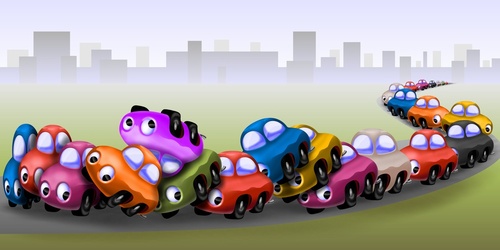
I once attended a stadium concert with a young woman who shares beautifully in AA meetings and seeks god daily.  I treated and she drove.  After the show, when we finally emerged from the parking lot, the line of cars to the freeway extended in front of us maybe a mile – an endless chain of tail lights.  To my surprise, my friend veered into the empty oncoming lane where she zoomed on and on past everyone.  I didn’t know what to say or do, but I felt tremendous relief when, at the freeway overpass, we encountered a traffic cop.  Instead of letting us turn, he made us pull over and wait.  Ten minutes of watching the line go by.  Twenty minutes.  Thirty minutes.  My friend was beside herself with the cop’s “unfairness.”  Finally, when all the cars had gone, the cop chirped his whistle and signaled us to go.

All selfishness stems from spiritual myopia.  If my friend could meet the people from those cars individually, if a dimension were to open in which she could converse with each, see photos of their ancestors and childhood, hear the tragedies and delights that have shaped their experience, no way would she have acted as she did.  But her driving “dimension” was just as unreal.  Normally a kind person, she could see only her own importance, her own “right of way.”

Driving simply underscores the fact that we all live selfishly.  To an extent, we have to.  We’re each in charge of caring for ourselves, providing for our own needs so we can prosper – a responsibility that often feels overwhelming.  But that’s our lower purpose.  We also have a higher one.

For me, the analogy of cells in a body works well.  Each cell is a distinct entity.  It’s busy absorbing nutrients, sending off waste, sensing everything going on around it, and doing all the work of them four stages of mitosis (which, I learned when I underwent radiation for cancer, requires fancy footwork).
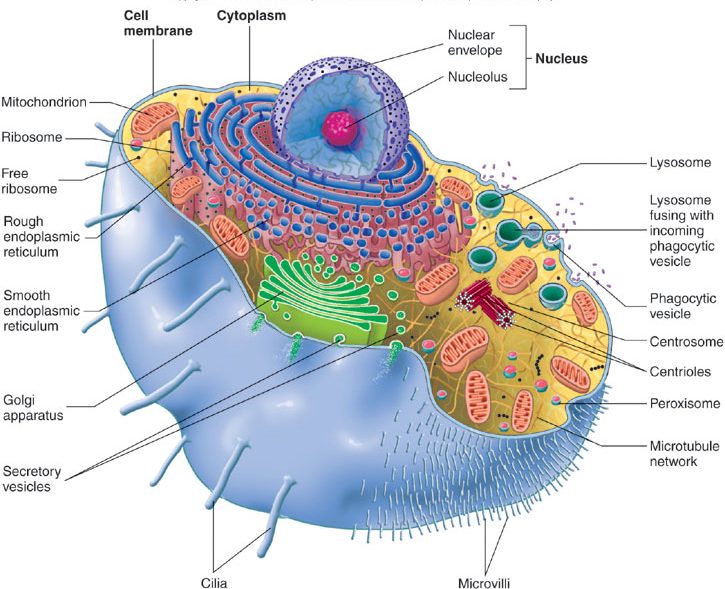
“I got shit to do before I can divide, man!” a cell might say.  “I got hundreds of mitochondria to manage here, not to mention this long-ass chain of chromosomes to tidy up!  Gimme a break!”  Yet it’s only because each cell serves a higher purpose, doing its tiny, insignificant part among trillions, that I’m able to write this and you’re able to read it.

We all have shit to do – lots of it – to keep our lives going.  But we also have a higher purpose – a collaborative one – “to be of maximum service to God and the people about us.”  Each of us with our tiny role to play animates humanity, and thus the world.

A little bit of god: Courage, Candor, Kindness
In every interaction, we can choose to contribute or withhold love from the world as a whole.  Every time we hit that crossroad where we might utter words of kindness, and we muster the courage and candor to speak them, we introduce into the cosmos a tiny surge of god-energy.  It takes effort sometimes.  “You did that beautifully!” might sound dumb.  We have to overcome self-consciousness and the dark suspicion that we’re just buttering people up.

I see it as my higher job to maximize goodwill around me.  Politically, that means resisting the designs of those who advocate greed and phobia. On a day-to-day scale, it means seeking to leave each person a little better off than I found them.  True, I can’t let others walk all over me because I need to care for myself enough to be able to show up in this role.  But that’s my means, not my end.  Every act of kindness is a positive.  A tiny positive, but positive nonetheless.

When I live this way (even when I’m driving!) I feel uplifted.  I’m happy.  I carry a glowing sun in my heart that I can, I swear, physically feel more with each year of practice.  And I can also sense when it’s eclipsed by selfish fear: I feel lonely, self-pitying, and overwhelmed.  In essence, I’m dying.  A cell cut off from the energy of its sisters will die – no way around it.  Or in my case, it just might reach for a drink.

PS: My son’s Mothers Day gift to me:
Japanese kanji for mind-heart-logic meaning
“to think with consideration for others”

.

1 Comment

Filed under Faith, Happiness, living sober, Recovery, Sobriety, Spirituality

The Disease We Forget We Have

Late to a Seattle AA meeting 12 years ago, I was just backing into a parallel parking space when another driver zipped forward into the spot. I rolled back to make eye contact with the driver, whose stony stare flung back a challenge: “Are you really gonna make a stink about this? Cause it’ll get you nowhere.”  But then we recognized each other!  He was my friend from meetings! Grinning with contrition, he signaled that I could have the space.  I waved back “no big deal” and drove off – though for years I gave him shit about it.

My friend was still toxic – only about a year sober after three decades of relying on booze, pot, and crack to limp through a dark and confused life. Just beneath his jovial exterior he carried a huge chip on his shoulder, a certainty that everyone and everything had fucked him over so badly he’d never be okay.  That parking space was owed to him despite some rival bitch about to score it.

Over the years that followed, though, my friend underwent what I can only describe as a spiritual transformation.  AA became his home and family as he attended meetings almost daily.  When he finished the steps himself, he began to sponsor new guys, reading the Big Book with them and learning what it felt like to truly want good things for someone else.  His heart grew.  He became a man of great empathy and compassion.

And somehow through that process, he developed empathy for himself, an acceptance of his trying past, including all the suffering that had forced him to change and grow.  The chip on his shoulder melted away.  His shares in meetings emanated that elusive calm that evolves only from gratitude and humility.  When he spoke, people listened.
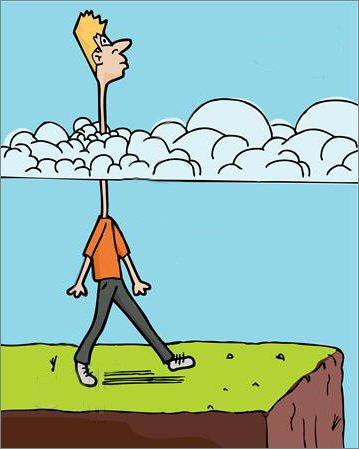

Finally, as a result of all that he had become in recovery, he quit recovery entirely and became desperate and miserable again.

Wait — what did I just say?  Why would someone do that?  Don’t we all know alcoholism is a lifelong affliction?  Doesn’t the Big Book plainly warn us not to ever let up on our spiritual program?

We are headed for trouble if we do, for alcohol is a subtle foe.  We are not cured of alcoholism. What we really have is a daily reprieve contingent on the maintenance of our spiritual condition.  (p.85)

My friend is far from alone in his abandonment of recovery.  Many of us get a good job, meet a good partner, buy a house, maybe pop out a kid or two, and expect to live happily ever after – without AA.  Some manage to, because they’ve found an alternate spiritual community: a congregation, sangha, even volunteer group.  A few die.  But the majority end up in either a tense, anxious day-to-day hell of frustrated ego, or a full-on relapse that promises relief but takes their job, house, family, dignity, happiness, and mental health instead.

So why do people like my friend, granted a beautiful life in AA, turn their backs on the simple regimen of meetings and service that saved them?

I’ll tell you why: we forget it was god who saved our lame, toxic, beat-to-shit asses.  We decide that, really, we did it!  Seriously – we just made a lot of bad choices back then, so amid the turbulence of all that wreckage, it seemed like the light of sanity came from god.  But now that we’re “winning” at life, we can see the change really came from our own smarty-pants-ness.  That’s right: we wised up, grew up, and climbed up.  And now that life has gotten so full and busy, who has time to waste on meetings and sponsees or prayer & meditation and all that 12-step shit?

That’s exactly what happened to my friend of the stolen parking space, who met me for coffee a few weeks ago.  But an unforeseen blow had upended his prosperity, so now he had this and that problem, but even worse, this other thing was about to happen, and then he’d really be in trouble!  He was physically sick, his face was broken out, and I noticed his hands shaking.

I spoke up: “You need to go to meetings.”  He responded as if I’d just suggested he take up embroidery, but, well aware I was an embroidery fanatic, he’d prepared a strong retort.  He cited reason after reason that AA meetings could do nothing for him, even if he had time to get to them.

“Do you remember,” I interrupted, “when you first came to meetings and you could NOT STOP drinking, and you asked god to help you?”  He held my eyes a few seconds with a distaste remarkably similar to that parking space stare of bitter defiance.  “Vaguely,” he mumbled.

Nothing I could say seemed to get through:  “You can’t find answers through isolation.  God works through people.  We need to be connected.  Answers come when you ask.”  I practically begged him to find a moment alone to offer the simple prayer, God, please help me.  He all but winced at my triteness, promised nothing, and left.

So.  Imagine my joy when a couple days ago that friend blew into my homegroup accompanied by two of his best AA buddies and took a seat at my table.  We cracked jokes til the meeting started.  A ways in, I caught the chair’s eye and signaled, so he called on “the gentleman sitting next to Louisa.”  And do you know what my friend shared?  That for years he’d kept relapsing because he refused to admit he was powerless over drugs and alcohol, and today he was just as stubborn about refusing to admit he was powerless over life. “The truth is, I need to be here,” he said, looking around the room.  “I need you guys.”

For me, god is everywhere — in my home, in the wilderness, in every connection I make with another living creature.  But so is my big fat ego, which wants to Edge God Out.  I need meetings, now and forever, to remind me I’m still an alcoholic who, left to my own devices, will still try to fill that perennial empty spot with the wrong things.  Because you wake me up to the divine unity that heals me, I will always need you guys.

3 Comments

Filed under AA, Alcoholism, God, living sober, Meetings, Recovery, Sobriety, Step 1

Seasons of Sobriety

Sobriety isn’t a task or a diet – it’s a way of life.  And like life, it excited-fanhas its ups and downs, riches and ruins.  The quality of our sobriety varies with our connectedness to god and our fellows, depending on the rigor with which we cultivate both.  Many of us long to be gung-ho about sobriety all the time – and we can be!  It’s just that what gung-ho looks like is going to change over time, which is why I like the analogy of seasons in sobriety.

Among my AA speaker recordings, I particularly love one by Don C., a Native American from Colorado Springs sober since August 10, 1978.  Don describes the horrific beating his alcoholism inflicted, distrust at his first AA meeting, a sponsor who made him read and annotate each Big Book chapter 25 times, and the freedom he accessed (there’s a silence while he fights back tears) by working the 12 steps.  His entire life and outlook changed.  So why, early in his fourth year sober, did he suddenly find himself miserable?

He says:

“I was about three years and two months sober and everything was going to hell. Meetings got stupid; my sponsor was having stupid attacks; the Big Book sucked…  I thought I was going crazy. So I went up to see Johnny Looking Cloud… He was a Native Elder that was in recovery. …He said, ‘You’re thinking this is a white man’s program – and it’s not.  This is the Indian way, also… The steps are 12 gentle ways to bring you back to the original teachings. And when you’re done, you’ll be in harmony… the way it was for your ancestors.’”

Johnny Looking Cloud explains to Don, firstly, that the steps align with the Native teaching of the Four Directions.  Steps 1, 2, and 3 align with the east, direction of the new sun, where we find our relationship with the Creator.  Steps 4, 5, and 6 align with the south, the high sun, where we find our relationship with ourselves.  Steps 7, 8, and 9  align with the west, the setting sun and direction of letting go, where we make amends to heal our relationships with others.  To the north, like the North Star, lie 10, 11, and 12, steps that align with the elders’ teachings to deepen our wisdom.

Secondly, he explains that just as all living things proceed through cycles, so do we in sobriety.  The first year is our spring, when our sap begins to flow and we form buds of potential.  In the summer of our second year, our leaves mature and we bloom – living vigorously in sobriety.  By the autumn of our third year, we’re harvesting sobriety’s fruits – stability, material gain, relationships.  But then along comes that fourth year: winter.  Our leaves wither and drop; the light weakens; sobriety seems barren and empty, as if everything were falling apart – just as Don C. experienced.  But in truth, the slate is only being cleared for a new level of sobriety – a fresh spring.

four-seasons-22

My own seasons haven’t conformed to a four-year pattern, but I’ve definitely experienced that cycle many times in my 21 years’ sobriety.  In my springtimes, I get to see something new, some truth of living or character defect I’d never recognized before, that changes me forever.  My golden summers and autumns extend sometimes for years.

But winter does arrive.  And it sucks.  My sobriety feels ~meh! ~  I can’t recapture my enthusiasm for meetings, stepwork, or service.  Even so, I’ve schlepped through many such winters to reach new springs.  How does that happen… or not happen?

All of us, consciously or not, seek god/goodness/love in our lives.  All of us carry burdens of fear, pain, and loss.  The interrelationship between these two parts, I’ve found, comprises the melody of my life.  The seasons of a heavy and aching soul complement those of lightness and a free spirit.

My feelings really don’t have much to do with god, I don’t think.  Emotions are part of me, rooted in my body and brain – my separateness from god.  Rather, the godly part of me manifests only in my immediate awareness – my ability to see with love in the present instant.

During my summery months, my god-awareness acts like a beam of light, one I can turn on my own emotions – fears and sadness or childish excitement.  I can make friends with whatever nonsensical feelings insist on tagging along with me.  And when I’m good with my own emotions, it’s easy to extend love and compassion to others.

But when sobriety’s winter comes around, the beam wanes so I can’t tell what the hell’s going on.  Emotions victimize me.  I suffer.  I isolate.  I envy.  I doubt life will ever be good again.  gollumIt’s at this point that I’m most vulnerable to the wheedling voice of alcoholism.  It promises me drinking would fix everything.  It points out that other people drink with impunity, claims my life would be more fun if I joined them.  It paints a sweeping mural of a happier me with booze at its center.

For me, thank god (literally), this voice stays puny – I can swat it away like a pesky fly.  But for relapsing friends of mine, it begins to sound credible.  “Take charge of your life!” it urges them.  Humility starts to look like timidity; gratitude like settling; forgiveness like self-debasement.  Before they know it, a grandiose ego has upstaged god and they’re gonna to fix themselves with a drink – and do it right this time!

I wish I could offer a ticket to instant spring.  But there isn’t one.  There’s only acceptance:

doveThis, too, shall pass.  Every alcoholic with long term sobriety has taken refuge in this motto.  When recovery feels like drudgery, we still pursue it as best we can – going to meetings, calling sponsors, being of service.  Maybe we seek out Johnny Looking Cloud, or our own equivalent, and ask for help.  In some ways, those words represent the deepest form of faith.  They capture the willingness to have no idea how things will turn out, yet trust god enough to hang on through the darkness, believing spring will come again.

scroll

.

PS:  Listen to Don C. here.  This isn’t the same talk I have on my 2011 Bellevue CD, but close.

Post to Facebook.

.

.

11 Comments

Filed under AA, Addiction, Alcoholism, Faith, living sober, Recovery, Sobriety

The Power of Powerlessness

About a year ago, I used to frequently pass a billboard claiming thousands of “stubborn” men who avoided seeing a doctor would die that year.  This photo isn’t from my street, but our local billboard met with the same (funny) response:

Stubbornness


While I don’t know about the billboard’s claim, I do know when it comes to stubborn alcoholics, even more will NOT seek out a program of recovery this year, which is why in the U.S. alone 2.5 million years of potential life will be lost, shortening by an average of 30 years the lives of those 88,000 who’ll die.*  Instead, despite an inner knowledge that they’re addicted to alcohol, millions will (yet again) marshal their willpower to decide not to drink so much.  Never mind how many times such resolutions have failed!  Never mind that they and everyone they live with can recognize night after night that they’re drunk as usual!  They’ll simply refuse to accept the fact that they’re powerless over alcohol.

The Big Book tells us, “The idea that somehow, someday he will control and enjoy his drinking is the great obsession of every abnormal drinker.  The persistence of this illusion is astonishing.  Many pursue it to the gates of insanity or death.”**  But even more simply resign themselves to permitting the self-disgust, degradation, and pathetic caricature of chronic drunkenness to taint their inmost conscience and closest relationships for the rest of their lives.

Why?  Because they believe so ardently in the preeminence of their own minds!  They insist their brains have the power to enact choices of free will that, research increasingly indicates, they simply do not have.  For an addict, Emersonian self-reliance means, in fact, an imprisoning cycle rather than freedom of choice.

Gabor Maté, in his book on addiction, In the Realm of Hungry Ghosts, explains our predicament as follows:

We may say, then, that in the world of the psyche, freedom is a relative concept: the power to choose exists only when our automatic mental mechanisms are subject to those brain systems that are able to maintain conscious awareness…

Electrical studies of brain function show that… the interval between awareness of the impulse and the activation of the… impulse is only one-tenth to one-fifth of a second.  Amazingly, it’s only in this briefest of intervals that the [cerebral] cortex can suppress behavior it judges to be inappropriate. …[But] in the split second before the impulse emerges into awareness… the brain carries out what is called preattentive analysis… the unconscious evaluation of what [is]…essential or irrelevant, valuable or worthless.  The cortex is primed to select actions that will achieve [these] goals…

“Those habit structures are so incredibly robust, and once they form in the nervous system, they will guide behavior without free choice.”***

In other words, before we even know we’ve thought of having a drink, the brain has cleared the impulse.  The cortex may occasionally summon a “but wait!’ counter-insurgence, but more often the drink idea advances to GO and collects $200.  Maté calls this condition “brain lock.”  AA calls it the “curious mental blank spot.”  In either case, with an internal sigh of “oh well!” we take the drink (just this one time) and tell ourselves we decided to.Broken Brain

Our brains are broken.  They cannot be fixed.

 ~

I knew none of this when I came to AA wanting to die.  When I first heard the statement, “I can’t fix my broken brain with my broken brain,” so much became clear to me!  For one thing, I understood why I’d fought tooth and nail against “surrendering” to AA.  Who wants to admit she can’t trust her own brain?  No one.

The ego lays claim to omniscience, at least within ourselves: I know all about me.  My thoughts are accurate.  To admit a glitch in my thinking has rendered me unable to choose, unable to correct myself, unable even to see what I’m doing while I’m doing it – this goes against all instinct.  It’s on par with admitting mental illness or, as Step 2 forces us to swallow, insanity.

Yet a deeper part of me – my soul –  heard the resounding truth of that phrase.  I realized I had no answers, and that AA, no matter how foreign, offered one.

So I gave up.Step1

I admitted I was powerless.

And do you know what happened?  Miracles!

First, I quit drinking.  Second, I began to see I was maladapted to living, that I’d never developed the skills and insight to “manage” life’s choices.  Third,  I discovered it wasn’t too late to learn.

The remaining 11 steps reconnected me to the god of goodness I’d known in earliest childhood – to the nurturing powers of Love and divine wisdom.  To maintain contact with them, all I had to do was adopt the 12 steps as a way of life.

At first, mind you, that idea repulsed me, too.

Who wishes to be rigorously honest and tolerant?  Who wants to confess his faults to another and make restitution for harm done?  Who cares anything about a Higher Power, let alone meditation and prayer?  Who wants to sacrifice time and energy in trying to carry AA’s message to the next sufferer? ***

Not early sobriety Louisa!  I did these things because I had to.  Today I do them because I get to – because they fill me with freedom and fulfillment.  Drunk, I blathered about climbing Mount Rainier.  Sober, I did it – 3 times!  Drunk, I dreamed of writing a book.  Sober, I wrote it – check the sidebar!  Drunk, I longed desperately to be liked.  Sober, I love more people than I’d ever have believed possible.

Mount_Rainier_from_northwest

Mount Rainier: click to enlarge:  14,411′

THAT is power, guys.  It’s just not mine.

~

The most important 1st step is the one I take today, the one I re-experience every morning, every hour.  My compulsion to drink is 100 times stronger than my cortex’s resistance.  Alcohol kicks my ass, has its way, calls the shots, rules my mind.  But luckily, it’s the same for you!  Alone, each of us has no power to fight this thing.  We bloat, soggy and mollified in the dregs of our lonely cups.  But connected to god and fellow alcoholics through AA, we tap into a Power that lifts us above the limitations of our broken brains – to heights we never dared imagine.


scroll

Post to Facebook

* http://www.cdc.gov/alcohol/fact-sheets/alcohol-use.htm
** Alcoholics Anonymous p. 30
*** In the Realm of Hungry Ghosts, Chpt. 26

2 Comments

Filed under AA, Addiction, Alcoholism, Drinking, living sober, Recovery, Spirituality, Step 1, Twelve Steps

10 Principles for Living Sober

FoodinBagA few weeks ago, I asked a clerk and bagger if they’d watch the sack of groceries I’d just bought while I ran back for another item.  When I returned, my groceries were gone and they felt terrible – so terrible that the bagger walked the aisles with me trying to help me remember what I’d bought.  But without the receipt we couldn’t recall much.  I’d picked up a number of things on impulse.

“You know,” she said after we’d covered the store with little success, “this deal is on us.  Really, you can just fill a bag with–.”

“Corn flakes!” I remembered.

But I soon drew another blank, so she urged a little harder. “It ends up as a theft write off, so you can just go for it.  Anything you want is fine with us!”

True, I’m a single mom and always short of money, so almost everything I looked at, I wanted.  Fancy jams and teas – mmm.  Maple syrup.  Organic soaps.  Mega-vitamins.

I left with a half-filled bag containing only what I distinctly remembered buying.

Question:  Why?  Am I going for sainthood?  Do I get a bang out of feeling superior?  Do I think god keeps score?

Answer: None of the above.  The fact is, I’m a doomed alcoholic who’s graced with sobriety one day at a time.  I’m not mindlessly drinking myself to death right now due solely to the power and guidance of my new employer – god as I understand god.  In each situation, I have just one prime directive: Do the most good I can for all concerned. 

The store was concerned; having my stuff stolen did not mean I could steal from it.

During active alcoholism, I lived by a slightly different prime directive: Do the most good I can for Louisa.  In every situation, I considered what would most benefit me.  What would make me feel good?  What might pay off later by making me feel even better?  If there were negative consequences, what eventual rewards might outweigh them? Certain people’s esteem was worth more than others’ pain or anger.  Gradually, navigating by my own best interest, I ruined my life.

Ruby slippersSo I quit that game.  What I seek now is clarity.  How I find it is by living in alignment with my HP’s prime directive, which I will here attempt to unravel as my own 10 principles for living sober gleaned from the Big Book, my fellows, and my own stepwork. Here they are, in no particular order:

1. Be where you say you’ll be and do what you say you’ll do.  (Choose Integrity)

2. Think of others as you’d have them think of you.  (Choose compassion)

3. Be honest with yourself always, and with others short of reckless harm. (Choose reality)

4. Give as much kindness as you possibly can to every being you encounter. (Choose love) 

5. Avoid gossip – and envy, which fuels internal gossip. (Choose respect)

6. Do not flirt either as or with a committed person. (Choose honor)

7. Let others be in charge of what’s best for them. (Choose detachment)

8. Pay attention to all you do and how it squares with your values. (Choose awareness)

9. Be grateful for everything – everything – everything. (Choose humility)

10.  Know that god loves you the same way you love small, helpless creatures, only a billion times more – whether you’re in your body or out of it – so try loving yourself that way, and love god for loving the world.  (Choose faith)

~

Now that I’ve written them all out, it looks like an awful lot of rules!  But I don’t think of them distinctly – more as Miguel Ruiz’s Fourth Agreement, “Always do your best.”

My agreement with god – my way of acknowledging  sobriety as a gift I’m graced with – is simply to try my best in each situation to do the most good I can for all concerned,  which means applying the above 10 principles.  For example, #3 and #8 mean I don’t eat meat by denying the horrors of factory ‘farms,’ or even shop at Walmart; #4 means being of service.  Sometimes the rules conflict and I have to work out what “most good” means.  For instance, to follow #5 – don’t gossip – I may reply “I don’t know” when I pretty much do.  Or to fulfill #6 – don’t flirt – I may pretend to be indifferent when I’m not.  But those bits of dishonesty fall under the “short of reckless harm” proviso in #3.

Then there’s the Al-Anon piece.  Up until a few years ago, I thought #4 – giving kindness and love – was to be practiced unconditionally.  You could treat me like shit and I’d just keep showing up with love, giving you the benefit of the doubt and killin’ you with kindness.  Al-Anon’s “Don’t be a doormat” applied, I assumed, only to codependent wives and mothers slaving selflessly for those who used them.

It took blatant abuse from those closest to me to drive home the fact that I need to recognize and respond to toxicity in others. People’s behavior tells me what they’re made of.  If I overlook continuous patterns, I’m lying to both myself and them.

Detachment (#7), I’ve learned, applies to letting other people think of me as they choose: I can’t make them understand me.  I can’t make them return goodwill no matter how much I beam their way.  At a certain point, loving myself as god loves me (#10) means I have to set boundaries.  Tortoises carry shells and roses sprout thorns for good reason: we often need protection to hold our own.

tortoise-roseOf course there are plenty of times I screw up – times I choose fear, choose anger, choose self.  Sometimes I wallow in loneliness and self-pity.  Plus I once ordered a cheap tent from Walmart.  But I never give up and say “fuck doing what’s right.”  As soon as clarity returns, I own my mistakes and do my best to clean things up.  It’s actually the easier, softer way, because I get to live in a beautiful, love-bright world with like-minded people.

scroll

Post to Facebook

4 Comments

Filed under Al-Anon, Alcoholism, Faith, living sober, Recovery, Sobriety, Spirituality

New Year’s FOMO and other Alcoholic Horsecrap

What is FOMO?  Fear  Of  Missing  Out.

It’s that sinking feeling that someplace you’re not, lots of amazingly cool people are having an absolutely stupendous time. Maybe there’s kickass music and people are lookin’ sharp n’sexy and having a fuckin’ blast and – oh my GAWD!!! Can you believe what those two did?! That is so hilariously outrageous!  It’s not just goin’ aParty-Dancing-Vectorll over Facebook –it’s like a “fun times” montage out of a Hollywood flick!  If you could be there mixin’ it up you’d feel – oh my god – so damn good! You’d be dialed into life, you’d be carpé-ing the fuckin’ diem all night long!   But you’re missing it!

As Katie Perry sings:

Last Friday night

Yeah we danced on tabletops
And we took too many shots
Think we kissed but I forgot

Yeah we maxed our credit cards
And got kicked out of the bar
So we hit the boulevard

We went streaking in the park
Skinny dipping in the dark
Then had a ménage a trois

Yeah I think we broke the law
Always say we’re gonna stop-op
ooh-ohh*

Here’s what the song leaves out: live those lyrics and you end up with a busted ankle from falling off the damn tabletop, years of credit card debt, and maybe even salmonella because you skinny dipped in a fucking duck pond.  You’re lucky if you don’t end up in jail with charges on your record or an STD from the ménage a trois with morons.  Of course, it goes without saying that you’ve poisoned yourself again ‘til you’re heaving up bile.

Lets-partyNo, Katie doesn’t really mention that part. Neither does your FOMO.  It airbrushes away all those pesky consequences and lures us with the promise of a bright and shiny “great time.”

It’s Also Called Immaturity
For normies, FOMO spikes in youth when they’re highly peer-oriented, but as they mature into adulthood, FOMO diminishes to a rare blip on the screen. The trouble for alcoholics is, once again, our perspective is skewed.

Our disease carries many tricks in its bag.  Though normies don’t understand, we  often speak of it as having a mind of its own, exploiting whatever ploys avail themselves to keep us using or, in recovery, to trigger relapse.  A lot of alcoholics crave adventure – a sense of living on the edge.  So addiction broadcasts FOMO to persuade us that swallowing a neurotoxin is really the key to livin’ large.

Much like the craving for alcohol, alcoholic FOMO can never be satiated.

For example, New Year’s Eve of 1982, after snorting coke in the car and paying some absurdly high cover charge, my future (ex) husband and I sauntered into a hip and glitzy Boston nightclub. We scored a table near the dance floor, ordered champagne, and lit up our smokes. We danced. But at as the countdown for midnight approached I was struck by the realization I still recall so clearly: We were at the wrong club! The one down the street was way cooler! No one here was even worth impressing because they, too, had fallen for the wrong club!  If only I’d known! If only we’d gone there! I was missing out!!

This pattern would repeat itself for over a decade. I never did find the right club or party or even picnic, because if I was there, a better one had to be someplace else.

Recovery = Reality
FOMO is really just another guise of codependence. It’s not actually a yearning for fun; it’s a belief that we can gain something that will deliver a shot of wellbeing by being seen in the right places doing the right things. At some level, we believe others hold the power to validate us, though we’re actually validating ourselves through projections of those people’s imagined esteem. The esteem has to seem to come from them to be any good – we can’t feel it simply by knowing and valuing ourselves.

More and more I’m convinced most alcoholics are also codependent. The source of pain for all codependents is an external locus of self-worth – often because we grew up in dysfunctional families where we did not get what we needed to develop a strong sense that we are loveable and worthy. We keep chasing and chasing it in others and never getting any closer.

While non-alcoholic (classic) codependents try to subdue their pain by concerning themselves with what others should do and ‘winning’ love by caretaking, alcoholic codependents subdue it not only with alcohol, but with attempts or impress and winCodependent over others, often becoming social chameleons and regarding friends as something like collectible baseball cards.  Active alcoholics can’t really love our friends. We can only seek relief via people – and “love” that relief.

When we get sober, we begin to seek a higher power that can grant us the worth we’ve so desperately sought in all the wrong places. With guidance from sponsors and a growing sense of Good Orderly Direction, we can begin to live a life of integrity that lets us discover our worth as loving and lovable human beings.

But FOMO still nags at us to forget all that. It can wheedle into our minds at any time, but New Year’s Eve is its favorite holiday – especially for the newly sober.

The Big Book’s authors knew all about FOMO.  While they do instruct us “not to avoid a place where there is drinking if we have a legitimate reason for being there” (p. 101), they also caution against attempting to “steal a little vicarious pleasure from the atmosphere of such places.”  They warn us to “be sure you are on solid spiritual ground before you start and that your motive in going is thoroughly good.”  Not just good – thoroughly good.  In other words, don’t bullshit yourself.

In my almost 21 years sober, I’ve never found a thoroughly good reason to go hang with drinkers at a New Year’s Eve party.  I prefer to usher in the new year with a good night’s sleep and a cushy set of earplugs.  Sobriety fills my life to the brim, and I know it.

scroll

Post to Facebook
.

* Katie Perry Lyrics – https://www.youtube.com/watch?v=Cdyfr4lU8sk
See also 6 Tips for Holiday Parties

.

16 Comments

Filed under Addiction, Alcoholism, Codependence, Codependency, living sober, Recovery, Sobriety

Acceptance

And acceptance is the answer to all my problems today. When I am disturbed, it is because I find some person, place, thing, or situation – some fact of my life – unacceptable to me, and I can find no serenity until I accept that person, place, thing, or situation as being exactly the way it is supposed to be at this moment… Until I could accept my alcoholism, I could not stay sober; unless I accept life completely on life’s terms, I cannot be happy. I need to concentrate not so much on what needs to be changed in the world as on what needs to be changed in me and my attitudes.

                                                                                                                  -Paul O.                                                                                             “Doctor, Alcoholic, Addict”

Acceptance was the topic at my homegroup last night, and I’ve been thinking about it since.  The only sane response to life, acceptance is also the arch-nemesis of ego, which much prefers its minions – denial, control, and resentment.  Ego says, “What is shouldn’t be!”  Acceptance says, “What is, is.  Now what?”

Acceptance Oops!is closely tied to humility and surrender. Our faith in a higher power lets us surrender to the workings of a universe beyond our comprehension, or to the irrevocable fact that we just stepped in dog shit.  Life brings a lot of what we don’t want, and we’re often powerless over it: the dinosaurs didn’t screw up in any way; neither do victims of disaster and disease.  Other times, we do play a part. Maybe we were too busy daydreaming to watch where we stepped.  Either way, acceptance means being honest with ourselves about what transpires or exists, whether we like it or not.

Last night a young newcomer shared that the hardest things for her to accept had been that A) she was alcoholic and B) that abstinence was, according to the medical community, the sole way to arrest her disease.  Her voice, still ringing with that forlorn loss of her best friend and coping tool, reminded me of the savage fight I’d put up years ago against those same facts.  Real alcoholics did X and Y, and I didn’t – so I wasn’t.

But awareness of the truth grows ever so slowly in our bones, no matter what skeletonrationalizations our brains light up as the neon truth of the day.  Layer by layer, truth gathers substance beneath our superficial mind babble until it grows too prominent for us to stuff into the strongbox of denial any longer.  For years I’d been a maybe alcoholic or even a sure but who gives a fuck? alcoholic. Yet there came a day, a minute, a second – yes – when I acknowledged reality: addiction ran my life, and I didn’t know how to live otherwise.

So it goes, to an extent, with every acceptance.  The process can take years or seconds.  In 1998, driving down a familiar street that passes under a highway, my partner and I encountered a handful of pedestrians mulling in the middle of the road with no inclination to step out of our way.  When I looked where they were looking, I saw a Metro bus in an odd place – the rockery of an apartment building – with its middle accordion bent at a sharp angle.  Dust hung thick.  Piles of what looked like dirty laundry littered the grass nearby.  I took in all the pieces, but they made no sense to me until, like a bowling ball rolling down the alley of my mind, the thought struck: look up.

When I craned my neck to peer up at the highway fifty feet above, I saw… open air where the guardrail should be and something hanging by its wires – an inverted lamppost.  Those little piles of laundry were bleeding, suffering human beings flung where they lay.  I still remember the fight my mind put up: This can’t have happened, can’t be true!  It was not unlike the silent fight I waged when my boss told me the best job I’d ever had had just been cut; or after I picked up my cell phone and was told I had cancer; or when I looked at my boyfriend’s texts and learned he’d been seeing a girl from work for years.  The mind whirls, searching for outs.  But denial, in big cases like those, is like a frantic little terrier scratching at a closed steel door.  The weight of the facts precludes wrangling.  Shit. has. happened.

Thank god I have a place where I can speak of my loss, my fears, my broken heart and be heard and hugged by friends or even strangers with full hearts – people who carry the message of god: everything’s gonna be okay.

In daily life, what’s denied may be less dramatic, yet we go through the same process of looking for outs and telling preferred stories about what’s going on.  This bill is so stupid I don’t need to pay it.  It’s not gossip if I only tell one person.  I waste a little time on Facebook.  My shit’s so together now, so I don’t need meetings.  It’s not my fault.  I never promised.  Just one won’t hurt.  The list goes on.  Because if there’s no undeniable steel door, that little denial terrier is likely to scamper down a happier avenue, a story we make up to avoid whatever truth we’d rather not accept.  All the red flags of non-reality we take for roses along our hallucinated garden path.

garden path

As Don Miguel Ruiz puts it:

We only see what we want to see… We have the habit of dreaming with no basis in reality… Because we don’t understand something, we make an assumption about the meaning, and when the truth comes out, the bubble of our dream pops and we find out it was not what we thought at all.

Life strikes me as a series of popping bubbles. After I’d accepted my alcoholism, I had to accept the need to let god change me via the steps.  Next, I had to accept my character defects – all my selfish fears and judgments.  And if that wasn’t bad enough, I somehow ended up in Al-Anon where I became aware of my codependent people-pleasing.  I also learned the Three A’s of Al-Anon: Awareness, Acceptance, & Action.  With annoying pithiness, these three words sum up the entire process of emotional and spiritual growth.  I have to recognize a problem before I can accept it; only then can I ask, “so, what now?” and begin to change.

Acceptance most certainly does not mean giving up.  I accept getting old.  But having accepted my arthritic left foot, messed up meniscus, radiation-scorched lung, and the general creakiness of life in my 50s does ballet shoesnot stop me from killin’ it in advanced ballet class.  An extra half-hour warm-up, trimmed Dr. Scholl’s pads, pre-class ibuprofen, and all the weird stretches I’ve invented – these are the changes I’ve made, along with knowing those first fifteen minutes are gonna hurt.  But after that,  I’m 26 again – all music and technique – and grateful, so grateful!  I take the same approach with every obstacle life throws at me.  I accept the unpalatable truth: Dammit – this is how it is!  Then I ask what tools, what changes, what creativity can I use to make the best of this?  The answers always come if I’m honest, open-minded, and willing.

scroll

.

Post to Facebook

8 Comments

Filed under Al-Anon, Alcoholism, Codependency, living sober, Recovery, Sobriety, Spirituality

Prescribed Relapse

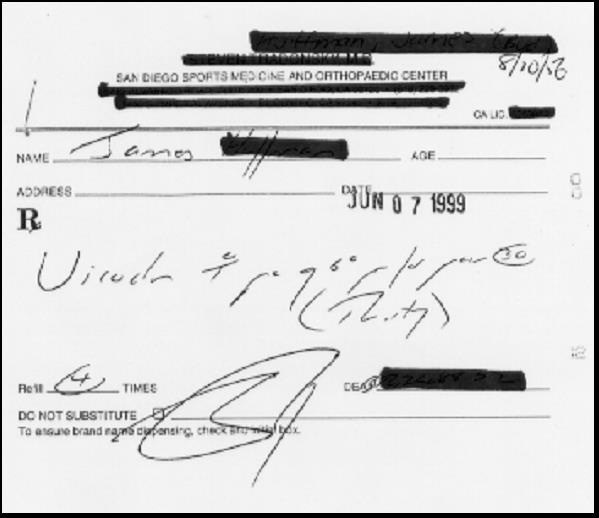
Doctor with Stethoscope“I’m happy to tell you the surgery went quite well, so you’re going to be on the mend!  Obviously, you’re going to have some pain from this, so what I’ll just do is ruin your life, happiness, and relationships by giving you an opiate.  Sound good?  So… you’ll start off taking it according to these directions I’m jotting until, of course, your brain’s addictive wiring trumps your reason – haha, just like the old days! – and you find yourself helplessly abusing it.  Eventually, I’d like to see you transition to your drug of choice.  When you do that is up to you, but within a couple months, you should find yourself back in full-on relapse.  Okay?  Does that sound good?  I’ll just call it in now.”

If only doctors actually said this, we alcoholic-addicts might have a better chance of protecting our sobriety from the pain management substances that work fine for normies (i.e. non-addictive people).  The trouble is that, even today, the vast majority of doctors don’t get recovery.  They see before them a reasonable and sane person who, they assume, will self-administer a prescribed drug reasonably and sanely.

What they don’t get is that we’re different. Our brains are forever like a duplex we share with an insatiable lunatic who is temporarily napping.  Rap on its door with an opiate and – no matter how intently we self-manage the dosage – once that beast wakes up, all bets are off.  It’ll rage, it’ll bust shit up, it’ll burn the whole damn house down, motherfucker.  Because that beast has a hold on us more powerful than anything that well-meaning doctor can possibly imagine.

It’s more powerful than reason, than resolve, than all things human.  It’s run our lives before, and it’s psyched to do it again.

I remember the first time I raised my voice at a vicodin2medical authority – my very kind dentist, a British woman – when I was about four years sober.  She’d just extracted one of my molars, and I’d just declined pain meds.  I remember the room we were in when she insisted, because it seemed to shrink and turn more yellow and seal off every doorway connecting me to AA.  I could feel the excitement rise in my chest: Meds!  Something GOOD!  There was hope!  Something really delightful perched just on the horizon!  Sure, I’d take ’em sensibly!  Of course!

…And I can’t say where it came from, but that small counter-voice, that love for the gift of sobriety and all the goodness it nurtured in my life – that sprang up in me, too.  They fought.  So by the time the words came out my mouth, sloppy from novocain, they were way too loud, too urgent, and too emotional.

“No!  I told you, I’m an alcoholic!”

“Yes, I know.  But this is a very safe drug – Vicodin.  You’ll be fine.”

“No, I won’t!  I’m sober and I want to stay that way!”

I remember the look of distaste on her face, that this normally calm and socially appropriate patient was going off on her.  She tried again, emphasizing the small dosage, but by that point tears spilled from my eyes and I had just one tremulous, throaty word for her: Ibuprofen.  Ibuprofen.  I’ll take ibuprofen…

And I did.  End of anecdote.

I’m not blaming doctors.  They’re rational; it’s we who make no sense!  That’s why the onus is on us to keep out of our lives what docs assure us is safe.   They don’t get Obit Hoffmanthe “curious mental blank spot.”  They haven’t heard the heart-rending shares of misery, helplessness, and loss sometimes dragging on for years – all triggered by a sensible prescription.   I have a huge number of friends in recovery.  And in contrast to the one alcoholic I know who successfully manages back pain with meds her partner doles out*, I know at least a dozen who have relapsed catastrophically – not counting those who have died.

I was messaging with one of them yesterday, my friend Rob.  He’s a wonderful guy traveling the country, working odd jobs, and struggling to stay off heroin for more than a few months at a time.  But failing.  He had a week.  Here’s what he messaged:

Yah know, if I’d of known what I would become after a few Vicodin, I’d a shoved them up my doctor’s ass!!  I was never into opiates as a kid. But eight years into sobriety I hurt myself really really bad, and I guess I needed them. But in hindsight, if I had a choice between acute pain and becoming a heroin addict, I would have probably chose the pain. But whatever.  It’s done.  It’s over, right?” 

Maybe.  Maybe not.**

When we want to drink or use, only god can help us. But when someone else tells us it’s not a problem, we can use our brains.  Remember: the doctor is going to offer you prescripsomething so legitimate, so routine, so neat!  The prospect of those little pills fucking up your life will seem so overly dramatic!  What I do is this: I picture a set of balance scales with two big pans.  On one side I put the prospect of perturbing my doctor, making a stink, sounding like an uncooperative bitch, no one getting it, and, quite likely, some physical pain.  On the other side I put every blessing I’ve won back sober, every person I love, every friend who needs me, my self-respect, my inner dignity, my body’s health, my spirit’s channel to god – and every beauty and joy of this life.

Then I bite my tongue to keep from saying, “Don’t you dare fuck with my sobriety!”  But it’s right there – that sense of defending what I love.

If your pain is such that you’ve absolutely got to take some meds, agree to a prescription of five pills.  Maybe eight.  Then call someone for each goddam pill you take and say, “It is 4:00, and I am taking a percocet now.”  Draw up a chart to keep exact track of what time you dosed, whom you called, and whom you’re calling next.  Stay in touch with your sponsor.  And as soon as you can, switch to ibuprofen and get the pills out of your house.  Do nothing alone because – remember – you’re not really alone: there’s that slumbering beast in the duplex, and you’re making a racket.

I recall the sadness I felt post-surgery many years ago, flushing the three remaining Vicodin I’d been given.  The magic was gone.  Now there was just me… and my stupid old life.  It took about five minutes for gratitude to return: the vial was empty, but my future was full.  I was sober.

scroll

*UPDATE: She relapsed after a year – knew where the pills were. After about a year of wallowing in opioid chaos, she’s clean again.

**UPDATE: Rob died of overdose less than a year later.

Post to Facebook

15 Comments

Filed under AA, Alcoholism, Drinking, living sober, Pain Medication, Pill addiction, Recovery, Sobriety

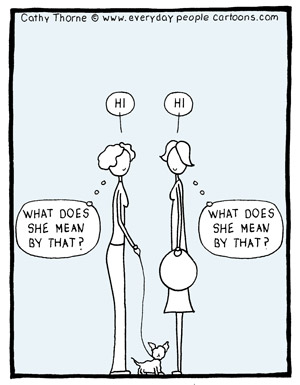
Awkwardness ~ !!!

Hi.  So I’m Louisa.

This is my blog.   Yeah.  It’s about alcoholism and spirituality.

I write it – the blog, I mean.

This one’s about…. AWKWARDNESSSSSSS

What the hell is it?  Why the hell does it happen? What’s the feeeeling it causes, and why does alcohol take it away?  Is it really so torturous that some of us, cornered at a dumb-ass party that in truth means nothing to us, are tempted to throw away our life-saving sobriety just to fit in?

awkward-momentOf course, awkwardness doesn’t strike just at parties and weddings and barbecues. It’s everywhere. It can plague us as we try to mingle after an AA meeting: I remember storming away from a smokers’ crowd in 1998 cursing them all – “Fuck ‘em! Fuck ‘em! Fuck ‘em!” – with every step.  Friends today Facebook about ducking down grocery aisles or waiting to leave their house until they can avoid an acquaintance or neighbor.

The dreaded nightmare?  It’s that bumbling, uncertain, inadequate feeling – awkwardness.

What’s the experience?
Awkwardness, I would say, is an involuntary onset of stiffness, verbal paralysis, and general lack of spontaneity that comes over us in conversation in such a way that we can’t think of good stuff to say, and stuff we do say sounds incredibly stupid.  We feel encased in something, as if our mind were struggling to sprint in a five-inch-thick wet suit.

What I still count as my all-time most awkward moment happened for no reasoncartoon whatsoever.  I was 17 and reading a textbook in the sun on the front steps of our house when our neighbor came through the gate calling hello – a young, cheery woman I idolized as cool. What we talked about, I have no idea. But for some reason, the intensity of awkwardness I underwent in those minutes is branded forever on my memory – I’d have gladly sawed off my left leg for a supply of witty rejoinders, and by the time she left, I longed to commit hari-kiri.

But then something rare followed: a passing moment of self-compassion. I reflected that I was like a student driver new to adult roads, still unskilled and unsure of the rules. I thought, “Maybe some day I’ll get good at social driving.  Maybe someday, I’ll always know what to say.”

Enter Alcohol
As it turned out, I was on the brink of discovering a drastic shortcut to an Indy 500 social experience: booze. That’s right!  Alcohol is not only liquid courage, butcool cat liquid ANTI-AWKWARD.  A few drinks and we “loosen up” so we can converse smoothly and easily.  We’re suddenly cool cats.  A few more and we just don’t give a fuck.  What a simple switch to flip: wracked with self-consciousness  ⇒  charming, maybe even scintillating  ⇒  “I fuckin’ love you guys!”

But what really happened?  What does the drug change in us?

Self-judgment.  Self-monitoring.  As noted in my previous blog, alcohol compromises the prefrontal cortex, responsible for monitoring impulsive behavior.  The trouble for many of us alcoholics (and codependents) is that for a variety of reasons, we tend to over-monitor.  In fact, we censor ourselves right out of perfectly valid expressions and sharings right and left.  But the good news is, if we do this to ourselves, then with god’s help we can learn to un-do it – sans alcohol.

Over the course of my sobriety, I’ve found it possible to make peace with awkwardness by drawing back the curtain on that little wizard generating all the noise and smoke.  Another approach is to go ahead and embrace awkwardness as a precious part of being human and flawed.  And the third is to simply remind myself that all moments pass, so even if I were to find myself living out a “forgot to wear pants” dream, ultimately I’d be okay.

What’s really going on?
Okay, you’re not gonna like this.  I know for me, any time I’m feeling awkward, I’m also feeling selfish and self-centered.  Selfishness for the alcoholic is such a deeply ingrained defect, one “driven by a thousand forms of fear,” that we may not realize we’re in its grip.Womensayinghi

I’m afraid you won’t like me.

I’m afraid I’m boring.

I’m afraid I’ll reveal ignorance.

I’m afraid – let’s just sum it up – that you’ll figure out I’m not good enough.

So since I secretly believe I’m not good enough, I have to falsely impress you.  While my conversation may seem motiveless on the surface, it’s actually an attempt to manipulate you into a favorable view of me that, deep down, I believe I don’t deserve.  I’m busy crafting an image, doing PR work with every nod, every chuckle, every response.

And it’s a fuck of a lot of work!

In fact, it’s so much work that my poor brain doesn’t have enough bandwidth left to actually be interested in you, in what you’re saying or feeling or whatever the hell we’re purportedly talking about.

I want something from you.  Approval.  Increased trust.  Intimacy.  I probably don’t even know what it is, but at some level I fear my ship will sink without it.  YOU are a means to an end…  and our conversation, interesting or needed as it may be, is really all about ME and my needs.

What’s the alternative?
Sorry, guys, but here we go again!  The way out is Step 3.  It’s trusting god.  It’s having made a decision to live from a place of knowing that my worth derives from god’s love – and that god is not wrong to love me.  I have inherent worth.  I am trying.  I have love and kindness to offer.  Further, regardless of whether our conversation turns to a big fat stinky turd on fire, I will still be worthy and lovable.  I don’t need you to like me.  What will be, will be.  I trust god that, just by being loving and useful, I can play the role I’m meant to.

What happens when we adopt this attitude?  Amazing things!  I can pay attention.  I can wonder about you.  I can think clearly about what I really mean, what would be helpful, what I have to offer you.  And I’m free!  God has sliced through the five-inch-thick wet suit to let me out so I can dance!  I laugh, say what I think, am playful – and it’s fun!  I’m able to love you for just being you.  All this I can do stone. cold. sober.

Embracing Awkwardness
Let’s face it, there are times when I do want something from someone, because I’m human.  Recently, for instance, I was on a group hike with a guy I found attractive – the first spark I’d felt since the demise of my relationship.  So guess what?  Whenever we two were alone, I felt awkward.  I couldn’t think of shit to say, or I said “stupid” shit, and three-second silences loomed like eternities.  But I forgave myself for it.  “How cute we are,” I thought, “all awkward and goofy like this!  How predictable I am, like a high schooler!”  Even awkwardness, reminding us we’re alive, can be a gift.

And Besides, No One Cares!
Eleanor Roosevelt, that great vanquisher of personal awkwardness, left us with this gem on the topic:

“You wouldn’t worry so much about what others think of you if you realized how seldom they do.”

We’re all self-centered by nature, each of us the central protagonist of our world’s story. Everyone’s too busy thinking about themselves to dwell on anything we say or do.

Lastly, there’s that bit of AA wisdom: “What you think of me is none of my business.” We’re here to be kind, loving, and useful.  Let others make of it what they will.

scroll

7 Comments

Filed under AA, Alcoholism, Codependency, living sober, Recovery, Sobriety, Spirituality

Spiritual Essence: Sobriety, Growth, and Who You’ll Be on the Other Side

Because in AA and Al-Anon meetings we emphasize similarities rather than differences, I usually refrain from talking about my Near Death Experience. I don’t want some share of mine about going to the Light to discourage a newcomer from identifying as alcoholic or convince them AA is full of loonies. But my blog’s a different matter. It’s a place to share my whole experience, loony or not.

When we get sober, we hear a lot of talk about ego as something in close cahoots with our addiction. In order to grow in sobriety, we strive to become conscious of those times (always?) when  it takes over our thinking. But what, exactly, is that entity trying to become conscious? That is, who/what are we without our egos? When we get down to the very heart of our being, our consciousness, what do we find?

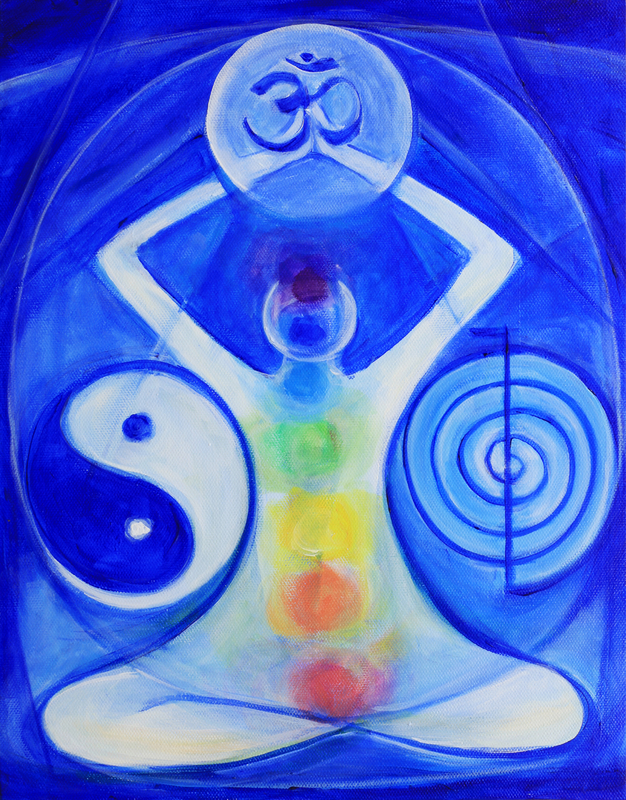
chakrasEckhart Tolle, in my experience, writes most masterfully on this topic. In A New Earth, he makes a number of distinctions among the images appearing on the screen of the mind or various voices in our heads. In addition to ego (which is essentially the voice of fear – a destructive agent) and thought (which continuously occupies the brain much as digestion occupies the stomach, but without necessarily holding insight), he identifies emotions (the body’s reaction to thoughts) and the pain-body (an energy field within the body that feeds on negative emotions). Together, these components of our minds conspire to create the Unhappy Story of our lives.

In contrast to this, Tolle posits Presence. Presence is that which witnesses all aspects of our experience – the font of consciousness itself. I remember when I was reading Tolle on a beautiful beach in Costa Rica, the phenomenon of Presence kept eluding me.  I’d try repeatedly to disengage from my thoughts and emotions enough to zoom in on who was witnessing them, only to be sucked in by another thought or emotion, such as judging the extent of my success.

Today I understand why I couldn’t do it: my core, my soul, my essence was submerged beneath a layer of lies (thoughts) and denial (fear) manufactured by my ego to maintain my love addiction: I lay on that beautiful beach with a boyfriend who I knew in my core was concealing late-stage alcoholism, simply not drinking or acting out around me. I did not want to know this, mind you. I wanted not want to be fully conscious, because if I dropped my stories of him as an ethically strong and genuine man, I’d need to uproot my entire emotional life by breaking from him.  Addiction – with its urgent needs and false realities to fill them – obstructed my access to Presence, exactly as it had back in the days when I was drinking.

I do, however, have a memory of being pure presence.  If you’ve read my addiction memoir, you know that in 1982 I snorted a half-gram of lidocaine sold to me as cocaine, which shut down my cardio-pulmonary impulses and caused me to die on the dance floor of a Manhattan nightclub.  In those three minutes without pulse or breathing, I rocketed out of my body and into a vast blue sky above the open ocean, embarking on my journey to god.  There’s no room to tell the whole story here. What I want to concentrate on is the “I” in those sentences. What was “I” outside my body?

Pure awareness. Pure interest. Pure embrace of each phenomenon I encountered. That is, whatever I experienced, I loved.  I saw and knew with an ongoing, unqualified excitement that made not loving impossible. How to describe this? When you were a kid, maybe on your birthday or Christmas, you might have encountered a big stack of presents. You didn’t know what was in them.  You didn’t need to.  You anticipated finding out without worry that some might be duds.  All you felt was, “Oh, boy!”  That’s how you’ll feel about everything after you leave your body – everything, that is, except the prospect of returning to it.

Fear became null. When I was diving hundreds of feet toward tspiritenergyhe ocean’s surface, I wondered whether its surface tension might impact me like concrete, and there was certainly an extra spurt of “Oh, boy!” when it didn’t – but no adrenaline tinge of dread.  Same with the realization that I was about to burst into the sun – I only wondered what would happen.  That’s it.  Fear, sadness, anger: these are functions of the BODY.  We don’t need them once staying biologically operational is no longer of consequence.

Short of dying, how can you experience your own essence – that core consciousness you’ll become on the other side?  The best way I know today is to get quiet, close your eyes, and mentally speak your own name adding the suffix “–ness.” Do this several times.  Each time you repeat it, go further toward your child self.  Seek the thinker, not the thoughts.  Not only that, let go of trying – to be someone, to please, to do well before anyone but god – and let yourself fall toward humility. You’re just you.

In my “Louisa-ness,” there’s a subtle hint of…  I can’t find a word besides “dumbness.” But it’s a dumbness I thoroughly love! Maybe it’s just the void left by ego’s absence, the submission to being limited. It’s sort of like the curve of a ball, the spherical nature of myself coming back to me. It cups me. It hums “Louisa-ness.”

The more sober I am, the closer I move toward living from my essence.  THAT is my spiritual journey.  As Meister Eckhart put it (not related to Tolle), “God is not found in the soul by adding anything, but by a process of subtraction.”

Part of the reason I love to climb mountains is that the physical demands pare away my thoughts and emotions until the simplicity of one goal – I will simply continue – eclipses all the various yammerings of ego.  Ego may initiate my climbs, but spirit finishes them.  “One Step at a Time” – the name of my sober mountaineering group – offers the ultimate metaphor for spiritual growth.  Day before yesterday, standing at 12,200 feet on the summit of Mount Adams, I did indeed feel close to my god.

I’m alive.  I’m grateful.  Nothing else matters.  For me, until the times comes to shed the “dumbness” of this body, that’s as true as it gets.

Me at 12,200 feet

Sunday afternoon, Mount Adams summit at 12,200 feet, a distant Rainier on the horizon.

1 Comment

Filed under AA, Afterlife, Codependency, God, living sober, Near Death Experience, Recovery, Spirituality