Category Archives: Faith

Reaching for god, Healing in the Mountains

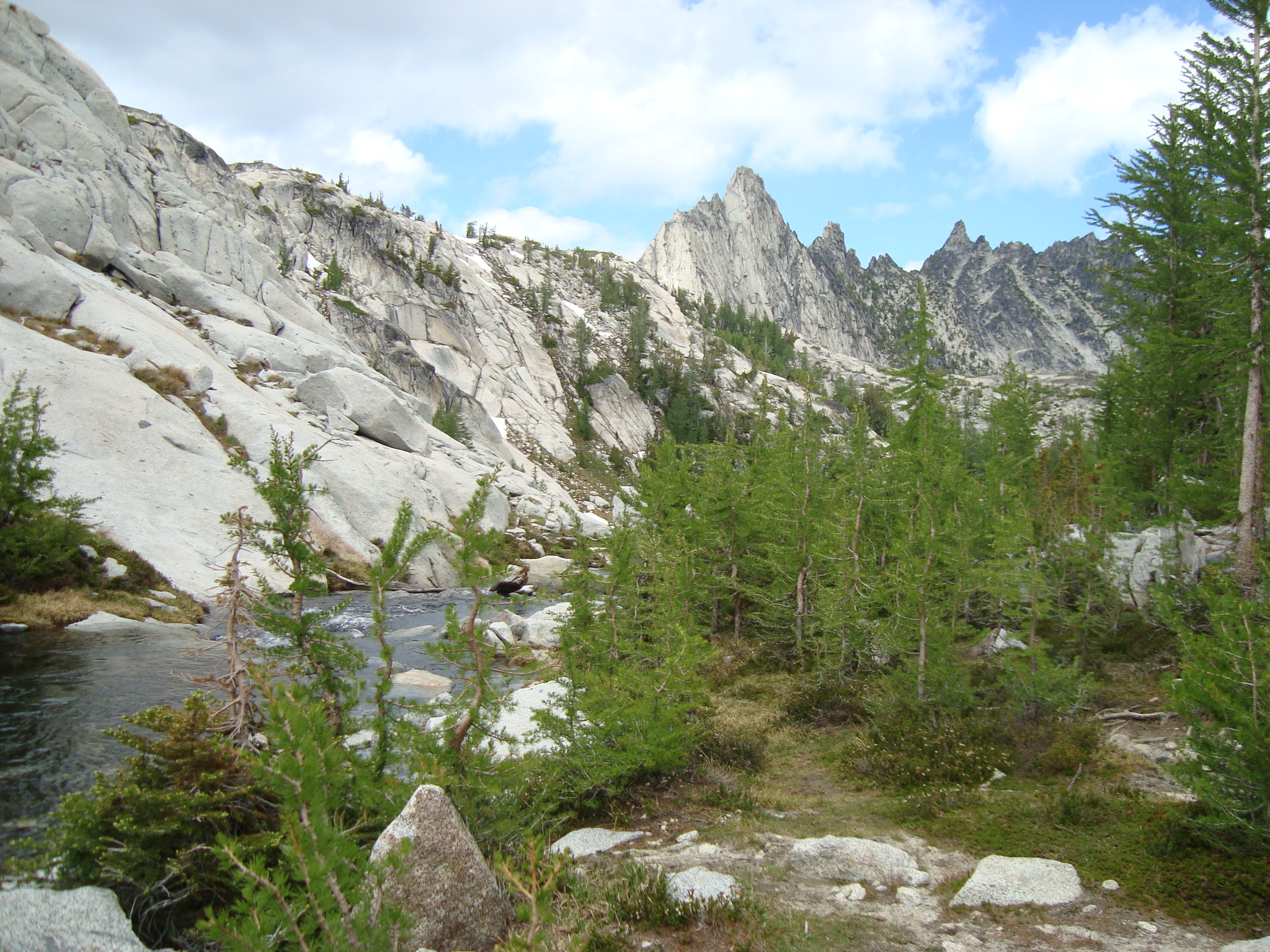
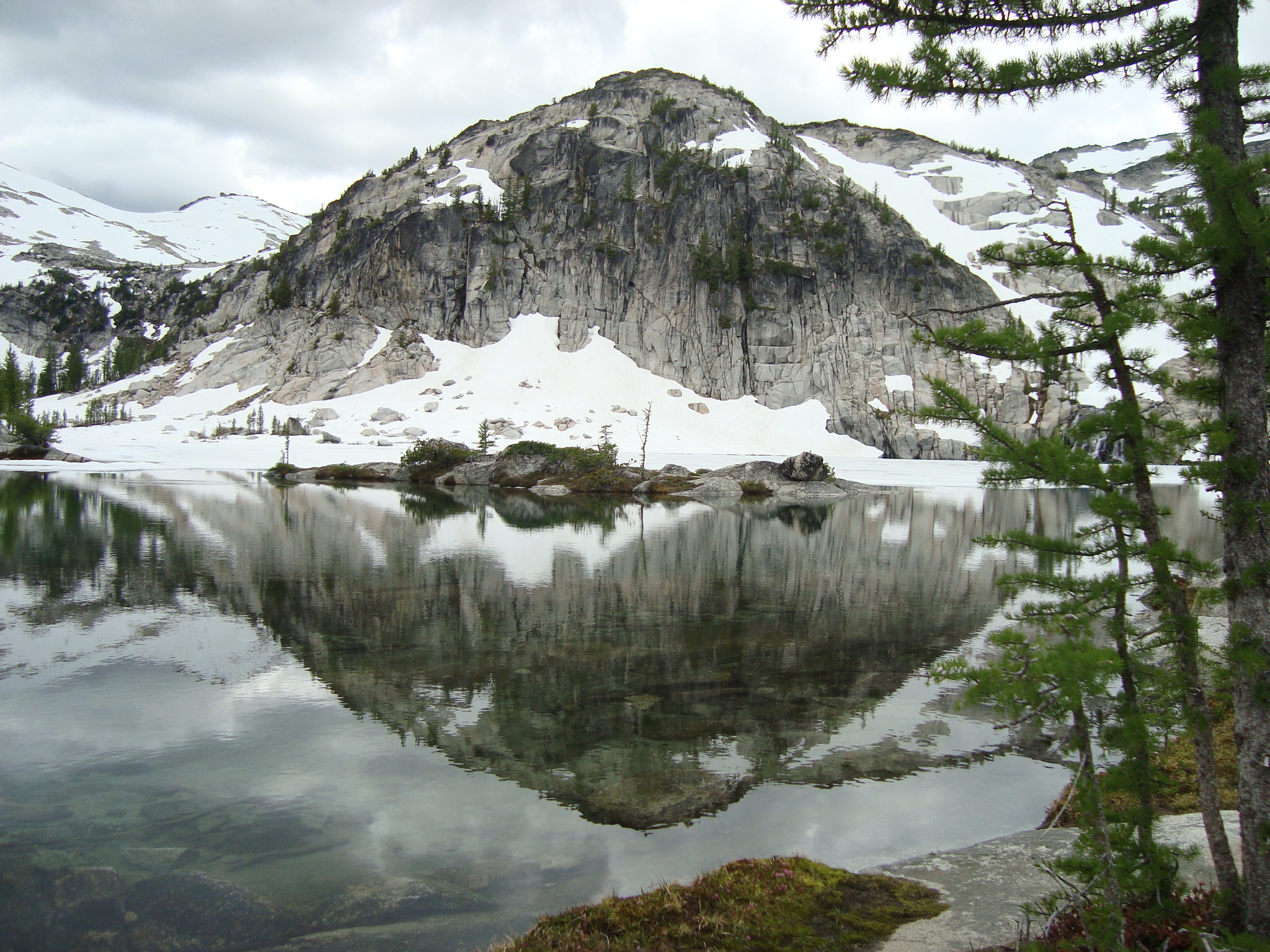
I want to describe a moment of insight, but to get there, I’ll have to take you on a little odyssey with me.  The Enchantments are a chain of lakes carved out by glaciers in Washington’s Central Cascades – a series of cirques in pale granite amid jagged peaks so lovely you need a very elusive permit to visit in summer.  But this year, with the snow level so low, I decided to seize the chance to see them before permit season began.

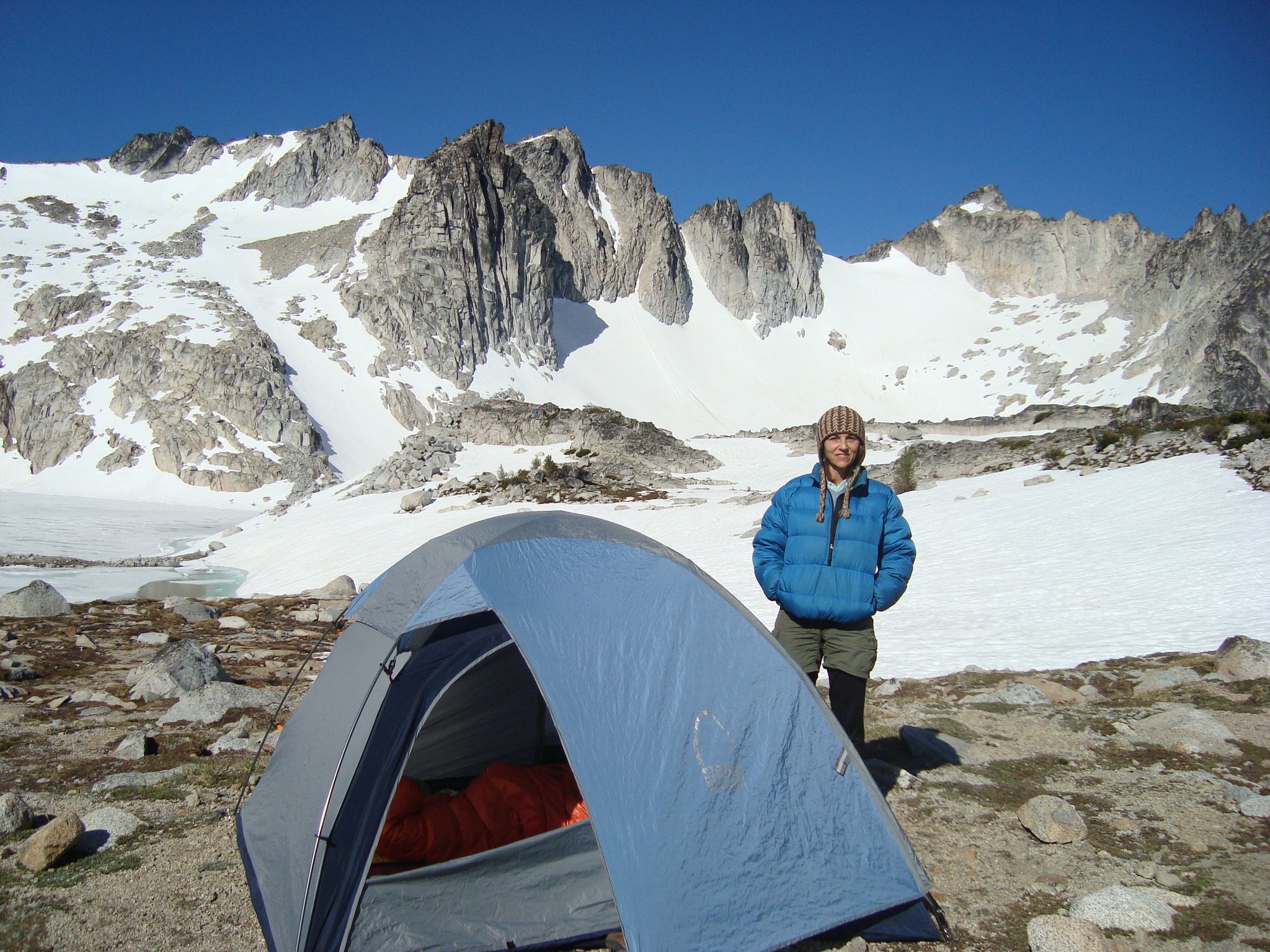
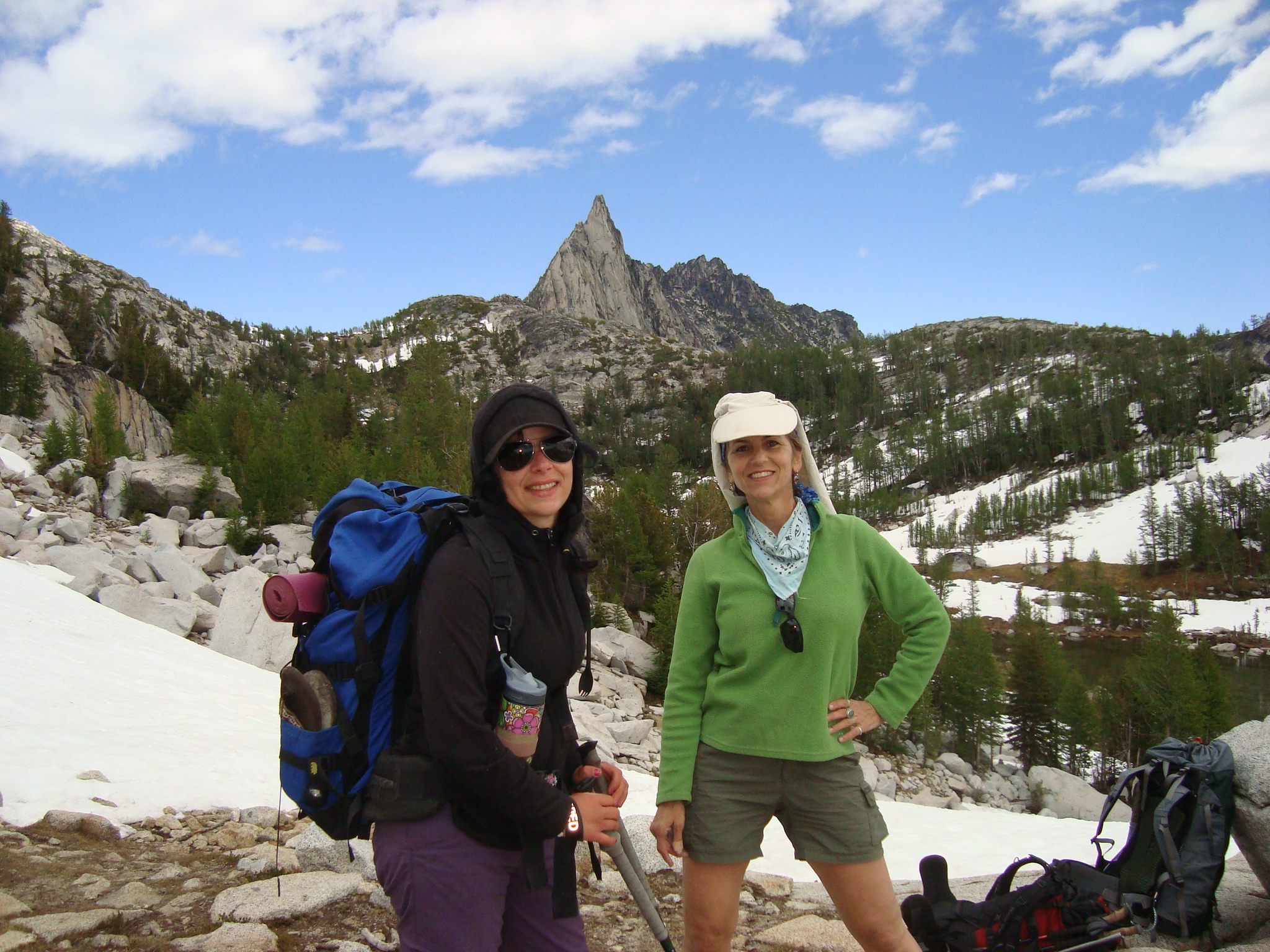
I invited along a friend who recently completed the Camino de Santiago Pilgrimage, walking 500 miles from St. John, France, to the cathedral of Santiago, Spain – with virtually no money.  I chose Kacie not only because she’s sober and a skilled through-hiker, but because her connection to God is knowledge rather than faith. Though she’s Christian and I’m non-religious, our spiritual convictions align perfectly.  At 33, she’s an absolutely beautiful soul.  Here we are, starting out our trip at Colchuck Lake.
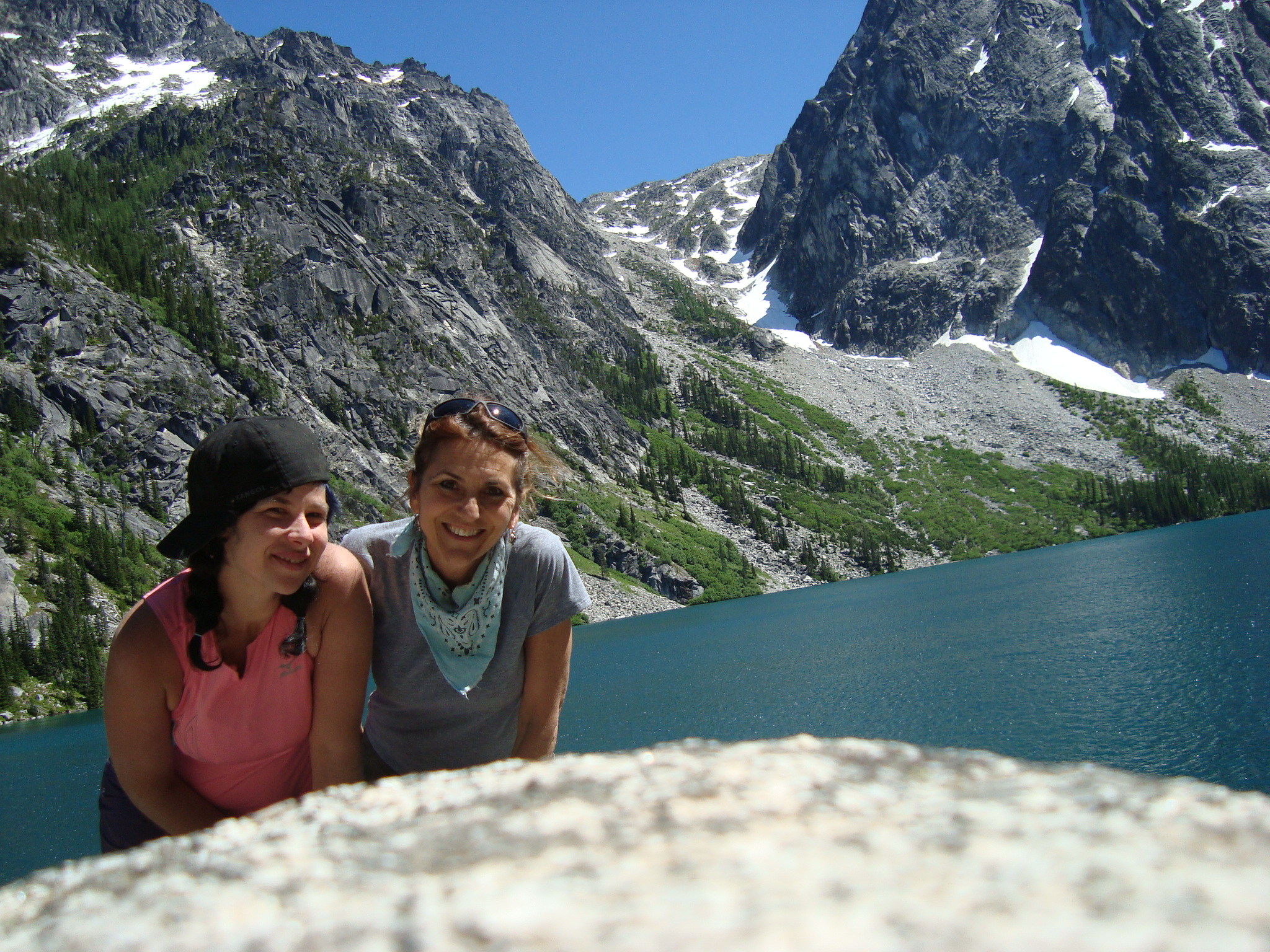
DSC03396

Aasgard Pass is behind us, where the trail gains 2,000 feet in 3/4 of a mile

I wanted Kacie with me not just to help me tackle this trail, but because I knew she could help me along a second, inner trek.  Maybe I’m trying to tell too much in one post, but for me, this trip was more about healing than hiking. I recently posted about having discovered that for two and a half years my alcoholic boyfriend concealed an ongoing affair with an alcoholic girl half my age – named KC, ironically enough.  Though I’m glad to have escaped with my sobriety, there’s much grief to process in losing someone you thought you loved for nine years.

Early on, I asked my Kacie for her take on my “happy” memories from those deceit-filled years with Grayson – our teasing as we played ping-pong, comparing cloud pictures as we lay in the sunlit grass, decorating our tiny Christmas tree.  She answered straight up: “You need to let go the lie before you can embrace the truth.  That was manipulation, it was false, it was poison – every minute of it.”  I knew she was right.  Her words solidified the ones hovering in my thoughts for weeks: emotional robbery, abuse, even molestation.  Because, yes, to con someone into prolonged intimacy, fully aware the truth would both horrify and repulse them, is that bad.

We hiked on.  I’d heard a lot about the dangers of climbing Aasgard Pass, with its 2,000 foot near-vertical gain.  We didn’t reach the base of the chute until 4:15.  There’s no trail per se; you scramble amid sliding talus and scree; you search above you for cairns – stacks of rock people have left to mark a course – praying nothing falls on you.  Chest-high boulders with divot toe-holds demand you heave yourself up them despite the 35 pounds on your back and hundreds of feet below you to fall.

DSC03408

Kacie picking her way up the rubble

We climbed for an hour.  Two hours.  The wind picked up, and we began to encounter pockets of ice and snow.  There were times I thought I’d lost the way completely, boxed in among boulders, until I’d sight a cairn someplace seemingly impossible to reach.  Then I’d pray, find handholds, pretend I wasn’t exhausted, and heft Louisa + pack one more time.  Ten minutes later, repeat.  Finally, three and a half hours into it, a moment arrived when I rounded a rock face and recognized from the outlines of slabs against the sky that we were nearly there.  To Kacie, over the whipping wind and cataract tumbling to our right, I shouted, “We’re almost there!  We’re gonna fuckin’ do it!”

That’s when the tears came. Thank you, god.  Not just for getting me here, but for showing me I have what it takes to do this.  In the past, on all our toughest climbs, Grayson led.  But no one led me this time, not even a frickin’ trail: just god and the bright life it kindles in me.

While the sun set amid 20 mph winds and the temps dropped below freezing, Kacie and I made camp at about 7,ooo feet.  Kacie was so chilled she began dropping things, getting confused.  Our stove wouldn’t light at this altitude and the winds snapped at the tent as we pitched it.  But we were never scared – not really. I gave Kacie all my extra clothes and released enough gas from the canister to blow up a small dog before my lighter finally ignited it. Once the water boiled I told Kacie to go eat inside the tent while I made her some hot water bottles and picked up for the night.

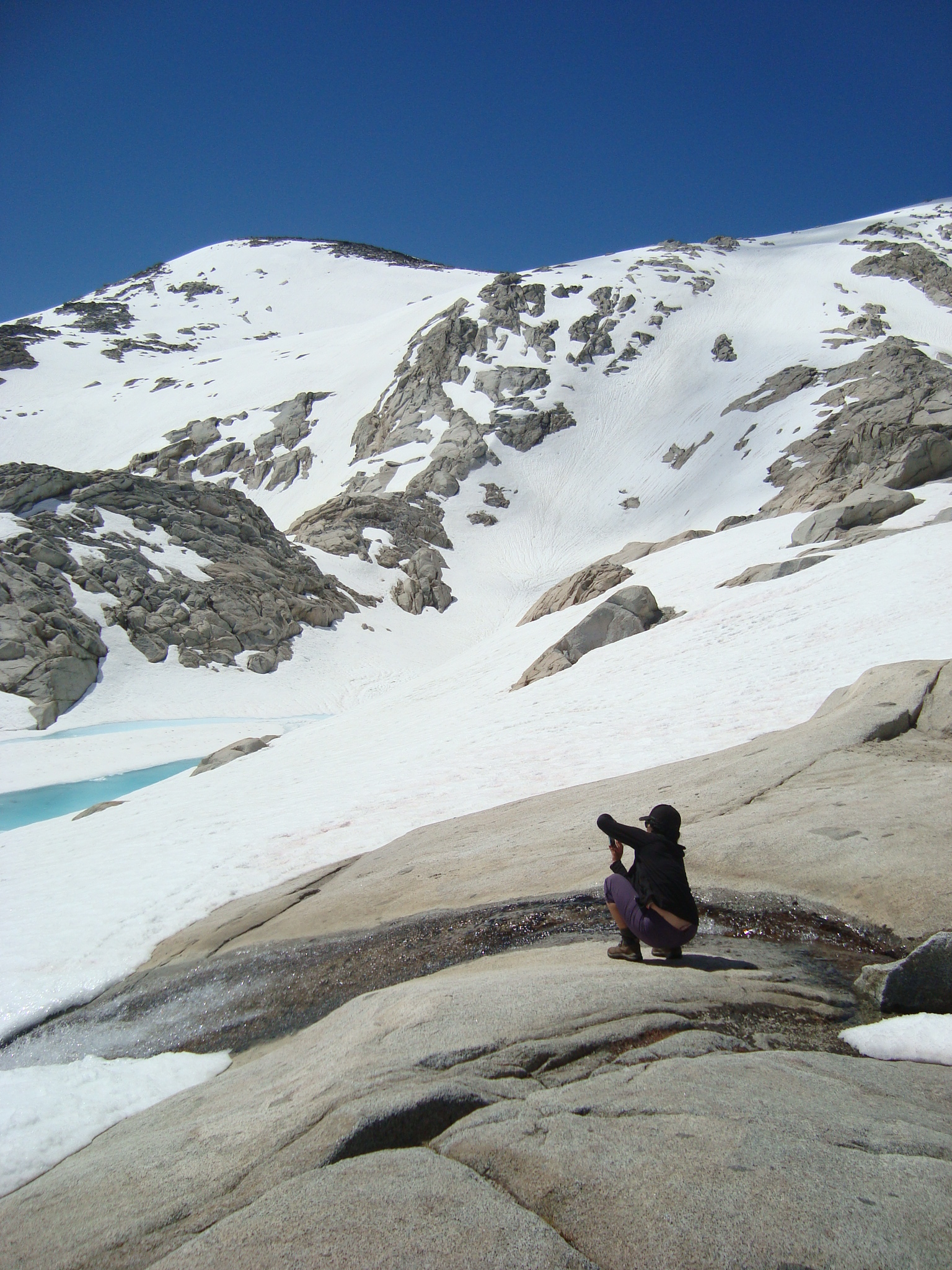
Neither of us slept much because the elevation throws you off, but in the morning we encountered this, along with the delicate music of snowmelt everywhere running down to Aasgard Lake:

DSC03410

and this:

DSC03411

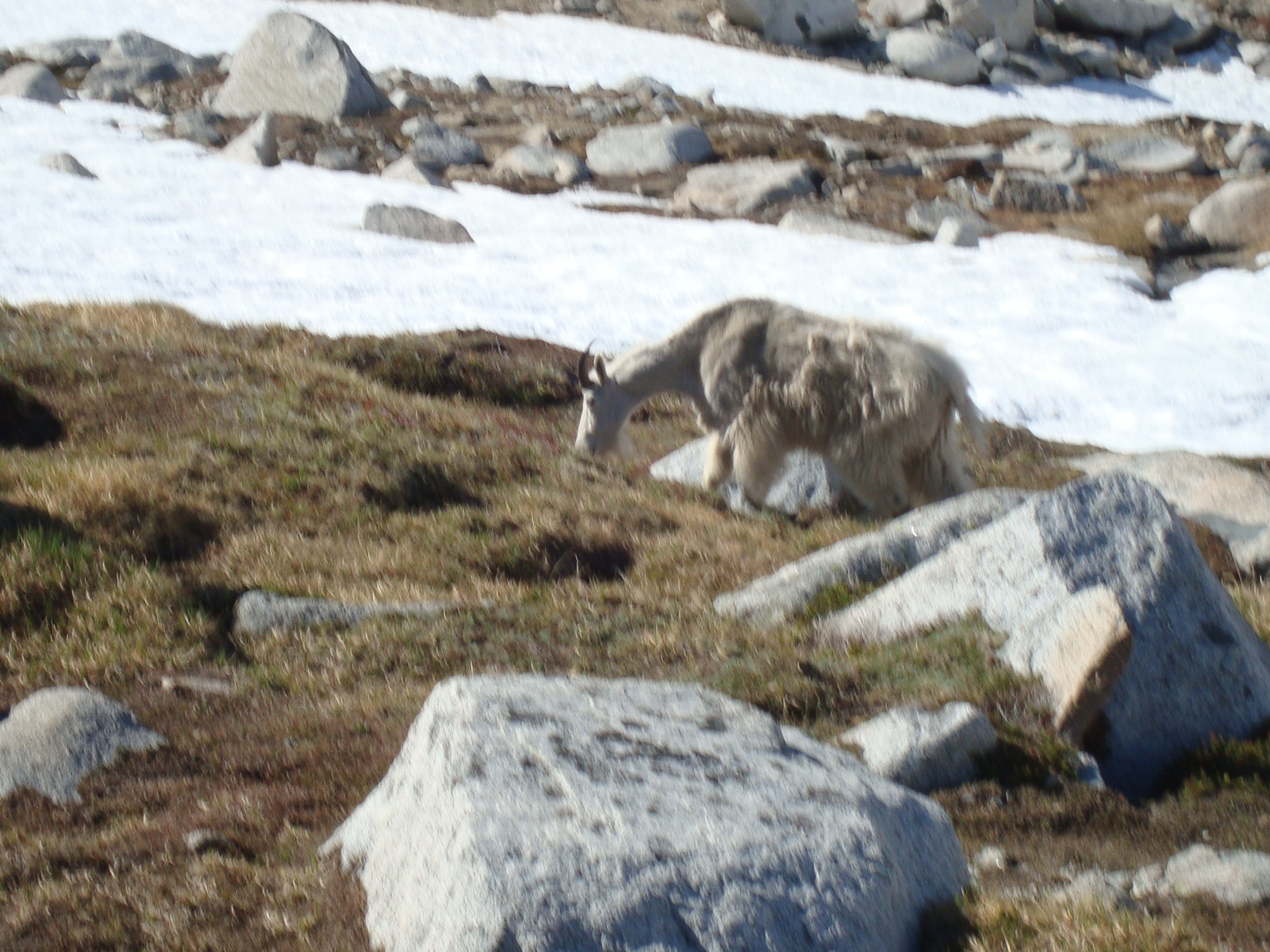
and lots of these guys:

DSC03413

After breakfast, we packed up and set off again, like this:
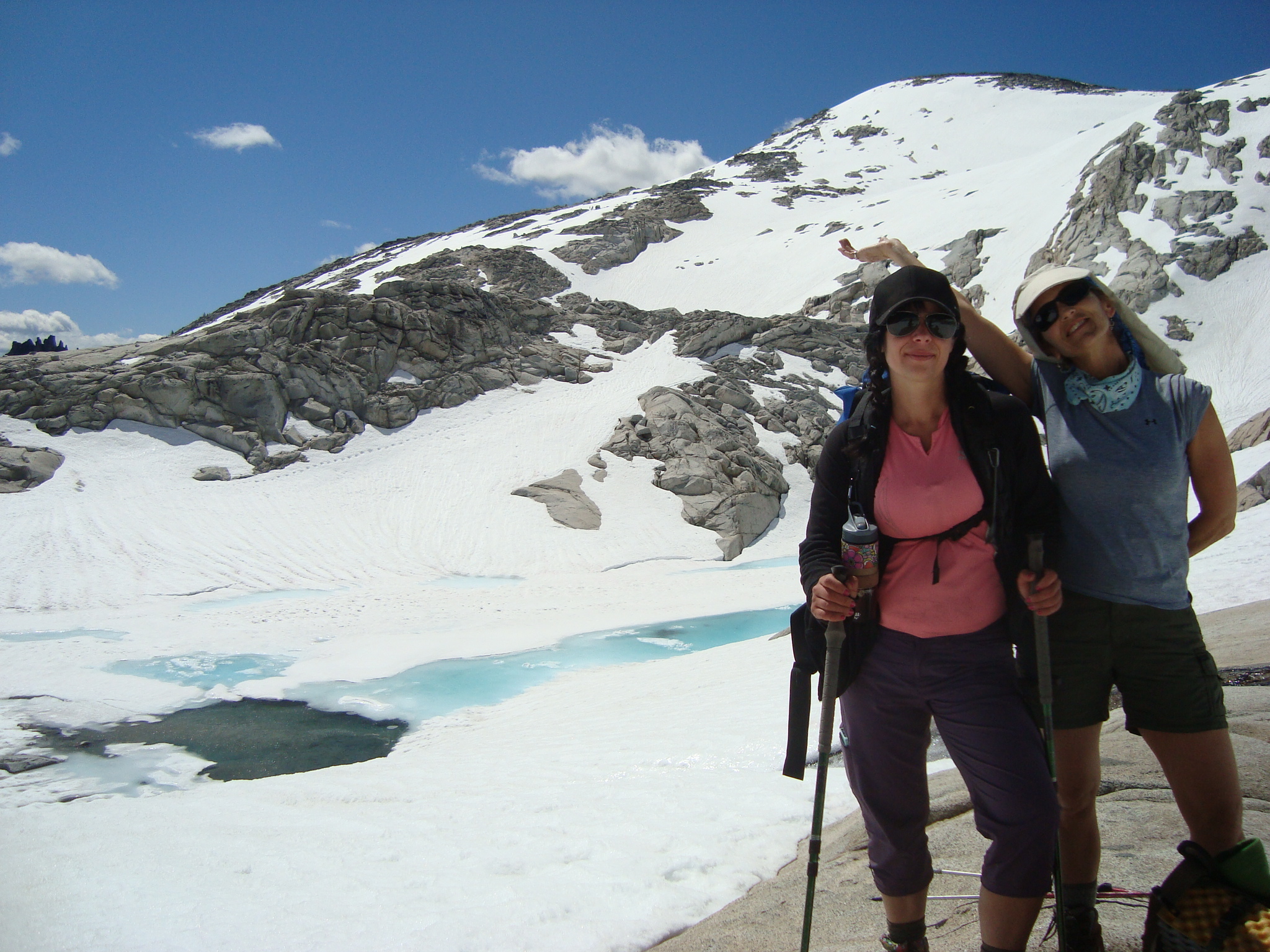
DSC03423

We covered about 10 miles that day, talking on and on about god, about how god has built right into us our capacity to see, feel, and appreciate beauty as a spiritual language to connect with Him/it.  Here’s are some glimpses of what we saw, did, and loved:
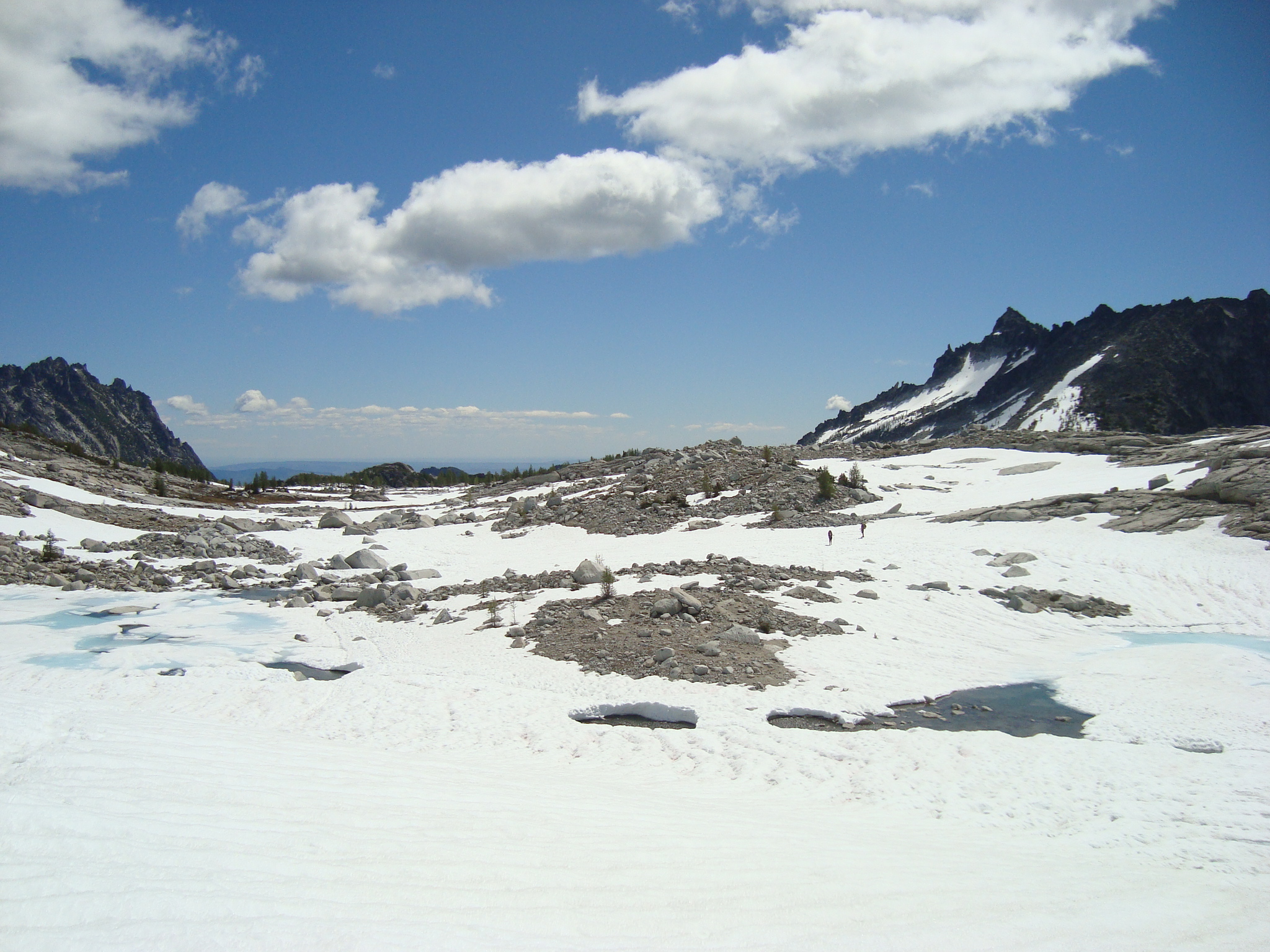
DSC03424

DSC03429

Kacie took

DSC03441

DSC03440

DSC03455

DSC03447

DSC03449

Among the many things Kacie said that struck me deeply was this: “The only thing God asks is that we participate in the relationship.  It’s like if I were going on this hike saying, ‘Hmm… Louisa might be with me on this hike. That might be her I see ahead of me, that could be her voice…’ but I ignored you the whole way because I wasn’t sure you were real.  I mean, what’s more hurtful than just ignoring someone who loves you?!  We do that to God all the time, and yet He just keeps loving us.  He keeps saying, I’m here when you’re ready.”

Eventually we began our descent to Snow Lake, where we’d spend our second night.  That’s when I felt something welling up in me, stronger with each step I advanced between the huge rock escarpments toward the meandering valley below.  Thoughts churned.  Why did it still hurt that Grayson had ignored my love? Why was it so hard to love myself ?

Here came the revelation: I understood, as I started bawling silently, that to love god in these mountains was to love god in me as well.  So I began saying silently to each beauty, however tiny or vast: “I love you, god.  I love you in this flower.  I love you in the tops of those trees.  I love you in that tremendous and intricate stone wall above me older than I can conceive.”  Each time I sent out this energy, whatever came back seemed to redirect my inner periscope just a tiny notch or two – away from Grayson’s insult and toward my own wealth of spirit, away from the story of what happened and toward the openness of whatever might.

I crossed some threshold.  I saw my journey was on course, that god had sent me a precious gift through every person I’ve ever loved – including Grayson. In the thousand-plus miles we covered together, he taught me most of the skills that embolden me today, skills that let me dare to venture out and meet my god in the rough and dangerous beauty of the wilderness.

What a gift!  Not just for me, but now through me to Kacie. “Churches are like big, fancy worship bathrooms,” says Kacie.  “I want to be here.  God’s Cathedral is here.”
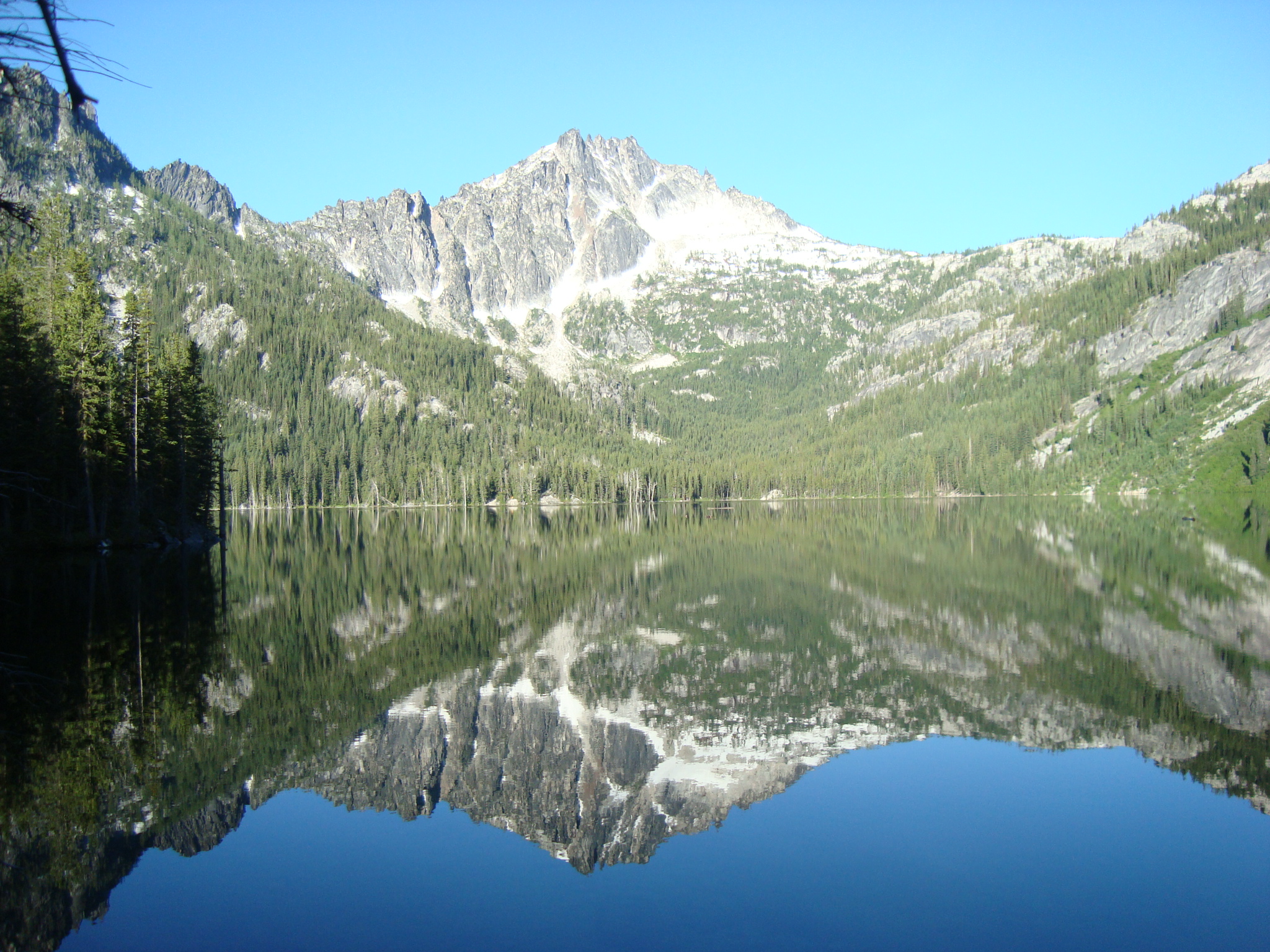
DSC03460

The next day we were met at the trailhead by kind, sober friends who drove us back to my car. The minute I got home, I showered, threw on a dress and heels, and drove to a downtown restaurant to celebrate another sober friend’s 50th birthday. We sang to him as he blushed.  Love – that same echo of god’s goodness – rang in our voices.

“God is such a show-off!” I remember Kacie saying as we hiked. “He is!  Because He has infinite beauty to show off!  Fucking infinite!  He pours it into the mountains, into this stream, into us!  He wants it  a-l-l  to be felt!”  We joked about the fears that make us check our inner share of god’s beauty, like a bird halting in mid-song for fear of fucking up.  This blog is part of my song.  I’ll show off, I’ll sing, I’ll fuck up, and I won’t apologize.  Because god put inside me what it wants me to share.

scroll

Post to Facebook

1 Comment

Filed under Alcoholism, Codependence, Faith, God, Happiness, living sober, Recovery, Sobriety, Spirituality

What is Goodness?

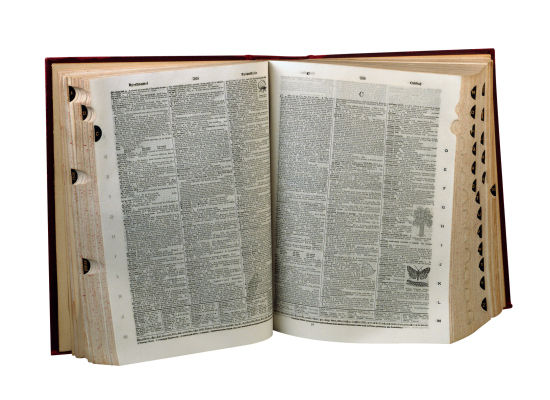
Words can be dead or alive.  My big, fat Webster’s dictionary devotes a full page to the word good, yet conveys almost nothing.  Definitions range from dictionary“making a favorable impression in terms of moral character” to “wholesome” or “noble and respectable.”    Words – nothing but lexical connections.

Yet words can also be alive when they resonate with what we know to be true.  Years ago at an AA meeting, for instance, I heard these: “Love from the heart is a one-way street.  It goes out.”  The guy saying this gestured from his chest into the room, his hand unfolding from from fist to open.  I knew the truth of what he was saying.  I’d never heard it so succinctly put.

Goodness.  What is it?  Most of us know it when we’re feeling it.  If we’re around a good person, something emanates from them.  A work of art or beauty can evoke the same feeling.  It’s a warmth, a light, a glow – maybe an aura.  But of what?

Love.  Goodness is the product of love.  When that inmost heart of ours, the font of our being, our life energy, reaches out to connect with something in the world, the energy around that connection is goodness. Love has a direction, a flow along the one-way street, while goodness is the product of that connection.  It shows up in any act or effort of integrity and honor that is untainted by selfishness.

A friend of mine experienced a Near Death Experience far more protracted and detailed than mine.  Hers occurred in the seconds before a head-on car crash, which for her expanded to hours of interaction with spirits.  She was a teen at the time, verging on a dark turn of acting out from pain in her past.  An ugly, squat demon at her feet in the passenger’s seat invited her to join him, promising her a chance to “get even” with everyone who’d ever wronged her.  But she declined, and found herself suddenly pulled up out of the car, rushing into the sky with her very serious, earnest guardian angel whom she realized she’d known all her life.  Among the things she was shown was a whirlwind tour of the globe, zooming in on all the pies being made right then.  Yes, pies.  She saw countless homemade pies, all different styles and types, until finally her guide showed her the very best pie on earth at that point in time.

It was a cherry pie made by an older woman somewhere Cherry-Piein Europe. The pie was just coming out of the oven, perfectly browned with woven crust and beveled edges.  The woman loved the pie.  Into it she had poured everything she knew about pie-making, every skill acquired in years of baking – not to impress anyone, but purely to manifest the best of her abilities.  The guide flashed into my friend’s awareness that the same can be true for anything we do in life.  When we care enough to learn something, when we respect the skills involved enough to apply them with dedication, we can bring into the world a work of goodness – even when tremendous faith and courage are needed to do so.

Any time our efforts are powered by such love, they become acts of goodness – an emblem of the plenty we’ve received from god.  They are, in essence, acts of gratitude: “Life is God’s gift to you; what you make of your life is your gift to God.”

Conversely, when they’re powered by the desire to get, which is actually rooted in a sense of lack and the driving fear behind it, which is ultimately a distrust of god, our efforts become acts of aggression.  They devolve to a way of “showing” and outstripping others, of getting even with those we feel have wronged us.  The recognition is all for me.

For these reasons, addiction cuts us off from goodness entirely.  Compulsive use of alcoholalcohol, drugs, sex, shopping, etc., or the codependent urge to steer another’s life – all these keep us constantly in the mode of wanting.  We try to suck from the world whatever we think will fill the gaping hole in our guts.  This time, we’ll get what we need to feel good about ourselves.  We’ll score it from the people we impress, from the places and things that infuse us with status, lend us power.

What we have in addiction is wrong-way traffic.  As long as I’m trying to suck up whatever addiction promises will fix me, I’m incapable of even recognizing goodness.  I’m numb to it entirely.  In fact, as told in my addiction memoir, by the time I neared hitting bottom, I’d quit believing goodness even existed!  It seemed a sickly sweet delusion manufactured by conformists, when the hard core truth was that I had to grab whatever I could from a mean, barren world.

But goodness not only exists, it’s the ultimate expression ofsunshine1 living.  It can emanate from any relationship founded in sincerity – in creativity and playfulness, in compassion and affection.  Whenever I reach to connect my spirit to yours without seeking to get something from the deal, the energy from my heart streams toward you, and I become a channel for god – which is love – to flow through.  God is the source of all beauty, and as soon as we give ourselves over to expressing it, that flow simplifies life radically down to being present in gratitude.  We are complete.  In fact, we have a surplus, because the wellspring of our life-force is constantly flowing, flowing.  So we can try to give it shape, to bring goodness into the world.

That’s why I wrote this, from me to you.

scroll

Post to Facebook

3 Comments

Filed under AA, Alcoholism, Codependence, Codependency, Faith, God, Near Death Experience, Recovery, Sobriety, Spirituality

Essential Prayers: Please and Thank You

Rejoice always,

pray without ceasing,

give thanks in all circumstances…

(1 Thessalonians 5:16-18)

I ain’t a Christian, but them’s some wise words for how to tackle the challenge of living a happy and meaningful life.  For some, the “always,” “without ceasing,” and “all circumstances” parts might present a problem.  Actually, they’re problematic only if we segregate our spiritual life from the rest, as if the little things we did all day had nothing to do with our spirit.  The fact is, they have everything to do with it! Our spirits are just as present when we’re comparing cans of beans at the store as when we’re kneeling by our bedside doing what we label “prayer.”  We’re just too caught up in piddly-shit to be aware of our awareness – to focus on what we actually are.

In the rooms of AA, we often hear the advice to use two simple prayers – Please and Thank You – to forge a relationship with our higher power.  This is an excellent start!  For newcomers who have no idea what might be entailed in talking to their god, these instructions open the door.  It’s suggested that when we wake up, we ask god to “Please help me to stay sober today.”  When we go to bed, we pray, “Thank you for keeping me sober today.”

2014-12-25 14.58.27But there’s a whole lot more potential behind these two simple prayers.  They can change your life.  Just as step 1 is the only one to spell out the word “alcohol” while the remaining 11 deal with the matters that made life so painful we needed a damn drink, so the lens of the Please and Thank You prayers can be dilated from mere drink avoidance to apply to all of living.

Please.  By all means, when we wake up, we can ask god to keep us sober today, but we can also expand that request to “ask God to direct our thinking.”  What I ask is, “please guide me today,” by which I mean not only my thoughts and actions, but my level of awareness.  I might even say, “help me stay awake.”  What I mean is, god, help me to stay in contact with you all day long; help me remember this life is not about my little fears and agenda, but about being the best human being I can be today; help me know that whatever’s going on right now is just a single pace in the journey of my life, so when it gets tough I can hang onto hope.

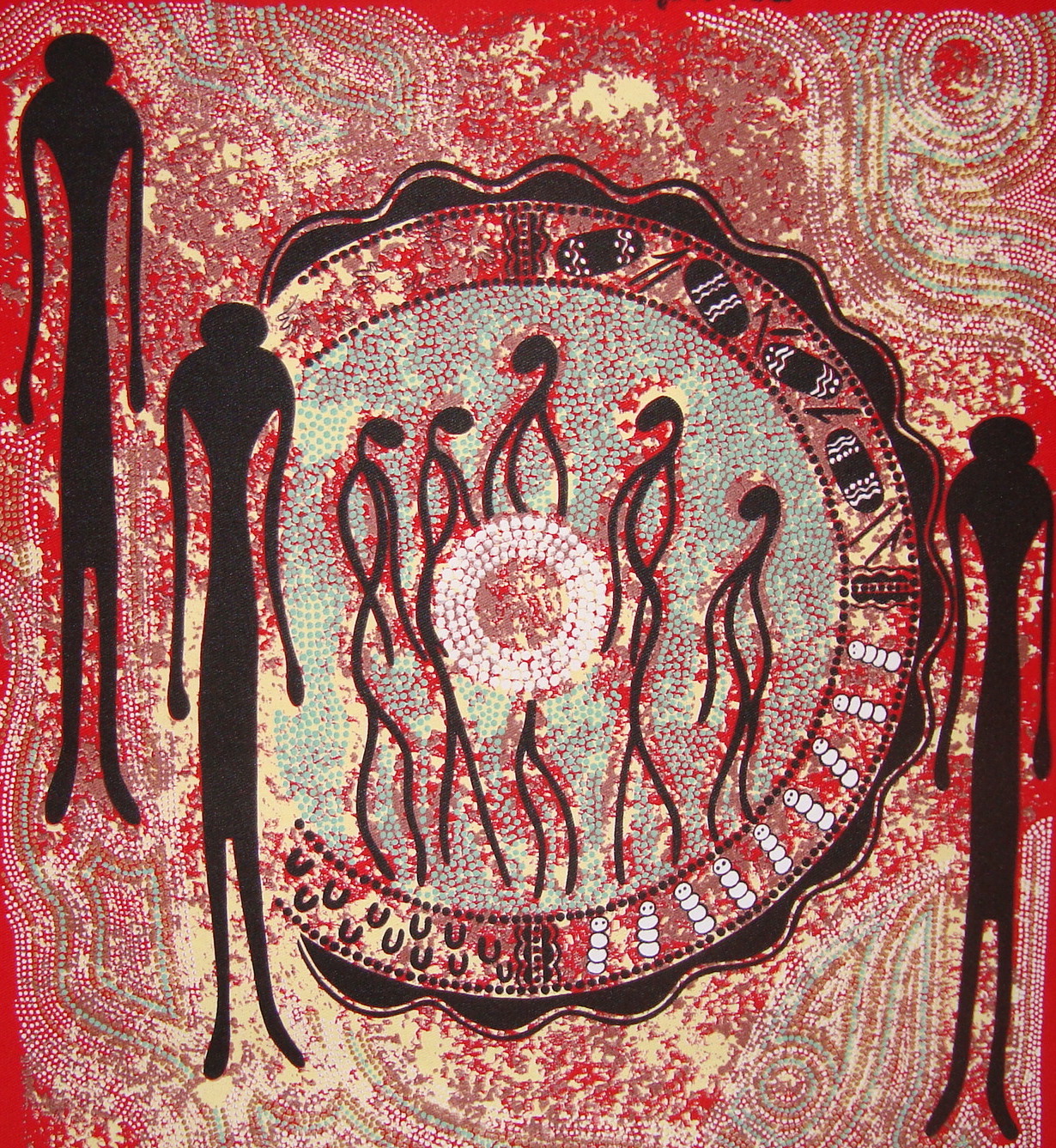
As I proceed through my day, my biggest challenges all center on emotions.  Not what happens, but how I feel about what happens.  I’m a wa-ay codependent child of an alcoholic, which means that, left to my own devices, I tend to be a “reactor” aboriginemore than an “actor.”  Boy, do I hate that!  It sounds so wussy, but it’s true.  Most of the time, what you think (or at least what I think you’re thinking) carries more weight than what think or do.  I need you to be okay with me.  Better still, I’d prefer you be favorably impressed.  That way, you’d hand me a chit of personal worth I could add to my lowly little scrap heap.

But, damn it, I don’t want to live that way!  So I pray pretty much “without ceasing.”  I ask god, not to strike me well, but to show me, “If I were well, how might I see this?”  My experience has been that god nudges me toward compassion – for myself and others – which helps me reframe what’s going on and strengthen new neural pathways so that my thinking will change over time.  And slowly, gradually, it’s been working, which brings us to…

Thank You.  Again, it’s fine to start with the matter of whether I swallowed any booze today.  Even after 20 years’ sobriety, I still hop into bed some nights and think, “Geez!  I didn’t drink or even think about drinking all day!”  I still get this little image of my insides as all clean and healthy compared to that slimy feeling from back in the day.  And I thank god for it, for having let me be just one of Earth’s creatures, a gizmo fit to walk the planet exactly as I was made.

But I also “give thanks in all circumstances.”  What a trip it is to be alive!  What a freaking awesome world this is to cruise through, filled with miracles we can take for granted any time we switch to autopilot.  Bits of nature (outside my window, a finch just landed amid the gently stirring leaves of a cherry tree), goodness our culture has produced, signs of caring between strangers, and my chance to be part of it all – I thank god for this over and over.  Sure, there’s plenty of darkness; just read the news.  But there are also many who unite in trying to combat it, connecting in their commitment to… love.

CloudmoonGrowth.  How can the “Please and Thank You” prayers change your life?  For me, they’ve expanded my awareness a tiny bit, like the rings on in a tree, with each challenge I walk though sober.  eye

I am a tiny bit more aware.  It’s how we grow in sobriety.

At the core of my consciousness is my spirit.  It’s not my body: my body includes all my brain’s thoughts, all my body’s issues, and all the emotions they stir up between them.  I love those guys – don’t get me wrong – but they’re not my spirit.  My knowingness, my receptiveness, the live wire of my presence – this is the essence that sprang out of my body during my Near Death Experience, but it’s also the core of what I am as I brush my teeth or drive to Goodwill.  I am a little piece of god.  So are you.  And that reality becomes slightly more vivid to me with every clod I break as I plow through the lumpy terrain of being alive. I am the plowwoman, the driving force behind one individual human experience.  I need help to push on (please), but with every step taken, I see a little better what a tremendous privilege I’ve been given (thank you)!

scroll

Post to Facebook

2 Comments

Filed under AA, Al-Anon, Alcoholism, Codependence, Faith, God, Recovery, Sobriety, Spirituality

Reality, Denial, and god – Alcoholism and Codependency

Reality is a tremendous nuisance to active alcoholics and Reality intersectioncodependents.  It’s so damn stubborn, but we’re more so!  We have a firm idea of how things really are and we’re stickin’ to it, however painful our grip.  The pain in both cases comes from everything that refuses to align with our story of how things can be okay – usually involving other people and their actions or views.   When I was living alcoholically, people kept misinterpreting my drinking.  Now that I’m sober but battling codependency, they keep not doing what they should.

The trouble is, as long as I’m in this mindset – I know shit – I’m cut off from god.  God animates reality, but its truth can’t be admitted by my sick thinking.  In other words, god’s guidance is heard via  honesty, but denial makes us deaf.

First, let’s talk about alcoholism.

During the 14 years that I drank pretty much daily, I had a good story:  I just liked to drink!  There was no big deal about it, though some people liked to pretend there was.  My life was as normal as anybody’s except that I was maybe a little more free about kicking back.  Alcohol was a just a feature of the good life – something that accompanied relaxation, candor, humor, and the ease of not taking stuff so damn seriously.  Didn’t I still have a job and a car?  Hadn’t I earned a fancy degree?  Wasn’t my health still good?  Okay, then, get off my back, everyone!

hot air balloonHitting bottom was the result of losing my levity, my ability to float a hot air balloon of egotism just enough to skim over the landscape of consequences beneath me.  Many people were hurt and angry, but they couldn’t reach me.  Many people would be hurt and angry if they found out certain things, but so far I’d dodged those impacts.  In the end it was the intensity of my own pain and self-loathing that weighed down my balloon basket more heavily every year, every month, and, as I gradually lost altitude, every day – until the ground of reality came up to meet me and I crashed.

I had no more escape.  My entire life was rife with lies.  Everything I’d been fleeing caught up with me and the pain was unbearable.  Finally, I admitted: “This is the truth.  This is how it is.  Addiction powers my every thought and deed, and without it, I have nothing.  I am nothing.  I have no power.”

Finally!  That’s when the door swings open.  It’s when god says, “Bingo!  That shit just doesn’t work.  How about I show you how to live in the world instead of your head?”  In my case, god showed me through the loving words spoken and written by people in AA, both living and dead.  “Here,” they explained, “is how you can live a meaningful life.”  The 12 steps were a means of clearing from my head the false stories I’d used to deny reality.  I began to work with what is to become the woman I want to be.

Now let’s talk about codependency.

It’s actually a whole lot like alcoholism, because it, like alcoholism, centers on denial.  Here’s the American Medical Association’s definition of alcoholism, tweaked just a bit to describe codependency:

“CODEPENDENCY is a chronic disease with genetic, psychosocial, and environmental factors influencing its development and manifestations. The disease is often progressive and fatal. It is characterized by continuous or periodic impaired control over ATTACHMENT, preoccupation with the ADDICT, use of OBSESSIVE TACTICS despite adverse consequences, and distortions in thinking, most notably denial.”

Look at that!  The denial part, I didn’t even have to mess with; it’s the mainstay of both diseases.

Just as denial let me pretend my drinking harmed no one, so it lets me pretend my attempts to change the alcoholic harm no one.  Now I’m riding in the hot air balloon of dependence – actually the offspring of ego and fear: a conviction that my well-being depends on someone else.  I need them to change so that I can be happy.  My levity comes from the certainty that if I just _______ the right thing, the alcoholic will come to his senses.  (Insert do, say, offer, model, threaten, etc.)  There have been some great attempts, but they haven’t quite worked yet.  Failures pass under me.  So do the alcoholic’s betrayals, lies, actions that clearly show he has no intention of doing anything other than being himself – an alcoholic.  I keep skimming over them all, using my will and my hope and my love with all my might!  I’ll say this and he’ll realize that!  I run the videos in my mind day after day: I say my lines, watch my ideation of the alcoholic comprehending.

But gradually, I lose altitude.  The weight of pain brings me down again – that my love is not reciprocated in the form of whatever integrity I long for the alcoholic to achieve.  The alcoholic remains deaf, is blind, stays asleep to everything but his own dream of denial, and there is nothing – nothing – I can do to wake him.   All my efforts are futile or, worse still, galvanize his denial.

I have no more escape.  This is how it is.  My entire life is rife with lies.  Everything I’ve been grasping for has evaporated, and the pain is unbearable.  Finally, I admit: “This is the truth.  This is how it is.  Codependent illusions power my every thought and deed, and without them, I have nothing.  I am powerless.”

Here again god steps in.  “Correcto-mundo!” says god.  “But you don’t have nothing, sweetheart!  You have you.  You have me.  You have all of life and this beautiful world to thrive in.”  I begin to listen.  I realize what god offers is real, not projected.  It doesn’t have to wait for someday; it can start now.

Just as I took my first shaky steps sober and wide awake all those years ago, now I begin to take my first steps on my own.  No one needs to live as I see fit for me to be happy.  Whether my attachment has been to a family member or a lover, I can free them to live their own life, make their own mistakes, and suffer their own consequences, whether through wasted potential or death.  I can do it because, in reality, I have no other option.

This actually exists somewhere, unlike my sober alcoholic.

Reality, in both cases, is so much simpler, so much easier, and so much richer than my thinking.  Now I have choices, and I can hear god’s guidance as I weigh them.

scroll

Post to Facebook

7 Comments

Filed under AA, Al-Anon, Alcoholism, Codependency, Faith, God, Recovery, sober, Sobriety, Spirituality

Boundaries = (honesty + humility) x self-esteem

The term “boundaries”  used to irritate me.  It’s always seemed such a pop-culture concept.  I guess it’s a psych term popularized during the assertiveness craze of the 80s – actually, I have no idea – but I first heard people throwing it around a lot in the 90s.  “That’s a boundary!” some woo-woo friend would exclaim, or, “You need to develop your boundaries” around this and that.  Like a lot of pop-psychology terms, it’s always kind of made me barf.

I’m just that way.  Whenever I don’t understand something, I’m quick to label it bullshit.  Contempt prior to investigation and all that.

The fact isBud ad, though, I suck at boundaries and always have.  I’m a people pleaser.  Why?  I grew up in an alcoholic home where we had trouble being honest about feelings because the most fundamental truth in the house had to remain that there was absolutely nothing wrong with Dad’s drinking. And because Dad was several different people depending on where he was in the cycle of irritable dryness, calm drinking, jubilant drinking, or self-disgusted hangover, while Mom and everyone else reacted to his state, I learned to look outside myself for the climate of reality.

But more subtle still was the thin film of doubt between the truth inside me and the truth inside my family members.  It isolated each of us.  It prevented love from sinking in through my skin.  I always felt valued for my various accomplishments rather than treasured for just being me.  All this is pretty classic for alcoholic homes.

I also grew up being quite bossy to my younger sister.  My older siblings had a sort of club that excluded us, so, as I relate in my addiction memoir, my younger sister was stuck with me.  I could run the show in all our doings, but whenever conflict came up, Mom would frame me as the oppressor.  Long story short: I grew up to suspect that my true self was mean, controlling, and unlovable.

When I got my first boyfriend, I remember so clearly the decision I made to play a role and stuff my true self!  If I expressed what I really thought or wanted, he’d be repelled and leave me.  It felt like some kind of vow of chastity or something, this inner resolve that I would win love by conforming myself to my best guess of whatever he wanted.

And I lived like that for decades.

split-rail-fence

Back to Boundaries.  What are they, anyway?  How do they work?

Working the 12 Steps of AA let me recognize the dance of Fear and Ego that orients so much of how I interact with others.  I learned that I fear I won’t get what I think I want/need, so my ego steps in to try to arrange and control the players as I think best, and then resents them when they don’t follow my script.  All true.

What I never saw until I went to Al-Anon was that one way – actually, my favorite way – of trying to control others was by doing exactly what I thought they wanted.  It’s all about management through martyrdom.  I’ve put not one but two partners through college, working at jobs I didn’t like to pay the rent and arranging my life around their syllabi.  This was love by transaction.  I sacrificed my needs for them so they’d be corralled and obligated to “favor” me with love – and if, along the way, I didn’t follow my own dreams, it was all their fault.  Both those relationships crashed and burned.

Unfortunately, all I really learned from those experiences was: “Don’t put people through college.”  In my current 9-year relationship, I’ve been blind to all the ways I’ve arranged my life around my current partner’s preferences.  We don’t live together, and he’s rarely in town, so I seem quite independent.  I have my own friends, my own programs, a busy life apart from him.  From the outside, I’ve got it goin’ on.  So it’s been harder to see the fact that I’ve dropped from consideration any requests I fear might displease him.  I’ve preferred to resent his “selfishness” for following (martyred) signals I put out rather than seeing my own choice to edit those signals.

Upshot: I can have no boundaries unless I’m honest with myself.  And I can’t be honest with myself if I lack humility.  Who wants to say, “I’m afraid I’m not loveable; I’m afraid you’ll decide to leave; I’m afraid I’ll be alone forever” -?  Humility is what lets us name and face this unglamorous truth: “I am flawed and frightened.” Once I can cliffname it,though,  I can have the self-honesty to see where I’m bending over backwards to be loved.  If god sees that with me, and we know it ain’t right, maybe I can muster the self-esteem to risk everything and trust god’s plan for me instead of my relationship management skills. Maybe I can take the plunge.  I can ask for what I want despite fear, in the faith that no matter what happens, I’ll be okay.

What Al-Anon has helped me see is that I’ve always misconstrued boundaries as a fence to keep other people from intruding on my inner sensitivities.  I’ve experienced angry siblings trampling all over my dignity and wanted protection – so that, I thought, would be a boundary.  But today I see that boundaries actually delimit my own choices and behaviors.  They’re about what I will and will not sign up for.  For years I chose to stand within the trajectory of my siblings’ insults.  Now the boundary is actually for me, the point at which I’ll remove myself.  Likewise, for years I’ve chosen to mute my own needs for the sake of my boyfriend’s.  Of course, any relationship involves compromise.  But the boundary signals those compromises that actually detract from my life and well-being.

Boundaries, I’m learning, are not directed at other people.  They’re about me recognizing the limit, the degree, the subtle gradation of that point at which my choices amount to self-harm – and refusing to cross it.  They represent a deal with god to honor my innate worth rather than trying to wrangle it from others.

I’m so grateful for a set of programs that has opened my eyes to the difference!

 scrollPost to Facebook

3 Comments

Filed under Al-Anon, Codependence, Faith, living sober, Recovery, Sobriety, Spirituality

Enlightened but Dead: Why Alcoholics Need God

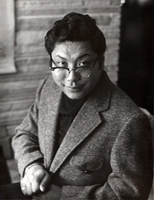
Pema Chödrön’s teacher, the venerable Chögyam Trungpa, drank a lot.  Drinking was a staple of his sanga, where he threw big parties among his students, and he was known to carry vodka in a water bottle.  Trungpa explained in one of his spiritual books why his drinking differed from that of an ordinary alcoholic:

“Whether alcohol is to be a poison or a medicine depends on one’s awareness while drinking. Conscious drinking—remaining aware of one’s state of mind—transmutes the effect of alcohol. Here awareness involves a tightening up on one’s system as an intelligent defense mechanism…

“For the yogi, alcohol is fuel for relating with his students and with the world in general, as gasoline allows a motorcar to relate with the road. But naturally the ordinary drinker who tries to compete with or imitate this transcendental style of drinking will turn his alcohol into poison…”*

Sadly, it appears that Trungpa’s liver failed to read the book and appreciate his “transcendental style” of yogi drinking.  Despite diagnoses of cirrhosis and doctors’ warnings that more drinking would kill him, Trungpa continued to drink heavily until it did indeed kill him in April of 1986, when he was just 48 years old.

Trungpa~

Philosopher Alan Watts was considered a sage throughout the ’60s after he rose to prominence with the 1951 publication of The Wisdom of Insecurity – a pivotal text  introducing Eastern concepts to Western society.  The book considers the ego’s dis-ease with the unstable nature of reality and its efforts to create security via constructs of memory and projection coalescing in a story of “I,” which Watts dismisses as unreal: only awareness divorced from self can access reality.  Watts, like Trungpa, was well aware of the futility of escapist drinking:

“One of the worst vicious circles is the problem of the alcoholic.  In very many cases he knows quite clearly that he is destroying himself, that, for him, liquor is poison, that he actually hates being drunk… And yet he drinks.  For, dislike it as he may, the experience of not drinking is worse… for he stands face to face with the unveiled, basic insecurity of the world.”

Unfortunately, identifying this vicious circle did not grant Watts the power to exit it.  Like Trungpa, he often gave lectures while sloppy drunk. He, too, developed end-stage alcoholism that deeply concerned his ex-wife and friends, and died of alcoholic cardiomyopathy – e.g. heart failure – at 58.

Watts~

Both of these men were masters of self-knowledge and the meditative disciplines that yield inner peace.  Both could speak brilliantly on the ills of ego and treasures of honesty.  Yet neither could stop drinking.  And they’re just two examples out of jillions.  Why did they fail?  Why would people so insightful not quit what was clearly killing them?  The Big Book explains:

“If a mere code of morals or a better philosophy of life were sufficient to overcome alcoholism, many of us would have recovered long ago.  But we found that such codes and philosophies did not save us, no matter how hard we tried.  We… could will these things with all our might, but the needed power wasn’t there. Our human resources, as marshalled by the will, …failed utterly.” (p. 44)

In Shambala: The Sacred Path of the Warrior, Trungpa makes very clear that no god enters into his vision.  “Over the past seven years, I have been a presenting series of ‘Shambala Teachings’ [on]… secular enlightenment, that is, the possibility of uplifting our personal existence and that of others without the help of any religious outlook.”

Good for him!  I agree wholeheartedly that self-knowledge is great stuff.  But it will not cure alcoholism.

In a 1968 talk, Bill Wilson, one of AA’s founders, described the initial amazement of the psychiatric community at the unprecedented breakthroughs of AA.  Many alcoholism specialists attended meetings and saw their own alcoholic patients, with whom years of psychiatric work had failed, achieve abstinence and mental health in a matter of weeks.  One suggested that Bill assemble a group of such psychiatrists to testify before the Academy of Medicine about AA’s success. So Bill asked them.

“And not a one would do it! …In effect, each said, ‘Look, Bill. You folks have added up in one column more of the resources which have been separately applied to alcoholics than anyone else… [But] the sum of them won’t add up to the speed of these transformations in these very grim cases… So for us, there is an unknown factor at work in AA.  [B]eing scientists, we… call it the X factor.  We believe you people call it the grace of God. And who shall go to the Academy and explain the grace of God?  No one can.'”

questionSorry, folks!  But the X factor, and that alone, is what saves an alcoholic: Connection with a higher power, to god as we understand it.  We ask god to help us, and we’re relieved of a compulsion that no amount of self-knowledge can touch.

Humility is the key ingredient to receiving grace.  We have to ask for it, accepting that we’ve been defeated.  By contrast, Trungpa, for all his wisdom, exhibited a strong tendency toward hubris.  The true warrior, he explains in Shambala, is both Outrageous and Inscrutable.  “…[H]aving overcome hope and fear, the warrior… fathoms the whole of space.  You go beyond any possibilities of holding back at all…. Your wakefulness and intelligence make you self-contained and confident with a confidence that needs no reaffirmation through feedback.” In other words, I got this!  Screw what anyone else thinks!

Watts, meanwhile, purported to embrace God, but his abstractions reduced it to a mere abandonment of I, which enabled connection with the eternal now and rendered us one with God.  For Watts, there could be no “Hey, god (you) please help (me)!” because the you / I division negated the fact that we are god: “[W]e cannot lay ourselves open to grace, for all such split-mindedness is the denial… of our freedom.”

Reluctance to seek god’s help almost killed AA co-founder Bill Wilson, too.  Relatively unknown in AA culture is the fact that Bill was so deeply repulsed by the God element in his friend Ebby’s solution that he went on drinking for three weeks after Ebby’s visit and landed yet again in a sanitarium.  There, after Ebby had visited him again to recap the spiritual solution, he had this experience:

“And again the despair deepened until the last of this prideful obstinacy was momentarily crushed out. And then, like a child crying out in the dark, I said, ‘If there is a God, will he show himself?’ And the place lit up in a great glare, a wondrous white light. Then I began to have images, in the mind’s eye, so to speak, and one came in which I seemed to see myself standing on a mountain and a great clean wind was blowing, and this blowing at first went around and then it seemed to go through me. And then the ecstasy redoubled and I found myself exclaiming, ‘I am a free man! So THIS is the God of the preachers!'”

Light
In my Near-Death Experiences group, I’ve heard several people describe similar experiences, when the “white light” of love brilliantly illuminated the room around them; but, naturally, many of Bill’s contemporaries considered him daft for insisting it had happened.  In his talk, he attributes this phenomenon not to his own specialness, but to the role it enabled him to play in AA, explaining that the powerful faith most AAs develop over months or years was for him simply crammed into a few minutes: “It did give me an instant conviction of the presence of God which has never left me… And I feel that that extra dividend may have made the difference in whether I would have persisted with AA in the early years or not.”

In other words, Bill was given what he needed not only to overcome a lifetime of harrowing addiction, but to co-create AA and persist in carrying its message into the dark world of his fellow alcoholics.  Why?  Because he asked… and frickin’ meant it.

.

scroll

.

PS: I have tremendous respect for both these sages as well as for Buddhism.  By no means am I critical of their legacy or beliefs.  Reading both authors did contribute to my self-knowledge, for which I am grateful, because such insight aids in a lifetime quest for serenity.  My point is merely that self-knowledge, no matter how deep or how keen, cannot arrest this disease, as these two tragically premature deaths testify.  See comments below. 

– Louisa

  • (Heart of the Buddha, p. 153)

32 Comments

Filed under AA, Alcoholism, Drinking, Faith, God, Recovery, Sobriety, Spirituality, Twelve Steps

Step 3: A Decision

What if I trusted god?

Doesn’t trust by definition mean not knowing?  Isn’t god by definition something I can’t know?

But what if I truly trusted trust?  Could I place mine in this unknowable god?  What if I surrendered this constant fight to fend off invisible threats and beat every dark fear to the punch?  Maybe I could give it up this constant need to choreograph the people and events around me if I decided it wasn’t necessary.  What might that feel like?  Why is it so difficult?

I could try thinking about how I got here.  embryosHow much say did I have about what I thought ought to happen in my mom’s womb?  Innumerable complexities aligned with inconceivable precision to bring about the organism that is me.  My mom herself had no clue what was happening.  All life originates from a process far beyond anything humans could ever comprehend or rig.  To give that process a name or classify it as “biology” doesn’t make it any less dumbfounding.

At birth our consciousness consists of trust and little more.  What is crying but half a bridge-?  As a survival strategy, it’s founded on the blind, helpless trust that someone will respond, someone will care.  That impulse – a precursor to prayer – is the only power given a human infant, but it’s the only one we need.

All that for what?  So I could grow up to earn money and buy groceries?  So it seems.  What if god has no extravagant “plan” for my life but loves me overwhelmingly regardless, simply for being me?  What if all the love I’ve ever felt and absorbed, every embrace from intimates and each kindness from strangers, every affection to ever move my heart – what if all of that energy pooled together were just the tiniest smidge of god?  What if an ocean of love is what generates every leaf and imbues every living thing with the urge to venture and delight and to rest and heal?

I might decide that, in ways far beyond my understanding, this intelligence orchestrates the outer world as much as inner, shapes every circumstance as much as every cell.  What if I could see that there is even more beauty, grace, and agility in the spirit of the gazelle in that moment when the cheetah’s jaws close on its throat than there was in its spirited flight, as it escapes the bonds of muscles and neurons to rejoin its brilliant source?  What if my perspective let me understand that from the beginning those two have been one, because the cheetah (in its mother’s womb) and the gazelle (in its mother’s womb) are two notes of the same symphony, one wave overtaking another with the same momentum?

earthMaybe then, in the same way, I could be okay with whatever happens.  Maybe I’d get it that my life is just a life, a storyline beaded with random incidents but beautifully embedded in some enterprise both gargantuan and exquisite, more vast than I can ever conceive.  It could be that the universe is indeed unfolding as it should, with me in it, so that I am still, in a sense, within a global womb.

Maybe I should think about the clear-eyed toddler I saw today outside Fred Meyer whose mom had just put her astride a fiberglass horse (without even feeding it quarters), who squealed with the uncontainable delight of now: something AMAZING was happening!  The mom’s love showed in her eyes, but my love for the two of them flooded inward from my smile – just some lady walking by – with intensity neither could guess.  Why?  Because they were me with my son ten years ago, and my mom with me half a century ago.  With them were the echoes of children long since aged and dead from centuries past, their horses of ceramic or wood now crumbled to dust.

That child will die.  My friends and family and pets have died.  And, yes, sometimes shit happens that is not of god.  There’s suffering and loss and disease and unfairness, so that my eyes teared at the child’s tender vulnerability, like mine and like yours.  God can’t guard us from pain and mishap.  But always, always there is love and more love – growing back, surviving, passed down – and the chance it gives us to cast its brightness on the now, to delight in our sheer being, to know joy.  The avalanche takes down trees centuries old, but amid the rubble, with the season, springs a tiny seedling.  These are the ways of god.


Fir Seedling

What if I put my trust in that ongoing love – mine, yours, god’s – as a tremendous net I can fall into?  What if all of it is good – not just striving but failing, not just birth but death?  Then I can fill in the dark unknown future with a flickering faith that god’s goodness is the ultimate power underlying all life, that it has always supported me whether I’ve known it or not, and that it always will.

That way I’m freed to seek out my own fiberglass horse in whatever form it takes.  I can rejoice right now just because I’m alive.  I’m here solely to be me and love you, not to stress and plot and worry about stuff I’m powerless over anyway.  I seek god’s guidance, try my best, end of story.  My ideas of how everything should come about or end up are just that – ideas.  As for reality, God’s got it.

I’ll roll with that.

Leave a comment

Filed under AA, Al-Anon, Alcoholism, Faith, God, Recovery, Sobriety, Spirituality, Twelve Steps

Beyond Religion’s Painted Window


Long before Eckhart Tolle, there was Alan W. Watts:

…[Y]ou can only know God through an open mind just as you can only see the sky through a clear window.  You will not see the sky if you have covered the glass with blue paint.  But “religious” people… resist the scraping of the paint from the glass.

[O]ur beliefs… block the unreserved opening of mind and heart to reality.

Alan W. Watts
The Wisdom of Insecurity (1951)

.

Hi guys.  So, like, what’re you using to read this right now?  What’re you thinking stuff with?  Is it this?

Cadaver Brain

Fresh out of a cadaver. Click for more photos – or better yet, don’t!

 .

“Gross, Louisa!” you say.  “No way!  Not me!  I think with… uh… the space of knowingness.”

The brain is an organ the size of a small cantaloupe weighing about 3 pounds, 60% of which is fat.  It processes sensory impressions, records them selectively as memory, and works out relationships among them based on principles of causality and classification – relationships we abstract as “truth.”

Now, if you’ll excuse me for a minute, I’m going to use mine (a little rounder than the one above) to determine the nature of the universe as a whole, and whether or not it contains a spiritual entity such as we call “God.”

Hmm.  Okay.  Sorry – still thinking…  Meanwhile, here’s a random shot from the Hubble Telescope for ya.

Butterfly emerges from stellar demise in planetary nebula NGC 63

This dying star, once about five times the mass of the Sun, has ejected its envelope of gases, now traveling at 950, 000 kilometers per hour, and is unleashing a stream of ultraviolet radiation that causes the cast-off material to glow.

.

Back already?  I’m still thinking about it.  Here’s a representation our solar system’s planets – see me thinking on earth, there?  I’m at my laptop.

.

solar scale

Louisa on Earth, weighing god’s existence

.

Okay – ahem! – I’m ready.  Religion?  Atheism?  Aren’t you just dying to know what I’ve decided is TRUE?  Because it’s going to have so much bearing on reality, isn’t it?  I mean, I’m so fully equipped with exhaustive knowledge on this topic, what’s left to guesswork?

Okay, maybe I’m being a tad sarcastic.  Yet the hubris of people both religious and atheistic strikes me as ridiculous to the same extreme.  Both purport to rule on something far beyond the limitations of human thinking.  Sure, written language has enabled humans to compile the collective knowledge of successive generations and arrive at highly technical creations like the Hubble Telescope.  But when we attempt to compile our thinking about spiritual matters, we’re trying to use words and symbols oriented toward material reality to represent that which can  be experienced only inwardly and via immediate consciousness.  And it doesn’t work.

Self-consciousness is a condition thrust on human beings.  If our lives are to have meaning, we must construct that meaning, and contemplating who and what we are is essential to the process. However, contemplating or “opening the mind and heart to reality” does not entail nailing down a pronouncement or definition that we can believe in as “truth” and convey to others.

In fact, to stop short of closure, to embrace faith as NOT knowing, can be highly uncomfortable.  We dislike the insecurity of trusting in something ineffable, of having no solid descriptions.

Religion stepped in long ago to flesh out those descriptions ByzJesusand abolish insecurity.  Human brains do just fine with stories, characters, and rules, so religion provided them in order to harness a unity of belief among followers – and in some cases, wealth and power.  By Watts’ metaphor, religious texts and dogma present us with a blue painted window intended to represent the open sky of god.

But religion, unfortunately, got distracted in specifying the exact shade of holy blue paint, debated oil versus latex and what holy brush had been used.  Each sect developed “right,” easy to grasp answers – the “idols” of which Watts writes.  If I am certain about the validity of my beliefs, I can say, “Fuck you and your wrong beliefs!”  I can do this with terrific confidence, whether I’m a right wing Christian or a jihadist Muslim.

Atheists, on the other hand, point out, “Hello, folks?!  That’s just some fuckin’ paint, dude!  There’s nothing holy about it, any more than what’s on the walls and ceiling – can’t you see that?  We should just close the goddamn shade and forget about it!”  And they do. They stay in the brain-made world, never venturing outside its constructs to gaze up in open-mouthed wonder.

Whenever I talk of god, people tend to assume I’m talking about some kind of blue paint God.  This is frustrating.

In my AA homegroup, for instance, there are a number of “praytheists” – people who pray because they get results, yet purport not to believe in God.  As alcoholics in AA, we’ve all encountered the inexplicable fact that when we pray for help, something relieves us of a compulsion that has proven far beyond our control.  One of these praytheists – a man sober 24 years – shared last night, “I met with my sponsee today.  We didn’t mention god once.  We talked about our kids, about our jobs – about real things we care about.  God’s not one of those things.”

So much I wanted to ask him, “Why do you think you meet with your sponsee?  Why don’t you tell him to fuck off and get a life?  Why do either of you give a shit about your parasitic kids or your waste-of-life jobs?   Could it be… LOVE?  Might you share a faith in basic GOODNESS?  Look into the depths of those feelings, of how it really feels to ‘care about,’ and you’ll see that you guys talked about nothing but god the whole time!  You just didn’t abstract it and name it directly!”

But he would hear only blue paint.  😦  And I would be saying, “Fuck you and your wrong beliefs!”

blueskyIn my experience, love is the clear window in our hearts – not our brains – through which we glimpse our own blue sky of god – the energy that powers our spirits.  If you don’t sit with love, if you don’t pursue the meaning of its non-logical warmth as it is actually happening to you, you’ll take for granted love’s fragments here and there and never see it as the fabric of meaning that unifies your entire existence.  As Watts says, “[L]ove that expresses itself in creative action is something much more than an emotion. Love is the organizing and unifying principle which makes the world a universe…” If you can make a commitment to actively love love, you’ll be jettisoned through Step 3 and toward Step 11.  You’ll begin to feel god – not comprehend it.

Our brains, by the way, are not all we are.  Among my own crowd of Near Death Survivors, all of us have experienced consciousness that continued while our brains were shut down and dying.  We would argue that the “YOU” at the helm of your fat-bag brain is, in fact, your spirit.  This is why people sometimes “know” things before they happen, or hear voices, or, in some cases, see spirits.  People who have crossed over and come back with memories – whether brain experts like Eben Alexander or just ordinary schmucks like me – will tell you they felt more “themselves” and more highly conscious outside their bodies than within them.

Here too, though, the experience is impossible to convey in words.  Even those people who want to believe us misconstrue what we describe, assuming the “other side” to be exactly like this material one.  It isn’t.  For instance, loving mothers like Mary Neal will tell you they didn’t particularly care about leaving their children behind, that they knew their children would be fine without them.  Why?  I think because on this side we parcel up love and dole it out selectively, as things we “care about,” so that we’re dependent on “loved ones” for meaning and spiritual sustenance in life.  On the other side, love is all there is.

How does that work?  I don’t know.  I really don’t.

feel free to share ⇓

2 Comments

Filed under AA, Afterlife, Faith, God, Near Death Experience, Recovery, Spirituality, Twelve Steps