Category Archives: Faith

Insides to Outsides: Envy vs. Compassion

I get envious.  I hate to admit it.  Envy’s such a low-down, ego-driven emotion, but sometimes the best I can do is admit I’m feeling it and maybe ask god to help me stop.  Lately, god’s been doing just that – showing me how little I know.

Envy can happen only when we compare our insides to other people’s outsides. And what a beautiful (AA) phrase that is, too!  We get lonely, assuming others are capering about with friends.  We scroll bored and depressed through Facecrack, convinced everyone else is reveling in a kick-ass life.  Always, we imagine other people have it easier.

In my drunken 20s and 30s, even after my Near Death Experience showed me otherwise, I clung to an objectivist, mechanical view of the universe that kept things pretty straightforward. But as the years brought on a series of paranormal experiences – knowing stuff I shouldn’t know, seeing stuff I shouldn’t see – I had to expand my realm of possibility.  Quantum physics increasingly shows researchers what an elusive, pliable, witness-influenced phenomenon “reality” can be.  And the spirit world is constantly showing me the same.

Angels & Demons

For me, it’s no longer beyond the bounds of possibility that when I pray for help with a specific character defect, god will provide the grist for just that – if I’m willing to perceive it.

So, anyway – I asked god to remove my envy.  It had been plaguing me particularly since I brought home my alcoholic ex-boyfriend’s cell phone and discovered his extreme, prolonged deception around his sex addiction.  I felt like an idiot for having banked all my love in a rotten vessel.  And all around me, it seemed, were couples savoring romantic bliss.
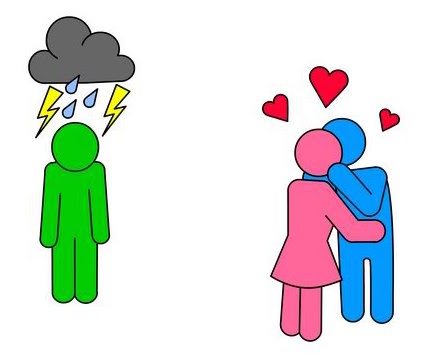
Left outFor reasons I can’t explain, my comparisons swarmed around a particular friend.  She and I had known each other only faintly from ballet class on the day when, less than a month after my horrific break up, I sat in the Department of Motor Vehicles, skinny from insomnia/inability to eat and still subtly shaking, waiting to renew my driver’s license.  In walked gorgeous Jane with her two beautiful children, so I waved her over.  Ten minutes later I knew that Jane, just like me, was a sober alcoholic who’d had her kids late in life.  She’d been married 10 years to a wonderful non-alcoholic man.

I trusted her.  By the time I left with my license, I’d confided the entire gruesome betrayal story, exposing all my wounds down to details I’d told no one else.  For some of the lewder texts and fetishes I’d seen on my boyfriend’s phone, I even spelled out words while her wholesome preschoolers played nearby.  Jane’s stricken face showed genuine empathy.  Even so, I berated myself afterwards for sharing TMI: “Why did you do that?!  You’re such a freak!”

Days, weeks, and months later, Jane’s husband would stop by our class lovers runningto pick up their kids, the two of them exchanging a brief kiss.  Mind you, I have plenty of friends in happy relationships, but for some reason that image, or even the thought of it, would spur me to beat myself up mercilessly:  I’d fucked up my whole life by choosing the wrong man.  If only I’d chosen more wisely, held out for a normie, found a good, church-going father like that, I’d have the happy intimacy Jane enjoyed!  Instead, I had nothing.

~

We never have a clue what’s coming.  Last week as I arrived at class, Jane rushed up to me in tears. “Thank god you’re here!” she said.  “My husband’s been cheating on me for years and years!  He’s a sex addict!”

I hugged her.  My heart flared with empathy as I understood this bomb had blasted not only her heart, as in my case, but her entire hearth, home, and family beyond anything I could imagine.  Still, the knife of betrayal – that I did know.  I looked into her eyes and spoke the words that had saved my sanity: “His sickness has nothing to do with you.”  We went to a coffee shop where I sat and listened while ‘crazy’ words spilled from her mouth — words of rage and agony and violence!  I nodded with recognition at even the harshest threats of retaliation.  I remembered that white rage.  Because when everything falls apart, there are no rules – except to stay sober.

To help Jane do that, I made up my mind to offer everything I could.

Love is the ultimate risk.  There’s no protecting yourself.  You open your heart and let someone live in there.  The more you love them, the deeper into your core their roots grasp.  So if a day comes that those roots are suddenly torn out, chunks of your soul get ripped out with them.  You die a little bit.  This is true for all of us.

backside embroideryWhat I’ve learned in AA is that nothing I’ve felt, thought, or done is unique to me.  Nothing!  In meetings we reveal our knotty, crisscrossed under-stitching instead of the smooth embroidery we show the outside world.  That’s how we learn to trust each other.  God reminds me over and over: in spite of whatever differing externals ego and envy harp on, our pains and our joys are the same. Helping one another through them, whether in ways big or small, is indeed the ultimate purpose of being alive.  Nothing matters more.

Jane is a strong woman.  She’ll walk through this hell, and she’ll do it without a drink.  And I’ll walk with her as much as I can.  I remember all the little kindnesses friends offered that helped me through my darkest days – frequent texts, maybe a positive CD, a bouquet, and most of all, listening.  Today, those are things I can do for Jane.

Why did I decide on that particular day, that particular hour, to head for that particular DMV to renew my license?  Why did Jane?  Was it merely by chance we shared the hour that bonded us?   You can think what you like, but I believe god sows at our feet the seeds of all we need to heal each other.

Everything is in divine order.

 

scroll

Post to Facebook

6 Comments

Filed under AA, Al-Anon, Faith, God, Recovery, Sobriety, Spirituality

What Alcohol Did; What god Does

Pain happens, starting when we’re young. In our efforts to evade it, we suppress a whole array of feelings, turning away and denying them. But like an ignored roommate sharing the small apartment of our psyches, the pain lives on. It doesn’t grow up. It stays the age we were when the trauma happened. Countless negative beliefs systems sprout to position it – that we’re not good enough, that others will reject our true selves, so we need to strategize to please them.  We try.  Again we miss the mark and endure more pain, the rabble of negativity within us creating a ceaseless inner shitstorm.

It sucks – the shitstorm does.  Our psyches can become a hellhole.  In AA, we speak of the shitty committee.

Shitty Committee

click to enlarge

What Alcohol Did for Me
The first time I got wasted, alcohol shrank that entire tornado of pain and fear so small it could fit inside a harmless little bubble and float off somewhere in my mind’s periphery – totally irrelevant.  Hey!  I was fine, you were fine, and if someone didn’t like us, fuck ‘em. My psyche’s protective walls fell away so the world opened up as a land of plenty, beautiful and safe. Life was so damn easy!  Cocaine tripled that effect*, adding an intense interest and delight in all things.

I wanted that feeling again.  And again.  Addiction promises a shortcut, an escape from ourselves. It’s that hope, that sweet anticipation of GOOD STUFF that lures us every time to jump on it again. Something as simple as a red notification number on Facebook can trigger a spurt of anticipatory endorphins in our minds – this is gonna be good! This cheesecake, this big sale, this cocaine porn winning horse remodel facelift romance booze is gonna lift me right out of the bad stuff, set me on top, make being me so smooth!  Dopamine levels surge, causing us to “forget” all the pain in our lives.

“Thus addiction… arises in a brain system that governs the most powerful emotional dynamic in human existence: the attachment instinct.  Love.”  Gabor Maté is writing here of opiates, but the same principle applies to all drugs that impact our dopamine levels – including alcohol.

sunshine1That first perfect, blissful high is, in my opinion, reminiscent of heaven.  Literally.  Hear the story of anyone who’s had a Near Death Experience (NDE) in which they went to the Light, and they’ll tell you they were permeated by an ovewhelming Love, a brilliance so powerful it left no room for anything bad. The Light is the unfiltered energy of Love that is not incarnate, not trapped in a limiting body; it is whence we originate, what powers us here, and what we’ll return to. And it’s a memory of bliss for which we hunger desperately as we trudge through the difficulties of being human.

So what am I saying?  That consciousness from a brain artificially flooded with dopamine resembles consciousness in heaven?  Yep.  ‘Fraid so.  That’s why many addicts sacrifice their lives in pursuit of it.  Un/fortunately, our brains respond to such bombardment by curtailing both production of and receptors for dopamine, so life without using more becomes increasingly hellish – and that change persists for years.

What god Does for Me
…is not as fast or dramatic, but it works: god gives me the self-compassion to heal my own wounds.  The message of the Big Book is love.  In the rooms we’re surrounded with it as we dare to take that First Step, to admit openly, “You guys, I don’t know what the fuck I’m doing!!”  From that humility, we tap an “an inner resource” – god as we understand it – which begins to edge out ego as our guide for living.  The more love we accept from god, the more we have to offer others, and vice versa.  For the first time, we can love imperfect people from the standpoint of our own imperfection.  In other words, as working the steps gradually teaches us compassion for others, we also develop it for ourselves.  We become conduits of the Light.

“You have to feel it to heal it,” my cousin and I like to say.  In scaredgirlmeditation I go in looking for that little 9-year-old Louisa who was so blighted by shame, and I ask her to tell me where it still hurts.  I feel it, too; I grieve with her; I comfort her.  You don’t have to do anything, I tell her. You can just be you, and I’ll love you.  I can promise her this because my god has promised it to me. At the core of Al-Anon, ACA, and SLAA, named either directly or indirectly, is the healing power of self-parenting. That’s the nexus of change.  We can play both roles, loving and healing our past selves.

Today my inner little girl is pretty happy.  She got banged up rather badly in my recent break-up, but she’s convalescing well.  We share an open world infused with goodness – because I perceive god in all I encounter.  At times I do experience bliss – basking in the beauty of the mountains, laughing myself loopy with sober friends, or witnessing the miracle of my sweet son. It’s not a cheap bliss, either: it’s the real McCoy, earned through hard spiritual work – that freedom I once faked temporarily with alcohol and drugs.  And like heaven, it’s all about love.

~

Watch This:
Here’s a simple animation that depicts volumes about addiction in a brief 4.5 minutes.  Strangely, watching it makes me cry.

I’m guessing Andreas Hykade, the film’s German creator, knew addiction well. It’s not by coincidence that our protagonist is a kiwi, a flightless bird.  We all feel like that – denied the soaring others pull off.  Neither is the grating step-by-step sound effect accidental. Real life is one step at a time and arduously incremental compared to the smooth bliss of intoxication. Even the images’ barren simplicity reflects the stark focus of addiction. An animation teacher at Harvard, Hykade chose a simple line drawing over every state-of-the-art visual effect at his disposal.

NUGGETS

Kiwi addict

.

So many of us never escape that final darkness.  If you have, take a moment for gratitude.

.

scroll

* Gabor Maté, In the Realm of Hungry Ghosts, p.153

Post to Facebook

4 Comments

Filed under Addiction, Afterlife, Al-Anon, Alcoholism, Denial, God, Near Death Experience, Recovery, Sobriety, Spirituality

10 Principles for Living Sober

FoodinBagA few weeks ago, I asked a clerk and bagger if they’d watch the sack of groceries I’d just bought while I ran back for another item.  When I returned, my groceries were gone and they felt terrible – so terrible that the bagger walked the aisles with me trying to help me remember what I’d bought.  But without the receipt we couldn’t recall much.  I’d picked up a number of things on impulse.

“You know,” she said after we’d covered the store with little success, “this deal is on us.  Really, you can just fill a bag with–.”

“Corn flakes!” I remembered.

But I soon drew another blank, so she urged a little harder. “It ends up as a theft write off, so you can just go for it.  Anything you want is fine with us!”

True, I’m a single mom and always short of money, so almost everything I looked at, I wanted.  Fancy jams and teas – mmm.  Maple syrup.  Organic soaps.  Mega-vitamins.

I left with a half-filled bag containing only what I distinctly remembered buying.

Question:  Why?  Am I going for sainthood?  Do I get a bang out of feeling superior?  Do I think god keeps score?

Answer: None of the above.  The fact is, I’m a doomed alcoholic who’s graced with sobriety one day at a time.  I’m not mindlessly drinking myself to death right now due solely to the power and guidance of my new employer – god as I understand god.  In each situation, I have just one prime directive: Do the most good I can for all concerned. 

The store was concerned; having my stuff stolen did not mean I could steal from it.

During active alcoholism, I lived by a slightly different prime directive: Do the most good I can for Louisa.  In every situation, I considered what would most benefit me.  What would make me feel good?  What might pay off later by making me feel even better?  If there were negative consequences, what eventual rewards might outweigh them? Certain people’s esteem was worth more than others’ pain or anger.  Gradually, navigating by my own best interest, I ruined my life.

Ruby slippersSo I quit that game.  What I seek now is clarity.  How I find it is by living in alignment with my HP’s prime directive, which I will here attempt to unravel as my own 10 principles for living sober gleaned from the Big Book, my fellows, and my own stepwork. Here they are, in no particular order:

1. Be where you say you’ll be and do what you say you’ll do.  (Choose Integrity)

2. Think of others as you’d have them think of you.  (Choose compassion)

3. Be honest with yourself always, and with others short of reckless harm. (Choose reality)

4. Give as much kindness as you possibly can to every being you encounter. (Choose love) 

5. Avoid gossip – and envy, which fuels internal gossip. (Choose respect)

6. Do not flirt either as or with a committed person. (Choose honor)

7. Let others be in charge of what’s best for them. (Choose detachment)

8. Pay attention to all you do and how it squares with your values. (Choose awareness)

9. Be grateful for everything – everything – everything. (Choose humility)

10.  Know that god loves you the same way you love small, helpless creatures, only a billion times more – whether you’re in your body or out of it – so try loving yourself that way, and love god for loving the world.  (Choose faith)

~

Now that I’ve written them all out, it looks like an awful lot of rules!  But I don’t think of them distinctly – more as Miguel Ruiz’s Fourth Agreement, “Always do your best.”

My agreement with god – my way of acknowledging  sobriety as a gift I’m graced with – is simply to try my best in each situation to do the most good I can for all concerned,  which means applying the above 10 principles.  For example, #3 and #8 mean I don’t eat meat by denying the horrors of factory ‘farms,’ or even shop at Walmart; #4 means being of service.  Sometimes the rules conflict and I have to work out what “most good” means.  For instance, to follow #5 – don’t gossip – I may reply “I don’t know” when I pretty much do.  Or to fulfill #6 – don’t flirt – I may pretend to be indifferent when I’m not.  But those bits of dishonesty fall under the “short of reckless harm” proviso in #3.

Then there’s the Al-Anon piece.  Up until a few years ago, I thought #4 – giving kindness and love – was to be practiced unconditionally.  You could treat me like shit and I’d just keep showing up with love, giving you the benefit of the doubt and killin’ you with kindness.  Al-Anon’s “Don’t be a doormat” applied, I assumed, only to codependent wives and mothers slaving selflessly for those who used them.

It took blatant abuse from those closest to me to drive home the fact that I need to recognize and respond to toxicity in others. People’s behavior tells me what they’re made of.  If I overlook continuous patterns, I’m lying to both myself and them.

Detachment (#7), I’ve learned, applies to letting other people think of me as they choose: I can’t make them understand me.  I can’t make them return goodwill no matter how much I beam their way.  At a certain point, loving myself as god loves me (#10) means I have to set boundaries.  Tortoises carry shells and roses sprout thorns for good reason: we often need protection to hold our own.

tortoise-roseOf course there are plenty of times I screw up – times I choose fear, choose anger, choose self.  Sometimes I wallow in loneliness and self-pity.  Plus I once ordered a cheap tent from Walmart.  But I never give up and say “fuck doing what’s right.”  As soon as clarity returns, I own my mistakes and do my best to clean things up.  It’s actually the easier, softer way, because I get to live in a beautiful, love-bright world with like-minded people.

scroll

Post to Facebook

4 Comments

Filed under Al-Anon, Alcoholism, Faith, living sober, Recovery, Sobriety, Spirituality

Spiritual Experience

Sometimes I wish I could loan my faith to others.  At least I felt that way the other night at my homegroup when the topic was “your spiritual experience.”  In share after share, people balanced guarded reservation with the undeniable fact that, once they sincerely asked a higher power for help, their addiction was lifted and a new way of living began for them.  A few also shared that certain inexplicable synchronicities or phenomena had strengthened their faith.

I really hoped to get called on.  If you could raise your hand in AA, I’d have been bouncing in my chair – “Ooo!  Pick me, pick me!”  My faith is HUGE and strong, and I wanted to share it!  I don’t believe – I know ( just like Carl Jung! – this is an awesome, quick clip!).

sky angelsMy addiction memoir recounts the tale of my slow (and ongoing) spiritual awakening.  It tells how there came a definite turning point in 2003 when I finally dropped the walls I’d been holding up against god.  Before that, I’d locked my Near Death Experience (NDE) and subsequent paranormal experiences away in a “not relevant to regular living” vault.  When I was “feeling spiritual,” I’d turn to god; otherwise it was was business as usual.  Weird Thing #9 led up to the transformative acknowledgement that god really is omnipresent in all that lives, beyond anything my brain can conceptualize or imagine.

On that day, I turned away from loyalty to society’s consensual reality in much the same way I’d turned from loyalty to alcohol and drugs some 8 years previously.   In both cases, I’ve never looked back.

My god is not religion’s God.  It’s the life force, the collaborative, animating energy of Love and the collective intelligence of all life it has ever generated. Nothing is lost.  Energy can’t vanish, even as a result of mass extinctions.  The sun keeps pouring energy into our life system, and the system keeps growing.  You’re a part of it.  Your trillions of separate cells collaborate toward the larger purpose of you, which/who in turn is meant to serve the greater purpose of we.

After Weird Thing #9 in 2003, it still took me 8 years to Google Near Death Studies, and still another year before I went to an IANDS meeting.  As with my first AA meeting, I was leery of a bunch of kooks.  And, as with my first AA meeting, hearing my inmost experiences described by strangers blew me away.  I soon realized I had, again, found “my people.”

In fact, only about 10% of our Seattle IANDS group at any given meeting has actually died.  But almost everyone there (usually about 60 people)  has experienced some kind of overtly paranormal event that caused them, too, to break from the physical-only view of the world that society condones.

Just as it’s “safe” at an AA meeting to share our ups and downs of sober living, so it’s “safe” in an IANDS meeting to speak of guardian angels, the overwhelming Love of the Light, and encounters with dead loved ones, or – if they’re in your story – demons.

Here’s a brief excerpt from one of our members’ stories.  A severe allergic reaction, combined perhaps with asthma, had caused him to collapse, aspirate, and die one night on a California beach.

When I’d been flipped over, I had sand and vomit all over my face and… she thought it was gross and didn’t want to do [CPR].  I still was [above them] saying, ‘I’m fine, I’m okay!… I don’t want to bother you!  I’d much rather you be happy!’…  But she did it.  I could see her bending down and getting ready to press her lips to mine.  And almost as soon as that happened, it felt like a car crash or something.  I was immediately back through my own perspective, I was definitely in my body… it was like being slammed back into me.  …I don’t know how to describe it.

I remember seeing her over me… At this point people are all around me and I’m just laying there on my back.  And I know that they’re asking me, what’s your name, what year is it, who’s the president.  I… I didn’t care.  All I could focus on were two things.  I could see their lips moving – I couldn’t actually, for some reason, hear their voices.  The only thing I could hear were the waves from the ocean, and the only thing I could look at were the people that were helping me – but they were… people that were helping the people that were helping me.

Um… for lack of a better term – I don’t like to use certain terms, but – for lack of a better term, I would call these ‘angels.’  I don’t feel they were there connected specifically to me, but that maybe they were there connected to those people – that we were all part of a collective effort, that everyone had the same – goal? – in mind.  It wasn’t that the goal was to bring me back, but that we were all taking part [in something bigger].

How wonderful to be free to know in an IANDS meeting that god is real!  Those rooms glow with vestiges of the Light.  By aligning what’s happened to me with what others have seen and described, I’ve come to believe that the loving presence I knew on the other side was my guardian angel, and that this same entity is what often answers not just my prayers but my private thoughts – not necessarily when I’d like or with what I’d like, but somehow.

orb close close orb2
Just before these pictures were taken in 2013, as many sober friends who knew I had cancer sang Happy Birthday to me, my embarrassment was interrupted by a different thought-voice: “Louisa, this is as good as it gets!  Don’t resist.  Just let them love you.”  If orbs are nothing but dust motes on a lens, why would photos from two different cameras, from two angles, at two different moments show the same orb in the same place?  That’s my angel.

So… back to my homegroup: “What’s your spiritual experience?”  I wasn’t called on, so I’d resolved to share once the meeting opened for volunteers.  As soon as it did, though, before I could open my mouth, came the thought: Don’t.  Only listen and love.

I countered, “I only want to help people!”

Bullshit, came the next thought/voice.  You think you know more just because you know different?  Let be.

Boy, was it hard to abide by this!  I had to sit on my hands, especially through the long silences.  Puppies don’t always pee on the newspaper, and I don’t always listen to guidance – but this time, I did.  When the secretary finally called time, I sighed: Phew!  Made it!

I got home.  I went to bed.  And in the morning I remembered clearly that AA works only because we all keep our gods to ourselves – since we do “not need to consider another’s conception of God.”  To go off about my IANDS group and NDE would be no different from someone going off about how Jesus Christ is Lord and Savior.

Because spiritual experience is, like sobriety, an inside job.  Each person grows their own experience.  Much as I’d like to, I can’t whomp my big fat weird tree down in front of anyone – each person has to germinate their own inner seed and nurture it over the days and years of their life.

What do you call that, when you’re great guns to do something and another thought/voice tells you not to – or vice versa?  How, exactly, do Steps 6 & 7 work in your beliefs?  “Do not let any prejudice you may have against spiritual terms deter you from honestly asking yourself what they mean to you” (p. 47).  You can call it superego if you prefer, but, as long as it’s a calling toward love, I call it direction from whatever it is that’s helping me.

scroll

.

.

3 Comments

Filed under AA, Afterlife, Faith, God, Near Death Experience, Recovery, Spirituality

Recover-ING or Recover-ED Alcoholic?

Some folks in AA take issue with the words sun-thru-cracks-in-door“recovering alcoholic,” preferring to classify themselves as having “recovered from a seemingly hopeless state of mind and body,”* and thus from alcoholism.

Not me!  Sure, my mind and body are healthy and I’m filled with hope.  Even so, an inner part of me remains as broken today as when I first walked into the rooms.  To me, that’s a gift.  Knowing I’m intrinsically flawed motivates me reach for god’s love each day by actively loving what is.

As long as my recovery’s a process rather than a check-box, the doorway is still opening.  There’s always more good stuff to seek – deeper honesty, truer humility, simpler joy.  I’ll never classify myself as a “success,” a done deal.

Here’s a little story about why.

Ten years ago, I was church liaison for an AA group that met in a wealthy neighborhood. For years, the church complained that we left cigarette butts in their parking lot. Homegroup meetings addressed this problem with lots of announcements and a two-person outdoor cleanup team. During our final winter, I served as Official Butt-Ranger myself, scouring the lot with my headlamp long after everyone had left, picking up every soggy thing that could possibly be construed as a butt. Even so, the complaints continued and we were finally given notice.

I phoned the church and asked to speak directly with the priest since our meeting, which drew over 150 drunks every week, would be tough to relocate.   What a huge and diverse crew we were!

In addition to plenty of wise old-timers and on-fire yearlings, the group included several mentally ill regulars. A muttering homeless guy, Dave, came for the coffee and smelled sooooo atrocious you couldn’t sit within three chairs of him. But you could observe each week’s unsuspecting newcomers as they took a seat next to him and, stage by stage, awakened to that fact.

We also had a schizophrenic young man I’ll call Harold, who occasionally suffered irrepressible outbursts at someone not there and had to be escorted from the room. To deal with this, we designated an un-official rotating service position of “Harold-shepherd.”

I also recall an adorable little curly-haired blonde girl I’ll call Robin who, as she shared, would gradually flush beet red until she was glaring around the room and barking out, “Fuck you ALL! I don’t give a FUCK what you think of me!” Whether to kick out little Robin came up frequently at homegroup meetings, but someone always agreed to have a talk with her, after which she’d contain herself for a few weeks.

Something wasn’t right in these and many others present, but we all kept coming back for the same reason: the meeting helped us.

Eventually, the priest called me at my work. Explaining to him, as I had in many emails to his office, that the butts were not ours, I suggested the nearby freeway exit might be somehow related. He said he thought that unlikely. Abruptly, his tone became frank.

“Listen, I’ve sat in on one of your meetings and I was very unimpressed. There’s swearing! People slop their coffee and don’t clean it up. They speak out of turn. Now you – you sound like an intelligent, well-educated woman. How can you sit with these people week after week and listen to the same drivel over and over?”

A little taken aback, I explained: “Some of those people have only one day sober.  They slop coffee cause they’re shaking so bad. Or a few might be close to killing themselves, so slopping coffee’s just not that big a deal. We mop up afterwards. We clean everything.” I decided to risk quoting one of the meeting’s old-timers: “In AA, we don’t shoot our wounded.”

The priest scoffed. “Wounded? I don’t see anything wounded about ‘em. They’re just lazy and immature!”

This was too much. Part of me wanted to fire back, “Jesus fucking Christ, man! Who’d want to listen you driveling on Sunday after Sunday? I’ll take drunks over your hypocritical ass any day!” Instead I thanked him respectfully for the many years of allowing us to meet in his church and agreed to be out by the end of next month.

Richard Rohr, a Franciscan Jesuit, offers a fascinating critique of Christianity. He points out that admitting our brokenness is crucial to letting god in – through our wounds, the cracks in our shell. Jesus healed the sick and banded with outcasts, not the well-to-do. Only when defeat forces us to admit powerlessness is the ego is quelled enough to shut up and let us receive.

Emperor Constantine

 Christian Emperor Constantine I

By contrast, once Christianity became Rome’s official religion in 313 A.D., it lost touch with the meek and struggling.  Says Rohr, “When you are aligned with Empire, you are forced to prefer a spirituality of achievement, performance, worthiness, and willpower… Conformity to cultural virtue becomes much more important than love of littleness itself or love of any outsider (read ‘sinner’).”**

Me – I ain’t righteous.  I ain’t fixed and never will be.  On daily loan to me from god are my sanity and happiness – and I know it!  The reward is tremendous: acknowledging the remnants of my own brokenness lets me love others through theirs.

I wish I could have taken that priest on a Scrooge-trip to my first AA meeting. My own shaking hands slopped coffee all over the place, which I hoped no one would notice even as I chain-smoked about 12 cigarettes in an hour and dropped candy wrappers under the table, trying my utmost to project a savvy, disinterested coolness that belied the empty, terrified, hopeless, self-disgusted wreck I was inside. In that magic AA room I sensed an energy I could neither identify nor comprehend, but today I can offer the same to newcomers living my past.  Compassion.  Well-wishing.  Patience.  Love.

We moved that old homegroup to a church downtown near a druggie park, but its character changed over time, and after a few years I signed over the lease and switched groups. Homeless Dave froze on the streets years ago. Harold and Robin vanished. Yet the beauty of that inclusive group stays in my heart, a collage of memories exquisitely human in a way that haughty priest (who had not love) will never know.

God breathes love into this leaky skin balloon each day when I ask and open. Like you, I’m a work in progress.

.

scroll

* Alcoholics Anonymous, xiii
**Richard Rohr’s Daily Meditations (thanks, Mick M.!)

Leave a comment

Filed under AA, Alcoholism, God, Recovery, Sobriety, Spirituality

The Alcoholic’s Power of Choice

“The fact is that most alcoholics, for reasons yet obscure, have lost the power of choice in drink.”

Alcoholic Anonymous, p. 24

Alcoholics cannot choose to not drink.  We lack the power to decide whether or how much alcohol we’ll consume.  If we had that power, we wouldn’t be alcoholics.  We’d just be people who drink too much.

liverIf that’s all there were to it, once we recognized drinking was destroying our love, life, and liver, instead of experiencing  “a complete failure of the kind of defense that keeps one from putting his hand on a hot stove,” we’d yank back our blistered, half-cooked hands and just stop drinking.  We certainly wouldn’t need a program of recovery or a spiritual connection to do so, and I wouldn’t need to write this blog.

Given our powerlessness, then, it really  makes no sense to say, “I’m an alcoholic and I choose not to drink today” – though we often hear that very  line spoken in meetings.  Some saying this may be clueless about their condition.  But others may be using shorthand for the power of choice we alcoholics do retain.  As alcoholics we have one daily, hourly, by-the-minute choice that can make or break our sobriety, and this is what it looks like: we can work toward the solution, or we can regress toward the problem.

Tiny TimWhat’s the problem, again?  We’re maladjusted to life.  Drinking was our old solution. Take it away via abstinence, and we’re up shit creek without a paddle.  Undeveloped emotionally, we’re Tiny Tim with his crutch cruelly kicked away.  We still have to cope with and navigate everything that overwhelmed us before, but now try to do so exposed and unarmed.

So the choices we make in sobriety are really about how to render the real world comfortable, livable, and even a joy – by staying in touch with a higher power.  We choose thousands of times every day, not only in our actions but in how we elect to perceive – and every choice will fall into one of those two categories: toward the solution or toward the problem.  Which wolf do you feed?

When newcomers ask me, sometimes desperately, what’s going fill that empty chasm in their gut, what’s ever going to take the place of alcohol and drugs, the solution is hard to verbalize because it resembles a sense they don’t have yet, or a feeling they haven’t experienced since they were little kids.  The solution is LOVE, for everything and everyone – and the unshakable conviction that love is everything.  Mind you, when I heard that kind of stuff in early sobriety, I felt like, “What the fuck good is that?!  I heard that crap in a Beatles song a long time ago and it doesn’t do anything!  I need help NOW!”

Don Miguel Ruiz offers this gem of a prayer at the close of The Four Agreements:

Today, Creator of the Universe, …help us to be like you are, to love life, to be life, to be love.  Help us to love the way you love, with no conditions….  Help us to love and accept ourselves without any judgement, because when we judge ourselves, we find ourselves guilty and we need to be punished.

That’s the destination: freedom to love ourselves and others.  The steps are a means of getting there – sometimes quickly, sometimes slowly.  Everything we think we know from the past holds us back.  When the fabric of our existence is shot through with fear, we can love only a select few and only on the condition that they be on “our side.”  Ironically, the same guards we’ve built up to protect us from a threatening world constitute the source of our deepest pain, because they also cut us off from god’s love – love that can flow through us and invigorate our souls as we pass it on to others.

Do you know what hell is?  Hell is being cut off from god, from love, from the energy that orchestrates our internal body and connects us to all that lives.  A life of fear and resentment enshrouds us in a thick, impenetrable cell that will not admit the light of god.  We can be busy knowing what’s right and who’s wrong, we can be fighting for ourselves and resenting everyone who gets in our way, we can chase whatever seems to grant us power – and all of it will lead to loneliness and despair!  And if we die with those guards up, we’ll experience hell in the hereafter – unless love cuts through our shell and frees us to seek the light.  (Or at least, so report my fellow Near-Death survivors who did go to hell.)

.

Sunlight of the spirit.

The 12 steps chip away at those countless false beliefs that made our shells seem necessary in the first place.  We replace our old axioms with new, transparent ones – that whenever we’re upset, it’s because there is something wrong with us; that acceptance grants us the freedom to live and let live; that we need to know where we end and others begin; and that, when necessary, detaching with love is our responsibility.

I can’t choose not to drink.  But I can choose to do what’s necessary to connect with a god who, one day at a time, graces me with sobriety.  I can PRAY for strength and guidance.  I can PRACTICE the self-care that nurtures me.  I can PAUSE whenever I sense I’m headed down a wrong path – toward resentment, self-pity, or irresponsibility.  I can ACT by walking out the door to a meeting I don’t think I need, where I do service I don’t admit is important, or pick up sponsees I don’t have time for.  I can feel GRATITUDE for a beautiful life I threw away countless times in my drinking.  I can OFFER kindness, encouragement, and help to those in need – i.e. everyone.  And, most important, I can choose to LOVE whatever life brings me, moment by moment by moment.

It’s not about just not drinking anymore.  These choices, I find, bring me heaven on earth.

 .

scroll

.

Post to Facebook

6 Comments

Filed under Alcoholism, Faith, God, Recovery, Sobriety, Spirituality, Twelve Steps

The Serenity Prayer

The word prayer repulsed me in early sobriety, and in some ways it’s still glitchy. It can call to mind a penitent worshiper hunched over clasped hands in some austere setting – and for the non-religious, that just ain’t us! So I’ve come up with ways to make prayer real to me – since fortunately, religion has no monopoly on access to god.

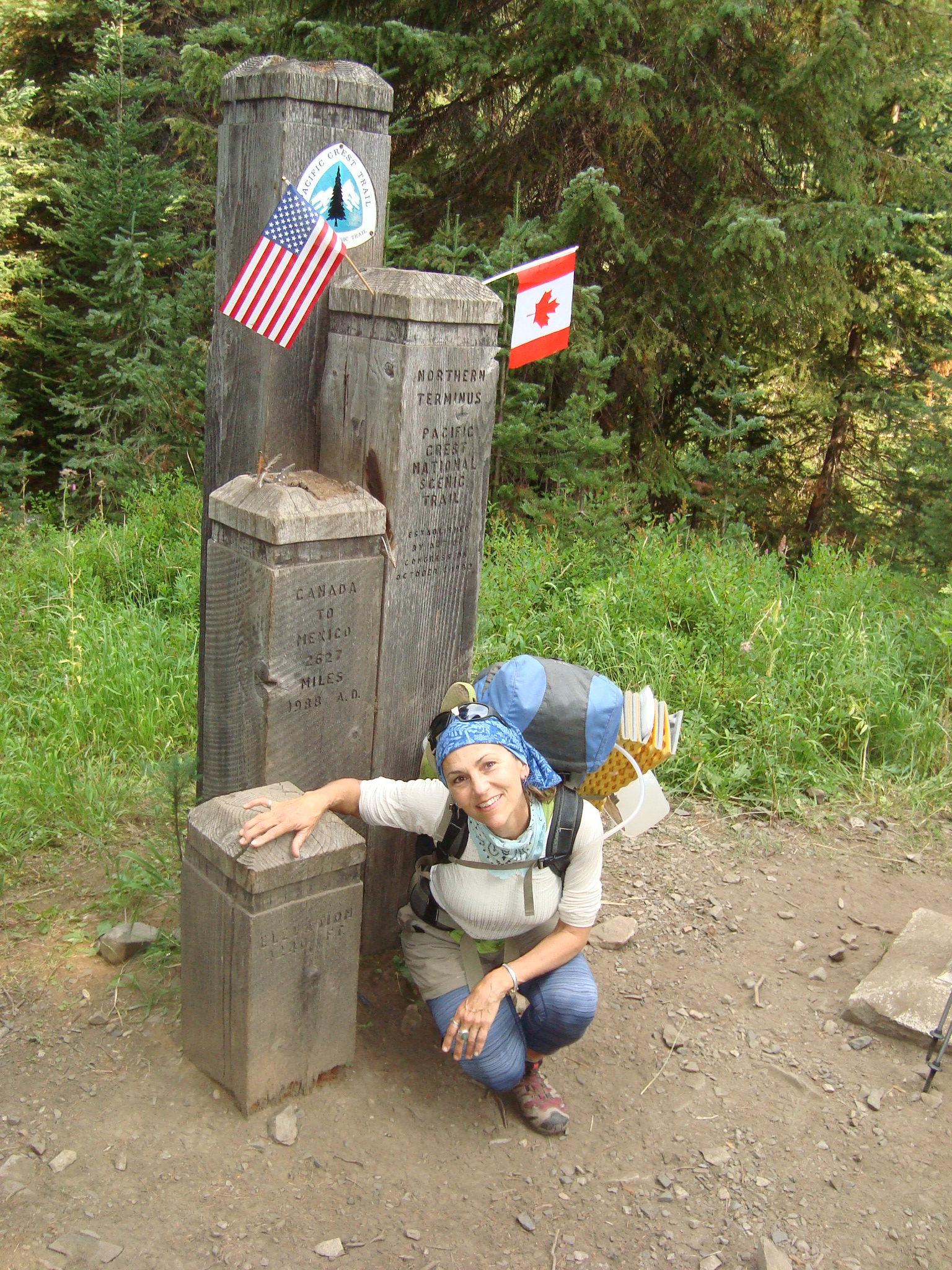
It’s amazing how many people assume it does – that spiritual DSC03916seeking and religion are inseparable.  That’s like claiming I-5 is the only way to get from Seattle into Canada.  Not true.  Recently, hiking the Pacific Crest Trail, I jumped in and out of Canada about five times in few seconds, just for fun.  You can always find your own pathway to god; the important thing is that you seek it with your deepest sincerity.

So instead of prayer, I just frickin’ talk to god. I may gab away and cuss and laugh, or I may get on my knees and weep, depending on how I feel. I may address my lost sister, or guardian angel, or the font of all that lives. Whatever works.

But what do I say?
Fear-based prayers are an extension of self – and a very natural one. All day, from the moment we wake, we’re responsible for meeting our own material needs. We engage our brains and bodies to make shit happen. I want a bagel so I open the fridge and get one. I want it toasted, so I get a knife to slice it and then pop that baby in the toaster. By applying skills, I get what I want.

Problems arise when we apply this approach to spiritual life: I feel restless, irritable, and discontent, so I gulp down some booze and get what I want – relief.  Great!  But fast-forward to the point where that survival tactic has quit working, so I’ve suffered agony at the level of emotional disembowelment, finally become willing, and – with god’s help – gotten sober.

Now I need new ways to fix those old pains, but I don’t know it. So it’s only natural that I try a skills approach: I identify the external problems I think are responsible – the people, places, and things I perceive as fucking up my happiness – and try to manage them to suit my needs.

It doesn’t work.  Dammit!  So I try harder.   Still, no dice.

Now I’m freaking out.  Will I ever get X?  Oh my god, does this mean I’ll always be stuck with this crappy Y?  What’s that I’m hearing in the rooms?  Ask god for help?

Okay… I turn to prayer: “God, please put this damn life-bagel in the goal-toaster for me. It should be toasted.  Surely you can see this. Thank you!  Your child, Louisa.”

Anxious prayerI may think of it as supplication rather than giving god orders. Still, however respectful I may be, I’m backseat-driving the universe. And it doesn’t work!  Yes, god may make some related good of my prayers (especially if they’re for others), but it won’t involve my specific bagel.  The great danger here is that I can feel ignored and get pissed… and turn my back on god.

True prayer, as Richard Rohr and others have written, is not about managing the world. It’s about changing ourselves. It’s about strengthening our relationship to god and accessing the power that god can channel into our lives.

Bagle

Enter, Serenity Prayer

Thank you, Reinhold Niebuhr, for writing this gorgeous prayer for a Sunday service in Heath, MA, in 1943.* You could not have imagined the role it would play in so many lives today.

“God, grant me the serenity to accept the things I cannot change, the courage to change the things I can, and the wisdom to know the difference.”

The prayer asks god to change us, to help us grow beyond whatever we ourselves can muster. We can say it over and over, thinking about what it means, how it moves us.   At different times it takes on different nuances.

Here, unpacked and named, is some of what this prayer can mean for me:  God,

grant me = help me, because I can’t seem to do this myself; I need your love, your guidance, your gifts
the serenity = to fricking calm the fuck down about this stuff, to quit panicking, to quit judging, to let go this urgency
to accept = to allow into my reality, to acknowledge as what is, to give up shoulding on and just let it be true – because it already is
the things I cannot change, = the past, what’s happening, how this person is, what they won’t do, everything I don’t like and wish were different… that isn’t me
the courage = a conviction, faith stronger than my fears, a power drawn from my inmost heart, a little spark of you
to change = to take action, to re-see, to step out into empty space, to quit procrastinating, to dare, to just do it !
the things I can = attitudes & assumptions & habits that don’t bring goodness, cycles I’m stuck in, people I hang out with, my default defects.  Reluctance to begin those baby steps of action I’ve been too afraid or proud to take
and the wisdom = god-inspired honesty, open-mindedness, faith, harvest from the experiences you’ve already given me
to know the difference = to intuit what’s my business and what’s yours

.

Good thing it’s a lot shorter, eh?  But for me it still carries all that meaning.

Resistance
I don’t know that I’ve ever, in 20 years of saying this shit, had a problem instantly vanish.  With bigger issues, sometimes the best I can hope for is for me to shed a layer of denial or feel a little less pain.

But the courage part has been literal and concrete. This prayer has emboldened me to act where I’ve been scared and reluctant: I’ve made phone calls, shown up at events, applied for jobs, thrown parties, forgiven rosietheriveterpeople, entered dance studios, climbed volcanoes, started a business, and walked into the mountains alone – all deeds inspired by this little prayer.  And those actions do transform my reality incrementally, with a cumulative effect beyond anything I could envision or orchestrate.

Ultimately, the Serenity Prayer condenses into twenty-seven words the essence of all 12 Steps: surrendering of self and the willingness to collaborate with god to cultivate meaning and integrity in our lives.

Never underestimate it, no matter how many cutesy places you see it embroidered!  It’s a compact tool we can carry in our back pockets like a humble but priceless compass.

scroll.

*http://www.huffingtonpost.com/2014/05/15/serenity-prayer-origin_n_5331924.html

.

Post to FacebookSerenityPrayer22

5 Comments

Filed under AA, Al-Anon, Alcoholism, Faith, Recovery, Serenity Prayer, Sobriety, Spirituality, Twelve Steps

Spiritual Essence: Sobriety, Growth, and Who You’ll Be on the Other Side

Because in AA and Al-Anon meetings we emphasize similarities rather than differences, I usually refrain from talking about my Near Death Experience. I don’t want some share of mine about going to the Light to discourage a newcomer from identifying as alcoholic or convince them AA is full of loonies. But my blog’s a different matter. It’s a place to share my whole experience, loony or not.

When we get sober, we hear a lot of talk about ego as something in close cahoots with our addiction. In order to grow in sobriety, we strive to become conscious of those times (always?) when  it takes over our thinking. But what, exactly, is that entity trying to become conscious? That is, who/what are we without our egos? When we get down to the very heart of our being, our consciousness, what do we find?

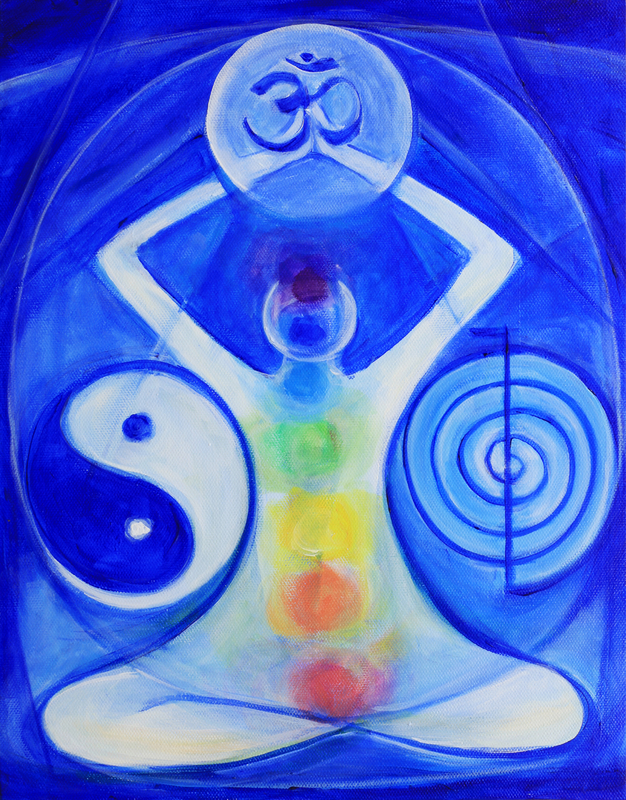
chakrasEckhart Tolle, in my experience, writes most masterfully on this topic. In A New Earth, he makes a number of distinctions among the images appearing on the screen of the mind or various voices in our heads. In addition to ego (which is essentially the voice of fear – a destructive agent) and thought (which continuously occupies the brain much as digestion occupies the stomach, but without necessarily holding insight), he identifies emotions (the body’s reaction to thoughts) and the pain-body (an energy field within the body that feeds on negative emotions). Together, these components of our minds conspire to create the Unhappy Story of our lives.

In contrast to this, Tolle posits Presence. Presence is that which witnesses all aspects of our experience – the font of consciousness itself. I remember when I was reading Tolle on a beautiful beach in Costa Rica, the phenomenon of Presence kept eluding me.  I’d try repeatedly to disengage from my thoughts and emotions enough to zoom in on who was witnessing them, only to be sucked in by another thought or emotion, such as judging the extent of my success.

Today I understand why I couldn’t do it: my core, my soul, my essence was submerged beneath a layer of lies (thoughts) and denial (fear) manufactured by my ego to maintain my love addiction: I lay on that beautiful beach with a boyfriend who I knew in my core was concealing late-stage alcoholism, simply not drinking or acting out around me. I did not want to know this, mind you. I wanted not want to be fully conscious, because if I dropped my stories of him as an ethically strong and genuine man, I’d need to uproot my entire emotional life by breaking from him.  Addiction – with its urgent needs and false realities to fill them – obstructed my access to Presence, exactly as it had back in the days when I was drinking.

I do, however, have a memory of being pure presence.  If you’ve read my addiction memoir, you know that in 1982 I snorted a half-gram of lidocaine sold to me as cocaine, which shut down my cardio-pulmonary impulses and caused me to die on the dance floor of a Manhattan nightclub.  In those three minutes without pulse or breathing, I rocketed out of my body and into a vast blue sky above the open ocean, embarking on my journey to god.  There’s no room to tell the whole story here. What I want to concentrate on is the “I” in those sentences. What was “I” outside my body?

Pure awareness. Pure interest. Pure embrace of each phenomenon I encountered. That is, whatever I experienced, I loved.  I saw and knew with an ongoing, unqualified excitement that made not loving impossible. How to describe this? When you were a kid, maybe on your birthday or Christmas, you might have encountered a big stack of presents. You didn’t know what was in them.  You didn’t need to.  You anticipated finding out without worry that some might be duds.  All you felt was, “Oh, boy!”  That’s how you’ll feel about everything after you leave your body – everything, that is, except the prospect of returning to it.

Fear became null. When I was diving hundreds of feet toward tspiritenergyhe ocean’s surface, I wondered whether its surface tension might impact me like concrete, and there was certainly an extra spurt of “Oh, boy!” when it didn’t – but no adrenaline tinge of dread.  Same with the realization that I was about to burst into the sun – I only wondered what would happen.  That’s it.  Fear, sadness, anger: these are functions of the BODY.  We don’t need them once staying biologically operational is no longer of consequence.

Short of dying, how can you experience your own essence – that core consciousness you’ll become on the other side?  The best way I know today is to get quiet, close your eyes, and mentally speak your own name adding the suffix “–ness.” Do this several times.  Each time you repeat it, go further toward your child self.  Seek the thinker, not the thoughts.  Not only that, let go of trying – to be someone, to please, to do well before anyone but god – and let yourself fall toward humility. You’re just you.

In my “Louisa-ness,” there’s a subtle hint of…  I can’t find a word besides “dumbness.” But it’s a dumbness I thoroughly love! Maybe it’s just the void left by ego’s absence, the submission to being limited. It’s sort of like the curve of a ball, the spherical nature of myself coming back to me. It cups me. It hums “Louisa-ness.”

The more sober I am, the closer I move toward living from my essence.  THAT is my spiritual journey.  As Meister Eckhart put it (not related to Tolle), “God is not found in the soul by adding anything, but by a process of subtraction.”

Part of the reason I love to climb mountains is that the physical demands pare away my thoughts and emotions until the simplicity of one goal – I will simply continue – eclipses all the various yammerings of ego.  Ego may initiate my climbs, but spirit finishes them.  “One Step at a Time” – the name of my sober mountaineering group – offers the ultimate metaphor for spiritual growth.  Day before yesterday, standing at 12,200 feet on the summit of Mount Adams, I did indeed feel close to my god.

I’m alive.  I’m grateful.  Nothing else matters.  For me, until the times comes to shed the “dumbness” of this body, that’s as true as it gets.

Me at 12,200 feet

Sunday afternoon, Mount Adams summit at 12,200 feet, a distant Rainier on the horizon.

1 Comment

Filed under AA, Afterlife, Codependency, God, living sober, Near Death Experience, Recovery, Spirituality

Just Say NO to Self-Pity: 10 Reasons

“What we must recognize now is that we exult in some of our defects. We really love them” (12 Steps and 12 Traditions, p.66).

Somebody or somethin’ done ya wrong?  Let’s stew on it.  After all, you’ve tried so hard for so long, earnestly doing what’s reasonable and right.  You had faith things would work out.  But then what did they do – this person or group or life in general?  Did they recognize the facts?  Did they acknowledge what was really going on, see their obligations, and grant you your just reward?

No!  No, they did this other thing, this wrong thing, 858617_4584888544779_993860787_othis business that is so, so hurtful!  You had hopes and they dashed them!  You were innocent and they shot you down.  And hasn’t it always been like this?  Fuckers.  They’re just plain cruel – that’s the truth!  It’s all so unfair!  Why do you even keep trying?  Why get hurt like this again and again?  Sometimes it feels like even god – that’s right, your gonna just go ahead and say it – plays favorites, walls you out, prefers a frickin’ clique!  So you’re utterly alone.  You have nothing.  Only this lonely ache and this rusty iron conviction you’ve been wronged…

Man, I just LOVE me a warm bath of self-pity!!!  Sing it, bring it, tell it!

Except – wait a minute.  That stuff’s poison.  It’s toxic thinking guaranteed to sicken and imprison a person in resentment quicker than they can say “running the show.”  Whenever I senseTears glass self-pity pooling in my thoughts, I have to draw myself up short and try my best to redirect my focus.  Otherwise, I’m taking steps backwards in my recovery.  For all of us prone to addiction, self-pity is a dangerous spiritual ailment, and  indulging in it without check is the emotional equivalent of guzzling drinks.

10 Reasons

    1. Self-pity ain’t nothin’ but ego:  We know the storyline of how things were supposed to go because we wrote the script.  It was a really good script, too!  We had “the lights, the ballet, the scenery, and the rest of the players” all set in the best way – that is, the way that would turn out ideally for us.  We deserve what we want!  Really, everybody would be better off doing things our way, if only we could make them see it! —————————————-  ——————— —————  —————-
    2. Self pity lies like a rug: I know what’s best. I know what everyone’s thinking and exactly why they did what they did – all their petty, biased little motives!  That’s why I’m sure this turn of events is wrong.  What actually happened is NOT god’s way: it’s a big mistake!  Or if it is god’s way, then god’s an asshole.  God should put foremost what makes me happy.  The universe is either with me or against me, based on what I see and think! ———————— ——— ——————————————- ————-
    3. Self-pity is drama crack: I’m not only the heroine of this tale but also the audience. Look at this poignant twist of plot!  I’ve persevered through so many difficulties, only to be wounded by this undeserved blow!  Oh, the pain!  The audience (me) can see the other characters all plotting around the player spotlighted in center-stage (also me).  I can play the drama forward; I can draw out the future with swelling musical notes.  Someday, damn it, they’ll realize X and be filled with Y.  This show is so intense!  So deep————————————– ——————- ————- ———
    4. Self-pity is addicting: The more we hang out in self-pity, the more trammeled those neural networks become and the more likely we’ll go back for more.  Dwelling on injustice brings the intensity of something exciting, something dire!  That delicious ache of martyrdom fills the gaping hole in our spirits.  Yes, it’s a low, but it’s also a high – an all-consuming escape from real life.  By contrast, a level-headed look at our situation going forward seems either boring (acceptance) or intimidating (action).  Can’t I just sit here and savor another hit of “poor me”?! ————————————– ————————————      ————————————————
    5. Self-pity ain’t self-compassion: Compassion is positive.  When we feel it for others, we open our hearts to them; we empathize lovingly.  The same goes for self-compassion.  It prevents us from judging ourselves negatively, acknowledging instead the efforts we’ve put in and the disappointment we feel.  But it does not stew, blame, resent, envy, or hate.  In self-compassion, we love ourselves as god loves us.  We nurture our own healing, not our pain. ———————————————————————————–
    6. Self-pity ain’t self-care: Self-care is, by definition, pro-active.  It considers my constructive options for healing and strengthening.  I ask god what I can do now to better my emotional state so I’ll develop the means to help myself – and then I do it.  Self-pity, by contrast, attributes all the power to others.  I’m a victim!  I have no responsibility!  Nothing I could have done, nothing I can do now can help me. —————————– ——————————————————– ——- ——–
    7. Self-pity turns our backs on god:  God dwells only in reality.  It can be met only in the present moment. It’s also the power of love – a love that motivates us to accept what life brings and see how we can grow, make, and be useful under those circumstances.  When we collapse instead into self, when we rail against reality, we encase ourselves in righteous resentment. Fear and scarcity wall out the very faith we need in order to recoup. ————————————————————————————–
    8. Self-pity makes us useless:  Your problems?  Are you fucking kidding me?  I’ve got my problems!  What do you have for me? ———————————————————————————–
    9. Self-pity attracts misfortune: This is karmic law.  I don’t know exactly how it works, just that it does.  Self-pity renders us a black hole of need.  We’re not generating; we’re sucking, sinking, retreating into darker and darker recesses of self.  The forces that gain energy in that darkness – forces we feed with our anguish – do not bring goodness into our lives. —————- ————–  —————————— ——————- ————
    10. Self-pity is frickin’ boring: For god’s sake, don’t we know this song and dance too well?  How many times have we been here?  It never changes.  It interests no one.  There are so many better ways to spend our time and energy.

Every time I’m able to recognize that self-pity is having its way with me, I pray something like this: God, help me stop right now.  Steer my thoughts toward the path of healing and usefulness.  Change me, dear god, in whatever way will free me from this dumbass horseshit. 

It truly helps.  Try it and see!

scrollPost to Facebook

9 Comments

Filed under Al-Anon, Alcoholism, Codependence, God, living sober, Recovery, Sobriety, Spirituality

Psychic Change

Toward Alcohol

When we hit bottom in our drinking careers, we’re pretty much forced to change.  We’re truly sick and tired of being sick and tired; we recognize, however faultily, that our way is not working.  We become teachable.  That is, we’re desperate enough to try out AA’s approach even though it feels foreign, artificial, and disorienting.

For me this meant giving up the belief that I knew everything.  I’d always felt sure I could perceive the lay of the land in a snap and choose the best course, which I then acted on with chutzpah and a dash of fukitol.  Drinks made me feel better, so I frickin’ took ’em.  Certain designated figures, also known as cool people, carried what I craved, so I chased ’em.  Responsibility and integrity felt cumbersome, so I shrugged ’em off – free to follow my whims wherever they might lead!

And where was that?  Loneliness so lethal I wanted to scream for eternity and futility so rampant I wanted to break and trash and burn every fucking thing that ever touched my life – that’s where my knowing everything took me.

12 stepsAA – the supposed solution – seemed as silly as a cake walk.  The 12 Steps, anyone could see, held no more wisdom than a hopscotch grid, and yet all these AA dolts claimed that if you sincerely played hopscotch, if you landed in each arbitrarily chalked off square, you’d bust through to frickin’ Narnia or something – whatever they meant by this “4th dimension of existence.”

But since a U-turn could lead me only back to the hell, I went ahead.  I gave up control, followed directions, did the dance.  And I commenced to change – to heal and grow and behold countless unexplored and rich possibilities hitherto invisible to me.

From somewhere inside me, I began to sense a direction besides my thoughts.  They – my thoughts – were still as dumb and which-way as ever, but this new chord, this voice within – it began to lead me instead of them.  Guidance I heard and talked about in AA aligned with this voice, but did not constitute it.  Rather, I had “tapped an unsuspected inner resource” previously drown out by all the fears, demands, and clutter spewed by my ego.

I’d experienced a psychic change.  I’d begun to develop a spiritual life that edged out my craving for booze.

Toward Life Itself

“Our liquor was but a symptom,” says the Big Book, of our messed up approach to life.  If we merely take away the faulty solution of drinking, life hits us full force and feels unbearable. The lasting solution is to live on a spiritual basis which flows in tune with reality rather than fighting it.

Spiritual evolution is not a matter of content.  That is, it’s never a matter of learning X, Y, and Z, passing the quiz, and graduating.  Rather, it’s a habit of cultivating open-mindedness and reaching for growth.  In other words, the conditions for continuous growth are the same as those that freed us from compulsive drinking: I elect not to buy into my thoughts, not to obey my ego, not to fall for the idea that my way is right.  Only by turning away from these easy-to grab reflexes can I open myself to another voice – the more fundamental guidance of a higher power.

second-handDay by day, growth happens at the juncture between what I’m exposed to and how I react to it.  In that immediate crucible, I make more tiny choices than can possibly be noted, but collectively, they coalesce into a “gear” for my outlook.  I plop into good-ole self-pity or reach for seemingly impossible gratitude – though I may end up somewhere between.  What matters is whether I ask my higher power to guide those tiny choices, and whether I commit the incremental shards of my awareness to pursuing that guidance.

Growth can’t happen when ego takes over.  The world becomes scary, because if what I’ve decided is supposed to happen doesn’t, I’m gonna be screwed. There’s never enough, so I lock into my plans.  I get tunnel vision – which means I’m sealed off from potential good outside my will.  I consign myself to stagnation.

The openness of faith reminds me life is always a collaborative effort – mine and god’s.  Sure, I still plan and take action, but with built-in acceptance of whatever plays out.  Even if things fuck up and fall apart, I’ll still be okay.  My “enough” originates not from stuff or status, but from the power of god’s love flowing through me, the strength to generate and nurture and delight.

Jess and Chip

Jesse & Chip (by permission) 1 month post-flood: “The joy of living [they] really have, even under pressure and difficulty.”

Consider some dear friends of mine who moved to Wimberley, TX, last year only to lose everything they owned in a recent river flood.  One day things were dandy, and next their home was was missing two walls and contained only mud and somebody else’s overturned couch.  They had no renters’ insurance.  Can you imagine that?  I mean, can you really imagine losing everything?  Yet these are two happy and thriving, not only because they’re sober, but because they live on a spiritual basis.  They don’t lament.  They have their precious lives, their energy, their love – a flow that’s providing all they need to rebuild what was lost, even as they pitch in to help neighbors… or support a faraway friend (me) processing a painful break-up.

The psychic change to living on a spiritual basis means we accept life’s uncertainty, taking our best shot and leaving the results to god.  Failure’s fine.  It happens.  Floods happen.  Betrayals happen.  We can only keep listening for the voice within and trying to follow it toward good actions and good people, but with no guarantees.  Because, while it’s true we each reap what we sow, it’s also true we’re  scattering seeds from an unmarked, mixed bag. What will take root and flourish depends, we know, as much on the rain and sun as our work. Yet we do it anyway – and cheerfully.

Millet- sower

The Sower, J. F. Millet, 1850


 scroll

1 Comment

Filed under AA, Alcoholism, Drinking, Faith, God, Happiness, Recovery, Sobriety, Spirituality, Twelve Steps