Category Archives: God

The Alcoholic’s Power of Choice

“The fact is that most alcoholics, for reasons yet obscure, have lost the power of choice in drink.”

Alcoholic Anonymous, p. 24

Alcoholics cannot choose to not drink.  We lack the power to decide whether or how much alcohol we’ll consume.  If we had that power, we wouldn’t be alcoholics.  We’d just be people who drink too much.

liverIf that’s all there were to it, once we recognized drinking was destroying our love, life, and liver, instead of experiencing  “a complete failure of the kind of defense that keeps one from putting his hand on a hot stove,” we’d yank back our blistered, half-cooked hands and just stop drinking.  We certainly wouldn’t need a program of recovery or a spiritual connection to do so, and I wouldn’t need to write this blog.

Given our powerlessness, then, it really  makes no sense to say, “I’m an alcoholic and I choose not to drink today” – though we often hear that very  line spoken in meetings.  Some saying this may be clueless about their condition.  But others may be using shorthand for the power of choice we alcoholics do retain.  As alcoholics we have one daily, hourly, by-the-minute choice that can make or break our sobriety, and this is what it looks like: we can work toward the solution, or we can regress toward the problem.

Tiny TimWhat’s the problem, again?  We’re maladjusted to life.  Drinking was our old solution. Take it away via abstinence, and we’re up shit creek without a paddle.  Undeveloped emotionally, we’re Tiny Tim with his crutch cruelly kicked away.  We still have to cope with and navigate everything that overwhelmed us before, but now try to do so exposed and unarmed.

So the choices we make in sobriety are really about how to render the real world comfortable, livable, and even a joy – by staying in touch with a higher power.  We choose thousands of times every day, not only in our actions but in how we elect to perceive – and every choice will fall into one of those two categories: toward the solution or toward the problem.  Which wolf do you feed?

When newcomers ask me, sometimes desperately, what’s going fill that empty chasm in their gut, what’s ever going to take the place of alcohol and drugs, the solution is hard to verbalize because it resembles a sense they don’t have yet, or a feeling they haven’t experienced since they were little kids.  The solution is LOVE, for everything and everyone – and the unshakable conviction that love is everything.  Mind you, when I heard that kind of stuff in early sobriety, I felt like, “What the fuck good is that?!  I heard that crap in a Beatles song a long time ago and it doesn’t do anything!  I need help NOW!”

Don Miguel Ruiz offers this gem of a prayer at the close of The Four Agreements:

Today, Creator of the Universe, …help us to be like you are, to love life, to be life, to be love.  Help us to love the way you love, with no conditions….  Help us to love and accept ourselves without any judgement, because when we judge ourselves, we find ourselves guilty and we need to be punished.

That’s the destination: freedom to love ourselves and others.  The steps are a means of getting there – sometimes quickly, sometimes slowly.  Everything we think we know from the past holds us back.  When the fabric of our existence is shot through with fear, we can love only a select few and only on the condition that they be on “our side.”  Ironically, the same guards we’ve built up to protect us from a threatening world constitute the source of our deepest pain, because they also cut us off from god’s love – love that can flow through us and invigorate our souls as we pass it on to others.

Do you know what hell is?  Hell is being cut off from god, from love, from the energy that orchestrates our internal body and connects us to all that lives.  A life of fear and resentment enshrouds us in a thick, impenetrable cell that will not admit the light of god.  We can be busy knowing what’s right and who’s wrong, we can be fighting for ourselves and resenting everyone who gets in our way, we can chase whatever seems to grant us power – and all of it will lead to loneliness and despair!  And if we die with those guards up, we’ll experience hell in the hereafter – unless love cuts through our shell and frees us to seek the light.  (Or at least, so report my fellow Near-Death survivors who did go to hell.)

.

Sunlight of the spirit.

The 12 steps chip away at those countless false beliefs that made our shells seem necessary in the first place.  We replace our old axioms with new, transparent ones – that whenever we’re upset, it’s because there is something wrong with us; that acceptance grants us the freedom to live and let live; that we need to know where we end and others begin; and that, when necessary, detaching with love is our responsibility.

I can’t choose not to drink.  But I can choose to do what’s necessary to connect with a god who, one day at a time, graces me with sobriety.  I can PRAY for strength and guidance.  I can PRACTICE the self-care that nurtures me.  I can PAUSE whenever I sense I’m headed down a wrong path – toward resentment, self-pity, or irresponsibility.  I can ACT by walking out the door to a meeting I don’t think I need, where I do service I don’t admit is important, or pick up sponsees I don’t have time for.  I can feel GRATITUDE for a beautiful life I threw away countless times in my drinking.  I can OFFER kindness, encouragement, and help to those in need – i.e. everyone.  And, most important, I can choose to LOVE whatever life brings me, moment by moment by moment.

It’s not about just not drinking anymore.  These choices, I find, bring me heaven on earth.

 .

scroll

.

Post to Facebook

6 Comments

Filed under Alcoholism, Faith, God, Recovery, Sobriety, Spirituality, Twelve Steps

Spiritual Essence: Sobriety, Growth, and Who You’ll Be on the Other Side

Because in AA and Al-Anon meetings we emphasize similarities rather than differences, I usually refrain from talking about my Near Death Experience. I don’t want some share of mine about going to the Light to discourage a newcomer from identifying as alcoholic or convince them AA is full of loonies. But my blog’s a different matter. It’s a place to share my whole experience, loony or not.

When we get sober, we hear a lot of talk about ego as something in close cahoots with our addiction. In order to grow in sobriety, we strive to become conscious of those times (always?) when  it takes over our thinking. But what, exactly, is that entity trying to become conscious? That is, who/what are we without our egos? When we get down to the very heart of our being, our consciousness, what do we find?

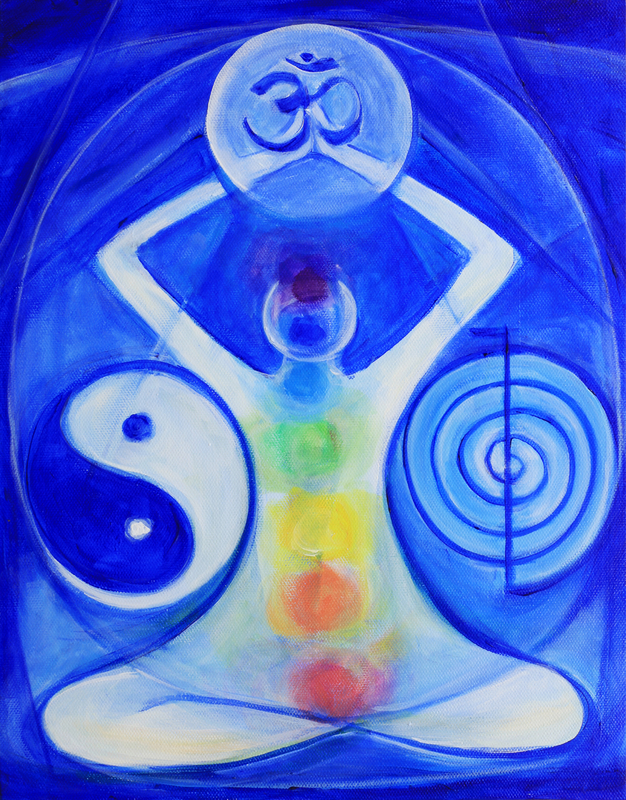
chakrasEckhart Tolle, in my experience, writes most masterfully on this topic. In A New Earth, he makes a number of distinctions among the images appearing on the screen of the mind or various voices in our heads. In addition to ego (which is essentially the voice of fear – a destructive agent) and thought (which continuously occupies the brain much as digestion occupies the stomach, but without necessarily holding insight), he identifies emotions (the body’s reaction to thoughts) and the pain-body (an energy field within the body that feeds on negative emotions). Together, these components of our minds conspire to create the Unhappy Story of our lives.

In contrast to this, Tolle posits Presence. Presence is that which witnesses all aspects of our experience – the font of consciousness itself. I remember when I was reading Tolle on a beautiful beach in Costa Rica, the phenomenon of Presence kept eluding me.  I’d try repeatedly to disengage from my thoughts and emotions enough to zoom in on who was witnessing them, only to be sucked in by another thought or emotion, such as judging the extent of my success.

Today I understand why I couldn’t do it: my core, my soul, my essence was submerged beneath a layer of lies (thoughts) and denial (fear) manufactured by my ego to maintain my love addiction: I lay on that beautiful beach with a boyfriend who I knew in my core was concealing late-stage alcoholism, simply not drinking or acting out around me. I did not want to know this, mind you. I wanted not want to be fully conscious, because if I dropped my stories of him as an ethically strong and genuine man, I’d need to uproot my entire emotional life by breaking from him.  Addiction – with its urgent needs and false realities to fill them – obstructed my access to Presence, exactly as it had back in the days when I was drinking.

I do, however, have a memory of being pure presence.  If you’ve read my addiction memoir, you know that in 1982 I snorted a half-gram of lidocaine sold to me as cocaine, which shut down my cardio-pulmonary impulses and caused me to die on the dance floor of a Manhattan nightclub.  In those three minutes without pulse or breathing, I rocketed out of my body and into a vast blue sky above the open ocean, embarking on my journey to god.  There’s no room to tell the whole story here. What I want to concentrate on is the “I” in those sentences. What was “I” outside my body?

Pure awareness. Pure interest. Pure embrace of each phenomenon I encountered. That is, whatever I experienced, I loved.  I saw and knew with an ongoing, unqualified excitement that made not loving impossible. How to describe this? When you were a kid, maybe on your birthday or Christmas, you might have encountered a big stack of presents. You didn’t know what was in them.  You didn’t need to.  You anticipated finding out without worry that some might be duds.  All you felt was, “Oh, boy!”  That’s how you’ll feel about everything after you leave your body – everything, that is, except the prospect of returning to it.

Fear became null. When I was diving hundreds of feet toward tspiritenergyhe ocean’s surface, I wondered whether its surface tension might impact me like concrete, and there was certainly an extra spurt of “Oh, boy!” when it didn’t – but no adrenaline tinge of dread.  Same with the realization that I was about to burst into the sun – I only wondered what would happen.  That’s it.  Fear, sadness, anger: these are functions of the BODY.  We don’t need them once staying biologically operational is no longer of consequence.

Short of dying, how can you experience your own essence – that core consciousness you’ll become on the other side?  The best way I know today is to get quiet, close your eyes, and mentally speak your own name adding the suffix “–ness.” Do this several times.  Each time you repeat it, go further toward your child self.  Seek the thinker, not the thoughts.  Not only that, let go of trying – to be someone, to please, to do well before anyone but god – and let yourself fall toward humility. You’re just you.

In my “Louisa-ness,” there’s a subtle hint of…  I can’t find a word besides “dumbness.” But it’s a dumbness I thoroughly love! Maybe it’s just the void left by ego’s absence, the submission to being limited. It’s sort of like the curve of a ball, the spherical nature of myself coming back to me. It cups me. It hums “Louisa-ness.”

The more sober I am, the closer I move toward living from my essence.  THAT is my spiritual journey.  As Meister Eckhart put it (not related to Tolle), “God is not found in the soul by adding anything, but by a process of subtraction.”

Part of the reason I love to climb mountains is that the physical demands pare away my thoughts and emotions until the simplicity of one goal – I will simply continue – eclipses all the various yammerings of ego.  Ego may initiate my climbs, but spirit finishes them.  “One Step at a Time” – the name of my sober mountaineering group – offers the ultimate metaphor for spiritual growth.  Day before yesterday, standing at 12,200 feet on the summit of Mount Adams, I did indeed feel close to my god.

I’m alive.  I’m grateful.  Nothing else matters.  For me, until the times comes to shed the “dumbness” of this body, that’s as true as it gets.

Me at 12,200 feet

Sunday afternoon, Mount Adams summit at 12,200 feet, a distant Rainier on the horizon.

1 Comment

Filed under AA, Afterlife, Codependency, God, living sober, Near Death Experience, Recovery, Spirituality

Just Say NO to Self-Pity: 10 Reasons

“What we must recognize now is that we exult in some of our defects. We really love them” (12 Steps and 12 Traditions, p.66).

Somebody or somethin’ done ya wrong?  Let’s stew on it.  After all, you’ve tried so hard for so long, earnestly doing what’s reasonable and right.  You had faith things would work out.  But then what did they do – this person or group or life in general?  Did they recognize the facts?  Did they acknowledge what was really going on, see their obligations, and grant you your just reward?

No!  No, they did this other thing, this wrong thing, 858617_4584888544779_993860787_othis business that is so, so hurtful!  You had hopes and they dashed them!  You were innocent and they shot you down.  And hasn’t it always been like this?  Fuckers.  They’re just plain cruel – that’s the truth!  It’s all so unfair!  Why do you even keep trying?  Why get hurt like this again and again?  Sometimes it feels like even god – that’s right, your gonna just go ahead and say it – plays favorites, walls you out, prefers a frickin’ clique!  So you’re utterly alone.  You have nothing.  Only this lonely ache and this rusty iron conviction you’ve been wronged…

Man, I just LOVE me a warm bath of self-pity!!!  Sing it, bring it, tell it!

Except – wait a minute.  That stuff’s poison.  It’s toxic thinking guaranteed to sicken and imprison a person in resentment quicker than they can say “running the show.”  Whenever I senseTears glass self-pity pooling in my thoughts, I have to draw myself up short and try my best to redirect my focus.  Otherwise, I’m taking steps backwards in my recovery.  For all of us prone to addiction, self-pity is a dangerous spiritual ailment, and  indulging in it without check is the emotional equivalent of guzzling drinks.

10 Reasons

    1. Self-pity ain’t nothin’ but ego:  We know the storyline of how things were supposed to go because we wrote the script.  It was a really good script, too!  We had “the lights, the ballet, the scenery, and the rest of the players” all set in the best way – that is, the way that would turn out ideally for us.  We deserve what we want!  Really, everybody would be better off doing things our way, if only we could make them see it! —————————————-  ——————— —————  —————-
    2. Self pity lies like a rug: I know what’s best. I know what everyone’s thinking and exactly why they did what they did – all their petty, biased little motives!  That’s why I’m sure this turn of events is wrong.  What actually happened is NOT god’s way: it’s a big mistake!  Or if it is god’s way, then god’s an asshole.  God should put foremost what makes me happy.  The universe is either with me or against me, based on what I see and think! ———————— ——— ——————————————- ————-
    3. Self-pity is drama crack: I’m not only the heroine of this tale but also the audience. Look at this poignant twist of plot!  I’ve persevered through so many difficulties, only to be wounded by this undeserved blow!  Oh, the pain!  The audience (me) can see the other characters all plotting around the player spotlighted in center-stage (also me).  I can play the drama forward; I can draw out the future with swelling musical notes.  Someday, damn it, they’ll realize X and be filled with Y.  This show is so intense!  So deep————————————– ——————- ————- ———
    4. Self-pity is addicting: The more we hang out in self-pity, the more trammeled those neural networks become and the more likely we’ll go back for more.  Dwelling on injustice brings the intensity of something exciting, something dire!  That delicious ache of martyrdom fills the gaping hole in our spirits.  Yes, it’s a low, but it’s also a high – an all-consuming escape from real life.  By contrast, a level-headed look at our situation going forward seems either boring (acceptance) or intimidating (action).  Can’t I just sit here and savor another hit of “poor me”?! ————————————– ————————————      ————————————————
    5. Self-pity ain’t self-compassion: Compassion is positive.  When we feel it for others, we open our hearts to them; we empathize lovingly.  The same goes for self-compassion.  It prevents us from judging ourselves negatively, acknowledging instead the efforts we’ve put in and the disappointment we feel.  But it does not stew, blame, resent, envy, or hate.  In self-compassion, we love ourselves as god loves us.  We nurture our own healing, not our pain. ———————————————————————————–
    6. Self-pity ain’t self-care: Self-care is, by definition, pro-active.  It considers my constructive options for healing and strengthening.  I ask god what I can do now to better my emotional state so I’ll develop the means to help myself – and then I do it.  Self-pity, by contrast, attributes all the power to others.  I’m a victim!  I have no responsibility!  Nothing I could have done, nothing I can do now can help me. —————————– ——————————————————– ——- ——–
    7. Self-pity turns our backs on god:  God dwells only in reality.  It can be met only in the present moment. It’s also the power of love – a love that motivates us to accept what life brings and see how we can grow, make, and be useful under those circumstances.  When we collapse instead into self, when we rail against reality, we encase ourselves in righteous resentment. Fear and scarcity wall out the very faith we need in order to recoup. ————————————————————————————–
    8. Self-pity makes us useless:  Your problems?  Are you fucking kidding me?  I’ve got my problems!  What do you have for me? ———————————————————————————–
    9. Self-pity attracts misfortune: This is karmic law.  I don’t know exactly how it works, just that it does.  Self-pity renders us a black hole of need.  We’re not generating; we’re sucking, sinking, retreating into darker and darker recesses of self.  The forces that gain energy in that darkness – forces we feed with our anguish – do not bring goodness into our lives. —————- ————–  —————————— ——————- ————
    10. Self-pity is frickin’ boring: For god’s sake, don’t we know this song and dance too well?  How many times have we been here?  It never changes.  It interests no one.  There are so many better ways to spend our time and energy.

Every time I’m able to recognize that self-pity is having its way with me, I pray something like this: God, help me stop right now.  Steer my thoughts toward the path of healing and usefulness.  Change me, dear god, in whatever way will free me from this dumbass horseshit. 

It truly helps.  Try it and see!

scrollPost to Facebook

9 Comments

Filed under Al-Anon, Alcoholism, Codependence, God, living sober, Recovery, Sobriety, Spirituality

Psychic Change

Toward Alcohol

When we hit bottom in our drinking careers, we’re pretty much forced to change.  We’re truly sick and tired of being sick and tired; we recognize, however faultily, that our way is not working.  We become teachable.  That is, we’re desperate enough to try out AA’s approach even though it feels foreign, artificial, and disorienting.

For me this meant giving up the belief that I knew everything.  I’d always felt sure I could perceive the lay of the land in a snap and choose the best course, which I then acted on with chutzpah and a dash of fukitol.  Drinks made me feel better, so I frickin’ took ’em.  Certain designated figures, also known as cool people, carried what I craved, so I chased ’em.  Responsibility and integrity felt cumbersome, so I shrugged ’em off – free to follow my whims wherever they might lead!

And where was that?  Loneliness so lethal I wanted to scream for eternity and futility so rampant I wanted to break and trash and burn every fucking thing that ever touched my life – that’s where my knowing everything took me.

12 stepsAA – the supposed solution – seemed as silly as a cake walk.  The 12 Steps, anyone could see, held no more wisdom than a hopscotch grid, and yet all these AA dolts claimed that if you sincerely played hopscotch, if you landed in each arbitrarily chalked off square, you’d bust through to frickin’ Narnia or something – whatever they meant by this “4th dimension of existence.”

But since a U-turn could lead me only back to the hell, I went ahead.  I gave up control, followed directions, did the dance.  And I commenced to change – to heal and grow and behold countless unexplored and rich possibilities hitherto invisible to me.

From somewhere inside me, I began to sense a direction besides my thoughts.  They – my thoughts – were still as dumb and which-way as ever, but this new chord, this voice within – it began to lead me instead of them.  Guidance I heard and talked about in AA aligned with this voice, but did not constitute it.  Rather, I had “tapped an unsuspected inner resource” previously drown out by all the fears, demands, and clutter spewed by my ego.

I’d experienced a psychic change.  I’d begun to develop a spiritual life that edged out my craving for booze.

Toward Life Itself

“Our liquor was but a symptom,” says the Big Book, of our messed up approach to life.  If we merely take away the faulty solution of drinking, life hits us full force and feels unbearable. The lasting solution is to live on a spiritual basis which flows in tune with reality rather than fighting it.

Spiritual evolution is not a matter of content.  That is, it’s never a matter of learning X, Y, and Z, passing the quiz, and graduating.  Rather, it’s a habit of cultivating open-mindedness and reaching for growth.  In other words, the conditions for continuous growth are the same as those that freed us from compulsive drinking: I elect not to buy into my thoughts, not to obey my ego, not to fall for the idea that my way is right.  Only by turning away from these easy-to grab reflexes can I open myself to another voice – the more fundamental guidance of a higher power.

second-handDay by day, growth happens at the juncture between what I’m exposed to and how I react to it.  In that immediate crucible, I make more tiny choices than can possibly be noted, but collectively, they coalesce into a “gear” for my outlook.  I plop into good-ole self-pity or reach for seemingly impossible gratitude – though I may end up somewhere between.  What matters is whether I ask my higher power to guide those tiny choices, and whether I commit the incremental shards of my awareness to pursuing that guidance.

Growth can’t happen when ego takes over.  The world becomes scary, because if what I’ve decided is supposed to happen doesn’t, I’m gonna be screwed. There’s never enough, so I lock into my plans.  I get tunnel vision – which means I’m sealed off from potential good outside my will.  I consign myself to stagnation.

The openness of faith reminds me life is always a collaborative effort – mine and god’s.  Sure, I still plan and take action, but with built-in acceptance of whatever plays out.  Even if things fuck up and fall apart, I’ll still be okay.  My “enough” originates not from stuff or status, but from the power of god’s love flowing through me, the strength to generate and nurture and delight.

Jess and Chip

Jesse & Chip (by permission) 1 month post-flood: “The joy of living [they] really have, even under pressure and difficulty.”

Consider some dear friends of mine who moved to Wimberley, TX, last year only to lose everything they owned in a recent river flood.  One day things were dandy, and next their home was was missing two walls and contained only mud and somebody else’s overturned couch.  They had no renters’ insurance.  Can you imagine that?  I mean, can you really imagine losing everything?  Yet these are two happy and thriving, not only because they’re sober, but because they live on a spiritual basis.  They don’t lament.  They have their precious lives, their energy, their love – a flow that’s providing all they need to rebuild what was lost, even as they pitch in to help neighbors… or support a faraway friend (me) processing a painful break-up.

The psychic change to living on a spiritual basis means we accept life’s uncertainty, taking our best shot and leaving the results to god.  Failure’s fine.  It happens.  Floods happen.  Betrayals happen.  We can only keep listening for the voice within and trying to follow it toward good actions and good people, but with no guarantees.  Because, while it’s true we each reap what we sow, it’s also true we’re  scattering seeds from an unmarked, mixed bag. What will take root and flourish depends, we know, as much on the rain and sun as our work. Yet we do it anyway – and cheerfully.

Millet- sower

The Sower, J. F. Millet, 1850


 scroll

1 Comment

Filed under AA, Alcoholism, Drinking, Faith, God, Happiness, Recovery, Sobriety, Spirituality, Twelve Steps

Reaching for god, Healing in the Mountains

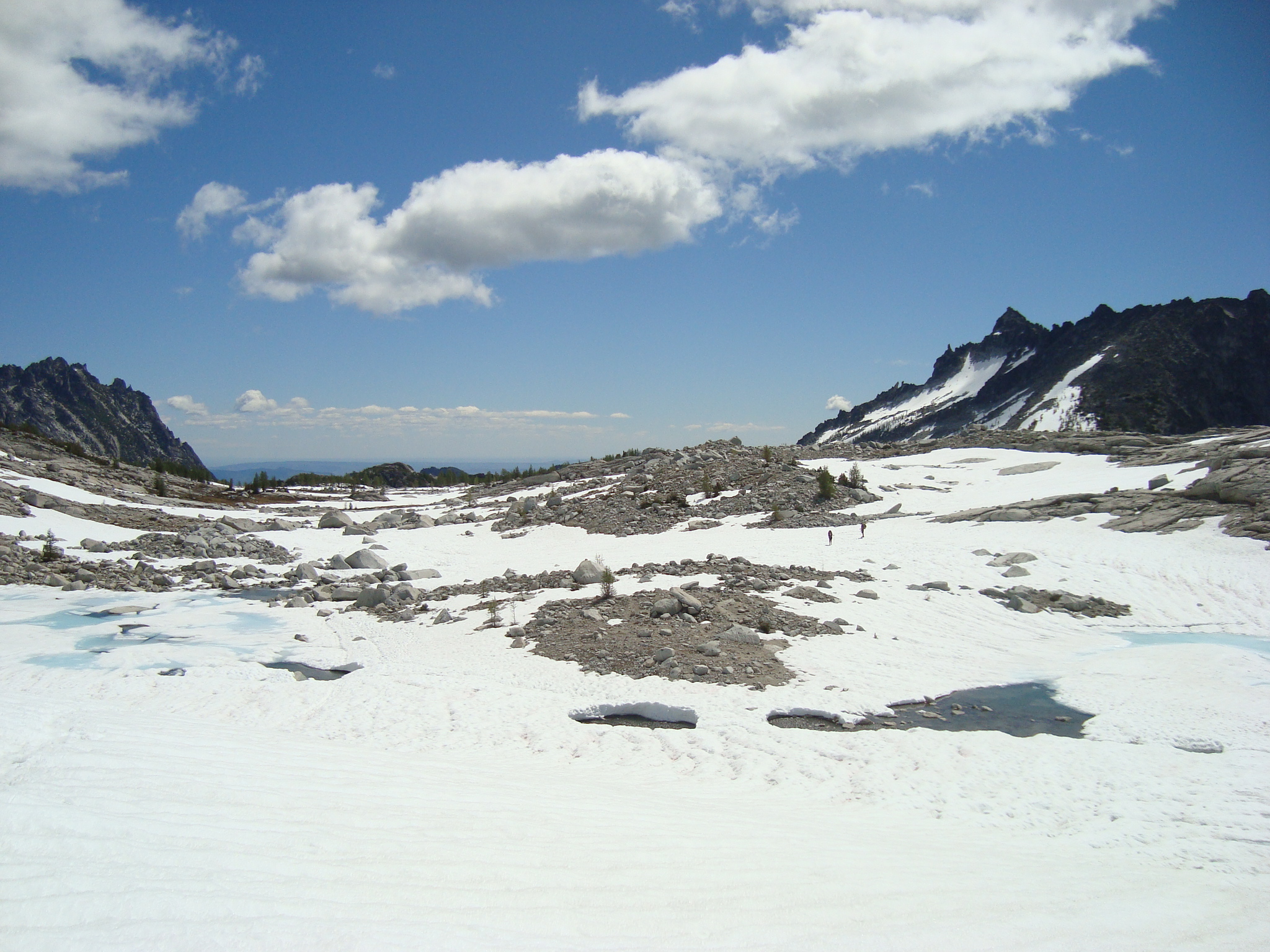
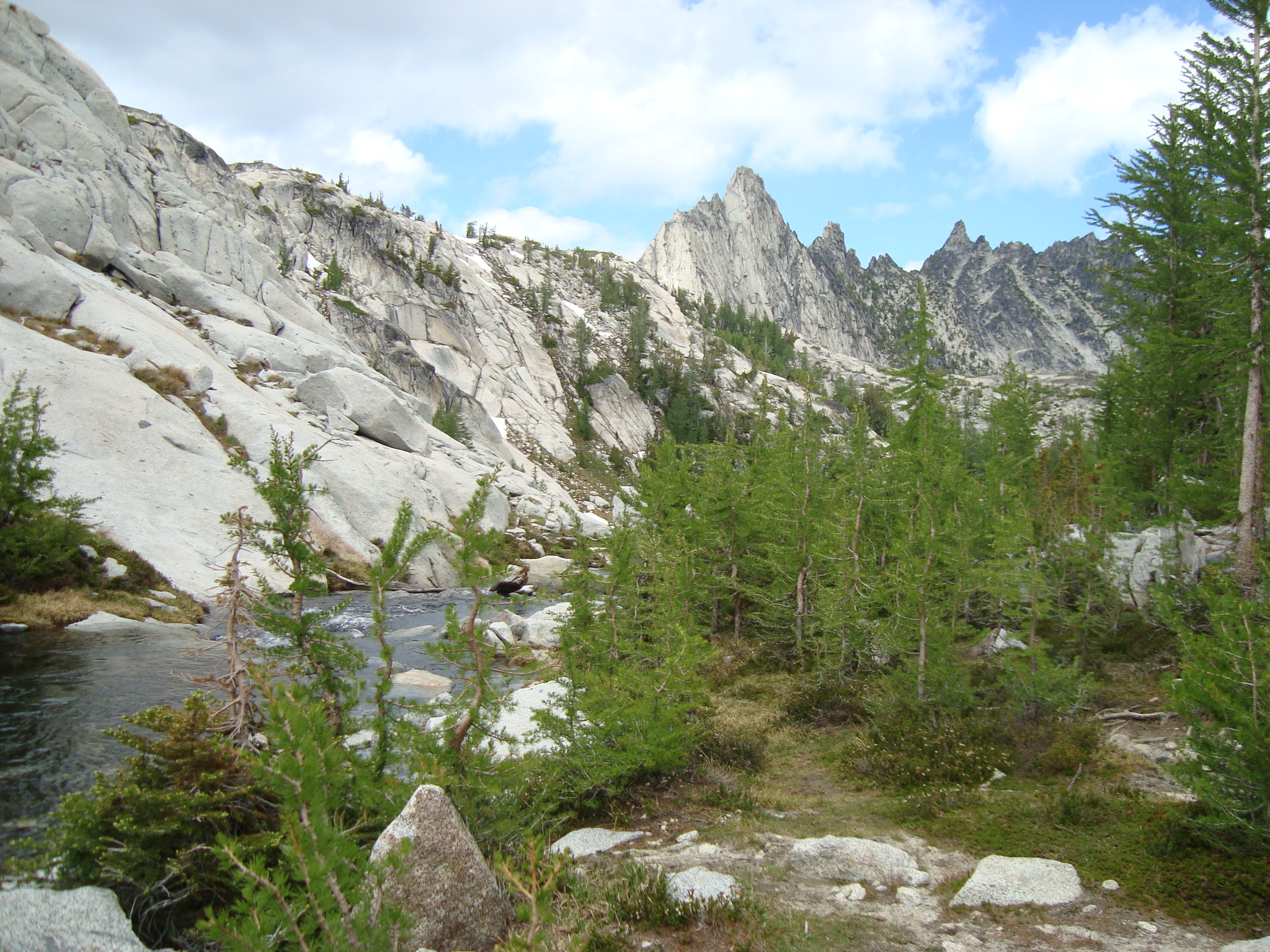
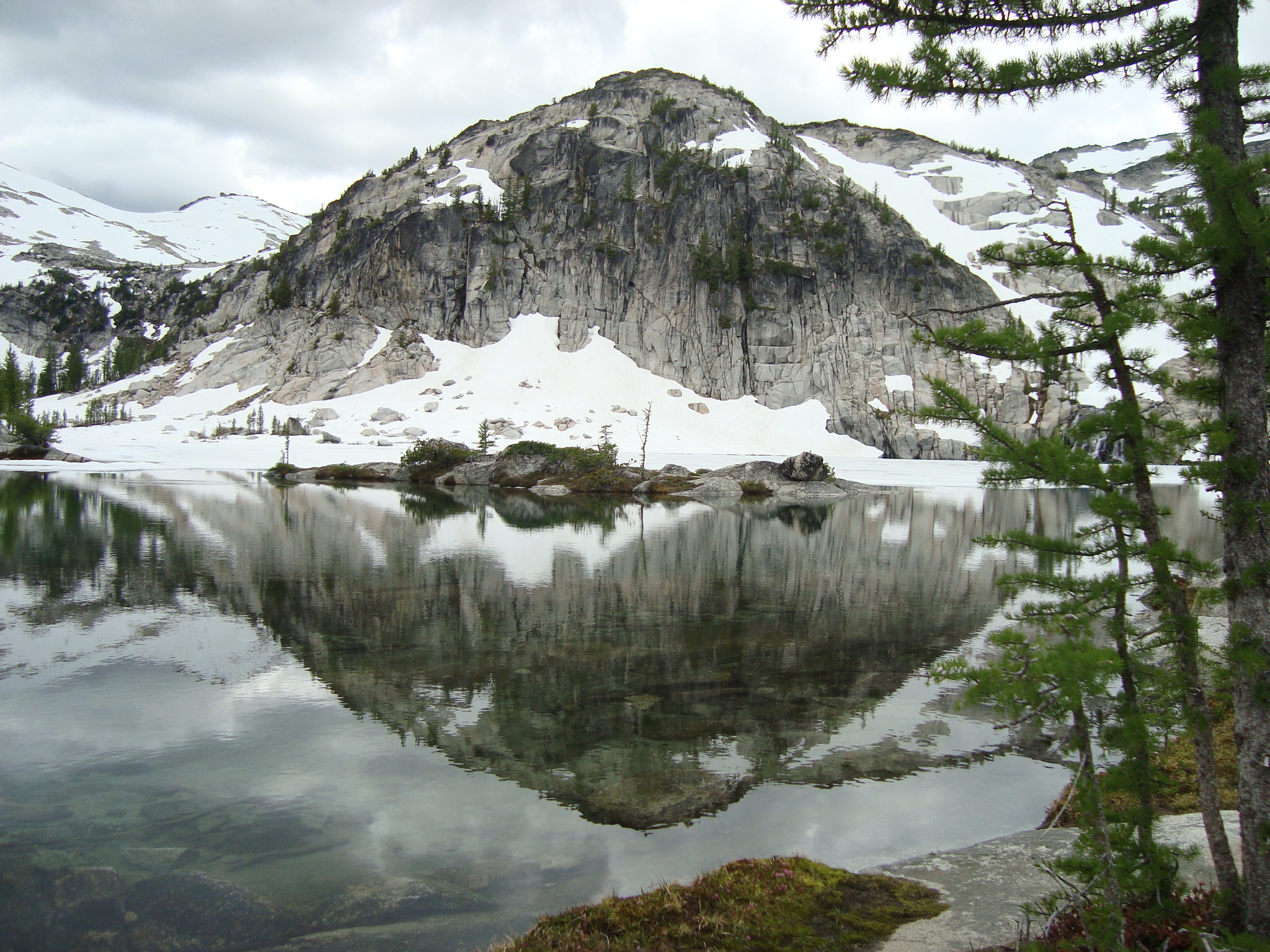
I want to describe a moment of insight, but to get there, I’ll have to take you on a little odyssey with me.  The Enchantments are a chain of lakes carved out by glaciers in Washington’s Central Cascades – a series of cirques in pale granite amid jagged peaks so lovely you need a very elusive permit to visit in summer.  But this year, with the snow level so low, I decided to seize the chance to see them before permit season began.

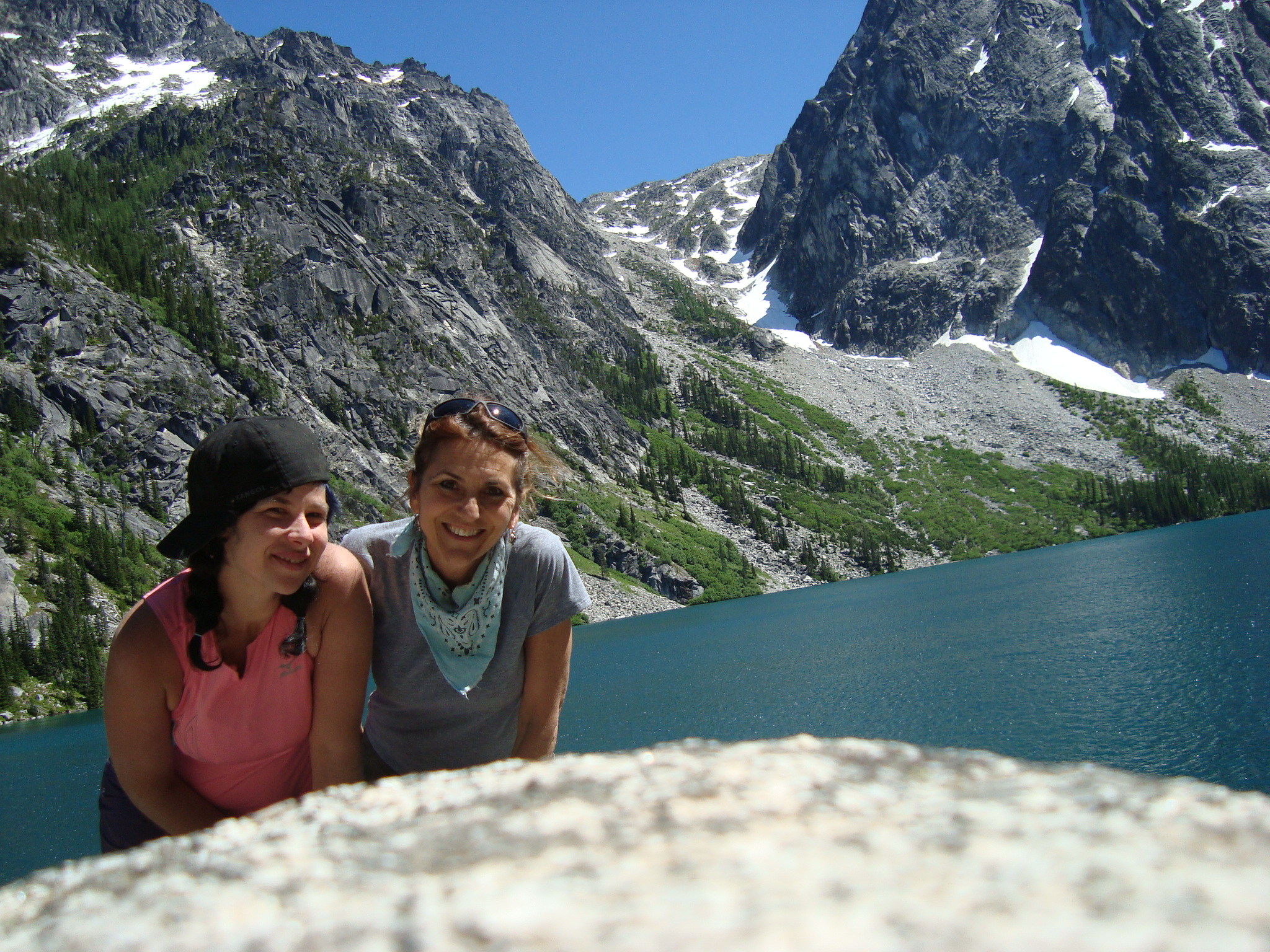
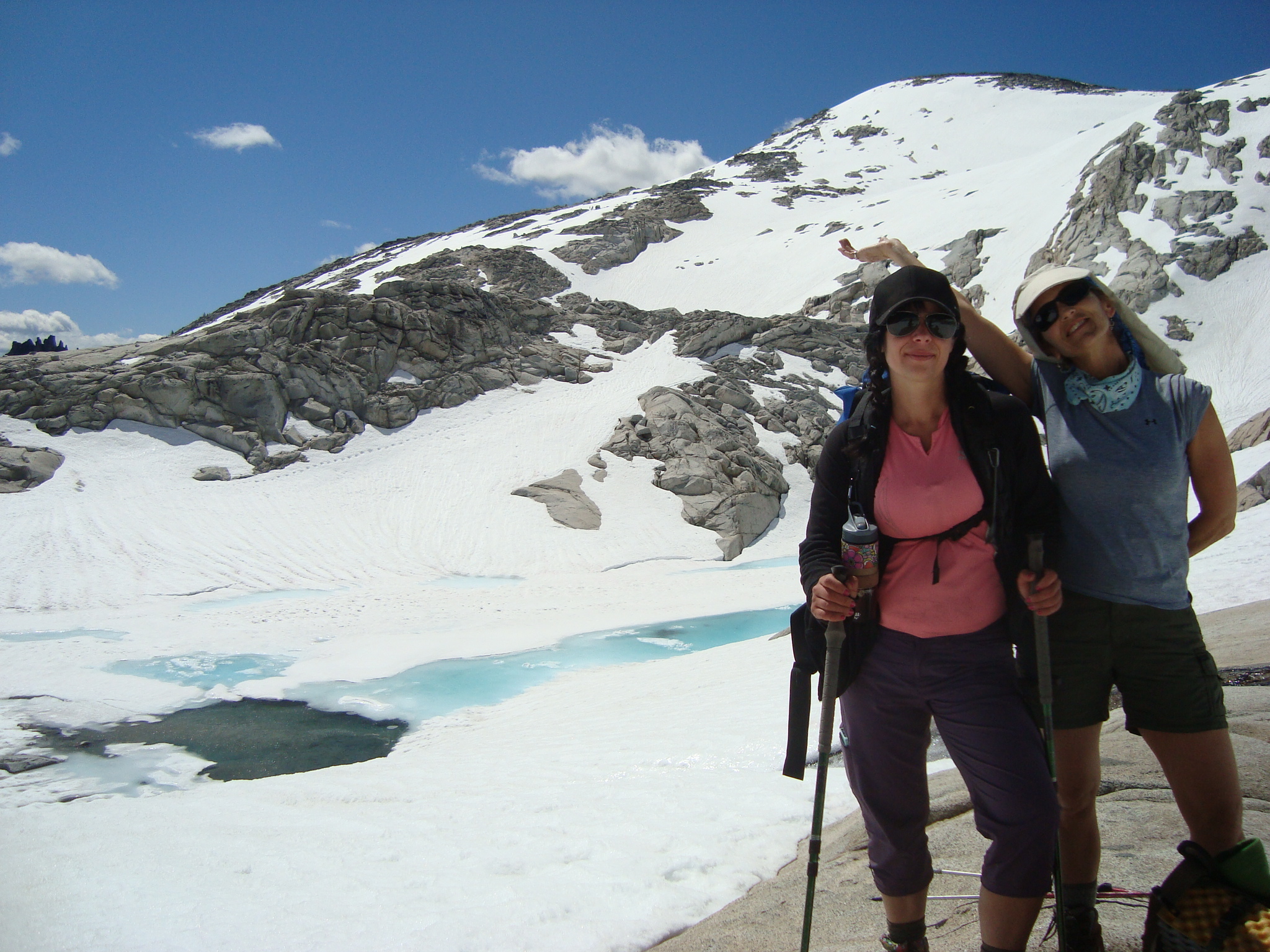
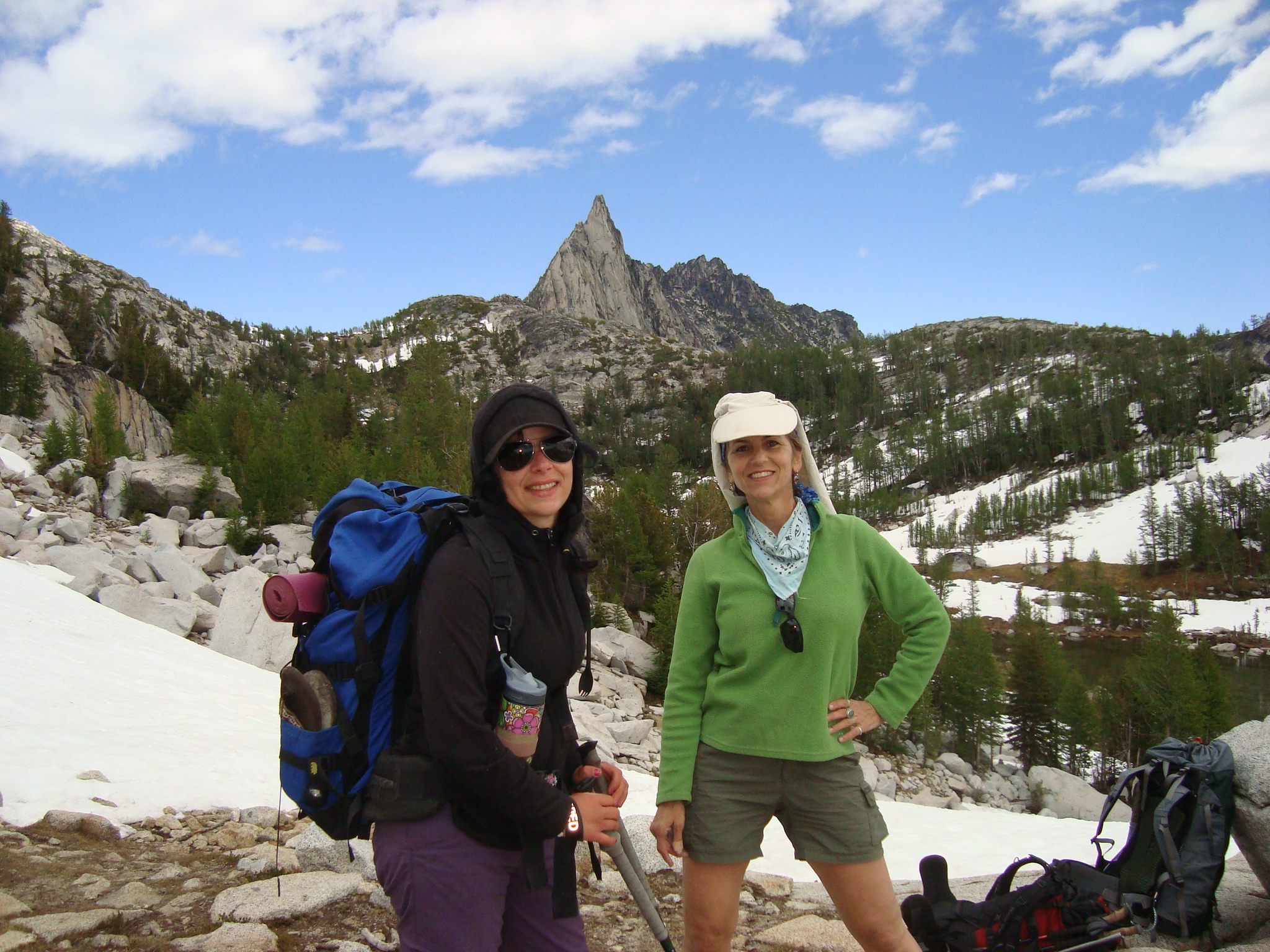
I invited along a friend who recently completed the Camino de Santiago Pilgrimage, walking 500 miles from St. John, France, to the cathedral of Santiago, Spain – with virtually no money.  I chose Kacie not only because she’s sober and a skilled through-hiker, but because her connection to God is knowledge rather than faith. Though she’s Christian and I’m non-religious, our spiritual convictions align perfectly.  At 33, she’s an absolutely beautiful soul.  Here we are, starting out our trip at Colchuck Lake.

DSC03396

Aasgard Pass is behind us, where the trail gains 2,000 feet in 3/4 of a mile

I wanted Kacie with me not just to help me tackle this trail, but because I knew she could help me along a second, inner trek.  Maybe I’m trying to tell too much in one post, but for me, this trip was more about healing than hiking. I recently posted about having discovered that for two and a half years my alcoholic boyfriend concealed an ongoing affair with an alcoholic girl half my age – named KC, ironically enough.  Though I’m glad to have escaped with my sobriety, there’s much grief to process in losing someone you thought you loved for nine years.

Early on, I asked my Kacie for her take on my “happy” memories from those deceit-filled years with Grayson – our teasing as we played ping-pong, comparing cloud pictures as we lay in the sunlit grass, decorating our tiny Christmas tree.  She answered straight up: “You need to let go the lie before you can embrace the truth.  That was manipulation, it was false, it was poison – every minute of it.”  I knew she was right.  Her words solidified the ones hovering in my thoughts for weeks: emotional robbery, abuse, even molestation.  Because, yes, to con someone into prolonged intimacy, fully aware the truth would both horrify and repulse them, is that bad.

We hiked on.  I’d heard a lot about the dangers of climbing Aasgard Pass, with its 2,000 foot near-vertical gain.  We didn’t reach the base of the chute until 4:15.  There’s no trail per se; you scramble amid sliding talus and scree; you search above you for cairns – stacks of rock people have left to mark a course – praying nothing falls on you.  Chest-high boulders with divot toe-holds demand you heave yourself up them despite the 35 pounds on your back and hundreds of feet below you to fall.

DSC03408

Kacie picking her way up the rubble

We climbed for an hour.  Two hours.  The wind picked up, and we began to encounter pockets of ice and snow.  There were times I thought I’d lost the way completely, boxed in among boulders, until I’d sight a cairn someplace seemingly impossible to reach.  Then I’d pray, find handholds, pretend I wasn’t exhausted, and heft Louisa + pack one more time.  Ten minutes later, repeat.  Finally, three and a half hours into it, a moment arrived when I rounded a rock face and recognized from the outlines of slabs against the sky that we were nearly there.  To Kacie, over the whipping wind and cataract tumbling to our right, I shouted, “We’re almost there!  We’re gonna fuckin’ do it!”

That’s when the tears came. Thank you, god.  Not just for getting me here, but for showing me I have what it takes to do this.  In the past, on all our toughest climbs, Grayson led.  But no one led me this time, not even a frickin’ trail: just god and the bright life it kindles in me.

While the sun set amid 20 mph winds and the temps dropped below freezing, Kacie and I made camp at about 7,ooo feet.  Kacie was so chilled she began dropping things, getting confused.  Our stove wouldn’t light at this altitude and the winds snapped at the tent as we pitched it.  But we were never scared – not really. I gave Kacie all my extra clothes and released enough gas from the canister to blow up a small dog before my lighter finally ignited it. Once the water boiled I told Kacie to go eat inside the tent while I made her some hot water bottles and picked up for the night.

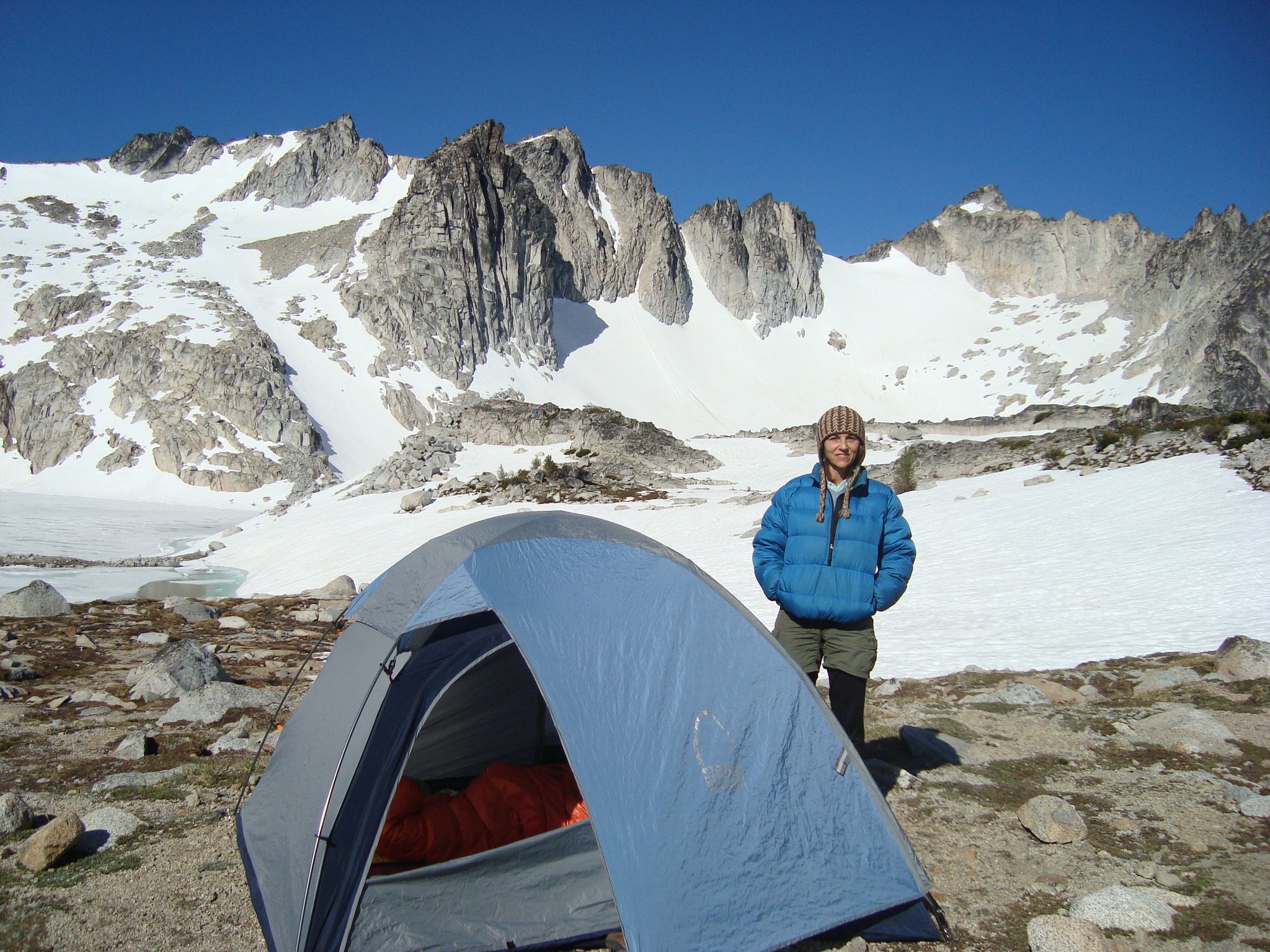
Neither of us slept much because the elevation throws you off, but in the morning we encountered this, along with the delicate music of snowmelt everywhere running down to Aasgard Lake:

DSC03410

and this:

DSC03411

and lots of these guys:

DSC03413

After breakfast, we packed up and set off again, like this:

DSC03423

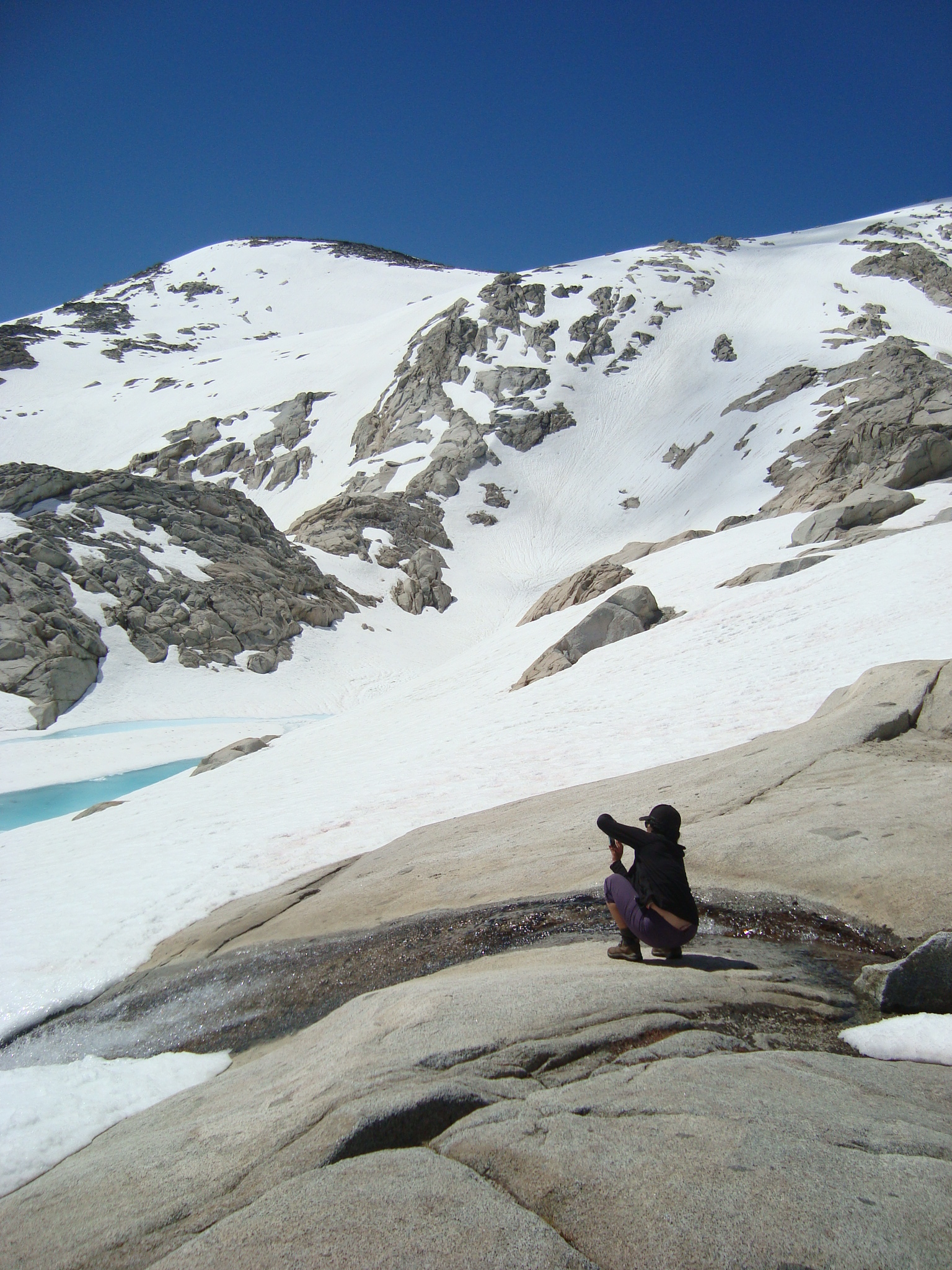
We covered about 10 miles that day, talking on and on about god, about how god has built right into us our capacity to see, feel, and appreciate beauty as a spiritual language to connect with Him/it.  Here’s are some glimpses of what we saw, did, and loved:

DSC03424

DSC03429

Kacie took

DSC03441

DSC03440

DSC03455

DSC03447

DSC03449

Among the many things Kacie said that struck me deeply was this: “The only thing God asks is that we participate in the relationship.  It’s like if I were going on this hike saying, ‘Hmm… Louisa might be with me on this hike. That might be her I see ahead of me, that could be her voice…’ but I ignored you the whole way because I wasn’t sure you were real.  I mean, what’s more hurtful than just ignoring someone who loves you?!  We do that to God all the time, and yet He just keeps loving us.  He keeps saying, I’m here when you’re ready.”

Eventually we began our descent to Snow Lake, where we’d spend our second night.  That’s when I felt something welling up in me, stronger with each step I advanced between the huge rock escarpments toward the meandering valley below.  Thoughts churned.  Why did it still hurt that Grayson had ignored my love? Why was it so hard to love myself ?

Here came the revelation: I understood, as I started bawling silently, that to love god in these mountains was to love god in me as well.  So I began saying silently to each beauty, however tiny or vast: “I love you, god.  I love you in this flower.  I love you in the tops of those trees.  I love you in that tremendous and intricate stone wall above me older than I can conceive.”  Each time I sent out this energy, whatever came back seemed to redirect my inner periscope just a tiny notch or two – away from Grayson’s insult and toward my own wealth of spirit, away from the story of what happened and toward the openness of whatever might.

I crossed some threshold.  I saw my journey was on course, that god had sent me a precious gift through every person I’ve ever loved – including Grayson. In the thousand-plus miles we covered together, he taught me most of the skills that embolden me today, skills that let me dare to venture out and meet my god in the rough and dangerous beauty of the wilderness.

What a gift!  Not just for me, but now through me to Kacie. “Churches are like big, fancy worship bathrooms,” says Kacie.  “I want to be here.  God’s Cathedral is here.”

DSC03460

The next day we were met at the trailhead by kind, sober friends who drove us back to my car. The minute I got home, I showered, threw on a dress and heels, and drove to a downtown restaurant to celebrate another sober friend’s 50th birthday. We sang to him as he blushed.  Love – that same echo of god’s goodness – rang in our voices.

“God is such a show-off!” I remember Kacie saying as we hiked. “He is!  Because He has infinite beauty to show off!  Fucking infinite!  He pours it into the mountains, into this stream, into us!  He wants it  a-l-l  to be felt!”  We joked about the fears that make us check our inner share of god’s beauty, like a bird halting in mid-song for fear of fucking up.  This blog is part of my song.  I’ll show off, I’ll sing, I’ll fuck up, and I won’t apologize.  Because god put inside me what it wants me to share.

scroll

Post to Facebook

1 Comment

Filed under Alcoholism, Codependence, Faith, God, Happiness, living sober, Recovery, Sobriety, Spirituality

What is Goodness?

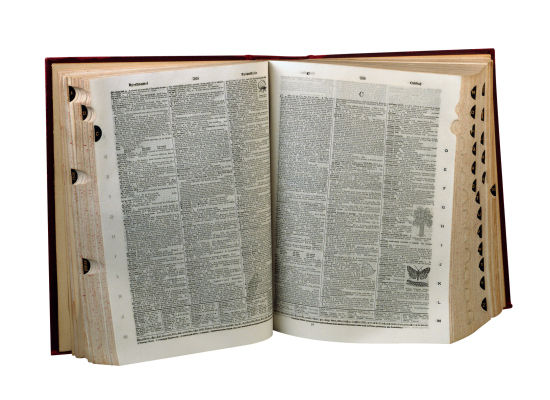
Words can be dead or alive.  My big, fat Webster’s dictionary devotes a full page to the word good, yet conveys almost nothing.  Definitions range from dictionary“making a favorable impression in terms of moral character” to “wholesome” or “noble and respectable.”    Words – nothing but lexical connections.

Yet words can also be alive when they resonate with what we know to be true.  Years ago at an AA meeting, for instance, I heard these: “Love from the heart is a one-way street.  It goes out.”  The guy saying this gestured from his chest into the room, his hand unfolding from from fist to open.  I knew the truth of what he was saying.  I’d never heard it so succinctly put.

Goodness.  What is it?  Most of us know it when we’re feeling it.  If we’re around a good person, something emanates from them.  A work of art or beauty can evoke the same feeling.  It’s a warmth, a light, a glow – maybe an aura.  But of what?

Love.  Goodness is the product of love.  When that inmost heart of ours, the font of our being, our life energy, reaches out to connect with something in the world, the energy around that connection is goodness. Love has a direction, a flow along the one-way street, while goodness is the product of that connection.  It shows up in any act or effort of integrity and honor that is untainted by selfishness.

A friend of mine experienced a Near Death Experience far more protracted and detailed than mine.  Hers occurred in the seconds before a head-on car crash, which for her expanded to hours of interaction with spirits.  She was a teen at the time, verging on a dark turn of acting out from pain in her past.  An ugly, squat demon at her feet in the passenger’s seat invited her to join him, promising her a chance to “get even” with everyone who’d ever wronged her.  But she declined, and found herself suddenly pulled up out of the car, rushing into the sky with her very serious, earnest guardian angel whom she realized she’d known all her life.  Among the things she was shown was a whirlwind tour of the globe, zooming in on all the pies being made right then.  Yes, pies.  She saw countless homemade pies, all different styles and types, until finally her guide showed her the very best pie on earth at that point in time.

It was a cherry pie made by an older woman somewhere Cherry-Piein Europe. The pie was just coming out of the oven, perfectly browned with woven crust and beveled edges.  The woman loved the pie.  Into it she had poured everything she knew about pie-making, every skill acquired in years of baking – not to impress anyone, but purely to manifest the best of her abilities.  The guide flashed into my friend’s awareness that the same can be true for anything we do in life.  When we care enough to learn something, when we respect the skills involved enough to apply them with dedication, we can bring into the world a work of goodness – even when tremendous faith and courage are needed to do so.

Any time our efforts are powered by such love, they become acts of goodness – an emblem of the plenty we’ve received from god.  They are, in essence, acts of gratitude: “Life is God’s gift to you; what you make of your life is your gift to God.”

Conversely, when they’re powered by the desire to get, which is actually rooted in a sense of lack and the driving fear behind it, which is ultimately a distrust of god, our efforts become acts of aggression.  They devolve to a way of “showing” and outstripping others, of getting even with those we feel have wronged us.  The recognition is all for me.

For these reasons, addiction cuts us off from goodness entirely.  Compulsive use of alcoholalcohol, drugs, sex, shopping, etc., or the codependent urge to steer another’s life – all these keep us constantly in the mode of wanting.  We try to suck from the world whatever we think will fill the gaping hole in our guts.  This time, we’ll get what we need to feel good about ourselves.  We’ll score it from the people we impress, from the places and things that infuse us with status, lend us power.

What we have in addiction is wrong-way traffic.  As long as I’m trying to suck up whatever addiction promises will fix me, I’m incapable of even recognizing goodness.  I’m numb to it entirely.  In fact, as told in my addiction memoir, by the time I neared hitting bottom, I’d quit believing goodness even existed!  It seemed a sickly sweet delusion manufactured by conformists, when the hard core truth was that I had to grab whatever I could from a mean, barren world.

But goodness not only exists, it’s the ultimate expression ofsunshine1 living.  It can emanate from any relationship founded in sincerity – in creativity and playfulness, in compassion and affection.  Whenever I reach to connect my spirit to yours without seeking to get something from the deal, the energy from my heart streams toward you, and I become a channel for god – which is love – to flow through.  God is the source of all beauty, and as soon as we give ourselves over to expressing it, that flow simplifies life radically down to being present in gratitude.  We are complete.  In fact, we have a surplus, because the wellspring of our life-force is constantly flowing, flowing.  So we can try to give it shape, to bring goodness into the world.

That’s why I wrote this, from me to you.

scroll

Post to Facebook

3 Comments

Filed under AA, Alcoholism, Codependence, Codependency, Faith, God, Near Death Experience, Recovery, Sobriety, Spirituality

Essential Prayers: Please and Thank You

Rejoice always,

pray without ceasing,

give thanks in all circumstances…

(1 Thessalonians 5:16-18)

I ain’t a Christian, but them’s some wise words for how to tackle the challenge of living a happy and meaningful life.  For some, the “always,” “without ceasing,” and “all circumstances” parts might present a problem.  Actually, they’re problematic only if we segregate our spiritual life from the rest, as if the little things we did all day had nothing to do with our spirit.  The fact is, they have everything to do with it! Our spirits are just as present when we’re comparing cans of beans at the store as when we’re kneeling by our bedside doing what we label “prayer.”  We’re just too caught up in piddly-shit to be aware of our awareness – to focus on what we actually are.

In the rooms of AA, we often hear the advice to use two simple prayers – Please and Thank You – to forge a relationship with our higher power.  This is an excellent start!  For newcomers who have no idea what might be entailed in talking to their god, these instructions open the door.  It’s suggested that when we wake up, we ask god to “Please help me to stay sober today.”  When we go to bed, we pray, “Thank you for keeping me sober today.”

2014-12-25 14.58.27But there’s a whole lot more potential behind these two simple prayers.  They can change your life.  Just as step 1 is the only one to spell out the word “alcohol” while the remaining 11 deal with the matters that made life so painful we needed a damn drink, so the lens of the Please and Thank You prayers can be dilated from mere drink avoidance to apply to all of living.

Please.  By all means, when we wake up, we can ask god to keep us sober today, but we can also expand that request to “ask God to direct our thinking.”  What I ask is, “please guide me today,” by which I mean not only my thoughts and actions, but my level of awareness.  I might even say, “help me stay awake.”  What I mean is, god, help me to stay in contact with you all day long; help me remember this life is not about my little fears and agenda, but about being the best human being I can be today; help me know that whatever’s going on right now is just a single pace in the journey of my life, so when it gets tough I can hang onto hope.

As I proceed through my day, my biggest challenges all center on emotions.  Not what happens, but how I feel about what happens.  I’m a wa-ay codependent child of an alcoholic, which means that, left to my own devices, I tend to be a “reactor” aboriginemore than an “actor.”  Boy, do I hate that!  It sounds so wussy, but it’s true.  Most of the time, what you think (or at least what I think you’re thinking) carries more weight than what think or do.  I need you to be okay with me.  Better still, I’d prefer you be favorably impressed.  That way, you’d hand me a chit of personal worth I could add to my lowly little scrap heap.

But, damn it, I don’t want to live that way!  So I pray pretty much “without ceasing.”  I ask god, not to strike me well, but to show me, “If I were well, how might I see this?”  My experience has been that god nudges me toward compassion – for myself and others – which helps me reframe what’s going on and strengthen new neural pathways so that my thinking will change over time.  And slowly, gradually, it’s been working, which brings us to…

Thank You.  Again, it’s fine to start with the matter of whether I swallowed any booze today.  Even after 20 years’ sobriety, I still hop into bed some nights and think, “Geez!  I didn’t drink or even think about drinking all day!”  I still get this little image of my insides as all clean and healthy compared to that slimy feeling from back in the day.  And I thank god for it, for having let me be just one of Earth’s creatures, a gizmo fit to walk the planet exactly as I was made.

But I also “give thanks in all circumstances.”  What a trip it is to be alive!  What a freaking awesome world this is to cruise through, filled with miracles we can take for granted any time we switch to autopilot.  Bits of nature (outside my window, a finch just landed amid the gently stirring leaves of a cherry tree), goodness our culture has produced, signs of caring between strangers, and my chance to be part of it all – I thank god for this over and over.  Sure, there’s plenty of darkness; just read the news.  But there are also many who unite in trying to combat it, connecting in their commitment to… love.

CloudmoonGrowth.  How can the “Please and Thank You” prayers change your life?  For me, they’ve expanded my awareness a tiny bit, like the rings on in a tree, with each challenge I walk though sober.  eye

I am a tiny bit more aware.  It’s how we grow in sobriety.

At the core of my consciousness is my spirit.  It’s not my body: my body includes all my brain’s thoughts, all my body’s issues, and all the emotions they stir up between them.  I love those guys – don’t get me wrong – but they’re not my spirit.  My knowingness, my receptiveness, the live wire of my presence – this is the essence that sprang out of my body during my Near Death Experience, but it’s also the core of what I am as I brush my teeth or drive to Goodwill.  I am a little piece of god.  So are you.  And that reality becomes slightly more vivid to me with every clod I break as I plow through the lumpy terrain of being alive. I am the plowwoman, the driving force behind one individual human experience.  I need help to push on (please), but with every step taken, I see a little better what a tremendous privilege I’ve been given (thank you)!

scroll

Post to Facebook

2 Comments

Filed under AA, Al-Anon, Alcoholism, Codependence, Faith, God, Recovery, Sobriety, Spirituality

Reality, Denial, and god – Alcoholism and Codependency

Reality is a tremendous nuisance to active alcoholics and Reality intersectioncodependents.  It’s so damn stubborn, but we’re more so!  We have a firm idea of how things really are and we’re stickin’ to it, however painful our grip.  The pain in both cases comes from everything that refuses to align with our story of how things can be okay – usually involving other people and their actions or views.   When I was living alcoholically, people kept misinterpreting my drinking.  Now that I’m sober but battling codependency, they keep not doing what they should.

The trouble is, as long as I’m in this mindset – I know shit – I’m cut off from god.  God animates reality, but its truth can’t be admitted by my sick thinking.  In other words, god’s guidance is heard via  honesty, but denial makes us deaf.

First, let’s talk about alcoholism.

During the 14 years that I drank pretty much daily, I had a good story:  I just liked to drink!  There was no big deal about it, though some people liked to pretend there was.  My life was as normal as anybody’s except that I was maybe a little more free about kicking back.  Alcohol was a just a feature of the good life – something that accompanied relaxation, candor, humor, and the ease of not taking stuff so damn seriously.  Didn’t I still have a job and a car?  Hadn’t I earned a fancy degree?  Wasn’t my health still good?  Okay, then, get off my back, everyone!

hot air balloonHitting bottom was the result of losing my levity, my ability to float a hot air balloon of egotism just enough to skim over the landscape of consequences beneath me.  Many people were hurt and angry, but they couldn’t reach me.  Many people would be hurt and angry if they found out certain things, but so far I’d dodged those impacts.  In the end it was the intensity of my own pain and self-loathing that weighed down my balloon basket more heavily every year, every month, and, as I gradually lost altitude, every day – until the ground of reality came up to meet me and I crashed.

I had no more escape.  My entire life was rife with lies.  Everything I’d been fleeing caught up with me and the pain was unbearable.  Finally, I admitted: “This is the truth.  This is how it is.  Addiction powers my every thought and deed, and without it, I have nothing.  I am nothing.  I have no power.”

Finally!  That’s when the door swings open.  It’s when god says, “Bingo!  That shit just doesn’t work.  How about I show you how to live in the world instead of your head?”  In my case, god showed me through the loving words spoken and written by people in AA, both living and dead.  “Here,” they explained, “is how you can live a meaningful life.”  The 12 steps were a means of clearing from my head the false stories I’d used to deny reality.  I began to work with what is to become the woman I want to be.

Now let’s talk about codependency.

It’s actually a whole lot like alcoholism, because it, like alcoholism, centers on denial.  Here’s the American Medical Association’s definition of alcoholism, tweaked just a bit to describe codependency:

“CODEPENDENCY is a chronic disease with genetic, psychosocial, and environmental factors influencing its development and manifestations. The disease is often progressive and fatal. It is characterized by continuous or periodic impaired control over ATTACHMENT, preoccupation with the ADDICT, use of OBSESSIVE TACTICS despite adverse consequences, and distortions in thinking, most notably denial.”

Look at that!  The denial part, I didn’t even have to mess with; it’s the mainstay of both diseases.

Just as denial let me pretend my drinking harmed no one, so it lets me pretend my attempts to change the alcoholic harm no one.  Now I’m riding in the hot air balloon of dependence – actually the offspring of ego and fear: a conviction that my well-being depends on someone else.  I need them to change so that I can be happy.  My levity comes from the certainty that if I just _______ the right thing, the alcoholic will come to his senses.  (Insert do, say, offer, model, threaten, etc.)  There have been some great attempts, but they haven’t quite worked yet.  Failures pass under me.  So do the alcoholic’s betrayals, lies, actions that clearly show he has no intention of doing anything other than being himself – an alcoholic.  I keep skimming over them all, using my will and my hope and my love with all my might!  I’ll say this and he’ll realize that!  I run the videos in my mind day after day: I say my lines, watch my ideation of the alcoholic comprehending.

But gradually, I lose altitude.  The weight of pain brings me down again – that my love is not reciprocated in the form of whatever integrity I long for the alcoholic to achieve.  The alcoholic remains deaf, is blind, stays asleep to everything but his own dream of denial, and there is nothing – nothing – I can do to wake him.   All my efforts are futile or, worse still, galvanize his denial.

I have no more escape.  This is how it is.  My entire life is rife with lies.  Everything I’ve been grasping for has evaporated, and the pain is unbearable.  Finally, I admit: “This is the truth.  This is how it is.  Codependent illusions power my every thought and deed, and without them, I have nothing.  I am powerless.”

Here again god steps in.  “Correcto-mundo!” says god.  “But you don’t have nothing, sweetheart!  You have you.  You have me.  You have all of life and this beautiful world to thrive in.”  I begin to listen.  I realize what god offers is real, not projected.  It doesn’t have to wait for someday; it can start now.

Just as I took my first shaky steps sober and wide awake all those years ago, now I begin to take my first steps on my own.  No one needs to live as I see fit for me to be happy.  Whether my attachment has been to a family member or a lover, I can free them to live their own life, make their own mistakes, and suffer their own consequences, whether through wasted potential or death.  I can do it because, in reality, I have no other option.

This actually exists somewhere, unlike my sober alcoholic.

Reality, in both cases, is so much simpler, so much easier, and so much richer than my thinking.  Now I have choices, and I can hear god’s guidance as I weigh them.

scroll

Post to Facebook

7 Comments

Filed under AA, Al-Anon, Alcoholism, Codependency, Faith, God, Recovery, sober, Sobriety, Spirituality

Enlightened but Dead: Why Alcoholics Need God

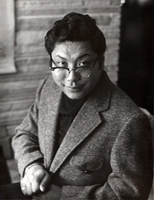
Pema Chödrön’s teacher, the venerable Chögyam Trungpa, drank a lot.  Drinking was a staple of his sanga, where he threw big parties among his students, and he was known to carry vodka in a water bottle.  Trungpa explained in one of his spiritual books why his drinking differed from that of an ordinary alcoholic:

“Whether alcohol is to be a poison or a medicine depends on one’s awareness while drinking. Conscious drinking—remaining aware of one’s state of mind—transmutes the effect of alcohol. Here awareness involves a tightening up on one’s system as an intelligent defense mechanism…

“For the yogi, alcohol is fuel for relating with his students and with the world in general, as gasoline allows a motorcar to relate with the road. But naturally the ordinary drinker who tries to compete with or imitate this transcendental style of drinking will turn his alcohol into poison…”*

Sadly, it appears that Trungpa’s liver failed to read the book and appreciate his “transcendental style” of yogi drinking.  Despite diagnoses of cirrhosis and doctors’ warnings that more drinking would kill him, Trungpa continued to drink heavily until it did indeed kill him in April of 1986, when he was just 48 years old.

Trungpa~

Philosopher Alan Watts was considered a sage throughout the ’60s after he rose to prominence with the 1951 publication of The Wisdom of Insecurity – a pivotal text  introducing Eastern concepts to Western society.  The book considers the ego’s dis-ease with the unstable nature of reality and its efforts to create security via constructs of memory and projection coalescing in a story of “I,” which Watts dismisses as unreal: only awareness divorced from self can access reality.  Watts, like Trungpa, was well aware of the futility of escapist drinking:

“One of the worst vicious circles is the problem of the alcoholic.  In very many cases he knows quite clearly that he is destroying himself, that, for him, liquor is poison, that he actually hates being drunk… And yet he drinks.  For, dislike it as he may, the experience of not drinking is worse… for he stands face to face with the unveiled, basic insecurity of the world.”

Unfortunately, identifying this vicious circle did not grant Watts the power to exit it.  Like Trungpa, he often gave lectures while sloppy drunk. He, too, developed end-stage alcoholism that deeply concerned his ex-wife and friends, and died of alcoholic cardiomyopathy – e.g. heart failure – at 58.

Watts~

Both of these men were masters of self-knowledge and the meditative disciplines that yield inner peace.  Both could speak brilliantly on the ills of ego and treasures of honesty.  Yet neither could stop drinking.  And they’re just two examples out of jillions.  Why did they fail?  Why would people so insightful not quit what was clearly killing them?  The Big Book explains:

“If a mere code of morals or a better philosophy of life were sufficient to overcome alcoholism, many of us would have recovered long ago.  But we found that such codes and philosophies did not save us, no matter how hard we tried.  We… could will these things with all our might, but the needed power wasn’t there. Our human resources, as marshalled by the will, …failed utterly.” (p. 44)

In Shambala: The Sacred Path of the Warrior, Trungpa makes very clear that no god enters into his vision.  “Over the past seven years, I have been a presenting series of ‘Shambala Teachings’ [on]… secular enlightenment, that is, the possibility of uplifting our personal existence and that of others without the help of any religious outlook.”

Good for him!  I agree wholeheartedly that self-knowledge is great stuff.  But it will not cure alcoholism.

In a 1968 talk, Bill Wilson, one of AA’s founders, described the initial amazement of the psychiatric community at the unprecedented breakthroughs of AA.  Many alcoholism specialists attended meetings and saw their own alcoholic patients, with whom years of psychiatric work had failed, achieve abstinence and mental health in a matter of weeks.  One suggested that Bill assemble a group of such psychiatrists to testify before the Academy of Medicine about AA’s success. So Bill asked them.

“And not a one would do it! …In effect, each said, ‘Look, Bill. You folks have added up in one column more of the resources which have been separately applied to alcoholics than anyone else… [But] the sum of them won’t add up to the speed of these transformations in these very grim cases… So for us, there is an unknown factor at work in AA.  [B]eing scientists, we… call it the X factor.  We believe you people call it the grace of God. And who shall go to the Academy and explain the grace of God?  No one can.'”

questionSorry, folks!  But the X factor, and that alone, is what saves an alcoholic: Connection with a higher power, to god as we understand it.  We ask god to help us, and we’re relieved of a compulsion that no amount of self-knowledge can touch.

Humility is the key ingredient to receiving grace.  We have to ask for it, accepting that we’ve been defeated.  By contrast, Trungpa, for all his wisdom, exhibited a strong tendency toward hubris.  The true warrior, he explains in Shambala, is both Outrageous and Inscrutable.  “…[H]aving overcome hope and fear, the warrior… fathoms the whole of space.  You go beyond any possibilities of holding back at all…. Your wakefulness and intelligence make you self-contained and confident with a confidence that needs no reaffirmation through feedback.” In other words, I got this!  Screw what anyone else thinks!

Watts, meanwhile, purported to embrace God, but his abstractions reduced it to a mere abandonment of I, which enabled connection with the eternal now and rendered us one with God.  For Watts, there could be no “Hey, god (you) please help (me)!” because the you / I division negated the fact that we are god: “[W]e cannot lay ourselves open to grace, for all such split-mindedness is the denial… of our freedom.”

Reluctance to seek god’s help almost killed AA co-founder Bill Wilson, too.  Relatively unknown in AA culture is the fact that Bill was so deeply repulsed by the God element in his friend Ebby’s solution that he went on drinking for three weeks after Ebby’s visit and landed yet again in a sanitarium.  There, after Ebby had visited him again to recap the spiritual solution, he had this experience:

“And again the despair deepened until the last of this prideful obstinacy was momentarily crushed out. And then, like a child crying out in the dark, I said, ‘If there is a God, will he show himself?’ And the place lit up in a great glare, a wondrous white light. Then I began to have images, in the mind’s eye, so to speak, and one came in which I seemed to see myself standing on a mountain and a great clean wind was blowing, and this blowing at first went around and then it seemed to go through me. And then the ecstasy redoubled and I found myself exclaiming, ‘I am a free man! So THIS is the God of the preachers!'”

Light
In my Near-Death Experiences group, I’ve heard several people describe similar experiences, when the “white light” of love brilliantly illuminated the room around them; but, naturally, many of Bill’s contemporaries considered him daft for insisting it had happened.  In his talk, he attributes this phenomenon not to his own specialness, but to the role it enabled him to play in AA, explaining that the powerful faith most AAs develop over months or years was for him simply crammed into a few minutes: “It did give me an instant conviction of the presence of God which has never left me… And I feel that that extra dividend may have made the difference in whether I would have persisted with AA in the early years or not.”

In other words, Bill was given what he needed not only to overcome a lifetime of harrowing addiction, but to co-create AA and persist in carrying its message into the dark world of his fellow alcoholics.  Why?  Because he asked… and frickin’ meant it.

.
scroll

.
PS: I have tremendous respect for both these sages as well as for Buddhism.  By no means am I critical of their legacy or beliefs.  Reading both authors did contribute to my self-knowledge, for which I am grateful, because such insight aids in a lifetime quest for serenity.  My point is merely that self-knowledge, no matter how deep or how keen, cannot arrest this disease, as these two tragically premature deaths testify.  See comments below. 

– Louisa

  • (Heart of the Buddha, p. 153)

31 Comments

Filed under AA, Alcoholism, Drinking, Faith, God, Recovery, Sobriety, Spirituality, Twelve Steps

Step 3: A Decision

What if I trusted god?

Doesn’t trust by definition mean not knowing?  Isn’t god by definition something I can’t know?

But what if I truly trusted trust?  Could I place mine in this unknowable god?  What if I surrendered this constant fight to fend off invisible threats and beat every dark fear to the punch?  Maybe I could give it up this constant need to choreograph the people and events around me if I decided it wasn’t necessary.  What might that feel like?  Why is it so difficult?

I could try thinking about how I got here.  embryosHow much say did I have about what I thought ought to happen in my mom’s womb?  Innumerable complexities aligned with inconceivable precision to bring about the organism that is me.  My mom herself had no clue what was happening.  All life originates from a process far beyond anything humans could ever comprehend or rig.  To give that process a name or classify it as “biology” doesn’t make it any less dumbfounding.

At birth our consciousness consists of trust and little more.  What is crying but half a bridge-?  As a survival strategy, it’s founded on the blind, helpless trust that someone will respond, someone will care.  That impulse – a precursor to prayer – is the only power given a human infant, but it’s the only one we need.

All that for what?  So I could grow up to earn money and buy groceries?  So it seems.  What if god has no extravagant “plan” for my life but loves me overwhelmingly regardless, simply for being me?  What if all the love I’ve ever felt and absorbed, every embrace from intimates and each kindness from strangers, every affection to ever move my heart – what if all of that energy pooled together were just the tiniest smidge of god?  What if an ocean of love is what generates every leaf and imbues every living thing with the urge to venture and delight and to rest and heal?

I might decide that, in ways far beyond my understanding, this intelligence orchestrates the outer world as much as inner, shapes every circumstance as much as every cell.  What if I could see that there is even more beauty, grace, and agility in the spirit of the gazelle in that moment when the cheetah’s jaws close on its throat than there was in its spirited flight, as it escapes the bonds of muscles and neurons to rejoin its brilliant source?  What if my perspective let me understand that from the beginning those two have been one, because the cheetah (in its mother’s womb) and the gazelle (in its mother’s womb) are two notes of the same symphony, one wave overtaking another with the same momentum?

earthMaybe then, in the same way, I could be okay with whatever happens.  Maybe I’d get it that my life is just a life, a storyline beaded with random incidents but beautifully embedded in some enterprise both gargantuan and exquisite, more vast than I can ever conceive.  It could be that the universe is indeed unfolding as it should, with me in it, so that I am still, in a sense, within a global womb.

Maybe I should think about the clear-eyed toddler I saw today outside Fred Meyer whose mom had just put her astride a fiberglass horse (without even feeding it quarters), who squealed with the uncontainable delight of now: something AMAZING was happening!  The mom’s love showed in her eyes, but my love for the two of them flooded inward from my smile – just some lady walking by – with intensity neither could guess.  Why?  Because they were me with my son ten years ago, and my mom with me half a century ago.  With them were the echoes of children long since aged and dead from centuries past, their horses of ceramic or wood now crumbled to dust.

That child will die.  My friends and family and pets have died.  And, yes, sometimes shit happens that is not of god.  There’s suffering and loss and disease and unfairness, so that my eyes teared at the child’s tender vulnerability, like mine and like yours.  God can’t guard us from pain and mishap.  But always, always there is love and more love – growing back, surviving, passed down – and the chance it gives us to cast its brightness on the now, to delight in our sheer being, to know joy.  The avalanche takes down trees centuries old, but amid the rubble, with the season, springs a tiny seedling.  These are the ways of god.


Fir Seedling

What if I put my trust in that ongoing love – mine, yours, god’s – as a tremendous net I can fall into?  What if all of it is good – not just striving but failing, not just birth but death?  Then I can fill in the dark unknown future with a flickering faith that god’s goodness is the ultimate power underlying all life, that it has always supported me whether I’ve known it or not, and that it always will.

That way I’m freed to seek out my own fiberglass horse in whatever form it takes.  I can rejoice right now just because I’m alive.  I’m here solely to be me and love you, not to stress and plot and worry about stuff I’m powerless over anyway.  I seek god’s guidance, try my best, end of story.  My ideas of how everything should come about or end up are just that – ideas.  As for reality, God’s got it.

I’ll roll with that.

Leave a comment

Filed under AA, Al-Anon, Alcoholism, Faith, God, Recovery, Sobriety, Spirituality, Twelve Steps