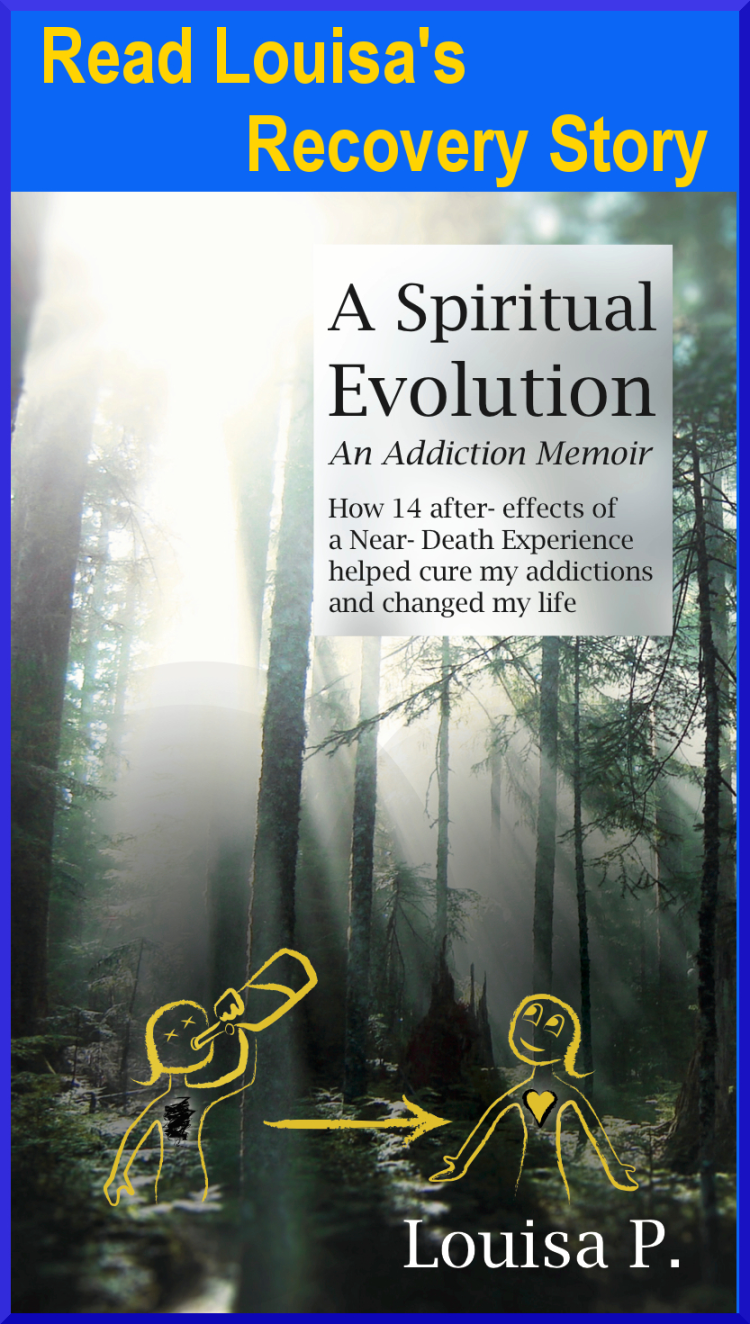
Over the course of a life of recovery, the ego dies a slow and painful death.
Alcoholism is a disease of body, mind, and spirit, so for newcomers, the first order of business is definitely to withdraw from physical addiction by simply not taking a drink. Doing this, however, doesn’t treat the mental and spiritual aspects of our disease. Few of us drank ourselves nearly to death in the midst of an otherwise hunky-dory grasp of life.
AA doesn’t claim to have “a monopoly” on treating this three-fold disease – only a way that works. That is, if you’ve tried other ways and they’ve failed you, you can find your answer in the Big Book’s pages. But a lot of people in AA don’t do this. Instead, they rely on a combo of “plug in the jug” dryness and regular “dumping” at meetings to relieve their pent-up discomfort.
By contrast, I know several people outside of AA who are progressing in spiritual development. What characterizes such people is a constant seeking for spiritual insight, a day by day dedication to becoming a better person – with “better” referring not necessarily to “more successful” but to more spiritually healthy. That would mean more grateful, kind, loving, and unselfish. The kickback for all this work is inner peace. And these non-AA sober alcoholics often have it, despite the fact that they don’t go to meetings.
The thing is, I need meetings as a setting where compassion pulls my head out of my ass. Left to my own devices, my ego begins to regroup and convince me that everything is all about me. Because of the way my life is set up – by my spiritual values rather than my ego’s agenda – my ego finds it highly unsatisfactory: I should be richer and thinner and get more attention. I should be “in control.” When I go to meetings, the pain of newcomers reminds me where chasing these lures will lead me, and the wisdom of oldtimers reminds me of all the ego wants me to forget – the humility, gratefulness, and service to others that fills life with a gentle happiness.
And yet, there’s a layer further you can go – or toward which you can be drawn against your own will. Spiritual quests of even the most sincere seekers are at heart selfish. We want that damn chit of inner peace! I want to be happy! I want my life to be filled with meaning, so I can feel good about it. Even in my efforts to diminish ego, it appears to have the last laugh – or would, if it weren’t for another agent involved in this process.
That agent is god. When we work a spiritual program, however tainted by the interests of “self-improvement” it may be, the act of reaching, seeking, and opening ourselves to something greater than self sabotages all our well laid plans by giving god an opening, a chink in our “control” armor. God beams in and moves the furniture around in ways we never intended, so that in tripping, in stubbing our toes and falling on our faces, we’re forced low enough to see what it is we truly stand upon.
This happened to me when I wrote my addiction memoir, which I intended to help others. But god got in and messed everything up. It moved the coffee table to the middle of my house traffic: my siblings reacted to the book with untempered rage and insult, and then I got breast cancer. I held onto god through that turmoil, and for a while I could see nothing. But when clarity returned, I found myself in a wholly different place – a place where I have less sense of control but am more comfortable with it. Where the phrase, “Oh, well!” seems to contain far more wisdom, whether it’s said before taking a courageous plunge or an evasive nap. And place more differentiated from my siblings. This was nothing I thought of or intended. It resulted from neither program nor self-improvement. But if I had not been working at both, the shift could not have occurred.
I’ve watched friends in the program not only climb to sweet joys but also suffer collapses similar to mine. I catch glimpses through their shares as they walk through this same Dark Night of the Soul. Yes, joy is the fruit of spiritual growth, but pain, unfortunately, remains the “touchstone” of that growth. The alternative is to turn away from god and tighten our grip on the illusions of control, of knowing best, of being right – and wronged. It is to choose the rigidity of fear over the gentleness of faith.
Over the course of a life of recovery, the ego dies a slow and painful death. (Of course, it never dies completely until we do.) For those of us who once embraced it as our only savior, its demotion from the driver’s seat takes not months or years, but decades. Like anything toxic, it retreats to reveal what appears at first a barren wasteland, a void where what I think is not important; I’m not powerful or authoritative, so life is not fun in a potentially dazzling way. But the seeds of truer meaning are already germinating beneath that dull surface and will one day sprout: My being alive is precious; I’m both loveable and free, so my life gathers beauty in a quiet way. This happens not just once, but with every inch of ground the ego surrenders.







 and recognizing not a single name: Let’s see it was here somewhere: “Not good for my body” – who’s that? “Always make a fool of myself” – do I know him? “Swore to my loved one” – might have met briefly. No, no… none of these ring a bell. Meanwhile, here’s your amygdala holding out a frosty, aesthetically perfect image of your favorite drink. It asks, What are you, a pussy? You gonna let these cards you don’t even recognize tell you what to do? Just do what you wanna do – THIS!