Category Archives: living sober

Just Say NO to Self-Pity: 10 Reasons

“What we must recognize now is that we exult in some of our defects. We really love them” (12 Steps and 12 Traditions, p.66).

Somebody or somethin’ done ya wrong?  Let’s stew on it.  After all, you’ve tried so hard for so long, earnestly doing what’s reasonable and right.  You had faith things would work out.  But then what did they do – this person or group or life in general?  Did they recognize the facts?  Did they acknowledge what was really going on, see their obligations, and grant you your just reward?

No!  No, they did this other thing, this wrong thing, 858617_4584888544779_993860787_othis business that is so, so hurtful!  You had hopes and they dashed them!  You were innocent and they shot you down.  And hasn’t it always been like this?  Fuckers.  They’re just plain cruel – that’s the truth!  It’s all so unfair!  Why do you even keep trying?  Why get hurt like this again and again?  Sometimes it feels like even god – that’s right, your gonna just go ahead and say it – plays favorites, walls you out, prefers a frickin’ clique!  So you’re utterly alone.  You have nothing.  Only this lonely ache and this rusty iron conviction you’ve been wronged…
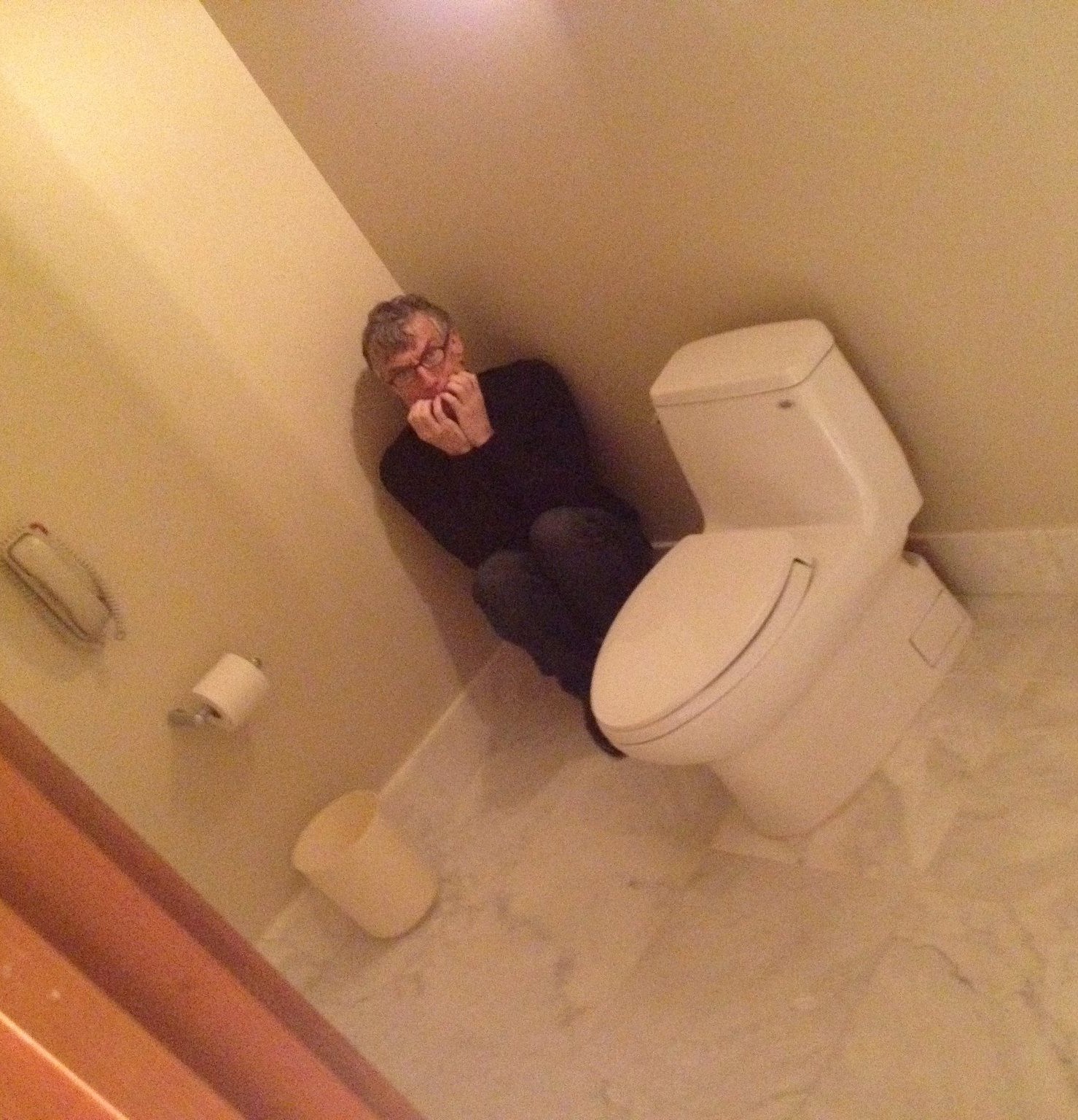
Man, I just LOVE me a warm bath of self-pity!!!  Sing it, bring it, tell it!

Except – wait a minute.  That stuff’s poison.  It’s toxic thinking guaranteed to sicken and imprison a person in resentment quicker than they can say “running the show.”  Whenever I senseTears glass self-pity pooling in my thoughts, I have to draw myself up short and try my best to redirect my focus.  Otherwise, I’m taking steps backwards in my recovery.  For all of us prone to addiction, self-pity is a dangerous spiritual ailment, and  indulging in it without check is the emotional equivalent of guzzling drinks.

10 Reasons

    1. Self-pity ain’t nothin’ but ego:  We know the storyline of how things were supposed to go because we wrote the script.  It was a really good script, too!  We had “the lights, the ballet, the scenery, and the rest of the players” all set in the best way – that is, the way that would turn out ideally for us.  We deserve what we want!  Really, everybody would be better off doing things our way, if only we could make them see it! —————————————-  ——————— —————  —————-
    2. Self pity lies like a rug: I know what’s best. I know what everyone’s thinking and exactly why they did what they did – all their petty, biased little motives!  That’s why I’m sure this turn of events is wrong.  What actually happened is NOT god’s way: it’s a big mistake!  Or if it is god’s way, then god’s an asshole.  God should put foremost what makes me happy.  The universe is either with me or against me, based on what I see and think! ———————— ——— ——————————————- ————-
    3. Self-pity is drama crack: I’m not only the heroine of this tale but also the audience. Look at this poignant twist of plot!  I’ve persevered through so many difficulties, only to be wounded by this undeserved blow!  Oh, the pain!  The audience (me) can see the other characters all plotting around the player spotlighted in center-stage (also me).  I can play the drama forward; I can draw out the future with swelling musical notes.  Someday, damn it, they’ll realize X and be filled with Y.  This show is so intense!  So deep————————————– ——————- ————- ———
    4. Self-pity is addicting: The more we hang out in self-pity, the more trammeled those neural networks become and the more likely we’ll go back for more.  Dwelling on injustice brings the intensity of something exciting, something dire!  That delicious ache of martyrdom fills the gaping hole in our spirits.  Yes, it’s a low, but it’s also a high – an all-consuming escape from real life.  By contrast, a level-headed look at our situation going forward seems either boring (acceptance) or intimidating (action).  Can’t I just sit here and savor another hit of “poor me”?! ————————————– ————————————      ————————————————
    5. Self-pity ain’t self-compassion: Compassion is positive.  When we feel it for others, we open our hearts to them; we empathize lovingly.  The same goes for self-compassion.  It prevents us from judging ourselves negatively, acknowledging instead the efforts we’ve put in and the disappointment we feel.  But it does not stew, blame, resent, envy, or hate.  In self-compassion, we love ourselves as god loves us.  We nurture our own healing, not our pain. ———————————————————————————–
    6. Self-pity ain’t self-care: Self-care is, by definition, pro-active.  It considers my constructive options for healing and strengthening.  I ask god what I can do now to better my emotional state so I’ll develop the means to help myself – and then I do it.  Self-pity, by contrast, attributes all the power to others.  I’m a victim!  I have no responsibility!  Nothing I could have done, nothing I can do now can help me. —————————– ——————————————————– ——- ——–
    7. Self-pity turns our backs on god:  God dwells only in reality.  It can be met only in the present moment. It’s also the power of love – a love that motivates us to accept what life brings and see how we can grow, make, and be useful under those circumstances.  When we collapse instead into self, when we rail against reality, we encase ourselves in righteous resentment. Fear and scarcity wall out the very faith we need in order to recoup. ————————————————————————————–
    8. Self-pity makes us useless:  Your problems?  Are you fucking kidding me?  I’ve got my problems!  What do you have for me? ———————————————————————————–
    9. Self-pity attracts misfortune: This is karmic law.  I don’t know exactly how it works, just that it does.  Self-pity renders us a black hole of need.  We’re not generating; we’re sucking, sinking, retreating into darker and darker recesses of self.  The forces that gain energy in that darkness – forces we feed with our anguish – do not bring goodness into our lives. —————- ————–  —————————— ——————- ————
    10. Self-pity is frickin’ boring: For god’s sake, don’t we know this song and dance too well?  How many times have we been here?  It never changes.  It interests no one.  There are so many better ways to spend our time and energy.

Every time I’m able to recognize that self-pity is having its way with me, I pray something like this: God, help me stop right now.  Steer my thoughts toward the path of healing and usefulness.  Change me, dear god, in whatever way will free me from this dumbass horseshit. 

It truly helps.  Try it and see!

scrollPost to Facebook

9 Comments

Filed under Al-Anon, Alcoholism, Codependence, God, living sober, Recovery, Sobriety, Spirituality

Reaching for god, Healing in the Mountains

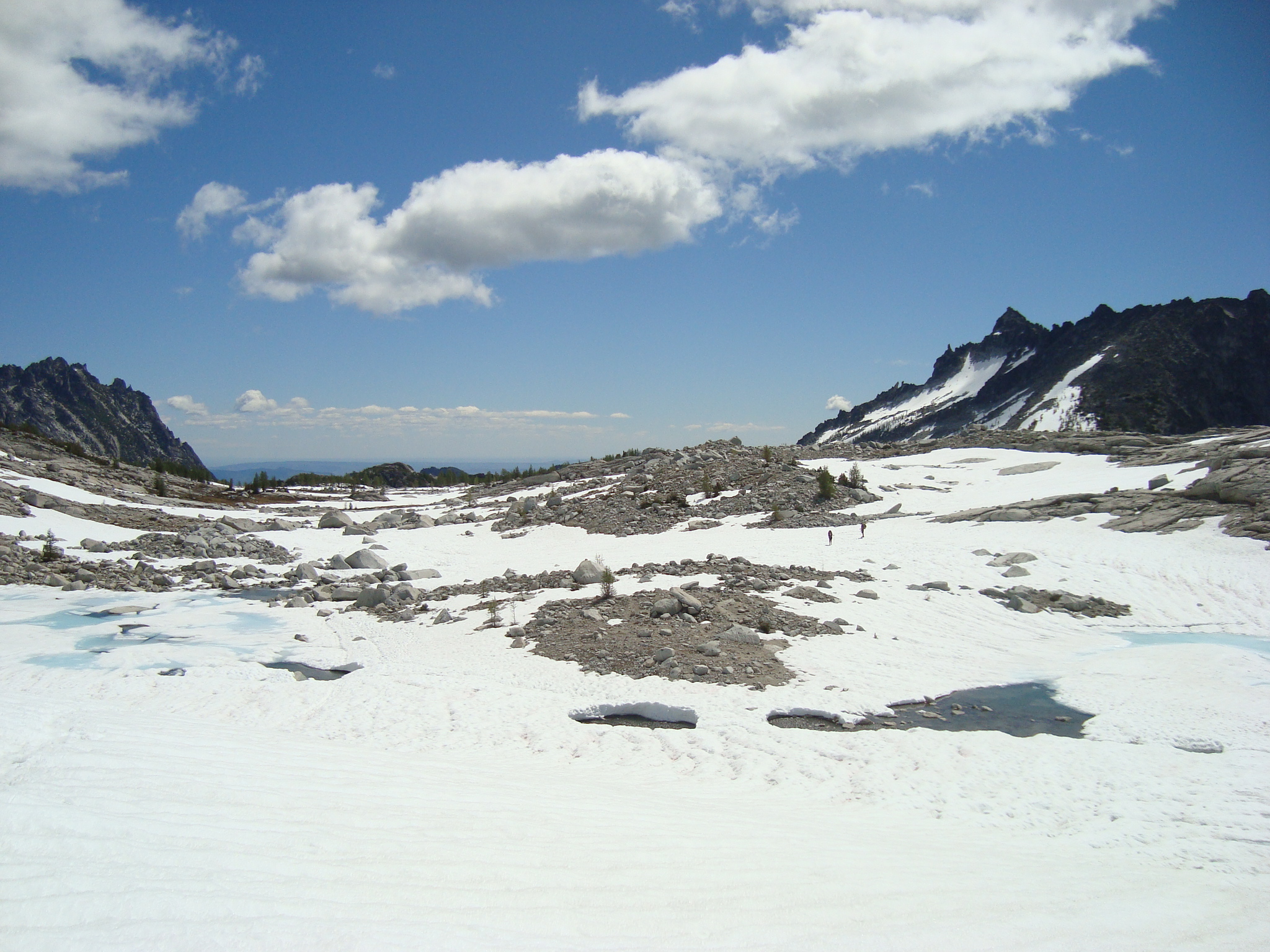
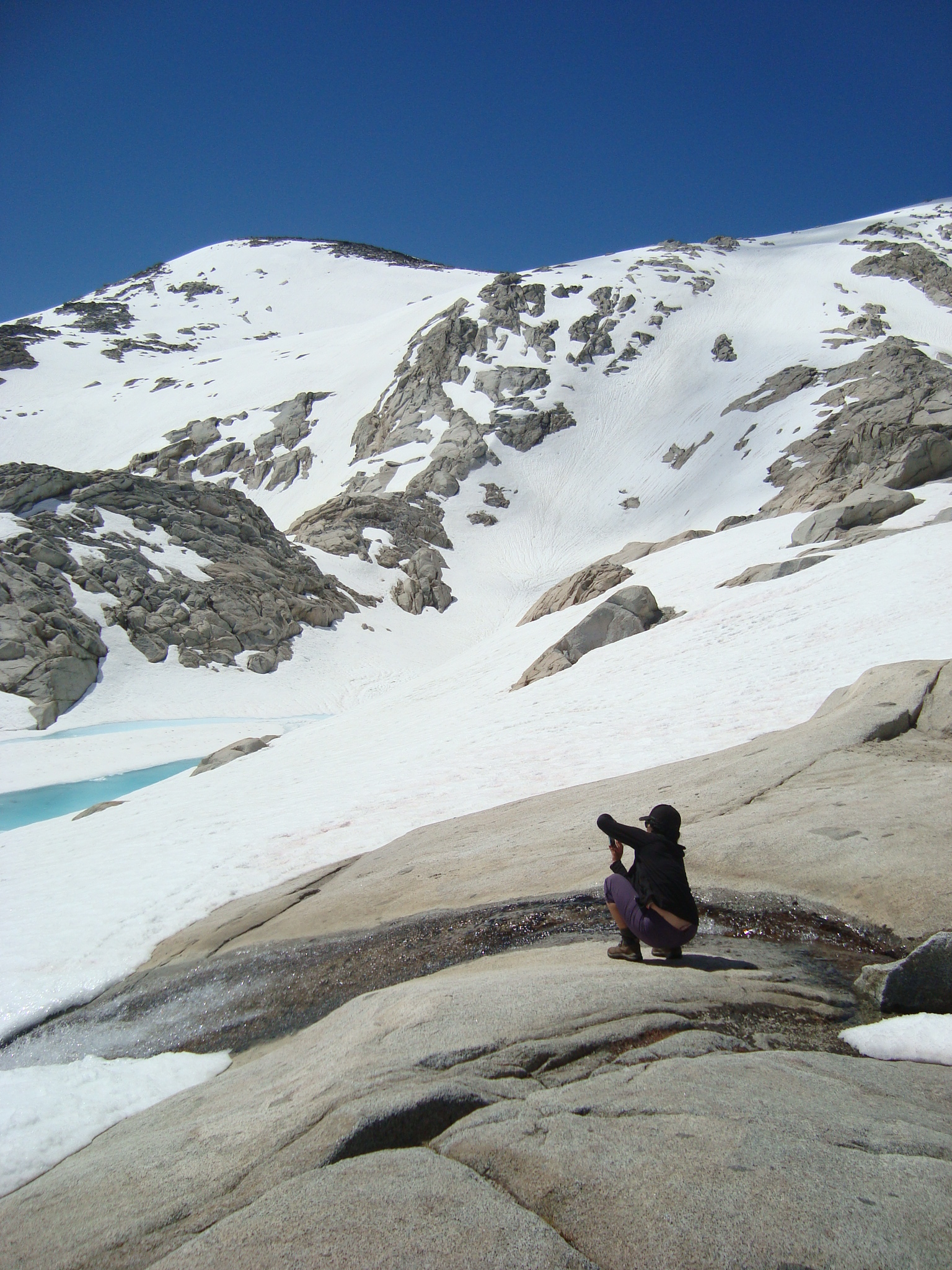
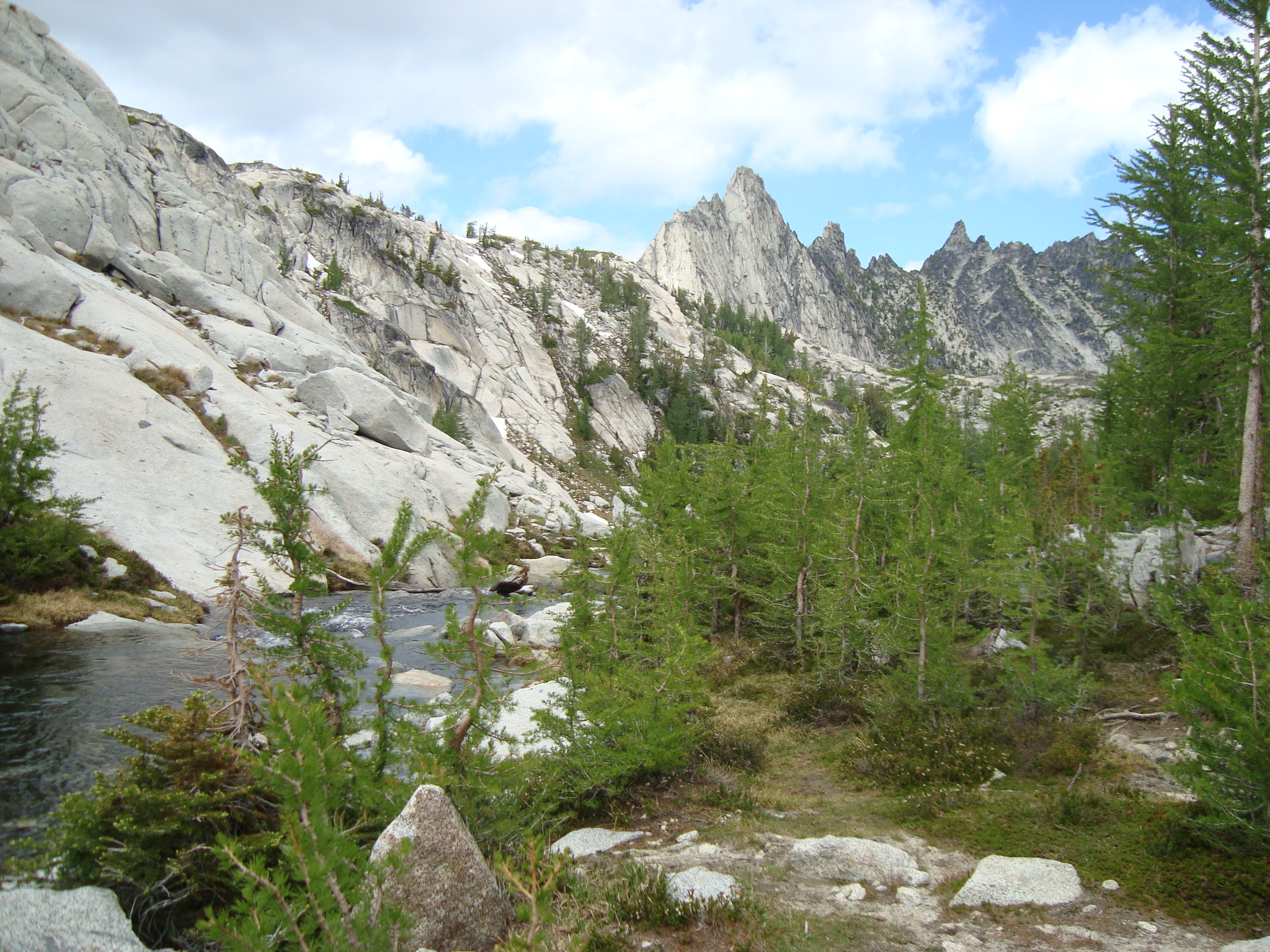
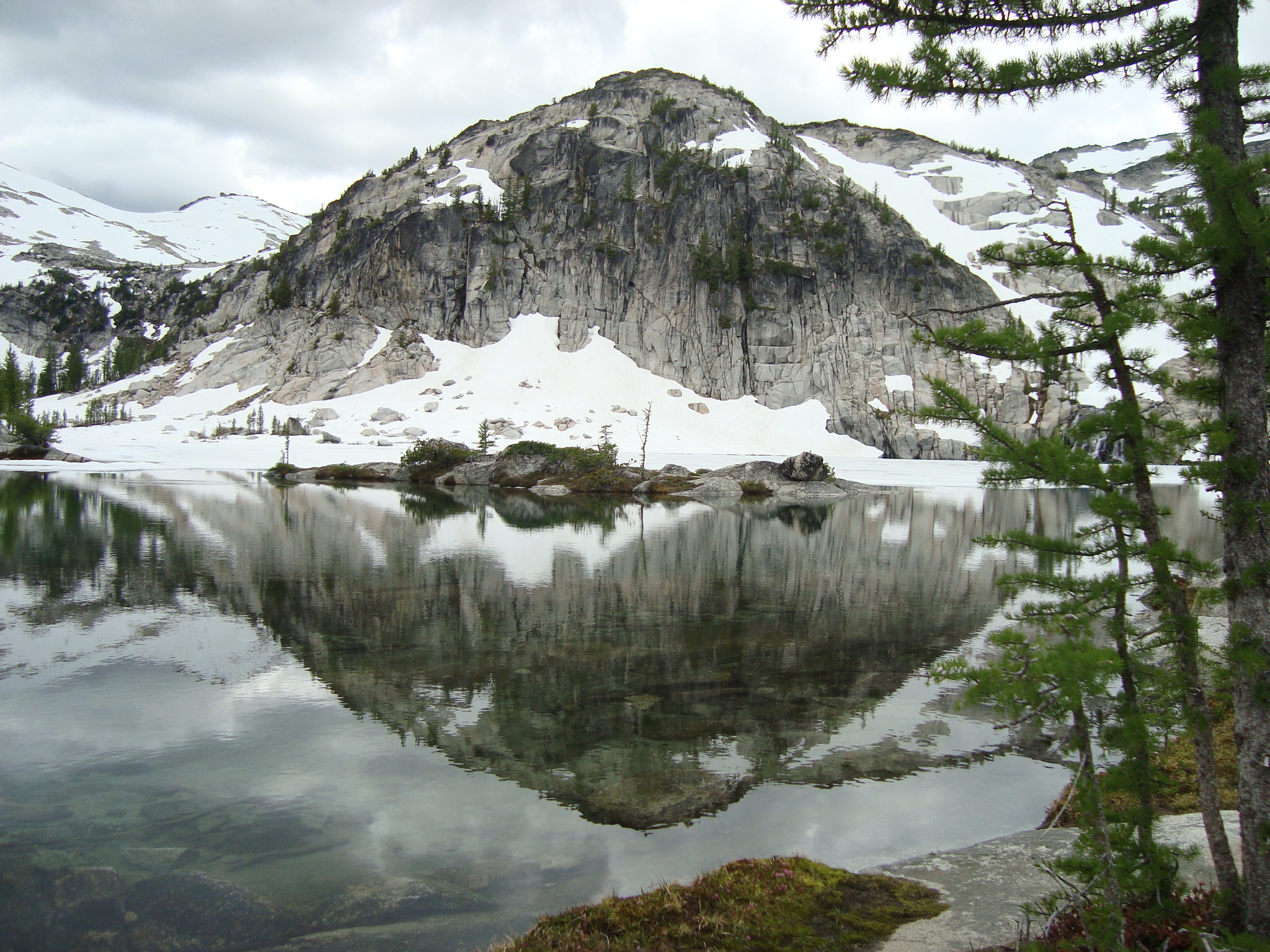
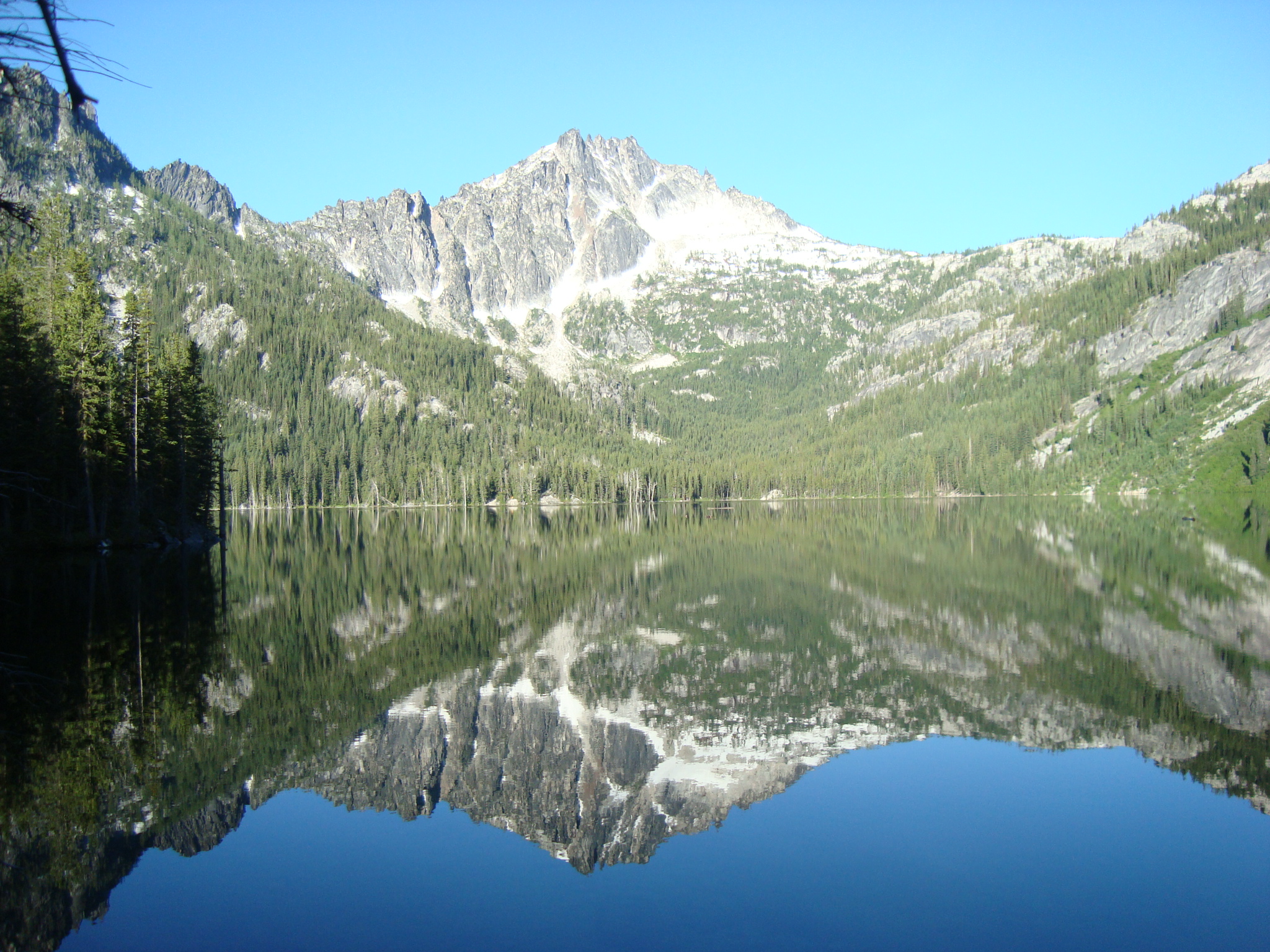
I want to describe a moment of insight, but to get there, I’ll have to take you on a little odyssey with me.  The Enchantments are a chain of lakes carved out by glaciers in Washington’s Central Cascades – a series of cirques in pale granite amid jagged peaks so lovely you need a very elusive permit to visit in summer.  But this year, with the snow level so low, I decided to seize the chance to see them before permit season began.

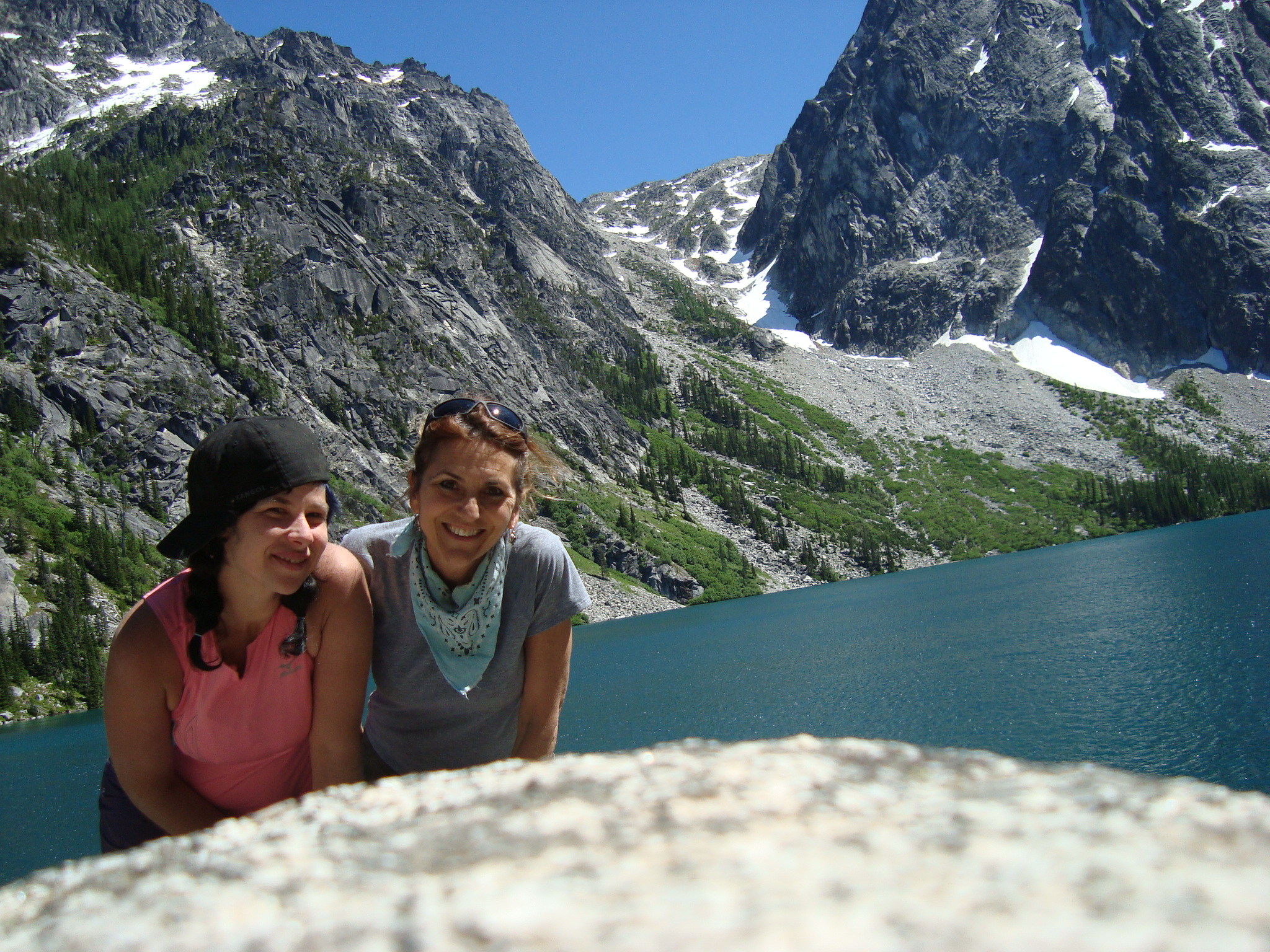
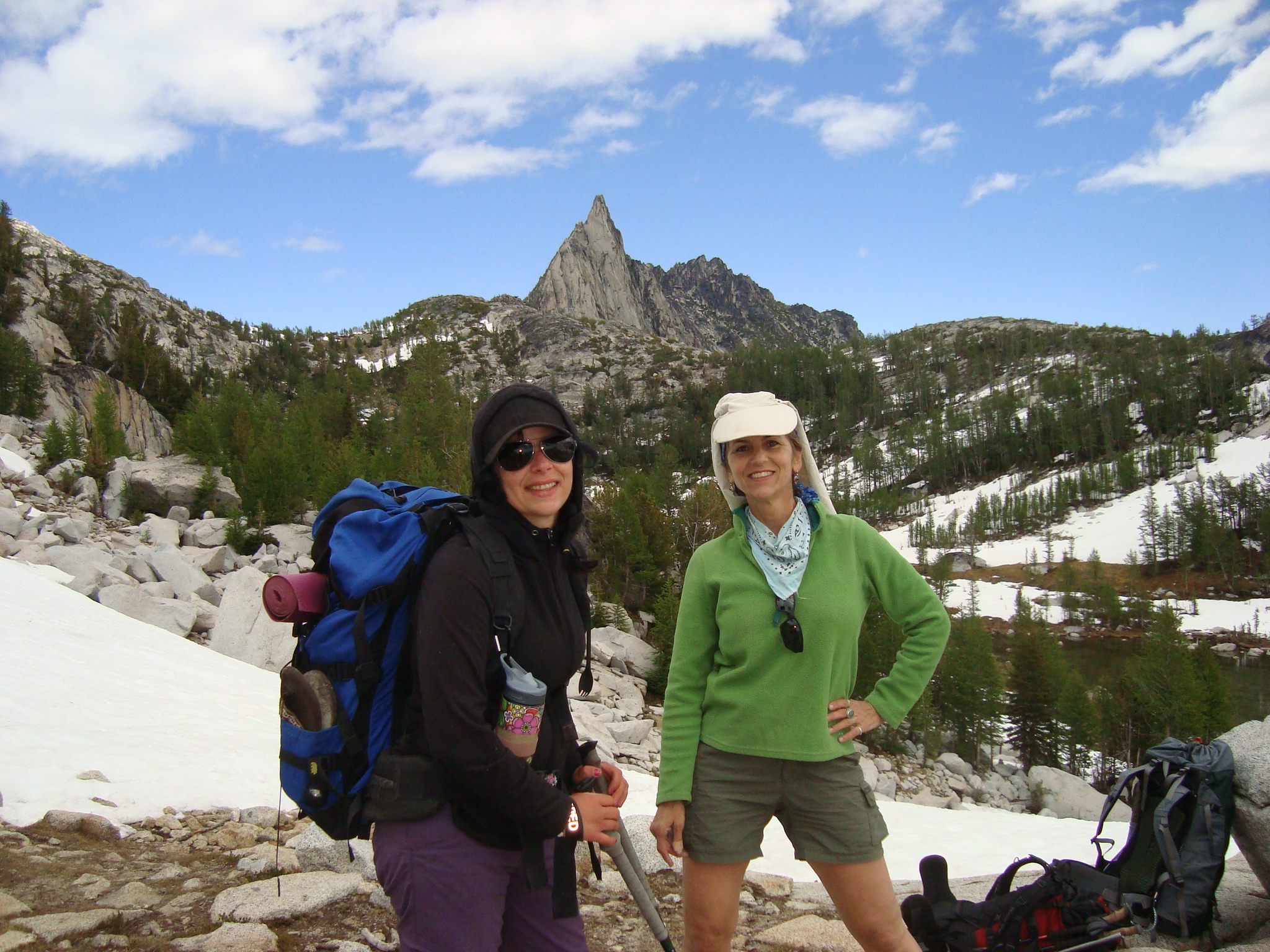
I invited along a friend who recently completed the Camino de Santiago Pilgrimage, walking 500 miles from St. John, France, to the cathedral of Santiago, Spain – with virtually no money.  I chose Kacie not only because she’s sober and a skilled through-hiker, but because her connection to God is knowledge rather than faith. Though she’s Christian and I’m non-religious, our spiritual convictions align perfectly.  At 33, she’s an absolutely beautiful soul.  Here we are, starting out our trip at Colchuck Lake.

DSC03396

Aasgard Pass is behind us, where the trail gains 2,000 feet in 3/4 of a mile

I wanted Kacie with me not just to help me tackle this trail, but because I knew she could help me along a second, inner trek.  Maybe I’m trying to tell too much in one post, but for me, this trip was more about healing than hiking. I recently posted about having discovered that for two and a half years my alcoholic boyfriend concealed an ongoing affair with an alcoholic girl half my age – named KC, ironically enough.  Though I’m glad to have escaped with my sobriety, there’s much grief to process in losing someone you thought you loved for nine years.

Early on, I asked my Kacie for her take on my “happy” memories from those deceit-filled years with Grayson – our teasing as we played ping-pong, comparing cloud pictures as we lay in the sunlit grass, decorating our tiny Christmas tree.  She answered straight up: “You need to let go the lie before you can embrace the truth.  That was manipulation, it was false, it was poison – every minute of it.”  I knew she was right.  Her words solidified the ones hovering in my thoughts for weeks: emotional robbery, abuse, even molestation.  Because, yes, to con someone into prolonged intimacy, fully aware the truth would both horrify and repulse them, is that bad.

We hiked on.  I’d heard a lot about the dangers of climbing Aasgard Pass, with its 2,000 foot near-vertical gain.  We didn’t reach the base of the chute until 4:15.  There’s no trail per se; you scramble amid sliding talus and scree; you search above you for cairns – stacks of rock people have left to mark a course – praying nothing falls on you.  Chest-high boulders with divot toe-holds demand you heave yourself up them despite the 35 pounds on your back and hundreds of feet below you to fall.

DSC03408

Kacie picking her way up the rubble

We climbed for an hour.  Two hours.  The wind picked up, and we began to encounter pockets of ice and snow.  There were times I thought I’d lost the way completely, boxed in among boulders, until I’d sight a cairn someplace seemingly impossible to reach.  Then I’d pray, find handholds, pretend I wasn’t exhausted, and heft Louisa + pack one more time.  Ten minutes later, repeat.  Finally, three and a half hours into it, a moment arrived when I rounded a rock face and recognized from the outlines of slabs against the sky that we were nearly there.  To Kacie, over the whipping wind and cataract tumbling to our right, I shouted, “We’re almost there!  We’re gonna fuckin’ do it!”

That’s when the tears came. Thank you, god.  Not just for getting me here, but for showing me I have what it takes to do this.  In the past, on all our toughest climbs, Grayson led.  But no one led me this time, not even a frickin’ trail: just god and the bright life it kindles in me.

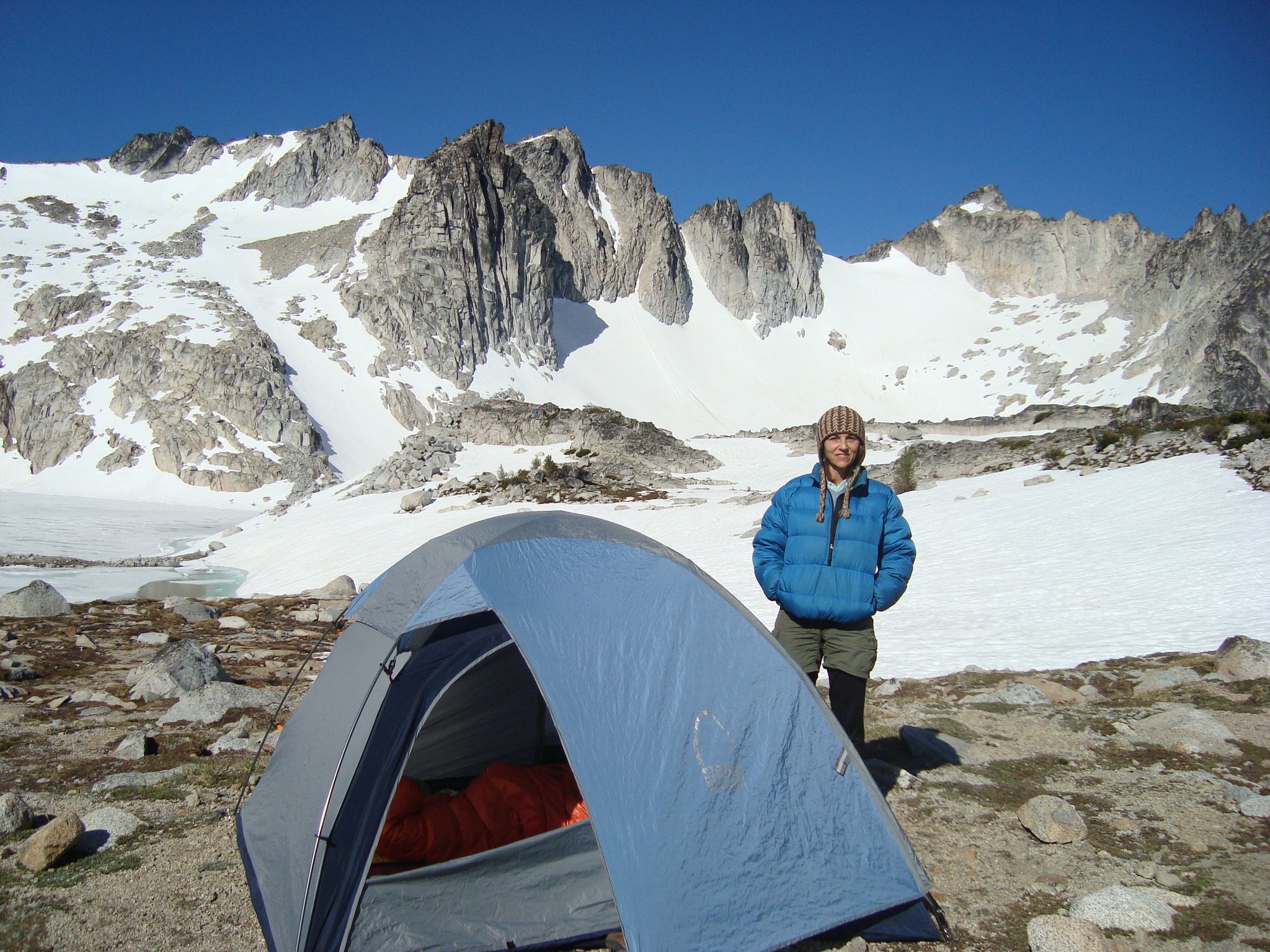
While the sun set amid 20 mph winds and the temps dropped below freezing, Kacie and I made camp at about 7,ooo feet.  Kacie was so chilled she began dropping things, getting confused.  Our stove wouldn’t light at this altitude and the winds snapped at the tent as we pitched it.  But we were never scared – not really. I gave Kacie all my extra clothes and released enough gas from the canister to blow up a small dog before my lighter finally ignited it. Once the water boiled I told Kacie to go eat inside the tent while I made her some hot water bottles and picked up for the night.

Neither of us slept much because the elevation throws you off, but in the morning we encountered this, along with the delicate music of snowmelt everywhere running down to Aasgard Lake:

DSC03410

and this:

DSC03411

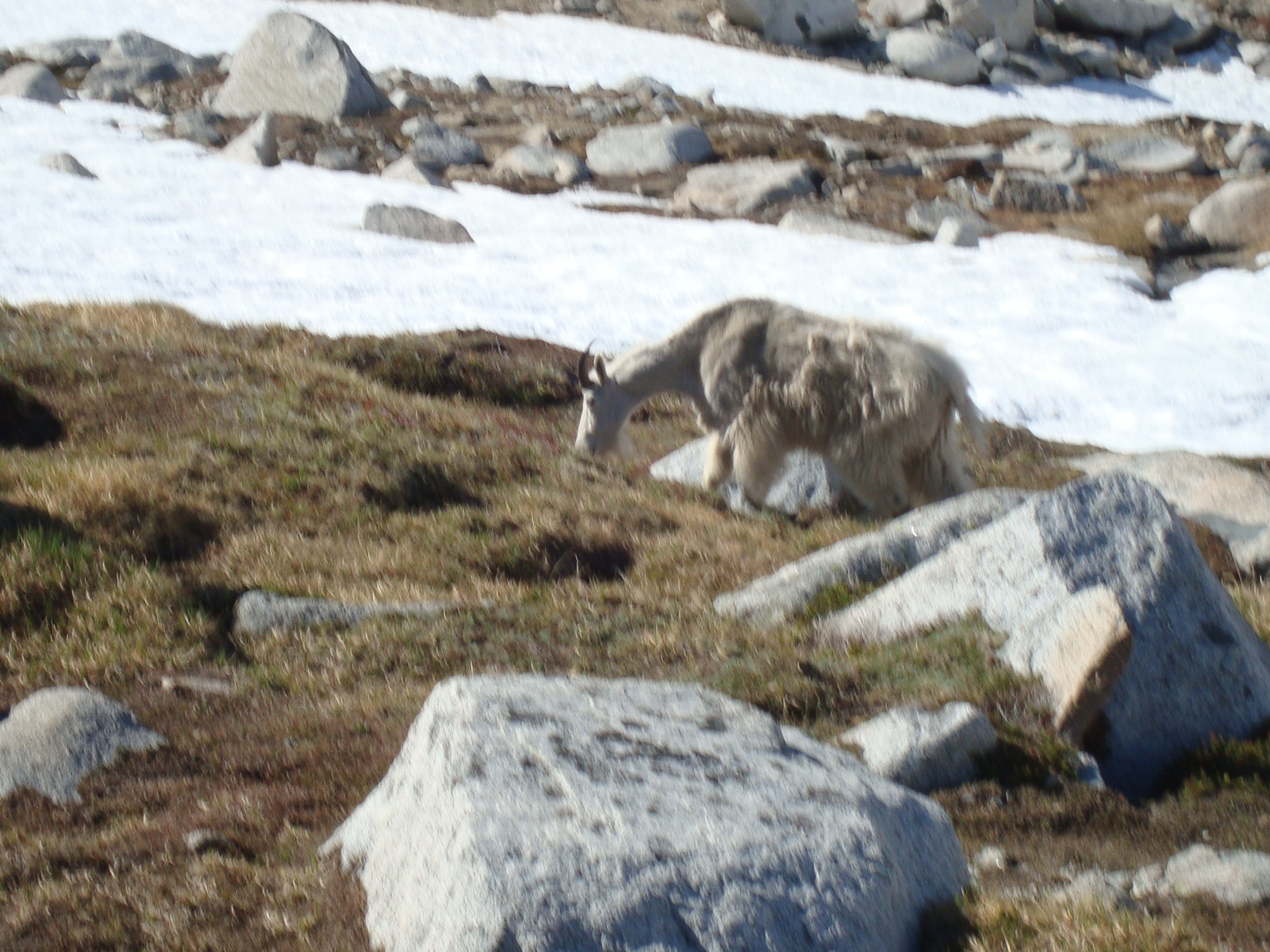
and lots of these guys:

DSC03413

After breakfast, we packed up and set off again, like this:

DSC03423

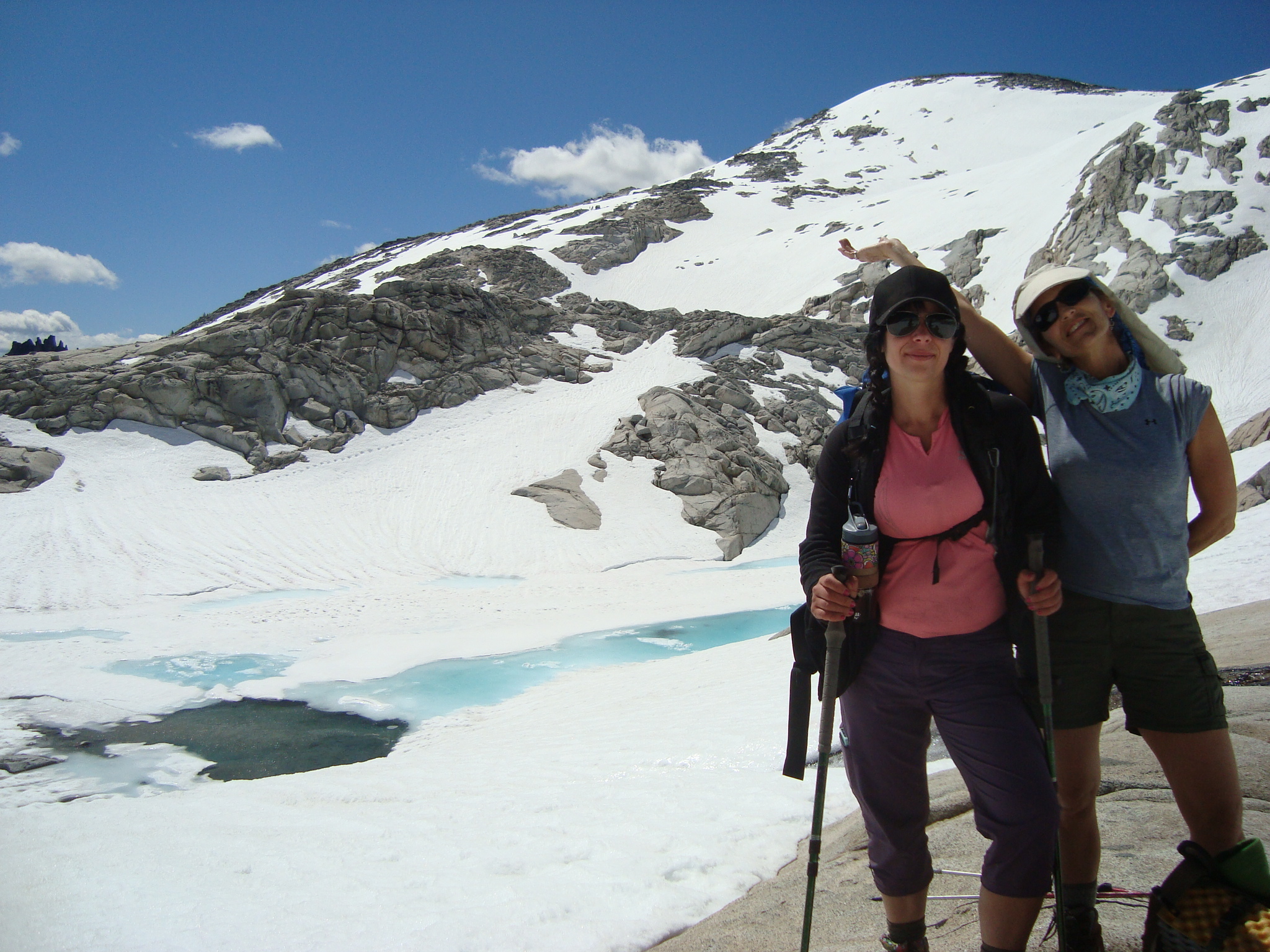
We covered about 10 miles that day, talking on and on about god, about how god has built right into us our capacity to see, feel, and appreciate beauty as a spiritual language to connect with Him/it.  Here’s are some glimpses of what we saw, did, and loved:

DSC03424

DSC03429

Kacie took

DSC03441

DSC03440

DSC03455

DSC03447

DSC03449

Among the many things Kacie said that struck me deeply was this: “The only thing God asks is that we participate in the relationship.  It’s like if I were going on this hike saying, ‘Hmm… Louisa might be with me on this hike. That might be her I see ahead of me, that could be her voice…’ but I ignored you the whole way because I wasn’t sure you were real.  I mean, what’s more hurtful than just ignoring someone who loves you?!  We do that to God all the time, and yet He just keeps loving us.  He keeps saying, I’m here when you’re ready.”

Eventually we began our descent to Snow Lake, where we’d spend our second night.  That’s when I felt something welling up in me, stronger with each step I advanced between the huge rock escarpments toward the meandering valley below.  Thoughts churned.  Why did it still hurt that Grayson had ignored my love? Why was it so hard to love myself ?

Here came the revelation: I understood, as I started bawling silently, that to love god in these mountains was to love god in me as well.  So I began saying silently to each beauty, however tiny or vast: “I love you, god.  I love you in this flower.  I love you in the tops of those trees.  I love you in that tremendous and intricate stone wall above me older than I can conceive.”  Each time I sent out this energy, whatever came back seemed to redirect my inner periscope just a tiny notch or two – away from Grayson’s insult and toward my own wealth of spirit, away from the story of what happened and toward the openness of whatever might.

I crossed some threshold.  I saw my journey was on course, that god had sent me a precious gift through every person I’ve ever loved – including Grayson. In the thousand-plus miles we covered together, he taught me most of the skills that embolden me today, skills that let me dare to venture out and meet my god in the rough and dangerous beauty of the wilderness.

What a gift!  Not just for me, but now through me to Kacie. “Churches are like big, fancy worship bathrooms,” says Kacie.  “I want to be here.  God’s Cathedral is here.”

DSC03460

The next day we were met at the trailhead by kind, sober friends who drove us back to my car. The minute I got home, I showered, threw on a dress and heels, and drove to a downtown restaurant to celebrate another sober friend’s 50th birthday. We sang to him as he blushed.  Love – that same echo of god’s goodness – rang in our voices.

“God is such a show-off!” I remember Kacie saying as we hiked. “He is!  Because He has infinite beauty to show off!  Fucking infinite!  He pours it into the mountains, into this stream, into us!  He wants it  a-l-l  to be felt!”  We joked about the fears that make us check our inner share of god’s beauty, like a bird halting in mid-song for fear of fucking up.  This blog is part of my song.  I’ll show off, I’ll sing, I’ll fuck up, and I won’t apologize.  Because god put inside me what it wants me to share.

scroll

Post to Facebook

1 Comment

Filed under Alcoholism, Codependence, Faith, God, Happiness, living sober, Recovery, Sobriety, Spirituality

Boundaries = (honesty + humility) x self-esteem

The term “boundaries”  used to irritate me.  It’s always seemed such a pop-culture concept.  I guess it’s a psych term popularized during the assertiveness craze of the 80s – actually, I have no idea – but I first heard people throwing it around a lot in the 90s.  “That’s a boundary!” some woo-woo friend would exclaim, or, “You need to develop your boundaries” around this and that.  Like a lot of pop-psychology terms, it’s always kind of made me barf.

I’m just that way.  Whenever I don’t understand something, I’m quick to label it bullshit.  Contempt prior to investigation and all that.

The fact isBud ad, though, I suck at boundaries and always have.  I’m a people pleaser.  Why?  I grew up in an alcoholic home where we had trouble being honest about feelings because the most fundamental truth in the house had to remain that there was absolutely nothing wrong with Dad’s drinking. And because Dad was several different people depending on where he was in the cycle of irritable dryness, calm drinking, jubilant drinking, or self-disgusted hangover, while Mom and everyone else reacted to his state, I learned to look outside myself for the climate of reality.

But more subtle still was the thin film of doubt between the truth inside me and the truth inside my family members.  It isolated each of us.  It prevented love from sinking in through my skin.  I always felt valued for my various accomplishments rather than treasured for just being me.  All this is pretty classic for alcoholic homes.

I also grew up being quite bossy to my younger sister.  My older siblings had a sort of club that excluded us, so, as I relate in my addiction memoir, my younger sister was stuck with me.  I could run the show in all our doings, but whenever conflict came up, Mom would frame me as the oppressor.  Long story short: I grew up to suspect that my true self was mean, controlling, and unlovable.

When I got my first boyfriend, I remember so clearly the decision I made to play a role and stuff my true self!  If I expressed what I really thought or wanted, he’d be repelled and leave me.  It felt like some kind of vow of chastity or something, this inner resolve that I would win love by conforming myself to my best guess of whatever he wanted.

And I lived like that for decades.

split-rail-fence

Back to Boundaries.  What are they, anyway?  How do they work?

Working the 12 Steps of AA let me recognize the dance of Fear and Ego that orients so much of how I interact with others.  I learned that I fear I won’t get what I think I want/need, so my ego steps in to try to arrange and control the players as I think best, and then resents them when they don’t follow my script.  All true.

What I never saw until I went to Al-Anon was that one way – actually, my favorite way – of trying to control others was by doing exactly what I thought they wanted.  It’s all about management through martyrdom.  I’ve put not one but two partners through college, working at jobs I didn’t like to pay the rent and arranging my life around their syllabi.  This was love by transaction.  I sacrificed my needs for them so they’d be corralled and obligated to “favor” me with love – and if, along the way, I didn’t follow my own dreams, it was all their fault.  Both those relationships crashed and burned.

Unfortunately, all I really learned from those experiences was: “Don’t put people through college.”  In my current 9-year relationship, I’ve been blind to all the ways I’ve arranged my life around my current partner’s preferences.  We don’t live together, and he’s rarely in town, so I seem quite independent.  I have my own friends, my own programs, a busy life apart from him.  From the outside, I’ve got it goin’ on.  So it’s been harder to see the fact that I’ve dropped from consideration any requests I fear might displease him.  I’ve preferred to resent his “selfishness” for following (martyred) signals I put out rather than seeing my own choice to edit those signals.

Upshot: I can have no boundaries unless I’m honest with myself.  And I can’t be honest with myself if I lack humility.  Who wants to say, “I’m afraid I’m not loveable; I’m afraid you’ll decide to leave; I’m afraid I’ll be alone forever” -?  Humility is what lets us name and face this unglamorous truth: “I am flawed and frightened.” Once I can cliffname it,though,  I can have the self-honesty to see where I’m bending over backwards to be loved.  If god sees that with me, and we know it ain’t right, maybe I can muster the self-esteem to risk everything and trust god’s plan for me instead of my relationship management skills. Maybe I can take the plunge.  I can ask for what I want despite fear, in the faith that no matter what happens, I’ll be okay.

What Al-Anon has helped me see is that I’ve always misconstrued boundaries as a fence to keep other people from intruding on my inner sensitivities.  I’ve experienced angry siblings trampling all over my dignity and wanted protection – so that, I thought, would be a boundary.  But today I see that boundaries actually delimit my own choices and behaviors.  They’re about what I will and will not sign up for.  For years I chose to stand within the trajectory of my siblings’ insults.  Now the boundary is actually for me, the point at which I’ll remove myself.  Likewise, for years I’ve chosen to mute my own needs for the sake of my boyfriend’s.  Of course, any relationship involves compromise.  But the boundary signals those compromises that actually detract from my life and well-being.

Boundaries, I’m learning, are not directed at other people.  They’re about me recognizing the limit, the degree, the subtle gradation of that point at which my choices amount to self-harm – and refusing to cross it.  They represent a deal with god to honor my innate worth rather than trying to wrangle it from others.

I’m so grateful for a set of programs that has opened my eyes to the difference!

 scrollPost to Facebook

3 Comments

Filed under Al-Anon, Codependence, Faith, living sober, Recovery, Sobriety, Spirituality

Being Right vs. Just Being

If you happened to see last week’s blog, I was pretty hot under the collar.  I have plenty of beliefs about anger, but none of them seem to show up when it’s flaring in my system.  angry-face“Anger rises up in defense of something sacred,” I’ve been told, which was certainly true in this case – AA is precious to me, and I felt it had been attacked.  But that anger’s gone now.  Gabrielle Glaser makes some good points.  AA is not for everyone.  Some heavy drinkers do have a mere “bad habit,” and no clear line distinguishes their condition from the sort of fatal alcoholism that has ravaged so many lives – which I do believe only a spiritual experience can conquer.

In other words, for some, Glaser may be right.

“Do you want to be right, or do you want to be happy?”  That question, often voiced in AA and Al-Anon meetings, has always bothered me a bit, because I don’t experience the two as a direct trade: being happy may not come in exchange for releasing my grip on rightness.  Today I settle instead for the peace of being uninterested.  That’s why I prefer to frame the choice in these terms: “Do you want to be right, or do you want to just be?”

In the heat of anger, my world shrinks down to two dimensions: right and wrong.  Only one of us can claim the “right” end of the stick, and the loser is left with the “wrong” end, because they’re… well, a loser.  But life is way more complicated than that!  If I can keep my mind open, I can drop the stick and say, “I have this perspective, which differs from yours.”  That way, I open an avenue to peace.  I may argue and stay pissed a while, but either way my goal is to move on, to continue with the business of living my life while you live yours as you see fit.

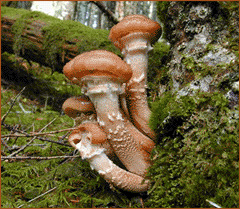
honey mushroomThe largest single organism on earth is currently thought to be a colony of honey mushrooms living in the Blue Mountains of Oregon which occupies an underground area about the size 1,665 football fields.  It’s a system of genetically identical cells communicating for a common purpose – i.e. one living thing.  Now, if I were to pick a single one of these mushrooms and contemplate it as an individual entity – that would be analogous to assessing the behavior of a person in a particular situation.

Because behavior is only the tip of the shroom colony!  Sprouting that person’s choice is the vast underground network of family, culture, and life experience that has cultivated that person’s principles and beliefs, along with the vast simultaneity of feelings and motives churning beneath their surface in the present moment.  But I don’t consider all that.  I see only something that contradicts my own ideas.

What do I want to do when I feel someone else is wrong?  Judge and gossip.  But, no, wait!  I don’t judge – I morally evaluate.  I don’t gossip, I process verbally with people I trust.  The temptation, in any case, is to “prove” that my truth beats the hell out of that asshole’s skewed rationalizations.  In the process, I can get downright mean.  In my Glaser rebuttal, for instance, I resorted to sarcasm: “Gosh, Gabrielle, that’s right! …Oh, I see!” I could have made the same points without mockery.

An even crazier response is trying to change the person, also known as “trying to talk some sense into” them by driving home something that will make them see they’re wrong “for their own good.”  What I’m trying to do is uproot the entire underground spore system by yanking the “right” way on a single mushroom: it’s just not going to work!

I do wish my boyfriend would give up his traveling job and go to AA.  I also wish he’d quit saying “oriental” and badmouthing Obama.  Having told him these things, I get to decide if I want to accept him as he is – or leave.  In the same vein, I wish my siblings would live by the principles of Al-Anon, practice loving kindness, and respect my sobriety, but I can’t make them do so.  What I get to decide is whether I want to hang out with them.

My job is to build my own meaningful life.  That’s it.  You get to do the same.

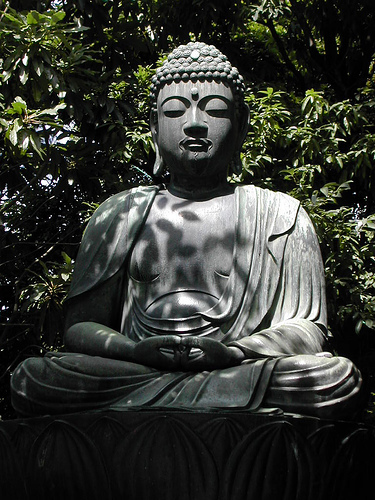
In Herman Hesse’s novella, Siddhartha, the young Siddhartha siddharthaabandons everyone close to him in his search for truth.  He leaves his father, the monks who’ve taken him in, his best friend, and even the Buddha himself, eventually landing in a life of material and sexual indulgence that slowly sickens him.  A few decades later, after having “awakened” from this stupor, he’s built a new life of spiritual purity assisting a simple river ferryman when his illegitimate son comes to live with him.  The son is a major asshole: spirituality’s a bore, dad’s a loser, and he runs away as soon as he’s old enough.  But when Siddhartha anguishes that he can’t teach his son how to live, the ferryman sets him straight: “Have you forgotten that instructive story of Siddhartha…?  Could his father’s piety, his teacher’s exhortations, his own knowledge, his own seeking, protect him?  Do you think, my dear friend, that anybody is spared this path?”

I take two points from this story.  The first is that I can’t impress my views on anyone who isn’t open to seeing them.  But the second is to live my own life fully, to blunder ahead at times as I blaze my own path of learning – along which, really, there are no mistakes!

There’s nothing wrong with being “wrong” sometimes.  Accept difference?  Are you kidding?  Of course I’ll still get pissed off!  Of course I’ll think I’m right and those assholes can stick it where the sun don’t shine!  Screwing up is part of being human – part of how we steer the course of who we do and don’t want to be.  That’s why Step 10 exists – because the process never ends.

I’m certainly no saint.  But loving tolerance remains my North Star, the direction in which I seek to move a little further every day.  That’s the point.

scrollPost to Facebook

2 Comments

Filed under Al-Anon, Codependence, Happiness, living sober, Recovery, Sobriety, Spirituality

People, Places, and Pain

Recently, someone I trusted betrayed my confidence deeply.  Or rather, I just found out about it last week.  Before then, I’d have said such a thing could never happen – and I’d have staked my life on it.  In a way, I did.  Maybe some day I’ll write about the specifics, but right now I’m too shocked to have any perspective.  I haven’t slept more than a few hours at a time all week; my heart pounds so I feel each beat; I have no appetite.  Sure, it’s great to drop five pounds in a week, but not with shaking hands you have to hide from clients or sinking guts that weigh down every breath.

I’ve often heard in the rooms that placing one’s faith in people, places, and things is a recipe for pain.  But how can we avoid doing just that?  Part of my loving – or feeling I love – inevitably involves dependence.  I trust that a friend or loved one honors me as I do them, and pretty soon I’ve hung my well-being on their actions without even realizing it.  In the same way, I rely on the places and things I love to provide me security.  I get attached to my body’s health.  These elements should all stay put just as I’ve arranged them.  I want to know my happiness is safe, that I can depend on the world to take care of me.

Natori, Japan

But it isn’t, and I can’t.

When illusions get ripped away, we realize that everywhere we make a home for ourselves in the world, we simultaneously become exposed.  We begin to think that home is part of us, of our being – our identity – and that we can shed our skin there in perfect safety.  But people are flawed.  They fuck up.  They decide, at times, that it’s a grand idea to be immensely selfish, throwing us under a bus.  Other “homes” are just as impermanent.  Diagnoses drop bombs on our health.  Jobs end and take financial security with them.  Sweet kids become addicts.  People move away.  Houses burn.  Earthquakes happen.  Nothing stays put.

When I am most in pain, I turn to god.  And god, I have found, is  there for me most when pain has torn open my heart.  I can feel it.  It doesn’t exactly empathize, because pain is not part of its realm.  But it loves.  Even when everything has gone to shit, god loves as always – the way the sun rises each morning, the way the ocean waves curl over and thunder up the beach, the way the spring grass sprouts through winter’s dead mat of straw year after year after year.  “I’m here.  I love you.”  That’s what it says.  But if I listen closer than I want to, it’s also saying, “All is well, if you’ll only let it be so.”  It’s talking about acceptance.  About humility.  God is in what is.  So when I fight what is, I’m fighting god.

Do I think about taking a drink?  Wouldn’t that fixDrinker silhouette everything?  Wouldn’t it calm my heart from slapping against the inside of my sternum?  Just cop a decent buzz and I could quit giving a shit.  Then I could vent my hurt as outrage and lash out about what a worthless piece of shit the person who hurt me was.  That anger – wouldn’t it  jack up my sense of power, raise me on towering flames of righteousness so I could smite?  Then maybe I wouldn’t have to feel this intense vulnerability, this loss, this pain… pain… pain….

Sure, that might happen temporarily.  But when the drunkenness retreated, I’d have nothing.  I’d have lost not only the person I trusted, but myself.

I hadn’t gone to one of my Near Death Experience (NDE) meetings in months, but when I asked last week on Facebook if someone would go with me, a Tennessee friend who’s had an NDE as well responded: “I’m in town; let’s go!”  At that meeting, the makers of a TV show came down front and announced they were interviewing NDEers.  So, as one of them passed my aisle seat, I handed him my card.  I didn’t think much of it.

NDEYesterday I was sitting with my pain, my journal open in my lap, staring into space.  The phone rang and one of those TV researchers asked if I would tell her my NDE story.  It takes a while, because I’ve had 14 paranormal after-effects as well, but she assured me she had all the time in the world.  So I told it again for the for the first time in years.  The story’s scattered through my addiction memoir and I’ve presented it to Seattle IANDS* and at the Seattle Theosophical Society, but there’s no call to tell it in daily living.

When I got to the part about my huge 9th Weird Thing, I explained:

“That’s the moment when I got it.  I mean, before then I’d believed god was real whenever I was feeling spiritual or something, but otherwise I’d set that aside and  believe in my own mind.  But this thing was so inexplicable – it was all the proof a person could ask for.  I knew then god is with us in every tiny thing that happens.  And something changed in me.  I was sobbing and I prayed, ‘Okay – I know you’re real!  I’ll never you doubt again!'”

“That’s so cool!” exclaimed the woman.  She was busy taking notes.  And in the little stretch of silence that followed, something nudged me: Hear yourself.  Sitting there, I remembered that the 9th Weird Thing really did happen.  I remembered all my weird things – that they had actually happened to me, that I really lived them, and that no material view of the world could explain them.

What I’d prayed fervently a few nights before was this: “Let me know you’re with me.”  So it came about that I spoke the very words I needed to hear.  Plus there was a deeper message wrapped up in that “hear yourself,” saying also, “heal yourself.”   It went something like this:

There’s a home at your core that’s always safe, because you and I inhabit it together.  Make that home your true one.  Spend time there, spruce it up, make it strong.  Because there, sweet child, even as the world falls down around you, my love will carry you, and you’ll be okay. 

Today, I know that’s true.

scroll

*Seattle IANDS = Seattle branch of the International Association for Near Death Studies

Leave a comment

Filed under Alcoholism, Drinking, living sober, Near Death Experience, Recovery, Sobriety, Spirituality

The Wisdom of Ordinary Schmucks

Today, Thursday the 29th, I have 20 years clean and sober. Woot!

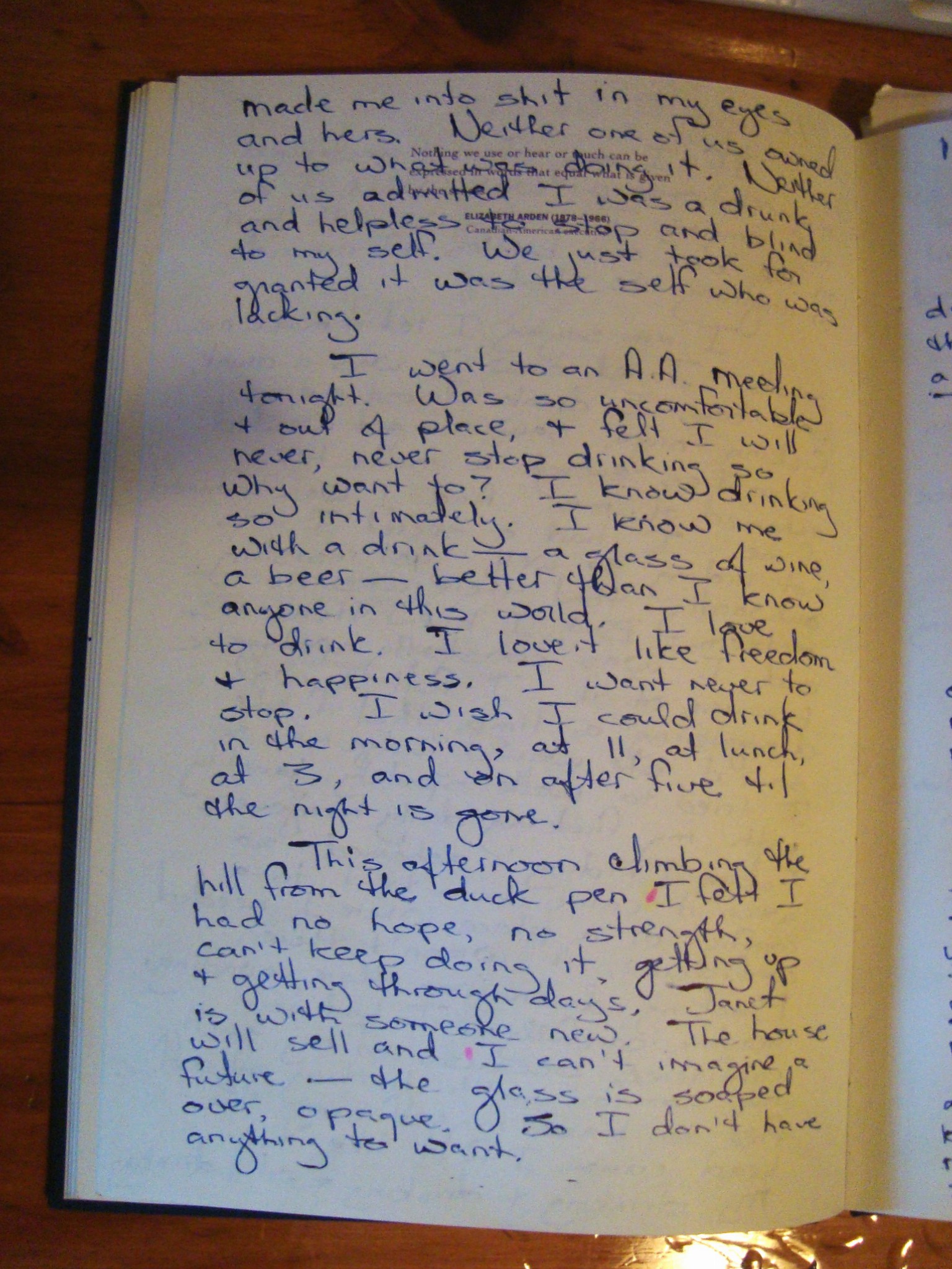
Here’s a journal entry I wrote 20 years ago after my first AA meeting:

1/29/1995:  “I went to an AA meeting tonight. Was so uncomfortable and out of place, and felt I will never, never stop drinking so why want to? I know drinking so intimately. I know me with a drink – a glass of wine, a beer – better than I know anyone in this world. I love to drink. I love it like freedom and happiness. I want never to stop. I wish I could drink in the morning, at eleven, at lunch, at three, and on after five ‘til the night is gone.”

2015-01-29 08.01.00

journal page

Writing that was a scared, deeply confused and unhappy semi-suicidal woman who thought her mind ought to be able to get her out of any jam. The last thing she suspected was that those people among whom she felt “so uncomfortable and out of place” would not only save her from slow death, they would teach her to transform living into something beautiful and joy-filled. I remember judging every person in that room by the standards my family had ingrained in me. Anyone lacking at least a BA, anyone with a working class job who wasn’t slumming ironically for the sake of some art form, was ignorant. As for the 12 Steps, it took me about 40 seconds to read them off the wall. How could such vague ideas accomplish anything?  Sure, these ordinary schmucks believed in them, but I was way smarter and more special.

Wisdom, however, is neither academic nor cultural. It’s about living – how we respond to the passions of being human, like our desires for love, fulfillment, and specialness.  It concerns how we deal with fear, anger, and the impulse to defend what we love.  And it’s far more a matter of what we let go as false than what we cling to as true.  The ordinary schmucks in AA taught me how to cast off the hoary crust of fear that had blocked me from the truths of god and my fellows, freeing me to be myself and to love you intrinsically because you are, at heart, just like me.

The first things the schmucks taught me were wisdom bytes passed down in AA, which made such an impression that I remember to this day where I sat relative to the person speaking.  “I can’t fix my broken brain with my broken brain,” said a guy at the next table with unruly hair sticking out from under his baseball cap. “That’s why I need the help of something greater than me.”  Whoa! I thought, no wonder I can’t get better!  Too bad I reject everything to do with God!  But then a few days later an overweight woman in polyester pants sitting to my left against the wall said, “If you can’t think God, if that’s objectionable to you, just think Good Orderly Direction.  You can seek that – something deeper than your own thinking.”

There light_bulbare countless other key moments when light bulbs went on for me. “My ego tells me I’m the shit, and my self-loathing insists I’m a piece of shit.  But God grants me the humility to be right-sized – to be a worker among workers, a driver among drivers, a sober drunk among sober drunks.”
But even more important, what the schmucks have shared with me is their experience of living life. The first story I ever identified with was told by a guy (sitting near the door to my right) who ordered Chinese take-out that arrived without chopsticks.  He knew he had a pair in the house, some nice bamboo ones, but couldn’t find them. He went bananas searching for them.  He kept looking in the silverware drawer again and again, lifting out the tray and shoving stuff around. Furious, he checked all kinds of illogical places – the junk drawer, his desk, the broken dishwasher – while his take-out got cold. It seemed to be about a principle.

This was in maybe my second week sober, but I still hear that guy’s words every time I go bonkers trying to find something.  “It’s just my ego refusing to accept what is” echoes in my mind.  “It’s just me being human and flawed.”  I’ve since heard countless stories of ways to be human and flawed, issues I once thought were mine alone.  Incrementally, they push me toward acceptance of things I cannot change.  But what about that courage to change the things I can?

The 12 steps grew from empty suggestions to a revolution in life perspective once I worked them with a hard-ass sponsor who pushed me to see beyond my story.  They changed me, dredging up insights from the depths of my inner knowledge and compelling me to face them.  When I didn’t like what I saw, I was willing to ask my god for help, much as I’d asked in theoak-tree beginning to be relieved of the compulsion to drink.  I was willing to work with god to become what it (i.e. love/Good Orderly Direction) would have me be.  I write this now when I have almost no time in my week because of my commitment to follow through on that direction.

Telling the truth – the human truth. That’s what I heard the schmucks doing over and over once I’d awoken through the steps.  They taught me with their shares that there’s almost always a deeper, more honest revelation underneath whatever story we’ve cooked up about ourselves and others.  Pretty much any problem boils down to “I’m afraid” of not getting what I think I need or losing what I have.  And any happiness boils down to “I love.”

I’m no longer the woman who wrote of clinging to her glass, to her liquid freedom and happiness that had, unfortunately, quit working.  Some wisdom comes simply with age.  We begin to see the old in the young and vice versa, see the broke in the rich, and to have compassion for people living though pains we have known.  Whether one is in AA or not, pain can be the greatest teacher if it moves us to replace our defunct illusions with love and tolerance rather than tout them with righteous judgement.  Gradually, we come to see the trajectory of birth to death resembles a meteor’s streak through the night sky: the small and insignificant burn bright, casting light where there was none, and then go out.  We can’t begrudge anyone the color or angle of their flare.  We are all miraculous and unique ordinary schmucks.

Thanks for 20 years, guys!

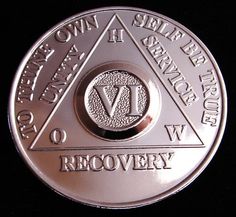
20 year coin

2 Comments

Filed under AA, Alcoholism, Drinking, living sober, Recovery, Twelve Steps

Is Plain Old Living Fun?

Active alcoholics, it seems to me, often crave action, adventure, glamour, and a lot of craziness, usually as ways of getting attention.  johnny-cash-finger-2I know I chased all these things – and loved to mentally flip off anyone who told me to settle down.  I see this tendency still in newcomers and chronic relapsers.  Hell, yeah, mothahfuckah, I’m a bad ass!  I’m wild!  Carpe F-in’ Diem is my middle name!

In my addiction memoir, I talk about the god-inspired (and abrupt dog-death inspired) aha moment when I realized the Pied Piper of the ultimate party, a phantom I’d been chasing all my life, was actually a demon who would lead me to my death.  Another face of that demon is dissatisfaction.  It’s discounting all that you have as not good enough while elevating the lure of something shiny – a party, a romance, a feat, some moment in the spotlight – as the prize that will fulfill you.

I’ve written before about the crisis that washed over me in 2012 with the one-two punch of my siblings venting emailed rage about my memoir (I was a narcissistic, AA-brainwashed liar dishonoring our family) and the news that I had breast cancer, both in the same month.  I’ve also written a bit on the way the intensity of that pain/fear acted on me like a forge, recasting me with a changed outlook.  Pain, the Big Book tells us, is the touchstone of growth, and all of us have to pass through our own to gain wisdom.  But the view from this side is something I can try to describe – something that may be of use.

Back in the day, I was constantly trying to fill the gaping hole in my chest with SOMETHING.  Alcohol, drugs, relationships, excitement, drama-analysis, fglamorood.  I knew my life shouldn’t be what it was.   I could read our culture; I could perceive what was rated glamorous or worthy; I understood the goal.  Media of all kinds broadcast examples of who and what was interesting and enviable.  I internalized all that and judged myself inadequate.

And yet at the same time, I drank to rebel against all that shit.  Drinking made whatever the hell was going on now just fine.  Sitting home alone or at a dive bar, I was a rugged individual who didn’t give a rat’s ass what anybody thought of me.  One of the best magical spells worked by alcohol was its jacking up my ego ipso facto.  I didn’t have to do anything but swallow to render my life a poignant drama worthy of attention.

So… I’ll be 20 years sober in two weeks, on the 29th.  I’ve walked a long road since those days, calling on god and gradually strengthening that relationship, so that while I used to “check in” with god through prayer, now god and me hang out 24/7 (although I think now more in terms of my guardian angel).  In any case, with spirit filling that hole, what life is about becomes a whole lot different.

Beautiful

To love life itself is an active enterprise.  Love flows only one way – from your heart outward.  But the marvelous thing is that it bounces back as reflection, whether from people, physical things, or even memories.  The more you love, the more love fills your life.

At some point, I realized how deeply in love I am with ordinary, boring, day-to-day life.  When I take the time to consciously love it, even the most mundane details reflect back their beauty and infinite preciousness.  Why infinite?  Because life is a chunk of a few decades cast against eternity.  Though I believe our spirits live on beyond our bodies, I also think that being in our bodies – spirit made flesh – is an amazing trip, a hybrid 3-D extravaganza of multi-tiered awareness.  Consciousness itself is a wild ride.

My cancer was caught early.  For a lot of people, like pancakesmy sister and friends, it wasn’t.  I get to be here.  What tremendous fun it is to make a pot of tea!  Will you look at this cozy I crocheted for the tea pot?  It’s yarn of bright colors, blue and yellow, and stained under the spout.  A little slice of living; the way things work. The trees out my window are earnestly being trees – those same things we drew as children, the green ball on the brown stick.  God, I love them!  My rug is worn threadbare from all the life that has tramped through this house – my son and I, friends and sponsees.  I have to go to work.  I don’t like work.  But I love the whole experience – getting to be a person who says, “Shit!  I have to go to work now…”  A person who drives just like everyone else.  Who hopes to be liked Carand to understand things and yet worries.  I buy apples and bring them home.  All the tiny chips of this life mosaic grab my attention one by one – but only for this little chunk of years.

I guess words are failing me as I try to describe this shift from taking everything for granted to seeing it, living it, loving it.  Mindfulness is the noticing of everything.  Gratitude recognizes the good things we have. But to really savor life is to go beyond both: it’s to notice each detail and call it good, delight in the sheer fun of it.  It’s to adore the whole kit and kaboodle.

I still like wild fun and adventure.  It was an adrenaline rush to zipline through a rainforest canopy on my vacation, to be the first in our group to jump from a 200 foot platform and shoot down the mountainside.  I love wilderness hiking, treks that some people would call extreme, either alone or with my boyfriend.  (He rode his bicycle alone 1800 miles from the Yukon Territory to his home on an island north of Seattle – that’s a bit much for me.)  I love dancing advanced ballet (and well), sweating alongside teens who could be my granddaughters.  In all these things, the stream of stimuli comes fast and thick.  Sometimes overload still thrills me.

But it’s not what I live for anymore.  Today, I live to be alive.

scroll

still life

3 Comments

Filed under AA, Alcoholism, Happiness, living sober, Recovery, Sobriety, Spirituality

Compassion – the best thing you can do for yourself

“Think of others as you would have them think of you.”

.

Self-centered like me?  Love others.  Got problems?  Give it all you got.

It may seem counter-intuitive, but practicing “love and tolerance” (p. 84) for all brings enormous spiritual, mental, and even physical benefits.  What I think about you inevitably colors the attitude I have toward myself, which in turn shapes my experience of life. We can know this based on anything from having lived it to abstract theories of quantum physics telling us the universe is made of energy.  What you dish out is ultimately what you get.

Years ago I recognized myself in a share by my friend, Andrew K..  He told about a time near his bottom when some friends Door peepholestopped by to see him.  From the upper story of the split-level where he lived, he silently crept down the stairs as the friends went on ringing and knocking.  Cautiously he peered out through the peep-hole to see them standing on the front slab exchanging conjectures about him.  What did they want?!  Whatever it was, he couldn’t handle it.  He just didn’t have it in him. Pleased at his evasion, he retreated oh-so silently up the stairs.

Andrew contrasted the story with his experience around Step 7:  “The more I judge you, the more I’m sure you’re judging me, so I actually experience that judging and judge myself.  And on the flipside, I’ve found that the more I let you be you and maybe even love you for it, the more I assume you’re okay with me, and so I’m okay with me.”

Our culture of scarcity encourages us to hoard love, but spiritual axioms teach the opposite.  The doors of the heart need to be oiled daily so that they’ll open even for strangers who “don’t deserve” our love and the very people who irritate us, as well as those in our inner circle.

We do pour out love toward a certain class of strangers all the time.  Yesterday during my ballet class, babyfor instance, we could hardly keep dancing for all the affection we were flooding through the studio’s big storefront windows.  With Halloween a week away, neighborhood retailers were holding a “Safe Trick-or Treat,” so the sidewalk featured a constant stream of bumblebees, superheroes, and characters from all kinds of stories.  Dressed as a dolphin, a woman handing out candy stood with her back to us, so the children would pause facing the glass, where we could see them perfectly.

Our teacher couldn’t help interrupting herself again and again.  “Oh my god, it’s Princess Leah!”  We all looked, and what I saw almost overwhelmed me.  She stood about two and a half feet tall in a flowing tunic, the classic dark buns on either side of her head slightly askew.  Tentatively, knowing what she was supposed to do, she approached the dolphin woman, her eyes staring up with a mix of trust and caution.  People flipped her off.  They called her a fucking bitch.  They judged her as a slut or a failure or beneath their concern — not yet, not yet, mind you.  But in her future.

Tiny Princess Leah was only doing her best, as she will throughout her life, and as will the Incredible Hulk who followed her with his impossibly muscled little green chest.  Already, they’re being taught who to be and how to get stuff.  We find it natural never to judge them (greedy little schmucks!) for what they “ought” to know or do.  To love them freely is ingrained in our culture.

Just for today, what if you practiced seeing the toddler in every person you interact with?  The spirit within that person is exactly the same.  Or what if you tried calling up a “legitimate” feeling of love – a glimpse of your loved one’s inner beauty or a sleepy kitten snuggling against you – and purposefully grew that energy in your chest like an expanding sun until it shone on every sight, sound, and experience?  Commit to loving.  Keep it like an inner homefire that must never go out, not even when fear tries to snuff it or anger tries to blast it from you.  Hold onto it as your homage to goodness, and practice radiating what it generates in all you think and do.

Sun

This under your sternum.

What you’ll get is a world transformed by love.  Today I notice small gestures of love from others that I used to discount as empty manners.  I joke with strangers about the dumbest shit, and to me our shared laughter rings out more beautifully than church bells.  I’ll never be some spiritual giant.  I wrestle daily with a shitload of fear.  But love is god’s power, and I’ve found that channeling it actually lends me power over fear: I sense an active energy of goodness all around me.  The world will feels safer.  If you’re coming from a place of love and encounter darkness in others – cruelty or deceit – you feel it as the anti-matter of goodwill and respond with mourning more than angry contempt.  The difference is huge.

Finally, when you least expect it, awareness will slip in that you, too, are loveable.  It’s hard to grasp, but in this moment, you – despite everything you regret in your past – are as innocent as you were at Princess Leah’s age.  Society sells you its weird customs and you suit up and give it a shot.  You look up toward life’s unknown with the same mix of trust and caution.  You, too, are vulnerable and unique.  It’s okay to see that with love.

Loving the good in others and yourself will swing wide the doors of spirit so you can breathe, and play, and thrive in the freedom of generosity.  It’s either that, or keep peering through the peep-hole.  You can choose.

.

.

Leave a comment

Filed under living sober, Recovery, Sobriety, Spirituality

Not-Enoughness

A worthy life is simply one of honesty with oneself and god…

.
I go through phases when I wake up almost every morning with a gut-level anxiety, a feeling of guilt that I’m somehow not doing all I’m supposed to, shame for lacking “success,” and alarm that I’m getting old at a mile a minute.  My whole life, the feeling claims, is a failure.  Before I’ve even sat up in bed, this “not-enoughness” jabs at my mind, perfect lifeprompting vague solutions that pop up like slot machine combos:  “Earn more!”  “Lose weight!”  “Socialize more!”

Whether my not-enoughness, a default setting from childhood, will ever go away I don’t know.  What’s changed is how I respond to it.  Today I understand that it’s just a feeling launched by the part of me that’s still broken.  I return its topspin tennis serve with a quick prayer: “God, please take this away and guide my thinking today.”  While I put on my morning clothes and weigh myself, not-enoughness still chides at me.  I dismiss it automatically and try to focus on the moment: gift of what I am doing, the good fortune of where I am, and the blessings of my reality.  I commit to loving what is instead of lacking what isn’t.

The power for this practice comes from my god, a connection nurtured through many years of working all 12 Steps.  Back when I relied on active drinking and codependency, I believed not only the not-enoughness, but the solutions my mind proposed.  My high school refrain, “Excel more!” gradually morphed into “Be more liked!”  If I could just win your admiration, I’d overcome not-enoughness.  Sans alcohol I was terrified to converse with people, not realizing the main obstacle had to do with the coordinates of my head, which was firmly lodged up my ass.  I could scarcely hear what you were saying, so preoccupied was I with self: what was up with me, what I thought you thought of me, and what I might say to impress you (usually figured out after you left).  Sober socializing was, in short, torture.

Drinking, of course, fixed all that.  It made me smart, funny, beautiful, and worthy.  Glamour drinkSure, I was still biding my time while you talked, but who gave a shit?  I’d get my turn to blab soon enough and, whether you were impressed or not, I, at least, was fine with whatever the fuck I’d just said.  The drunker I got, the wider my range of just fine became.  Maybe you didn’t care to hear about ex-partner’s sexual foibles, but fuck it!  Lissen!  It’s hilarious!

loufinger

Moi, back in the day

The infatuation addiction detailed in my memoir was really just a souped-up version of that same dynamic, with all my need concentrated on a chosen, magical person whose admiration (or even company) worked like cocaine.  Sadly, these worth-seeking projects frequently morphed into real relationships – meaning that the magic one, by committing, lost all magic.  Subsequently, when attacks of not-enoughness struck, I had no “soon things will be different!” to counter it with.  I could only muffle its penalty buzzer with more booze and great ideas.  All I’d end up with was a wreckage of mishaps, huge amounts of money blown, and a hangover like a brain full of puss.

Sobriety has by no means been a picnic.  I spent over two years dry and tortured – fleeing the conversation clusters after meetings with mutters of “fuck ’em!” – before I finally worked the steps and became teachable.  Slowly teachable, that is: I spent nine years in a codependent cocoon focusing all my anxious attention, from the moment I woke, on fixing my partner’s “problems” and ignoring my own.  Really, that morning gong of not-enoughness did not emerge for me as a distinct phenomenon until I found myself waking up alone.  “What is this feeling?” I finally asked.

Self-knowledge may not save us from drinking, but it sure helps with other problems!  The steps have transformed my economics of worth.  The only worth I can feel, I understand now, is self-worth.  I am the only agent who can generate that rebuttal to not-enoughness, no matter what anyone else may think of me.  God has shown me how to cultivate self-esteem by doing estimable works.  It has guided me to grow a loveable life by loving my life.  It has taught me to connect with others more through my heart than my words.

Despite what the zillion ads we’re bombarded with would have us believe, a worthy life is simply one of honesty with oneself and god – whatever that may look like for the individual.  For me, it means I do the best I can with what’s right in front of me Goodmanand trust god that whenever a suitable door approaches, god will not only alert me, but open it.  Why did I start up the small business I run today?  Doors would not open to the 500+ jobs I tried for following my layoff, whereas with just one little ad, the business practically threw itself at me.  Like incremental promotions at a firm called Happiness, Inc., small choices I’ve made have gradually steered my life away from money and prestige toward more time and freedom.  Thrift at home is part of my work.  True, I drive a beater and shop at Goodwill, but I also get to walk my 13-year-old son to school each morning, laughing about this and that.  I get to write instead of wishing to.  I see friends.  I take loads of ballet classes, raise cute hens, and execute my own half-assed home repairs.  Overall, my life today reflects the truth of who I am – a plenitude of what I value and a shortage of what I don’t.  That’s the true test.

In fact, by the time I go to bed each night, I’m overwhelmed with gratitude for my beautiful, rich, love-filled life.  My only prayer is, “Thank you, god, for all of it.  I love you.”

Tomorrow, I know, it all begins again.

imagesShare if you like ~ ↓ ↓

8 Comments

Filed under AA, Alcoholism, Codependence, Drinking, living sober, Recovery, sober, Sobriety, Twelve Steps

The Courage to Surrender

Courage: the ability to do something that you know is right or good, even though it is dangerous, frightening, or very difficult.
—————————————————————————-Macmillan dictionary

.
American popular culture tends to associate courage with kicking ass.  Most of our movie heroes don’t need to overcome fear because they don’t feel any.  All we see from them is the anger and righteousness to smash the bad guys.  This invulnerable version of courage is reflected in Dictionary.com’s definition, as that which “permits one to face Die_hardextreme dangers and difficulties without fear.”

But what if fear is essential to courage?  That is, what if courage involves not just outward action, but the inner struggle to overcome all that holds us back – confusion, doubts… and fear?  In that case, courage means acceptance of our vulnerability, even our weakness, as well as the faith to move beyond it.

What’s this got to do with alcoholism?  People outside the rooms often assume recovery is about the ego’s type of courage: we’re sober because we’ve kicked addiction’s ass.  We conquered that mofo by being strong, disciplined, and – my favorite – taking control!  But there’s a lil’ problem with that.  Where drinking’s concerned, I can pull off none of those things.  I drink myself shitfaced.  That’s just what happens.  No matter how angry or righteous I may feel toward addiction, it’s the only one doing the ass-kickin’.

HOW coinOn the other hand, what I witness and learn in the rooms of AA is another form of courage – the courage to surrender.  Those two words don’t match up in most people’s minds, but for those of us in recovery, they have to.  When we tell ourselves, “I’m gonna beat this thing!” we seem to end up drunk.  But if instead we surrender, something inside us begins to shift, and we develop courage through the three essentials of recovery: Honesty, Open-mindedness, and Willingness.

Honesty
Nobody wants to be an alcoholic.  But even more, nobody who’s known only that way of life can imagine surviving without alcohol – a terrifying prospect.  I don’t know a single person who came to their first AA meeting without half a mind to bolt out the door.  What keeps us there is loyalty to certain moments of clarity – also known as honesty – when we either recognized death on our not-so-distant horizon or, in subtler cases, realized we could no longer endure the mental contortions necessary to sustain denial.  To hang onto that insight despite all the disclaimers our disease flings at us requires courage.

What’s more, every instinct cries out against admitting to a room full of strangers, “I cannot stop drinking and I don’t know how to live.”  Such words may not be voiced at our first meeting, and for some they never are. But alcoholics committed to recovery find the courage to speak these truths, no matter how difficult or painful.  Hearing them still brings tears to my eyes, even after almost 20 years.

Open-mindedness
Alcoholics tend to abhor the idea of groups.  We like to see ourselves as fiercely independent and temperamentally unique, so we’re repulsed by anything that smacks of conformity.  We also can’t stand the prospect of talking to others without a few drinks in us.  The last place we ever thought we’d spill our guts is a goddam cult, meetingwhich is what we’ve been calling AA, between swigs, for years.  Who wants to crawl in and, stone cold sober, ask for help from a group they’ve talked nothing but shit about to anyone who’d listen?  Nobody!  But we do it anyway, strange and frightening as it is.

Neither do I know a single newcomer who read the Twelve Steps on the wall and thought, “Oh, boy! That’ll help!”  The steps seem useless and irrelevant – some ‘hokey-pokey’ dance involving a magic Easter Bunny that has NOTHING to do with our very huge and real problems.  When alcoholics move ahead with these steps despite the certainty that they’ll never work, they’re stepping out on pure faith, reaching for the possibility of other ways to experience life.   The disease continues to offer them “Fuck Everything Free!” cards, but they decline to take one.  To turn away from everything familiar toward something unknown and intangible just because it feels “good or right” takes – you got it! – courage.

Willingness
The road to recovery is lengthy and, in places, steep.  We hear early on, “There’s only one thing you need to change – and that’s everything!”  Not only does that sound creepy, but “change” here is a verb – meaning we have to make it happen.  To find and work with a sponsor, write and read inventory, show up and listen at meetings, make amends, and eventually to sponsor and be of service to others – all these efforts require a willingness we’ve formerly lacked.  Our degree of willingness may wax and wane over the years, but if we steer by what we “know is right or good, even though it is… difficult,” we gradually come to call it by a different name: maybe god’s guidance, or maybe loving-kindness.

scroll.
Whether in terms of the battlefield or bottle, surrender means accepting as reality that which we’ve been fighting to deny.  But while a soldier surrenders only once, for the alcoholic, surrendering to one aspect of reality just moves us to a new perspective where we have to repeat the process.  Once we accept that our lives are unmanageable, we have to look at our relationships, which points us to our selfishness, which alerts us to our fear, which signals us to look at our connection to god and what it truly means to us.  The greatest paradox is that courage gradually leads us to our spiritual source, and yet it was that source (aka god/HP/ loving-kindness), once we opened the channel, that granted us the courage to change.

surrender_flag


Leave a comment

Filed under AA, Alcoholism, Drinking, living sober, Recovery, sober, Sobriety, Twelve Steps