Stepping Out in Faith & Courage

Newly sober alcoholics are crippled. For years or decades we’ve relied on a tool for navigating life — an easy exit to that buzzed state where problems shrink — and suddenly we’re robbed of it.  How to live in this bald, unrelenting world without escape?  That’s the impasse we face day by day, even minute by minute during the first weeks and years of sobriety.

The short answer is faith. And faith sounds like jack shit to most newly sober drunks. Because the irony is, it takes faith to build faith. We’re used to considering evidence first and then weighing whether an action is likely to work in our favor. Faith means we step out knowing nothing and see what happens.  Our actions are based in trust rather than reason.

Eventually, faith gets easier to muster as it builds up evidence of its own: I acted in good faith and was taken care of.  I ask god to help me stay sober today, and I’ve not had to drink/ use/ act out for X days/ years. Faith works! Gradually, witnessing as much firsthand over and over, we begin to trust faith — perhaps even more than we trust our practical minds.

The Faith to Adventure
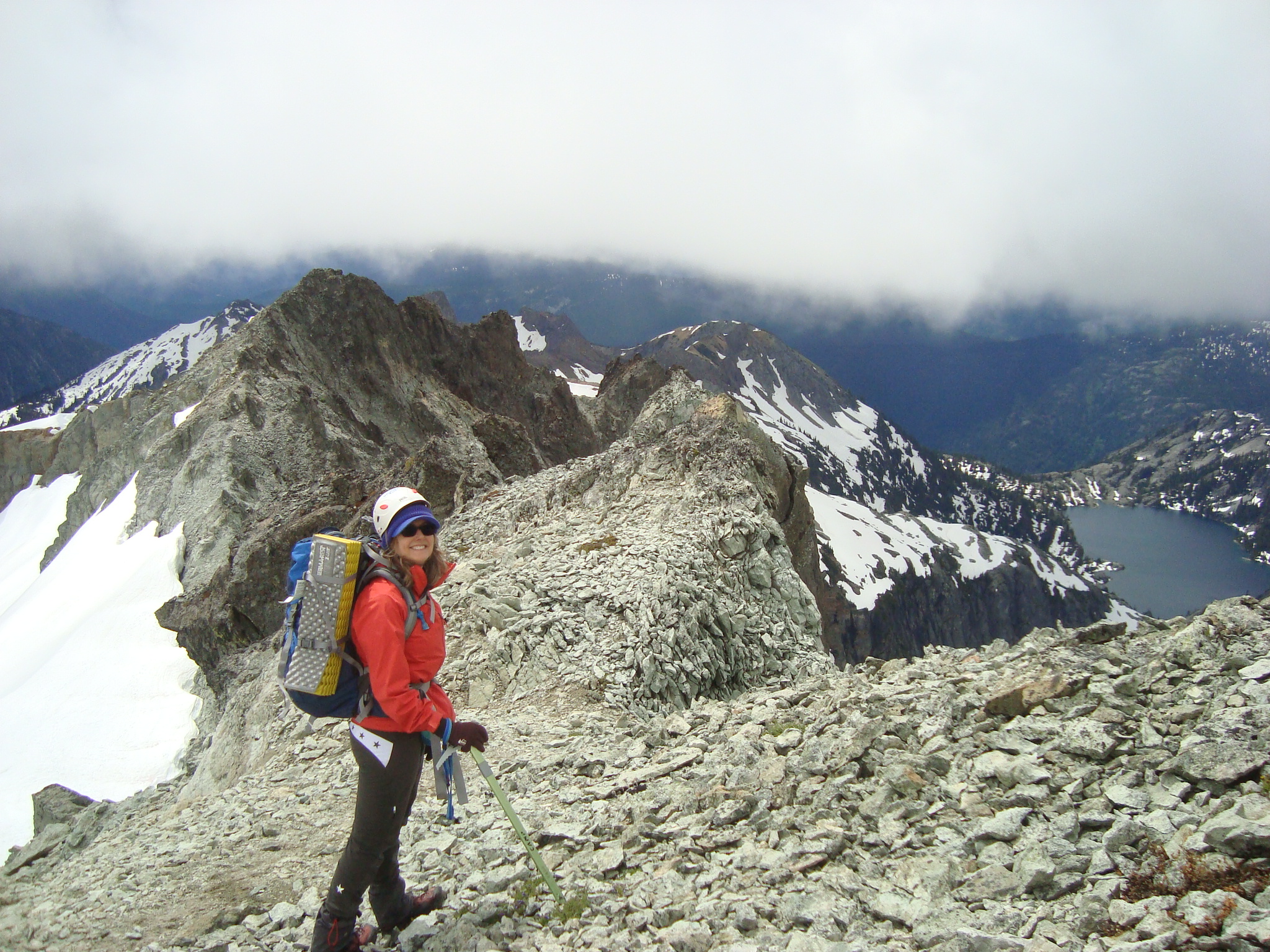
I had a dramatic experience with faith last week in the middle of the Mount Baker- Snoqualmie wilderness of the Cascade mountains.  As some of you know, I’m an avid thru-hiker (hike –> camp –> hike).  This year, at kind of the last minute, my friend Sally had to drop out of our planned 8-day thru-hike from Stevens Pass to Rainy pass on the Pacific Crest Trail (PCT).

I decided to go it alone. The trail covers 127 miles, gaining and losing 26,000 feet of elevation.  It’s known as the 2nd toughest section on the entire PCT (the toughest being the JMT).  I found it much, much harder than I’d anticipated to cover 17-20 miles a day with a 40-lb pack (which shrank slowly as I ate food), climbing/descending sometimes a vertical mile, day after day.  I’m 58, BTW.

But I did it.

Many women have asked me how I can hike alone in the wilderness. They fear predators both animal and human, exposure to heights, creek crossings, and the sheer self-reliance of solitude too much to try such a trek.  How can I feel safe, even happy, out there in the wild?

My short answer, again, is faith.  But it’s also love.  I love the wilderness so intensely, there’s just no room in my heart for fear.

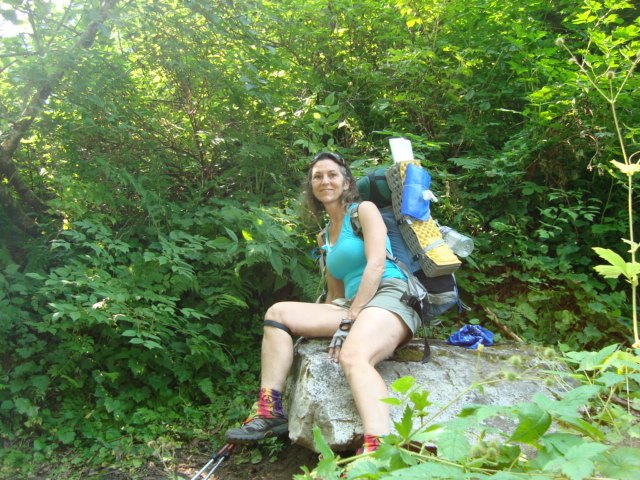
True, I felt a little lonesome until I got outside the range of chatty, clean day hikers and entered the true backcountry. There I shifted my focus away from humans, instead talking out loud to critters, plants, trees, and god.  The glow in my heart grew stronger and stronger, as did my faith that other living entities could sense it.  To take this timed selfie, for instance, I pinned back a shrub blocking my lens.  I’d finished and was just starting to hike on when I ran back, unpinned it, and said, “Sorry!”

But even loving hearts need boundaries, whether for toddlers or wild things.  I love bears (two years ago I surprised one who graciously ceded the trail) and mountain lions, but even so I sang a lot and kept a trekking pole with me constantly. I radiated a boundary: Don’t fuck with me. You may win, honey, but not til I’ve made sure you regret it!  I meant it.  I knew no creature would attack me, animal or human, unless it was mentally ill.  Besides, humans who victimize others rarely have the guts or stamina to hike far into the wilderness.

A Miracle on the Trail
Such was my mindset when my right knee gave out about 60 miles into my trip, with about 60 miles left to hike and no roads near. I’ve made a video that covers the barest facts of this experience – that I began to get flashes of intense, crazy nerve pain flaring in that joint, first intermittently and then repeatedly, making me gasp and cry out.

I could not walk.  I stopped.  I was carrying an inReach satellite communicator to check in with loved ones each night, loaned by a friend, which featured an SOS beacon.  I could toggle to emergency, push a button, and wait however long it took for rescue to arrive.

Instead, I shifted to the world of spirit.

…except at altitude on steep terrain

In front of me stood a huge grand fir – a type of evergreen with roots entirely underground. It was as though our eyes met — the tree’s and mine.  At this high elevation of 4,500′ where trees grow slowly, I knew it had to be a thousand years old. Also flashing through my mind was recent research finding, for instance, that matriarchal trees send moisture along their roots to sustain neighboring seedlings, exhibiting far more “consciousness” than humans have understood.

So I approached this tree as a matriarch who had channelled god’s energy for a thousand years. With a humility possible,  I think, only to someone crippled after four days of solo hiking, I put both hands on her trunk, touched my forehead to the surface between them, and called to her silently, “Are you there?”

Into my consciousness came the tree’s energy — I am.

I’ve had enough post-NDE experiences to distinguish thoughts sent to me from those I generate. You can say “bullshit,” or you can trust that I’m not a moron and keep reading.

Tears were streaming down my face. I thought to her, with a reverence for the millennium she’d witnessed as opposed to my own brief and absurdly self-absorbed life: “Can you ask god to help me?”

The response was instant, but not what I wanted. It filled my mind as a knowing, an unchanging principle, just as vibrations of a tuning fork fill the air:

Every life must ask directly.

I countered as if in conversation with thoughts of my shyness, unworthiness, and that I’d gotten myself into this predicament.  The tree “heard” none of this.  It continued to emanate at the same frequency, unchanged: Every life must ask directly.  Of the three elements in that principle — life, asking, and directness — the last seemed to linger longest.

I thanked her.  I tried to walk on, oh so carefully.  I’d made only a few steps when the pain blared again — WAAAHHHHH!!!! — and with it came a realization of my own: “I’m totally screwed!”

I didn’t take off my pack.  I didn’t sit down or even close my eyes.  I just stood there on the trail, gushing tears as I always do in prayer, and spoke inwardly to god. To be totally honest, I felt like a child braced for the same disappointing response all my terrified acrophobia-on-the-mountainside prayers incur: “You got yourself up, child; you can get yourself down.”  That, or maybe something blunt like, “Use the beacon, silly!”

Even so, I reached for god with my tenderest heart. I apologized first that I knew all this was my own fault because ego had played a role in getting me here, but I also “reminded” god how intensely I loved the living beauty of the wilderness, how much this trip meant to me.  Then I asked, directly, as the tree had instructed, Can you give me some guidance?

At almost the same instant that I asked, my mind began to fill with instructions, as if they were downloading from some external source.  I got so excited!  I knew so many things in that second that I’d not known the second before!

None of this information came in words. We all know our physical bodies well, so the references were to my own conceptions of these parts. I had strained my inner thigh.  “No I haven’t!” came from my brain.  “It’s fine — doesn’t hurt a bit!”  God reminded me of a move I’d made in my tent that morning that had hurt in that spot — and there was so much love with this correction, with each instruction: love, love, love!  I was told to put my foot up on a rock or log and stretch it gently.

To my amazement, I found my adductor muscle so tight at first that I (a ballet dancer) could not raise my leg more than about 2 feet.  I was also told to use my trekking pole to put pressure on another spot.  No words — just my familiar idea of the dent under my kneecap on the inside.  I was told to stop and repeat both these actions frequently — what I decided meant every 500 feet.

There had been a third instruction from the outset, but only when I’d stretched and pressed about 6 or 8 times, walking between with zero pain, did I “hear” details of how I should follow it.  This idea pertained to a little velcro loop I’d packed for no reason. It might have originally come with my air mattress to keep it rolled up, but in any case, I’d decided at least twice not to bring it.  Somehow, it ended up in my pack anyway.  At various camps I’d pull it out and roll my eyes: “Why did I bring this?!”

THIS is why! god seemed to answer, referencing all the above with love, love, love.  Wrap it on that spot, tightly but not too tightly.

My brain thought, “That’ll do nothing!”  Duh!  I’d used knee braces many times on lesser injuries; they helped only to the degree that they immobilized the joint, whereas to descend  from this elevation, I’d have to bend my knee to at least 90 degrees hundreds of times, with my weight and the weight of pack crashing down as many times amid rocks, fallen trees, and rough terrain.  What could a little mattress roll-up holder possibly do to mitigate that?!

But my spirit was told, You will be healed.  The knowing came that this band would act similarly to kinetic tape, except that while tape attracts attention from the brain to heal a given area, this little band would attract spiritual attention, my own and god’s, to heal my knee miraculously.

My brain disbelieved, but that’s what I heard, a promise my spirit dared to trust.  You will be healed. You will be healed.  The knowing echoed like a mantra every time I confronted a challenge — a two-foot drop on the trail, a fallen log I had to jump down from, a slip and arrest.

My knee, my spirit, my god, and that little velcro band kept on descending and descending over the next hour and a half.  No pain.  Before I knew it, we’d reached Milk Creek, elevation about 3,000′.  I took this photo to commemorate the miracle.
DSC05885

I am astounded.  I’m thinking, “Thank you, thank you, thank you!”


Over the next three days, I hiked 60 more miles on that knee. I never experienced pain again.  Sure, it throbbed like mofo at night, but so did my feet, ankles, hips, neck, and shoulders. I had to take a lot of ibuprofen just to sleep. But never again did it pain me me on the trail.  Not once.

My message for alcoholics and addicts of various modes is that we can all experience two conflicting convictions at once.  The brain can insist, “It’ll never work!” while the spirit resolves to act as though perhaps it will — on faith — and see what happens.  At every step of my recovery from alcoholism, I doubted:  “Faith is nothing but pretend!  The steps are nothing but mumbo-jumbo!  I’ll never not want to drink, never stop feeling less-than and judgmental and scared of life!”

And yet, I ventured ahead in faith and courage to follow the advice of sponsors and old timers from AA meetings, just as I reached out to a tree for help, just as I bracketed my doubts of god’s guidance and did precisely what I was told.  We don’t have to believe it (with our skeptical minds).  We just have to do it (with our spirit’s courage).  The miracle will happen.

We can be guided toward growth and sometimes even healed.  Because god is real, and god does stuff for those who ask — directly.


Video telling the story.  Also available at  https://youtu.be/McRi8zbW0TY

Photos from my trip:
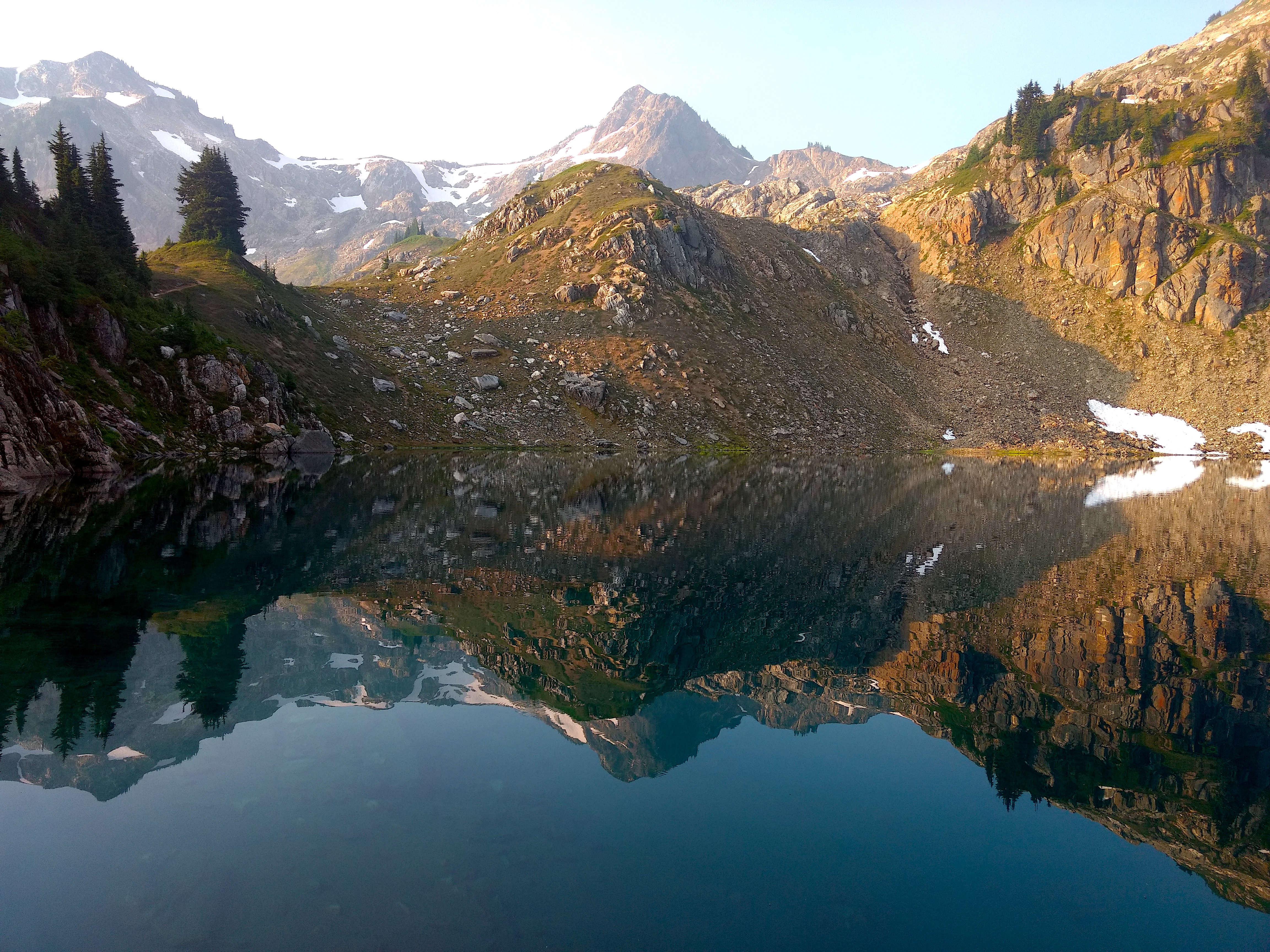
Mica Lake, the camp above which my knee first twinged. Note how the reflection polarizes glare from the smoke particles.
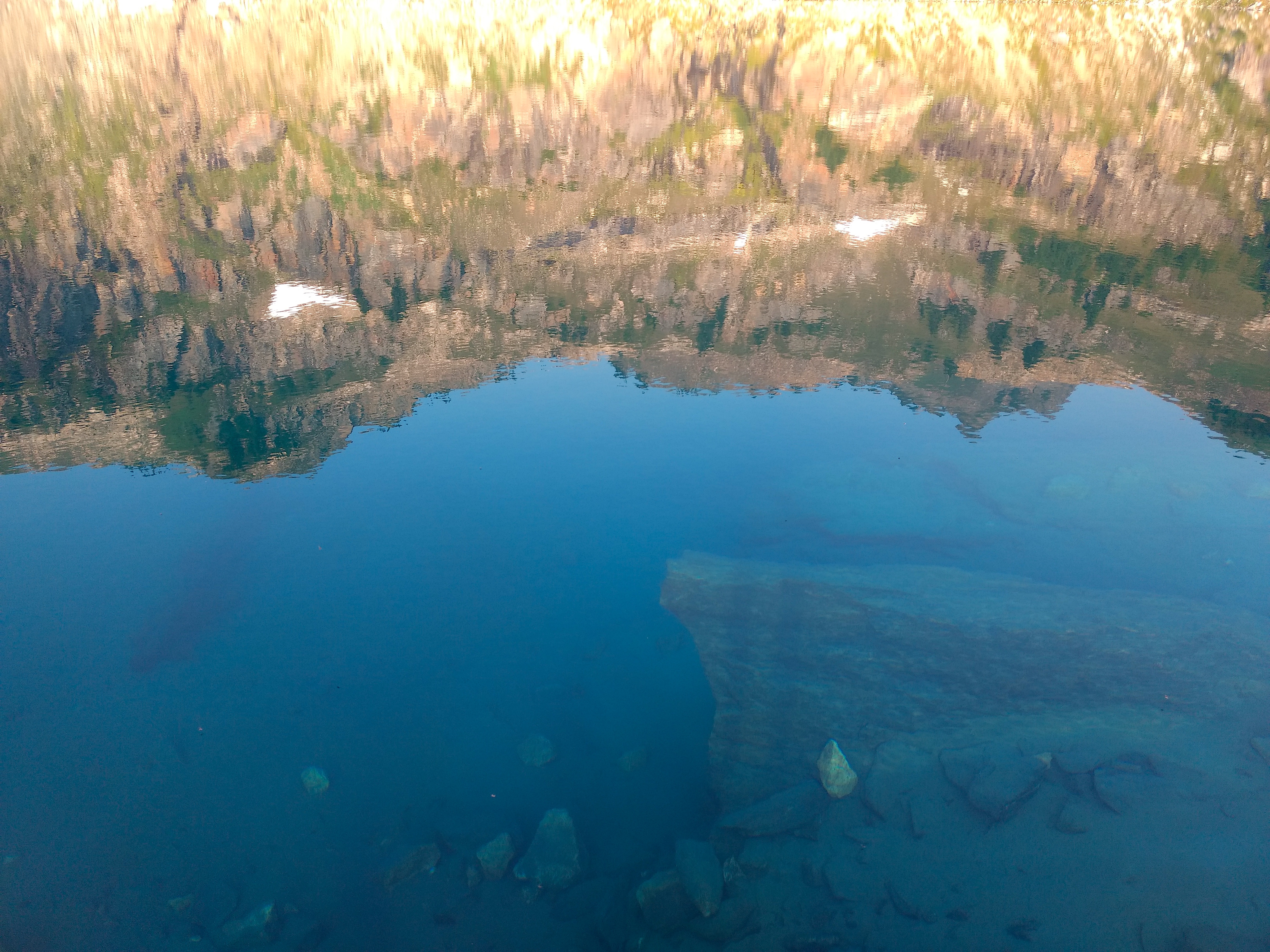
Mica Lake from the granite slab where I got water

Me with fellow PCTers waiting for a boat as part of a forest fire detour
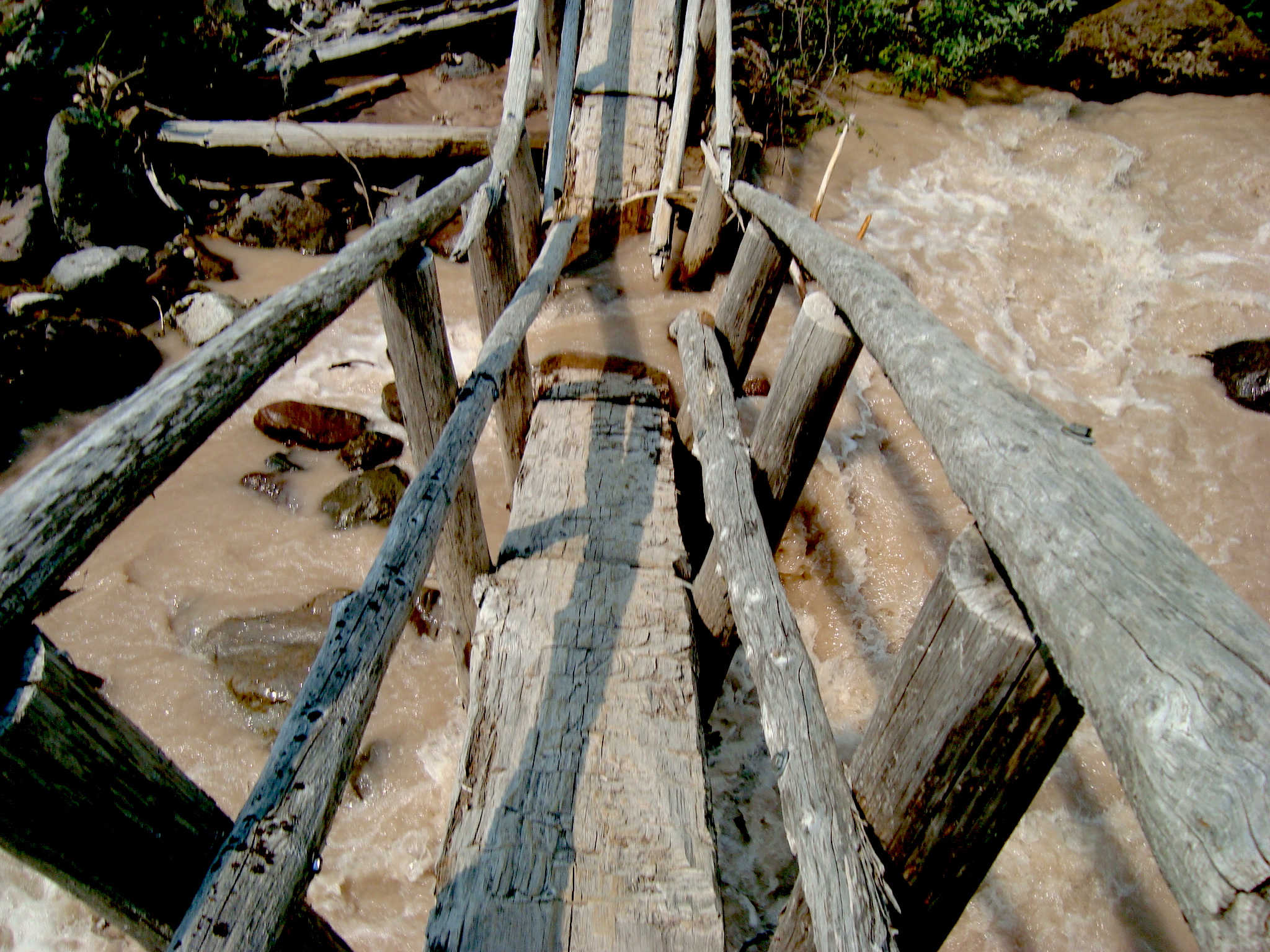
 

Bridge out on  loud, raging creek so I climbed across on the railings. 
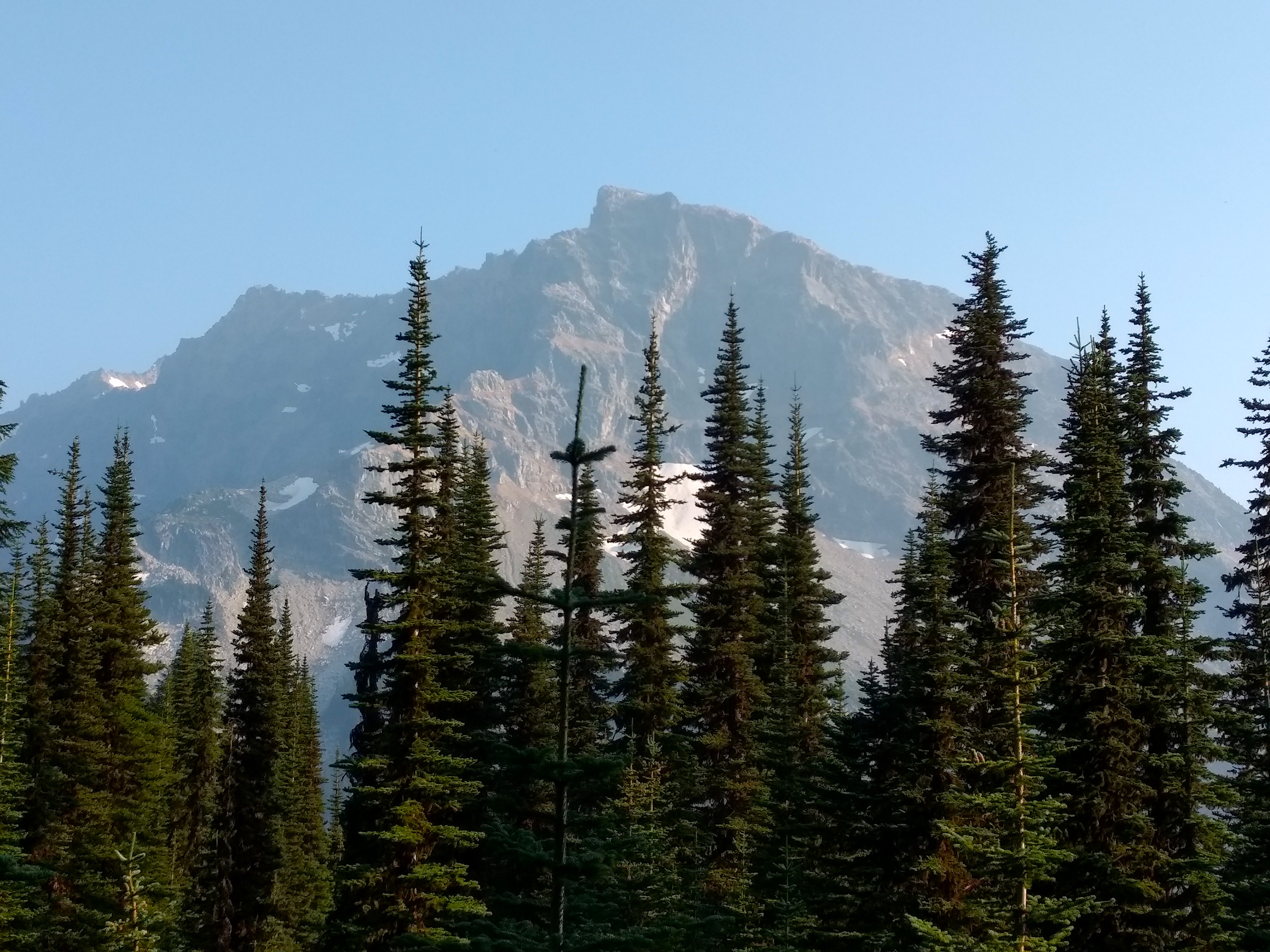
Approaching Cloudy Pass
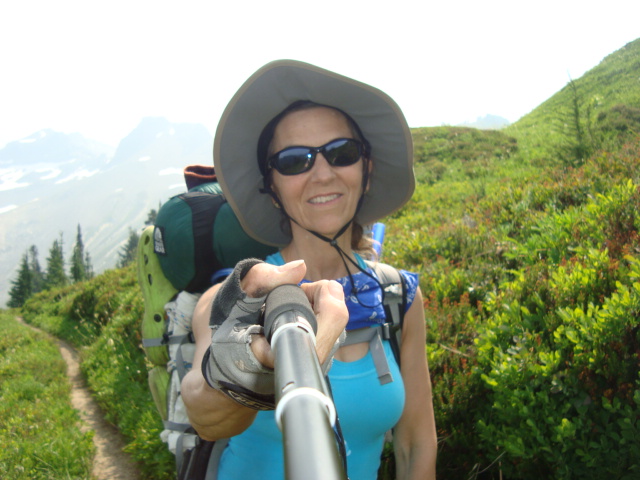
Me with some background peaks you could see if it weren’t so damn smoky.
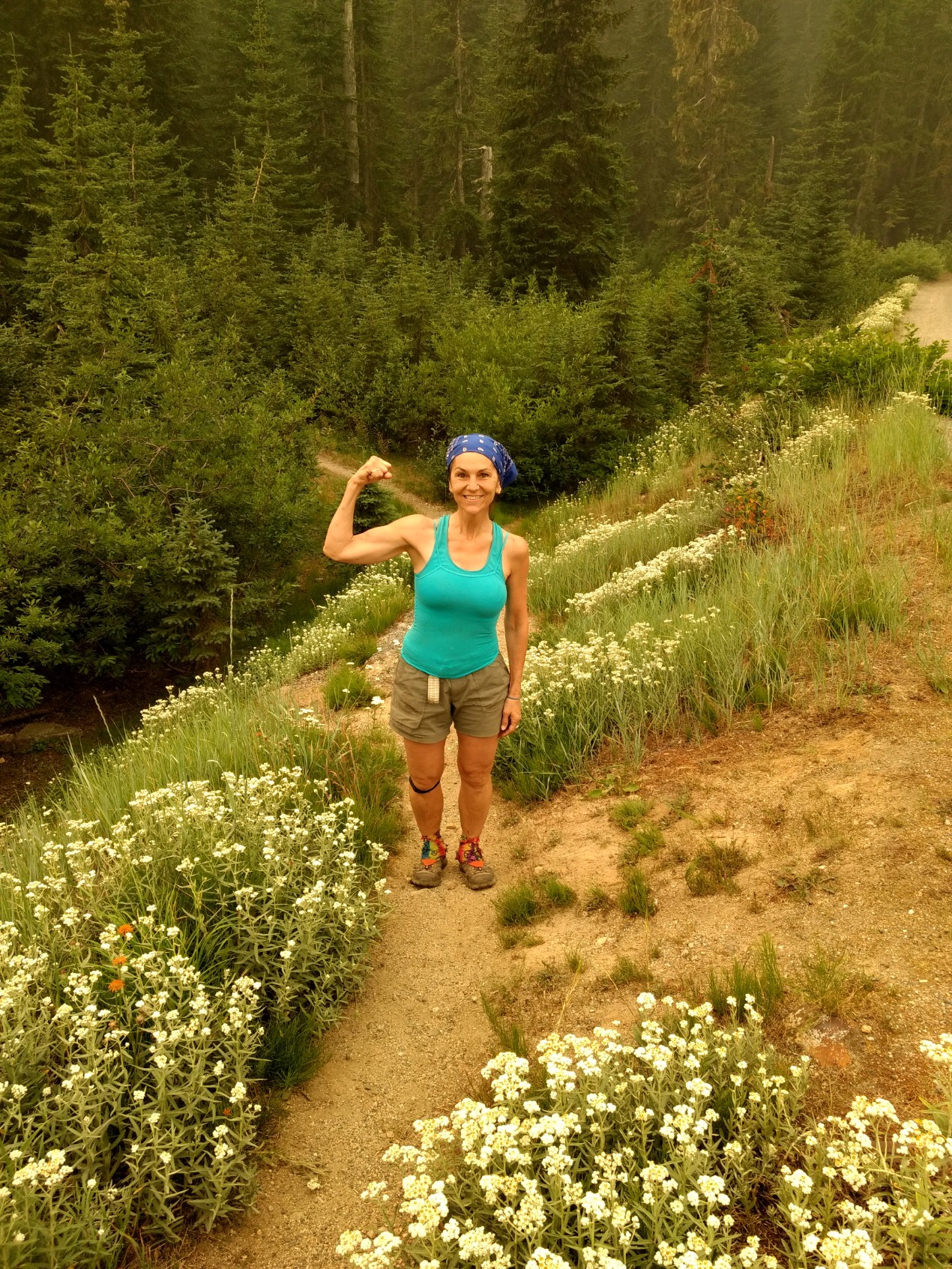
Me emerging at my goal on time – 127 miles and 8 days later. I lost 6 pounds despite eating constantly.

1 Comment

Filed under Alcoholism, Faith, God, Happiness, NDE, prayer, Recovery, Spirituality

We Are NEVER Too Well for AA Meetings

I recently had a chance to tell none other than Bill Gates, who went to my high school and was at my 40th reunion, that I had 23 years sober. “Impressive!” he remarked.  He’d just told me that a mutual friend of ours, a venture capitalist and hilarious jokester on the school bus back in the day, had died — overdosed on fentanyl-laced heroin after many years clean.

Yet when I told him I still go to weekly AA meetings, Gates looked baffled: “Really?!” he said, drawing back sharply.  Even as I explained that exactly what had happened to our friend Keith could happen to me at any time with booze, he still looked incredulous.

Here’s one of the deadliest afflictions known to humans, killing 6% of the global population every year (WHO), and this man, who, through the Gates Foundation, has done more to battle diseases worldwide than anyone else on the planet, had no inkling of alcoholism’s lifelong grip.
Sometimes I think ours is the most misunderstood illness in the world, and AA the most misunderstood cure.

Getting Too Well?
Of course, there’s a part of every sober alcoholic that agrees with Gates. A part of me agrees daily, claiming, “Louisa, clearly you’ve got this thing beat!  Look at how accomplished and sensible your life is now!  Waking up in somebody else’s bed with Cheetos orange around your mouth and a hangover from hell–? That is just sooo not gonna happen anymore!”

The result of this voice is that, as I type this, I’ve not been to an AA meeting for nigh on three weeks.  A week ago, I was supposed to chair one and forgot.  And I’ve not posted a new blog here for almost two months.

Why?  Partly for good reasons.  When I got sober in 1995, I couldn’t imagine what I was going to DO now that I couldn’t drink alone while scrawling boy-obsessive drivel in my journal, or drink in bars while bending indifferent ears, playing darts, pool, or pinball.  Take all that away, and what else was there to life?

As sobriety gradually revealed, within me were talents and loves neglected like withered, leafless plants.  Before alcohol took over, I’d danced, hiked, and written.  AA reopened the flow of love my heart was dying for, slowly at first via people in meetings, and then, as I worked the steps, through my own dilating portal to god. The elixir of life — godlove — watered my spirit so those dried up, nearly dead talents sprouted fresh leaves and blossomed again.

Sobriety, as a result, has been anything but dull.  Today, these loves fill up much of my life.

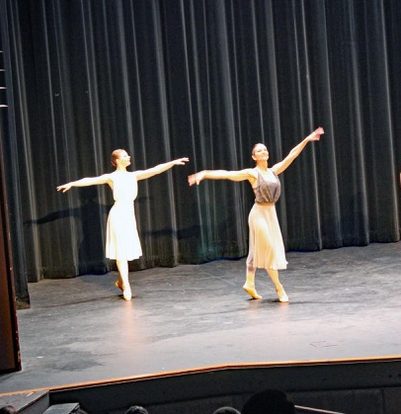
About two weeks ago, I was dancing onstage in a ballet recital — at a week shy of age 58.  Godlove let me bond with my troupe, mainly teenage girls and twenty-something women.  There was a moment in the dressing room when all nine of us gathered around my phone, which was playing the one disjointed moment of our dance.  “We lunge there,” I said, “on the low note.”  I’ll never forget the solemn way their eyes met mine, not because I’m old and bossy, but because we needed unity and they trusted my cue.

We aced it.

Performing (on right)

Warming up before dressed rehearsal (on right)

The weekend before, three sober women friends and had I attempted Mount Adams — a 12K’ volcano four hours’ drive from home.  Thunderstorms forced us to camp at the trailhead rather than base camp and shoot for the summit the next day, when high winds and whiteout above 9K’ turned us back.  Still, we had a blast getting rained on, climbing, and taking turns “losing enthusiasm” as we tried to find shelter from the icy winds.  Here are three of us at 9K’ pulling our “bikini bitches” stunt of pretending it’s not frickin’ FREEZING just long enough for photos.

Suck in tummy award to me, center 😉

The day after my recital, I climbed Mailbox Peak, a 4K’ gain, with my friend Sally and brand new boyfriend, Tommie.  (That’s right, after years of tortuous dating, I finally met the right guy. ❤   More later.)

Then, just a few days ago, I summited a backcountry wilderness peak, Mount Daniel, with just Sally.  The two of us camped at a frozen lake and navigated this route in partial white-out:

Mount Daniel east peak via SE Ridge .

Our route followed the ridge above Sally’s head!

But it’s not all been ballet, boyfriend, and beauteous mountains!  Life happened, too.  My house’s sewer system went kaput, upsetting my — er — delicate financial balance.  To safeguard that balance, I had, in previous weeks, overtaxed my gift for writing, agreeing to edit super-human quantities of text amid an already full work schedule and to conduct and write up an NDE interview for the Seattle IANDS Newsletter.

Long story short: I’ve been so busy savoring/exploiting the flowers of sobriety that I’ve neglected to water their roots.

I should know better.  Around me, dear friends I never dreamed would die or get hooked on alprazolam (Xanax) are doing just that.  One, a former drug and alcohol counselor, is a ghost of his former self, with hollowed-out eyes and tales of demons.  The other, who landed his dream life — wife, kids, big house in the burbs — became addicted to anti-anxiety meds prescribed for his stress over huge mortgage and daycare payments.


How did these friends change from the happy, joyous, and free sober people I knew fifteen years ago in AA meetings?  Both got “too well” for AA — the same tempting path I’ve wandered down these past weeks.

Ironically, the same drive that energizes me to pursue so many activities and take on added responsibilities can kill me if not balanced with humility before my god.

As an addict, I am permanently geared to chase feel-good.  As a co-dependent, I scent feel-good when I say “yes” to people and things, so I say it more and more: YES — I’ll be in the recital!  Climb mountains!  Edit your humongous text!  So what if I’m losing my mind?!

The trouble is, without the humility that god-awareness brings, I cannot be in feel-good; I can only chase it.  No matter how much I get, I want more.  And there’s another problem with feel-good.  The flip side of genuine satisfaction is the trophy-hunting of ego — addiction to the story of adventures, to LIKES on Facebook or Instagram, to praise for fabulous texts and newsletters.

Hey, whatever primes the dopamine pump — right?  I’ll take any hit I can get!  So let’s think: who could it be spurring  this constant chase, urging me to take on more and more?  It’s my old buddy, addiction — disguised, like a villain behind a fake mustache, as enthusiasm and responsibility. It’s refrain?  “We’re so close to feeling good!”

Ultimately, going to AA meetings is like prayer: both require and reinforce humility — that bane of our ego-oriented culture — by freely admitting, “I lack.”  Only when I embrace the fact that I’m a tiny shard of god who can thrive solely via connection do I remember my true mission on earth: to love.  Overcommitting, I leave no time to dwell in that truth.  I’m too busy chasing brain candy.

Anytime I imagine my addiction to be a thing of the past, I jeopardize everything precious to me, everything alcoholism once took away and wants to take again.  I may not wake up with Cheetos-mouth, but I will wake up guided by the very same ego that led me to it.

Bill Gates has no need to acknowledge the deep power of alcoholism, but I do.  Tomorrow I chair a women’s AA meeting.  The next night, I’ll be at my homegroup after meeting with a sponsee.  These commitments, unlike others, allow me to relinquish my illusions of control and seek serenity though god.  It’s what I do.  It’s what I need.  It’s who I am.

PS: Short video of our Mount Daniel climb, 6/30 – 7/1/18 (sobriety ain’t boring!):

Car ride to Mount Adams with AA girlfriends 6/16/18 😀 (feeling close while stone cold sober):


2 Comments

Filed under AA, Addiction, Alcoholism, Happiness, Recovery, Sobriety

What’s it all for?

When I drank, my life was always dramatic — at least to me.  Everything was a big deal.  Drinking both fueled and helped defuse that.  If someone was mad at me, if I’d behaved inappropriately, if some asshole had robbed me of a goal or privilege rightly mine, my emotions would rollercoaster up and down huge swells of anger and careen around curves of righteousness before finally winding down to the self-pity platform to which all things led: poor me.

Booze, by Buddy Nicholson

But in those days, I had a best buddy, wine, along an array of other pals — beer, the gin & vodka twins, and all those whiskey relatives. We’d hang out and they’d fix everything.  Actually, they’d fix my brain; everything else stayed exactly as it had been. But by muting my amygdala so the fear subsided and by impairing my frontal lobe so that all thoughts simply led back to me, drunkenness let me feel brokenly triumphant.  Fuck them.  Fuck everything.

In those days, everything I had going for me was external — or so I believed.  What mattered was out there, so I was constantly keeping score: first it was grades and teachers, then published stories, then impressing my students, and eventually, as my life spiraled downward and I quit teaching to focus on drinking — I mean, writing! — it became impressing all the “cool” cats at the tiny espresso shop where I worked.

Mind you, everything that went on in that espresso shop was colossally big news!  Who was getting together with whom, new policies about whether you could eat behind the counter, hirings and firings.  In the end my main drama centered on the fact that my life partner had read my journal, caught me cheating emotionally, and promptly left, so now I couldn’t pay the mortgage with my joke of a job, even if my shifts hadn’t been cut for coming in stoned.

Drinking enough to make that no big deal nearly killed me.

When I got sober, my focus gradually shifted to who I was within and whatever linked that spirit to a higher power — to goodness in the world.  At first, of course, I had no idea the 12 steps were effecting that change.  I just went through them with a sponsor and discovered harmful patterns in my thinking and behaviors, asking my higher power to help me outgrow them.  And as I began to lay aside increasingly subtle versions of these once precious “coping skills” — deception, manipulation, knowing best (pride), envy, and my favorite, self-pity — the ride of living smoothed out.  A lot.

Today, I have no crises. I don’t wish I were somebody else.  Sobriety’s granted me huge gifts: I’m performing in two ballet recitals this spring and climbing three glaciated mountains this summer, so my life is full.  My home, health, work, son, and friendships are all good.
But smooth sailing can be frickin’ difficult for an alcoholic!!  Without that clamoring, overflowing bucket of piddly-shit drama to seize my attention day after day, my gaze drifts to the horizon and I wonder, what am I doing?  What’s my life for?

I’m getting older.  I haven’t made any big splash lately.  My son has grown up, my dog is old, I have no partner.  What stands out with increasing clarity is that I will disappear from this planet in a number of years.  How many is unknown, but every day I’m closer.  What will my life have meant?

Here’s where near-death experience comes in.  I am so blessed that the inexplicable paranormal phenomena stacking up in my life finally led me to the Seattle branch of the International Association of Near-Death Studies (IANDS), and that I hold a service position there of interviewing near-death experiencers and writing up their stories for our newsletter (snailmailed only at this point, sorry). Every other month, I get to Skype with someone who has, like me, died and come back with wisdom to share.

On the other side, when they are pure spirit, many know their life’s purpose. There’s a role we’re each here to play, and they’re shown theirs.  Yet when they come back, they remember knowing, but they can’t remember what!  This “forgetting” seems to be the price of embodiment.  Enclosed in bodies, we lose 99% of our conscious connection to the expanding web of creation that is god. With little to go on but our hearts and the gossamer strands of love that link us to other hearts, we’re something of a lost boat, a tiny shard trying to work out its place in a 13.8-billion-year unfolding.

When one NDEr was given the choice to stay in the spirit realm or return to her body, she asked what would become of all her half-done life’s work if she died. “None of that matters,” she was told. “What matters is connections. If your work helps someone to strengthen their relationships with others or even to know themselves better, it has value.  The important thing is the wake you leave behind you in the waters of life.  Do you leave a wake of love… or of indifference?”

That’s our job — to love others and love god by generating gratitude for this spectacular pageant of life on Earth. My life is not about what accolades go up on my mental mantlepiece.  It’s about the people (and other beings) I love and the ripple effect of loving them, which touches countless lives of people I will never meet.

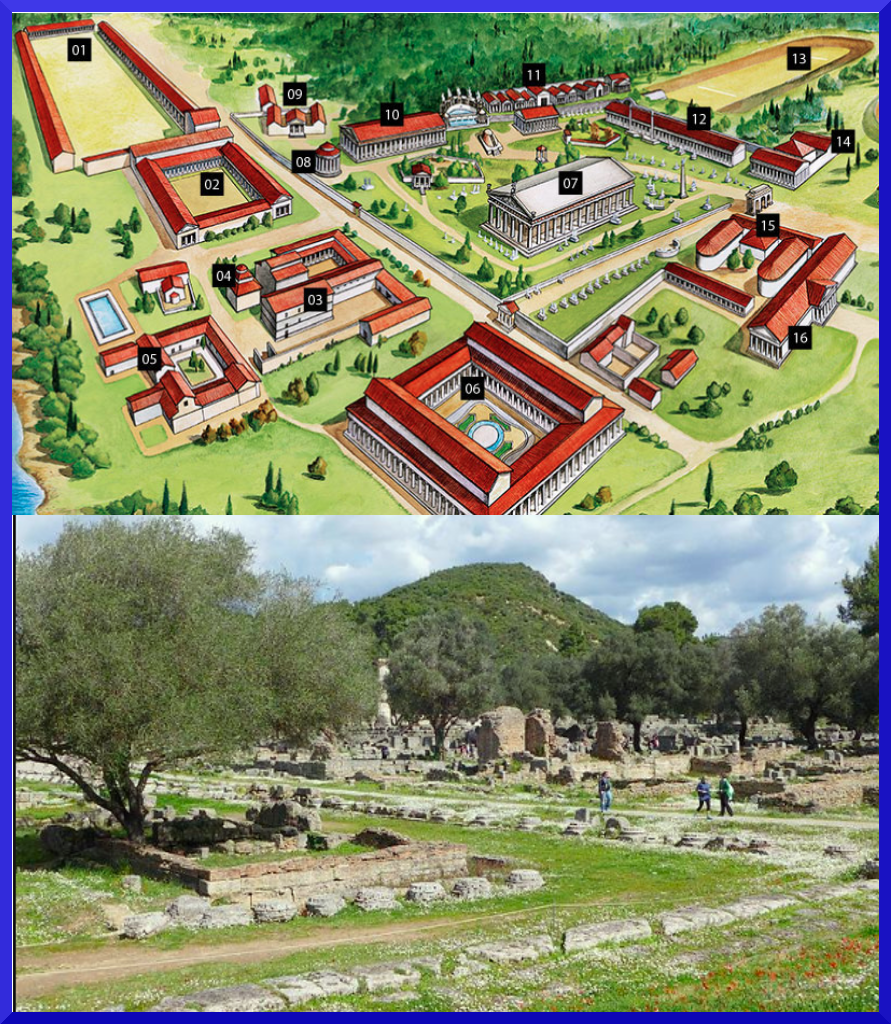
     Olympic games site, then & now

Humility is also key.  In 1995, when I was about 100 days sober, I visited the site of the first Olympic Games — alone.  Wandering from the ruins, which date from 776 BC, I took a nap under a gnarled tree. And when I woke, looking out at the meadow where a sign indicated the Greek athletes’ housing had once stood (6), used centuries later as Roman soldiers’ quarters before god knows what in the Dark Ages, I had a sort of vision. I saw with time-elapse speed hundreds of trees germinating, growing large, and dying; buildings going up and falling to ruin; people slaughtering each other and making love — all in this very same meadow while its grass sprouted green and then dried to yellow over and over, 2,771 times.

The years, I saw, cycled through just like waves on a beach.  So did human lives.  I was no less transient than a blade of grass — but one with a plentitude of choices.

Ultimately, the purpose of my life has to be turned over to god every day as a part of Step Three. In my own version of the famous Merton prayer, I tell god, “I can’t see what I’m doing, but I love you.  Please lead me wherever I can do your will, and lend me the courage and grace to do my best there.”

Life is no more and no less that that.  And that is enough!


.

2 Comments

Filed under Afterlife, living sober, NDE, Recovery, Twelve Steps

Spiritual but not Religious – what does that mean?

“Spirituality and religion are often used interchangeably, but the two concepts are different. Spirituality involves humans’ search for meaning in life [and is] subjective, intangible, and multidimensional…, while religion involves an organized entity with [pre-established] rituals and practices about a higher power….”

Ruth A. Tanyi, 2002


God is not a religious concept, yet the vast majority of people seem to assume it is. To me, this conflation is not only frustrating but dangerous.

Why dangerous?  The authority religion once wielded in our culture has been waning for over two centuries.  That’s fine by me.  While religion itself is neither good nor bad, humans have used it to justify so much wrongdoing that its myths smack of hypocrisy.  The trouble is that many modern day people who reject religion throw out the baby with the bathwater. That is, because they see the constructs of religion as a hoax, they assume god must be a hoax, too.

In a godless universe, many abandon their search for an ever-expanding
meaning in life. “There’s nothing out there,” they decide, “so it’s just me against the world.”  With that attitude, they grow deaf to spirit’s call to actively love the world, to grow our compassion and act on it, and to nurture our talents so we can birth our unique contributions to the flow of life.

Why are 25% of US women my age currently taking antidepressants?*  In my opinion, that number has shot up, not clinically, but because so many are spiritually starved. Lack of faith, I believe, complements fear and self-centeredness: What’s in it for me? and My actions don’t matter lead ultimately to cynicism, emptiness, and despair.

Admittedly, I know quite a number of moral atheists and once considered myself one. These people do love, maybe even strive to help others and live with honor, but they shy away from examining WHY. Press them and they’ll offer some truism like, “Because it’s the right thing to do.”  But what defines “right”?

As a young atheist myself, I remember getting super annoyed with 19th century Danish philosopher Søren Kierkegaard when I read his three stages of individual actualization: 1) living for selfish pleasure, 2) living in the in-between place of ethics, and 3) taking a leap of faith.

In those days, I wanted ethical life to be the most awake state of mind. “There is no God, but I do good anyway” struck a chord of individual courage. I imagined us ethical folks blazing a noble trail through life without sticking to the trodden lanes of religion.

But Kierkegaard, that asshole, pointed out that to live by ethics is to live in an either/or state, torn between what we crave to do and what we sense we should do. If we really looked into that inner sense of what’s “right,” we would recognize the call of goodness itself and open our hearts to it fully.  There, he said, we would find god.

Well… actually, Kierkegaard said “God,” and for him that meant Christianity complete with Jesus’ resurrection and the whole kit and kaboodle.  The leap of faith, Kierkegaard said, was to abandon objective criteria and embrace instead the non-rational truth of religion.

Hubble: Sombrero galaxy

Spirituality
So… I hop off that bus at the paragraph before last.

My leap is not to religion, but to a view of the universe that mainstream culture still dismisses as nutty. It’s based on my own near-death experience, when I left my physical body and glimpsed the other side, along with the 14 paranormal experiences that followed, and corroborated by thousands of other NDErs led to the same truth: Love powers the universe.

Love powers the universe is, to my thinking, the only true north we need to orient meaningful lives. For me, that means having faith in the god I experienced as overwhelming love in the light of the other side.  For others, it can mean simply living in loving kindness. One’s spiritual path is one’s own — as in Buddha’s dying advice to “be a lamp unto yourself.”

Spirituality in AA
I find it frustrating every time I hear AA referred to a “religious organization”or even one affiliated with religion.  Much of the public at large seems sorely misinformed on this point.  For example, the film The 13th Step claims to be “a stark expose… of AA’s disempowering 12-Step belief system, whereby members must agree to become subservient to a higher power…”

What a bunch of crap!

The 12 steps don’t present a “belief system.”  They’re offered as a roadmap for self-evaluation and growth:  1. Is alcohol kicking your ass? 2. Is your life (getting) batshit crazy?  3. Ask whatever your heart trusts in to guide you and 4. try looking at the stories you tell yourself about your life 5. so you can reality-check them with someone objective and against your ultimate sense of truth, then 6. get ready to change and 7. ask for help changing and fucking mean it.  8. Figure out whom you’ve hurt and 9. go ask them if you can set it right. 10. Keep checking on yourself for bullshit rationalizations and 11. keep seeking your god and 12. if you’re getting well, help others do the same.

As the appendix on spiritual experience tells us, “With few exceptions our members find that they have tapped an unsuspected inner resource which they presently identify with their own conception of a Power greater than themselves.”  How is this subservience?

On the other hand, if I’d tried to get sober in the bible belt, I’d probably be dead now, because it’s likely that many AAers in Christian-dominated regions do present AA as a Christian-based recovery.  How sad!  I could not have absorbed something so counter to my own sense of truth — not even to save my life.

*          *          *

I have a Facebook friend across the world in Turkey, a self-employed floor polisher who saw me in this film and reached out to me about life after death, which he calls the real reality. Raised Muslim, Uğur Hakanoğlu has independently studied ancient texts from which the Quran was assembled, searching for spiritual truths. Perhaps because his conviction must leap the language barrier between us, what he writes to me always resonates powerfully:

“Some people are thinking they are atheist, but they only hate wrong human religion that humans made…  Church, mosque, and other areas [are] like lying machines. They are [to] earn money and they don’t say true…  We have to respect all lifes, like god.  Ignorance and fear, they are guns.  All bad minds use these two guns…

“Life is not earn, Louisa.  Life is Love, in my mind.  When we go to the forest or seaside, we take photo or video, we are choosing not to live. Everything is telling us his/her life, telling what I am and why I am here, but we don’t listen. We are only looking, not seeing.  Sea, tree, sun — everything telling us only about love.  Love change all mind.  There are no borders, no nationality.  If I have good English, I will say more.”

Of course, not every aspect of religion is a “lying machine,” and many religious people are deeply loving, humble, and sincere. In AA as in all experience, loving all is what heals, as much as being loved.


PS: I’ll be giving an hour-long talk, telling my NDE story and reflecting on it, at the International Association of Near-Death Studies annual conference August 30th, 10:00 – 11:00 a.m. in Bellevue, WA.  Conference details here.

**https://www.health.harvard.edu/blog/astounding-increase-in-antidepressant-use-by-americans-201110203624

Leave a comment

Filed under AA, Faith, God, NDE, Recovery, Spirituality, Twelve Steps

Listening for god

In my drinking days, before I was tight with god, I imagined god’s voice as an echoey Morgan Freeman cadence conveying various profundities. Today I believe more that god is all over the place, not only animating every living organism but also circulating among us in spirit forms, and it speaks to us constantly — although we’re largely deaf.

If I were to say, “God has spoken to me, and His word is blah-de-blah!” I’d have my head up my ass, no doubt.  But I have received something.  My conception of what that is comes mainly from my own NDE* and ensuing paranormal experiences, with gaps filled in by what I’ve heard from fellow NDErs.

By paranormal, I mean stuff like this: In 1999 or so, I was spacing out at the end of a freeway offramp in downtown Seattle late at night, waiting for the light to turn green.  It did so.  At the same instant, a “voice” spoke in my mind with a strong message, Don’t go.

Our brains are amazingly quick.  In a millisecond, I thought, “That’s dumb!  I’ll ignore it.” But in the next millisecond, the message came again, underscored, sort of like, DON’T GO; IT’S IMPORTANT.   So… I, well…  checked my rearview mirror.  No car was behind me. What harm could it do to just sit there?  So I just sat there… at the green light… which looked exceedingly green and all about GO.  Quite shortly, I felt foolish.  I asked the voice, “How long don’t go?”

Like this but older and faster!

WHOOSH!!!   Like a bullet fired from behind a building that blocked my view shot an off-white sedan going at least 100 mph. It streaked through the intersection exactly where I’d have been. I remember, first, being amazed that a car could fly by so fast with so little sound, and second, realizing that my life had just been saved.

I thought, “Thank you!”  Still I didn’t go.  I couldn’t.  I was too scared some car in pursuit might be next, or who knows what!  Then I began to hear sirens, first one then several, a ways off.  Shaken, I drove toward home.

Experiences like this aren’t so unusual for NDErs. According to an NDERF survey, 45% of us return with “psychic” aftereffects,** which amounts to many thousands of people. Leaving and reentering the body alters in some way the energy barrier surrounding each of us, so it’s more easily penetrated.  At least, that’s my best guess.

“How can I tell the difference between god’s will and  my will?”  That’s a question we hear in countless AA meetings. I’m gonna offer some pointers.

Each of us has the ability to sense god’s guidance and, as we continue to work our program, increasingly distinguish it from our ego’s.  The most important prereq is that we want to.  We have to be listening for god and willing to hear what we often don’t care to.  Another is that we have to cherish the goodness within ourselves and be awake to its resonance as a compass.  Beyond this, in my experience, what comes from god bears a few telling hallmarks:

  • It’s the opposite of what I was thinking.  If I’m cruising down some avenue of thought that feels awesome in a self-righteous kind of way, and something intercedes and proposes the opposite with a striking ring of truth, it’s probably god. Far and away the most common input I get from god is “Bullshit, honey: you can go deeper.” By deeper, it means thinking more from my heart.  Sigh!  It’s always true!
  • It’s about love, kindness, and service.  The short explanation here is that god is love, as the ultimate power of the universe.  And we are here to god.  (Yep, that’s a verb!) Whenever we feel compassion and act on it, we are growing god. Recently, I found myself exiting a non-AA meeting near a fellow alcoholic with whom I’d just strongly and publicly disagreed on a policy. I so much wanted to jet, clean and easy! But as I looked at his back, something said, “Talk to him; make peace.”  I told him the conflict was nothing personal, that I knew his intentions were good, as were mine.  He looked relieved, I accidentally cried, and we hugged, disagreeing.
  • While you’re actually doing it, it feels right, almost like déjà- vu.  Sometimes when you make an important choice that aligns with god, it feels — and this is hard to describe — like everything has somehow clicked into place.  There’s a “yes” in every second.  When I heard that my former sponsee was pissed at me for never visiting now that she lived far away, I called and headed down there for dinner. So intensely during that drive, I sensed that I was fulfilling something significant.  We shared dinner on Saturday.  Thursday morning, she was struck dead at her construction job.  Our last words had been, “I love you.”
  • Serendipities reinforce it.  These are the “coincidences” we hear about so often in meetings.  “I decided to kill myself, and three guys from the meeting walked in and sat down at my diner booth.” “On my way to relapse, my car quit on me, and the guy that pulls over is my sponsor.”  I, too have many such stories of statistically infinitesimal likelihood.  Chances are, if you’ve been working the program a while, you’ve had a few of your own.
  • It’s constructive.  God is not big on wallowing.  God is growth and unfolding, so for a recovering wallow-holic like myself, it’s been a tad disappointing that god won’t cosign my misery.  Once, hiking alone in major emotional pain, I noticed a lone yellow wildflower on which a large branch had fallen. Smooshed but not broken, the flower had grown around the wood and bloomed anyway.  God as good as told me, “Child, you’re smooshed but not broken: Bloom!”

One final note.  For the reason listed directly above, god mourns the waste of life that is addiction.  Yet god is never into shame or martyrdom. “Oh, I’m such a piece of shit!” or “Gee, I’m such a saint!” both stem from ego, from preoccupation with self.  God wants us only to do our best, share our gifts, love freely.  Beating ourselves up or codependently pouring energy into toxic people to wheedle self-worth — these ain’t about blooming.

I honestly try to live by this stuff.  For instance, I’m aware that posting this exposes me to ridicule from both atheists (especially in my family) and religious folks. But the AA saying nails the truth: What you think of me (or my writing) is none of my business.  My job is simply to click “publish” and then, as a bird lets the air keep its song or a wolf sends its howl to the moon, move on to whatever’s next.

Thanks for reading, open-minded alcoholics!


*NDE: Near Death Experience.  This refers to a vivid experience that takes place while a person is clinically dead or close to death.  IANDS definition here.

** See Jeffrey Long, Evidence of the Afterlife, p. 189.


PS:  I’ll be presenting at the IANDS conference this summer.  I’ll post details when I get them.

9 Comments

Filed under AA, Addiction, Alcoholism, God, NDE, Near Death Experience, Recovery, Spirituality

AA Stigma Misses the Point

Stigma

a archaic: a scar left by a hot iron : brand
b: a mark of shame or discredit : stain  ex: bore the stigma of cowardice
c: an identifying mark or characteristic; specifically : a diagnostic sign of a disease


I remember the fear in my throat when I first spoke the words, “I’m Louisa, and I’m an alcoholic.”  Sitting in my third AA meeting, I felt like I’d been fleeing those words all my life, and now they rang out in the room like the gates of hell clanging shut behind me.

Twenty-three years later, I’m happy to tell the world, “Yeh-yah, baybee! I’m a full-on alcoholic — and thank god!  Cause otherwise, I’d have missed out on the whole point of life!”

Do I sound looney?  Maybe a tad.  But I’m joyfully looney, and that’s a mighty bright candle to try and shit on.

My sober life is rich with AA friends who have each, through touching life’s deepest and loneliest pain, struck the bedrock of their own will to live, so that we can now meet each other’s gaze without pretense.

Mind you, I foresaw none of this when I first spoke those dreaded words. Nobody wants to join AA. Nobody identifies with that bunch of self-blaming, drink-obsessed sots who fart around in church basements. Obviously, AA as Hollywood and society at large envision it is about as cheery as a medieval dungeon.

But that’s far from the truth of AA as I’ve come to know and love it.  Below are a few photos from some of the AA meetings/gatherings I’ve been part of in the past three years.


In a sense, all of these images are sacred to me, because I remember how we were all sober together at these meetings despite a disease that wants to kill us — or at least ruin our lives. At times we share tears. Most often, they’re tears of gratitude for having been blessed in ways we can’t believe we deserve.  We still lag on our fourth steps or slip into familiar character defects, but each in her or his own way is pursuing is an ever-stronger connection to the Good.

Yep.  Higher power, flow of the universe, life, love, god:the word doesn’t matter. What matters is that we’ve all nearly killed ourselves solo, and now we’re all intent on seeking help from [god] and each other to experience real life to the fullest.

Nevertheless, AA stigma persists. Despite the millions of lives transformed through AA, many people still dismiss it as contemptible. For instance, I recently came across a video from a lifecoach offering a program for “people who just want to stop overdrinking.” These are “good people,” as opposed to those who “claim that they have a disease or that they’re an alcoholic or that they want to go to meetings.”  Having lost her father and brother to addiction despite the fact that each attended meetings, this coach seems to loathe AA. She recalls her “overdrinking… waking me up in the middle of the night [and] affecting how foggy I was feeling during the day and… creating a lot of cravings… to drink earlier and earlier in the day.”  Yet, she affirms, “I had no interest in becoming an alcoholic or calling myself an alcoholic.  I had no interest in recovery…. I did not see that as the solution to my very mild struggle.”

“Very mild struggle”~!

I’m sorry, but that’s friggin’ hilarious!  What a coincidence!  I, too, had a “very mild struggle” — for about 14 years!

Ego’s Game: the Stigma of Recovery
There’s a good reason why this lifecoach, Hollywood, and most people indoctrinated with popular culture regard AA with such distaste.

When Bill and Bob, AA’s founders, first met in 1935 and, talking for hours and days, hammered out the fundamentals of the 12 steps, they hit upon two little ideas that engendered the defeat of this previously invincible disease.

1) A god-connection blocks alcoholism.

2) Ego blocks god-connection.

That’s all there is to AA, really.

Here’s the whole damn program.  SEEK GOD; DEFLATE EGO; SEEK GOD some more; DEFLATE EGO some more

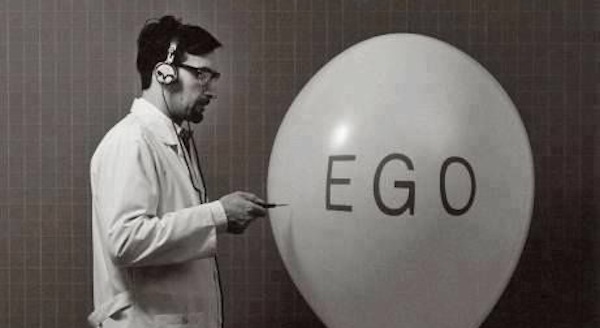
ego-

DO try this experiment at home…


We need these processes broken down into 12 Steps and shared in a community because A) connection to god can be so elusive at the start, and B) ego is a wily, cunning, and stealthy tyrant that does not want to be deflated.

Of course it doesn’t!  It’s fucking EGO.

The problem for most people, including our “very mildly struggling” lifecoach, is a lack of distinction between ego and self-worth.  Ego is mistaken for self-worth by the vast majority of Americans (as epitomized by our arrogant Cheeto in Chief).  In fact, however, the two are diametrically opposed.

Ego separates us from others, relegating them to an onlooker/competitor role at best.  We believe our full experience of consciousness to be unique.  Our thoughts and experiences — whether positive, negative, or just weird — are somehow more intense and complex than those of “ordinary people.”  Ego tells me…

I’m better.

I’m entitled.

I’m doing it right.

and yet I know that in reality I bumble, get confused, hurt, and lost.  Sometimes I fuck up.  So… ego sweeps all that under the rug.  It insists…

If I’m vulnerable, I’m weak.

If I’m humble, I’m less than.

If I’m only human, I’m nobody.

Self-worth, on the other hand, grows from connection and compassion.  I understand that my human experience is little different from yours. I get that we’re in this together. I feel for you, and I trust that you feel for me. Trust emboldens me to tear off my mask and be vulnerable, honest, and fully human — flaws and all.  I’m just me, but maybe I can help you.

Today, everything I love about myself, I hold to be a gift from god — not a feat of my own making. God is generating my mind, my body, my love, my courage, these words — every second I live.  I am god — its flower, its child.

AA stigma is imposed out of fear.  It’s a defense mounted by those fiercely loyal to the tyrant who imprisons their spirit.  Let’s pray for them — for all sentient beings — to be free.


3 Comments

Filed under AA, Addiction, Alcoholism, Recovery, Self-worth, Spirituality

Which Way to Self-Love?

For years and years I’ve put off writing this post.  Why?  Because I frequently suck at self-love.

Originally I meant to write only after I had self-love down.  Self-loving me I pictured as an endearingly geriatric version of myself, her grizzled hair drawn up in a loose bun and her slightly pouchy face lit with a warm smile of knowing.  When I get there, I thought, and I’ve got all this chit figured out, then I’ll crank out a self-love post like, BAM!

Never gonna happen.

My future blogging self will actually be a view of this laptop (or a newer one).  And every day I live, I will wrestle with weird, difficult feelings. So my question will ALWAYS be the same as yours: without using booze or whatever to shut them down, how do we deal with those inner voices of self-loathingnot enoughness, anxiety, awkwardness, shame, envy, self-pity, vulnerability, and drama addiction?

My inner voices get meaner during Seattle winters, when twilight sets in before 4:00 p.m. and the gray rain can drag on for days. They’ve been up lately — super critical of my appearance, abilities, personality, and what little I have to show for the many years I’ve lived — but all mooshed together in a generic “fail” static that hums as a backdrop for my thoughts.
So.  Because I well know, at almost 23 years sober, that such voices are “fake news” (haha), I resolved last month to launch a self-love campaign.  I found a self-love prayer and, er, trimmed it down on my phone (see bottom of this post), and I bookmarked two self-love meditations from Sarah Blondin on Insight Timer (a wonderful free meditation app).  Whenever I’d first wake up, I’d find the onslaught of “fail” static SO LOUD that I’d start blindly fumbling for my phone the way Bill and Bob describe grabbing for a bedside bottle of gin.

“I need help!  I need help!”  This was my constant prayer.

Eventually, the campaign worked — though not in the way I’d intended.  I gained, not any falling in love with myself, but enough gumption to turn and face those inner voices and ask them, “Why are you here?  What, exactly, am I doing so wrong?  Can you guys explain?”

Man, do they hate that!!   Because I saw those assholes for what they were.

Vanity and Ego are the soil in which self-criticism thrives.  Both of them craftily impersonate self-esteem or self-love.  Maybe vanity’s more about narcissism and ego self-importance, but they both tell us, “You’re okay because you have this!”  And THIS is things, material wealth, cool shit.  THIS is intellect, degrees, a fat paycheck.  THIS is looking hot or well dressed.  It’s the social finesse to be interesting and witty.  Being right.  Being wronged.  Lots of tattoos.  A hot partner.  Class.  Whatever vanity/ego can hock to grant us status.

But if you listen closely, what vanity and ego are actually saying is, “Without THIS, you’d be worthlesssssss.”

In truth, criticizing ourselves for insufficient THIS is a tactic we learned to protect ourselves from the stings of criticism we suffered growing up in dysfunctional families.  If our THIS supplies aren’t constantly rising, our worthlessness-hazard gauge is.  But in our hearts we know, THIS is never us.  No matter how persistently we try to amass THIS, we feel no inner worth — no love for self.  That pain is one reason we drank.

“The soul grows not by addition but by subtraction.”

— Meister Eckhart, 1260 – 1327

Eckhart’s subtraction principle, I am discovering, applies to self-love.  Love’s roots thrive in humility, not in awesomeness.  Do vanity and ego claim that, compared to other people or where I ought to be, I’m mediocre, boring, and unimportant?

Okay, fine.  You win, mean voices.  Mediocre is my middle name.

Once I stop fighting, I topple from ego’s tightrope, down and down until I land on the solid ground of being stuck with me.  But it feels pretty good!  What a relief!  Once I subtract the work of defending myself (which isn’t easy), once I chuck any fickle THIS gauge in favor of not caring where I stand, I can focus on being just plain old me — to the fullest.  Sure, the arena where my duels with self-criticism took place will still call to me.  But unconditional surrender, giving up again and again, means I relinquish much emotional busywork and free up that much more bandwidth for what matters: using the gifts I’ve been granted to contribute something positive to this messy, lovable world.

God’s love and self-love are one
I think of a friend with Parkinson-like symptoms caused by an inoperable brain tumor, who tells of waking in the night consumed with terror and praying his guts out in the dark.  He got an answer of two words: Trust me.

I think of an NDE survivor, a father who once dozed while driving 80 mph, lost his adored wife and baby in the same crash that took his leg, and who, struggling to make a home for his surviving boy, sobbed his guts out to god.  He, too, got a two-word response: Choose joy.

And I think of my own NDE, how the instant I found myself on the other side, I’d simply shed all negative emotions.  I had zero self-criticism, zero self-consciousness, zero interest in self-assessment — all the concerns of being human.  I cared only about how cool and amazing my surroundings were, how cool and amazing it felt to get to experience stuff.

Those three elements together, I’ve been thinking, make up a recipe self-love: trust god, choose joy, forget myself.

Here you may notice a major overlap with the basic recipe for sobriety: trust god, clean house, help others.  They’re the same.  Because I can’t choose joy if I carry resentment or guilt, and the best self-forgetting comes from helping others.  So, sort of like Dorothy, I guess I’ve had the way home all along.

Self-love, I’m learning imperfectly and will doubtless forget again, flows from a source that can never be depleted, only obscured by ego’s relentless fear of lack.  I am love.  We are sparks of god, you and I — shards of the light sculpted into cherished artworks by the ultimate love.  To realize my home, which glows with the warmth of self-love, I need only to drop all those thorny false treasures I’ve been trying so desperately to clutch.

2 Comments

Filed under Alcoholism, Faith, Recovery, self-love, Self-worth, Spirituality

Loneliness

True loneliness as a state of mind entails a lot more than just wanting company. It’s a feeling of emptiness, a soul ache with its roots in lack, in longing.  Loneliness casts a dissatisfied pallor over solitude, punches a gaping hole in tranquility, sucking all subtle beauties and gratitude from the moment because none of it is as it should be. Loneliness makes us victims.

When I gaze directly into my own loneliness, I find it to be a soup of emotions.  As with any soup, the flavor can vary from batch to batch, episode to episode, but the same basic ingredients are almost always present.  [Caution: all these ingredients are downers  😥 ]

  • Self pity — poor me that I am alone
  • Jealousy — unfair that others aren’t alone
  • Rejection —  fun people don’t like me
  • Self-loathing — because I pretty much suck
  • Ambition — I could be/have a ton of fun if I had a chance
  • Frustration — life’s not supposed to be like this
  • Pain — I am unloved
  • Hopelessness — I will never be loved
  • Despair — I’m unworthy

Did I just nail that shit, or what?

The antithesis of loneliness is love and belonging.  When I’m surrounded by friends I love, I see in each person (or animal) a unique spirit in action — the tone or frequency of that person’s way.  I can glimpse their goodness, their core beauty, their irreplaceableness in this world.

Mount Olympus

We laughed SO hard… 

And I have faith that they see me to some degree in that same light, so I don’t hide. I may get a little over-the-top with excitement, sometimes at my homegroup, or when I have people over, or if we’re climbing some insanely tough mountain.  I kinda cop a high on love, on sharing life.  But when I do, I know my friends will love me for being so Louisaish, just as I love them.

That trust — the exchange of love — sparks a joy that’s among the truest gems of being alive.

I drank to vanquish loneliness.  So did you, so do millions.  For me, if I was lonesome, alcohol worked on several levels. One was by buffing up my who-gives-a-shit? tough guy.  Another was by swelling my ego, which I used to consider the ultimate Get-Out-of-Jail-Free card. I could slosh myself into feeling I was hella cool to hang out with and maybe just a tad too cool for anyone else to fully get.

Other people living normal, wholesome lives — fuck ’em!  I was an artist.  I was a writer.  All the cool ones lived tortured lives, right?  Lookit Sylvia Plath and Virginia Woolf and Ernest Hemingway. Lookit Van Gogh, who shot himself in the stomach but then could’t find the gun in the damn wheat field where he’d been painting.  What did they all have the balls to see?  That life sucks and then you die, bitches! I, too, had the balls to face that and to live… (let me just light up, here) … with a rebel spark.

Me, late 1994

Then I’d swig some more booze and crank up my music, hating on all those healthy, normal, Friends-type people, and think about some depressing story I wanted to write or brilliant painting I was gonna start pretty soon, but do neither, until I blacked out.

Good times.

Other options include eating compulsively, binge-watching TV/movies, fixating on social media, working, cleaning, or wanking obsessively, online shopping/gambling yourself broke, or just sucking the life out of whatever loyal victim you can secure.

So what’s different now that I’m almost 23 years sober?  Everything.  Sober, I’ve lived through just about every feeling to come down the pike.  And in meeting them repeatedly, I’ve come to befriend some and recognize others as grifters.  I’m not so easily taken in  as I once was: “Hey, self-pity!  How you been?  No, I’m sorry, you can’t stay here…”

When loneliness visits today, I move toward humanity instead of away from it.  I remind myself that I’m human, that no experience is mine alone; it’s yours, too.  Deep loneliness is well-known to that nondescript person walking down the sidewalk, and to the people up in that plane crossing the sky.

SH2 Peptide Complex

On a physical level, we’re made the same way, our inner experiences resulting from the same incredibly intricate systems.  Our brains associate stimuli with memories, and the neurotransmitters so activated release showers of peptides that “swim” throughout the entire body, interacting with every cell to produce profound changes in cell structure and behavior.  Feelings flavor our perception, and we all share the same spice rack.

On a spiritual level, we are all one.  This fundamental truth is brought back time and time again by Near Death Experiencers who make contact with divine wisdom.  We are made of life-stuff, an energy that flows through all living things, whose purest form is love, constantly circulating within and among us.  None are unique or separate — neither in our specific feelings nor in our consciousness in general.

For example, take my specific feeling of last night.  As I drove home alone from Mom’s house Christmas Eve, snow swirled in streetlights’ illumination while The Nutcracker played on KING FM, short pieces to which I used to prance about as a little girl excited to become someone.  The familiar flow of those notes, the car’s gliding on fresh snow, the night’s open space swimming with motion — all of these suffused me with intense feeling.

And I thought, we feel this!  That’s why we’ve held onto The Nutcracker all these years, why we love these melodies of Arabia, Russia, and others woven through.  It’s why we make a big deal of fresh snow, why we paint and sing about this stuff — because we love life, and we love it in these trappings!  Every culture is like a huge family that has passed down to its children what it most prizes.  This is mine.

Loneliness is, ironically, our Humanity ID card, because it’s downright difficult to exist as a tiny shard of god sealed off in a physical body, separated from our source, from love’s unity. Loneliness develops when the flow of life/love energy through and among us is stymied, whether by fear, ego, or resentment.

All the world’s ills stem from this illusion of separation — the stuff I used to believe in.  Connecting despite the god-phobic shells individuating each of us can be difficult, but connect we must.

Whatever it is you’re longing for, think of someone to whom you could give it.  Then take steps to make it so.  Loneliness is never about you.  You’re just a leaf losing touch with the tree.  Reconnect.

Remember what this guy said, because he was right on.

…Lord, grant that I may seek rather to comfort, than to be comforted,
To understand, than to be understood,
To love, than to be loved…

St. Francis Prayer   .   .   .

2 Comments

Filed under Addiction, Alcoholism, Recovery, Sobriety

Getting Through the Goddamn Holidays

‘Tis the season when the spiked eggnog, hard cider, and hot buttered rum are flowing.  At office parties everywhere, coworkers will be pushing drinks, unwittingly or wittingly, on their recovering alcoholic colleagues.  To offer some strategies for getting out of a party with your sobriety intact, I wrote Holiday Parties a few years back.
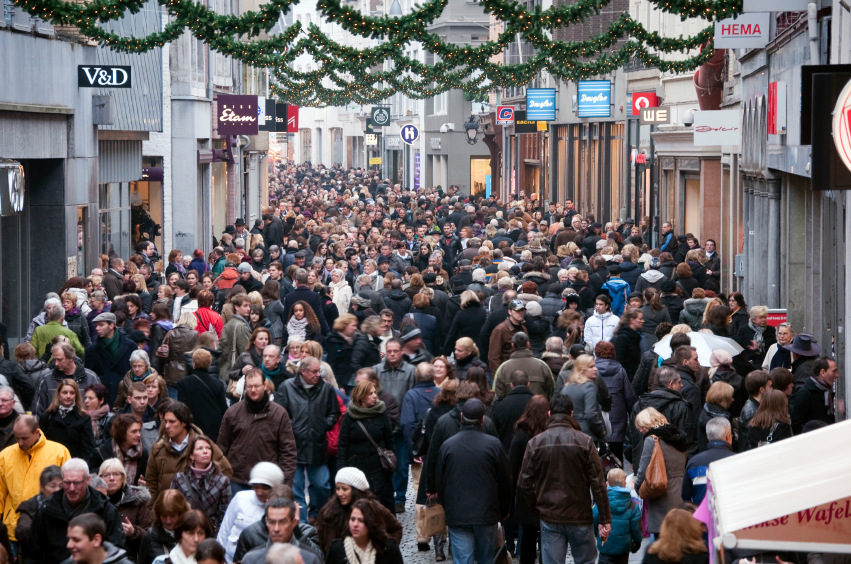
But that’s not the real bane of Christmas.

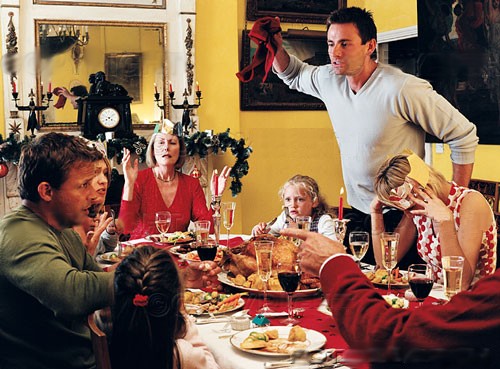
There’s also that obligatory holiday spirit crap attacking your serenity.  You’re supposed to feel a certain way.  Something’s wrong with you if those Sinatra/ Crosby/ Cole clichés piped into practically every public space don’t incite in you fond recollections of some Rockwellian ideal you’ve never really lived — the chestnuts not roasting on your open fire, that cheery ring-a-ling of sleigh bells you’ve never even remotely heard, and, of course, your deep reverence for the virgin birth that fuels smiles at… uh… bustling shoppers.  Not so much.

Even if you enjoy it, there’s no denying that, particularly in the US, Christmas amounts to a ridiculous spectacle of compulsory consumerism.  It’s an orgy of buying, an onslaught of marketing, with the omnipresent need to fill wrapped packages under a mandatory tree.  And it’s never quite enough.  Every year, tens of millions of us overspend in an effort to conform — which adds up to financial stress.

Wasn’t it just a few months ago that you packed away those lights, ornaments, and various kitchy nutcrackers, etc., back into their faded, half-torn boxes?  Now you’re supposed to not only get them all out again but feel excited and seasonally schmoozy while doing so.

Please, dear god — why??

Alcoholics need to place their serenity foremost.  This means we recognize the pressures that disturb us, triggering feelings of frustration, not-enoughness, not-a part-of, or just plain loneliness.  For many, the holidays trigger all of the above.  But more than parties or overspending or obligatory cheer in the darkest part of the year, what most threatens our serenity amid the holidays are the stresses of…

FAMILY.
Rarely does the stork drop off a lone alcoholic-addict in an otherwise functional, mindful, emotionally honest and loving family — if any such families exist.

Most of us grew up in homes where one or both parents drank, where the truth remained veiled and no one modeled emotional availability or loved us unconditionally as our authentic, vulnerable selves.  Rather, we and our siblings learned to jump through life’s countless hoops using fabulous springboards like selfishness, self-seeking manipulation, and dishonesty, playing a role nonstop in an effort to wrestle from life what we thought we needed to survive — a battle we drank to escape.

In other words, families were the very hotbeds where we generated all our character defects, all that we’ve since dredged up in our 4th and 5th steps so we could open them to god in the 6th and 7th, asking to be relieved of an approach to life that no longer served us.  Every day and in every meeting, we strive for more rigorous honesty to further our spiritual progress.

But then along come the holidays, and we have to head back to that swampy hotbed where, often, no one else has changed.  Siblings, parents, and other relatives continue to follow whatever works for them — frequently a continuous pursuit of short-term feel-good.  Some will still be chasing feel-good, as we used to, through alcohol and drugs.  But there’s a myriad of other ways to chase it: being smarter than everyone else, or more successful or hip, or politically goading others.  Egos will be crowding the house, overreaching one another, whether in loud, competitive conversation or exchanges of subtle smirks.

So… here we stand on the banks of this oh-so-familiar swamp, the old emotional reflexes itching to kick in, the family calling to us, “Jump on in!  The slime is great!  Play your damn role!”

What do we do, alcoholics?!  Do we chameleon our former selves?  Do we judge with spiritual superiority?   Or do we dig deep and practice…

BOUNDARIES.
Up until 2013, I’d have told you here that “all you need is love.”  I’d have claimed that if you didn’t enjoy yourself around family, the problem lay in your holding on to resentments or self-pity.  But today I call bullshit on that view.

Sick people hurt others.  Toxic people spread poison.  To every wild creature, god has given means of self-defense or escape.  And to sober people dealing with alcoholism-affected family, god has given boundaries.

How do we practice boundaries?  There are two basic steps:

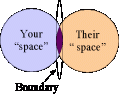
  1. Know who you are and that you’re okay, flaws and all.  In other words, carry with you a sense of what matters to you, how you respect and treat others, and how you require others to respect and treat you.  Claim your space. But… temper this with a sense of humor and awareness that the flaws we notice most in others tend to mirror our own.  For example, if I’m annoyed that my cousin is hogging the dinner table’s attention, it’s probably because I want to do it!  Humor and humility let me replace that annoyance with compassion.
  2. Know when someone is infringing on your dignity/space.  If someone keeps running over your foot with a lawnmower, it’s up to you to move your foot.  If you’ve previously asked the person not to run over your foot, and yet you see them heading down a line that’s gonna intersect with it again, then withdraw your damn foot!  For me, this means I no longer attend functions at which the lawnmowing person will be present.  For you, it may mean leaving before a certain person gets drunk.

Love and tolerance is our code – now and always.  But that love must include ourselves, and that tolerance an admission that some vulnerabilities and triggers persist despite all our work.  Just walking into a house where trauma occurred can be exhausting.

So, as with any dicy situation, have a plan in place before you go.  Bring your own Martinelli’s — lots of it.  If alone, text sober friends ahead of time that you may be calling.  If with a partner, have a “safe phrase” that means “I need to get the hell out of here.”  Then smile, say your goodbyes, and get the hell out!

Looks kinda freaky but it’s not!

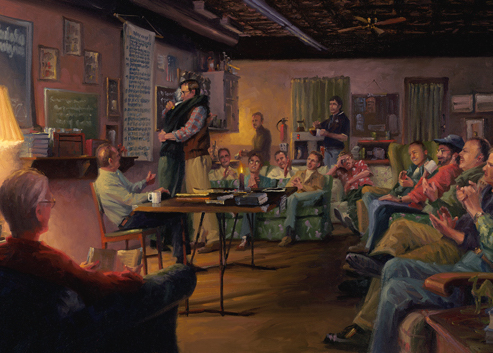
If you find yourself out of sorts, get your ass to a meeting.  Most Alano Clubs and big meetings host all-hours alcathons throughout the holidays.  Go.  Sit down.  Be initially disappointed that the group appears small and motley, or huge and you don’t know many.  But just sit there, just listen, and let the feeling of sober sanity and spiritual guidance seep in through your skin.

Reach out to someone with kindness.  We all struggle with this holiday stuff.  You are never alone.  ❤

.

4 Comments

Filed under Al-Anon, living sober, Recovery, Sober Christmas, Sober holidays, Sobriety

How Alcohol Fucks Up Your Body

a companion piece to How Alcoholism Fucks Up Your Brain

.

For all those years that I guzzled alcoholically, and even before that when I was a kid, I wholeheartedly believed that alcohol was good for you.  My dad, a tense professor by day and, before alcoholism overshadowed his life, happy winemaker by evening, taught us kids that booze made life sweet: “It’s good for what ails ya!”

After all, what did old-time doctors dose out to patients?  Whiskey!  What did St. Bernards carry in those little casks to people stranded in the snow?  Brandy!  So, liquor must be almost medicine, right?

Actually… uh, no.  The opposite is true.  That shit is poison — literally.

In many parts of the world, alcohol abuse now ranks as the #1 cause of death among people aged 15 to 49.*  Did you just absorb that, my friend? Would you please check out my reference below – World Health Org, 2014.  Sure, there’s a lot of bullshit circulating the internet, but doesn’t WHO sound kind of credible?  Here’s one of many graphs expanding on that fact:

So much for the ole “Drinking’s no problem in Europe” line! (WHO 2014)  Click to enlarge.         EUR = Europe; EMR = Middle East; SEAR = Southeast Asia; WPR = Western Pacific

In recent news, we’ve all heard of studies — most of them funded by the alcohol industry — claiming alcohol is the bee’s knees for some aspect of health.  Rarely is it the actual alcohol — the ethanol in these drinks — behind these supposed benefits.  In red wine, it’s the grape skins’ resveratrol, in beer it’s B vitamins from grains, etc.  True, ethanol dilates blood vessels, which may seem to alleviate symptoms of cold and flu, but even researchers behind such studies admit ethanol “would not have an effect on the virus itself.”**

All of these pro-booze studies stress the condition of small doses, usually about 1-6 drinks per week — a mere thimbleful for heavy drinkers.  In such small quantities, alcohol can’t poison you because your liver nabs it by the short ones and boots it the hell outta your bloodstream.  But suck up enough booze and the stuff overwhelms your liver, wreaking havoc throughout your entire body.

Ethanol is one of the few nutrients that is profoundly toxic, …caus[ing] both whole-body and tissue-specific changes in protein metabolism. Chronic ethanol misuse increases nitrogen excretion with concomitant loss of lean tissue mass. …A variety of diseases and tissue abnormalities… are entirely due to ethanol-induced changes in…  tissue proteins; for example, cirrhosis, cardiomyopathy, and osteoporosis. Ethanol induces changes in protein metabolism in probably all organ or tissue systems.†

Let’s look at them there tissue systems one by one, why don’t we?

Alcohol  fucks up your liver.  In stages.
1.  Fatty liver (steatosis) – doctors call this “enlarged”
2.  Inflammation of liver tissue (hepatitis)
3.  Scar tissue formation (fibrosis)
4.  Fucked to hell liver architecture (cirrhosis)
Gross clickable pictures  

During these disease stages, some of the blood entering the liver through the portal vein cannot penetrate [it] and is diverted directly into the general circulation… not detoxified, [so] blood levels of toxic substances increase.  …Thus, liver dysfunction can… contribute to brain damage.Ω

You know how, when a rainstorm overwhelms a sewage system, raw sewage spills straight into a bay or river or whatever?  Same thing here: that shit-filled blood goes everywhere in your body and brain.

All a hangover means is, your body and brain have been poisoned.  Hey, no big!  But feeling like a sack of dogshit all day doesn’t mean you’ve actually damaged your body, does it?

Alcohol Fucks Up Your Muscles and Bones
It does.  Both skeletal and cardiac muscles are screwed up by alcohol — even from a single binge.

…[T]he most reliable data examining the effects of alcohol on protein metabolism is derived from animal studies, where… the dosing regimen can be strictly controlled. These studies indicate that, both chronically and acutely [i.e. binge], alcohol causes reductions in skeletal muscle protein synthesis, as well as of skin, bone, and the small intestine.

Most full-blown alcoholics treat their bodies like shit in general – doing other drugs, smoking, eating crap – so to isolate alcohol, scientists have to dose it to poor little animals and record how their little muscles, bones, and guts all go to hell.

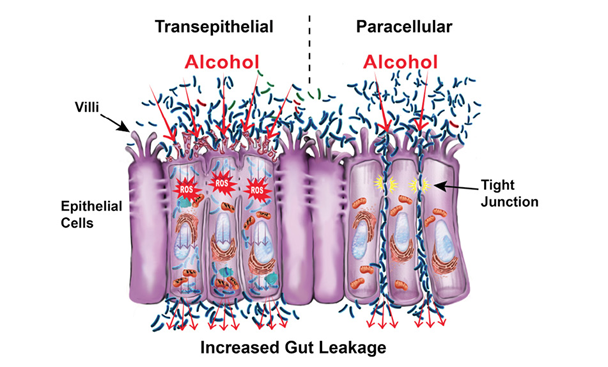
Speaking of your small intestine, can you guess what alcohol does to it?  Yup – fucks it up royally.  First, alcohol decreases the good bacteria (flora) in the gut and increases harmful bacteria.  Worse, the walls of the intestines, which normally allow only nutrients pass through, get all permeable and schlop those bad bacteria straight into your bloodstream.

Alcohol can induce intestinal inflammation through a cascade of mechanisms that subsequently lead to inflammation and organ dysfunction throughout the body, in particular in the liver and brain. One mechanism is by increasing bacterial loads and the permeability of the intestinal wall (see figure) allowing bacteria to leak through, leading to local and systemic effects.

Paneth cells normally police the gut for bacteria, but alcohol suppresses them, “which can allow additional intestinal bacteria overgrowth and allow their byproducts (i.e., endotoxins) entrance through the intestinal barrier. The bacteria, via endotoxins, trigger an inflammatory response by the intestine’s immune system, causing a release of proinflammatory cytokines” that travel to the liver and fuck it up, too.

How alcohol screws up your pancreas & lungs could drag on for several paragraphs, but I’ll just note that about 45% of pancreatitis cases result from alcohol abuse, which increases chances of pancreatic cancer. (If you think I’m making this shit up, just read the damn article.¤)  As for lungs, in the late 1700s, the first US Surgeon General warned that alcohol use was linked to pneumonia.  The dude was right.  Studies today confirm that “alcohol use disorder (AUD) render[s] people more susceptible to a wide variety of lung infections, including bacterial pneumonias and tuberculosis, and increased morbidity and mortality.”§

Endocrine and Cardiovascular Systems
I guess by this point it won’t exactly shock your pants off to learn that drinking buggers your entire endocrine/hormonal system. Interactions among your hypothalamus, pituitary, pineal, thymus, thyroid, and adrenal glands, and even your gonads, area all screwed up.

Alcohol intoxication induces hormonal disturbances that can disrupt the body’s ability to maintain homeostasis and… result in… cardiovascular diseases, reproductive deficits, immune dysfunction, certain cancers, bone disease, and psychological and behavioral disorders.∋ 

alcoholic cardiomyapathy

😦 alcoholic cardiomyopathy

Heartwise, some studies claim a drink or two a day wards off certain types of heart disease.  “But any positive aspects of drinking must be weighed against serious physiological effects, including mitochondrial dysfunction and changes in circulation, inflammatory response, oxidative stress, and programmed cell death, as well as anatomical damage to the CV system, especially the heart itself.”

Are we gonna make a stink about a little cell death and heart damage?  I guess so.  Sad tuba says, wah-wah!

Wouldn’t it be fun to talk about CANCER a bit?  Let’s do!  In women, even one drink a day elevates risk of breast cancer.º  In men, one per day does the same for prostate cancer. And for everybody who swallows the stuff, drinking has been shown to increase cancer of the mouth, throat, larynx, esophagus, stomach, pancreas, liver, colon, and rectum.Δ

Are you thinking what I’m thinking? Pretty much everything that stuff touches, from lips and pooper, takes a giant step or two toward cancer.  Why?  Because “alcohol in your body is converted into a toxic chemical, acetaldehyde, [which] can damage your DNA and stop cells from repairing that damage, which can lead to cancer.”ß

The bottom line is, booze rips through the body like a Warner Brothers Tasmanian Devil.  Sure, some people survive it; my aunt drank scotch every night and lived to 93 — though it made her more puffy than happy. We can all point to such nightcap-taker exceptions, but their livers’ extended kickass performance doesn’t change what alcohol is (poison) and does (destroys healthy cells).

Cultures worldwide frame alcohol, not as a toxic drug, but as a harmless aid to relaxation and conviviality.  Look again at the left side of that WHO graph above — all those people dying in their teens, 20s, and 30s.  For each death, how many survivors’ lives are crippled?  The world’s leading cause of death, illness, injury, and family tragedy is something people choose to consume — until it turns and consumes them.

That, dear readers, is fucked up.

REFERENCES

*http://www.who.int/substance_abuse/publications/global_alcohol_report/msb_gsr_2014_1.pdf?ua=1  See page 57.  

**https://web.archive.org/web/20130211101748/http://abcnews.go.com/blogs/health/2012/12/08/cold-remedy-cocktails-do-they-work/
http://www.sciencedirect.com/science/article/pii/S0899900799000969

Ω https://pubs.niaaa.nih.gov/publications/arh27-3/240-246.htm

https://www.arcr.niaaa.nih.gov/arcr382/article01.htm

¤ https://www.arcr.niaaa.nih.gov/arcr382/article10.htm

§ https://www.arcr.niaaa.nih.gov/arcr382/article04.htm

∋ https://www.arcr.niaaa.nih.gov/arcr382/article05.htm

◊ https://www.arcr.niaaa.nih.gov/arcr382/article03.htm

º https://jamanetwork.com/journals/jama/article-abstract/187252

https://prostatecancernewstoday.com/2016/11/17/drinking-alcohol-increases-risk-of-prostate-cancer 

Δ https://www.cancer.org/cancer/cancer-causes/diet-physical-activity/alcohol-use-and-cancer.html

ß https://www.drinkaware.co.uk/alcohol-facts/health-effects-of-alcohol/diseases/alcohol-and-cancer/

12 Comments

Filed under Addiction, alcohol damage, AUD, Health, Recovery