Category Archives: Spirituality

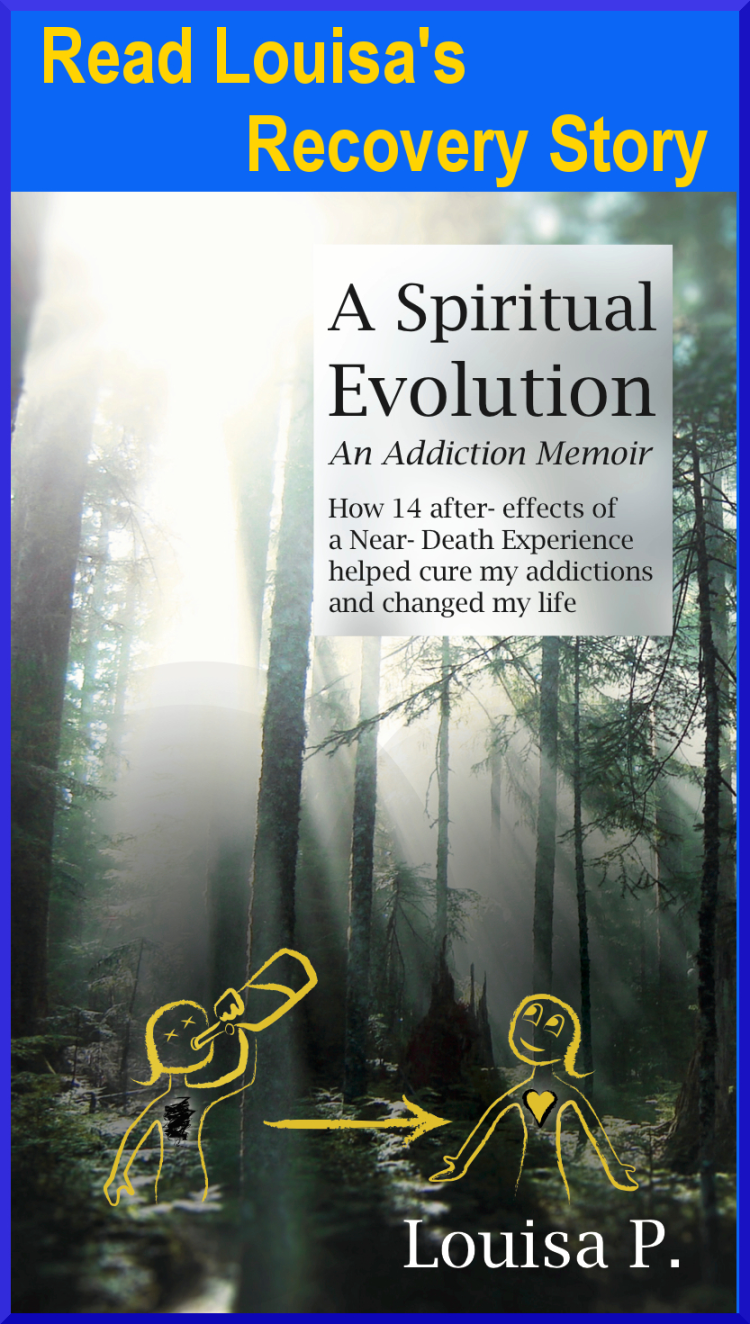
How a Near Death Experience and its aftermath compelled me to recognize the reality of god and an “other side.”

Long-term Sobriety: Always Seeking

In the long haul of recovery, times come along when life’s day-to-day stressors feel overwhelming. There’s something chafing, some problem we can’t quite name. We’re still functioning okay, wearing all our hats, fulfilling our responsibilities – check!  So frankly we don’t see the need to tell anybody we feel lonely, anxious, and discontent.  Spiritual pride urges us to just wave away whatever’s up without bellyaching — we’ve survived far worse, after all.  But if we slow down enough to look inward sincerely, maybe in Step 11, we can acknowledge a growing pain around our heart, an ache almost like a sore muscle.

Here’s the root of the problem: we’ve forgotten god.  Living as societal pawns, we’ve unconsciously allowed the messages bombarding us — ads, media, faddish friends, and fluctuations of culture — to define what life’s all about.  We’ve inadvertently immersed ourselves in a world of habit and conformity, as if the externals of people, places, and things were the whole story.

Whenever we do that, our reliance on god shrinks.  And the instant god shrinks, our dis-ease takes up the slack.  Alcoholism slinks up from the unconscious, from the brain stem where it’s holed up throughout recovery, and resumes the work of making us sick.

To personify alcoholism in this way makes sense only to those who have lived with a presence in their psyche that relentlessly urges self-destruction.  It’s me, and yet it’s not me.  Its goal is to separate me from life, to poison my perceptions so that I’ll begin to resent life in the old way: as an opponent, a bully.  And what does it propose I brandish in response?
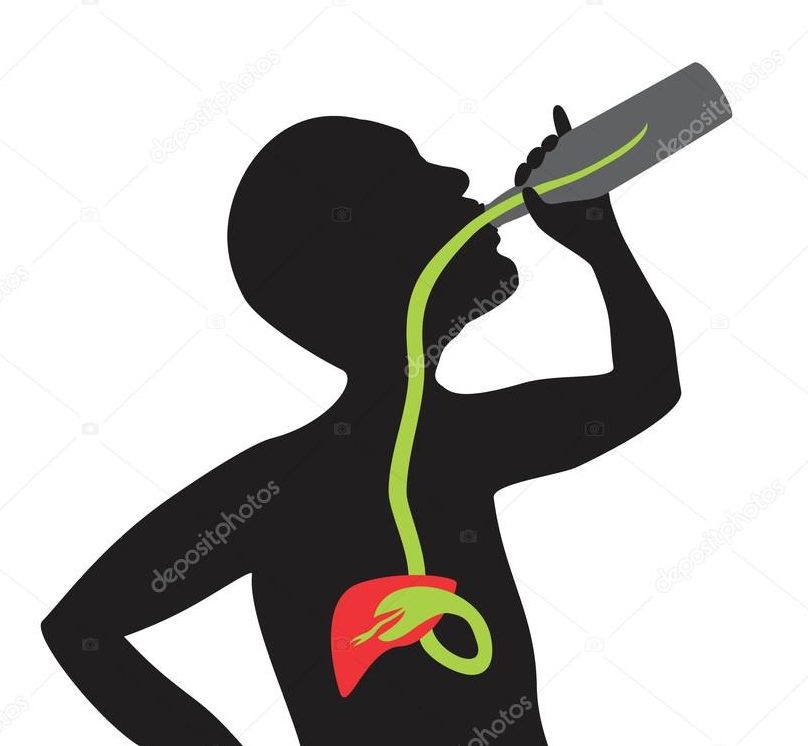
A drink.  Many drinks.  All the fuckin’-who-gives-a-shit drinks I damn well please.  Because that mental twist in my brain, which has weirdly survived 22 years of abstinence, is ever primed to plunge me back into the endless hell of resolving absolutely not to drink today — except, hey! Let’s have a drink! (and another…)

At my home group recently, several people contrasted their strong connection to recovery during early sobriety with their current sense of detachment.  Funny how early sobriety, one of the most excruciating gauntlets ever run, can be glossed over in the rose-colored glow of nostalgia! Nobody misses those early days of chemical and emotional withdrawal — the psychological equivalent of being dragged through an automated car wash naked with an all-over sunburn.  Nope.  What we so fondly recall is the free-falling dependence on god that was — in those difficult times — our sole choice.

Early sobriety is lived one day at a time.  It’s a continuous process of abandoning our own will in favor of a faith that doing so — going to meetings when we don’t want to, calling a sponsor when it feels weird, praying when we don’t know what the fuck we’re praying to — will change us for the better.

And it does!  Living by faith heals us to the point where we feel strong and useful, because people now value our opinions and trust us, so we have a new identity as a person with their shit together.

At this point, we begin to imagine our spiritual state is up to us.  Positive self-will messages surround us, from motivating Facebook memes to the ingrained self-help assumptions of our bootstrap pulling society.  Be happy: Abraham Lincoln once said — well, actually, no, he fucking didn’t!  No record exists of Lincoln ever saying folks are as happy as they make their minds up to be, but our society’s all over the idea anyway because we’d love to believe happiness is just a light switch, an app.  BING~!

In truth, happiness is an art And like all arts, it requires cultivation.  Much of that cultivation transpires in acknowledging and working through pain, discontent, and loneliness.  It entails the Honesty to admit to myself and others that I’m hurting; the Open-mindedness to believe my feelings are not facts; and, most importantly, the Willingness to implore god to help me.

I must turn toward, not away from, the pain concealed beneath my nervous discontent.  I have to wade into it.  But let me caution, there are ways to wade and ways to wallow.

If I take the hand of ego to accompany me, we’re gonna camp out in that shit and throw us a big ole pity party.  You know?  We’re gonna bitch and complain and scratch that itch, because it’s all about me and it hurts soo good to be a victim!

But if I take the hand of god, we’re looking for the path through it – and only god knows the way!  I sure as hell don’t, or I’d have taken it!  Here’s where that early sobriety piece fits in: I have to get it that I am still as helpless in combating my pain as I was at the outset of this journey:  I know only what I know, and it has brought me to this impasse.  My vision of life, not life itself, has trapped me in discontent.

I need a miracle, yes, but a miracle can be simply a new way of seeing.  What I think matters, where I’m heading, who I want to become — all these can be transformed with god’s guidance.  I have found that, when I’m most uncomfortable, it’s often because I’m morphing.

My most kick-ass morph prayers (best preceded by meditation) go something like this:

God — I hurt.  Please help me.

God — I don’t know what the fuck I’m doing.  Please guide me.

God — This being human job is effing hard, I gotta say!  Show me the point!

The change, the guidance, the point usually come down to some version of…

… yet it’s inexpressibly intimate between me and god.  This is a point I wish to smash home on my readers: We loved and trusted booze.  We were stoked to hang out with booze.  Now, to thrive despite alcoholism, we have to become every bit that intimate with god, every day, every moment.  God is love.  Let it in.

Spiritual renewal is god’s work, not ours.  To continue growing, we have to humbly admit defeat and seek god’s help, same as always.  That’s choosing joy.  That keeps us sober.

.

2 Comments

Filed under AA, Addiction, Alcoholism, Faith, Happiness, prayer, Recovery

Afterlife: Is it Too Weird to Talk About?

Death visits frequently in my Seattle circle of sober fellowship. Two friends with years of sobriety died this past Tuesday from heroin relapse; one I knew faintly, the other well.  Jeremy leaves behind the 11-year-old daughter he so intensely adored along with a partner and countless friends who loved his playful yet self-deprecating energy, sarcastic wit, and unflinching, quirky, inspiring shares.  He’s gone.

Gone where?

As someone who’s undergone a Near Death Experience followed up by many paranormal aftereffects, I can tell you what I believe.  (Meanwhile, you believe whatever you believe 🙂 ).

In the minutes before my sister died, I was trying doze in the dark hospital room when into my mind flashed “the light” I had known on the other side: it was seeping in under a window, floating to my sister’s bed, and “pooling” above her, a million tiny points of light swirling, gearing up to receive her.  When I opened my eyes, there was nothing.  Eyes closed, I knew the lights were our extended family ancestors, who loved my sister immensely and were preparing, like a million loving midwives, to guide her “birth” to the afterlife.

As I recount in my book or this short film, I had not yet accepted this crazy stuff into my “normal” paradigm of reality, so I kept trying to dismiss it.  A thought-voice urged me to tell her (my sister) what I knew of the light to help her cross, because her fear (that cancer was god’s punishment) blocked her crossing. “She’s got two weeks!” I insisted, believing her doctors, but the voice simply would not quit.  Finally, I consented.  I knelt close by my unconscious sister, took her hand, and tried my best to describe the the light – she’d feel the warmth of god’s love all through her, it would feel so wonderful…  When the words were out, I sat back down.  Twenty minutes later, in a sudden, violent hemorrhage, she died.

Far from serene, I tore around the hospital floor with my brother screaming, “Help us!” An impassive doctor listened to my sister’s heart… but assured us it would stop soon.  One minute I truly wanted to rip that doctor’s head off; the next, my sister reached me.  Her energy was unmistakable, hovering in the room, loving and trying to calm me, loving my brother, loving the frickin’ doctor and nurse – the whole world!  Somehow she filled me with the light again, a euphoric flashback of the bliss I’d known while I got to be dead.

That was twenty years ago.

Just before my father’s death, I didn’t sense the light, but I knew when he was about to cross. I told the hospice worker to get my family, who were all chatting around the kitchen table with a visiting social worker.  In the minute I had alone with Dad, I remember telling him in thought, “You’re gonna do fine, Dad.  You’re gonna do great!”  I felt proud of him, excited for him.  That’s not how you’re supposed to feel, but it’s exactly the midwifey anticipation those million angels had for my sister – this time filling to me, too.

That was ten years ago.

Weird Things still pop into my life fairly regularly.  Last week, getting ready to leave for work, I resolved to pick up groceries on the way home.  Trader Joe’s or Safeway?  The thought flashed – Trader Joe’s: you’ll see someone you know.  I dismissed it, because  Safeway was right on the way home, so I’d– Trader Joe’s.  You’ll see Mindy.  Along came a faint flash of Mindy’s smiling face backed by the sauces shelf, though in 10 years’ shopping at TJ’s, I’d never once seen her there. Aware of other times I’d been advised in ways that saved my life, I consented: “Okay, fine!  TJ’s – I’ll go!” (I often use this exasperated tone with my guardian angel.)

Six hours later, I’m on the phone with Mom at TJ’s when Mindy sails by in the produce area.  I wave excitedly but can’t talk – I can’t tell her I knew.  I wrap up with Mom, shop a while, then decide I’m gonna track down Mindy.  I hunt through the store – did she leave?  Finally, I see her.  I greet her and explain.  She laughs – she’s a Wiccan – and admits she was thinking “very loudly” this morning that she had to go to TJ’s.  I love her immensely in a strange way – her classic Mindy-ness.  I love life.  It’s right then that I realize, behind her are… the sauces.

What the fuck is going on with this stuff, you guys?  I don’t know!  But I know something is.  I KNOW there is more to this world than the physical.

I believe many of us are steered by guardian angels, even if we can’t tell their input from our own thoughts.  Many NDE survivors can tell – often because the voice contradicts what we want.  One NDE friend of mine descending a staircase “heard” her angel warn, “If someone calls from above, don’t look around.”  A coworker called her name from the top of the stairs.  She tried at first not to look, but it seemed silly.  Turning her head, she mis-stepped, fell down the stairs, and broke her leg. She laughs telling the story.

I believe we’re collectively steered via billions of microdecisions – toward some purpose none of us can know.  I believe it’s thanks to billions of microdecisions that we have not (yet) eradicated life on Earth with our warheads.

I believe we’re Life/Love doing something.

Among adults, 10-15% who survive death bring back memories from the other side.  In young children, the percentage is far higher – more like 80% – perhaps because they’re relative newcomers here.  These figures hold across cultures.

Many NDEers encounter a love a thousand times more powerful than any we’ve felt on earth.  Some who get less far just feel a powerful sense of well-being.  NOBODY I’ve met in the NDE community wanted to get back inside their body.  Nobody!  But heaven, if you like, is not a “better place.”  It’s just a bodiless place – so not really a place.

Anger, fear, and pain are defense mechanisms built into our bodies.  We need them to stay incarnate.  So in a sense, the Puritans were onto something when they blamed “the flesh” for all our woes – for the “hundred forms of fear” and resentment that fuck up our existence with greed, insecurity, envy, etc.

And while it’s true we slough off all these bummers when we exit the body, the state of embodiment is nonetheless an absolutely amazing feat!  We are spirit invested in flesh, energy inhabiting matter – like photons, we’re both! What a crazy stunt that is.  Our emotions carry shadows that give them richness unique to earthly life.  So savor it  – all of it, the buoyancy of joy and the gravity of sadness.  As one childhood NDEer put it: “Life is for living; the light is for later.”

Life is for living, so from our perspective, it’s immensely tragic when one is cut short by addiction.  We’ll never again see Jeremy, never hear his raspy voice or belly laugh.  We all miss and mourn him deeply.  Yet Jeremy has transcended to pure Jeremy-ness.  His unmistakable, unique energy is now at large in the universe.  That I know.

.

.

.

10 Comments

Filed under Addiction, Afterlife, Faith, God, NDE, Near Death Experience, Spirituality

Forgiving Shame

Even though I’ve been sober many years, I find my codependent symptoms still crop up like Whack-a-Moles: I get over one and another shows up.  Shame is a particularly pesky mole with big front teeth that keeps popping up no matter how insightfully I whack it.

Brené Brown, a shame researcher, makes this key distinction:

GUILT – says what I did was bad

SHAME – says I, myself, am bad

When I got sober, I carried a lot of guilt – and rightly so!  I’d screwed over just about everyone unlucky enough to have let me into their life.  But over the next year or ten, I learned to stop engaging in harmful behaviors (at least, those I can perceive) and seek a life rooted in the values of honor and kindness.

So when I say I still experience times when shame seems imbued in my very cells, when the conviction flares that I’m secretly wrong, bad, even evil, I’m not crying out for help.  I’m trying to help us both.  Because if you, too, were raised by parents who somehow shamed you or are simply prone to self-criticism, then that same undertone of shame reverberates in your bones as well.

shameMost of the time, we ignore it like some kind of emotional tinnitus, so the feeling doesn’t register.  “What, me? shameful?  That’s absurd!”  But then life happens.  We screw up or feel exposed in some way and ~ BOOM!!  That accumulation of denied self-condemnation drops on us like a Monty Python 16-ton weight.  We’re flattened, aching from a wound that has far less to do with what just happened than scars buried deep in our soul.

For example, years ago I felt so free from shame that I wrote my addiction memoir, trusting that no matter how sick my thoughts and behaviors, even those readers who couldn’t identify would empathize.  When my relatives learned of it, the backlash was intense: they dropped dozens of 16-ton weights – all via email, texts, and online reviews, of course.  I found myself catapulted back deep into shame for who I was and what I believed, as well as for having had the blind audacity to write about it publicly.

vat-of-slimeEver since, I find that whenever some mishap shakes me up, those same shame feelings resurge – even when I’ve done nothing wrong!  I swear, I’d qualify for the Shame Olympics if there were such a thing.  It’s like some huge, soupy vat of shame is just waiting for me to lose my spiritual balance, spin a double pike and topple back in.

Chronic shame cripples our efforts to live authentically.  It hisses that we’re never to question others’ expectations, make waves, or stand out.  It’s the voice of fear, not god.  To be exactly who we’re created to be, to share our gifts unabashedly with the world – that’s what we’re here for.

Significant to sober alcoholics is the idea that getting buzzed will banish shame – along with guilt.  It certainly used to.  That’s why first few times I drank felt like flying.  I was every bit as good as you – hell, even better!  Because that oversized ego I’d stoked to make up for my abysmal self-worth was finally cut free of all those painful, heavy burdens to soar above the world.

Un/fortunately, the highs of addiction gradually diminish until our fix offers no lift at all.  My last drinks  left me as sodden with self-loathing and shame as ever.  Relapse, I know, would bring on not only shame but guilt at having shat on everything sacred to my higher self: integrity, honesty, courage, and faith.

Luckily, shame has several other nemeses.  It thrives on secrecy and silence; the deeper we bury it, the more power it gains. Like botulism, shame cannot survive exposure to open air.  When we talk about our triggers sincerely with trusted others, shame withers.  Meetings and sponsors let that happen.  Voicing our secrets takes courage, but when love lets us embrace our foibles (or even sickness) as merely human, a beautiful humility emerges to eclipse shame.

The audacity to be authentic is one of the tools Brené Brown calls for.  But having recently undergone yet another bout of shame (triggered by a naïve hope disappointed – with the vat waiting), I stumbled on another approach in the teachings of Pema Chödrön.

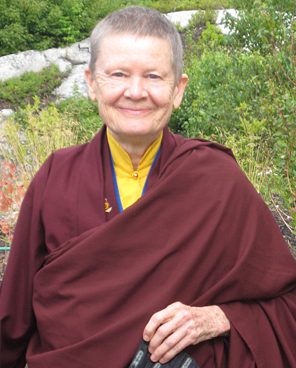
pema-comAbout 13 years ago, a sponsee/friend moving away gifted me a 6-cassette Chödrön lecture series entitled “Awakening Compassion” that I always meant to listen to – even after I ditched my cassette player.  A few months ago, forced to do boring PT exercises nightly before bed, I tossed Tape #1 into an old boom-box; I’ve been listening for about 15 minutes per night ever since.  Pema keeps speaking about “the raw stuff” of life being more important than our mental evaluations of it, and of “the open heart” being like a “sea anemone” that doesn’t retract when disturbed, but rather “softens” to life. Meanwhile, because I’m lying on my yoga mat, my dog Cosmo keeps coming up and dropping his drooly tennis ball on my stomach or maybe my hair, hoping I’ll chuck it across the room for him one more time.  I keep aspiring toward Pema’s lofty wisdom and enlightenment, and then – PLOP!!  Ew!!

The other night I realized – PLOP!!  Ew!! – that Cosmo’s drooly ball and my reaction to it are precisely what Pema means by “the raw stuff” of life. In Cosmo’s place, put any people or conditions that don’t suit me – including unwelcome emotions.  Woven through Pema’s words is encouragement to love this life with an open heart, not retracting into slanted stories and shoulds.

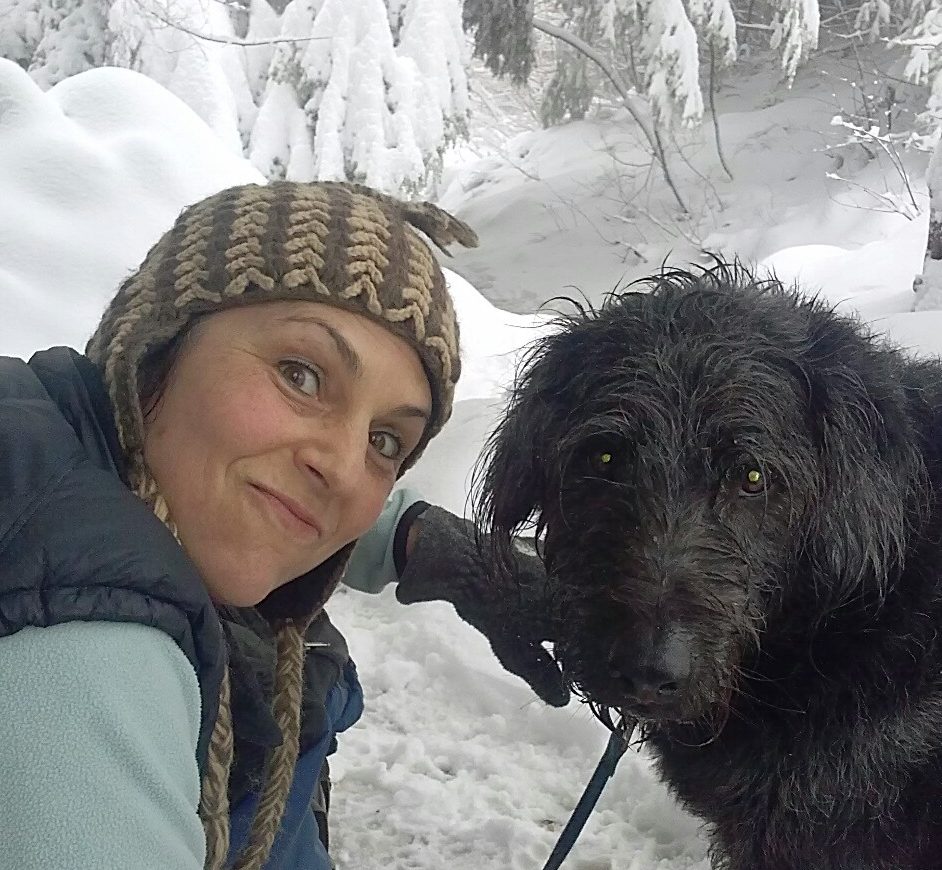
louisa-cosmo-mt-si-2016

Me & Cos on Mt. Si

Whether I snap at Cosmo or whack at shame (“I shouldn’t feel this!”), I am closing my heart to what is, to life.  I don’t have to toss the ball every time, but Cos is almost 12 and before long I’ll lose him.  By the same token, I don’t have to buy into the story shame tells, but I can accept my dance with that emotion over the years as part of my human experience, which is likewise finite and precious.  In other words, much as I’ve learned to accept and forgive shortcomings in other people, so I can begin to practice the same love and tolerance within myself.  Whacking is never our only option.

scroll

.

17 Comments

Filed under AA, Alcoholism, Codependence, Recovery, Sobriety, Spirituality

Vulnerability

The other day I got a call from a woman I don’t know asking about something she’d heard me say in an AA meeting.  She’d tracked me down because she was curious.

“You said the closer you get to God, the more you’re able to love people – you said because you don’t need shit from them.  I’ve been wanting and wanting for years to get closer to that – not wanting or needing people’s approval – but I don’t seem to get anywhere.  How do you do it?”

I offered to meet her for coffee next week. But what the fuck will I say to her?  How can I even hope to frame in one sitting what’s taken me 22 years to learn?  I can’t.  But that’s okay.  Because the truth is, in taking the risk to reach out to me, she’d begun to answer her own question.

Vulnerability is Scary
Neurologically, most of our responses to life involve an almond-sized part of the brain known as the amygdala, the center of fight, flight, or freeze, which scans our sensory data constantly for signs of danger.

Costa Rican girls

Unsafe but unworried Costa Rican kids

In the US, our culture prioritizes shielding ourselves from such danger.  Airbags, seatbelts, baby car seats, and helmets – they’re all mandated by law.  By contrast, when I traveled to Costa Rica, the safety policy appeared to be, “Let’s hope bad shit doesn’t happen.” I saw a couple motorcycling down a pot-holed road with no helmets – not for them or the 1-year-old between them, whom the woman could brace with only one hand because her other dangled groceries near the rear axle.  Another guy ahead of our car perched on the back of his friend’s motorcycle carrying a full-size bicycle across his back – no hands!  Now, I’m sure some bad shit does happen, but among the Costa Ricans I sensed a freedom and happiness – a trust in life and themselves – that Americans can’t even dream of.

If we’re knocking ourselves out to evade physical dangers, it only makes sense that we transfer the same approach to emotional ones.  Research has proven that our brains experience emotional pain and physical pain as virtually identical: the same regions light up when someone turns us a cold shoulder as would if they snapped a mousetrap on our finger.  Rejections hurts.

That’s why we drank!  Then we didn’t have to give a shit who disliked or rejected us, or if we did, it was all delicious maudlin drama.  Yet the day comes when alcohol can no longer anesthetize us, and at the same time the wreckage of our past overwhelms us.  When that happens, we hit bottom.

It’s a pain that cracks us open so deeply, god can touch our hearts.  We admit we don’t know how to live, and we ask for help from god and sober alcoholics.  If we work a program, we learn that ego, unchecked, is the source of our troubles.  Through inventory we name the character defects that ego animates in us and start mustering the willingness to part with them.

So who, then, is this new person?  This human divested of their emotional shield, inflated ego, assorted coping mechanisms – in short of their boozing imperviousness?

It’s a person suddenly exposed and vulnerable as hell.

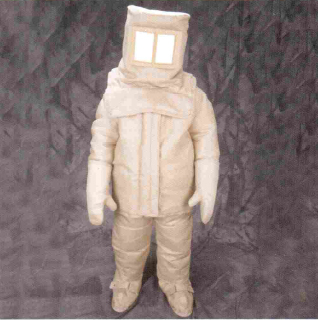
Now, we can be hurt.  We experience pain deeply, sometimes a backlog built up over a lifetime.  If we’re lucky, we have a sponsor who advises us to bring that pain to god.  But sometimes, our amygdalas decide god’s just not concrete enough.  fire-suitWe need safety precautions, emotional helmets and hazmat suits!  So we reduce our vulnerability by learning to edit and hide our true selves.  We develop strategies like people pleasing: whatever we think will smooth our path, whatever others want or would approve, we try to appear.  The goal is to be accepted.  We need it because we so intensely fear rejection’s pain.

The problem is, if we don’t put ourselves out there, exposing our weaknesses and imperfections and hoping to be loved despite them, we also won’t live. We’ll miss the chance to know intimacy, trust, and the warmth of loving other people simply for their humanness.  In short, safe inside our hazmat suits, we’ll miss the richest beauties of life on earth.

So I Guess What I’ll Say to that woman is that since I’ve been sober, life has absolutely beaten the crap out of me, over and over.  Partners have plopped my heart in food processors set on Betrayal – not just once but twice.  My siblings ridiculed and shamed my book – even as I fought cancer.  Besides losing a sister and father, I’ve lost half a dozen dear friends to overdose, accident, and suicide.

Pain.  Pain.  Pain.

But here’s the thing.  Every time, god has been there.  Every time, god has loved me through it.  And the gift from staying sober long enough has been that I begin to fear pain less.  It won’t kill me.  It is, after all, “the touchstone of all spiritual progress” – that which affirms the real deal:  I will love again.  I’ll show up for my siblings.  Cancer won’t haunt me.  And I will never forget my loved ones.

cristins-cookiesI find I have begun to live emotionally in the same spirit the Costa Ricans live physically – with less caution and more freedom.  I can begin to risk pain knowingly.  Today I choose to be vulnerable, extending kindness or heartfelt gifts to those who may reject them, because I don’t need their acceptance.  Sure, I’d like it!  Sure, I hope bad shit doesn’t happen.  But what’s the worst case scenario?  Those “ouch” parts of my brain will light up again, and I’ll cry my guts out again.  And when I turn to god in all my pain and grief, god will say to me again, “Louisa, you are enough, just as you are – I love you in the beauty of your trying.”

Freedom is the difference between hoping for and thinking we need reciprocation.  I am all I have to offer.  This life’s the only time I can do it.  God, I know, has my back.

scroll

.

PS: Happy birthday to me, guys!  Thanks for 22 years on the 29th!  🙂

Post to Facebook

12 Comments

Filed under AA, Addiction, Alcoholism, Codependence, Faith, God, Recovery, Sobriety, Spirituality

The Bedevilments vs. Grace

Here are thousands of [sober] men and women, worldly indeed. They flatly declare that since they have come to believe in a Power greater than themselves… there has been a revolutionary change in their way of living and thinking. In the face of collapse and despair… they found that a new power, peace, happiness, and sense of direction flowed into them.
 
…Is not our age characterized by the ease with which we… throw away the theory or gadget which does not work for something new which does? We had to ask ourselves why we shouldn’t apply to our human problems this same readiness. We were having trouble with personal relationships, we couldn’t control our emotional natures, we were a prey to misery and depression, we couldn’t make a living, we had a feeling of uselessness, we were full of fear, we were unhappy, we couldn’t seem to be of real help to other people— was not a basic solution of these bedevilments more important than whether we should see [an ad for some new gadget]? Of course it was…
 
Our ideas did not work. But the God idea did.
-Alcoholic Anonymous, pp. 50-52
The bedevilments sum up how life sucks for an active alcoholic – or for one dry without a solution.  Anyone familiar with the Big Book knows of them.  They make up yet another passage where the AA founders nailed our experience, so  the hurting alcoholic marvels as s/he reads, “How did they know-?”
.
The bedevilments hurt like hell because they’re symptoms of our dying spirits.  Fear cuts us off from the love that would sustain us, so we languish like plants without sunlight.  Drinking temporarily soothes that pain while ego promises to fix everything by grabbing more admiration from the outside world (via  accomplishments, attractiveness, wealth, etc).  What else could possibly help us besides self-medicating and vanquishing all the assholes in our life?
.
aa-80th-convention

AA’s 80th anniversary: 70,000 sober drunks from 94 nations. D’ya think this thing might work?         (click to enlarge)**

.
The Way Out
This chapter, “We Agnostics,” offers an alternative:  If we replace religious ideas of God with  open-minded spirituality, we can examine the results of faith just as we would any other phenomenon – scientifically.  We see that people who adopt faith in a higher power go from the shit pile to thriving.  We see it over and over.  Linking the two events causally – is that such an illogical jump?  To say, “Hmm… looks like this faith gadget works wayyy  better than the self-reliance gadget I’ve been using” – ?
.
That’s how models function in science.  We observe phenomena and devise a theory, a model that explains what’s going on.  We can’t isolate or observe faith, but we can note its effects.  Faith (and the rigorous stepwork it inspires) arrests the misery of alcoholism.  In drunk after drunk, this shit works.  We don’t have to know why.
.
Still, I remember how I reacted the first time I read “We Agnostics.”  Yes, I suffered all the bedevilments (though I didn’t give a shit about not helping others), but I wasn’t going to buy the idea that what had worked for millions of other people would work for me.  No, because I was smarter.  And I hurt worse.  And the prospect of seeking god felt weirder to me than it had for those guys – obviously.  Just in general, other people were so other-peopleish!  They had nothing to do with me.  They were packed in society like canned beans, whereas I had flowered and grown on the vine of my life, bobbing in breezes and raindrops they’d never experienced.
.
This is the catch-22 of getting sober in AA: we have to trust that we are like others before we can really believe it to be so.  If we trust, we can do what they did and get what they got – but at the start we don’t trust anything!  Even booze, our best buddy ever, has turned on us.  Or has it?  Maybe we should try one more time with the bootstraps and a little less bottle?  Isn’t that more likely to work than something so preposterous?
.
wile-e-coyote-cliffAnd yet we try the unknown thing.  We step out into air.  There’s something in AA meetings, some energy we can’t identify that keeps us coming back.  My brain told me emphatically that AA would never work, yet my hope, my heart, and somehow my car keys carried me to meeting after meeting, where I heard people speaking authentically of ruined relationships, self-loathing, wild emotions, relentless fears, and pain-filled loneliness just like mine – that no longer ruled their lives.  I could see it in their eyes, hear it in their voices: they were free.

.
Grace.  What is it?  It’s defined as “unmerited divine assistance,” a gift from god we receive without earning.  The longer I’m sober, the more I see it’s all grace: every breath I take, every sensation, every emotion, every moment of being alive on this earth.  How could I “earn” any of that?  I was graced with the utter defeat of my wrecked life.  I was graced to meet the person who took me to my first AA meeting.  Graced to find myself out of answers, sick of believing my broken brain over and over, desperate enough to show up despite immense skepticism.  The short version is that I was graced with surrender: “Maybe there is something; maybe I can ask it to help me.”
.
That opened the door enough for those first rays of sunlight to touch me.  duckling-graceThree steps forward, two steps back, I’ve progressed through life’s vicissitudes and cycles of stepwork to reach my own intimate experience with a god that I now love with everything in me.  Today I can see how god – that energy of love powering every element of life – is in you.  I can love you with no self-interest – no more than I have in loving a robin, or a birch tree, or a puffy white cloud shifting across the blue expanse of sky.  Look at you being you!

.
And what a wonder it still is, as I come up on 22 years sober, to watch AA newcomers at the outset of their own  journey.  They come in with bedeviled pain and discontent practically scribbling the space above their chairs. Today, I get to flatly declare to them the peace, happiness, and sense of direction with which I’ve been graced – and watch them find it, too.
.
scroll
.
 **https://rehabreviews.com/went-aas-80th-international-convention-kept-journal-become/#prettyPhoto

6 Comments

Filed under AA, Addiction, Alcoholism, Faith, God, Happiness, Recovery, Sobriety, Spirituality

Choose Life; Choose Joy

Paul Johnson was not an alcoholic, but he was extremely unhappy.  One night he drank a bunch of booze and took a bunch of pills then went up to his attic, where he hung himself.  Some time later his wife found him – quite dead.  She struggled to lift his body but failed; she had to go downstairs and get her son, the two of them panicking in their efforts to get the body down.  Though Paul’s face had turned black and he was without pulse or breathing, his wife gave him CPR for five minutes.

Then Paul took a breath.

Paul’s consciousness, far from ceasing to exist, had become exceptionally clear during the time his body was dead.  He found himself in darkness, approached from the right by four shadowy figures who showed him a review of his entire life.  “Thoughts were instantaneous. When you asked a question, you would instantly know the answers.” In a Scrooge-like transformation, Paul returned from the dead absolutely overjoyed to be alive:  “I had this vivid memory, extremely vivid, and it shouldn’t have been vivid at all for a guy that took a couple bottles of meds and drank two bottles of liquor. Yet it was so vivid and so real.  I was so happy to be alive, and to have a second chance to fulfill the things pointed out to me as being important.”

I’m in the process of editing a book of interviews with Near-Death Experiencers* – people (including me) who have died, experienced the other side, and returned with memories. Paul is one of fourteen of us interviewed by filmmaker Heather Dominguez, who has amassed the footage for a television series and is raising the money to produce it.

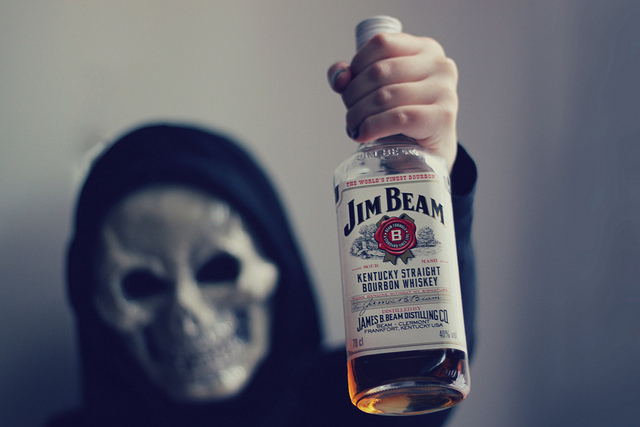
hooded-figureUnlike the rest of us, however, Paul did not go to the Light.  He went to blackness – a void where he existed without a body.  Far from feeling inundated with infinite love, he sensed that the four figures “wanted to take me to a darker, more horrible place.”  But as he watched the scenes of his life go by, Paul felt overwhelmed with loss.  “My biggest regrets were that I didn’t travel and see the world, and I didn’t do the things that made me happy. …It wasn’t that I missed this wedding or didn’t get this job… [It was] that I didn’t enjoy my life like I really wanted to…  As I realized that, I thought: ‘I wish I wasn’t dead!’  In that exact moment… [the experience] was over for me.”

Today, Paul lives in the Philippines with a new wife and her extended family – all of whom he loves.  He changed everything about himself and is now a man decidedly happy, joyous, and free.

Alcoholics who choose to live experience a shift analogous to Paul’s – if they commit to rigorous spiritual work to effect an internal change.  Paul’s moment of choice strongly reminds me of a favorite Big Book story in the 2nd & 3rd editions of Alcoholics Anonymous, “He Who Loses his Life.”  In it, an honors student and “boy wonder” in business named Bob has drunk his life into the ground despite plenty of intelligence and self-knowledge.  All his city friends alienated, following yet another binge he crashes in the country with a doctor he’s known since boyhood.

We worked in five below zero weather, fixing on an elm tree a wrought iron device which modestly proclaimed that he was indeed a country doctor.  I had no money – well, maybe a dime – and only the clothes I stood in.  “Bob,” he asked quietly, “do you want to live or die?”

He meant it.  I knew he did… I remembered the years I had thrown away.  I had just turned 46. Maybe it was time to die.  Hope had died, or so I thought.

But I said humbly, “I suppose I want to live.”  I meant it.  From that instant to this, nearly eight years later, I have not had the slightest urge to drink.

Bob threw himself into working the 12 steps in AA, which led him to great happiness.

Such lasting happiness can be found only by learning to love reality as it is.  To do this, we need to bring about major change in ourselves – something we can’t accomplish without help from the steps, from our fellows, and, most of all, from our god.

When I was growing up in the 1960s and 1970s, drugs had just sprung lucy_in_the_sky_with_diamonds_by_alfredov90-d5tmlejinto mainstream popular culture.  As a kid listening to Beatles songs like “Lucy in the Sky with Diamonds” or “Tomorrow Never Knows,” I imagined that drugs brought a higher awareness than just plain old consciousness – which was, for me, terribly uncomfortable. As I grew up, I embraced not just alcohol but “recreational drugs” – as if crippling my brain created anything.  I don’t know about you, but I dared to chase that vision, to venture far into the mysteries of the universe – so I sucked chemicals into my mouth and nose and lungs that essentially shoved my head up my ass, and from there I tried to marvel at the view.

It was dark.  It was lonely.  It was pointless.

I had to hit a bottom, to despair almost completely, before I could begin to see that in my search for “something cooler,” I had rejected life.  In my greediness to be loved, I had rejected loving.  And in my obsession with self, I had rejected a humble consciousness of my own soul and spirit – connection to god.

Deep down, every alcoholic knows they are committing a little bit of suicide with every drink.  We know we’re turning our backs on goodness and truth even as we laugh and whoop it up.  We vaguely sense that we’re completely full of shit, but we somehow can’t see a viable alternative.  It’s life.  Honing awareness in sobriety, I have found that plain old reality… is a trip.  It’s huge.  It’s rich.  It’s mind-blowing.

oak-treeTo love what is takes courage.  To love others without a parasitic agenda takes strength.  And to see clearly into ourselves takes humility.  I, of myself, have hardly any of the above.  But I borrow them (and more) from my god day after day, breath after breath.  I choose joy.


scroll

*I’ll let you know when it comes out 🙂

..

5 Comments

Filed under AA, Addiction, Afterlife, Happiness, Near Death Experience, Recovery, Sobriety, Spirituality

What’s the Point of “Bill’s Story”?

Pledges inscribed on the flyleaf of Bill and Lois’ family bible:

  • October 20, 1928:  To my beloved wife that has endured so much, let this stand as evidence to you that I have finished with drink forever.
  • November 22, 1928:  My strength is renewed a thousand fold in my love for you. I will never drink again.
  • January, 1929:  To tell you once more that I am finished with it.  I love you.
  • September 3, 1930:  Finally and for a lifetime, thank God for your love.

On Christmas day, 1930, Lois’ mother died. Bill was drunk for days before, too drunk to attend the funeral, and drunk for days after. Lois began work at Macy’s for $19/week to support the two of them.

Anyone familiar with the Big Book of AA knows that in its opening chapter, “Bill’s Story,” co-founder Bill Wilson offers his personal narrative of “what it was like” while he was a prisoner of alcohol, “what happened” when his drinking buddy Ebby visited (miraculously sober), and “what it’s like now” – or was like for him and Lois, flourishing in the early days of AA at the time the book was published.

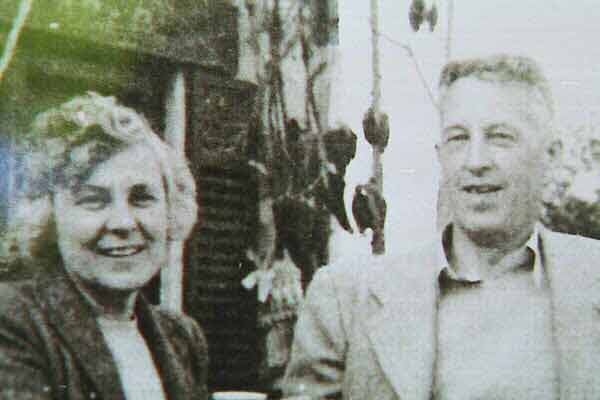
Bill and Lois

Lois and Bill later in life

Standard “homework” for an AA newcomer embarking on the 12 steps is to highlight the passages in “Bill’s Story” to which they relate – at least, that’s how we do it in Seattle (and I expect all over the world).  Sponsees of mine who were sure they’d have zilch in common with some dude of a different race, class, gender, and era writing in terms they consider archaic are surprised to find Bill puts into words experiences, pains, and terrors they’ve suffered but shared with no one.  Identification – that’s how the program works.

It starts from the get-go: “War fever ran high” he opens – each of these four words flashing icons of addiction.  Bill drank when things were awesome: “I was part of life at last, and in the midst of the excitement I discovered liquor.” And he drank when they sucked: “I was very lonely and again turned to alcohol.” By the end of the first paragraph, we can guess Bill drank like we did.  By the end of the first page, we know he turned away from the foreboding doom he felt reading an alcoholic’s tombstone and focused instead on vast faith in his own “talent for leadership” his ability to choose wisely.

 canstockphoto.com

Right there, folks, is the enigma of alcoholism in a nutshell.  Even as we increasingly realize that booze is killing us, we place increasing trust in self-will and self-knowledge, which amount to paper swords in our gladiator’s fight with this powerful, thought-twisting, brain-sabotaging snake.  Why?  Because the curious mental blank spot can override our resolve at any moment.

Though there must have been hundreds of times when Bill rallied all his resolve to quit drinking and found himself shit-faced soon after, his story specifically names five of them.

 1.  Self-will: “Nevertheless, I still thought I could control the situation, and there were periods of sobriety that renewed my wife’s hope.” [Referring to the bible inscriptions]

Blank spot: “Then I went on a prodigious bender, and the chance vanished.”

2.  Self will: “I woke up.  This had to be stopped.  I saw I could not take so much as one drink.  I was through forever.  Before then, I had written lots of sweet promises, but my wife happily observed that this time I meant business.  And so I did.”

Blank spot: “Shortly afterward I came home drunk.  There had been no fight.  Where had been my high resolve?  I simply didn’t know.  It hadn’t even come to mind.”

3.  Self-will: “Renewing my resolve, I tried again.  Some time passed, and confidence began to be replaced by cocksureness.  I could laugh at the gin mills.  Now I had what it takes!”

Blank spot:  “One day I walked into a cafe to telephone.  In no time I was beating on the bar asking myself how it happened.”

4.  Self-will: “It relieved me somewhat to learn [in the hospital] that in alcoholics the will is amazingly weakened when it comes to combating liquor… Understanding myself now, I fared forth in high hope… Surely this was the answer  self knowledge.”

Blank spot: “But it was not, for the frightful day came when I drank once more. The curve of my declining moral and bodily health fell off like a ski-jump.”

5. Self-will: “No words can tell of the loneliness and despair I found in that bitter morass of self-pity.  Quick sand stretched around me in all directions.  I had met my match.  I had been overwhelmed.  Alcohol was my master.  Trembling, I stepped from the hospital a broken man.”

Blank spot: “Fear sobered me for a bit.  Then came the insidious insanity of that first drink, and on Armistice day 1934, I was off again.  Everyone became resigned to the certainty that I would have to be shut up somewhere, or would stumble along to a miserable end.”

But instead of drinking himself to death, Bill receives a visit from his old drinking pal, Ebby, who tells him of the Oxford Group and opens the door to freedom – as the rest of the chapter swiftly summarizes.  Because the focus here, at the book’s beginning, is on defining the problem.

The point of Bill’s story is that we can’t fix ourselves.  No matter how disciplined in other respects, our minds cannot combat our alcoholism, which resides in the mind.  No amount of decision, resolve, moral fiber, determination, or even dedication through the deepest love for a partner can come to our aid at the junctures of the curious mental blank spot, when these thoughts don’t “even come to mind.”

Repulsed by the Oxford Group’s religiosity, Bill did indeed drink himself back into the hospital after Ebby’s first visit, but NOT after Ebby’s hospital visit, because at that time Bill had a white light experience that not only struck him sober for the remaining 36 years of his life, but empowered him to persevere in the difficulties of co-creating a program that would save the lives of millions of fellow alcoholics.

God alone can relieve our addiction, if we ask.  I’m not talking about a god named in any religion,spiritenergy though such gods work fine for some, which is cool.  For me, god is the life force, an energy which flows not only through the matter of our bodies and among all living entities – animal or vegetable – but indeed throughout the order of the universe.  Cut off from this energy flow by ego and hostility, our spirits languish and we find ourselves puppets of addiction.  Yet it’s right there – an energy of immense love and intelligence that we can tap into if we sincerely open to it.  It’s living you right now.  It’s living the planet.  You can write it off as “shit happens” or…

You can start where you are.  Whether you’re hungover as hell right now or sober but in pain, you can ask it for help and guidance.  You might start like this: “I don’t know what you are, but I know that I hurt, and that I need you.  Help me.  Please guide me toward goodness and love and light.  I will look for you in the depths of my heart.”

I guarantee you it will answer.

scroll

Post to Facebook

..             .


13 Comments

Filed under Addiction, Alcoholism, Recovery, Sobriety, Spirituality

Full Time God

Holding onto my god-reality gets difficult. Consensus reality refers to what a given culture affirms as real and true. Everyone is socialized to adopt a similar model.  Where I live, in an urban, high-tech setting, most people dismiss the idea that god is an actual presence and power in everyday life.

Today it’s not crazy to believe every object around us is 99.999% empty space punctuated by vibrating atoms with orbiting electrons whose “wave function is spread out over a cubic Angstrom (10^-4 microns), which means that the electron ‘is’ everywhere in that volume. So [while] the electron has no volume, …it is spread out over a relatively big volume. ”*

Totally! Got it!  Physicists know their shit, right?

But it is crazy to believe the statements of thousands of perfectly sane people who claim to have left their bodies, entered a spiritual realm far more vivid, and there encountered a being of Light who beamed them love, compassion, and insight beyond anything comparable on earth.  (For examples, browse those posted on the NDERF site.)

Those guys are just trippin’!  Sure, they all think they left their bodies, but really it was just X… [insert hypoxia, DMT dump, etc.]

The problem? Religion has claimed authority over god and the afterlife for so long that we as a culture seem unable to divorce the two. Sometime in the mid 1800s, there began a cultural landslide that demoted the church to a social club and the bible to myth – BUT also took out with it the conviction that our spirits are of god and survive physical death.

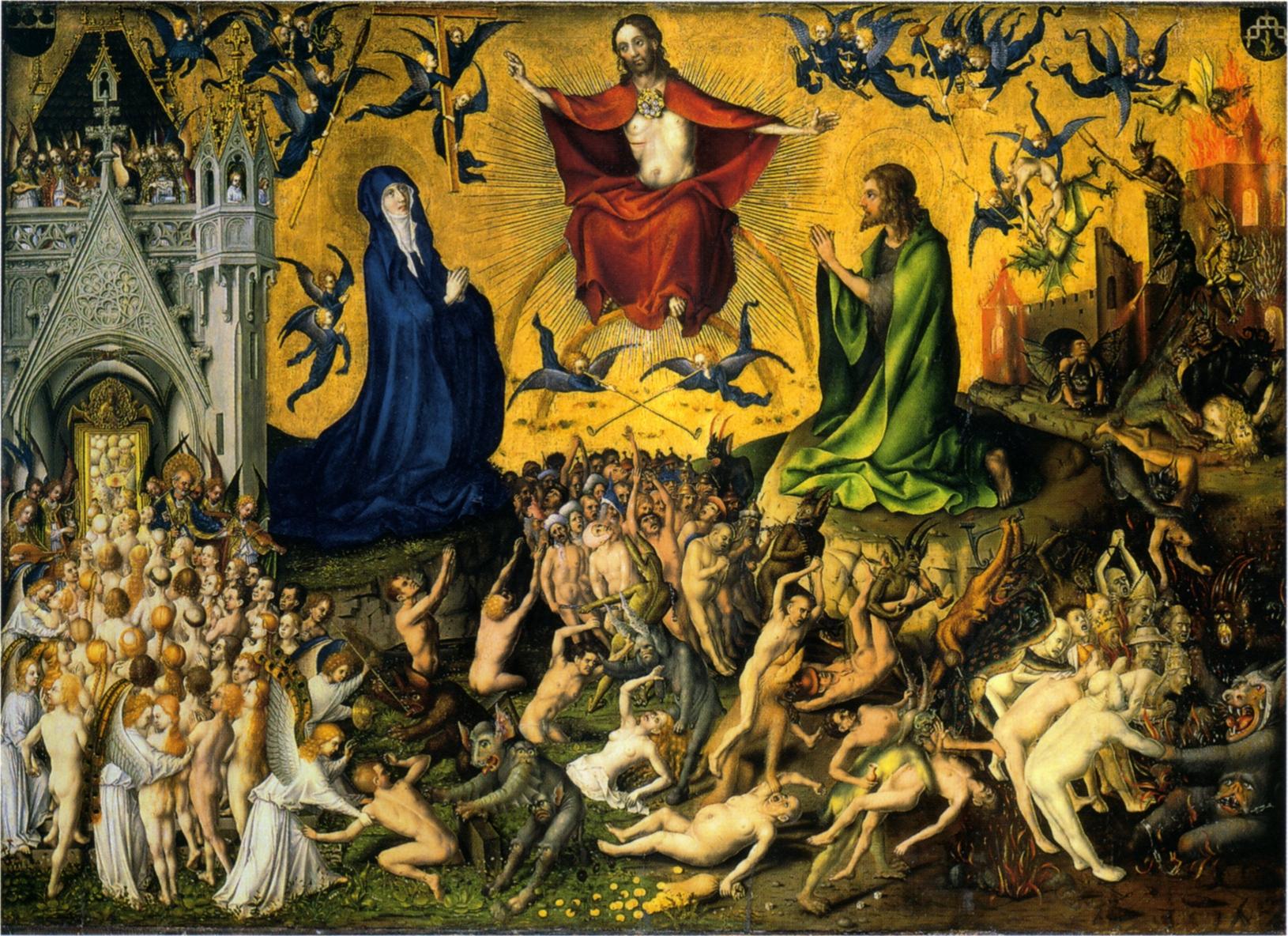
the_last_judgement  stefan_lochner_-_last_judgement_-_circa_1435
The Last Judgment, a total bummer – versions by Jan Provoost, 1525 (above) and Stefan Lochner, 1435 – click to enlarge

~

I’m feeling weird.  At long last I’ve read Life after Life, by Raymond Moody – the pioneering exploration of Near Death Experiences (NDEs) published in 1975.

I say “at long last” because, in spite of having undergone an NDE myself in 1982 (as described in my book – along with my alcoholic wreckage and recovery), I’ve strangely resisted reading Moody’s book for many years. If you’d forced me to read it the day before my NDE, I’d have scoffed at it as total crap. If the day after (though my slight brain damage made reading difficult), it would have blown my mind, upended my universe – to know that so many other people had experienced what I did.

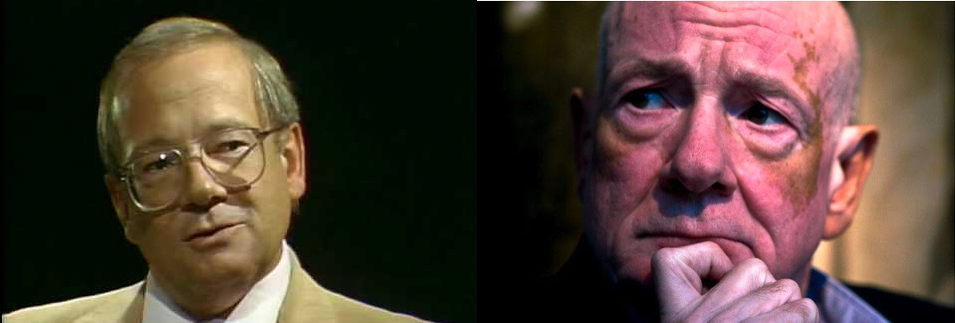
Moody 70s&15

Dr. Raymond Moody, 1975 & 2015

At the time when Moody conducted these interviews with NDE survivors, the terms NDE, being of light, life review, tunnel, etc. had no place – zero, nada, nichts – in our culture. Moody coined them. In fact, the interviewees struggle to come up with the best words they can find for what they individually maintain exceeds the scope of both language and earthly experience. All had kept their stories to themselves to avoid being labeled kooks.

Just as I did – even to myself! And… here’s the reason I’m feeling weird: I realize I’m still doing that.  WTF?!  On a daily basis, I unknow my knowledge of the other side to align with the consensual reality around me.

I recently came across this video on Facebook showing the power of cultural conformity. In it, a woman is conditioned by study “actors” in a waiting room to rise from her seat every time she hears a beeping tone. The shocking part is that she continues the behavior after the planted group is gone; in fact, she “teaches” a new group of five non-study civilians to stand up every time they hear the tone – just because.non-conformity

And I am DOING THAT! Every time I set aside my knowledge that the spirit world really does exist, I’m allowing the beep – the consensus model of materialism – to control my internal behavior.

I know the being of light that beamed me full of love and bliss on the other side, while back here I’d become a corpse, was a piece of god – a god that knows us all because we’re of it.  And I know that same celestial being sent me back here.  It beamed, “You can’t stay; you’re not done.”  To me.  Which enraged me.  I remember that.  And yet MOST of the time, I go around with my god truth stuck away in a little mental compartment.

Reading Moody, when I really think about the fact that I came alive in a body that three minutes before had shut down from snorted lidocaine (sold to me as cocaine), I see that it simply makes no sense. A lethal dose of that drug was still in my system. How could CPR restart my heart?  I came back to my body in a vast puddle of sweat, dazed and child-like but fully functional – when three minutes before, extreme bradycardia had shut down my brain and triggered a grand mal seizure.

How could that happen?  It couldn’t.  Not by any natural means.  God did it.embarrassed1

But it’s SO UNCOMFORTABLE to know this when my culture categorizes such a claim as fantastical.  It’s SO HARD to own it when it sounds arrogant and self-important: “MMmm- god sent me back!”  I’m frickin’ embarrassed to say the same things so many people in Moody’s book were frickin’ embarrassed to say.

But it only seems arrogant because our culture squelches acknowledgment of miracles all around us – every goddamn day! Miracles in the lives of virtually every goddamn person! Why are miracles so hard for us to acknowledge?  GOD IS REAL.  Why, as a culture, do we have to explain the evidence away?  Some of us predict that the internet will change this denial.  For the first time in human history, NDEers can find one another.  We can become a group with a united voice – and power to challenge the consensus that insults us.

For example, I recently read a skeptic’s theory that the light is actually an optical migraine.  Dude – I’ve had optical migraines!  Lots of ’em.  They’re a big swath of shimmering light, sure, but they’re less like the Light than a firefly is to a bolt of lightning.  How stupid do you think I am?

But I’m promising myself, I’m promising my god, and I’m promising those of you who share my experience: I will fight to know what I know.

Continuous prayer is really the only sane state of mind.


scroll


* See Quora explanation

Every year hundreds of NDEers and interested fellows fly in from all over the globe to attend the IANDS conference because, according to skeptics, they’re all, like formerly sane Dr. Eben Alexander, a bunch of self-deluded dummies who actually believe this other-worldly shit happened to them.  Related links on my Links and Stuff page.

1 Comment

Filed under Afterlife, Faith, God, NDE, Near Death Experience, Recovery, Spirituality

The Bitter End… or Willingness

…[W]e had but two alterna­tives: One was to go on to the bitter end, blotting out the consciousness of our intolerable situation as best we could; and the other, to accept spiritual help.
–“There is a Solution” (p. 25)

Over the years I’ve grown so accustomed to going to meetings, working the steps, and sponsoring people that I tend to forget I’m actually sober through god’s grace alone.  I forget that for most alcoholics, the disease rolls along like a hell-bound runaway train, taking them with it.

The Bitter End:  The other day I had coffee with a longtime friend whose ex-husband bavarian shed– I’ll call him Julius – was once a man vividly alive: handsome, funny, and brilliant. Together they created a beautiful home, the yard landscaped with a Bavarian-style gardenhouse of which I was always a tiny bit jealous. While our children were young, I joined their friends and family at many celebratory gatherings where Julius cheerfully acted as a bartender, mixing everyone’s drinks with a brisk, festive hospitality.

He didn’t seem to like me much, though. His wife had discussed his suspected ‘drinking problem’ with my partner and me, which he seemed to resent.  He was European-born, a year and a half older than I.  Alcohol, he maintained, was a normal part of European life – though Americans abused it.

As the years elapsed, however, my friend experienced the many pains of loving an active alcoholic. Finally she found herself cheated on in conjunction with alcohol, much as I would years later. Because Julius scoffed at AA recovery, she’d had to painfully end the relationship and find her happiness elsewhere.

Still, I continued to see Julius regularly because for some time he and I worked at the same place and exercised at the same gym. I’d witness much important foot traffic bustling to and from his windowed office across the hall from my virtual closet. At the gym, he’d stroll into the big cardio room glancing about as if for an audience — tall, blonde, and well aware of his strapping physique. But meeting his eye was only me, that annoying sober woman!  We’d exchange nods.  Then, about seven years ago, I was laid off and no longer saw him.

So over coffee, I asked my friend, “And how is Julius doing?”

“You didn’t hear?” she started in return. “He died.  It was a few months ago.”

I shook my head, speechless.

“His liver went, and then… Didn’t you see his obituary? I put it on Facebook.”

Maybe you know the feeling I had, when you’ve rivaled someone you actually respect.  It’s as though the two of you were playing an intent game of ping-pong – and they’re suddenly not there.  The ball whizzes off to nowhere,  gone forever; you realize that underneath your resentment was… a slightly bruised form of love.  True, Julius had seemed to scorn my life choices – to flout sobriety by drinking hard and living well.  But he’d also passionately loved his children, the world of intellect, and life itself.  At heart, he was a good man.

My friend proceeded to unfold an old, old story lived out by countless alcoholics, a script starring that unsung hero, the liver. empties We alcoholics poison ourselves, and our liver cures us.  We do it again and again, driven by addiction, and that amazing organ reverses our suicidal onslaughts.  Until one day, it can’t.  It breaks.  But as alcoholics, we can’t stop the onslaught.  Poisons course unchecked through our systems, wreaking havoc on other organs – especially the brain.

Julius could not stop drinking, despite knowing full well alcohol was destroying his life.  He became obese and depressed.  He lost interest in work and took early retirement.  He stopped leaving the house, bathing, shaving, caring about anything.  His children both pitied and resented him, because he lived on the couch in a house that smelled bad.  He peed himself.  He saw no one.  Still, he drank.  And gradually, as ammonia crippled his brain, he stopped making sense.  Visiting to check on him, my friend found him speaking of people not there and tasks imagined.  She called 911.

At the hospital, doctors did all they could, but his body could not recoup.  A bloated wreck of his former self, watched over by the woman whose love he’d betrayed, with the children he would leave fatherless, 12 and 14, clutching his hands on either side, Julius died.

~

alcohol death

~

Willingness:  It’s an odd feeling to hear of someone dying from the same disease you have.  There but for the grace of god go I.  Nothing could be more true.

I was just like Julius.  For so many years, whenever the prospect of my “getting help” was raised by therapists or friends, a bulletproof glass shield came up like an electric car window between me and that idea.  “No.  That will not happen,” I’d think with an iron will.  Like Julius, I planned to slow down and then drink normally.  But I’d sooner join a leppers’ nudist colony than mix with those freaks in AA!

How did that change for me – but not him?  Surely Julius knew a misery just as dark and painful as mine.  But somehow, I was graced with the gift of willingness.

My desire to live jumped tracks.  Its impulse switched from “I must drink” to “I must change.”  Why that happened for me and not for Julius, I cannot tell you.  I did not want to change.  I did not believe AA could help me.  Yet I made that first call, went to that first meeting in spite of my thinking.

That god provides the defense we lack against the first drink – we’re reminded of that miracle often enough.  But even the willingness to BEGIN TO LET GOD HELP US comes from god.  A spark of god glows at our core, our source, and yearns to connect outside us.  For some, the blockage – our will – is temporarily lifted: our spirit reaches out and god answers.  Others languish, locked in self.

Grace is inexplicable!  But we can practice gratitude without understanding: “Thank you, god, for my sobriety.  Thank you for this life – exactly as it is!”

scroll

7 Comments

Filed under AA, Addiction, alcohol damage, Alcoholism, Denial, God, Recovery, Sobriety, Spirituality

Happy, Joyous, and Free

Throughout my 20s and early 30s I drank almost daily and blacked out at least weekly because alcohol made all my lies come true.  Not my dreams – my lies: I wanted to be right in everything that I got, and wronged in everything that I didn’t.  Alcohol made that possible.

loufinger

Me, 1990

Until it didn’t.  I was loath to admit the light was growing dimmer, that more and more shit was seeping in through the seams, but  the day(s) came when life felt unbearable – with or without alcohol.  Suicide and AA being a toss-up, I tried them out in the only order possible.  I went to an AA meeting January 29, 1995, and I’ve not had a drink since.

But when I heard you guys quoting the line from the Big Book, “we are sure God wants us to be happy, joyous, and free,” it sounded like a crock.  Me – happy?

First off, by “God” you had to mean some kind of authority figure, some “He,” some tyrant of righteousness – which I mentally flipped off.

Secondly, only stupid people were happy.  You guys lacked the guts to acknowledge life’s futility, the grim jest of being born into this harsh world only to suffer endless loneliness and disappointment.  You preferred buying into Barney-the-Dinosaur style clichés and niceties.

Anyway, you AA people were never going to brainwash me with your spiritual drivel.

But you did.  Turns out I needed brainwashing pretty badly – given that my every thought was thoroughly toxic.

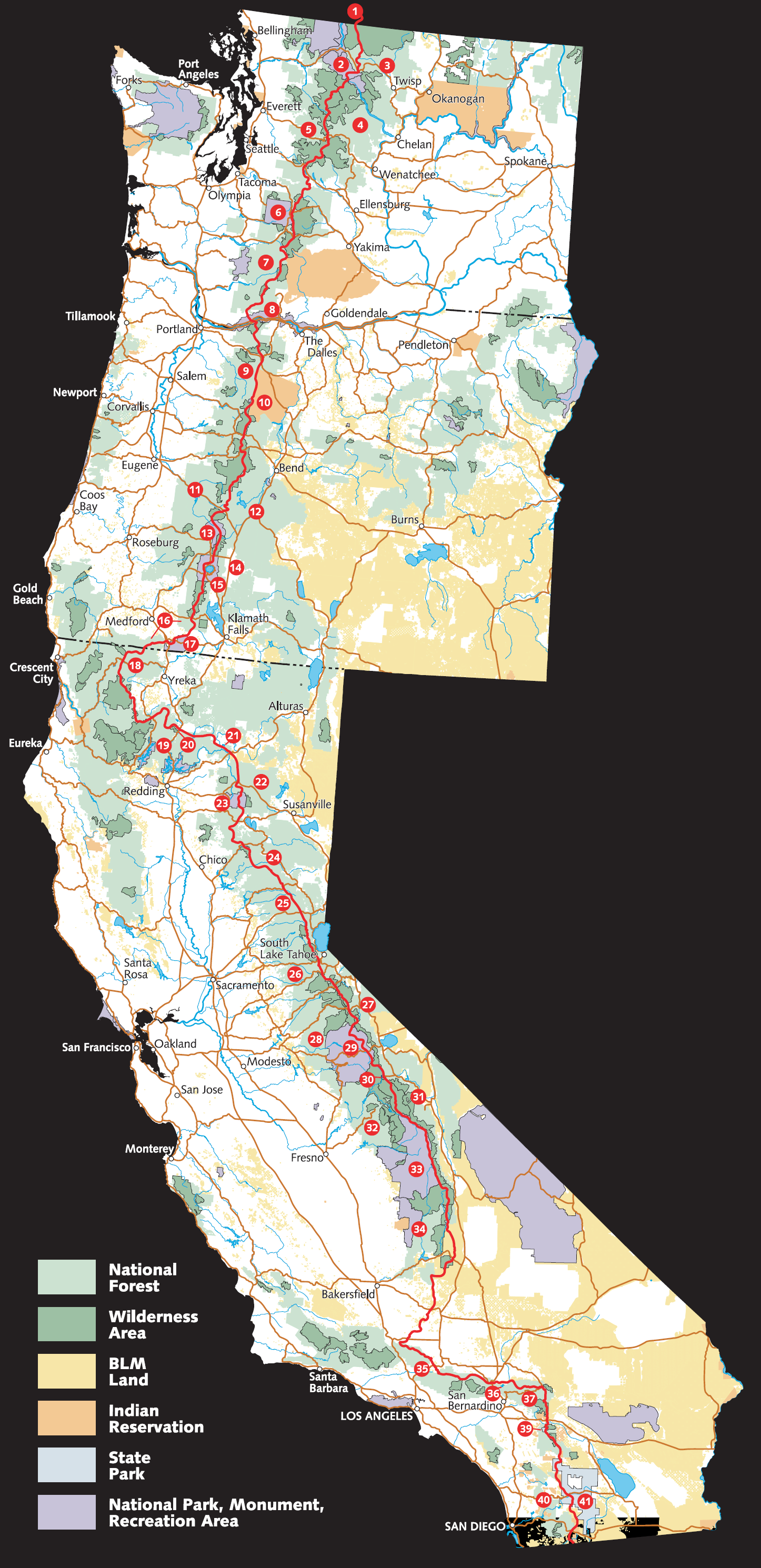
Hiking 100 miles of the Pacific Crest Trail is how I spent last week – Section i of Washington, southbound.  I went with a sober friend 22 years my junior, and we had the time of our lives.  After making only 8 miles the first day, given our 40-lb packs laden with a week of food, we stepped up our pace to climb and descend 15- 17 wilderness miles daily, passing perhaps 4 to 6 fellow hikers per day.  Almost every night at camp, we held a two-person AA meeting.  The first nights we futzed around with reciting “How it Works,”  but we soon said screw it and just used the Serenity Prayer.

We shared formally, no one else around for miles:

ME: “I’m Louisa and I’m and alcoholic.”

KACIE: “Hi, Louisa!”

Our shares let us remind each other that all the happiness, joy, and freedom we were reveling in were contingent on our sobriety, and thus on god.  I cried more than once: the emotions of loving the beauty of this world and awareness of mortality were so strong I could hardly stand them.  For instance, I met a highly enlightened spiritual guide on the trail.

What happened was that, high on a ridge in strong wind, I rounded a rock outcropping to see a huge black bear beside the trail.  The size of a dark refrigerator, he was sitting on his rump in an alpine meadow of wildflowers about 30 feet distant, contentedly chewing some vegetation with the wind at his back.  Thoughtfully he lifted his great head as if to say, “What a wonderful day to be a bear!”  I felt no fear – only a strong sense that my choices were important.  I turned to Kacie: “There’s a bear.”  We walked behind the rock where we held a bellowed conversation about our hopes the bear would move.  When we came back around the rock two minutes later, he had vanished.

Bear

NOT my photo!  A camera is not what comes to mind…

As a self-conscious human, I’ll never be as at ease in the world as that wild creature.  But letting god into my life has brought me a tiny bit closer every day.  I want to know that I am meant to live, as that bear knew: that I belong to the earth, to nature.  I want to know I’ll be provided  all I need.  I want to understand that, even when I have the power to trump others – in the bear’s case to kill effortlessly – choosing peace and simplicity is almost always the wiser course.  The faith and confidence to be fully and unapologetically Louisa while harming no one – that’s the goal of my sober life.

If I could go back and tell that AA-scoffing Louisa of 1995 what I understand today, I might say this:

  • “You think “God” means someone outside you, some entity confronting you.  You’re wrong.  The very ember inside you that wants to live, that loves life and goodness and others – your “you-ness” itself is god!!  You are a drop of god transforming matter to life in every cell of your body.  To know god is to delve deeper in your life-force and discover it’s the same power that interconnects all life.  To trust god is to understand that all who’ve lived and died are nano-parts of a tremendous, intricate unfurling.

Anonymous friend

Along the way, Kacie got slowed down by a terrible blister, so at a spur trail to a water source she sat down on a log to change to sandals while I went off to filter.  By the time I returned she was chatting with a through-hiker who’d started off in Mexico.  He’d already said goodbye and was 20 feet down the trail when something moved me to call out: “Can we give you some food?”  He halted in his tracks.  We filled a Ziplock with all kinds of yummy stuff that thrilled him.  THAT’s when we learned he, too, was an alcoholic.  Kacie had even visited his homegroup thousands of miles away in Key West!  Blown away by that “coincidence,” he shared with us how he’d relapsed at the last outpost of civilization and was nervous about the next.  We listened.  We said we’d pray for him.  And we did.

I would tell 1995 Louisa:

  • You think happiness comes from getting what you want, impressing people, winning stuff.  But true joy comes from giving, from reaching out and helping others.  It’s only selfish fear that blocks you from channeling god to others.  The more you trust, the more god frees you from the mire of self-centeredness, so loneliness can  be replaced by an endless flow of love – for the world.

Life is so damn good today, you guys!

How do I find the courage to step out on a wilderness trail, armed with only a stack of printed maps, and head for someplace I’ve never even seen 100 miles away?  Easy.  All I have to do is take one step.  Then another.  Same as staying sober.  And whether I meet up with a bear or a fellow drunk, I’ll ask god to guide my course.

scroll


VIDEO VERSION OF OUR HIKE: https://youtu.be/5vio7oDjhsQ


6 Comments

Filed under Addiction, Faith, God, Recovery, Sobriety, Spirituality