
Last week at my home group, I noted a difference that sometimes arises in AA. Our group is a tight family. Some have only a few years’ sober, but more of us have 25+. Anyway, the person chairing, having lived sober through 30 years of joys and deaths, boons and losses, chose a meeting topic of authenticity in friendships.
Here’s why. They’d made an off-color joke among a group of friends. One friend went ballistic without bounds, ripping them a whole new ass…assination of character in front of the others. Our chairperson instantly apologized for any pain they’d caused and, reading the room, departed to allow their friend space. But now they felt their trust hurt beyond healing.
Here was their dilemma: their AA sponsor maintained that they’d already cleaned up their side of the street, owed no further amends, and could choose whether to reinvest in the friendship. But another friend, not in AA, said they ought to meet with the explosive friend and tell her how that outburst made them feel.
Which was the right course? How do we navigate our continuing journey of sobriety to keep growing toward what our higher power would have us be — i.e. toward our full potential in emotional sobriety?
The group picked up the question and ran with it. Everyone had relationship issues — with friends, partners, and relatives — to share about. Almost everyone. The thwarted expectations issue arose when a visitor from out of town spoke up. He said essentially, “I don’t care whether I talk to friends honestly or not! All I care about is whether I take a drink over it. I come to these meetings to learn how not to do that TODAY — not how to dance around in relationships!” 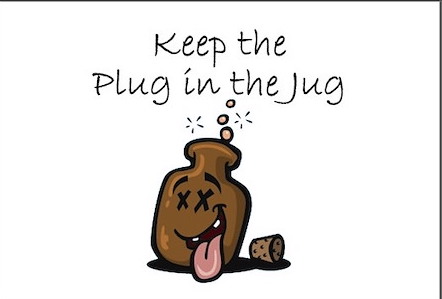
He had a few years but, clearly, just not drinking was still a struggle.
This is an issue. Aside from meetings specifically named BEGINNERS, AA generally takes a one-size fits all approach. Our Singleness of Purpose, clearly outlined in Traditions 3 and 5, runs like this: “The only requirement for membership is a desire to stop drinking” and “Each group has but one primary purpose – to carry its message to the alcoholic who still suffers.”
But… define “suffers.”
Plug-in-the-jugging is not enough for a happy life. Rather, most of AA is about ferreting out the defects of character that lead us away from our higher power and toward isolation, resentment, depression, and “a thousand forms of fear” — conditions ripe for the ego and addictive drive. Relationships test the mettle of our recovery. Emotional sobriety comes down to an ability to recognize our character defects and cope with them in constructive ways. Is it more constructive to routinely zip our lips or to show up honestly with our emotions, personalities, and vulnerabilities, sharing who we are à la Brené Brown?

During the 1980s, John Welwood coined the term “spiritual bypassing” to mean, in simple terms, trying to be so “spiritual” that you ignore whatever emotions you’re feeling. Any negative feelings get dismissed as “attachment.” Welwood was speaking in a Buddhist context, but boysee! Do his words ever apply to AA! For instance, I’ve known people who throw themselves into gobs of service work, go to jillions of meetings per week, and work with dozens of sponsees — all so they won’t have to FEEL the pain nipping constantly at their heels. They try to guilt others into following their path, a stance I like to call “competitive sobriety.”
In my first 10 years, I used to worship such people, considering them AA sages. In my next 10, I’d get resentful at them, feeling I had to make excuses for NOT doing likewise. But as I wrap up my third decade of sobriety, meetings, and stepwork, my attitude is a mix of compassion and live-and-let-live. I know they have pain that won’t let up, and I understand that this solution helps them. It must help, or they wouldn’t do it. Myself, I’d rather stick my head in a flaming bucket of shit than sit through General Service meetings. It’s terrible, but it’s true.
So I don’t practice competitive sobriety but, somewhere beneath my own radar, I DO practice spiritual bypassing. I keep my side of the street clean no matter what — whether it makes me become a doormat, tolerate rudeness, or pretend to agree with values I dislike. I look like I’ve achieved emotional sobriety, but it’s a sham — more like emotional constipation.
What spiritual bypassing boils down to is dishonesty — with myself  and others — leading to a lack of boundaries. I discover my false tactic only once the pain load reaches such a pitch that I have to take action: “If someone keeps running over your foot with a lawnmower, it’s up to you to move your foot.” That’s one of my favorite sayings, and yet I’ll leave my foot in their path for years! “No, no, it doesn’t hurt much! It’s just a little blood! Just a toe I wasn’t using! After all, they have a perfect right to mow!”
 Spiritual pride tells me I’d be too “unspiritual” if I said what I actually think and feel. Too unspiritual if I showed up as myself. Too petty, judgmental, wave-making, or self-centered in telling others “Here are my feelings” or admitting to myself “This isn’t working.” In fact, by pretending everything’s fine, I’m harming everyone involved.
Recently, my pain reached such a pitch that I finally moved my foot. I’ve spoken about the situation with my sponsor and a few uninvolved confidants. But for me, it was wonderful that our chair opened up this question of finding the fine line between kindness and authenticity. This is where the rubber meets the road for me today, the area where I’m most uncomfortably growing.
I hope the out-of-town guy could glean that eventually Honesty, Open-mindedness, and Willingness lead us far beyond just not drinking. “Our liquor was but a symptom. So we had to get down to causes and conditions” (How it Works). Turns out, of course, that dislodging each cause reveals a deeper cause beneath: onion layers. Insight by insight, we keep learning how to live a little bit better, until we run out of time.


 AA itself is built on this oxymoron of confiding anonymously, of being open in a closeted setting. The program needs anonymity not only because every newcomer feels at first the way I did but also to preclude the rise of AA demagogues. Nevertheless, sharing our messiness openly and unsparingly is our lifeblood. The Big Book tells us “that it is only by fully disclosing ourselves and our problems” that we can connect with fellow alcoholics. The 9th step promises that “We will not regret the past nor wish to shut the door on it” as “we will see how our experience can benefit others.” And The Family Afterward reminds us, “in God’s hands, the dark past is the greatest possession you have — the key to life and happiness for others.”

 A Spiritual Evolution