AA’s Step 11 reads, “Sought through prayer and meditation to improve our conscious contact with God,” but many newly sober alcoholics – and people with time – have trouble knowing where to start. I was moved after my morning meditation to record a spontaneous YouTube meditation for this blog, so I did. Such reflections free me from my fears and self-criticisms (see bedevilments, p. 52, Big Book).
Close your eyes and hang out.
This is a shareable (but unlisted) link. Feel free to share it with anyone you think might benefit or post it on recovery pages. Please let me know in the comments if you’d like me to make more.
No hair combing, zero make-up, not trying to look presentable. House jammies and bedhead and reflecting glasses. The focus is inward toward source and outward toward you.
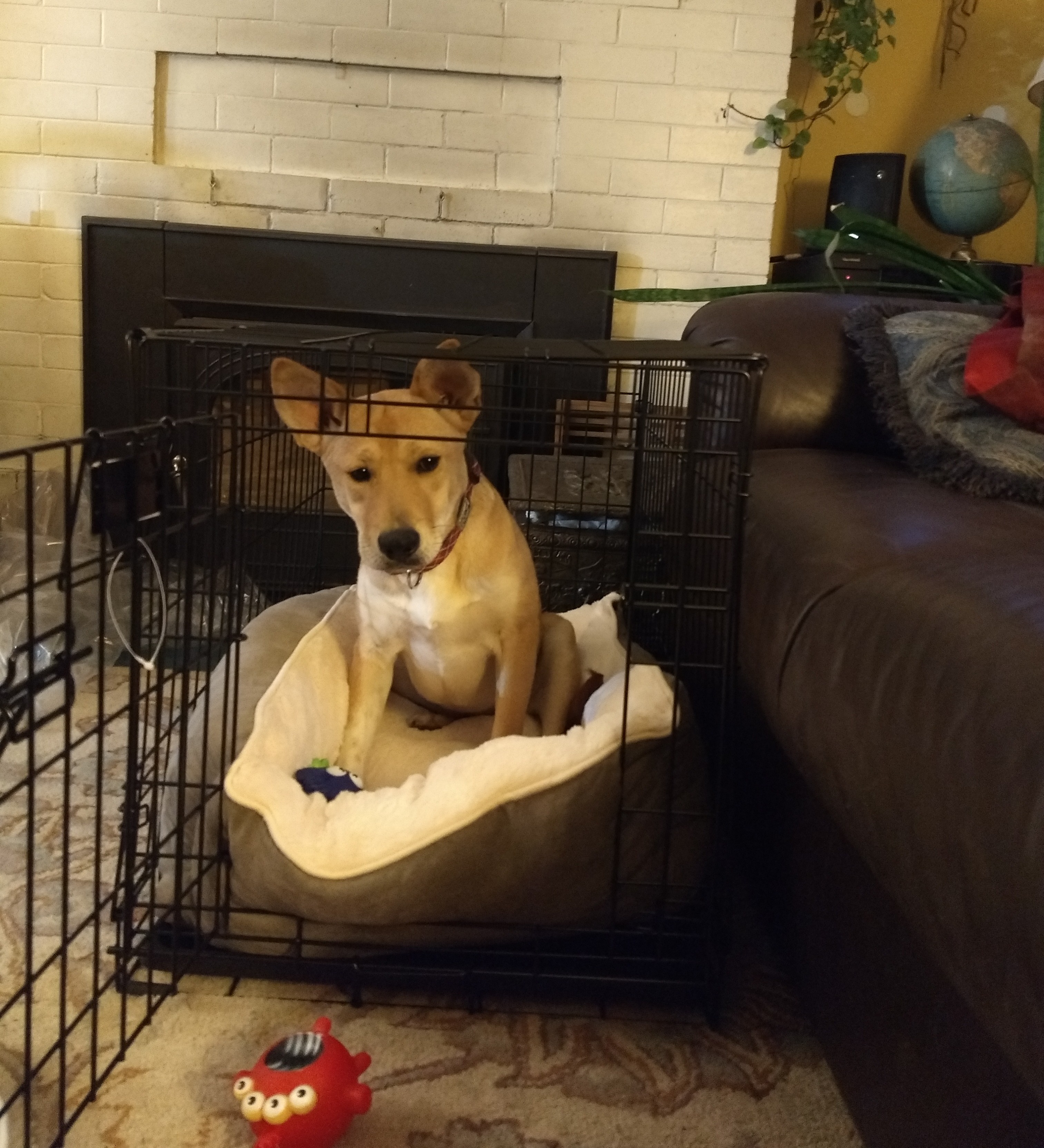
Here’s my sweet Alice a month after being rescued from starvation in the Rio Grande Desert. Her stunted body did catch up with her head and paws a little once she got regular nutrition, and she is often happy.
NOT an alcoholic, my mom died about a month ago at 97. Residents in the assisted living facility where she’d spent her last year insisted on holding a memorial service for her. It was attended by about 40 people — everyone recalling how she’d touched their lives with her humor and knowledge. My sister and brother-in-law presented a beautiful slide show of Mom’s life – travels abroad, outings in nature, parenthood, family and friends. Without question, hers was a life well lived. (Mom’s blog is here.)
Vassar graduation 1946, honeymoon on Appalachian Trail (stick selfie), watercoloring at 96
Definitely an alcoholic, my dear ex-boyfriend also died two months ago. He collapsed on his 60th birthday from a GI tract hemorrhage and bled to death alone. For some of you, 60 may seem old — but it’s not. I myself am 63, and when I think of all the living my mom packed into the last 37 years of her life, I feel the waste, the loss, the tragedy of an alcoholic death.
I can say “my dear ex” because I loved him — just not the disease that altered his behavior once he relapsed. Alcoholism did to him the same thing it did to me in my 14 years of drinking. At first I was tipsy most nights, then drunk every night, then bumping up Happy Hour earlier and earlier: by the end, noon seemed fine. In the same proportion, my morals declined. I lied. I emotionally cheated on partners. My selfishness grew like a tumor around my heart, blotting out whatever love it could still generate.
So I understand why my ex lied to me. I understand why he cheated, first during work travels and later with a pudgy alcoholic girl who spent nights at his house on the weekends I spent with my young son. I have no doubt that, beneath that tangle of deceit, selfishness, and relentless pursuit of pleasure that dominated his thinking was the sweet, shy man I’d fallen in love with. But for the past 8 years I communicated minimally, texting only at birthdays and New Years, because he was toxic.
Back when we were together, he was always talking about how he couldn’t wait to retire and start doing whatever he wanted to do. But here’s what happened once he actually retired in 2021; he started doing what alcoholism wanted him to do: Drink.
In 2022 when his sisters met him for coffee, they found him rail thin and shaking. His sister called me and brought me onboard along with his daughter for an intervention. He went to detox and treatment for 30 days. He got better. For three months afterwards, he stayed sober.
But then came the insidious insanity of the first drink. At a convenience store where he was buying cigarettes, the person in front of him bought some kind of Budweiser beer & tomato juice combo he’d never tried. He told himself the tomato juice would dilute the beer enough that he’d be okay. (And if THAT doesn’t sound familiar, you should review “More About Alcoholism” p.36.)
So he was off again, no brakes, no meetings, no prayers. When we texted two weeks before his death, he told me he could not find a higher power or a sufficient substitute. He asked if he could call me, but I was, ironically enough, in my AA homegroup meeting, so I said maybe later. That was the last I’d ever hear from him (on this physical plane, at least).
Drinking only beer, albeit high-alcohol Indian Pale Ale, couldn’t hurt him much, he assumed, but he fainted from a ruptured GI blood vessel — a common danger for heavy drinkers — and bled out. When he failed to answer any of our birthday texts, his sister had a sheriff make a wellness call. Whoever removed the body also removed a six-foot square of carpet surrounding it.
It’s so sad!
Glacier NP thru-hike
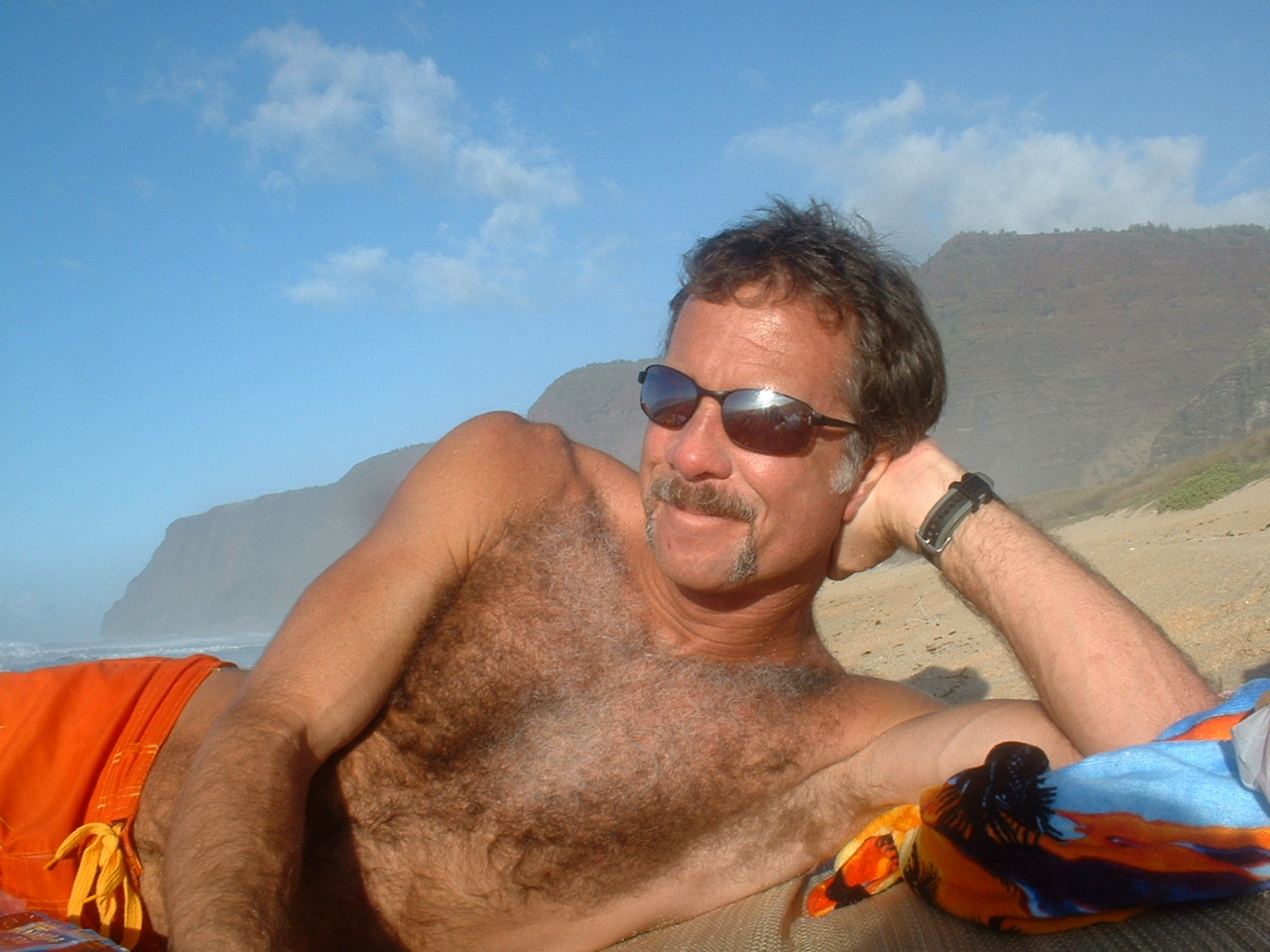
Hawaii
Stuck in tent in rain
Was on his mantlepiece
Sperry Glacier
Summit Mt. Baker
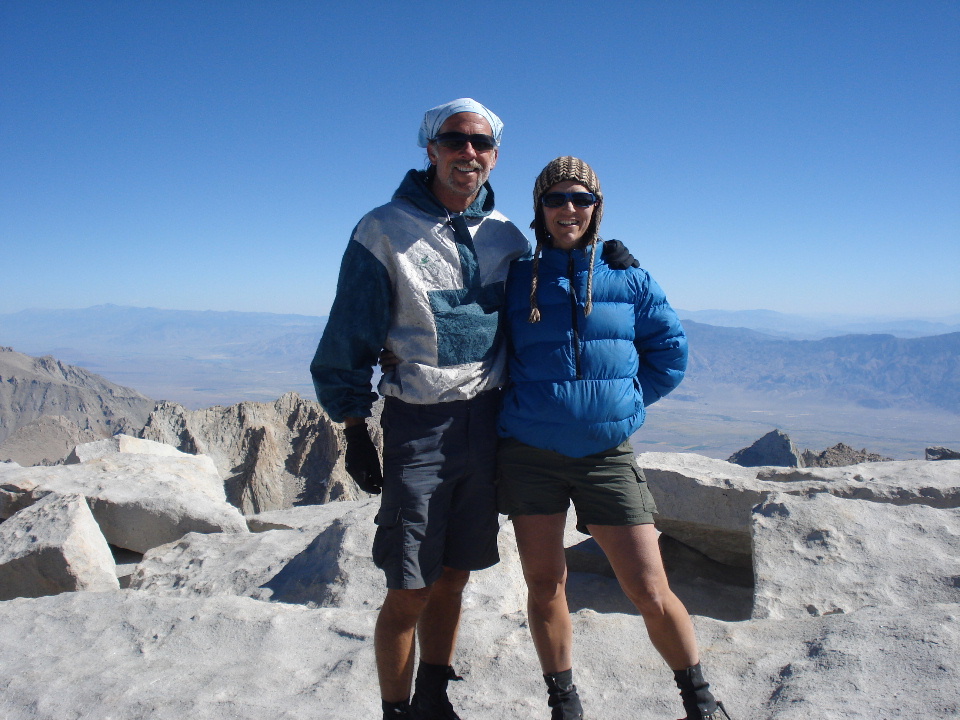
Summit Mt. Whitney
Feather in his cap
My ex, whom I’ll call G., was born a middle child. When he and his sisters were 8, 11, and 13 respectively, their mother, a warm, loving Irishwoman who fed the family mainly from their garden and domestic goats, suffered a stroke that left her half paralyzed and totally aphasic (i.e. dumb). Their Type-A father merely divvied up among the children all the chores their mother had performed and soon moved the family to town — no mourning allowed, no counseling, no talking about feelings. In fact, G. was certain his father shot his dog the a few days before they moved. “Musta run off” was all he told 12-year-old G when his beloved Cool McCool failed to show up at the school bus stop as he’d always done to walk G home.
G. learned to drink. He found ways to get the the money for it, mainly trapping animals for their pelts, and to keep his pain at bay he stayed drunk throughout his teens. As soon as his mother regained an ability to express herself, she stopped the killing of animals. But his daily drinking and the deep loss that drove it — those she remained powerless to touch.
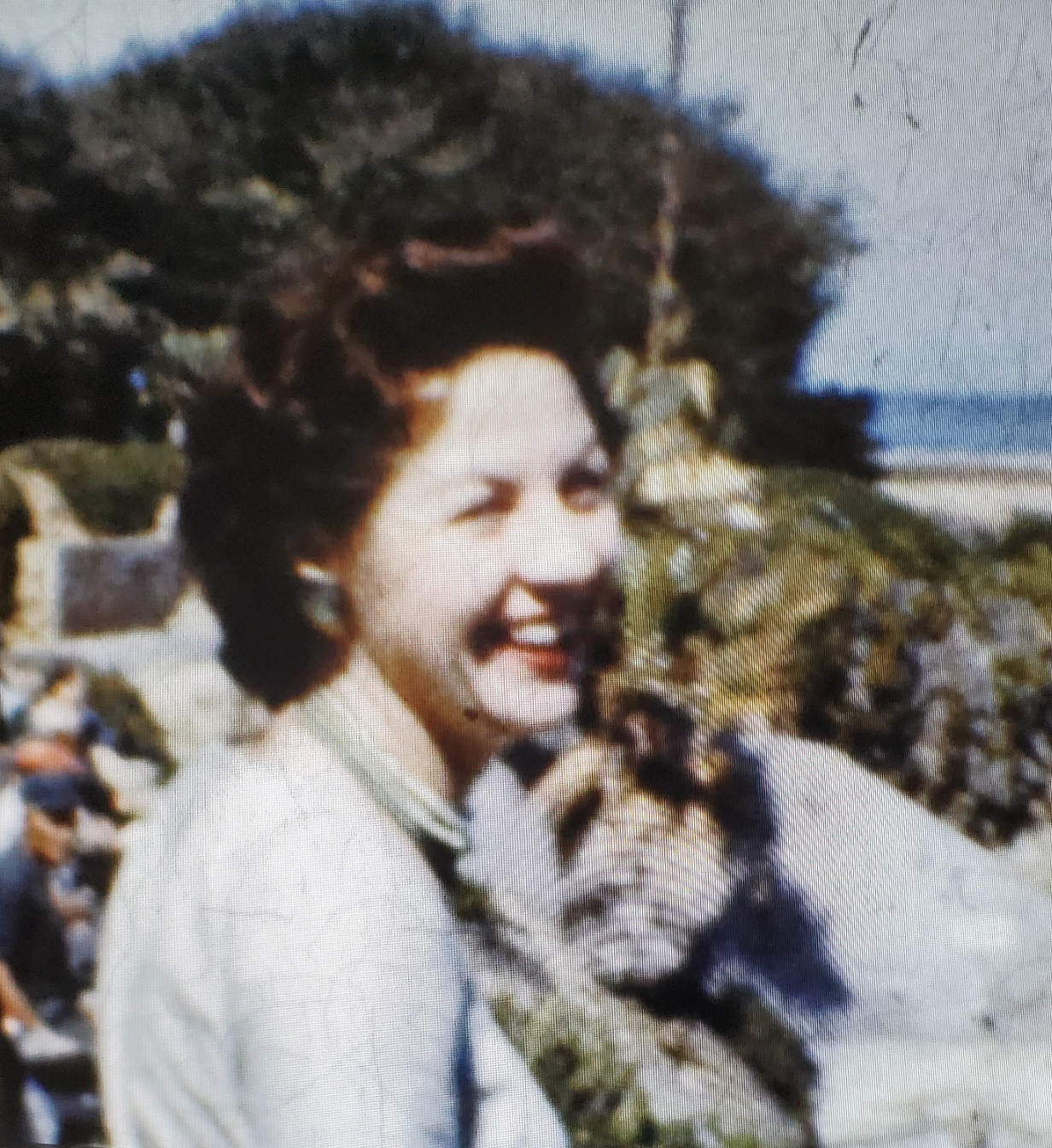
G’s mother before her stroke
G as a boy
When I met a 43-year-old G in my sober hiking group, One Step at a Time (OSAT), his wife had kicked him out for drinking and his license was suspended after a third DUI. Neither is uncommon for a recovering alcoholic, so I assumed his boozing days lay behind him.
We shared five intense years while he was sober and a few sort of okay ones after his relapse. Most of the high points of my life came during adventures with G., thru-hiking first in Glacier National Park, then along the PCT, especially the John Muir Trail. We rode our bicycles 1,000 miles from Port Townsend to San Francisco. We took a ferry to Alaska so he could bicycle home through the Canadian Rockies.
I loved him despite his being on the autism spectrum. Because he had trouble conversing with others, I felt from him that strange authenticity of those who simply can’t pull off affectation. He was earnest. But that same acute shyness teamed up with his lifelong history of drinking to alienate him from the AA solution, even when he truly wanted it. We need fellowship and service, but he couldn’t connect with a group. Instead he isolated in his rural home, he and his dog Miley.
I know he is finally free now, having at last shed the pain of his childhood. He’s with his sweet mom and his loyal Cool McCool. I miss having both my mother and G. on the planet, but I know my mom, despite her own difficult childhood, enjoyed a long, full life, whereas I mourn the precious decades stolen from my onetime sweetheart.
Three weeks ago I adopted a rescue-pup, Alice, from Texas. She’s adorable, 10 months old, but was severely and heartlessly abused from the get-go. She can’t tell me what she endured, but her terror at the sight of any sort of leash or cord speaks volumes, as does her dissolving at the sound of a raised voice. She shuts down. She turns to jelly. She trembles and piddles and clearly wants to sink away into the Earth, which she tries to do by hunkering as low as possible and looking at nothing.
No place for puppies
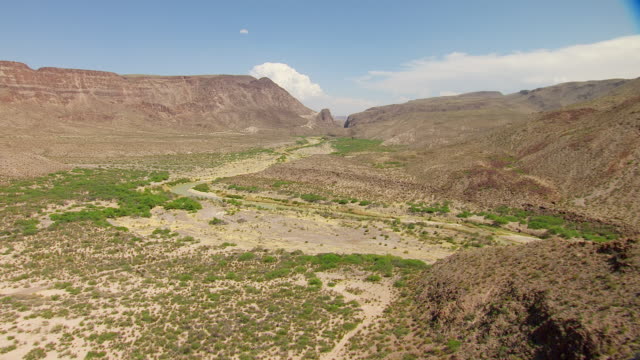
At some point, Alice and her siblings were dumped in the desert near the Rio Grande, where they starved so severely that she’s forever stunted and her teeth are tiny. At about four months, she and two siblings were found, too weak to flee. Little Alice was the worst off, so skeletal that the rescue vet doubted she’d pull through. But she did. Never will Alice grow into those great big ears and paws of hers, yet somehow her brain was spared; she’s smart! Her love for play survived as well. She prances in the back yard among imaginary friends.
But humans – they’re all Freddy Krueger. Her original Texan owners did not believe in love. They thought they knew best how to “break” a puppy by showing that tiny creature who was boss and just how much power the boss wielded. When the puppies failed to learn by these methods, they were abandoned to die.
And here’s the connection to this blog: it’s no joke that if little Alice were a human being, she’d be a prime candidate for addiction – a way to escape her fear and trauma, just as she tries now by freezing and going glassy-eyed. In those moments, she’s just like a human who, whether consciously or at the gut level, considers the world untrustworthy, loveless, and scary. Not to be present and vulnerable is all she wants she wants, and she wants it desperately.
Friends remark, “Alice is so lucky to have found her way to you!” But I see it the other way ‘round: I’m so lucky to have found Alice. In her sweet nature, I see every spirit wounded through no fault of their own. It’s up to me to help her unlearn what her most foundational experiences taught her: that the world is full of cruelty, and that she’s helpless against it.
Like Alice, I’m still unlearning my own false beliefs about life – unconscious ones that drove me to nearly drink myself to death, desperate for a way out.
Why do alcoholics drink in the first place? To find relief.
Like Alice, we don’t trust life because, no matter what we do, we can’t control it. Initially, we quell that stress with a drink or two to “take the edge off.” And though early on, alcohol works reeeaally well, whatever we’re not dealing with tends to get worse, and before we know it, addiction itself is calling the shots. Now we drink because drinking is just what we do. We dig ourselves deeper and deeper, until we hit bottom.
Maybe things get horrible enough that we consider going to AA, even though we’re way cooler than that.
If we listen in AA, if we open our minds even a little not just to what’s said in meetings, which are a component, but to the Big Book’s text and 12-step instructions, which we read and follow with a competent sponsor, two ASTOUNDING things may happen.
1) We realize it’s not the world, but our thinking about the world that is AFU.
2) We realize that, try as we might, we can’t change these thought patterns on our own. We need a spiritual connection to something greater than ourselves to break out of the rut neuropathways have dug for us – the ways we keep trying that keep not working.
Here’s the thing. The less conscious we are of a belief, the more it controls us.
And if assumptions we’re unaware of, those landmarks by which we interpret our experience, other people’s actions, and how best to navigate life, are delusional, the world is going to seem like an asshole.
Learning to SEE and QUESTION our delusional assumptions, that’s what the 12 Steps are all about, particularly 4 – 10. There we shine a light on the patterns of a self-centeredness we’ve been way too self-centered to see and the failed coping skills that we thought everybody used.
Only once we’ve arrived at enough humility to admit we don’t know how to live can we turn to god and ask for help. Like Alice, we have cynical reflexes that have slammed the door on values like goodwill, honesty, and trust. But as we unlearn the old ways, we recast reality. There’s actually a whole ‘nother way to live, and with it, a new world opens – one that’s not an asshole, one that doesn’t require that we numb out to “take the edge off.” Rather, it’s so beautiful that we actually want to be awake to it.
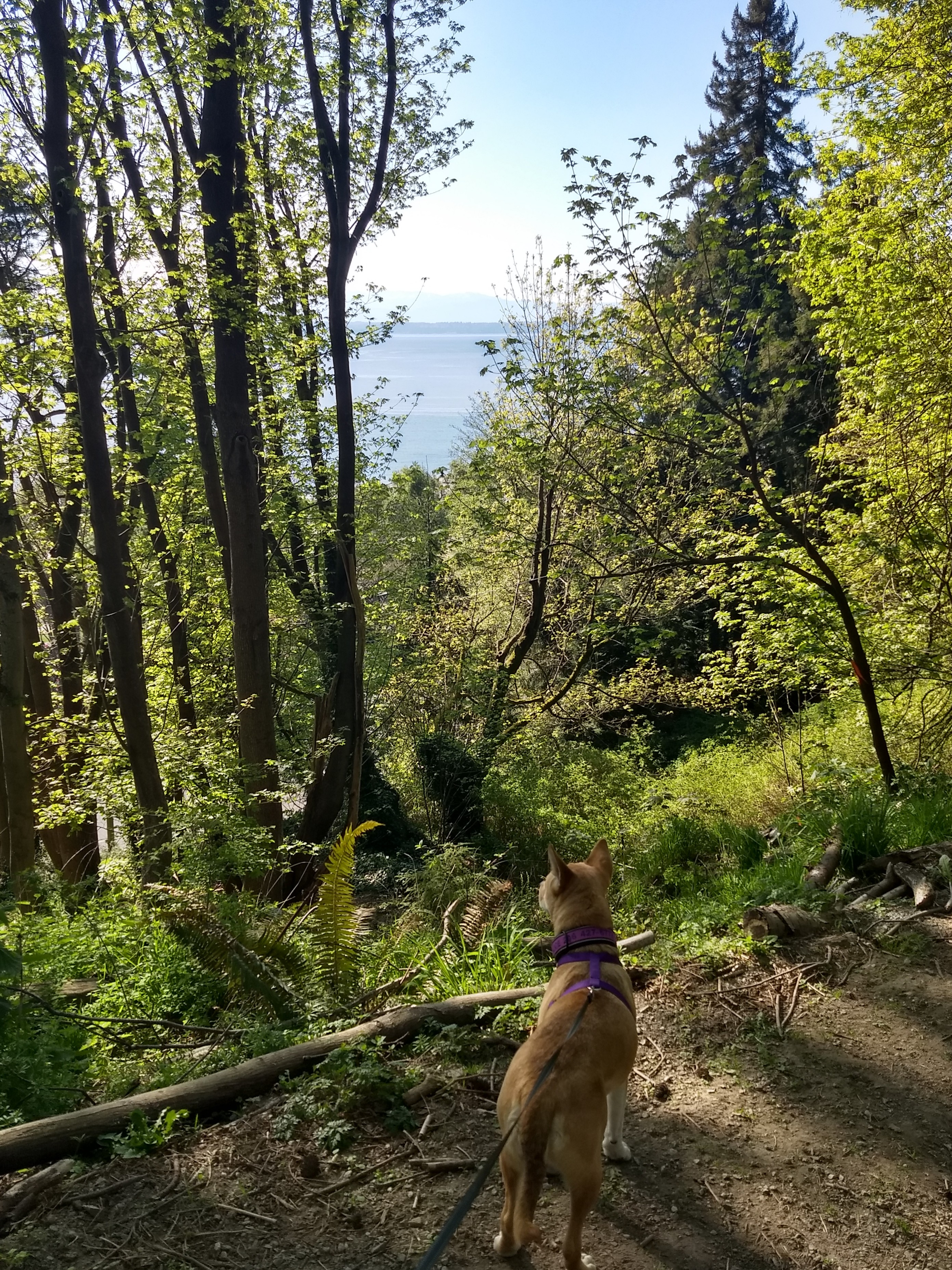
The first time I tried taking little Alice for a walk, she flattened herself on the pavement and, as a neighbor approached to greet her, spontaneously peed herself, unable to even look at him. My rehabilitation plan is simply to love her, provide stable structure, and treat her to countless fun experiences until she’s able to trust first me, then others, and finally life itself. Surprisingly, a first sign that she was unlearning helplessness came when she decided to bark at strangers approaching the house. With my love at her back, she’d found the pluck to at least pretend she might defend herself (and me?) from future harm.
Finding our sense of basic dignity, Alice has shown me, can be a first stage of healing. I remember finding mine as newly sober woman with the faint love of god and community of AA behind me. I can’t wait to see Alice shine!
.
.
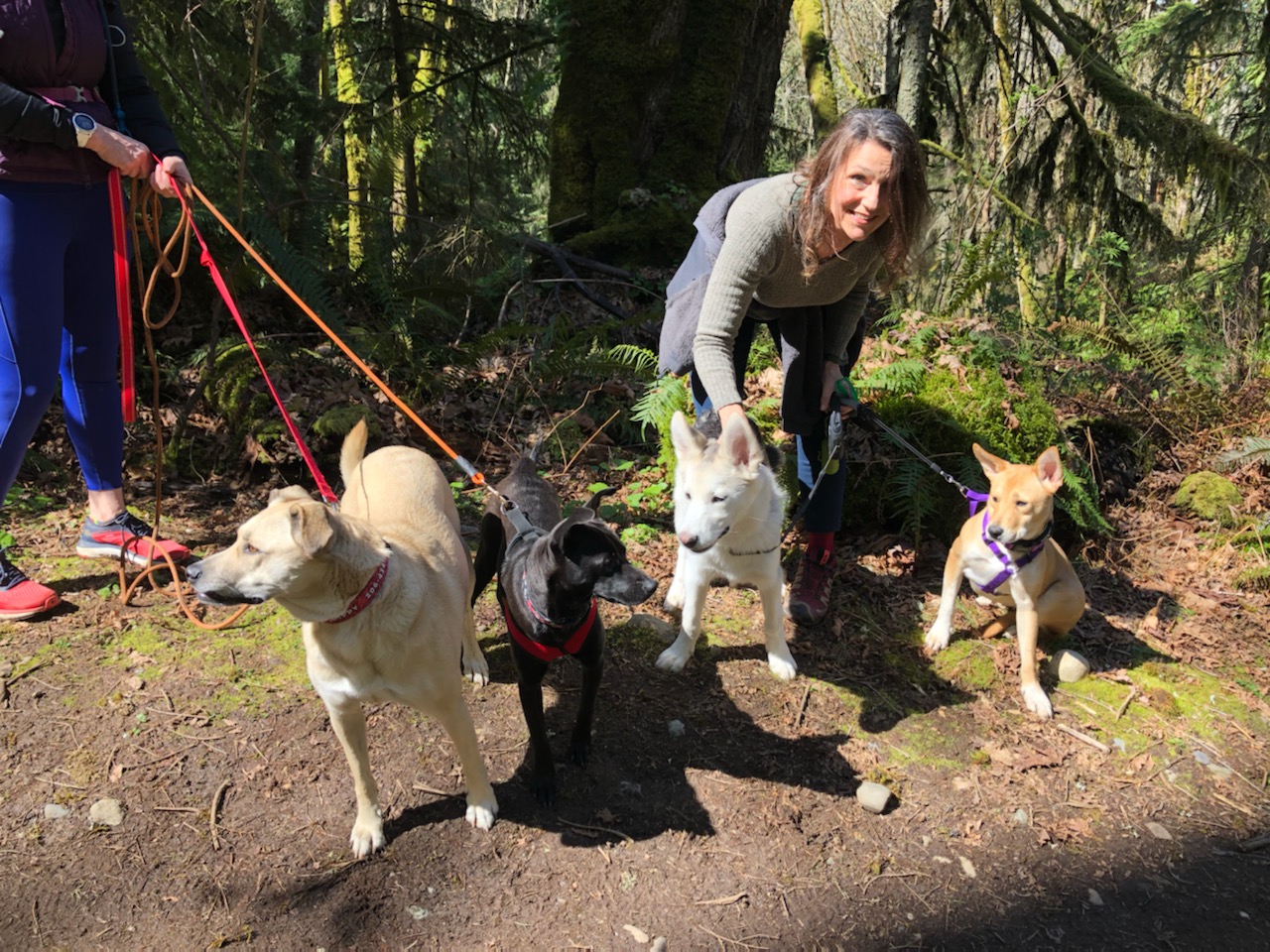
Clockwise from top left: When she’d finally let me hug her; so many smells!; first time she felt safe showing her tummy; what is this huge puddle?; and friends make life sweet (Alice far right).
She has a nervous tic — but she’s getting braver!
UPDATE: What two months of love has done — Alice’s first time off leash near the summit of Mount Teneriffe in May:
Int'l Book Awards Finalist 2024 - Spirituality. How thisblog'sauthor resolved to dismiss her Near-Death Experience but ended up transformed by her spirit guide. $4.95 Kindle $14.95 book https://www.amazon.com/dp/B0CFZF1GK
Blog Stats
618,850 views
Join 730 other subscribers
Help support this Blog? Thanks!
Maintaining this resource for alcoholics/addicts costs me $130/yr.
Kindle $4.95 - Paperback $13.95 - click here
(It's lo-ong, sorta like a 10-hr speaker's mtg)













 A Spiritual Evolution