Monthly Archives: December 2015

New Year’s FOMO and other Alcoholic Horsecrap

What is FOMO?  Fear  Of  Missing  Out.

It’s that sinking feeling that someplace you’re not, lots of amazingly cool people are having an absolutely stupendous time. Maybe there’s kickass music and people are lookin’ sharp n’sexy and having a fuckin’ blast and – oh my GAWD!!! Can you believe what those two did?! That is so hilariously outrageous!  It’s not just goin’ aParty-Dancing-Vectorll over Facebook –it’s like a “fun times” montage out of a Hollywood flick!  If you could be there mixin’ it up you’d feel – oh my god – so damn good! You’d be dialed into life, you’d be carpé-ing the fuckin’ diem all night long!   But you’re missing it!

As Katie Perry sings:

Last Friday night

Yeah we danced on tabletops
And we took too many shots
Think we kissed but I forgot

Yeah we maxed our credit cards
And got kicked out of the bar
So we hit the boulevard

We went streaking in the park
Skinny dipping in the dark
Then had a ménage a trois

Yeah I think we broke the law
Always say we’re gonna stop-op
ooh-ohh*

Here’s what the song leaves out: live those lyrics and you end up with a busted ankle from falling off the damn tabletop, years of credit card debt, and maybe even salmonella because you skinny dipped in a fucking duck pond.  You’re lucky if you don’t end up in jail with charges on your record or an STD from the ménage a trois with morons.  Of course, it goes without saying that you’ve poisoned yourself again ‘til you’re heaving up bile.

Lets-partyNo, Katie doesn’t really mention that part. Neither does your FOMO.  It airbrushes away all those pesky consequences and lures us with the promise of a bright and shiny “great time.”

It’s Also Called Immaturity
For normies, FOMO spikes in youth when they’re highly peer-oriented, but as they mature into adulthood, FOMO diminishes to a rare blip on the screen. The trouble for alcoholics is, once again, our perspective is skewed.

Our disease carries many tricks in its bag.  Though normies don’t understand, we  often speak of it as having a mind of its own, exploiting whatever ploys avail themselves to keep us using or, in recovery, to trigger relapse.  A lot of alcoholics crave adventure – a sense of living on the edge.  So addiction broadcasts FOMO to persuade us that swallowing a neurotoxin is really the key to livin’ large.

Much like the craving for alcohol, alcoholic FOMO can never be satiated.

For example, New Year’s Eve of 1982, after snorting coke in the car and paying some absurdly high cover charge, my future (ex) husband and I sauntered into a hip and glitzy Boston nightclub. We scored a table near the dance floor, ordered champagne, and lit up our smokes. We danced. But at as the countdown for midnight approached I was struck by the realization I still recall so clearly: We were at the wrong club! The one down the street was way cooler! No one here was even worth impressing because they, too, had fallen for the wrong club!  If only I’d known! If only we’d gone there! I was missing out!!

This pattern would repeat itself for over a decade. I never did find the right club or party or even picnic, because if I was there, a better one had to be someplace else.

Recovery = Reality
FOMO is really just another guise of codependence. It’s not actually a yearning for fun; it’s a belief that we can gain something that will deliver a shot of wellbeing by being seen in the right places doing the right things. At some level, we believe others hold the power to validate us, though we’re actually validating ourselves through projections of those people’s imagined esteem. The esteem has to seem to come from them to be any good – we can’t feel it simply by knowing and valuing ourselves.

More and more I’m convinced most alcoholics are also codependent. The source of pain for all codependents is an external locus of self-worth – often because we grew up in dysfunctional families where we did not get what we needed to develop a strong sense that we are loveable and worthy. We keep chasing and chasing it in others and never getting any closer.

While non-alcoholic (classic) codependents try to subdue their pain by concerning themselves with what others should do and ‘winning’ love by caretaking, alcoholic codependents subdue it not only with alcohol, but with attempts or impress and winCodependent over others, often becoming social chameleons and regarding friends as something like collectible baseball cards.  Active alcoholics can’t really love our friends. We can only seek relief via people – and “love” that relief.

When we get sober, we begin to seek a higher power that can grant us the worth we’ve so desperately sought in all the wrong places. With guidance from sponsors and a growing sense of Good Orderly Direction, we can begin to live a life of integrity that lets us discover our worth as loving and lovable human beings.

But FOMO still nags at us to forget all that. It can wheedle into our minds at any time, but New Year’s Eve is its favorite holiday – especially for the newly sober.

The Big Book’s authors knew all about FOMO.  While they do instruct us “not to avoid a place where there is drinking if we have a legitimate reason for being there” (p. 101), they also caution against attempting to “steal a little vicarious pleasure from the atmosphere of such places.”  They warn us to “be sure you are on solid spiritual ground before you start and that your motive in going is thoroughly good.”  Not just good – thoroughly good.  In other words, don’t bullshit yourself.

In my almost 21 years sober, I’ve never found a thoroughly good reason to go hang with drinkers at a New Year’s Eve party.  I prefer to usher in the new year with a good night’s sleep and a cushy set of earplugs.  Sobriety fills my life to the brim, and I know it.

scroll

Post to Facebook
.

* Katie Perry Lyrics – https://www.youtube.com/watch?v=Cdyfr4lU8sk
See also 6 Tips for Holiday Parties

.

16 Comments

Filed under Addiction, Alcoholism, Codependence, Codependency, living sober, Recovery, Sobriety

Spiritual Experience

Sometimes I wish I could loan my faith to others.  At least I felt that way the other night at my homegroup when the topic was “your spiritual experience.”  In share after share, people balanced guarded reservation with the undeniable fact that, once they sincerely asked a higher power for help, their addiction was lifted and a new way of living began for them.  A few also shared that certain inexplicable synchronicities or phenomena had strengthened their faith.

I really hoped to get called on.  If you could raise your hand in AA, I’d have been bouncing in my chair – “Ooo!  Pick me, pick me!”  My faith is HUGE and strong, and I wanted to share it!  I don’t believe – I know ( just like Carl Jung! – this is an awesome, quick clip!).

sky angelsMy addiction memoir recounts the tale of my slow (and ongoing) spiritual awakening.  It tells how there came a definite turning point in 2003 when I finally dropped the walls I’d been holding up against god.  Before that, I’d locked my Near Death Experience (NDE) and subsequent paranormal experiences away in a “not relevant to regular living” vault.  When I was “feeling spiritual,” I’d turn to god; otherwise it was was business as usual.  Weird Thing #9 led up to the transformative acknowledgement that god really is omnipresent in all that lives, beyond anything my brain can conceptualize or imagine.

On that day, I turned away from loyalty to society’s consensual reality in much the same way I’d turned from loyalty to alcohol and drugs some 8 years previously.   In both cases, I’ve never looked back.

My god is not religion’s God.  It’s the life force, the collaborative, animating energy of Love and the collective intelligence of all life it has ever generated. Nothing is lost.  Energy can’t vanish, even as a result of mass extinctions.  The sun keeps pouring energy into our life system, and the system keeps growing.  You’re a part of it.  Your trillions of separate cells collaborate toward the larger purpose of you, which/who in turn is meant to serve the greater purpose of we.

After Weird Thing #9 in 2003, it still took me 8 years to Google Near Death Studies, and still another year before I went to an IANDS meeting.  As with my first AA meeting, I was leery of a bunch of kooks.  And, as with my first AA meeting, hearing my inmost experiences described by strangers blew me away.  I soon realized I had, again, found “my people.”

In fact, only about 10% of our Seattle IANDS group at any given meeting has actually died.  But almost everyone there (usually about 60 people)  has experienced some kind of overtly paranormal event that caused them, too, to break from the physical-only view of the world that society condones.

Just as it’s “safe” at an AA meeting to share our ups and downs of sober living, so it’s “safe” in an IANDS meeting to speak of guardian angels, the overwhelming Love of the Light, and encounters with dead loved ones, or – if they’re in your story – demons.

Here’s a brief excerpt from one of our members’ stories.  A severe allergic reaction, combined perhaps with asthma, had caused him to collapse, aspirate, and die one night on a California beach.

When I’d been flipped over, I had sand and vomit all over my face and… she thought it was gross and didn’t want to do [CPR].  I still was [above them] saying, ‘I’m fine, I’m okay!… I don’t want to bother you!  I’d much rather you be happy!’…  But she did it.  I could see her bending down and getting ready to press her lips to mine.  And almost as soon as that happened, it felt like a car crash or something.  I was immediately back through my own perspective, I was definitely in my body… it was like being slammed back into me.  …I don’t know how to describe it.

I remember seeing her over me… At this point people are all around me and I’m just laying there on my back.  And I know that they’re asking me, what’s your name, what year is it, who’s the president.  I… I didn’t care.  All I could focus on were two things.  I could see their lips moving – I couldn’t actually, for some reason, hear their voices.  The only thing I could hear were the waves from the ocean, and the only thing I could look at were the people that were helping me – but they were… people that were helping the people that were helping me.

Um… for lack of a better term – I don’t like to use certain terms, but – for lack of a better term, I would call these ‘angels.’  I don’t feel they were there connected specifically to me, but that maybe they were there connected to those people – that we were all part of a collective effort, that everyone had the same – goal? – in mind.  It wasn’t that the goal was to bring me back, but that we were all taking part [in something bigger].

How wonderful to be free to know in an IANDS meeting that god is real!  Those rooms glow with vestiges of the Light.  By aligning what’s happened to me with what others have seen and described, I’ve come to believe that the loving presence I knew on the other side was my guardian angel, and that this same entity is what often answers not just my prayers but my private thoughts – not necessarily when I’d like or with what I’d like, but somehow.

orb close close orb2
Just before these pictures were taken in 2013, as many sober friends who knew I had cancer sang Happy Birthday to me, my embarrassment was interrupted by a different thought-voice: “Louisa, this is as good as it gets!  Don’t resist.  Just let them love you.”  If orbs are nothing but dust motes on a lens, why would photos from two different cameras, from two angles, at two different moments show the same orb in the same place?  That’s my angel.

So… back to my homegroup: “What’s your spiritual experience?”  I wasn’t called on, so I’d resolved to share once the meeting opened for volunteers.  As soon as it did, though, before I could open my mouth, came the thought: Don’t.  Only listen and love.

I countered, “I only want to help people!”

Bullshit, came the next thought/voice.  You think you know more just because you know different?  Let be.

Boy, was it hard to abide by this!  I had to sit on my hands, especially through the long silences.  Puppies don’t always pee on the newspaper, and I don’t always listen to guidance – but this time, I did.  When the secretary finally called time, I sighed: Phew!  Made it!

I got home.  I went to bed.  And in the morning I remembered clearly that AA works only because we all keep our gods to ourselves – since we do “not need to consider another’s conception of God.”  To go off about my IANDS group and NDE would be no different from someone going off about how Jesus Christ is Lord and Savior.

Because spiritual experience is, like sobriety, an inside job.  Each person grows their own experience.  Much as I’d like to, I can’t whomp my big fat weird tree down in front of anyone – each person has to germinate their own inner seed and nurture it over the days and years of their life.

What do you call that, when you’re great guns to do something and another thought/voice tells you not to – or vice versa?  How, exactly, do Steps 6 & 7 work in your beliefs?  “Do not let any prejudice you may have against spiritual terms deter you from honestly asking yourself what they mean to you” (p. 47).  You can call it superego if you prefer, but, as long as it’s a calling toward love, I call it direction from whatever it is that’s helping me.

scroll

.

.

3 Comments

Filed under AA, Afterlife, Faith, God, Near Death Experience, Recovery, Spirituality

Denial and Ego: Addiction’s Minions

People suffering from a potentially fatal disease normally want to know what it is and how to get better. If it’s diabetes, you alter your diet and take insulin. If it’s cancer, you follow whatever regimen you’re dictated. But if it’s alcoholism, you say, “Um… actually, I don’t have that!” so you can get even worse.

Denial: it’s built right into alcoholism – which why in the rooms we talk about “the disease that tells me I don’t have a disease.”

Here’s an official alcoholism definition hammered out by the Journal of the American Medical Association. A 23-member (how many?) committee of the National Council on Alcoholism and American Society of Addiction Medicine researched and bickered for 2 frickin’ years (how long?) to spell this thing out:

Alcoholism is a primary, chronic disease with genetic, psychosocial, and environmental factors influencing its development and manifestations. The disease is often progressive and fatal. It is characterized by impaired control over drinking, preoccupation with the drug alcohol, use of alcohol despite adverse consequences, and distortions in thinking, most notably denial.

I’d like to thank whichever committee members lobbied to squeeze in “most notably denial.” Under great pressure to be concise, why bother naming that particular distortion? God knows alcoholic thinking distorts right and left: Everyone else is the problem; I drive better drunk; I didn’t like that X anyway. But woven through every distorted thought of an active alcoholic is the thread of denial – outright refusal to acknowledge the fact that we need to get wasted despite whatever price it’s exacting from our lives.

evil minions

Self-centered ego is denial’s evil twin, likewise a mainstay of alcoholism.  A great description, penned by Anne Wilson Schaef in When Society Becomes an Addict, runs as follows (excerpted):

Addicts are notoriously self-centered. They may claim to care about the people around them, but their fix begins to overshadow everything else.

Another aspect of self-centeredness puts the self at the center of the universe. Self-centered people do not know where they begin and end and anyone else begins and ends. Because there are no clear-cut boundaries, two things happen: the self spreads out, and the world rushes in. Everything becomes ME, and everything starts coming at ME and is perceived as either for or against ME.

During active addiction, alcohol is FOR ME.  It’s on my side – the only ally I can trust.  If I’m lonely, I invite my buddy alcohol over to keep me company, and we hang out together in a cozy refuge against a world we both tell to fuck off.  On the other hand, if I need to socialize, alcohol becomes my Iron Man suit.  It empowers me to converse freely, lovin’ life and knowing I’m absolutely invincible.  Either I’m so freakin’ charming that everyone admires me, or I’m such a boss rebel I could give a rat’s ass what any of those assholes think.  Either way, my self-centered ego feels impervious.

Anything against my alcohol is, by definition, against ME.  I fight as if my life depended on it: You can take my job, my relationships, my health, my home, my self-respect, even my hope that things will ever get better – but don’t you dare touch my buddy, alcohol.  That’s my lifeline, bitches!

Doctors, therapists, friends, spouses or partners – when they turn against our buddy, they all have to be shafted.  It’s unfortunate, but inevitable.  And what about our conscience, that repentant whiner who, filled with morning self-reproach, promises not to drink (so much) again?  With a sigh we hit the trap door switch and drop them to the alligators.  Sorry.  No way around it.

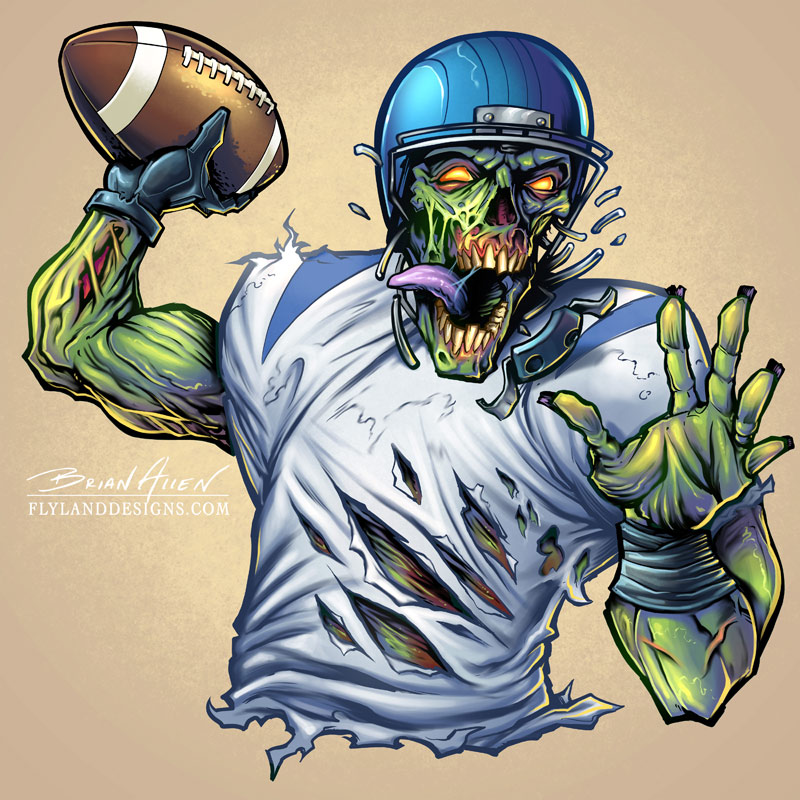
Denial and ego conspire together as addiction’s minions. Demon quarterbackDenial says I don’t have a problem, and ego says, Whatever – I do what I want!  Together they block the world like offensive linemen, protecting addiction from tackles by reason and emotion so it can launch just one more play for a great time.  This time, it’s gonna be awesome!

But then one day, if we’re lucky, we reach that magical combination –our life’s shot to shit and alcohol quits working – and we hit bottom.  Death is lookin’ real-ly good by this point.  No more anybody expecting anything from us.  No more failure.  No more loneliness and hating ourselves.  Just peace.  That incomprehensible demoralization blasts away denial’s excuses, flattens ego’s games.

Without their cover, we can finally glimpse the actual face of addiction, and we understand that it’s a demon. For a short window of time, we get that it’s killing us. The question is whether we can find help, whether we can be shown a way out, before that window of clarity closes. If we make it to AA, we can look at Step 1 on the wall and sigh, yes:  We admitted we were powerless over alcohol – that our lives had become unmanageable.  Others can show us the way out.

But that’s far from the end of it!

The inner addict doesn’t die.  Recovery only incarcerates it.  And guess who’s constantly plotting and conspiring to spring the boss out of prison?  You got it: those loyal henchmen, denial and ego.

“You know, maybe I never really had that big a problem with alcohol.  Maybe now that I’ve got my shit together, I don’t have to bother with AA meetings.”  Just as cancer mimics and perverts the miracle of cell growth, so addiction mimics and perverts the goodness of self-care. “You deserve a drink!  Don’t be so hard on yourself!  You’ve totally cleaned up your act – why not enjoy a little reward?”  Both diseases kill the host.

In sobriety I know of only one deliverance from the minions’ head chatter: god.  That’s why the 12 Steps exist.  For me, god can be found only when I wrench my focus away from all my thinking and look to my heart, where my sense of goodness lives.  Goodness runs deeper than knowledge; it’s my very foundation of living, god dwelling in me.  I pray for direction and new thoughts come: call a sober friend; get to a meeting; be of service to others.  Whenever unselfish love flows through our system, it flushes out the disease’s crud and nourishes our core.   The minions lose.

But they’ll be back tomorrow!

scroll

Post to Facebook

5 Comments

Filed under AA, Addiction, Alcoholism, Denial, Recovery, Sobriety